Paget's disease of boneKnown as osteitisdeformansA chronic disorder that typically results in enlarged and deformed bonesPaget's disease can cause bone to weaken,Bone painThe excessive breakdown and formation of bone tissuearthrites deformities,
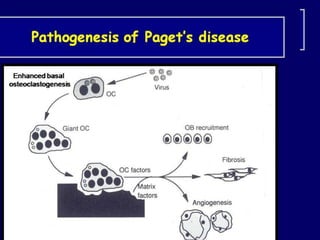
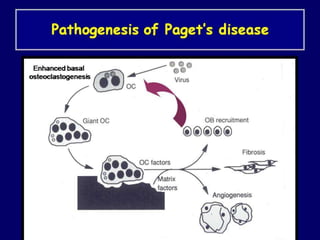
causeVirus infectionsCanine distemper virusRespiratory syncytial virusParamyxovirus
SymptomsBone pain is the most common symptom Headaches and hearing loss may occur when Paget's disease affects the skull Pressure on nerves may occur when Paget's       disease affects the skull or spine.  Drowsiness
SymptomsIncreased head sizeCurvature of spine may occur in advanced casesHip pain may occur when Paget's disease affects the pelvic or thigh boneDamage to joint cartilage may lead to arthritiesTeeth may spread intraorallyChalkstik #: Chalkstick fractures are fractures, typically of long bones, in which the fracture is transverse to the long axis of the bone, like a broken stick of chalk.
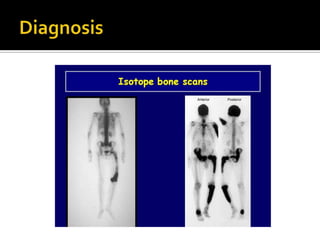
Diagnosis
Diagnosis
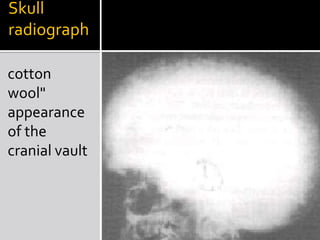
Skull radiographcotton wool" appearance of the cranial vault
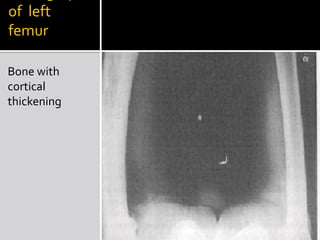
Radiograph of  left femurBone with cortical thickening
TreatmentDrug Therapy
Surgery
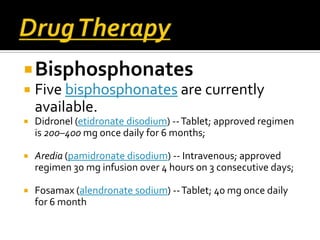
Diet & ExerciseDrug TherapyBisphosphonatesFive bisphosphonates are currently available.Didronel (etidronate disodium) -- Tablet; approved regimen is 200–400 mg once daily for 6 months; Aredia (pamidronate disodium) -- Intravenous; approved regimen 30 mg infusion over 4 hours on 3 consecutive days;Fosamax (alendronate sodium) -- Tablet; 40 mg once daily for 6 month
BisphosphonatesSkelid (tiludronate disodium) -- Tablet; 400 mg (two 200 mg tablets) once daily for 3;Actonel (risedronate sodium) -- Tablet; 30 mg once daily for 2 months;
CalcitoninMiacalcin is administered by injection; 50 to 100 units daily or 3 times per week for 6-18 months
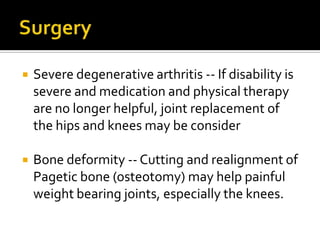
SurgeryThere are generally two major complications of Paget's disease for which surgery may be recommended.SurgerySevere degenerative arthritis -- If disability is severe and medication and physical therapy are no longer helpful, joint replacement of the hips and knees may be consider Bone deformity -- Cutting and realignment of Pagetic bone (osteotomy) may help painful weight bearing joints, especially the knees.
Diet and ExercisePatients with Paget's disease should receive 1000-1500 mg of calciumAdequate  sunshineAt least 400 units of vitamin  D dailyThis is especially important in patients being treated with bisphosphonates.
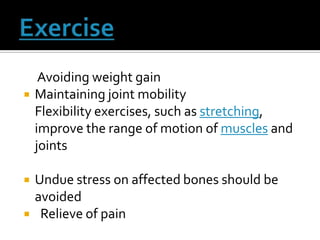
Exercise     Avoiding weight gain Maintaining joint mobility    Flexibility exercises, such as stretching, improve the range of motion of muscles and jointsUndue stress on affected bones should be avoided    Relieve of pain
         SHOULDER  EXERCISEThe shoulder shrug is another technique that may improve posture and reduce back pain Begin by standing erect with dumbbells or water bottles held at the sides of the bodyLift the shoulders toward the head by elevating the shoulder girdle, and slightly retract the scapulae to rotate the shoulders back
      SHOULDER  EXERCISEPause, and then return to the starting position. Avoid rocking or using the legs to initiate the exercise by slightly bending your knee Repeat   the exercise three to five times
             KNEE EXCERCISEA good starting point is the squat which targets the gluteals, hamstrings, and quadricepsStart by standing erect with a neutral spine and feet shoulder-width apartSlowly lower the body, with the hips moving back as if sitting in a chair.
             KNEE EXCERCISEMaintain the weight directly over the heels or mid-foot
 Lower to approximately 90 degrees of knee flexion.
Pause, and then slowly return to the starting position
Remember to keep the weight over the back portion of the foot rather than the toes; raise the arms to shoulder height to counterbalance.               KNEE EXCERCISERepeat the exercise three to five times If you have trouble lowering your body until 90 degrees of knee flexion  consider placing a chair behind you with some pillows in the chair.  This way, you can lower your body until about 70 degrees of knee flexion (or until you feel the pillows on the chair), pause at that amount of knee flexion, and then return to starting position

Nishant prestation 1

  • 1.
    Paget's disease ofboneKnown as osteitisdeformansA chronic disorder that typically results in enlarged and deformed bonesPaget's disease can cause bone to weaken,Bone painThe excessive breakdown and formation of bone tissuearthrites deformities,
  • 2.
    causeVirus infectionsCanine distempervirusRespiratory syncytial virusParamyxovirus
  • 7.
    SymptomsBone pain isthe most common symptom Headaches and hearing loss may occur when Paget's disease affects the skull Pressure on nerves may occur when Paget's disease affects the skull or spine. Drowsiness
  • 8.
    SymptomsIncreased head sizeCurvatureof spine may occur in advanced casesHip pain may occur when Paget's disease affects the pelvic or thigh boneDamage to joint cartilage may lead to arthritiesTeeth may spread intraorallyChalkstik #: Chalkstick fractures are fractures, typically of long bones, in which the fracture is transverse to the long axis of the bone, like a broken stick of chalk.
  • 9.
  • 10.
  • 11.
    Skull radiographcotton wool"appearance of the cranial vault
  • 12.
    Radiograph of left femurBone with cortical thickening
  • 13.
  • 14.
  • 15.
    Diet & ExerciseDrugTherapyBisphosphonatesFive bisphosphonates are currently available.Didronel (etidronate disodium) -- Tablet; approved regimen is 200–400 mg once daily for 6 months; Aredia (pamidronate disodium) -- Intravenous; approved regimen 30 mg infusion over 4 hours on 3 consecutive days;Fosamax (alendronate sodium) -- Tablet; 40 mg once daily for 6 month
  • 16.
    BisphosphonatesSkelid (tiludronate disodium)-- Tablet; 400 mg (two 200 mg tablets) once daily for 3;Actonel (risedronate sodium) -- Tablet; 30 mg once daily for 2 months;
  • 17.
    CalcitoninMiacalcin is administeredby injection; 50 to 100 units daily or 3 times per week for 6-18 months
  • 18.
    SurgeryThere are generallytwo major complications of Paget's disease for which surgery may be recommended.SurgerySevere degenerative arthritis -- If disability is severe and medication and physical therapy are no longer helpful, joint replacement of the hips and knees may be consider Bone deformity -- Cutting and realignment of Pagetic bone (osteotomy) may help painful weight bearing joints, especially the knees.
  • 19.
    Diet and ExercisePatientswith Paget's disease should receive 1000-1500 mg of calciumAdequate sunshineAt least 400 units of vitamin D dailyThis is especially important in patients being treated with bisphosphonates.
  • 20.
    Exercise Avoiding weight gain Maintaining joint mobility Flexibility exercises, such as stretching, improve the range of motion of muscles and jointsUndue stress on affected bones should be avoided Relieve of pain
  • 21.
    SHOULDER EXERCISEThe shoulder shrug is another technique that may improve posture and reduce back pain Begin by standing erect with dumbbells or water bottles held at the sides of the bodyLift the shoulders toward the head by elevating the shoulder girdle, and slightly retract the scapulae to rotate the shoulders back
  • 22.
    SHOULDER EXERCISEPause, and then return to the starting position. Avoid rocking or using the legs to initiate the exercise by slightly bending your knee Repeat the exercise three to five times
  • 23.
    KNEE EXCERCISEA good starting point is the squat which targets the gluteals, hamstrings, and quadricepsStart by standing erect with a neutral spine and feet shoulder-width apartSlowly lower the body, with the hips moving back as if sitting in a chair.
  • 24.
    KNEE EXCERCISEMaintain the weight directly over the heels or mid-foot
  • 25.
    Lower toapproximately 90 degrees of knee flexion.
  • 26.
    Pause, and thenslowly return to the starting position
  • 27.
    Remember to keepthe weight over the back portion of the foot rather than the toes; raise the arms to shoulder height to counterbalance. KNEE EXCERCISERepeat the exercise three to five times If you have trouble lowering your body until 90 degrees of knee flexion consider placing a chair behind you with some pillows in the chair.  This way, you can lower your body until about 70 degrees of knee flexion (or until you feel the pillows on the chair), pause at that amount of knee flexion, and then return to starting position