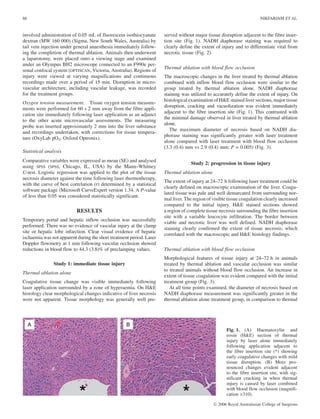
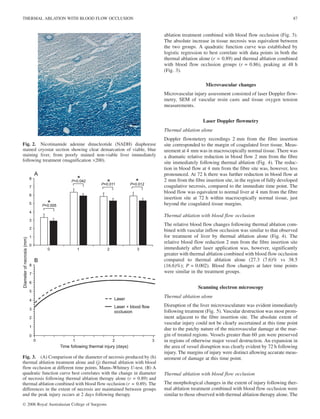
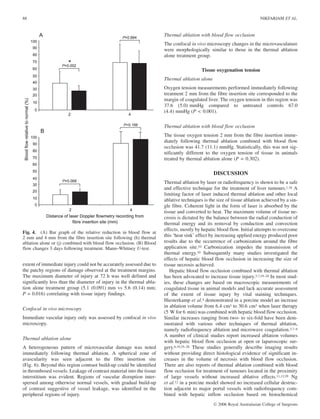
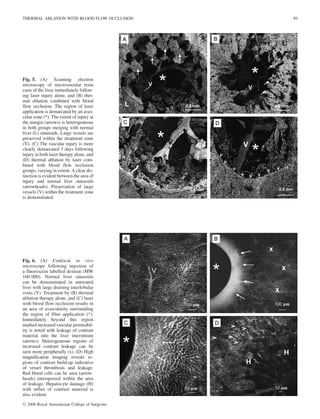
This study examines the impact of temporary blood flow occlusion on direct and indirect liver injury caused by laser thermal ablation in mice. Thermal ablation was performed with and without temporary occlusion of the portal vein and hepatic artery. Tissue damage was assessed immediately after treatment and over subsequent days using histochemical staining techniques. The results showed that temporary blood flow occlusion decreased the extent of initial injury but did not alter the progression of tissue damage over time. The maximum diameter of necrosis was smaller with temporary occlusion at 48 hours. This suggests that while temporary blood flow occlusion may decrease the immediate size of the ablation zone, it does not enhance the overall volume of liver tissue destroyed by the thermal treatment.