Presenter
Shree Prasad Devkota
In partial fulfillment of the requirements for the
Course Economics of Education EDUC 544
Second Semester

12/25/2013

1
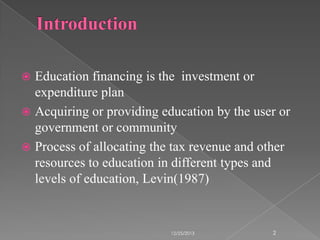
Education financing is the investment or
expenditure plan
 Acquiring or providing education by the user or
government or community
 Process of allocating the tax revenue and other
resources to education in different types and
levels of education, Levin(1987)


12/25/2013

2
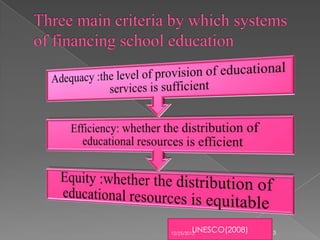
UNESCO(2008)

12/25/2013

3
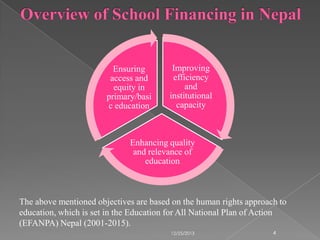
Ensuring
access and
equity in
primary/basi
c education

Improving
efficiency
and
institutional
capacity

Enhancing quality
and relevance of
education

The above mentioned objectives are based on the human rights approach to
education, which is set in the Education for All National Plan of Action
(EFANPA) Nepal (2001-2015).
12/25/2013

4
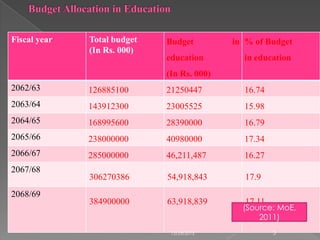
Fiscal year

Total budget
(In Rs. 000)

Budget
education

in % of Budget
in education

(In Rs. 000)
2062/63

126885100

21250447

16.74

2063/64

143912300

23005525

15.98

2064/65

168995600

28390000

16.79

2065/66

238000000

40980000

17.34

2066/67

285000000

46,211,487

16.27

306270386

54,918,843

17.9

384900000

63,918,839

17.11

2067/68
2068/69

12/25/2013

(Source: MoE,
2011)
5
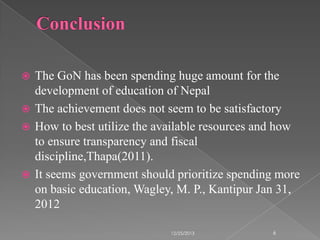
The GoN has been spending huge amount for the
development of education of Nepal
 The achievement does not seem to be satisfactory
 How to best utilize the available resources and how
to ensure transparency and fiscal
discipline,Thapa(2011).
 It seems government should prioritize spending more
on basic education, Wagley, M. P., Kantipur Jan 31,
2012


12/25/2013

6
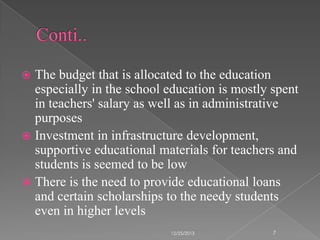
The budget that is allocated to the education
especially in the school education is mostly spent
in teachers' salary as well as in administrative
purposes
 Investment in infrastructure development,
supportive educational materials for teachers and
students is seemed to be low
 There is the need to provide educational loans
and certain scholarships to the needy students
even in higher levels


12/25/2013

7

New microsoft offFinancing Education: School Finance in Nepalce power point presentation

  • 1.
    Presenter Shree Prasad Devkota Inpartial fulfillment of the requirements for the Course Economics of Education EDUC 544 Second Semester 12/25/2013 1
  • 2.
    Education financing isthe investment or expenditure plan  Acquiring or providing education by the user or government or community  Process of allocating the tax revenue and other resources to education in different types and levels of education, Levin(1987)  12/25/2013 2
  • 3.
  • 4.
    Ensuring access and equity in primary/basi ceducation Improving efficiency and institutional capacity Enhancing quality and relevance of education The above mentioned objectives are based on the human rights approach to education, which is set in the Education for All National Plan of Action (EFANPA) Nepal (2001-2015). 12/25/2013 4
  • 5.
    Fiscal year Total budget (InRs. 000) Budget education in % of Budget in education (In Rs. 000) 2062/63 126885100 21250447 16.74 2063/64 143912300 23005525 15.98 2064/65 168995600 28390000 16.79 2065/66 238000000 40980000 17.34 2066/67 285000000 46,211,487 16.27 306270386 54,918,843 17.9 384900000 63,918,839 17.11 2067/68 2068/69 12/25/2013 (Source: MoE, 2011) 5
  • 6.
    The GoN hasbeen spending huge amount for the development of education of Nepal  The achievement does not seem to be satisfactory  How to best utilize the available resources and how to ensure transparency and fiscal discipline,Thapa(2011).  It seems government should prioritize spending more on basic education, Wagley, M. P., Kantipur Jan 31, 2012  12/25/2013 6
  • 7.
    The budget thatis allocated to the education especially in the school education is mostly spent in teachers' salary as well as in administrative purposes  Investment in infrastructure development, supportive educational materials for teachers and students is seemed to be low  There is the need to provide educational loans and certain scholarships to the needy students even in higher levels  12/25/2013 7