Neurosurgical  Research  Foundation Established 1963
 
The Foundation  supports research into the  cause, prevention & treatment   of diseases and injuries of the brain, spine and nerves.
Without research,  there can be  no advances in prevention  or treatment.
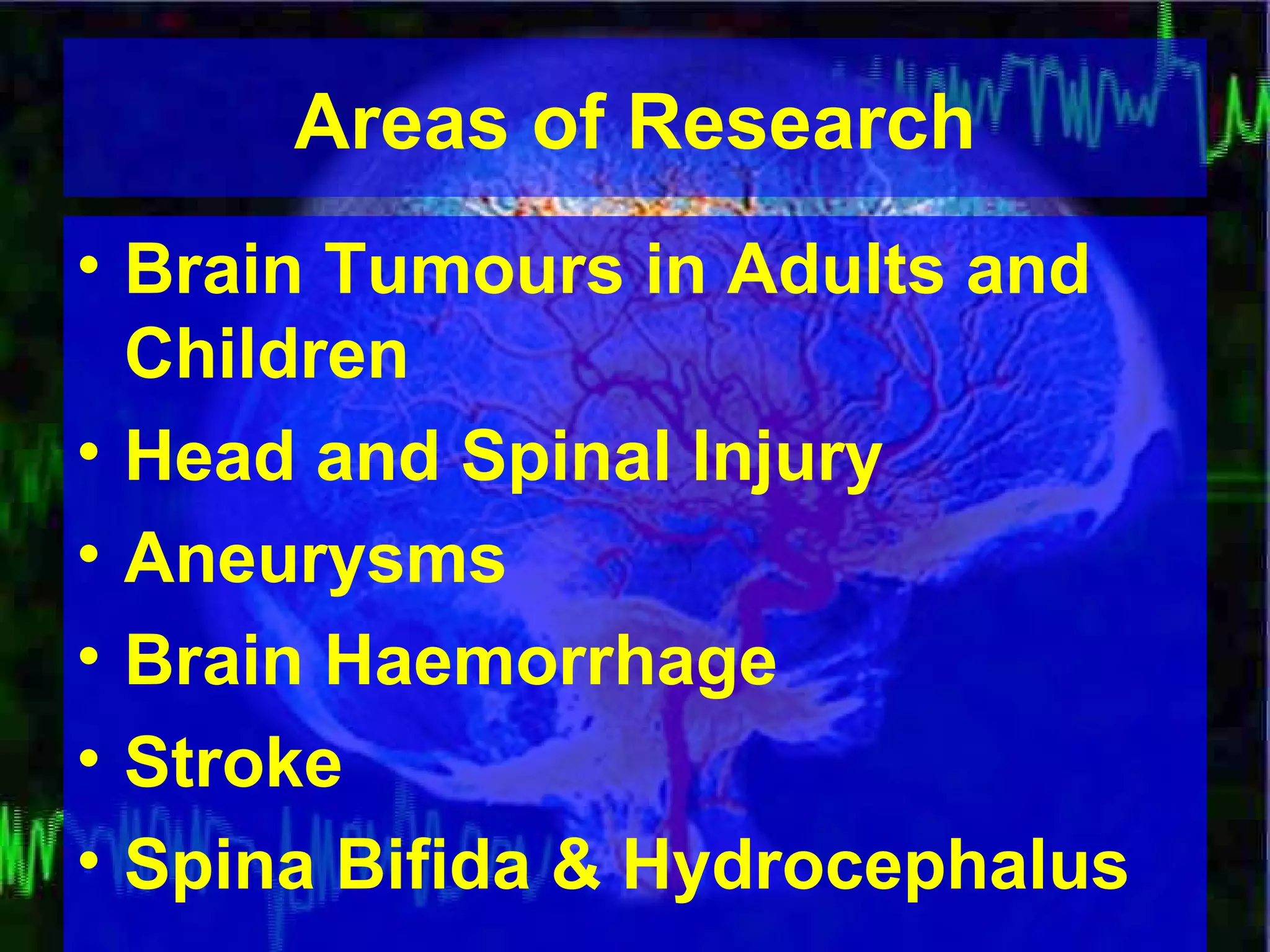
Areas of Research Brain Tumours in Adults and Children Head and Spinal Injury Aneurysms Brain Haemorrhage Stroke Spina Bifida & Hydrocephalus
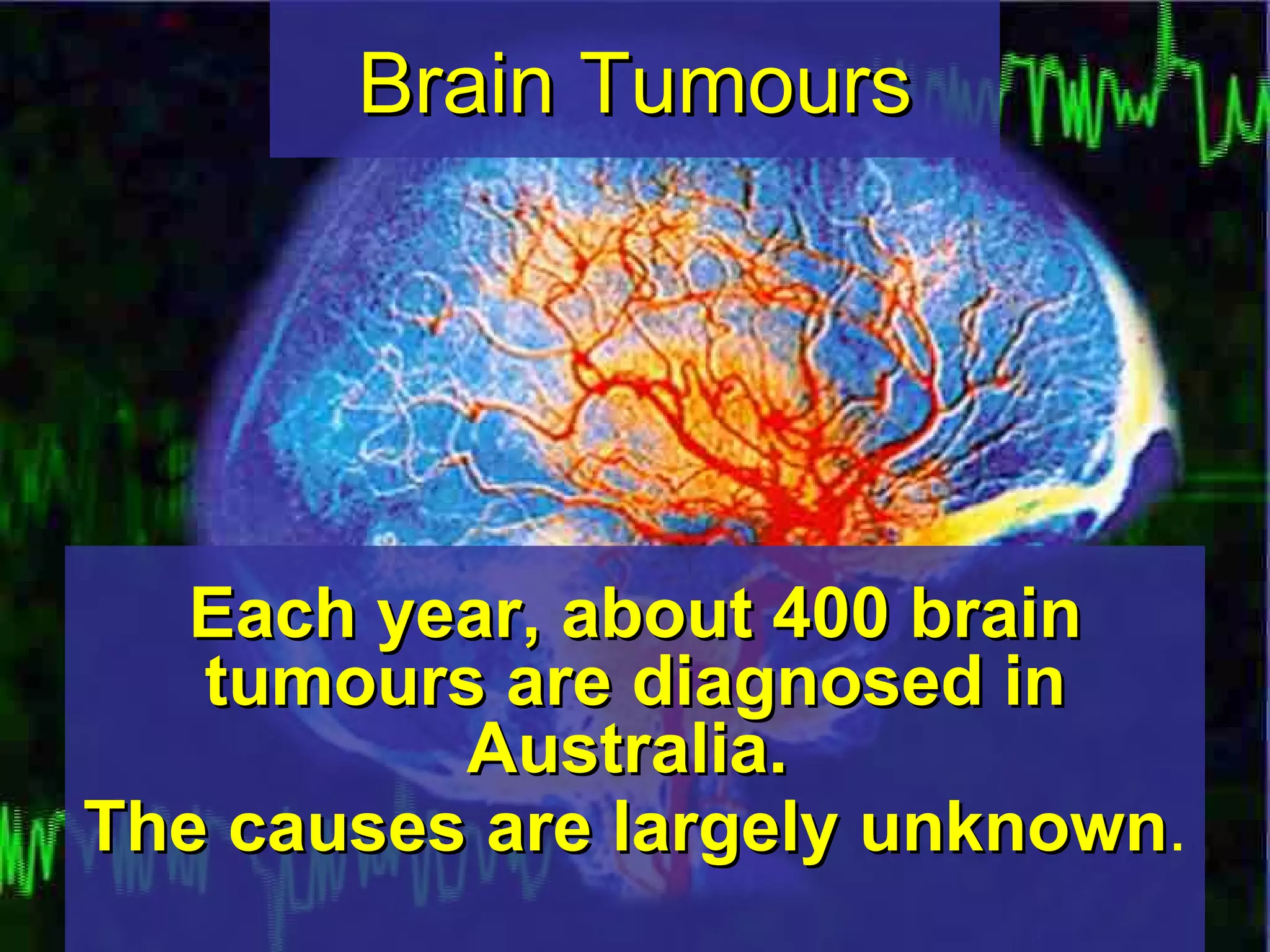
Brain Tumours Each year, about 400 brain   tumours are diagnosed in   Australia.   The causes are largely unknown .
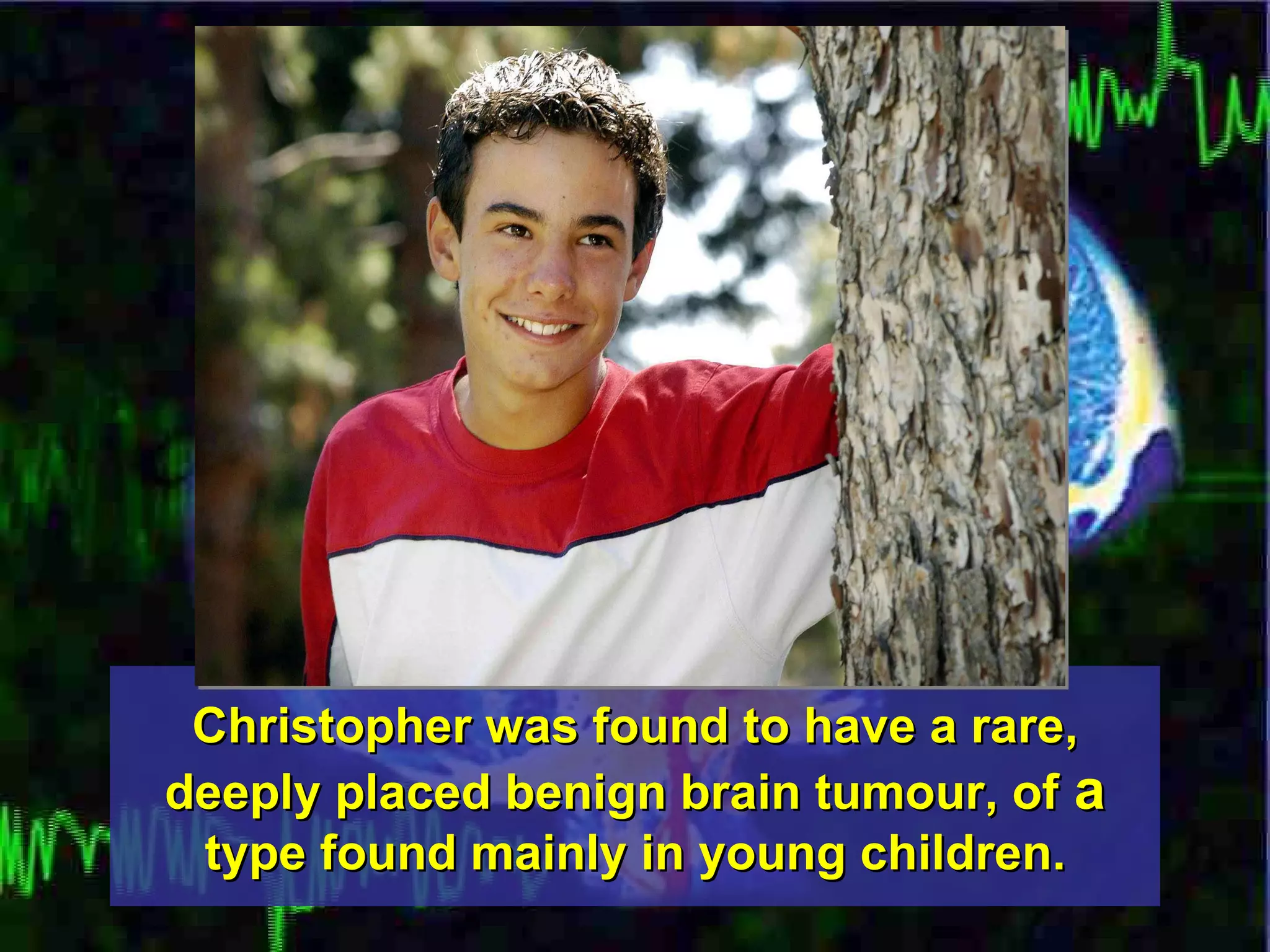
Christopher was found to have a rare, deeply placed benign brain tumour, of  a  type found mainly in young children.
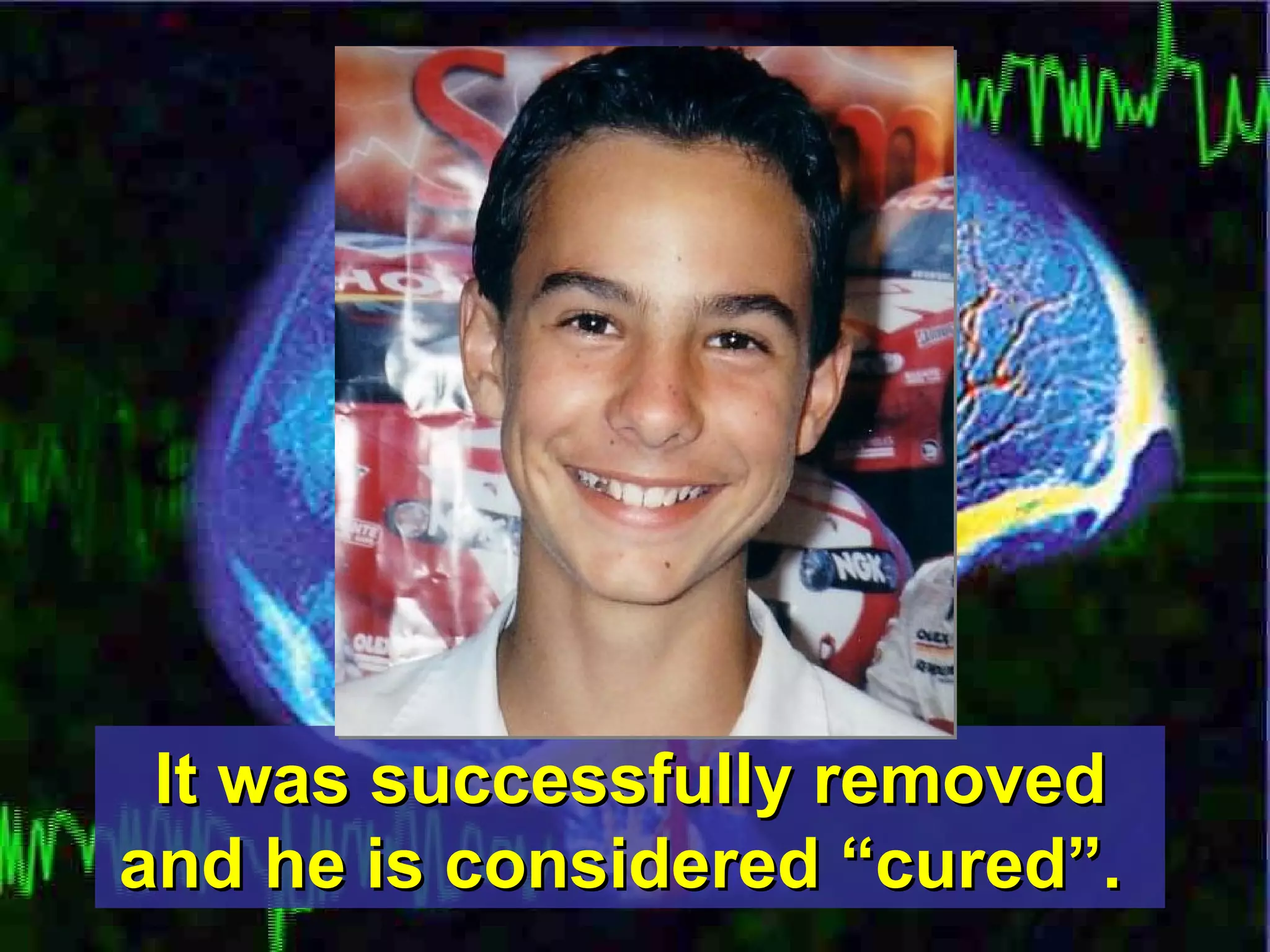
It was successfully removed and he is considered “cured”.
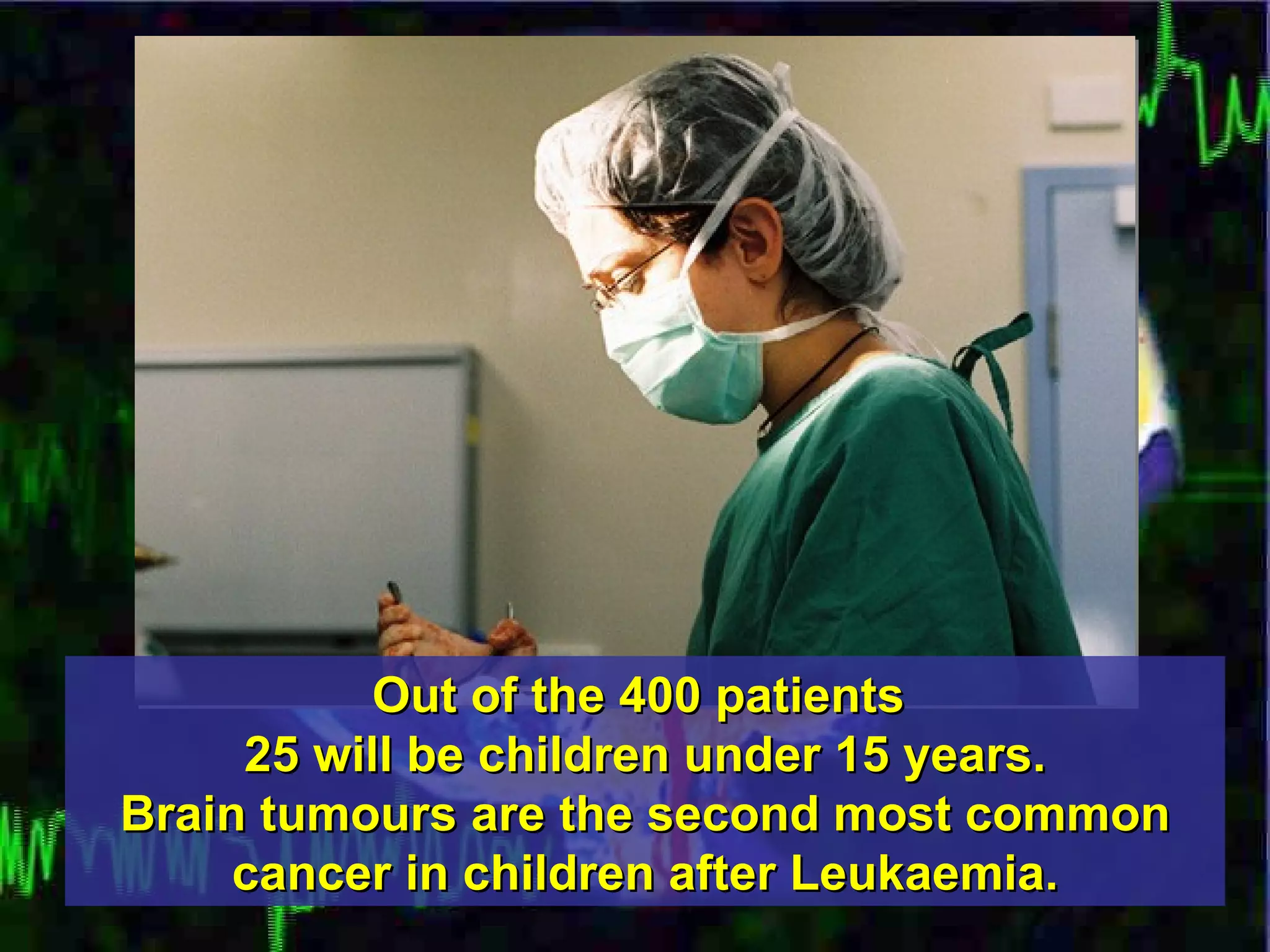
Out of the 400 patients  25 will be children under 15 years. Brain tumours are the second most common cancer in children after Leukaemia.
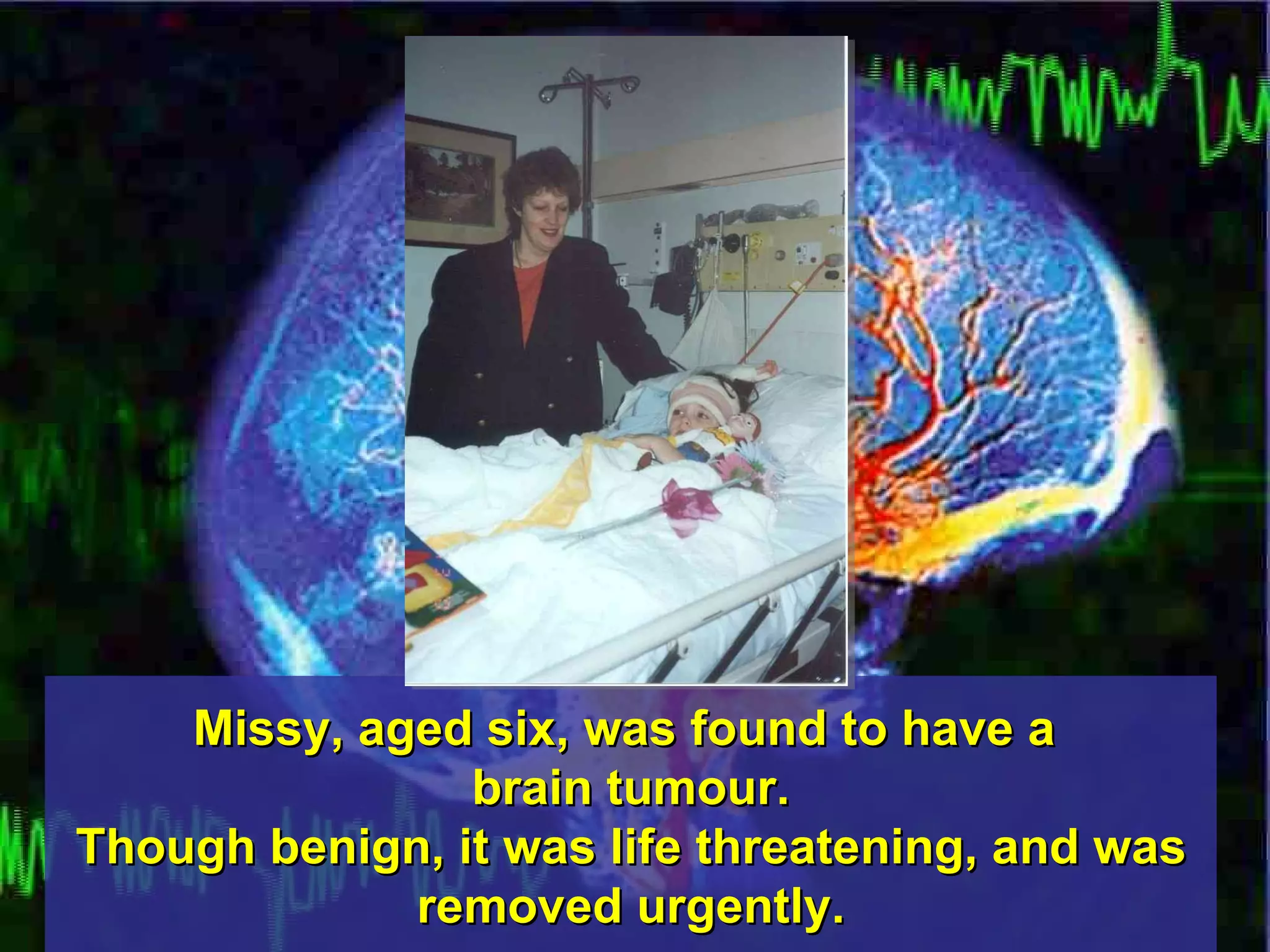
Missy, aged six, was found to have a  brain tumour. Though benign, it was life threatening, and was removed urgently.
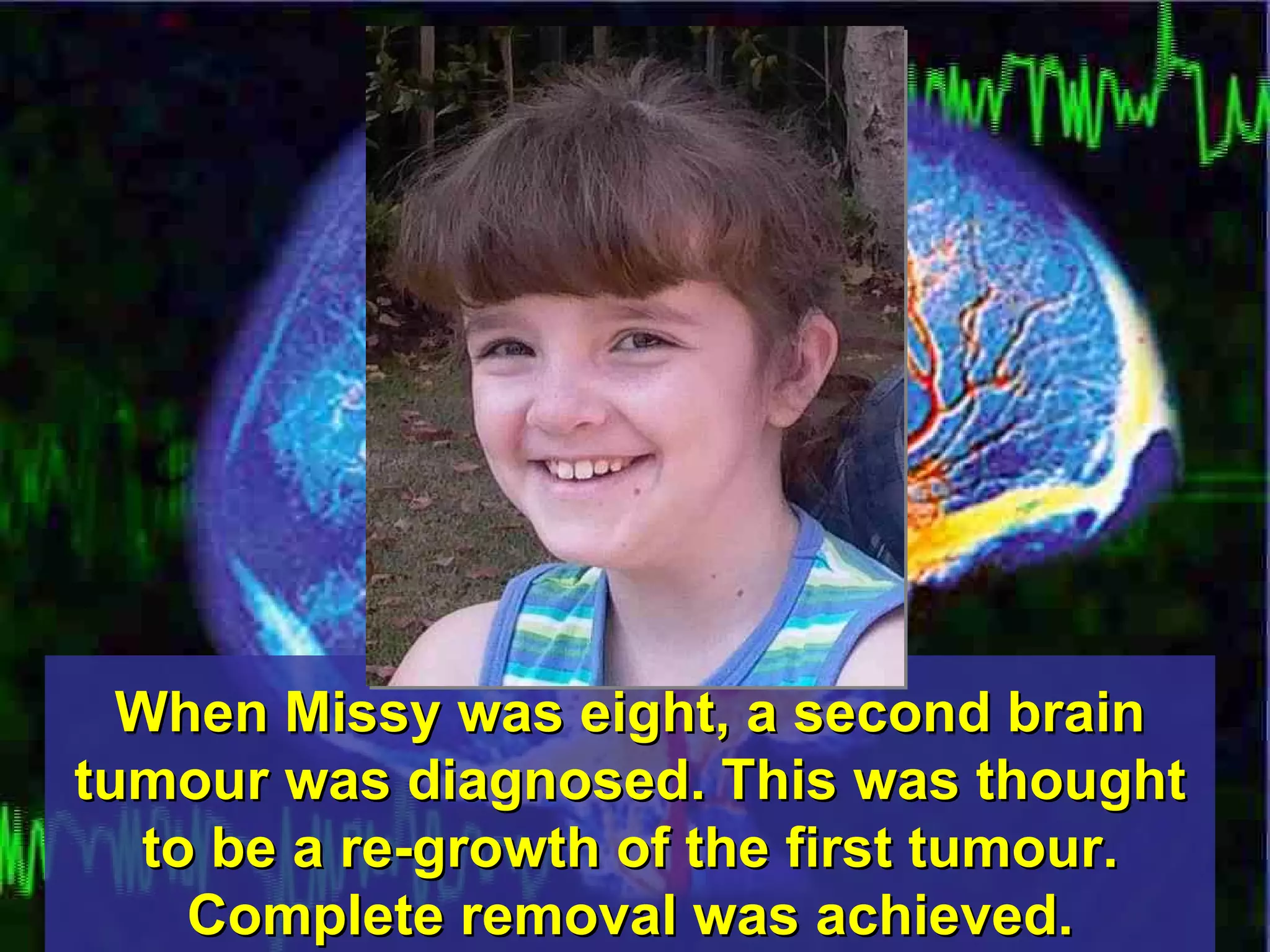
When Missy was eight, a second brain tumour was diagnosed. This was thought to be a re-growth of the first tumour. Complete removal was achieved.
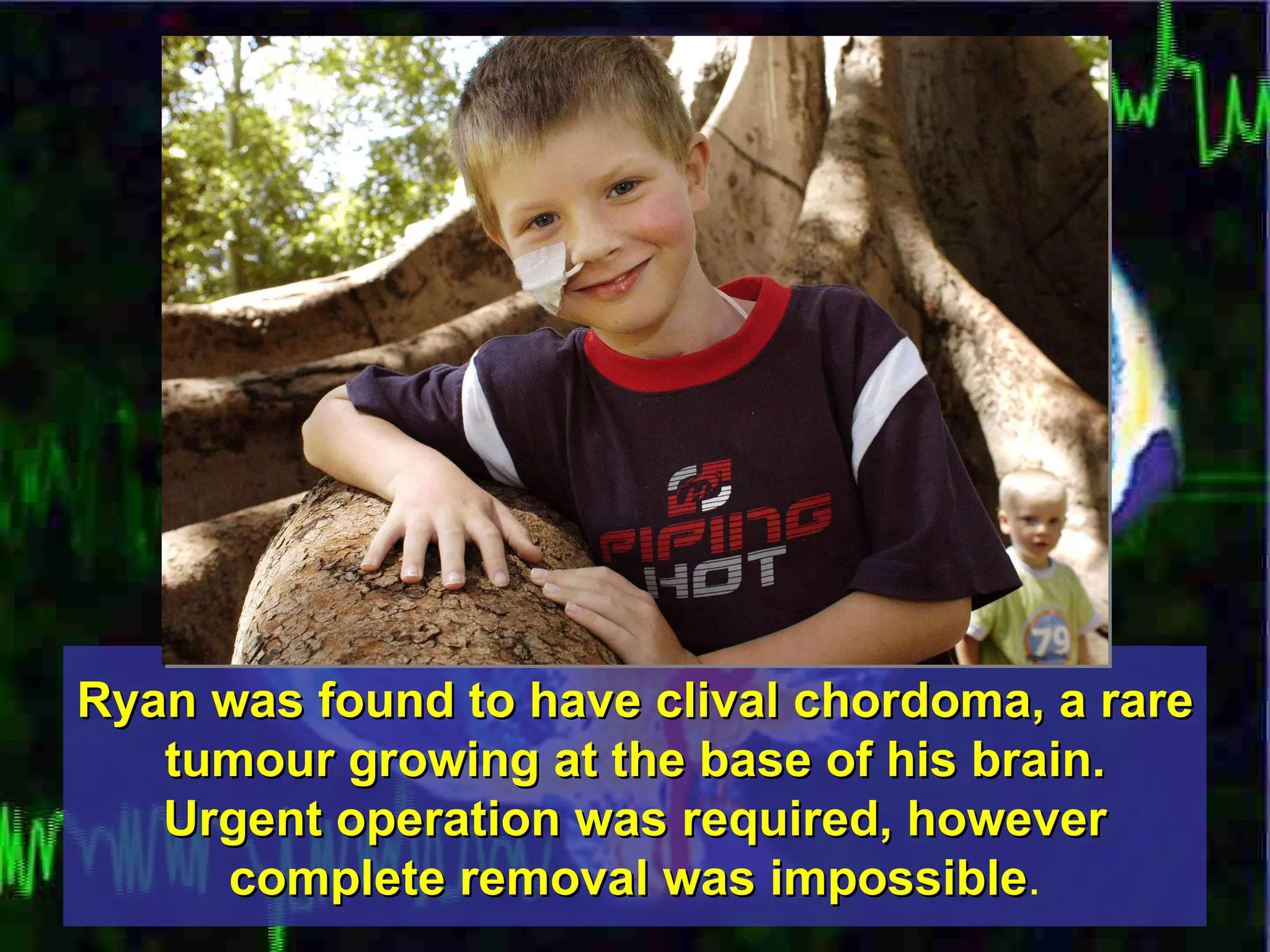
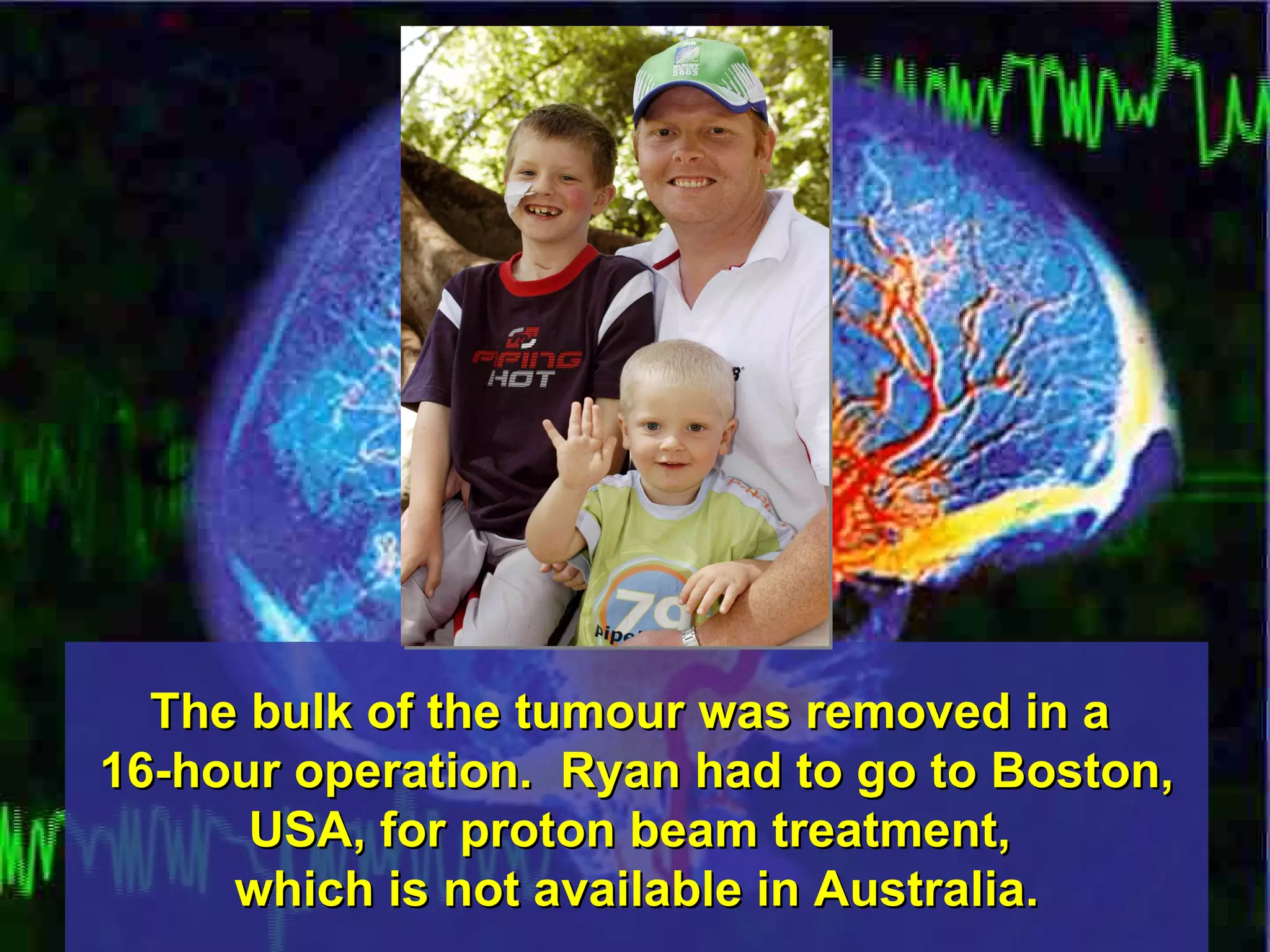
Ryan was found to have clival chordoma, a rare tumour growing at the base of his brain. Urgent operation was required, however complete removal was impossible .
The bulk of the tumour was removed in a  16-hour operation.  Ryan had to go to Boston, USA, for proton beam treatment,  which is not available in Australia.
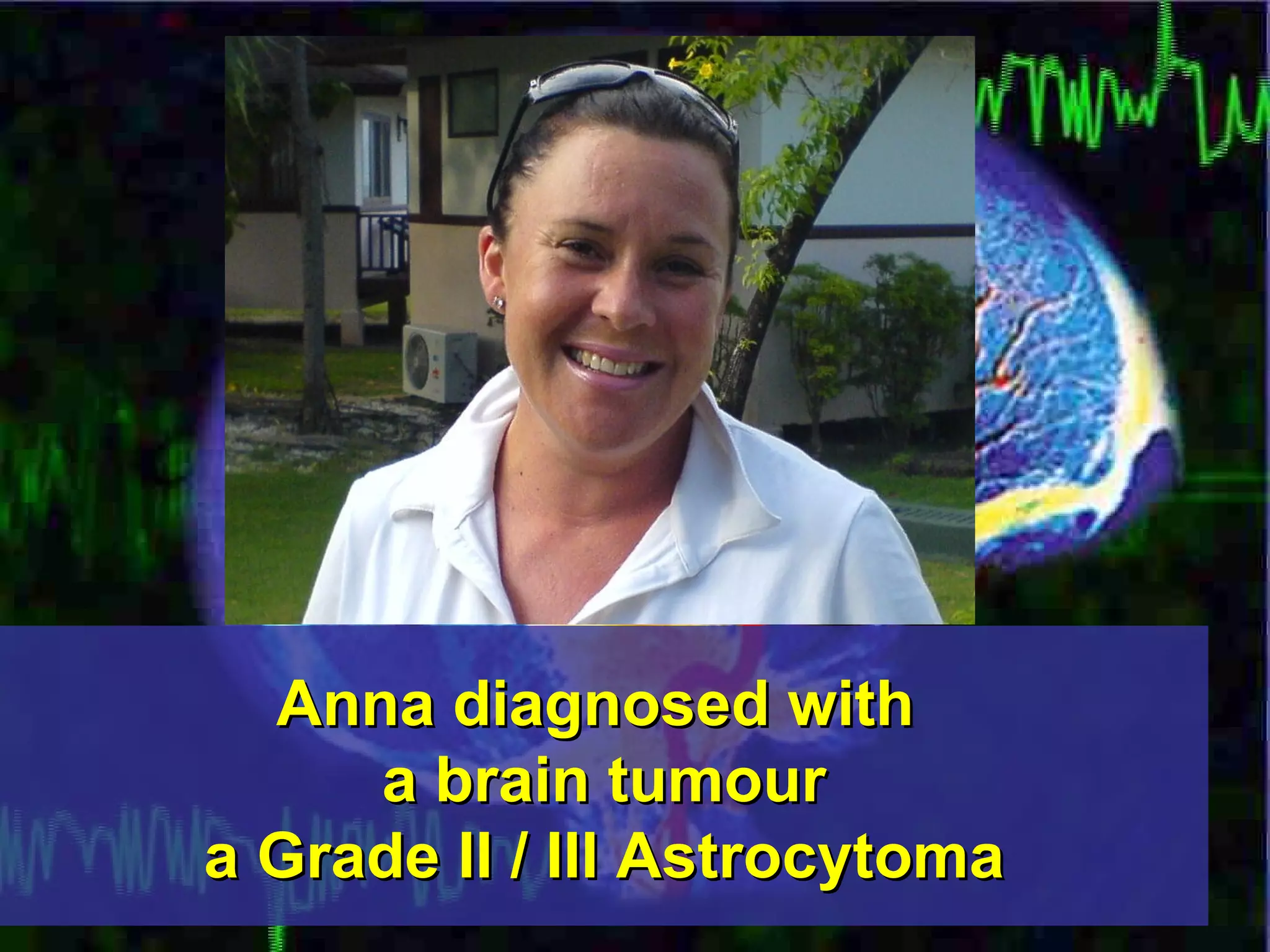
Anna diagnosed with  a brain tumour a Grade II / III Astrocytoma
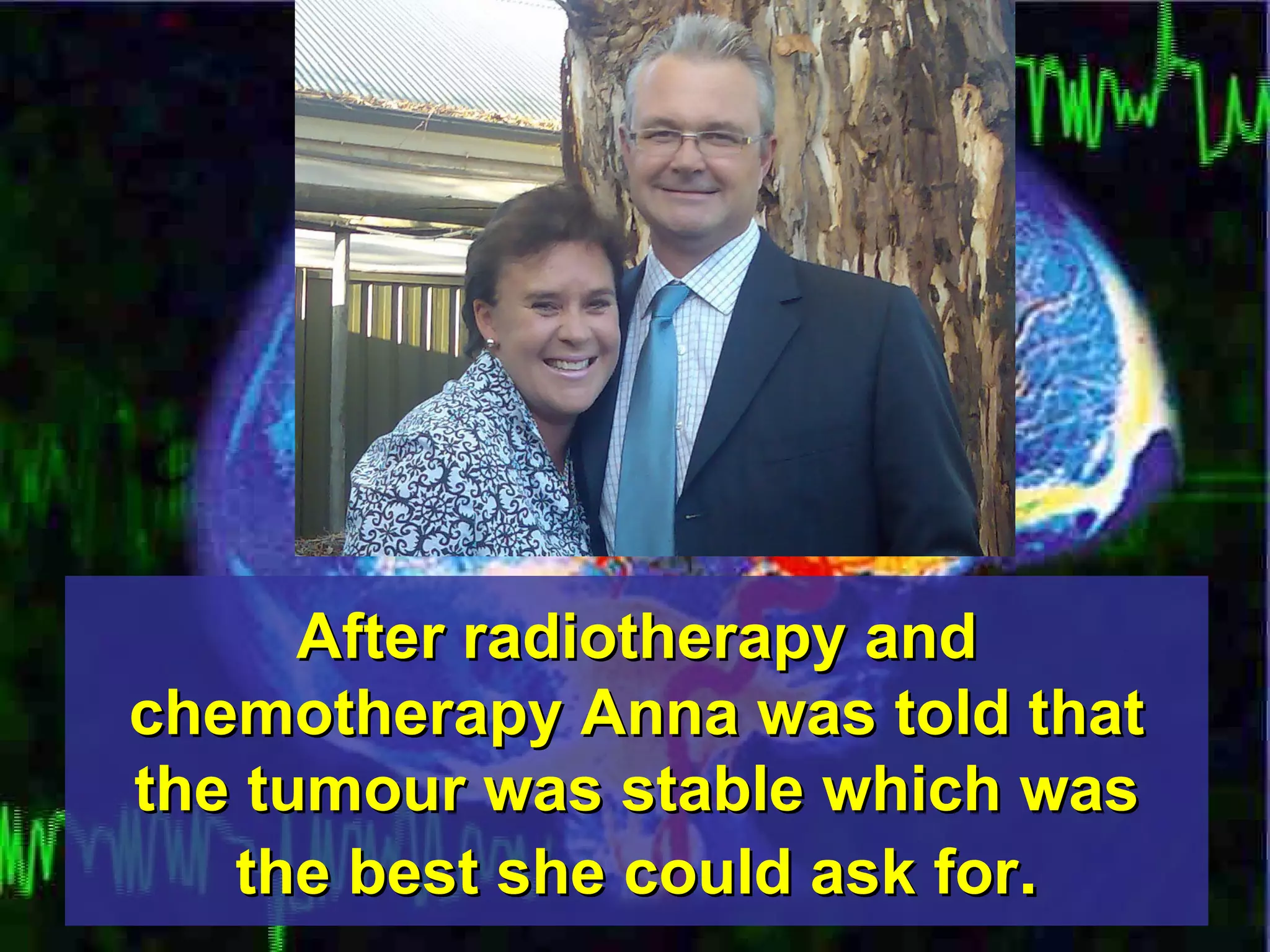
After radiotherapy and chemotherapy Anna was told that the tumour was stable which was the best she could ask for .
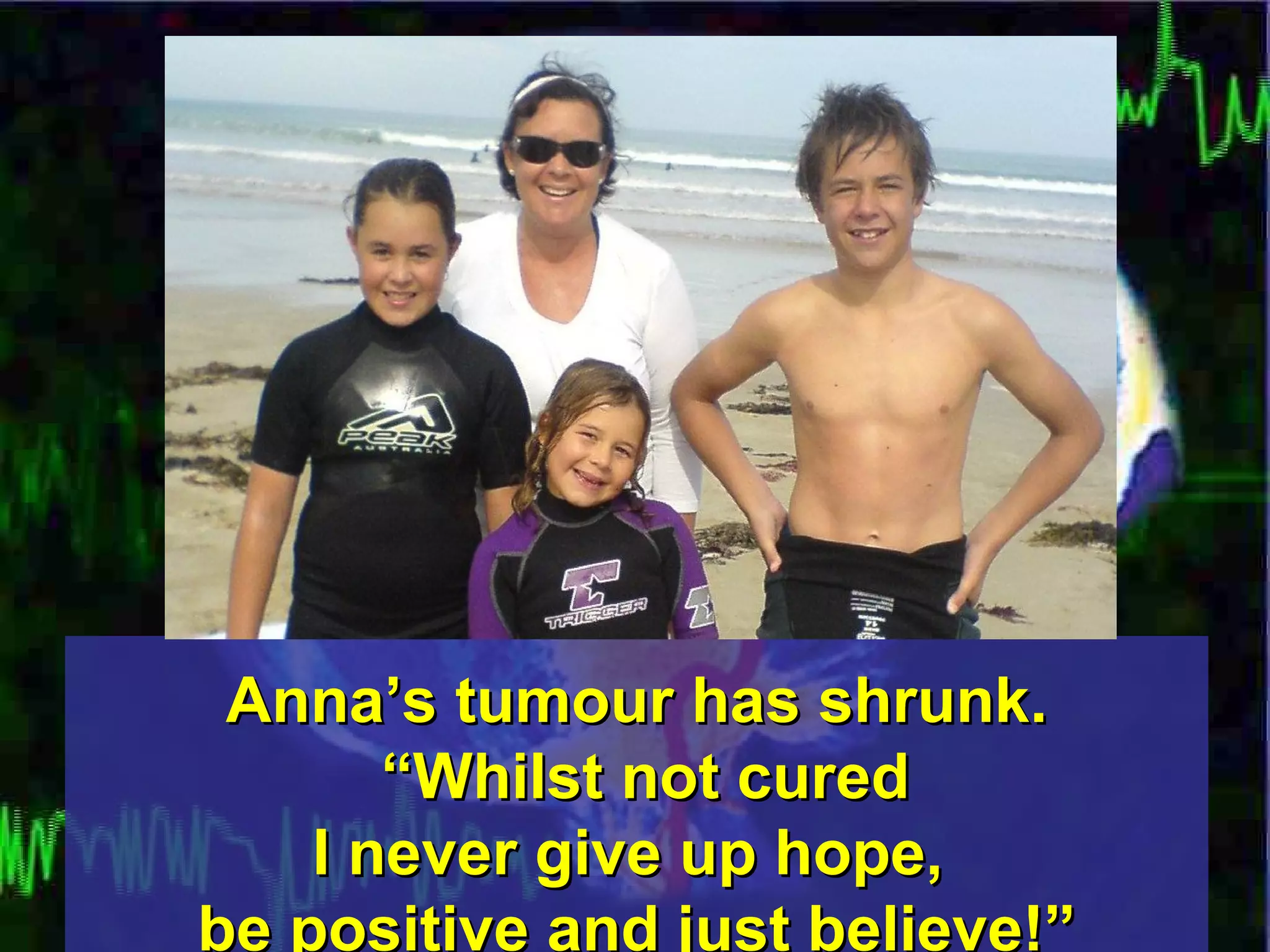
Anna’s tumour has shrunk.  “Whilst not cured I never give up hope,  be positive and just believe!”
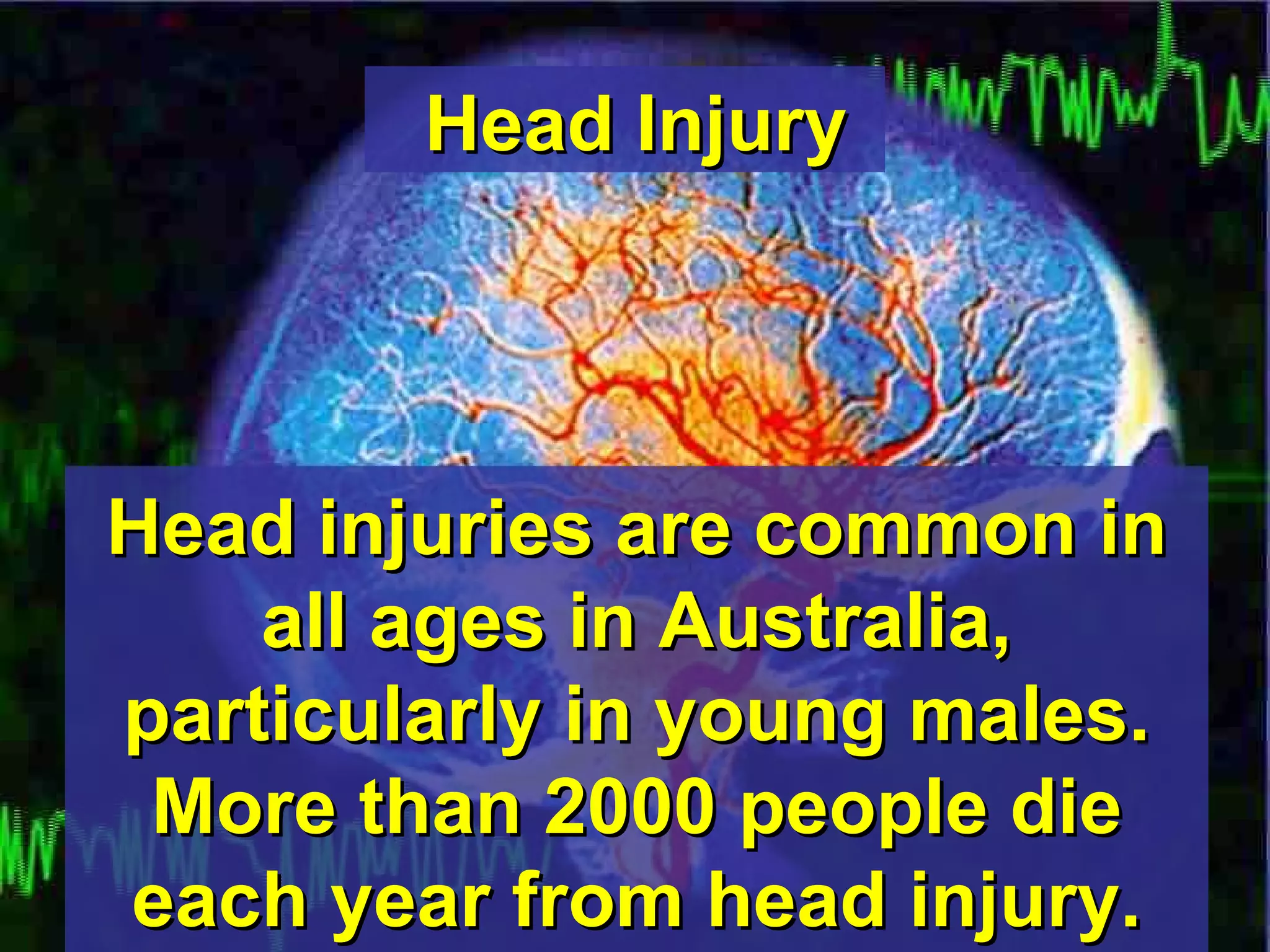
Head injuries are common in all ages in Australia, particularly in young males. More than 2000 people die each year from head injury. Head Injury
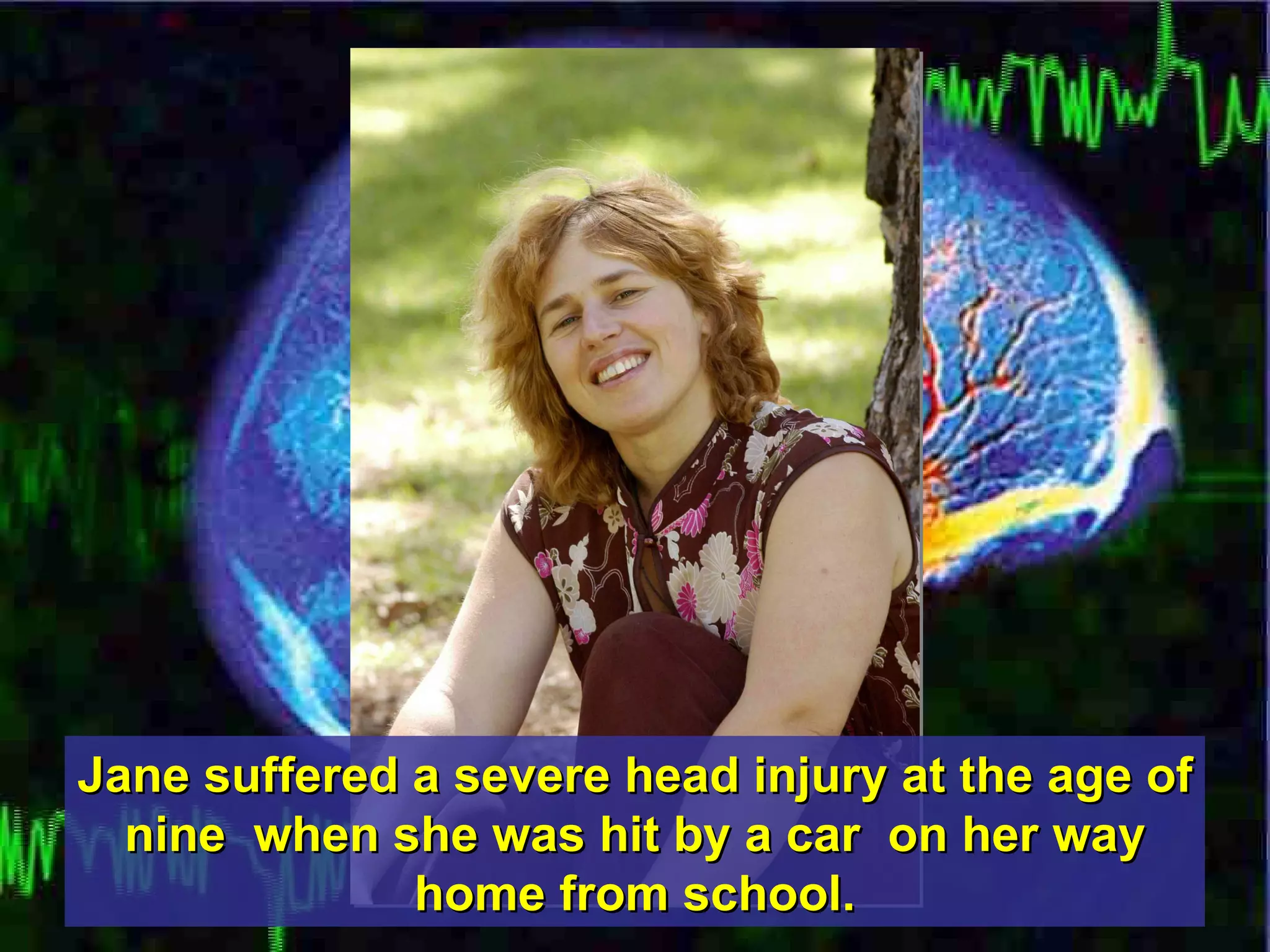
Jane suffered a severe head injury at the age of nine  when she was hit by a car  on her way home from school.
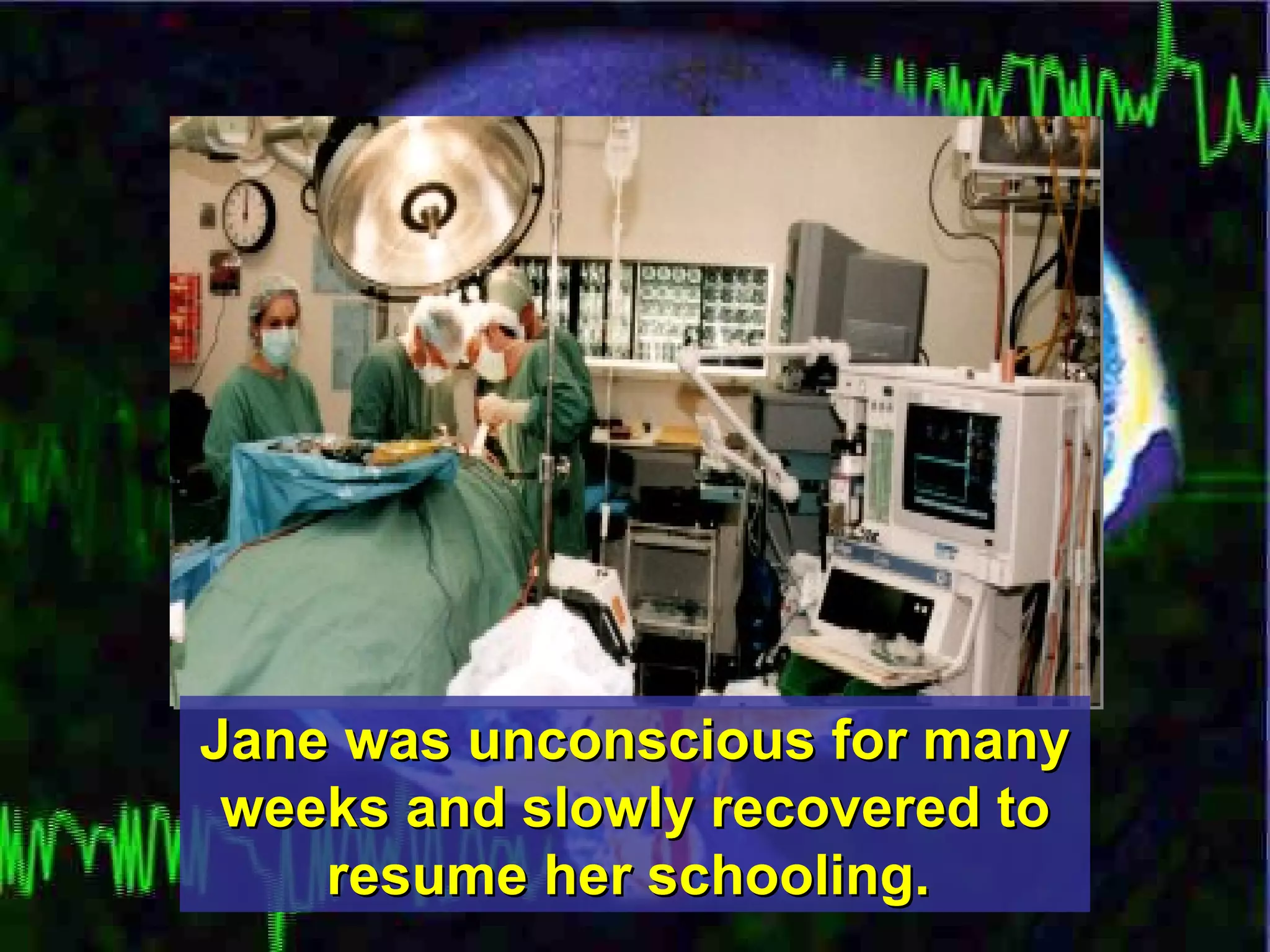
Jane was unconscious for many weeks and slowly recovered to resume her schooling.
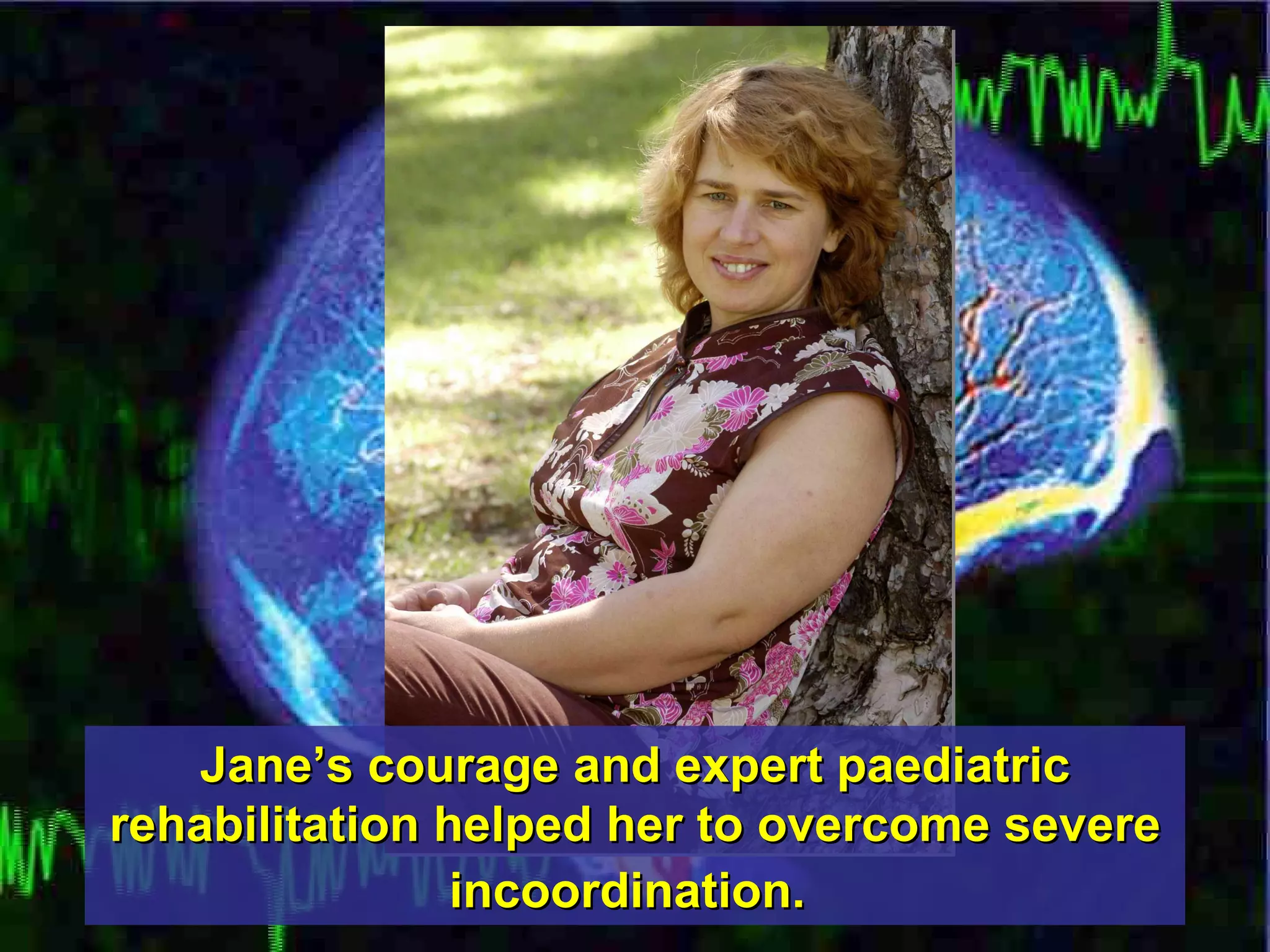
Jane’s courage and expert paediatric rehabilitation helped her to overcome severe incoordination.
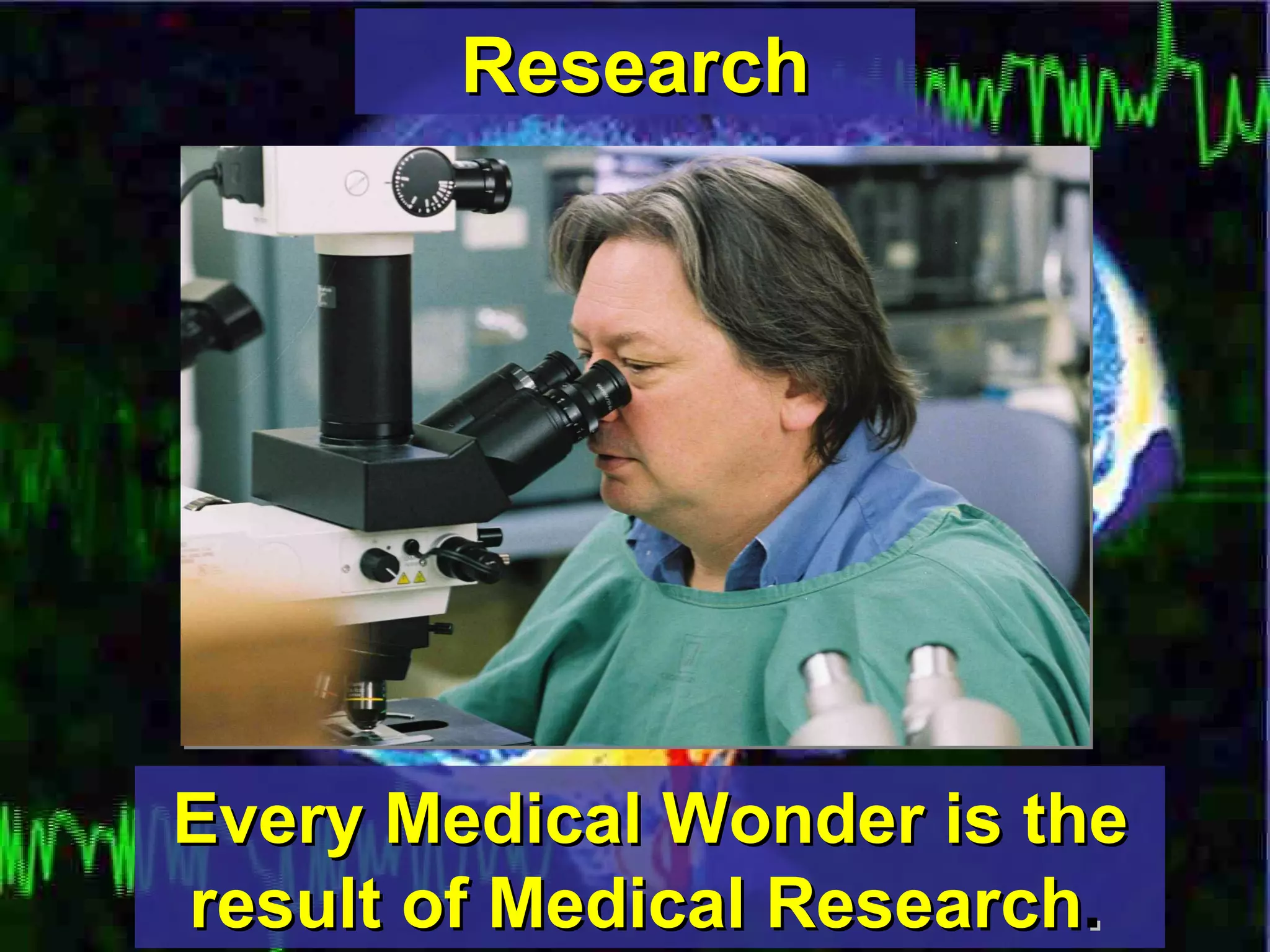
Research Every Medical Wonder is the result of Medical Research .
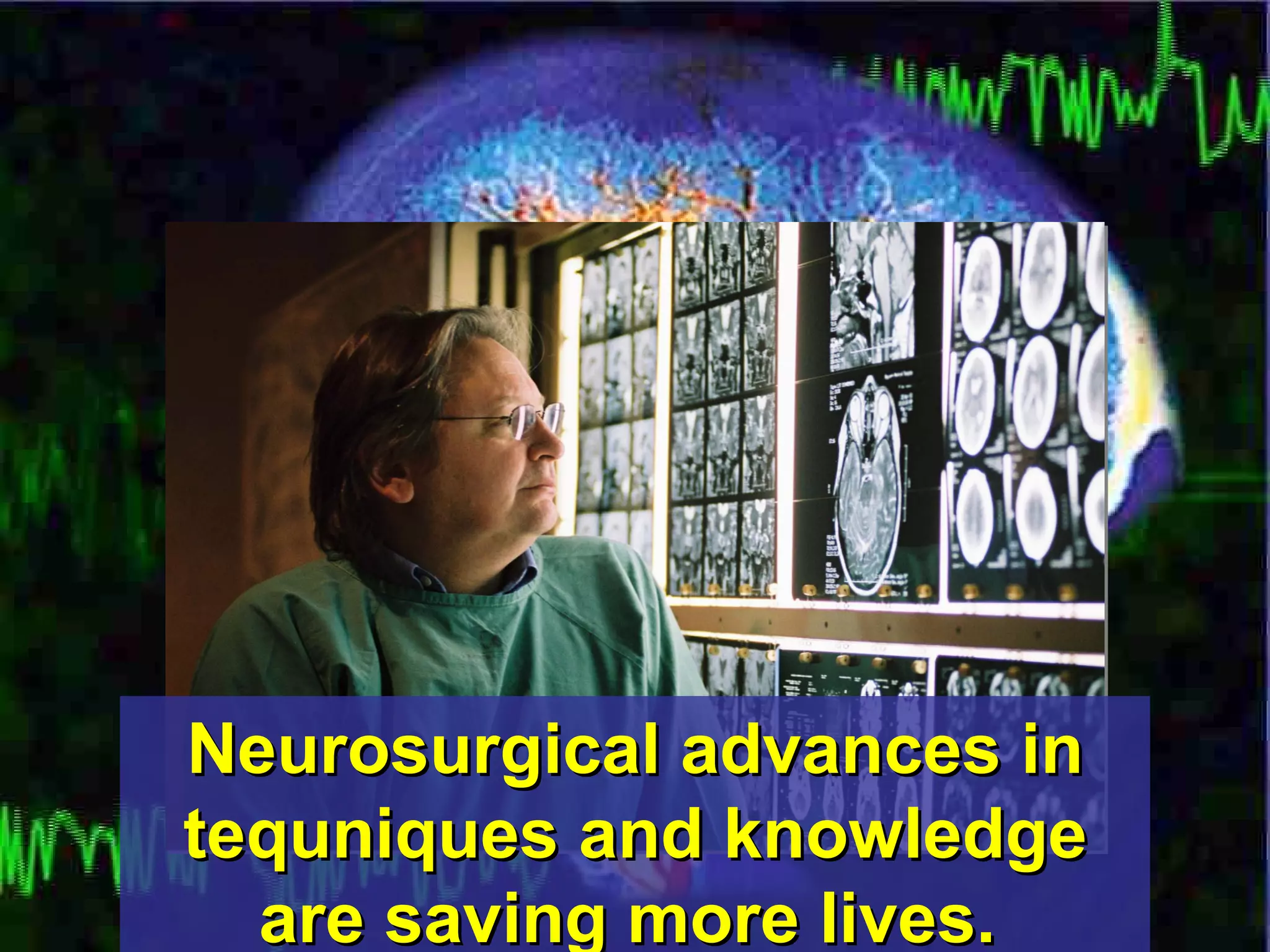
Neurosurgical advances in tequniques and knowledge are saving more lives.
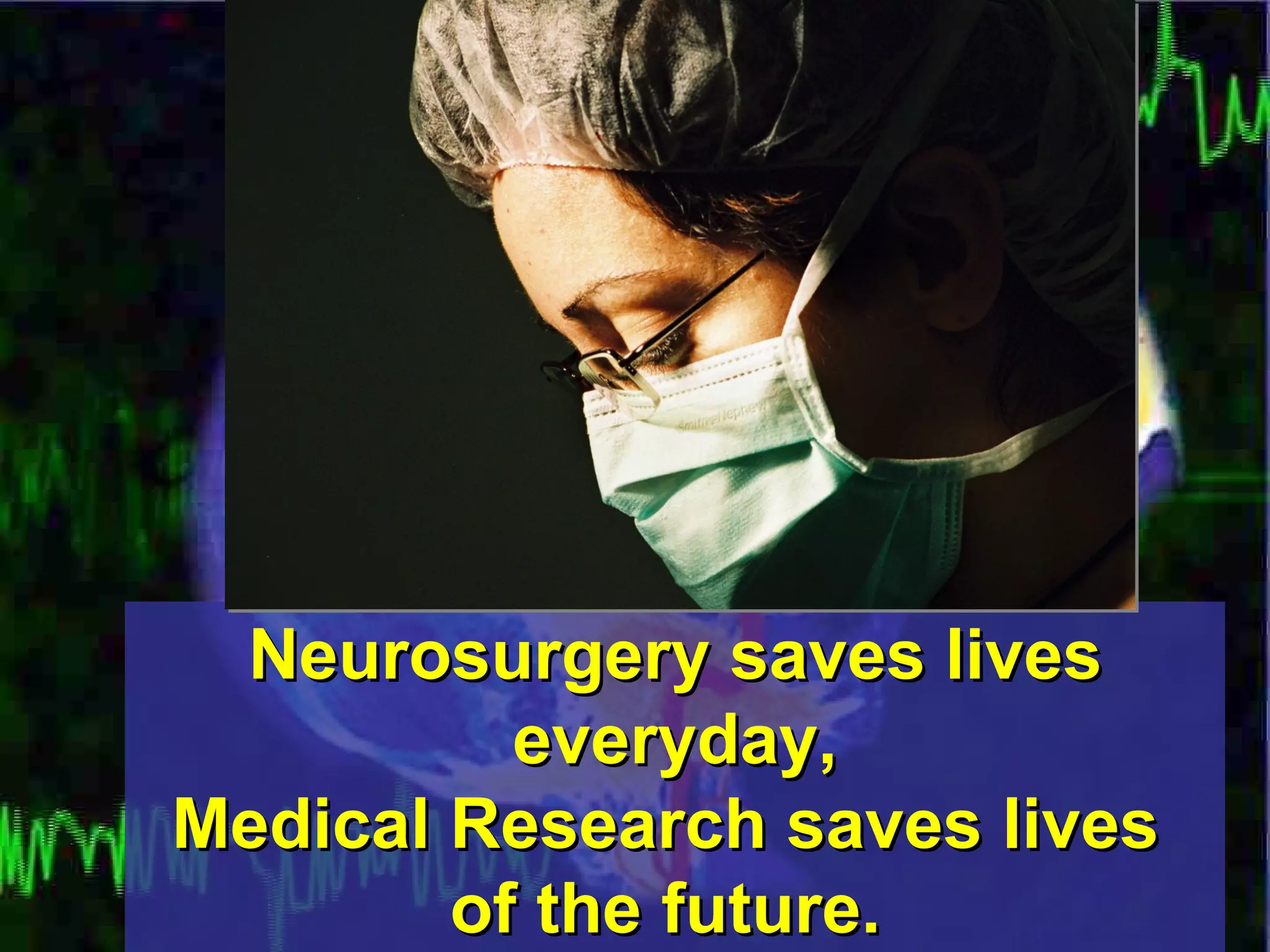
Neurosurgery saves lives everyday, Medical Research saves lives  of the future.
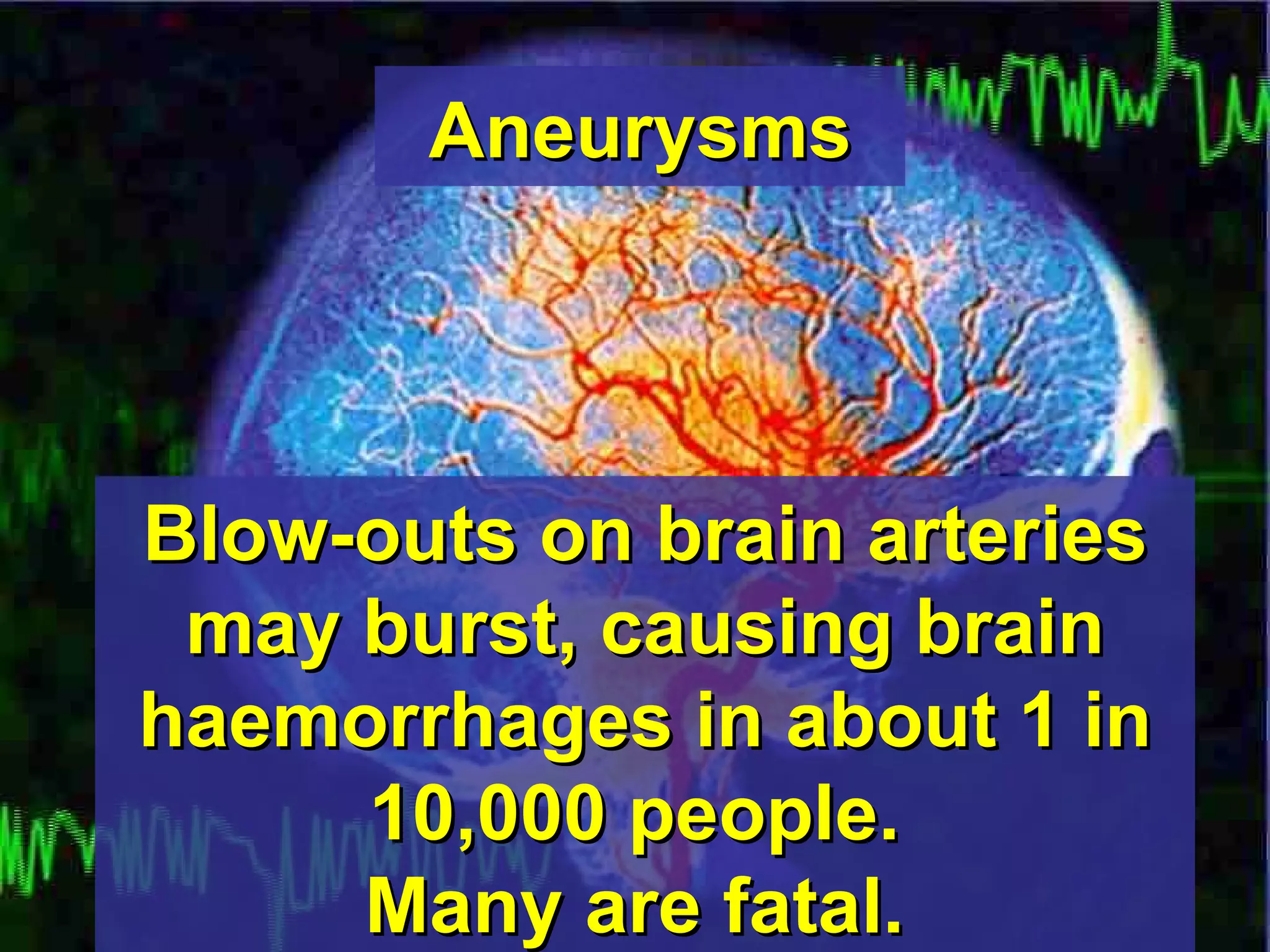
Aneurysms Blow-outs on brain arteries may burst, causing brain haemorrhages in about 1 in 10,000 people.  Many are fatal.
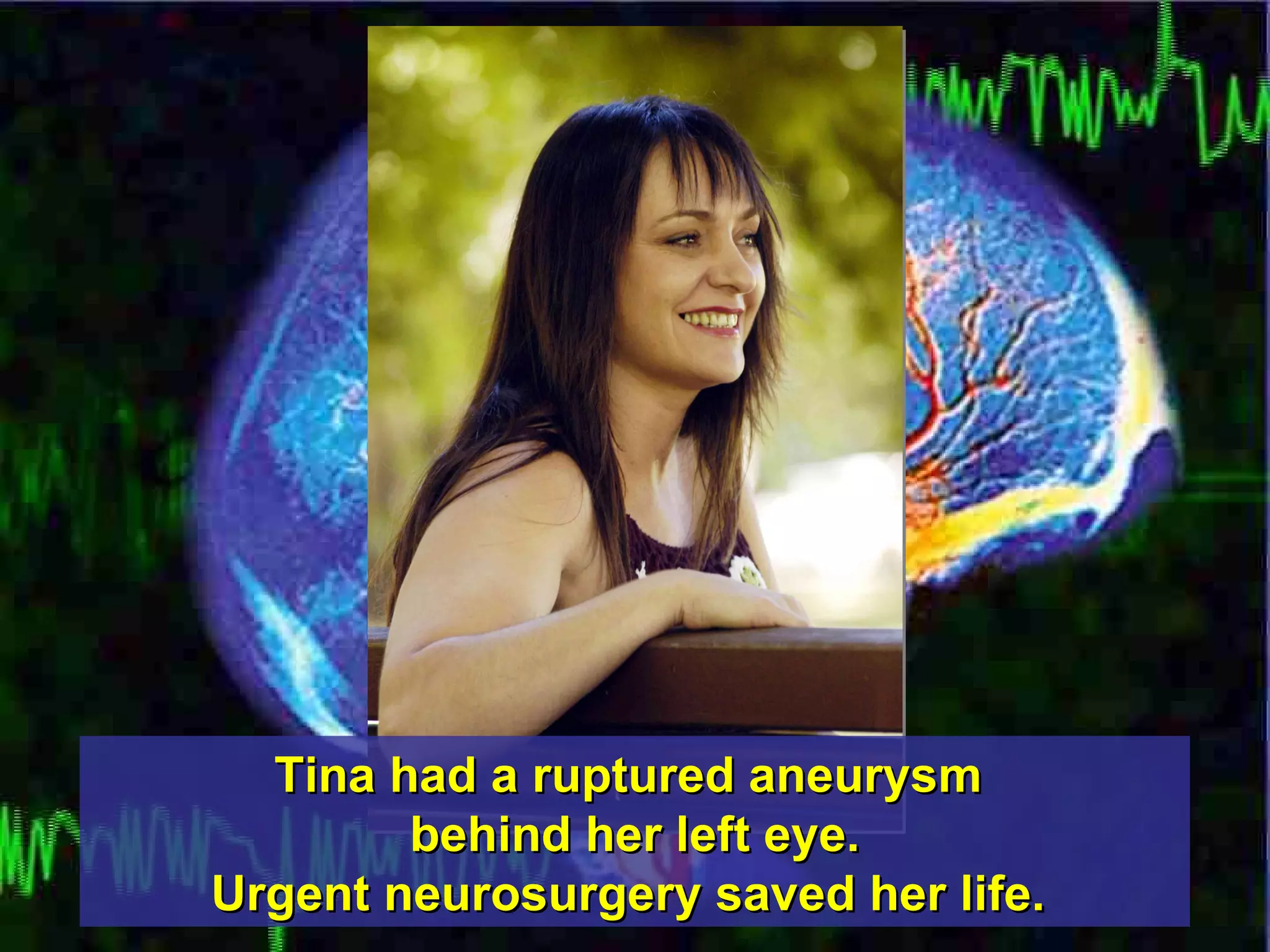
Tina had a ruptured aneurysm  behind her left eye. Urgent neurosurgery saved her life.
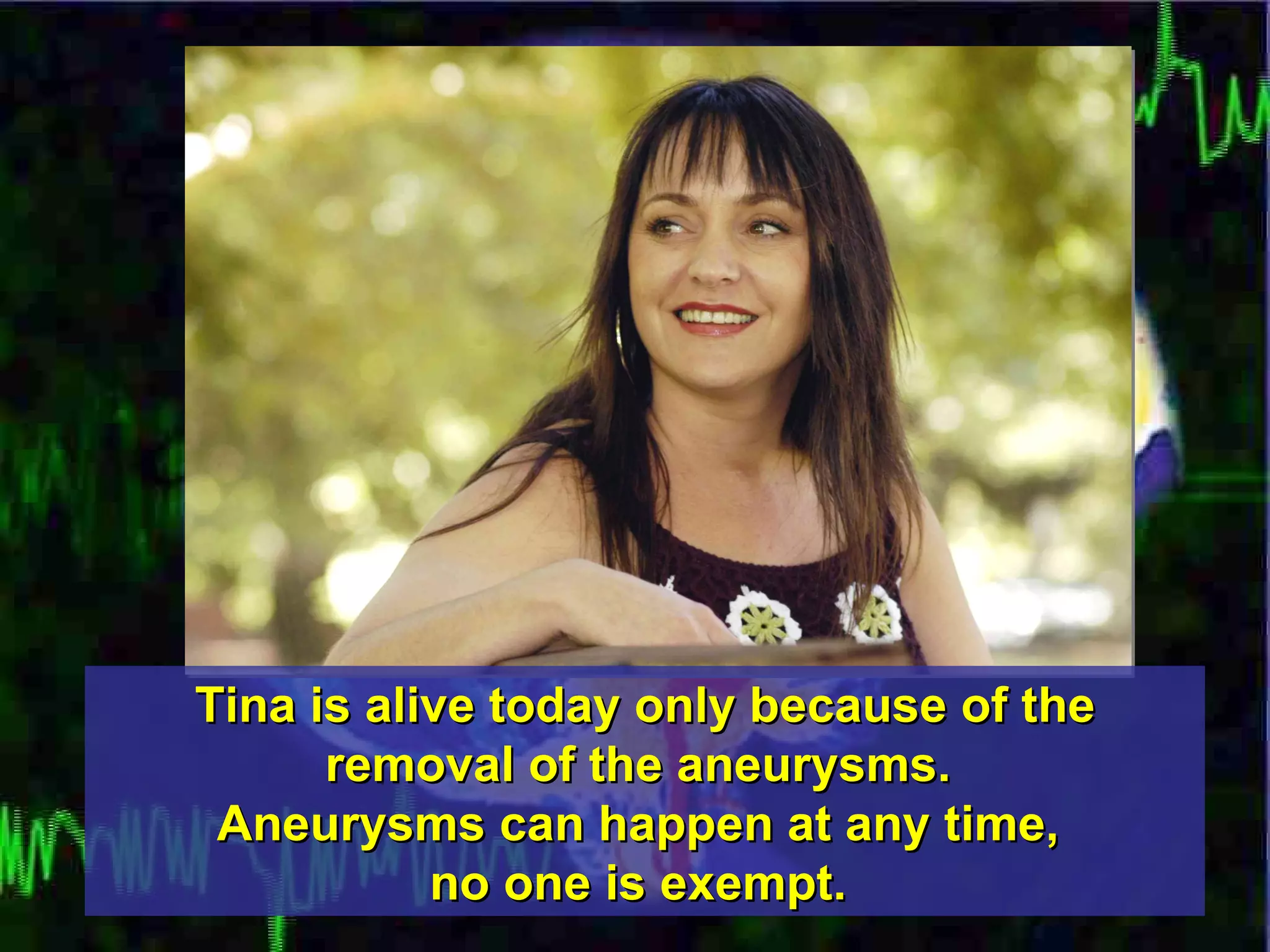
Tina is alive today only because of the removal of the aneurysms.  Aneurysms can happen at any time,  no one is exempt.
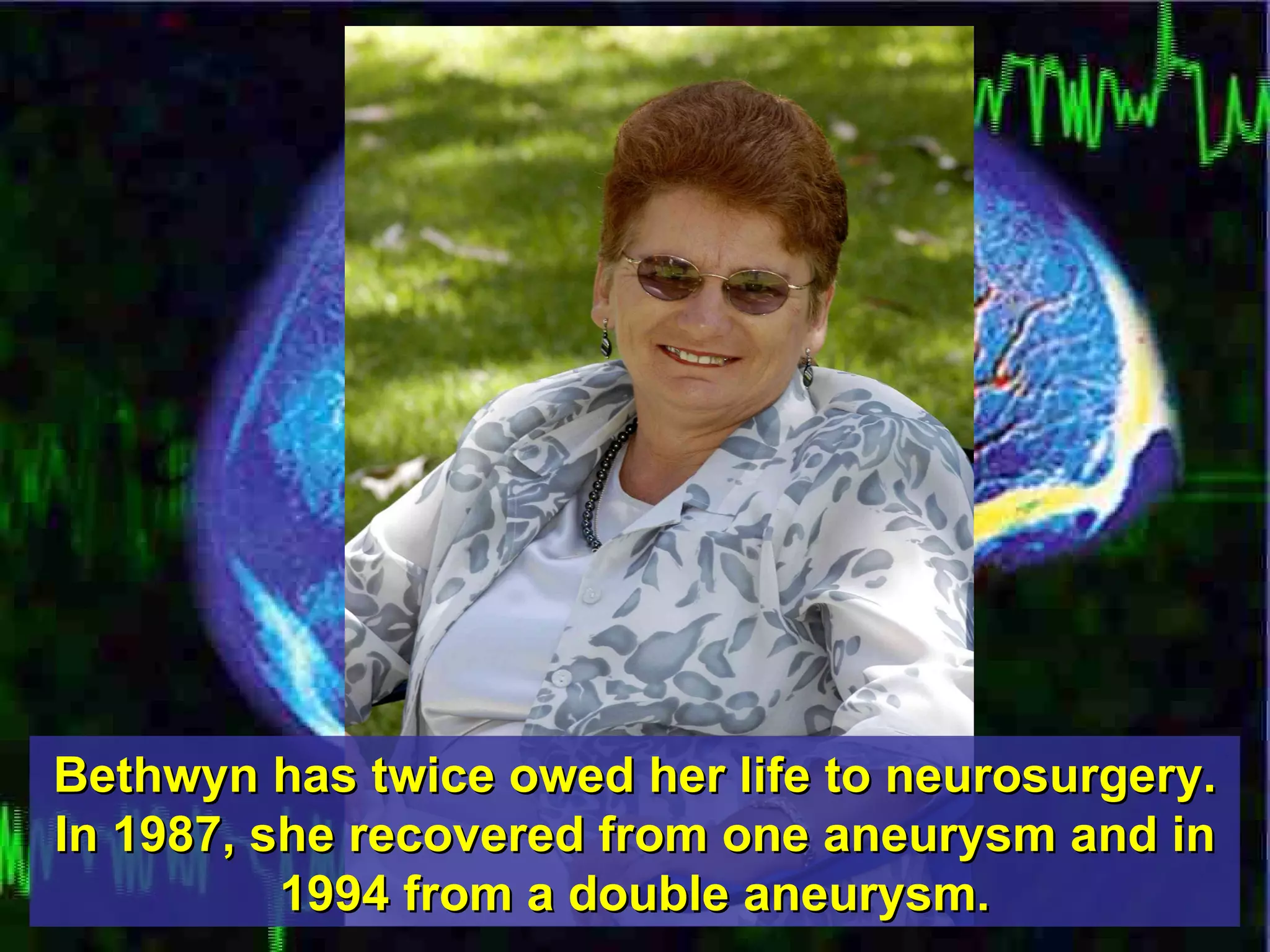
Bethwyn has twice owed her life to neurosurgery. In 1987, she recovered from one aneurysm and in 1994 from a double aneurysm.
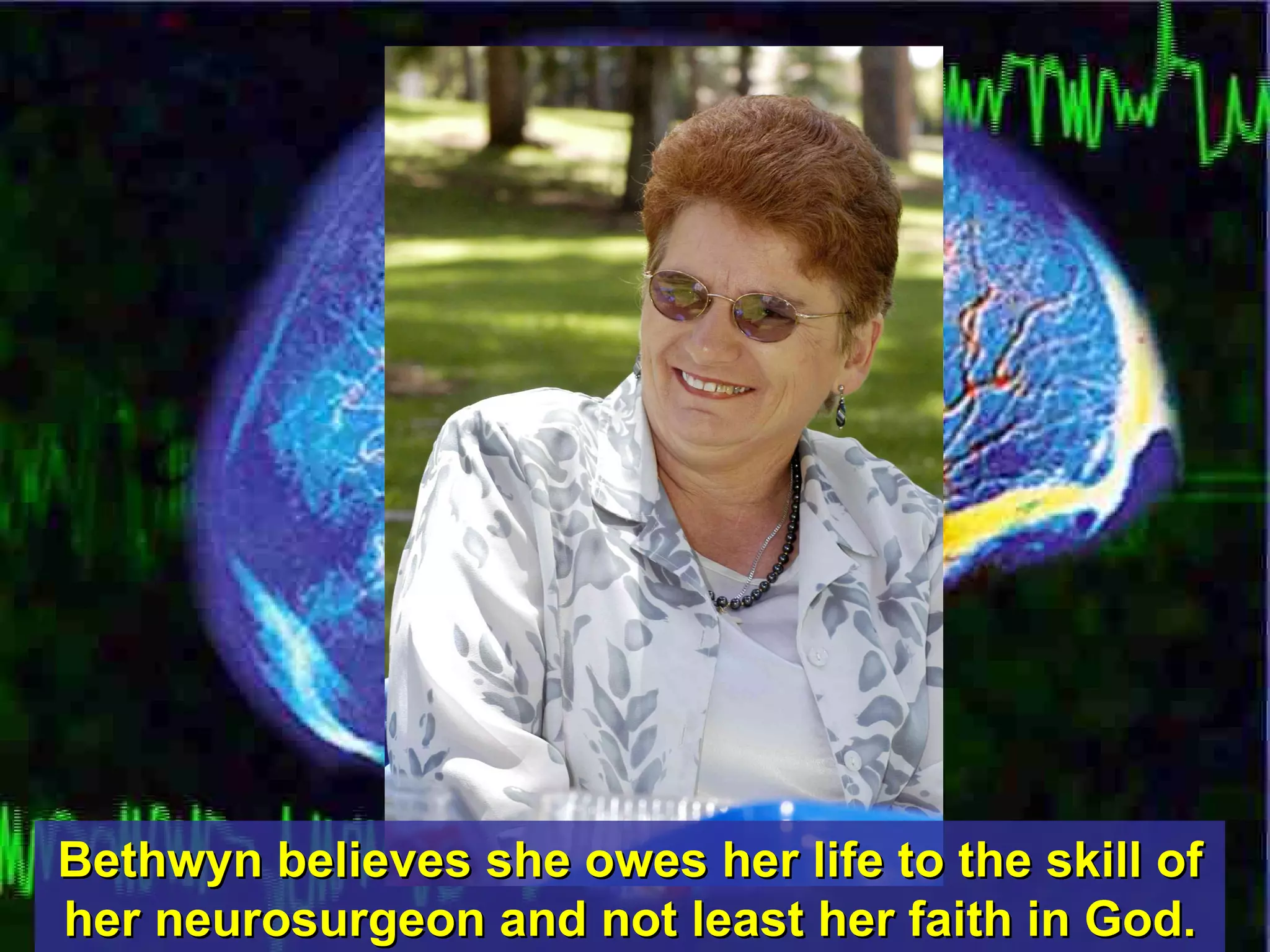
Bethwyn believes she owes her life to the skill of her neurosurgeon and not least her faith in God.
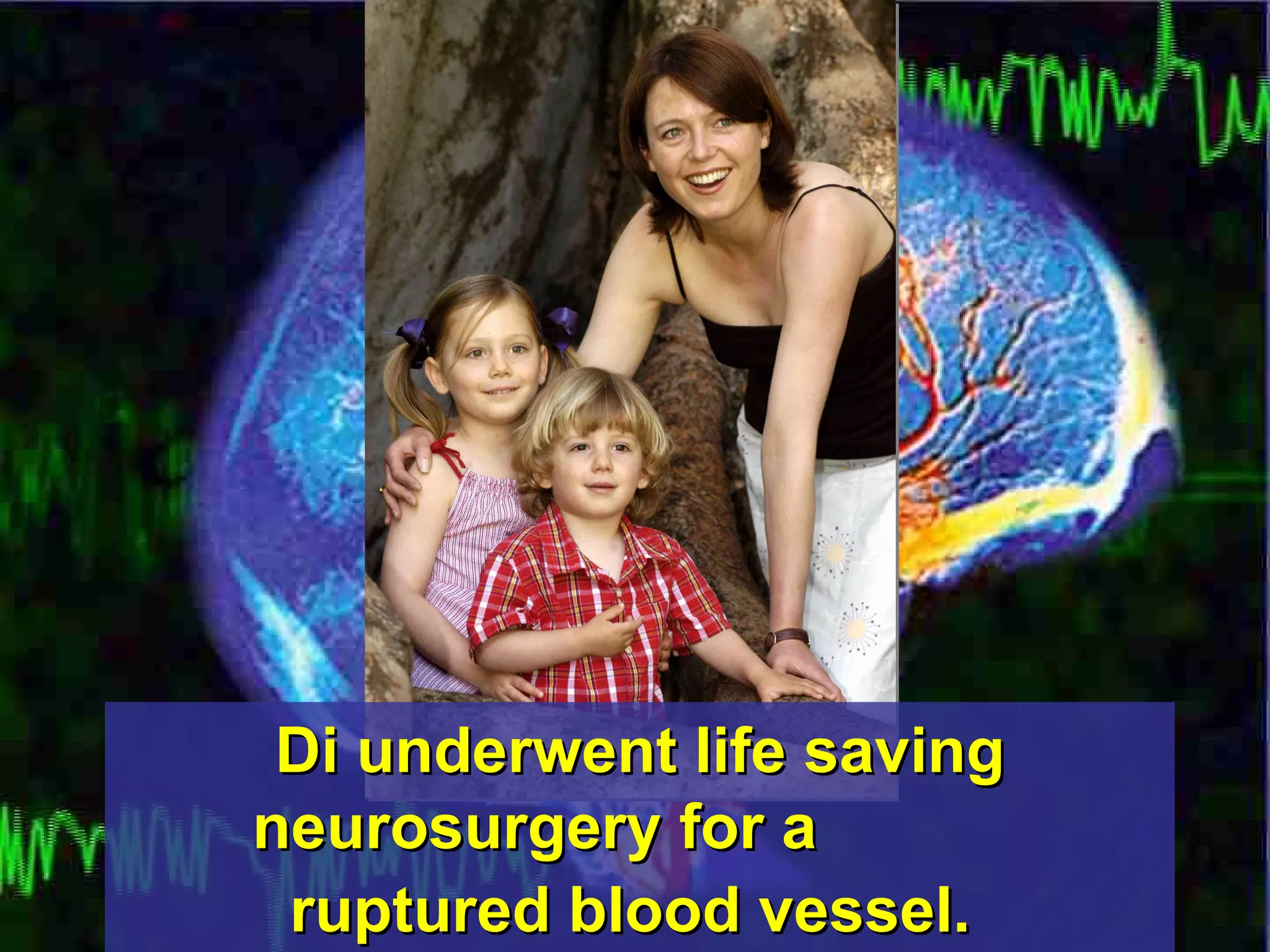
Di underwent life saving neurosurgery for a  ruptured blood vessel.
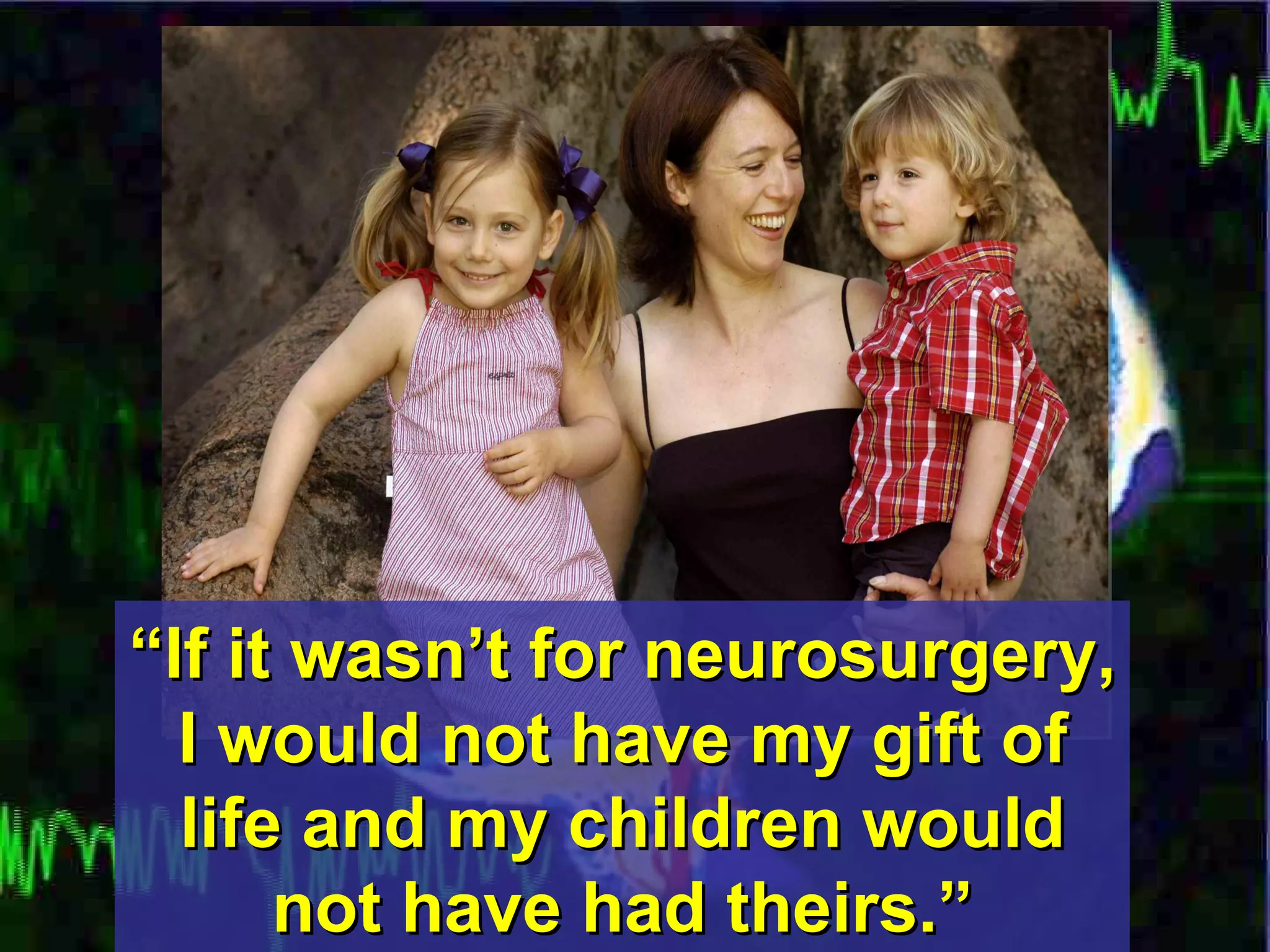
“ If it wasn’t for neurosurgery, I would not have my gift of life and my children would not have had theirs.”
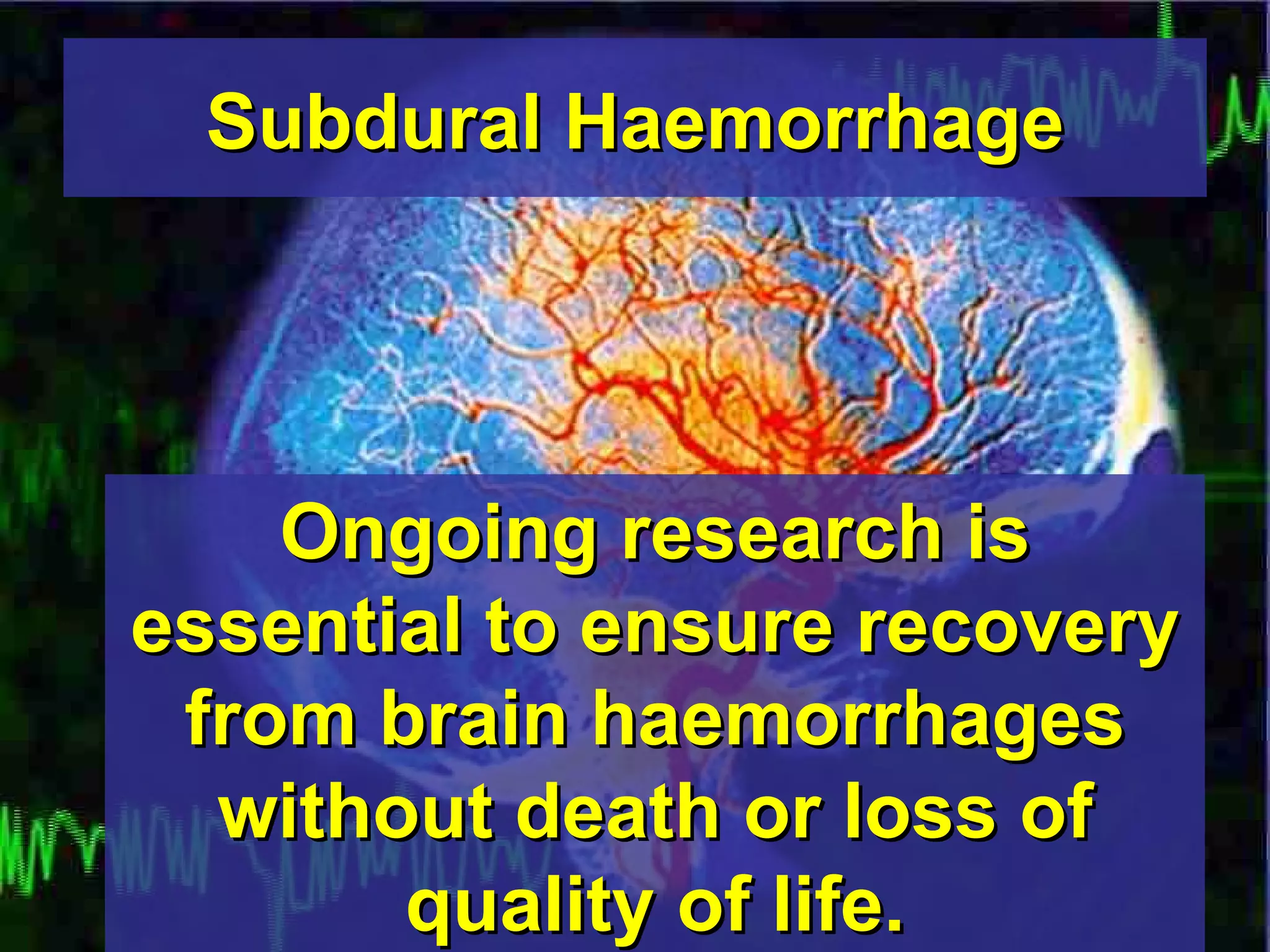
Subdural Haemorrhage Ongoing research is essential to ensure recovery from brain haemorrhages without death or loss of quality of life.
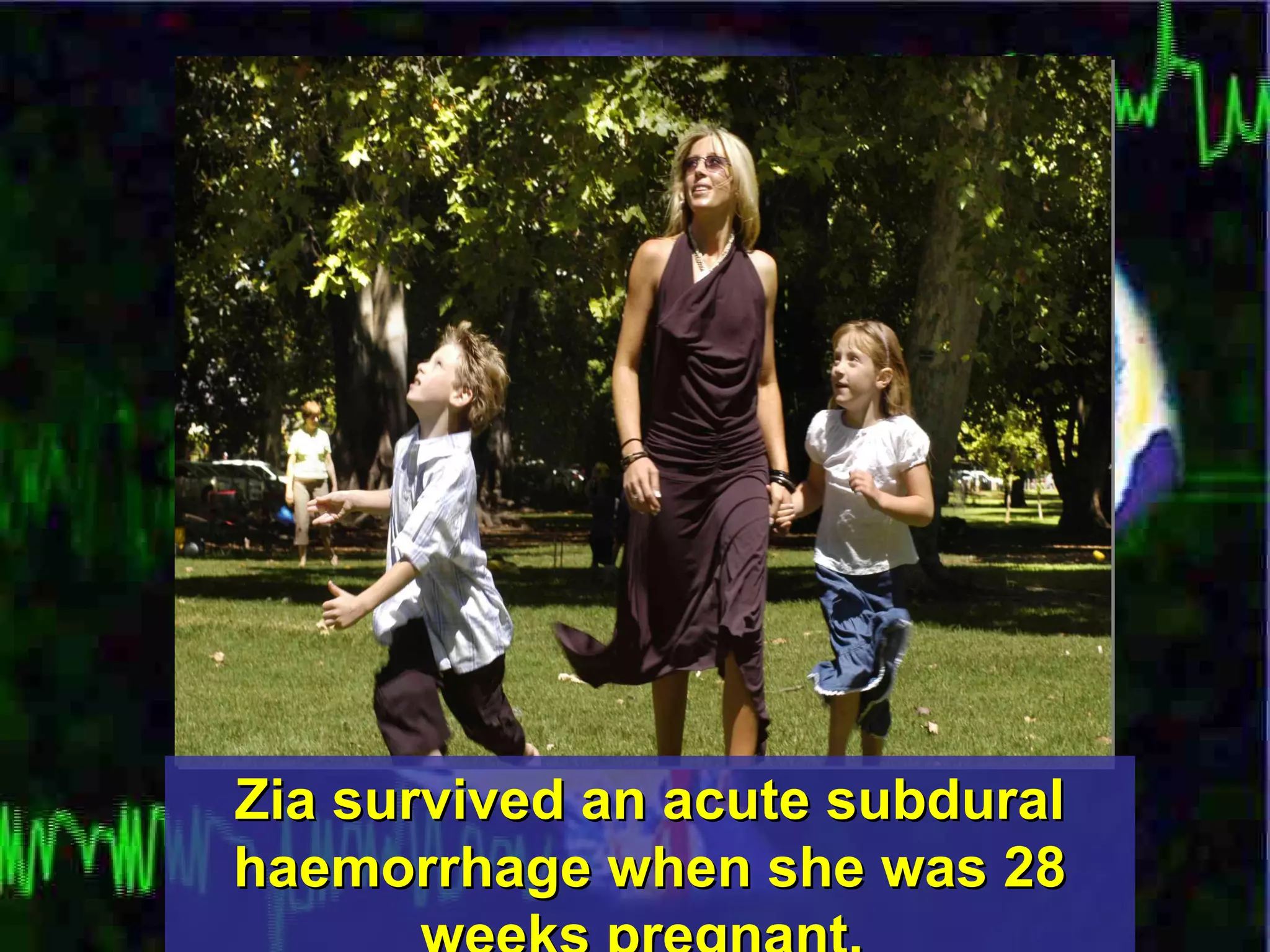
Zia survived an acute subdural haemorrhage when she was 28 weeks pregnant.
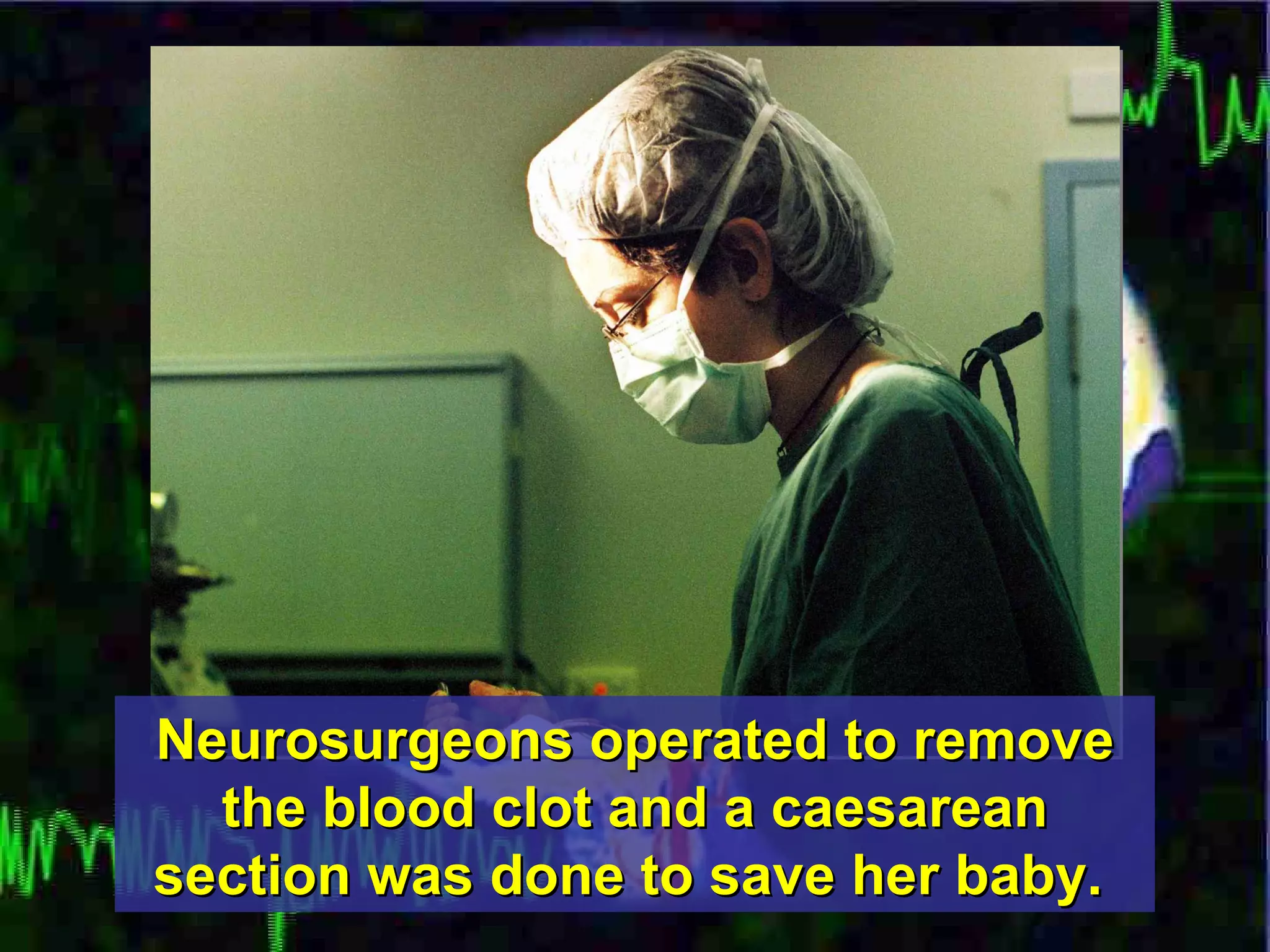
Neurosurgeons operated to remove the blood clot and a caesarean section was done to save her baby.
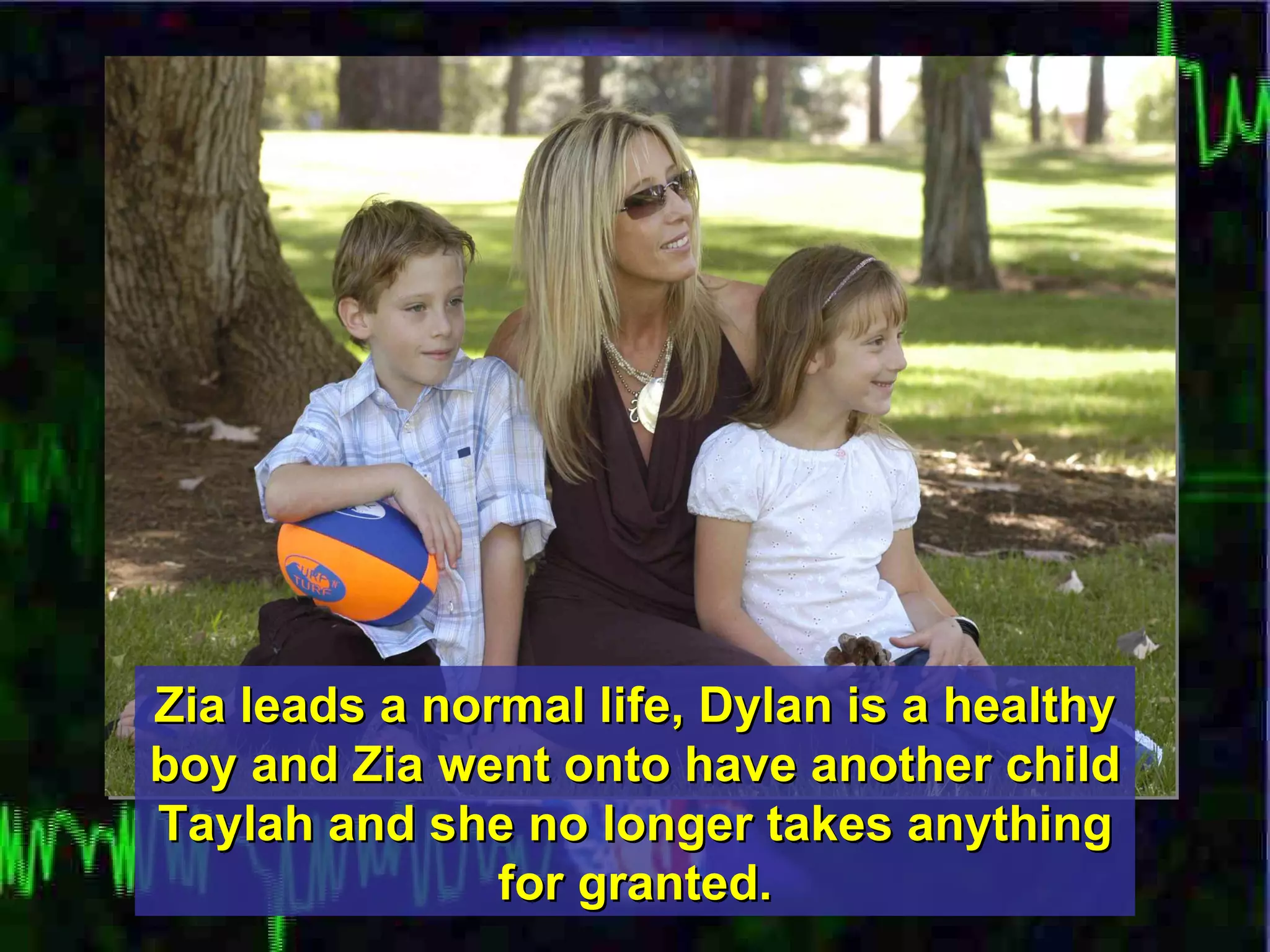
Zia leads a normal life, Dylan is a healthy boy and Zia went onto have another child Taylah and she no longer takes anything for granted.
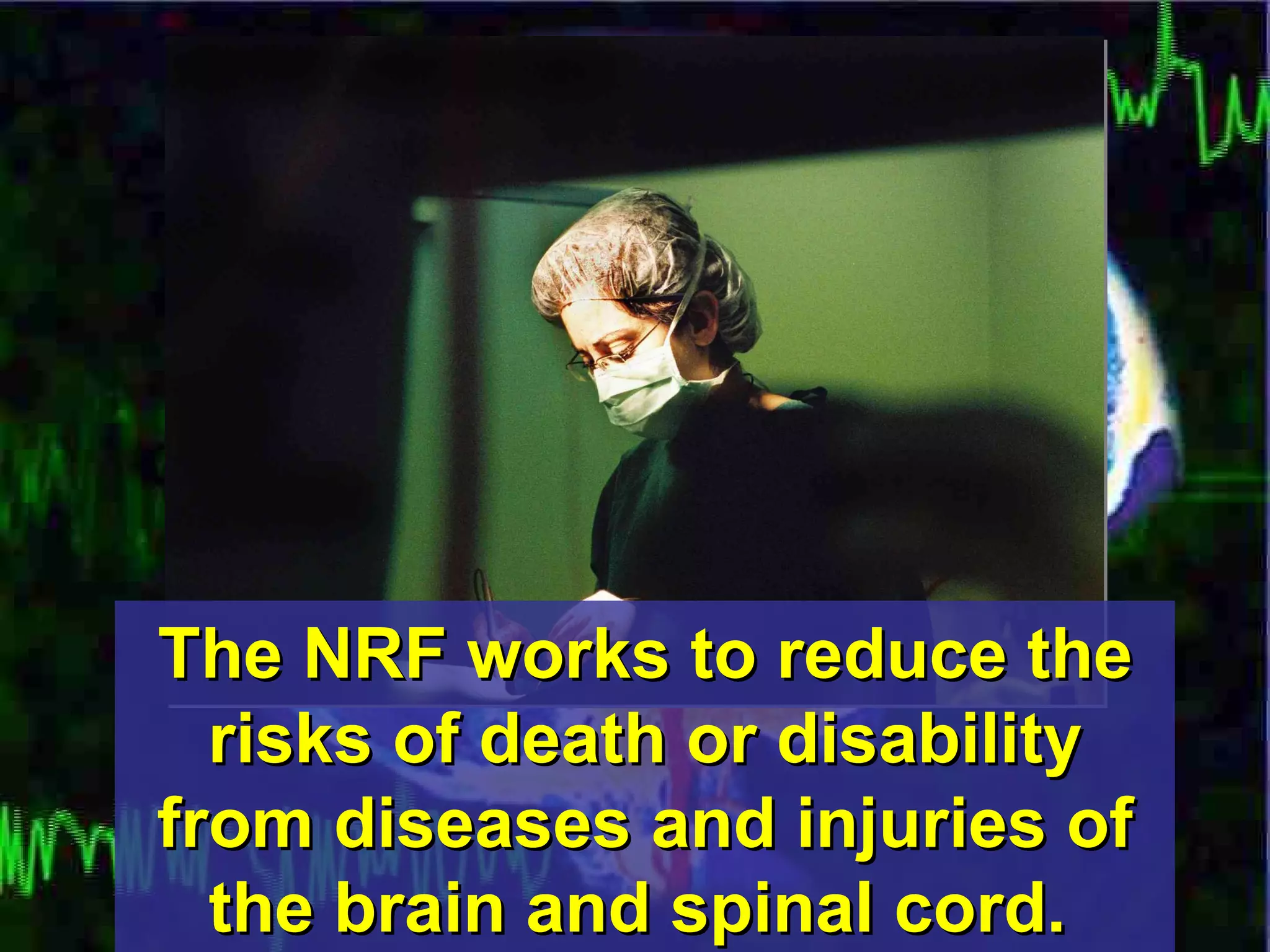
The NRF works to reduce the risks of death or disability from diseases and injuries of the brain and spinal cord.
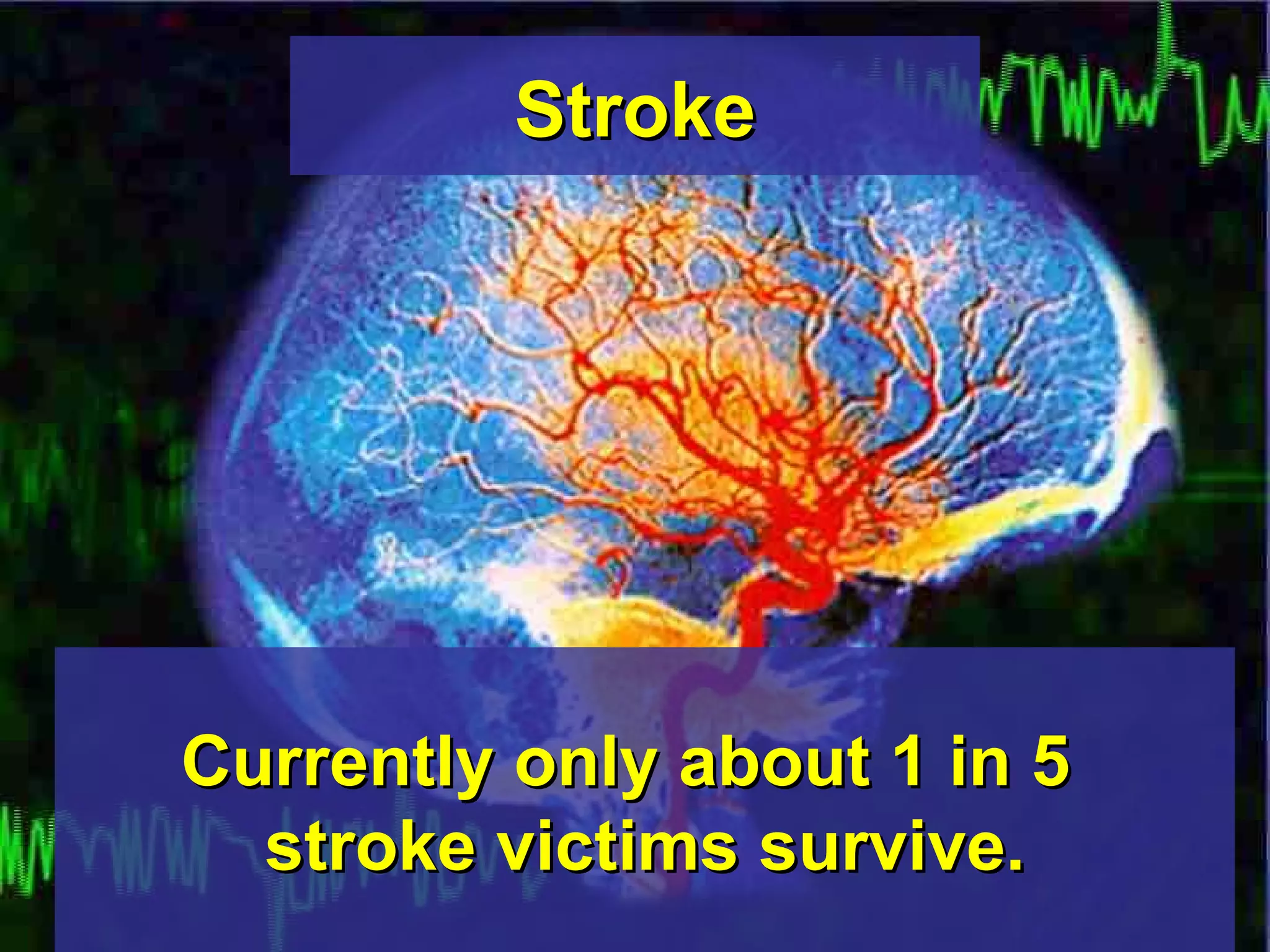
Stroke Currently only about 1 in 5  stroke victims survive.
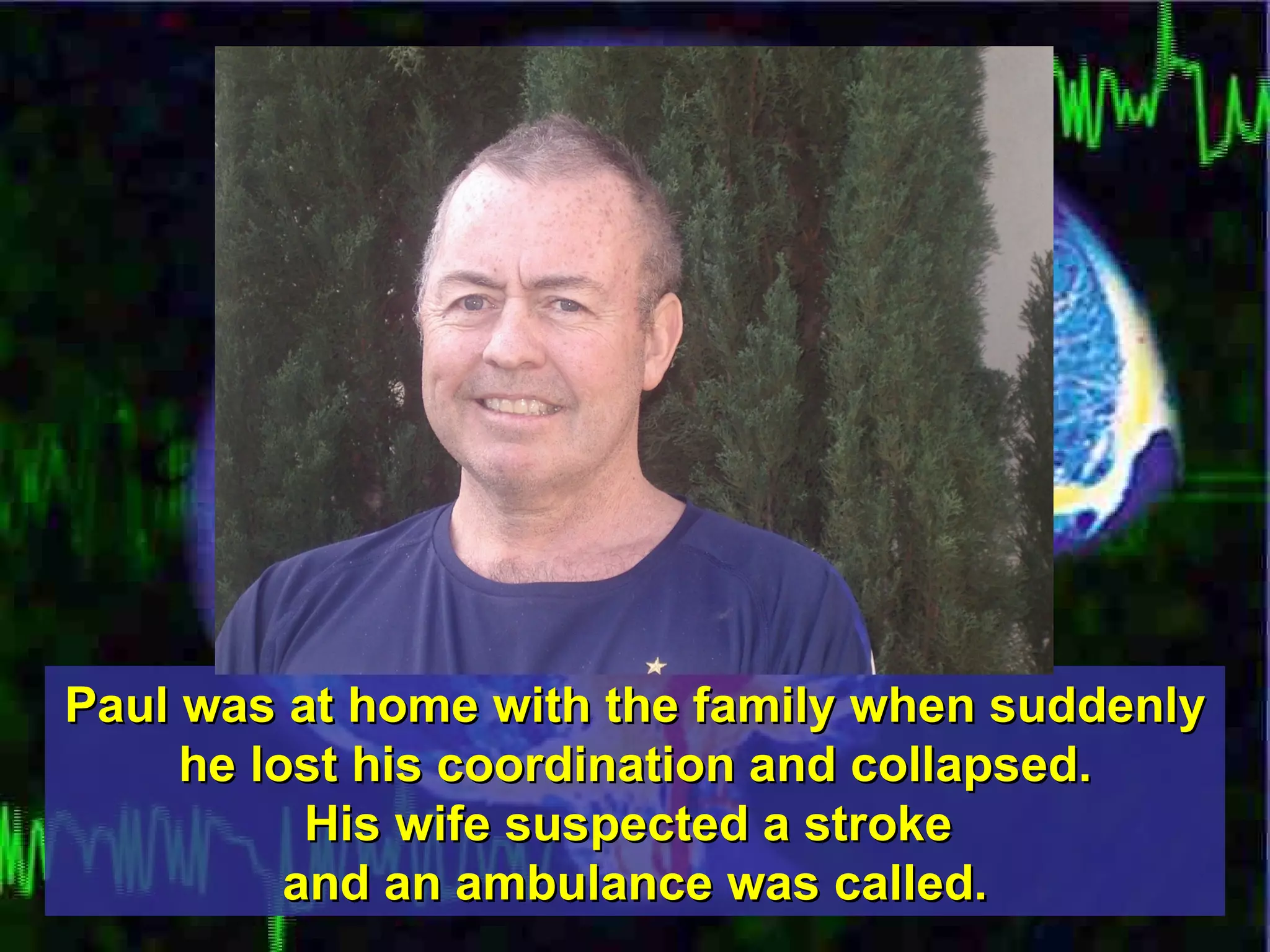
Paul was at home with the family when suddenly he lost his coordination and collapsed. His wife suspected a stroke  and an ambulance was called.
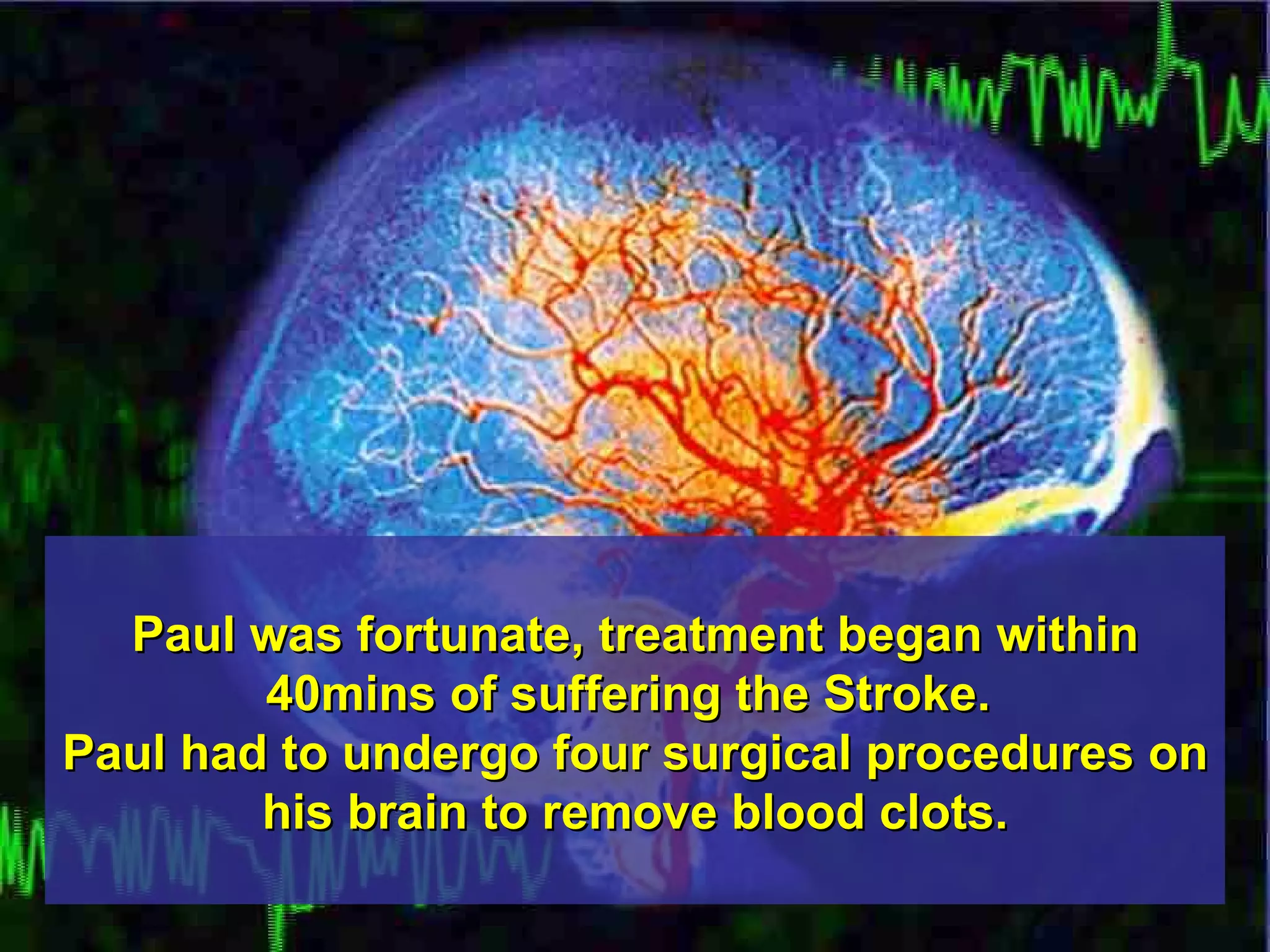
Paul was fortunate, treatment began within 40mins of suffering the Stroke.  Paul had to undergo four surgical procedures on his brain to remove blood clots.
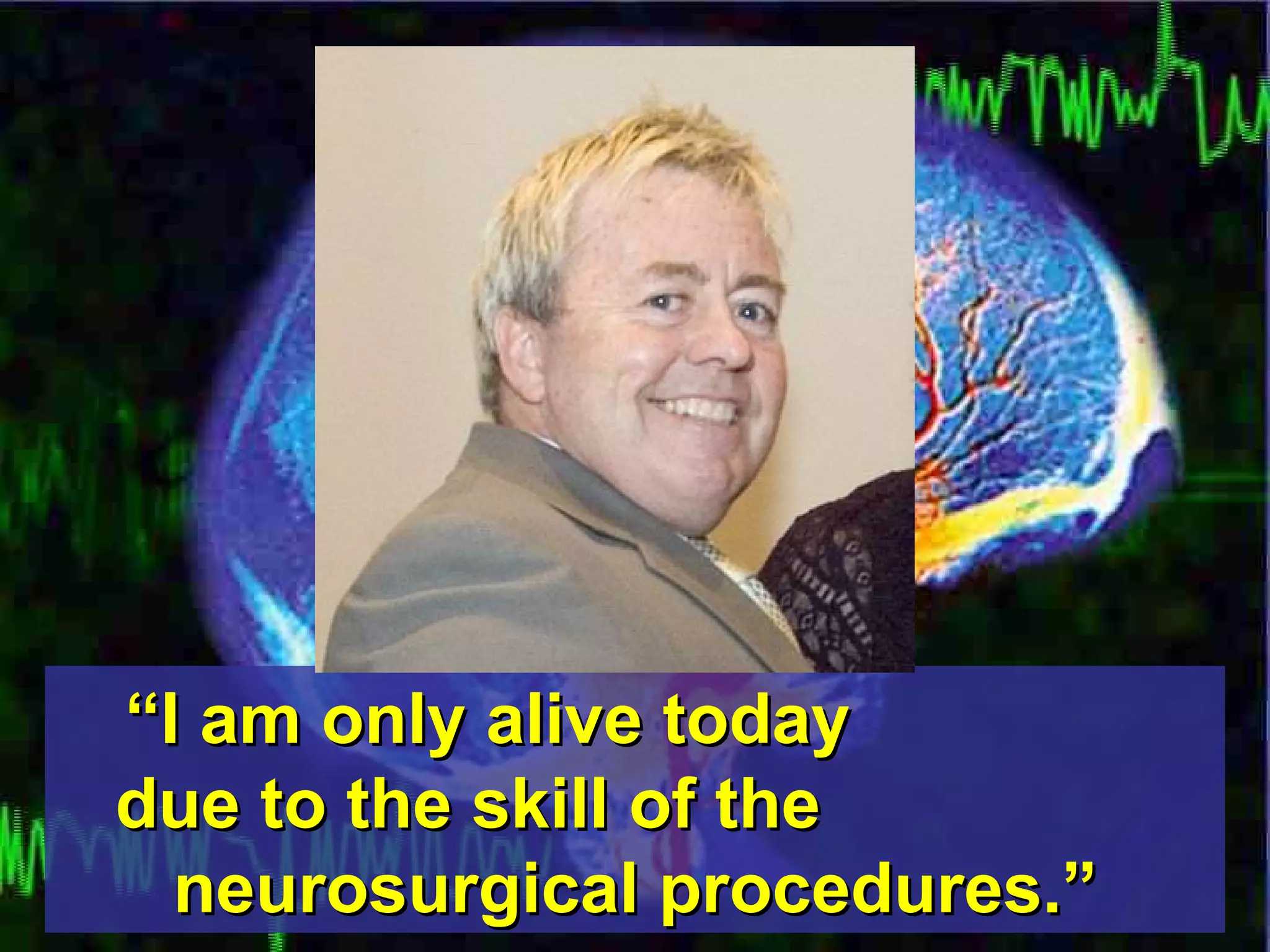
“ I am only alive today  due to the skill of the  neurosurgical procedures.”
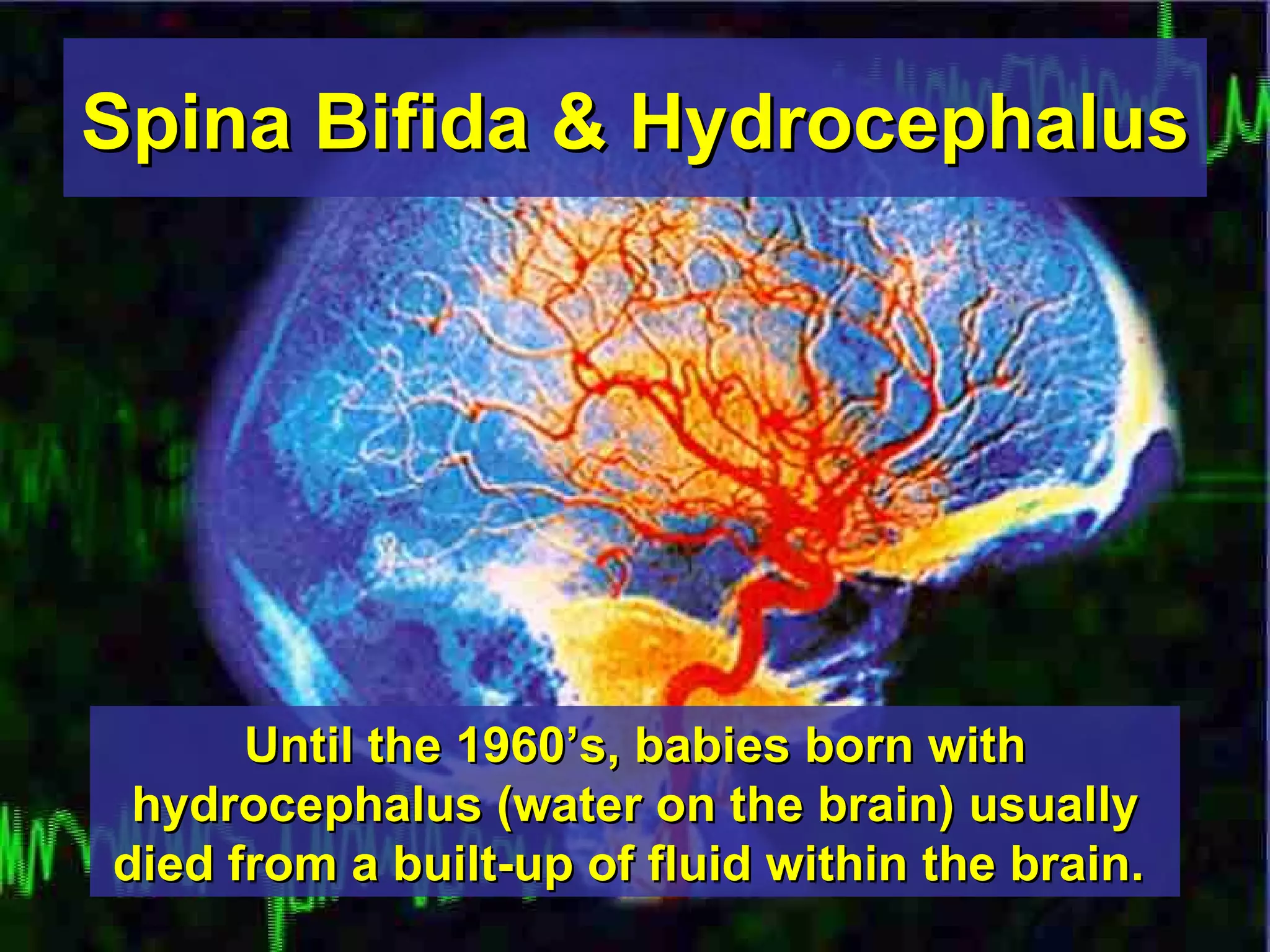
Until the 1960’s, babies born with hydrocephalus (water on the brain) usually died from a built-up of fluid within the brain.   Spina Bifida & Hydrocephalus
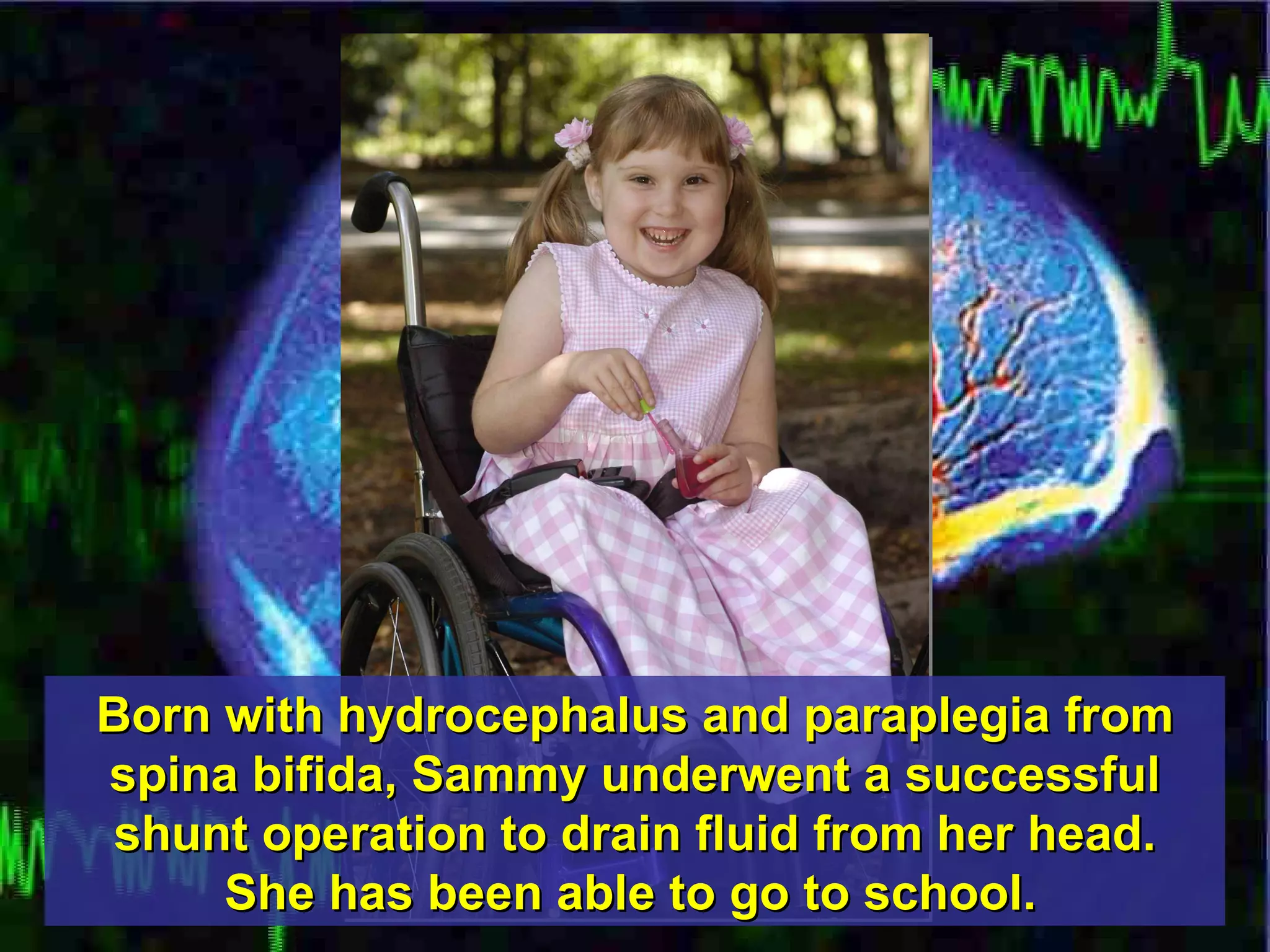
Born with hydrocephalus and paraplegia from spina bifida, Sammy underwent a successful shunt operation to drain fluid from her head. She has been able to go to school.
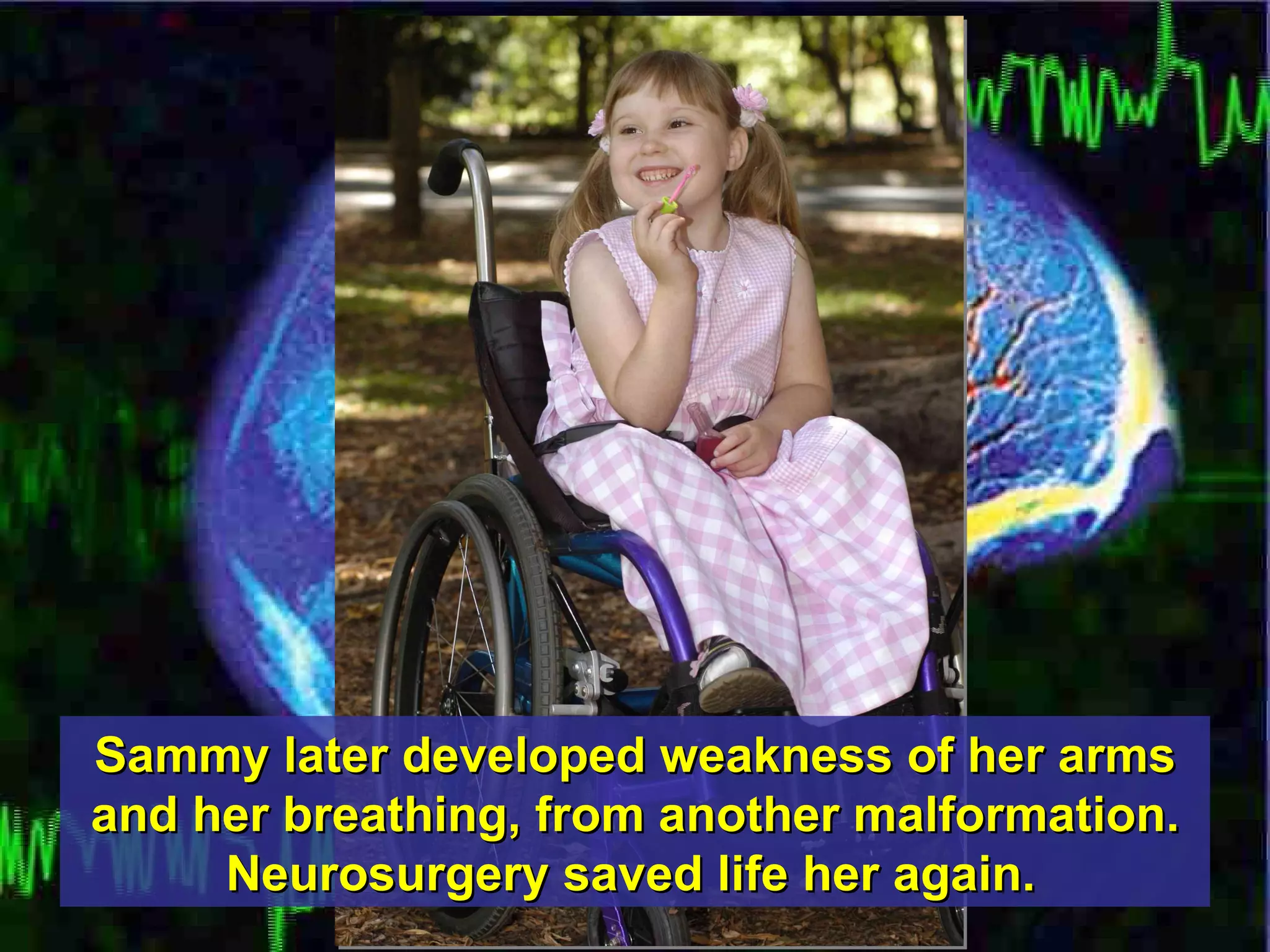
Sammy later developed weakness of her arms and her breathing, from another malformation. Neurosurgery saved life her again.
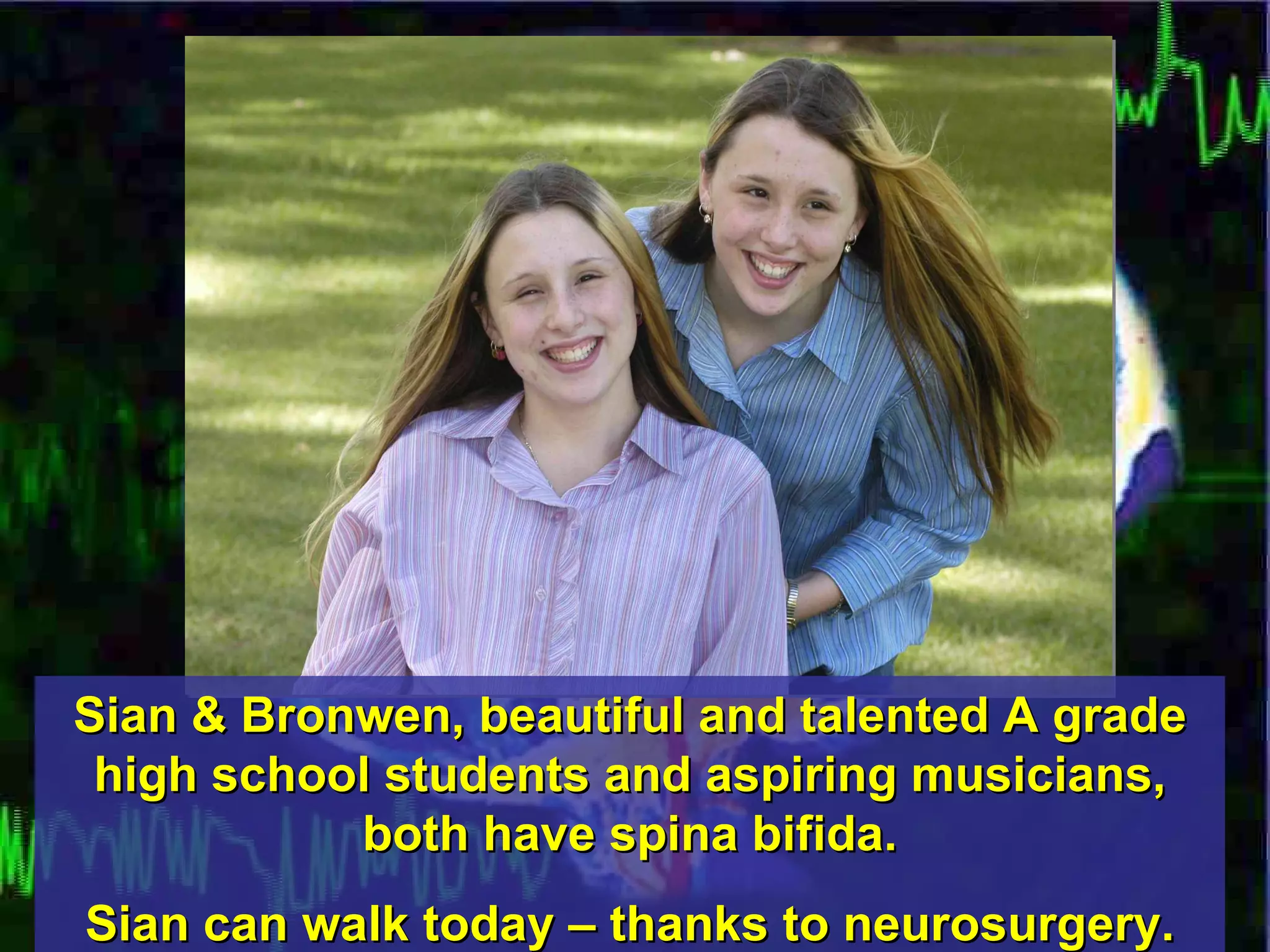
Sian & Bronwen, beautiful and talented A grade high school students and aspiring musicians, both have spina bifida. Sian can walk today – thanks to neurosurgery.
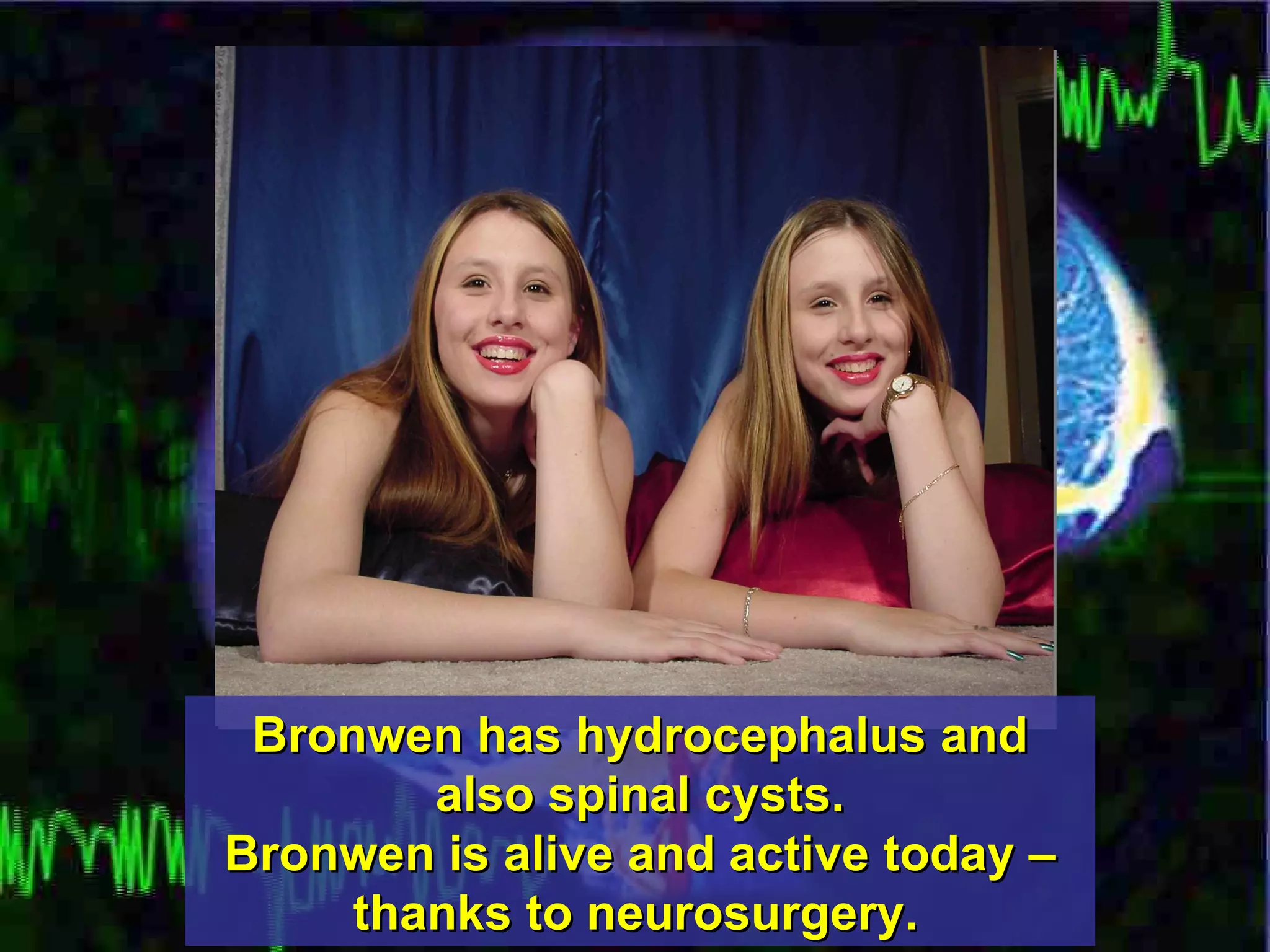
Bronwen has hydrocephalus and also spinal cysts. Bronwen is alive and active today – thanks to neurosurgery.
Other Areas of Research Stroke Epilepsy Parkinson’s Disease Alzheimer’s Back Pain and Sciatica Trigeminal Neuralgia
Fortunately we are sharing some of the happy stories and results of neurosurgery. However there are unfortunately many sad stories without successful recoveries. We are striving every day to make a difference and to create more happy stories. With successful outcomes mean more  lives saved.
Donations to the NRF are directed to neurosurgical research. Research is done in Australian Universities and teaching hospitals.   Neurosurgical Research Foundation
Your donations  help us to continue  to support vital  life-saving research.
 

Neurosurgical Research

  • 1.
    Neurosurgical Research Foundation Established 1963
  • 2.
  • 3.
    The Foundation supports research into the cause, prevention & treatment of diseases and injuries of the brain, spine and nerves.
  • 4.
    Without research, there can be no advances in prevention or treatment.
  • 5.
    Areas of ResearchBrain Tumours in Adults and Children Head and Spinal Injury Aneurysms Brain Haemorrhage Stroke Spina Bifida & Hydrocephalus
  • 6.
    Brain Tumours Eachyear, about 400 brain tumours are diagnosed in Australia. The causes are largely unknown .
  • 7.
    Christopher was foundto have a rare, deeply placed benign brain tumour, of a type found mainly in young children.
  • 8.
    It was successfullyremoved and he is considered “cured”.
  • 9.
    Out of the400 patients 25 will be children under 15 years. Brain tumours are the second most common cancer in children after Leukaemia.
  • 10.
    Missy, aged six,was found to have a brain tumour. Though benign, it was life threatening, and was removed urgently.
  • 11.
    When Missy waseight, a second brain tumour was diagnosed. This was thought to be a re-growth of the first tumour. Complete removal was achieved.
  • 12.
    Ryan was foundto have clival chordoma, a rare tumour growing at the base of his brain. Urgent operation was required, however complete removal was impossible .
  • 13.
    The bulk ofthe tumour was removed in a 16-hour operation. Ryan had to go to Boston, USA, for proton beam treatment, which is not available in Australia.
  • 14.
    Anna diagnosed with a brain tumour a Grade II / III Astrocytoma
  • 15.
    After radiotherapy andchemotherapy Anna was told that the tumour was stable which was the best she could ask for .
  • 16.
    Anna’s tumour hasshrunk. “Whilst not cured I never give up hope, be positive and just believe!”
  • 17.
    Head injuries arecommon in all ages in Australia, particularly in young males. More than 2000 people die each year from head injury. Head Injury
  • 18.
    Jane suffered asevere head injury at the age of nine when she was hit by a car on her way home from school.
  • 19.
    Jane was unconsciousfor many weeks and slowly recovered to resume her schooling.
  • 20.
    Jane’s courage andexpert paediatric rehabilitation helped her to overcome severe incoordination.
  • 21.
    Research Every MedicalWonder is the result of Medical Research .
  • 22.
    Neurosurgical advances intequniques and knowledge are saving more lives.
  • 23.
    Neurosurgery saves liveseveryday, Medical Research saves lives of the future.
  • 24.
    Aneurysms Blow-outs onbrain arteries may burst, causing brain haemorrhages in about 1 in 10,000 people. Many are fatal.
  • 25.
    Tina had aruptured aneurysm behind her left eye. Urgent neurosurgery saved her life.
  • 26.
    Tina is alivetoday only because of the removal of the aneurysms. Aneurysms can happen at any time, no one is exempt.
  • 27.
    Bethwyn has twiceowed her life to neurosurgery. In 1987, she recovered from one aneurysm and in 1994 from a double aneurysm.
  • 28.
    Bethwyn believes sheowes her life to the skill of her neurosurgeon and not least her faith in God.
  • 29.
    Di underwent lifesaving neurosurgery for a ruptured blood vessel.
  • 30.
    “ If itwasn’t for neurosurgery, I would not have my gift of life and my children would not have had theirs.”
  • 31.
    Subdural Haemorrhage Ongoingresearch is essential to ensure recovery from brain haemorrhages without death or loss of quality of life.
  • 32.
    Zia survived anacute subdural haemorrhage when she was 28 weeks pregnant.
  • 33.
    Neurosurgeons operated toremove the blood clot and a caesarean section was done to save her baby.
  • 34.
    Zia leads anormal life, Dylan is a healthy boy and Zia went onto have another child Taylah and she no longer takes anything for granted.
  • 35.
    The NRF worksto reduce the risks of death or disability from diseases and injuries of the brain and spinal cord.
  • 36.
    Stroke Currently onlyabout 1 in 5 stroke victims survive.
  • 37.
    Paul was athome with the family when suddenly he lost his coordination and collapsed. His wife suspected a stroke and an ambulance was called.
  • 38.
    Paul was fortunate,treatment began within 40mins of suffering the Stroke. Paul had to undergo four surgical procedures on his brain to remove blood clots.
  • 39.
    “ I amonly alive today due to the skill of the neurosurgical procedures.”
  • 40.
    Until the 1960’s,babies born with hydrocephalus (water on the brain) usually died from a built-up of fluid within the brain. Spina Bifida & Hydrocephalus
  • 41.
    Born with hydrocephalusand paraplegia from spina bifida, Sammy underwent a successful shunt operation to drain fluid from her head. She has been able to go to school.
  • 42.
    Sammy later developedweakness of her arms and her breathing, from another malformation. Neurosurgery saved life her again.
  • 43.
    Sian & Bronwen,beautiful and talented A grade high school students and aspiring musicians, both have spina bifida. Sian can walk today – thanks to neurosurgery.
  • 44.
    Bronwen has hydrocephalusand also spinal cysts. Bronwen is alive and active today – thanks to neurosurgery.
  • 45.
    Other Areas ofResearch Stroke Epilepsy Parkinson’s Disease Alzheimer’s Back Pain and Sciatica Trigeminal Neuralgia
  • 46.
    Fortunately we aresharing some of the happy stories and results of neurosurgery. However there are unfortunately many sad stories without successful recoveries. We are striving every day to make a difference and to create more happy stories. With successful outcomes mean more lives saved.
  • 47.
    Donations to theNRF are directed to neurosurgical research. Research is done in Australian Universities and teaching hospitals. Neurosurgical Research Foundation
  • 48.
    Your donations help us to continue to support vital life-saving research.
  • 49.