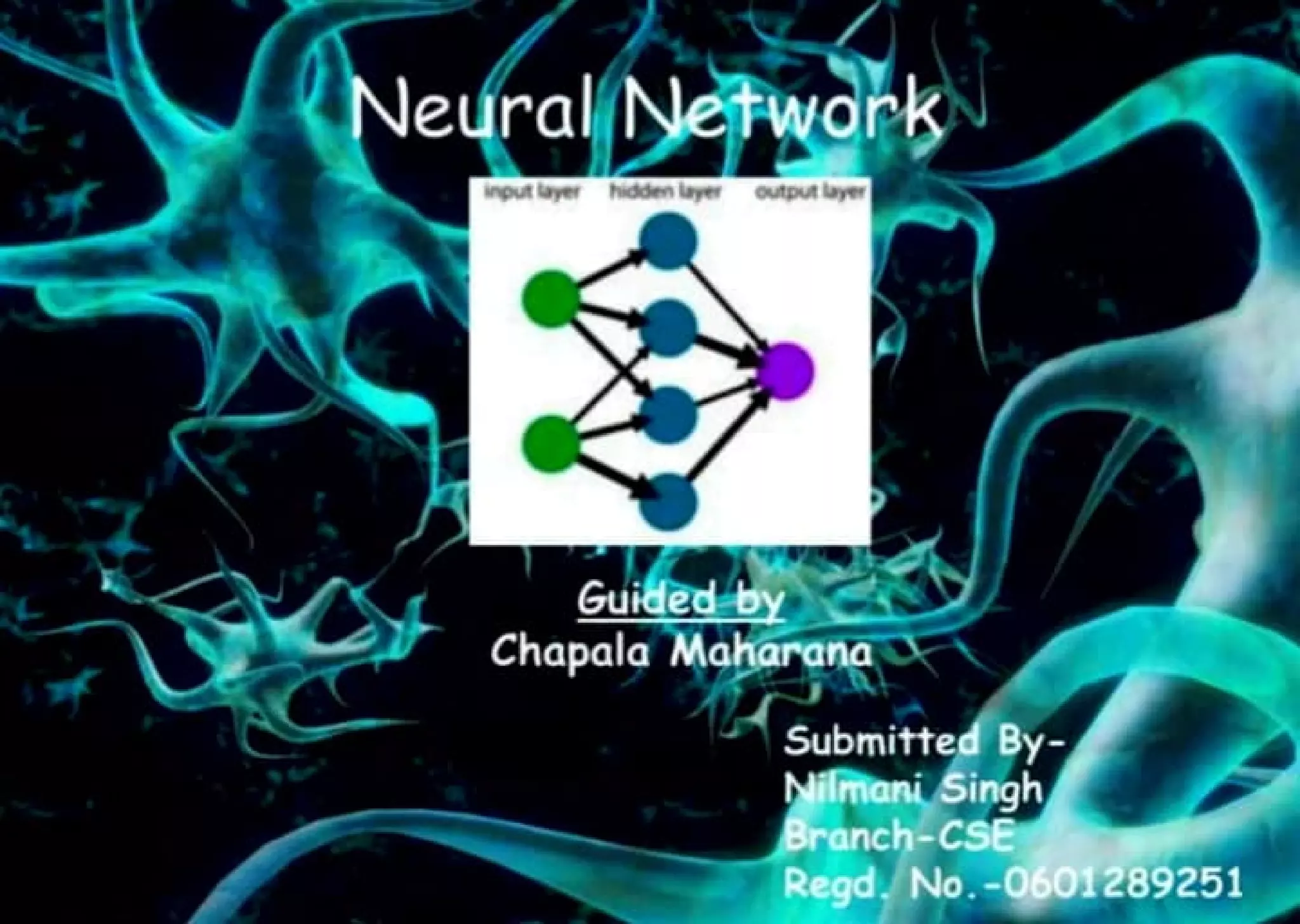
I ~ - . ' ~ I
Guifu.~ ~ ~
Chapala Mah~rana·-'
.,,,,,.. i'
' ' '
J
· SubmitteJ '
. .
I
N .
Contents
. Introduction to Neural Network
.Neurons
.Activation Function
.Types of Neural Network
.Learning In Neural Networks
. Application of Neural Network
.Advantages of Neural Network
.Disadvantages Of Neural
Network
Neural Networks
• A method of computing, based on the
interaction of multiple connected
processing elements .
• A powerful technique to solve many real
world problems .
• The ability to learn from experience in
order to improve their performance.
• Ability to deal with incomplete
info tion
Basics Of Neural Network
• Biological approach to AI
• Developed in 1943
• Comprised of one or more
layers of neurons
• Several types, we'll focus on
feed-forward and feedback
networks
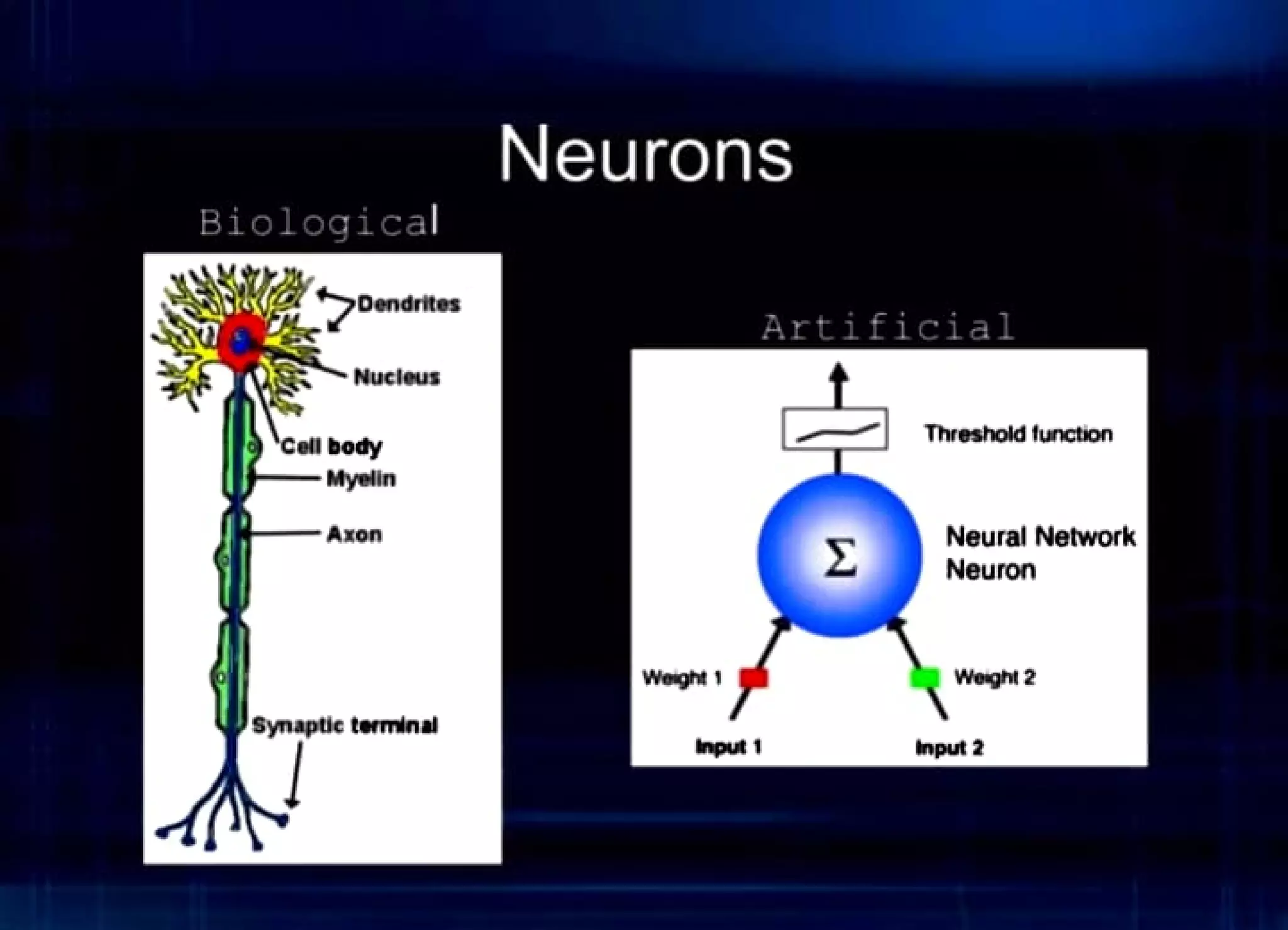
Nucleu1
Cell llody
Mylllln
11--Axon
lynap(lc teminll
1
Neurons
Threshold luoclion
Neural Network
Neuron
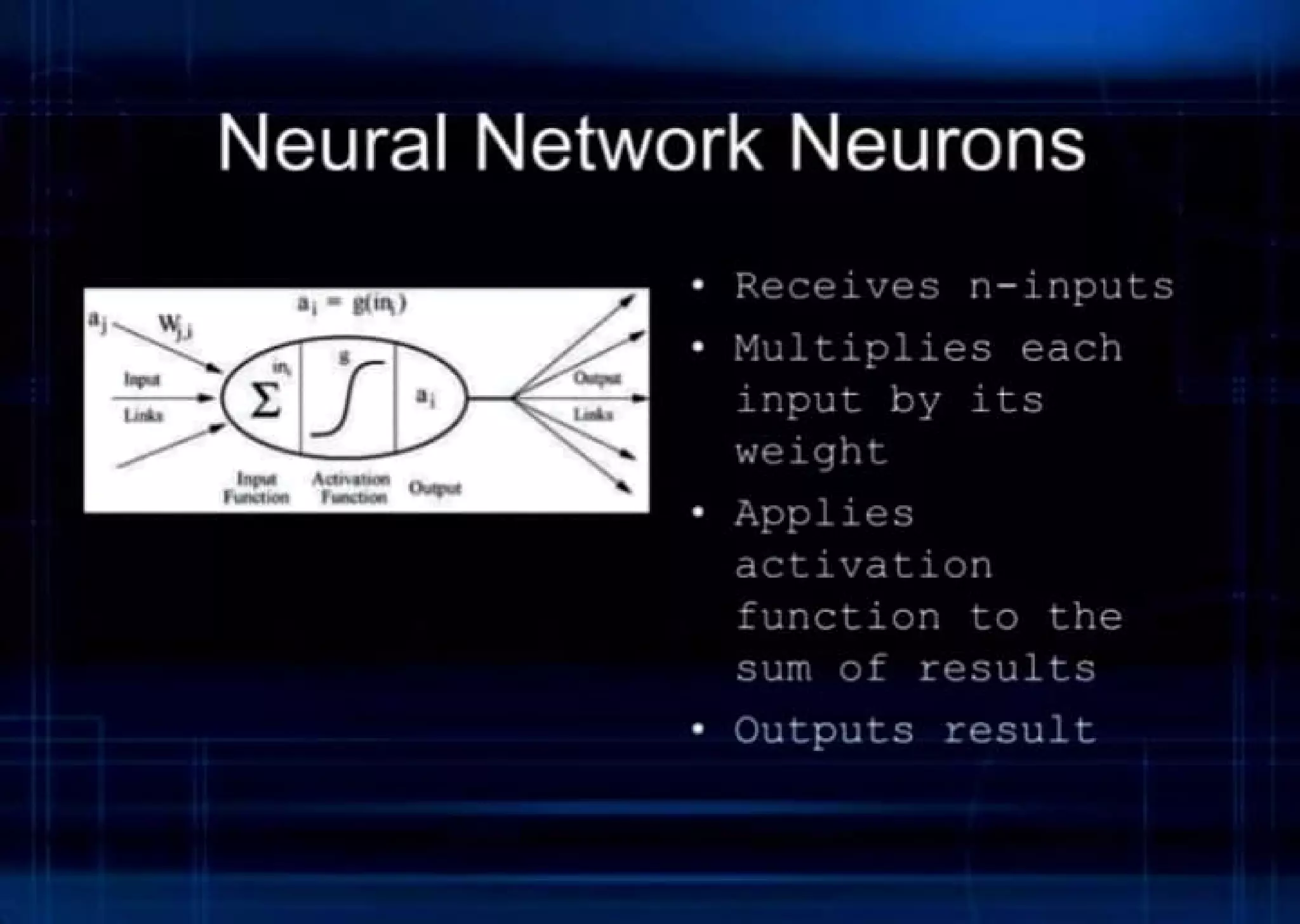
Neural Network Neurons.
• '.· ' • ' • • • • + ' • : • - • : • : ' ••
• • • • • • ._• + • ~ ••
. . . . . . . . . . . '
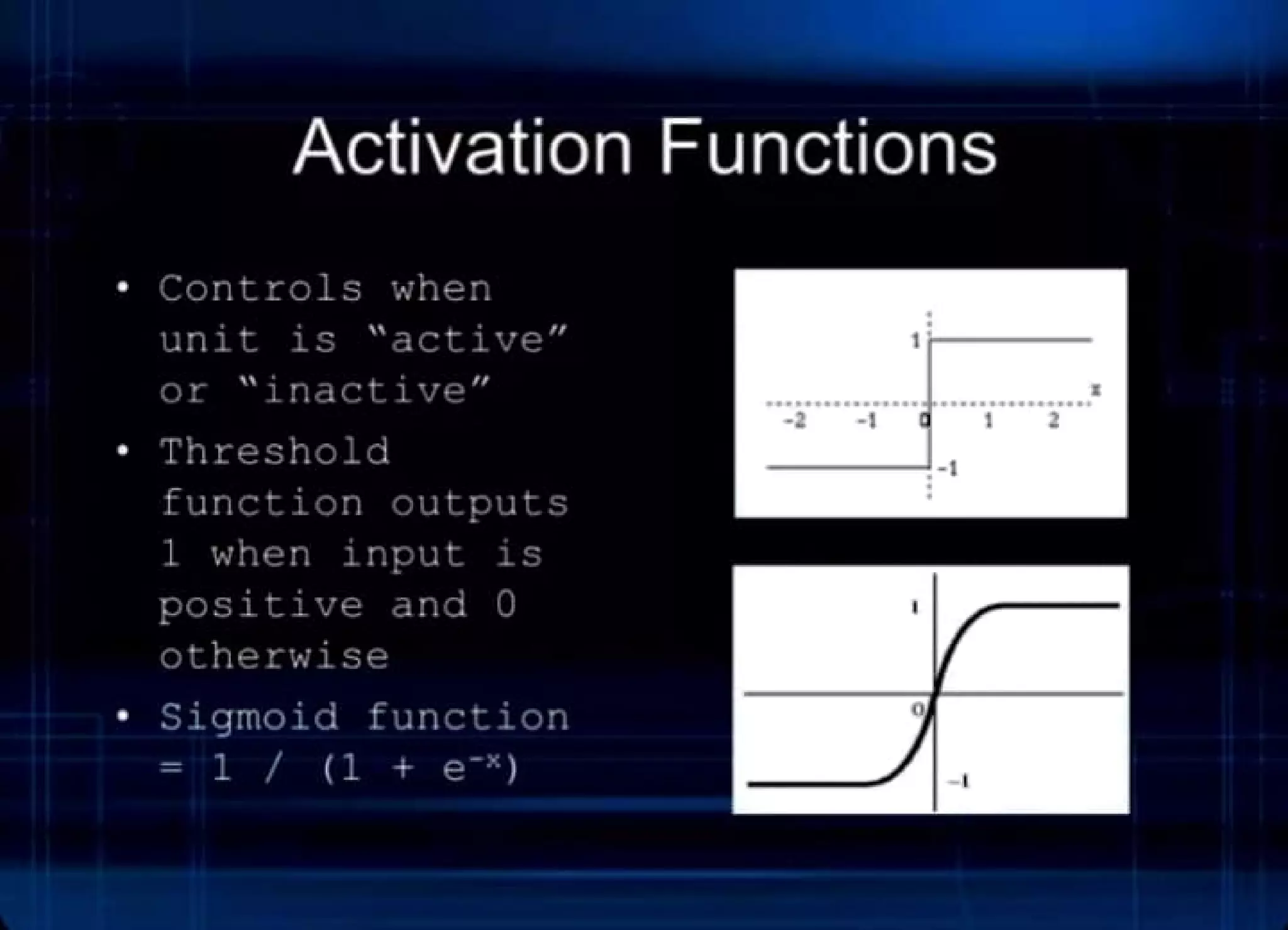
Activation Functions
•
11------
•
...............•
•2 •I 2
------'
.·I
,,:::__
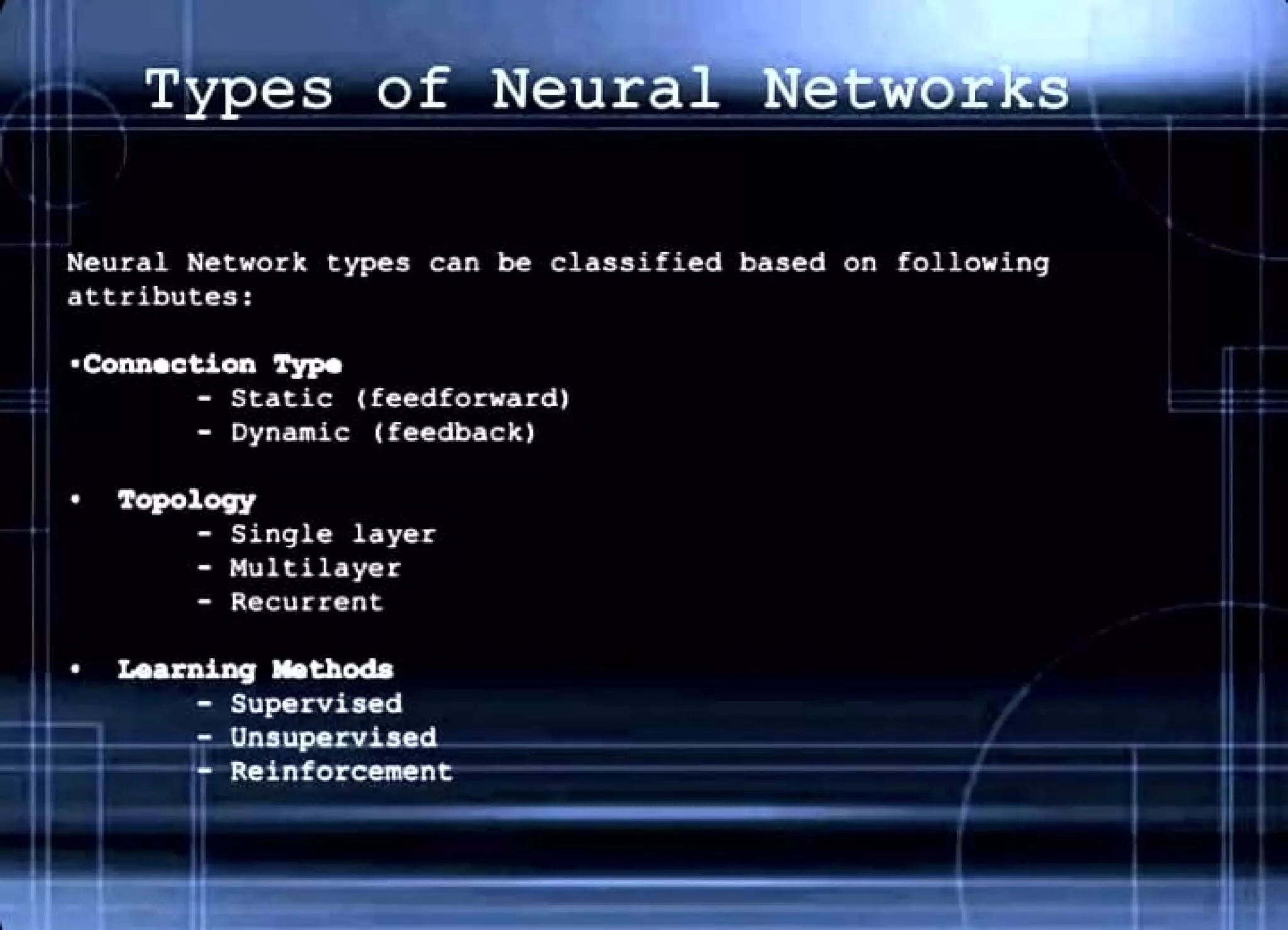
'.l'yp_
es_ of Neural Networ
- -
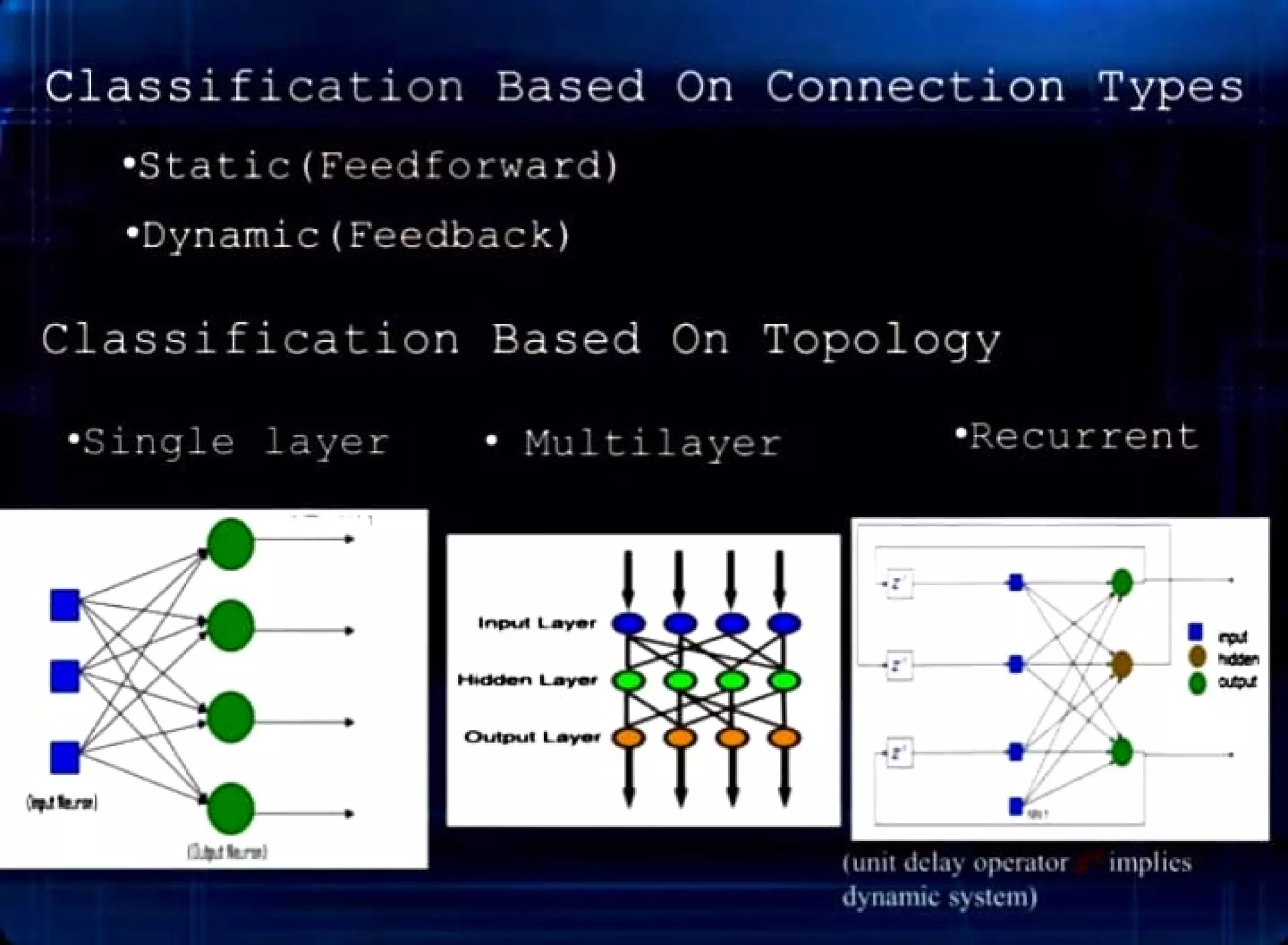
Neural Network types can be classified based on following
attributes:
•CoM•otJ..on
Static (feedforward)
- Dynamic (feedback)
• 'l'opolOff
Single layer
Multilayer
Recurrent
. ,......,_.. ........
Supe rViiiO:"d
tJni,upervised
·--•- Reinforcement
Cl assifi ca ti on Based On Connect i o n Types
•S L'."i : i .· (F--- l ! . ·r ·.•: c1 r ·i )
Class i fi ~a : i o n Based On Topo logy
ftlctef . I ~
I ,I, ii 'I I
,-.· I, , ,·, '' l
I
j ~ , I , I'
1l i .!1111 .
'- , ~ , Io..' 11 l l
.II
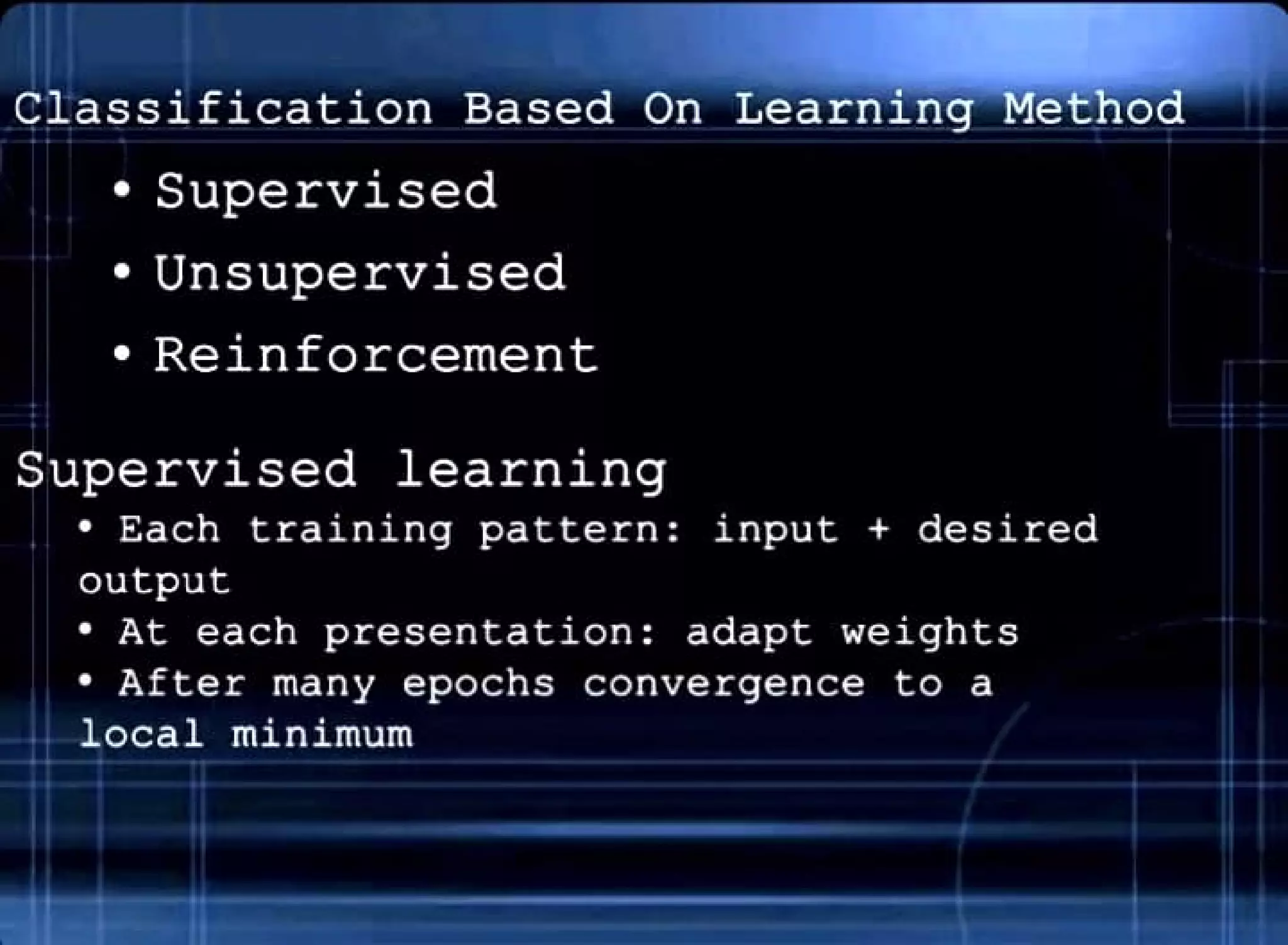
Classification Based On Learning Method
• Supervised
• Unsupervised
• Reinforcement
Supervised learning
• Each training pattern: input+ desired
output
• At each presentation: adapt weights
• After many epochs convergence to a
local minimum
4---
iI .
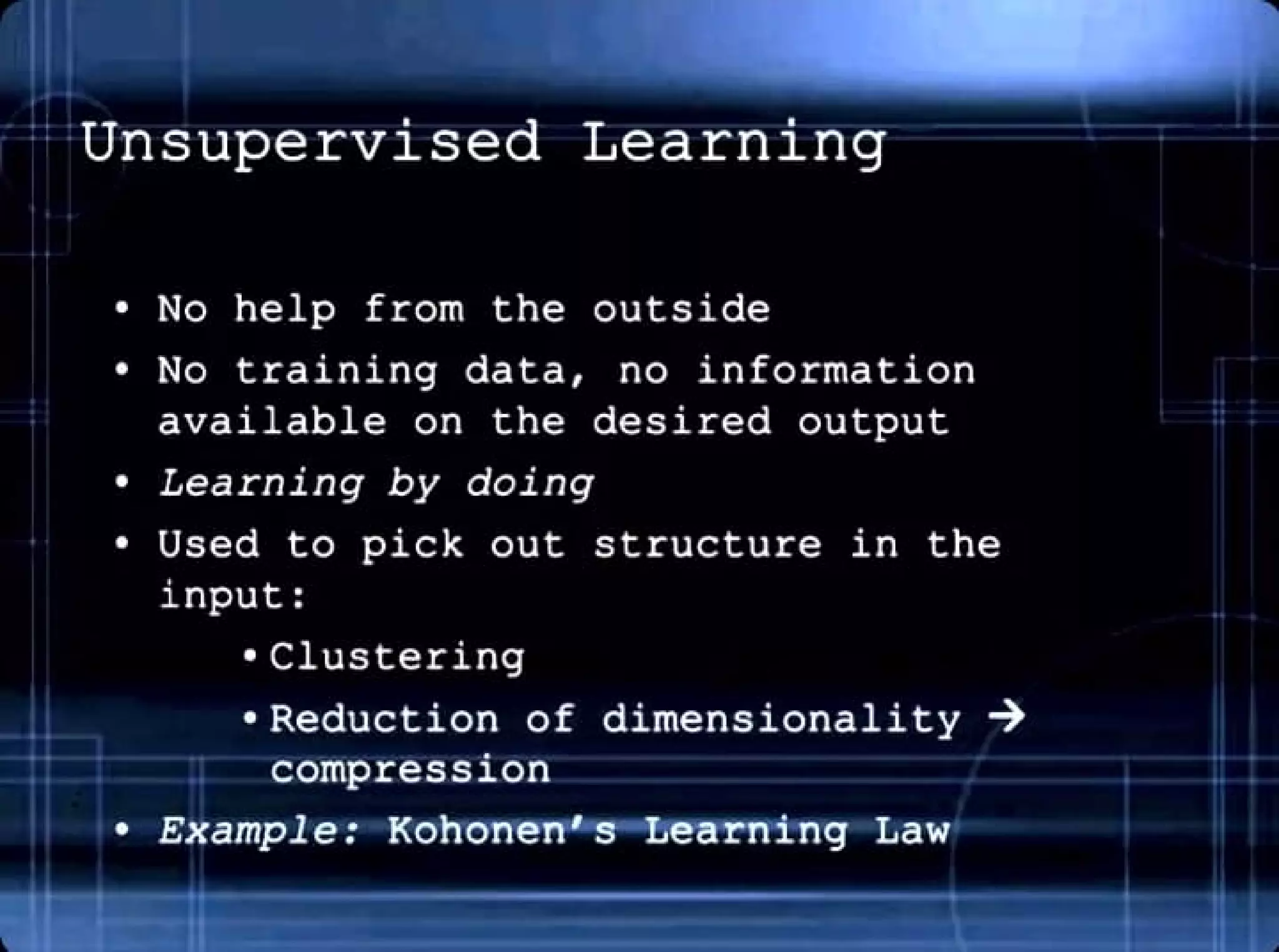
Unsupervised Learning
• No help from the outside
• No training data, no information
available on the desired output
• Learning by doing
• Used to pick out structure in the
input:
• Clustering
• Reduction of dimensionality ➔
compression
• Example: Kohonen's - Learning Law
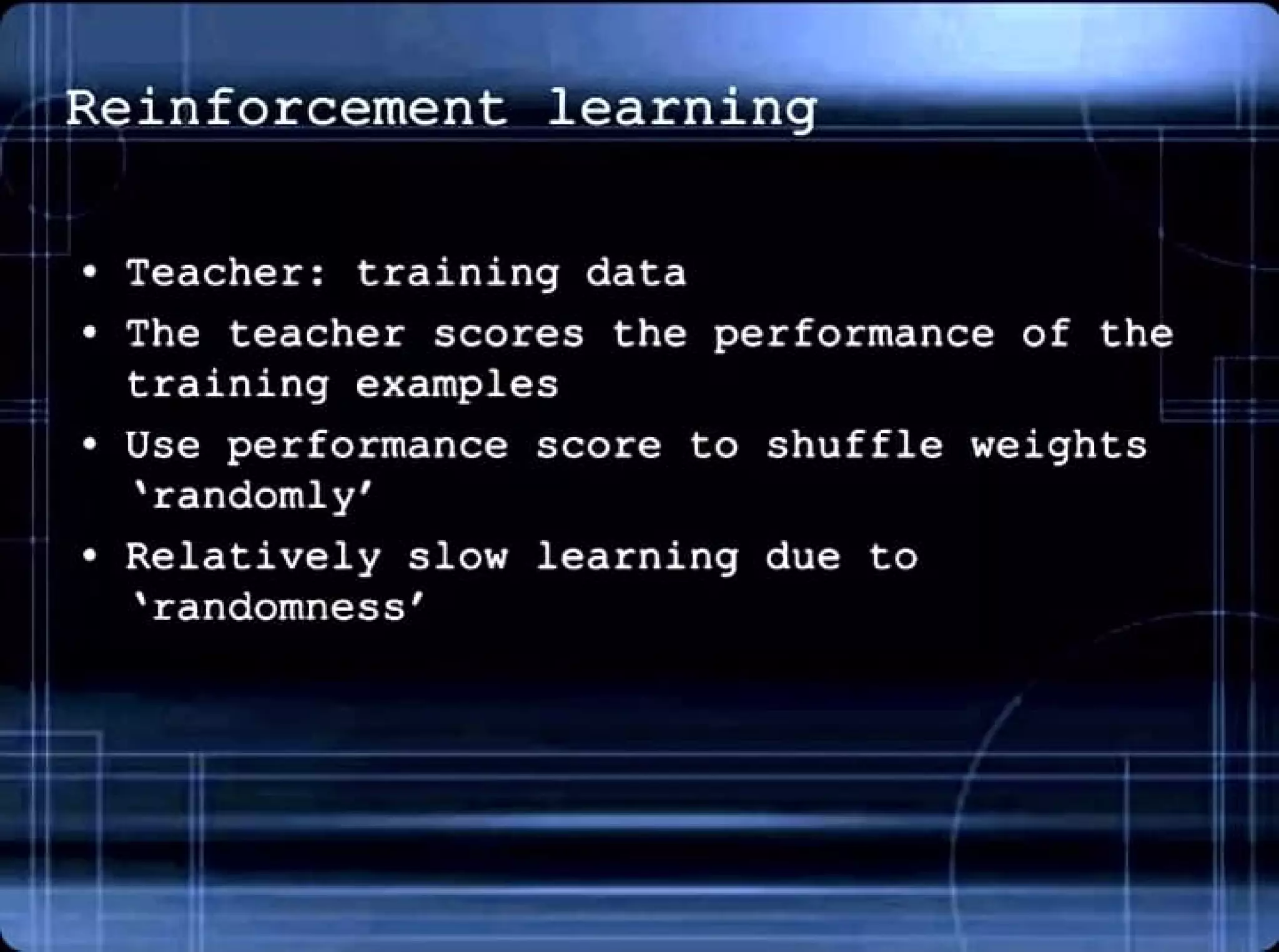
Reinforcement learning
• Teacher: training data
• The teacher scores the performance of the
training examples
• Use performance score to shuffle weights
'randomly'
• Relatively slow learning due to
'randomness'
••
.,
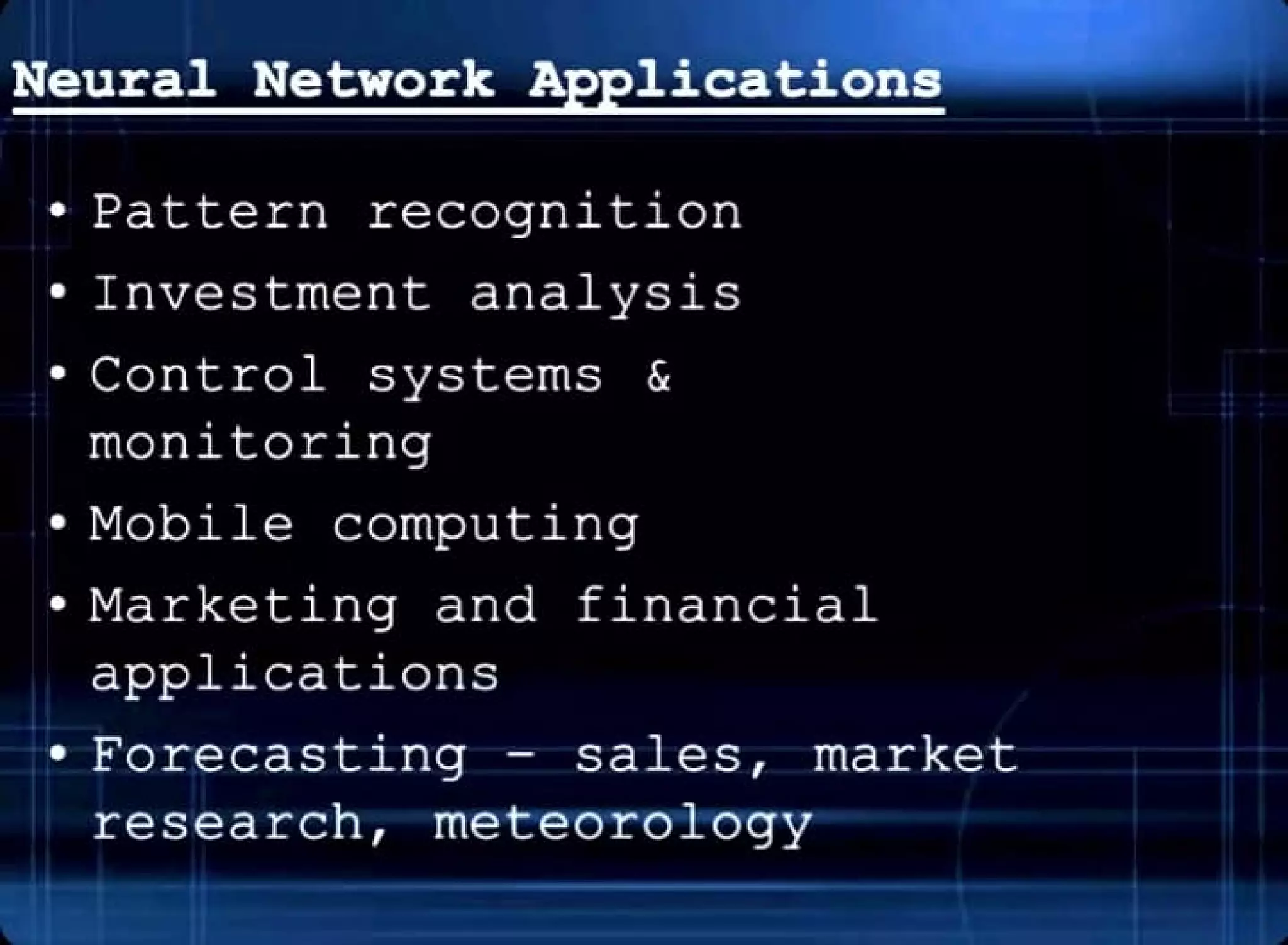
Neura1 Network A 1ications
• Pattern recognition
• Investment analysis
• Control systems &
monitoring
• Mobile computing
• Marketing and financial
applications
• Forecasting - sales , market
research , meteorology
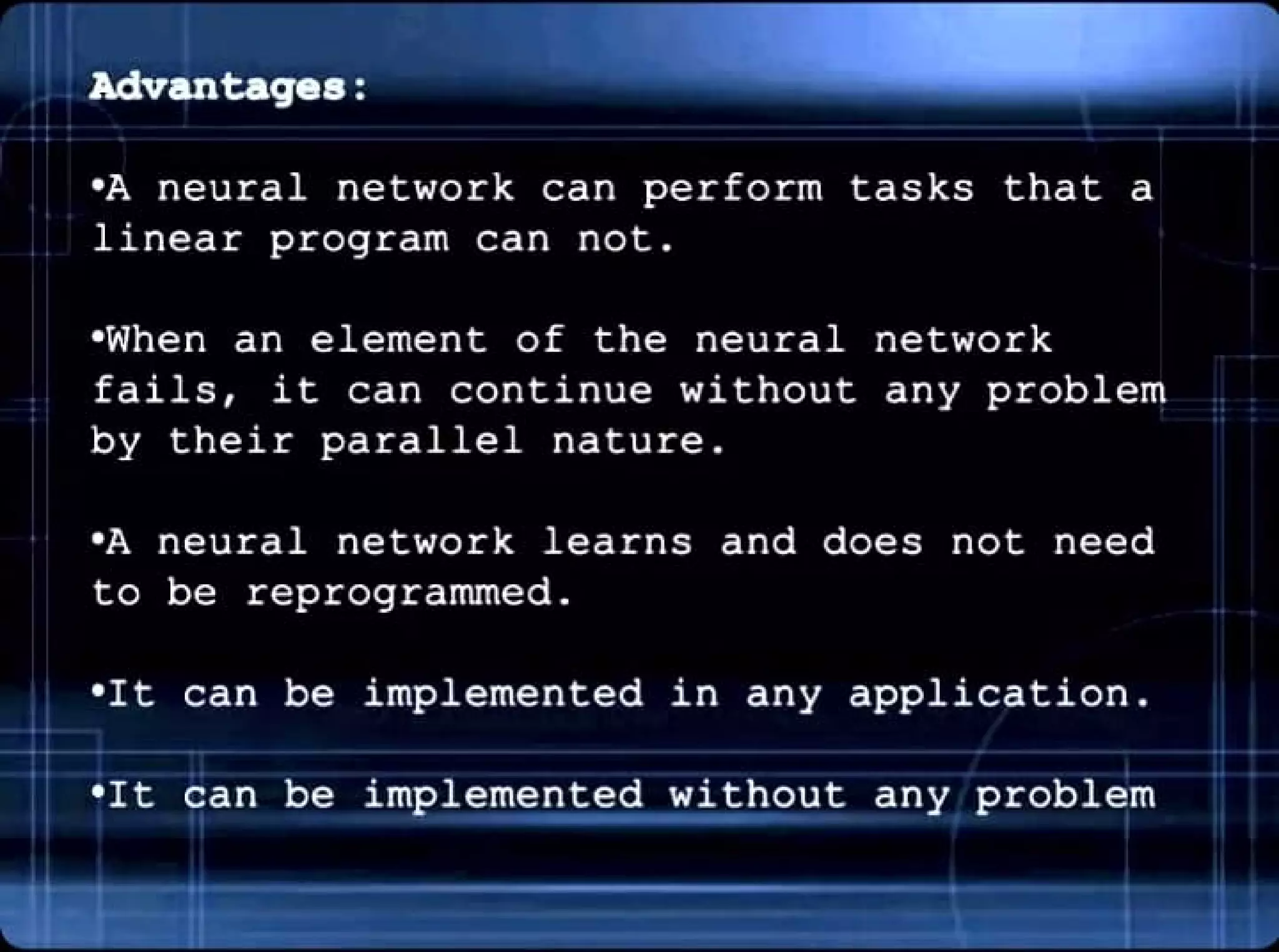
antages :
•A neural network can perform
linear program can not .
tasks that a
•When an element of the neural network
fails , it can continue without any problem
by their parallel nature.
" •A neural network learns and does not need
to be reprogrammed .
•It can be implemented in any application.
--·•· -
•It can
I ,,
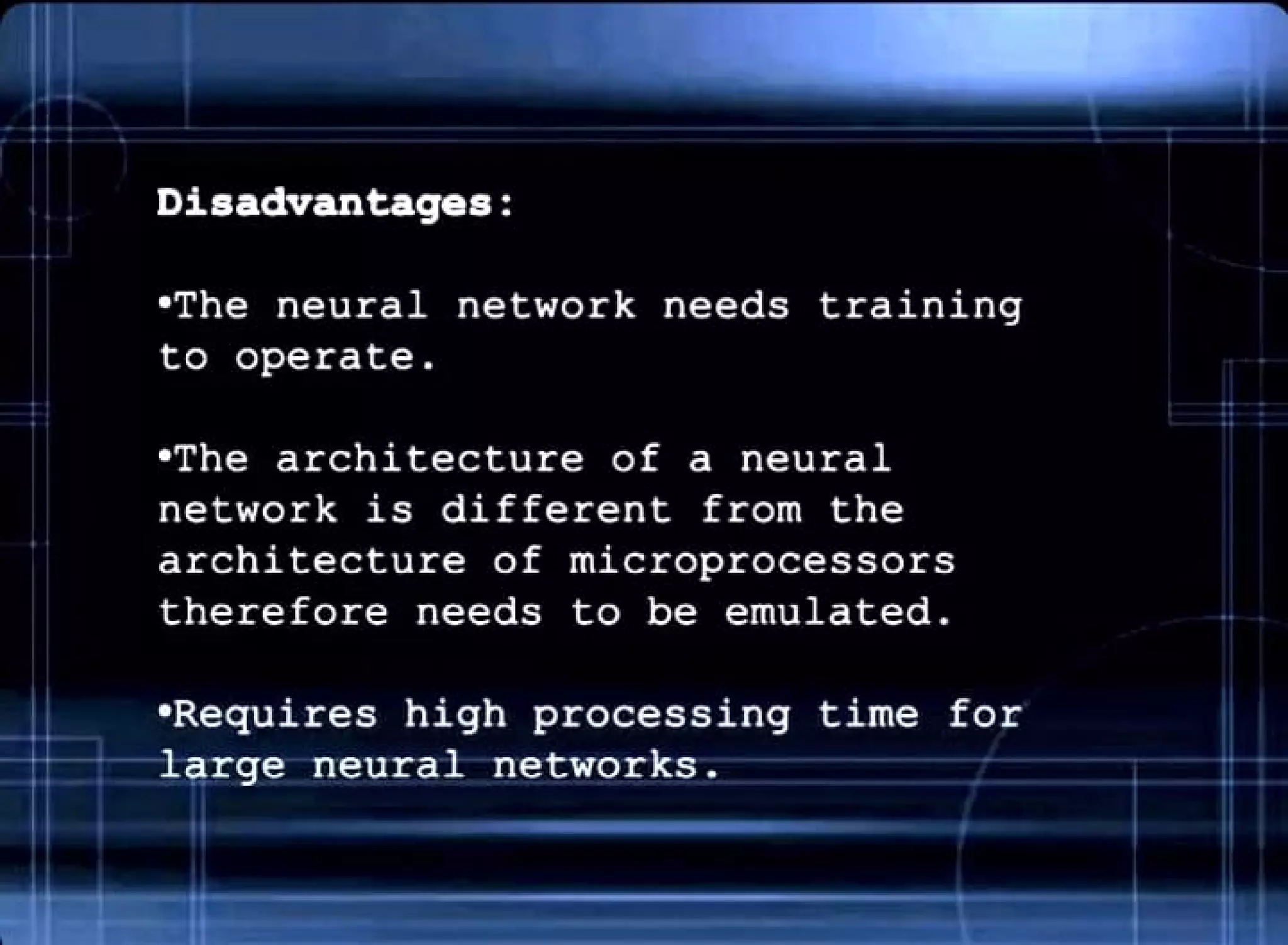
Disadvantages:
•The neural network needs training
to operate .
•The architecture of a neural
network is different from the
architecture of microprocessors
therefore needs to be emulated.
•Requires high processing
-ff~'- 1arge neural networks.
,I
time for
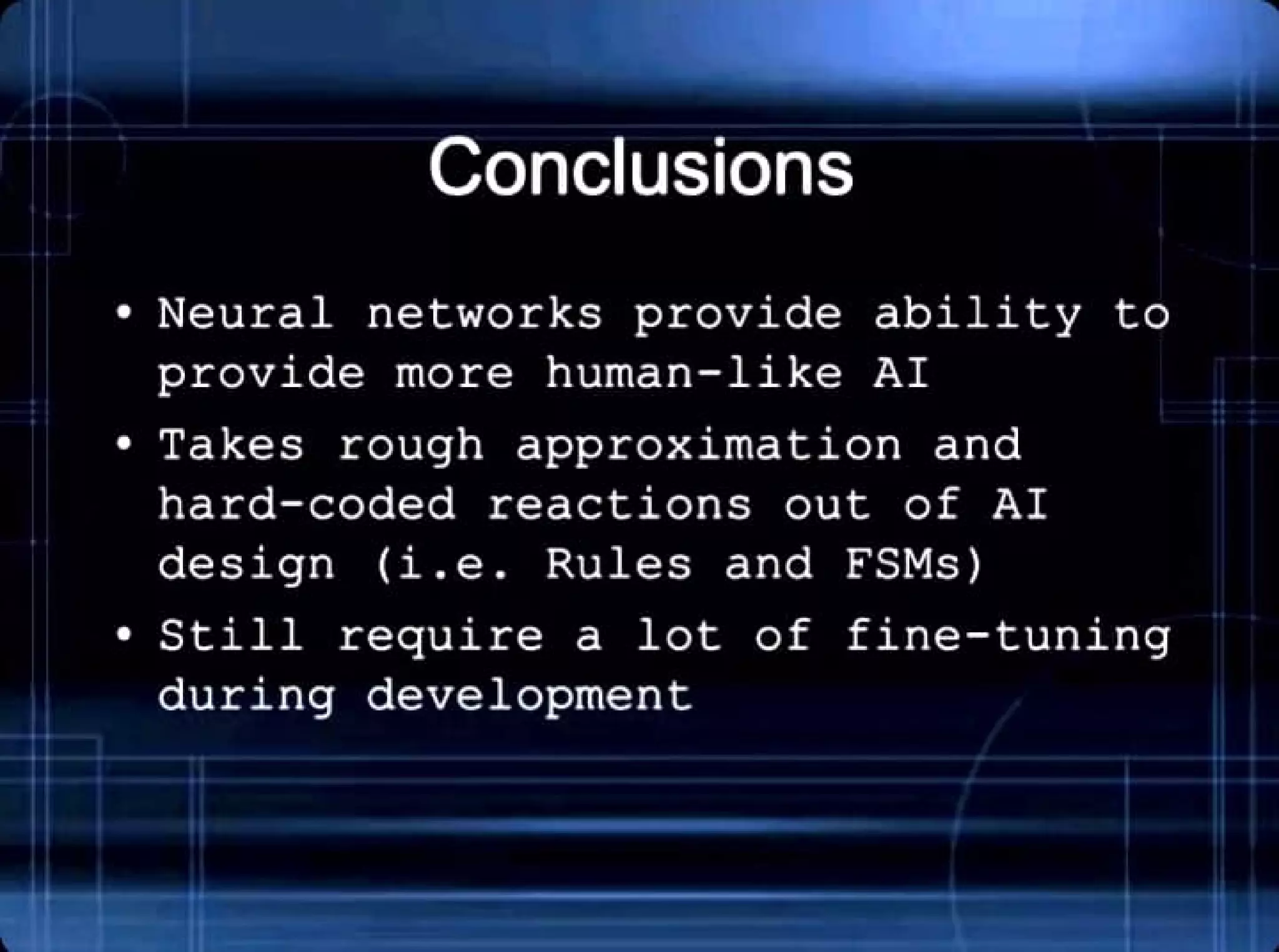
Conclusions
• Neural networks provide ability to
provide more human- like AI
• Takes rough approximation and
hard- coded reactions out of AI
design (i.e . Rules and FSMs)
• Still require a lot of fine - tuning
during development
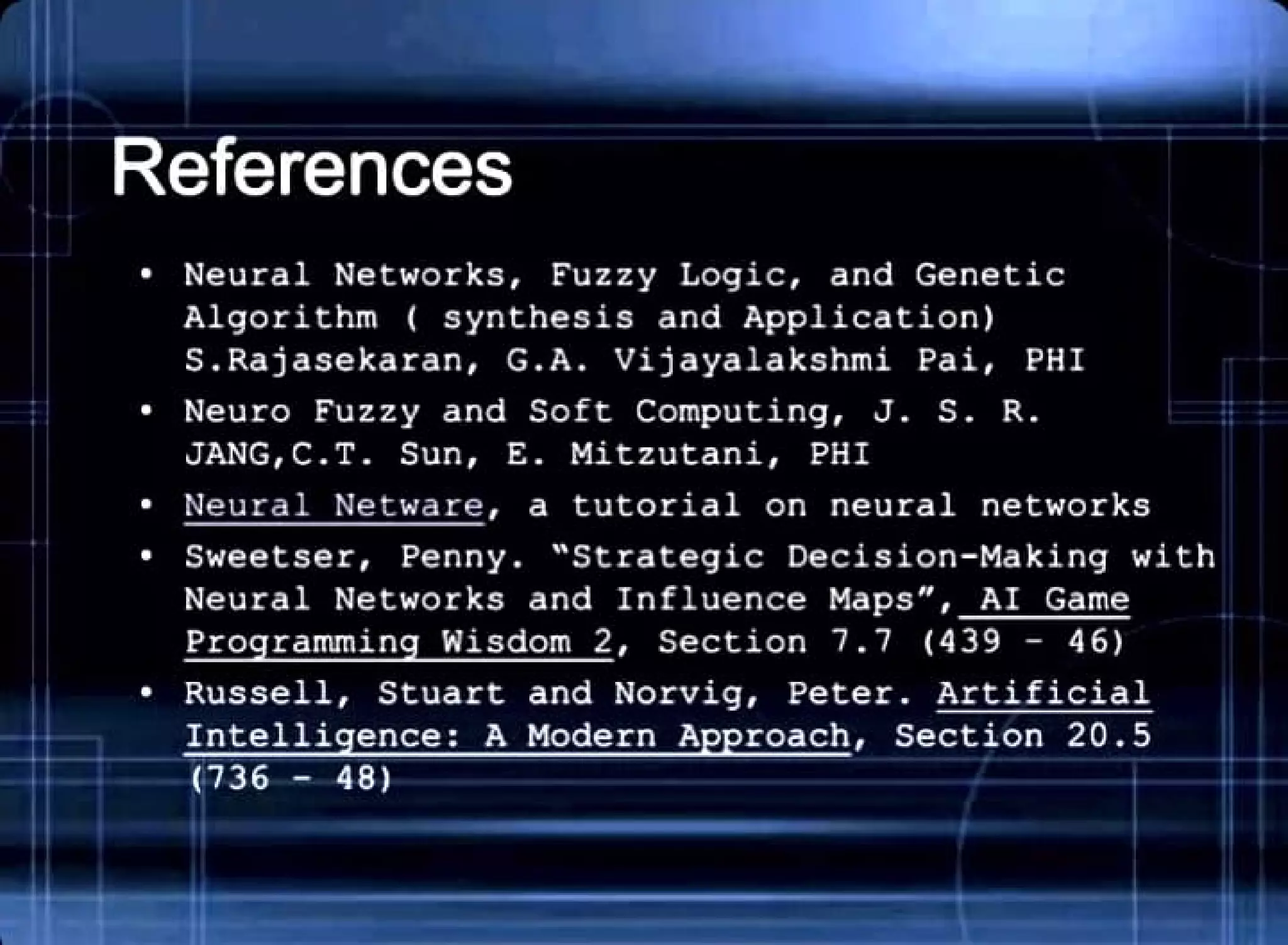
References
• Neural Networks , Fuzzy Logic, and Genetic
Algorithm ( synthesis and Application)
S . Rajasekaran , G. A. Vijayalakshmi Pai, PHI
• Neuro Fuzzy and Soft Computing, J. S. R.
JANG,C.T. Sun , E. Mitzutani, PHI
• Neu r al Netware , a tutorial on neural networks
• Sweetser , Penny . "Strategic Decision- Making with
Neural Networks and Influence Maps", AI Game
Pro rammin Wisdom 2 , Section 7.7 (439 - 46)
• Russell , Stuart and Norvig, Peter . Artificial
Intelli ence : A Modern A roach, Section 20 . 5
(736 - 48)
Neural Networks.pdf

Neural Networks.pdf

  • 1.
    I ~ -. ' ~ I Guifu.~ ~ ~ Chapala Mah~rana·-' .,,,,,.. i' ' ' ' J · SubmitteJ ' . . I N .
  • 2.
    Contents . Introduction toNeural Network .Neurons .Activation Function .Types of Neural Network .Learning In Neural Networks . Application of Neural Network .Advantages of Neural Network .Disadvantages Of Neural Network
  • 3.
    Neural Networks • Amethod of computing, based on the interaction of multiple connected processing elements . • A powerful technique to solve many real world problems . • The ability to learn from experience in order to improve their performance. • Ability to deal with incomplete info tion
  • 4.
    Basics Of NeuralNetwork • Biological approach to AI • Developed in 1943 • Comprised of one or more layers of neurons • Several types, we'll focus on feed-forward and feedback networks
  • 5.
  • 6.
    Neural Network Neurons. •'.· ' • ' • • • • + ' • : • - • : • : ' •• • • • • • • ._• + • ~ •• . . . . . . . . . . . '
  • 7.
  • 8.
    ,,:::__ '.l'yp_ es_ of NeuralNetwor - - Neural Network types can be classified based on following attributes: •CoM•otJ..on Static (feedforward) - Dynamic (feedback) • 'l'opolOff Single layer Multilayer Recurrent . ,......,_.. ........ Supe rViiiO:"d tJni,upervised ·--•- Reinforcement
  • 9.
    Cl assifi cati on Based On Connect i o n Types •S L'."i : i .· (F--- l ! . ·r ·.•: c1 r ·i ) Class i fi ~a : i o n Based On Topo logy ftlctef . I ~ I ,I, ii 'I I ,-.· I, , ,·, '' l I j ~ , I , I' 1l i .!1111 . '- , ~ , Io..' 11 l l
  • 10.
    .II Classification Based OnLearning Method • Supervised • Unsupervised • Reinforcement Supervised learning • Each training pattern: input+ desired output • At each presentation: adapt weights • After many epochs convergence to a local minimum 4--- iI .
  • 11.
    Unsupervised Learning • Nohelp from the outside • No training data, no information available on the desired output • Learning by doing • Used to pick out structure in the input: • Clustering • Reduction of dimensionality ➔ compression • Example: Kohonen's - Learning Law
  • 12.
    Reinforcement learning • Teacher:training data • The teacher scores the performance of the training examples • Use performance score to shuffle weights 'randomly' • Relatively slow learning due to 'randomness' •• .,
  • 13.
    Neura1 Network A1ications • Pattern recognition • Investment analysis • Control systems & monitoring • Mobile computing • Marketing and financial applications • Forecasting - sales , market research , meteorology
  • 14.
    antages : •A neuralnetwork can perform linear program can not . tasks that a •When an element of the neural network fails , it can continue without any problem by their parallel nature. " •A neural network learns and does not need to be reprogrammed . •It can be implemented in any application. --·•· - •It can I ,,
  • 15.
    Disadvantages: •The neural networkneeds training to operate . •The architecture of a neural network is different from the architecture of microprocessors therefore needs to be emulated. •Requires high processing -ff~'- 1arge neural networks. ,I time for
  • 16.
    Conclusions • Neural networksprovide ability to provide more human- like AI • Takes rough approximation and hard- coded reactions out of AI design (i.e . Rules and FSMs) • Still require a lot of fine - tuning during development
  • 17.
    References • Neural Networks, Fuzzy Logic, and Genetic Algorithm ( synthesis and Application) S . Rajasekaran , G. A. Vijayalakshmi Pai, PHI • Neuro Fuzzy and Soft Computing, J. S. R. JANG,C.T. Sun , E. Mitzutani, PHI • Neu r al Netware , a tutorial on neural networks • Sweetser , Penny . "Strategic Decision- Making with Neural Networks and Influence Maps", AI Game Pro rammin Wisdom 2 , Section 7.7 (439 - 46) • Russell , Stuart and Norvig, Peter . Artificial Intelli ence : A Modern A roach, Section 20 . 5 (736 - 48)