.Net Pipeline on Windows
Kubernetes
Jessica Deen, Microsoft Azure & Dan Garfield, Codefresh
Dan
Garfield
Chief Evangelist
Jessica
Deen
Cloud Developer Advocate
Agenda Codefresh - what is it?
Windows Kubernetes with Azure
Demo
Questions?
Containers - What are they?
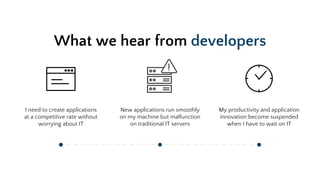
What we hear from developers
I need to create applications
at a competitive rate without
worrying about IT
New applications run smoothly
on my machine but malfunction
on traditional IT servers
My productivity and application
innovation become suspended
when I have to wait on IT
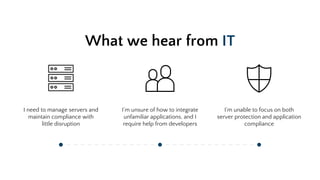
What we hear from IT
I need to manage servers and
maintain compliance with
little disruption
I’m unsure of how to integrate
unfamiliar applications, and I
require help from developers
I’m unable to focus on both
server protection and application
compliance
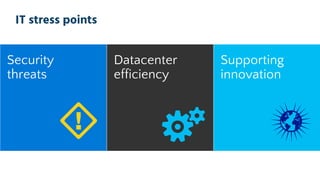
IT stress points
Security
threats
Datacenter
efficiency
Supporting
innovation
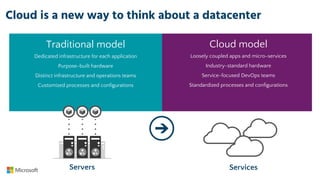
Traditional model
Dedicated infrastructure for each application
Purpose-built hardware
Distinct infrastructure and operations teams
Customized processes and configurations
Cloud model
Loosely coupled apps and micro-services
Industry-standard hardware
Service-focused DevOps teams
Standardized processes and configurations
Servers Services
Cloud is a new way to think about a datacenter
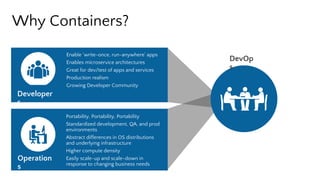
Why Containers?
Developer
s
Enable ‘write-once, run-anywhere’ apps
Enables microservice architectures
Great for dev/test of apps and services
Production realism
Growing Developer Community
Operation
s
Portability, Portability, Portability
Standardized development, QA, and prod
environments
Abstract differences in OS distributions
and underlying infrastructure
Higher compute density
Easily scale-up and scale-down in
response to changing business needs
DevOp
s
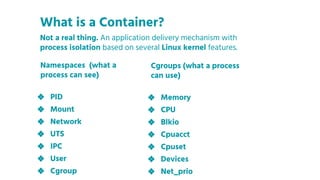
Namespaces (what a
process can see)
❖ PID
❖ Mount
❖ Network
❖ UTS
❖ IPC
❖ User
❖ Cgroup
What is a Container?
Cgroups (what a process
can use)
❖ Memory
❖ CPU
❖ Blkio
❖ Cpuacct
❖ Cpuset
❖ Devices
❖ Net_prio
Not a real thing. An application delivery mechanism with
process isolation based on several Linux kernel features.
❖ Open Source Container Runtime
❖ Mac, Linux, Windows Support
❖ Command Line Tool
❖ “Dockerfile” format
❖ The Docker image format with layered
filesystem
What is
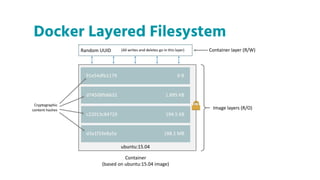
Docker Layered Filesystem
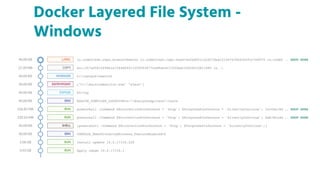
Docker Layered File System -
Windows
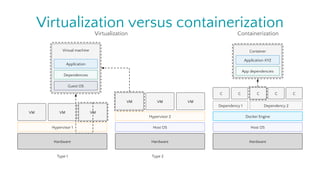
Virtualization Containerization
Type 1
Hardware
Hypervisor 1
VM VM VM
Hardware
Type 2
Host OS
Hypervisor 2
VM VM VM
Virtual machine
Guest OS
Dependencies
Application
Hardware
Host OS
Docker Engine
Dependency 1 Dependency 2
C C C C C
Container
App dependencies
Application XYZ
Virtualization versus containerization
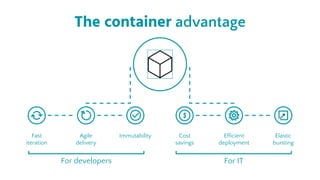
The container advantage
Fast
iteration
Agile
delivery
Immutability Cost
savings
Elastic
bursting
Efficient
deployment
For ITFor developers
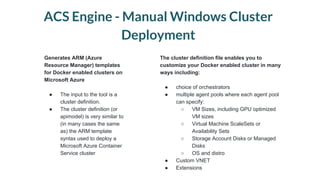
ACS Engine - Manual Windows Cluster
Deployment
Generates ARM (Azure
Resource Manager) templates
for Docker enabled clusters on
Microsoft Azure
● The input to the tool is a
cluster definition.
● The cluster definition (or
apimodel) is very similar to
(in many cases the same
as) the ARM template
syntax used to deploy a
Microsoft Azure Container
Service cluster
The cluster definition file enables you to
customize your Docker enabled cluster in many
ways including:
● choice of orchestrators
● multiple agent pools where each agent pool
can specify:
○ VM Sizes, including GPU optimized
VM sizes
○ Virtual Machine ScaleSets or
Availability Sets
○ Storage Account Disks or Managed
Disks
○ OS and distro
● Custom VNET
● Extensions
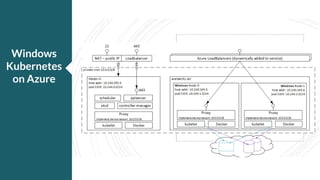
Windows
Kubernetes
on Azure
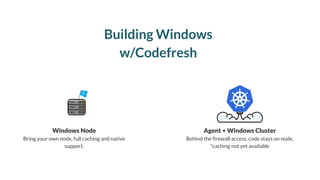
Windows Node
Bring your own node, full caching and native
support.
Agent + Windows Cluster
Behind the firewall access, code stays on node,
*caching not yet available
Building Windows
w/Codefresh
Demo
Questions?
Resources!
https://github.com/jldeen/wink8sdemo
http://azure.microsoft.com/account/free
● 12 Months of FREE services
● $200 credit
Thank
you!
Thank you
Get 120 FREE builds/month
Codefresh.io
Learn More
azure.microsoft.com

Net Pipeline on Windows Kubernetes

  • 1.
    .Net Pipeline onWindows Kubernetes Jessica Deen, Microsoft Azure & Dan Garfield, Codefresh
  • 2.
  • 3.
  • 4.
    Agenda Codefresh -what is it? Windows Kubernetes with Azure Demo Questions? Containers - What are they?
  • 5.
    What we hearfrom developers I need to create applications at a competitive rate without worrying about IT New applications run smoothly on my machine but malfunction on traditional IT servers My productivity and application innovation become suspended when I have to wait on IT
  • 6.
    What we hearfrom IT I need to manage servers and maintain compliance with little disruption I’m unsure of how to integrate unfamiliar applications, and I require help from developers I’m unable to focus on both server protection and application compliance
  • 7.
  • 8.
    Traditional model Dedicated infrastructurefor each application Purpose-built hardware Distinct infrastructure and operations teams Customized processes and configurations Cloud model Loosely coupled apps and micro-services Industry-standard hardware Service-focused DevOps teams Standardized processes and configurations Servers Services Cloud is a new way to think about a datacenter
  • 9.
    Why Containers? Developer s Enable ‘write-once,run-anywhere’ apps Enables microservice architectures Great for dev/test of apps and services Production realism Growing Developer Community Operation s Portability, Portability, Portability Standardized development, QA, and prod environments Abstract differences in OS distributions and underlying infrastructure Higher compute density Easily scale-up and scale-down in response to changing business needs DevOp s
  • 10.
    Namespaces (what a processcan see) ❖ PID ❖ Mount ❖ Network ❖ UTS ❖ IPC ❖ User ❖ Cgroup What is a Container? Cgroups (what a process can use) ❖ Memory ❖ CPU ❖ Blkio ❖ Cpuacct ❖ Cpuset ❖ Devices ❖ Net_prio Not a real thing. An application delivery mechanism with process isolation based on several Linux kernel features.
  • 11.
    ❖ Open SourceContainer Runtime ❖ Mac, Linux, Windows Support ❖ Command Line Tool ❖ “Dockerfile” format ❖ The Docker image format with layered filesystem What is
  • 12.
  • 13.
    Docker Layered FileSystem - Windows
  • 14.
    Virtualization Containerization Type 1 Hardware Hypervisor1 VM VM VM Hardware Type 2 Host OS Hypervisor 2 VM VM VM Virtual machine Guest OS Dependencies Application Hardware Host OS Docker Engine Dependency 1 Dependency 2 C C C C C Container App dependencies Application XYZ Virtualization versus containerization
  • 15.
    The container advantage Fast iteration Agile delivery ImmutabilityCost savings Elastic bursting Efficient deployment For ITFor developers
  • 16.
    ACS Engine -Manual Windows Cluster Deployment Generates ARM (Azure Resource Manager) templates for Docker enabled clusters on Microsoft Azure ● The input to the tool is a cluster definition. ● The cluster definition (or apimodel) is very similar to (in many cases the same as) the ARM template syntax used to deploy a Microsoft Azure Container Service cluster The cluster definition file enables you to customize your Docker enabled cluster in many ways including: ● choice of orchestrators ● multiple agent pools where each agent pool can specify: ○ VM Sizes, including GPU optimized VM sizes ○ Virtual Machine ScaleSets or Availability Sets ○ Storage Account Disks or Managed Disks ○ OS and distro ● Custom VNET ● Extensions
  • 17.
  • 18.
    Windows Node Bring yourown node, full caching and native support. Agent + Windows Cluster Behind the firewall access, code stays on node, *caching not yet available Building Windows w/Codefresh
  • 19.
  • 20.
  • 21.
  • 22.
    Thank you Get 120FREE builds/month Codefresh.io Learn More azure.microsoft.com