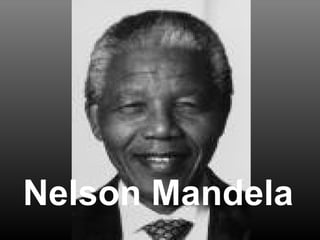
Nelson Mandela
Topics 
• family 
• AIDS work 
• future? 
• biography 
• political career 
• time in prison 
• peace work
Biography 
• Rolihlahla Dalibhunga 
Mandela was born in Mvezo 
near Umtata on 18th July 
1918 
• his father Henry Mgdala 
Mandela was a chief of the 
Thembus 
• his family was quite wealthy 
Þ Mandela had a happy 
childhood 
• at the age of nine he lost his 
father 
• he was given his British 
name “Nelson“ at a 
Methodist school
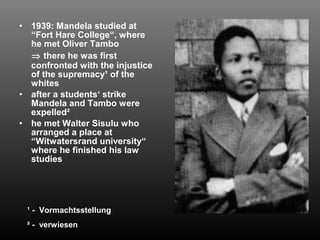
• 1939: Mandela studied at 
“Fort Hare College“, where 
he met Oliver Tambo 
Þ there he was first 
confronted with the injustice 
of the supremacy¹ of the 
whites 
• after a students‘ strike 
Mandela and Tambo were 
expelled² 
• he met Walter Sisulu who 
arranged a place at 
“Witwatersrand university“ 
where he finished his law 
studies 
¹ - Vormachtsstellung 
² - verwiesen
Political career 
• as a student Mandela got 
involved in the political 
opposition which struggled 
for equal rights for the black 
majority 
• 1944: he joined the African 
National Congress (ANC) 
and two years later he 
founded the Youth League 
of the ANC (ANCYL) with 
Tambo and Sisulu 
• after the National Party had 
won the election¹ the ANC 
was forced to fight harder 
against Apartheid 
¹ - Wahl
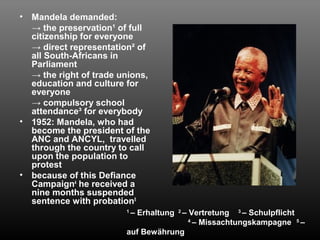
• Mandela demanded: 
→ the preservation¹ of full 
citizenship for everyone 
→ direct representation² of 
all South-Africans in 
Parliament 
→ the right of trade unions, 
education and culture for 
everyone 
→ compulsory school 
attendance³ for everybody 
• 1952: Mandela, who had 
become the president of the 
ANC and ANCYL, travelled 
through the country to call 
upon the population to 
protest 
• because of this Defiance 
Campaign4 he received a 
nine months suspended 
sentence with probation5 
1 – Erhaltung 2 – Vertretung 3 – Schulpflicht 
4 – Missachtungskampagne 5 – 
auf Bewährung
• 1956: Mandela and others were accused of high treason¹ 
Þ 1961: the defendants were set free 
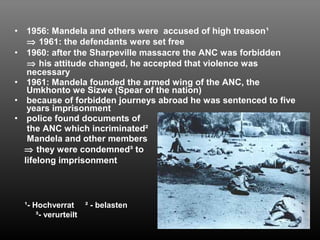
• 1960: after the Sharpeville massacre the ANC was forbidden 
Þ his attitude changed, he accepted that violence was 
necessary 
• 1961: Mandela founded the armed wing of the ANC, the 
Umkhonto we Sizwe (Spear of the nation) 
• because of forbidden journeys abroad he was sentenced to five 
years imprisonment 
• police found documents of 
the ANC which incriminated² 
Mandela and other members 
Þ they were condemned³ to 
lifelong imprisonment 
¹- Hochverrat ² - belasten 
³- verurteilt
Time in prison 
• He spent 18 years of his 
prison time on Robben 
Island 
→ lived in a 4 sqm- cell 
→ black prisoners weren‘t 
considered to be human 
beings 
• they developed the so-called 
“Mandela University“ where 
they passed on the political 
views and the history of the 
ANC 
Þ 1982: they were sent to 
Pollsmore Prison 
• 1985: Mandela refused a 
possibility to get free 
because he would have to 
stop fighting violently
• many people demonstrated 
for Mandela‘s release¹ 
→ also many important 
politicians visited him 
• 1988: he was moved to a 
prison near Paarl, where he 
didn‘t feel like a prisoner any 
more 
• Frederik Willem de Klerk 
became leader of the 
National Party and president 
of south Africa 
→ he abolished the ban on 
the ANC 
• after the pressure of the 
ANC and foreign 
organisations and with the 
help of de Klerk Mandela 
was released in 1990 
¹ - Freilassung
Peace work 
• 1990-1994: after his release he started to 
negotiate¹ with all sections of the 
population 
→ Mandela and de Klerk received the 
Noble Peace Prize 
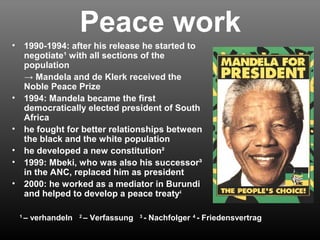
• 1994: Mandela became the first 
democratically elected president of South 
Africa 
• he fought for better relationships between 
the black and the white population 
• he developed a new constitution² 
• 1999: Mbeki, who was also his successor³ 
in the ANC, replaced him as president 
• 2000: he worked as a mediator in Burundi 
and helped to develop a peace treaty4 
1 – verhandeln 2 – Verfassung 3 - Nachfolger 4 - Friedensvertrag
Family 
• Mandela has been married three times 
• 1944: marriage with Evelyn Ntoko Mase 
→ they had five children, but two died 
→ 1957: the marriage was divorced 
• 1958: he married Winnie Nomzamo 
Madikizela 
→ they had a son together, Makgatho 
Mandela 
→ 1996: they were divorced 
• 1998: Mandela married Graça Machel 
• January 2005: Mandela’s second son 
died of AIDS
AIDS work 
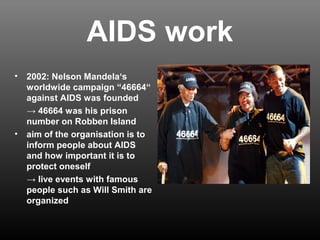
• 2002: Nelson Mandela‘s 
worldwide campaign “46664“ 
against AIDS was founded 
→ 46664 was his prison 
number on Robben Island 
• aim of the organisation is to 
inform people about AIDS 
and how important it is to 
protect oneself 
→ live events with famous 
people such as Will Smith are 
organized
Future? 
Þ What will happen when Mandela is dead? 
• Mandela works for peace between whites and blacks 
• many blacks are angry at the whites because a lot of them still 
experienced what Apartheid was like 
→ Mandela stops them from taking revenge 
• “When Mandela is dead, the whites will die like flies!“ 
• hypothesis: 
→ civil war? 
→ whites being murdered? 
→ blacks will oppress whites? 
→ or whites will oppress blacks again?
This was a 
presentation by: 
Shubham .S .B

Nelson Mandela

  • 1.
  • 2.
    Topics • family • AIDS work • future? • biography • political career • time in prison • peace work
  • 3.
    Biography • RolihlahlaDalibhunga Mandela was born in Mvezo near Umtata on 18th July 1918 • his father Henry Mgdala Mandela was a chief of the Thembus • his family was quite wealthy Þ Mandela had a happy childhood • at the age of nine he lost his father • he was given his British name “Nelson“ at a Methodist school
  • 4.
    • 1939: Mandelastudied at “Fort Hare College“, where he met Oliver Tambo Þ there he was first confronted with the injustice of the supremacy¹ of the whites • after a students‘ strike Mandela and Tambo were expelled² • he met Walter Sisulu who arranged a place at “Witwatersrand university“ where he finished his law studies ¹ - Vormachtsstellung ² - verwiesen
  • 5.
    Political career •as a student Mandela got involved in the political opposition which struggled for equal rights for the black majority • 1944: he joined the African National Congress (ANC) and two years later he founded the Youth League of the ANC (ANCYL) with Tambo and Sisulu • after the National Party had won the election¹ the ANC was forced to fight harder against Apartheid ¹ - Wahl
  • 6.
    • Mandela demanded: → the preservation¹ of full citizenship for everyone → direct representation² of all South-Africans in Parliament → the right of trade unions, education and culture for everyone → compulsory school attendance³ for everybody • 1952: Mandela, who had become the president of the ANC and ANCYL, travelled through the country to call upon the population to protest • because of this Defiance Campaign4 he received a nine months suspended sentence with probation5 1 – Erhaltung 2 – Vertretung 3 – Schulpflicht 4 – Missachtungskampagne 5 – auf Bewährung
  • 7.
    • 1956: Mandelaand others were accused of high treason¹ Þ 1961: the defendants were set free • 1960: after the Sharpeville massacre the ANC was forbidden Þ his attitude changed, he accepted that violence was necessary • 1961: Mandela founded the armed wing of the ANC, the Umkhonto we Sizwe (Spear of the nation) • because of forbidden journeys abroad he was sentenced to five years imprisonment • police found documents of the ANC which incriminated² Mandela and other members Þ they were condemned³ to lifelong imprisonment ¹- Hochverrat ² - belasten ³- verurteilt
  • 8.
    Time in prison • He spent 18 years of his prison time on Robben Island → lived in a 4 sqm- cell → black prisoners weren‘t considered to be human beings • they developed the so-called “Mandela University“ where they passed on the political views and the history of the ANC Þ 1982: they were sent to Pollsmore Prison • 1985: Mandela refused a possibility to get free because he would have to stop fighting violently
  • 9.
    • many peopledemonstrated for Mandela‘s release¹ → also many important politicians visited him • 1988: he was moved to a prison near Paarl, where he didn‘t feel like a prisoner any more • Frederik Willem de Klerk became leader of the National Party and president of south Africa → he abolished the ban on the ANC • after the pressure of the ANC and foreign organisations and with the help of de Klerk Mandela was released in 1990 ¹ - Freilassung
  • 10.
    Peace work •1990-1994: after his release he started to negotiate¹ with all sections of the population → Mandela and de Klerk received the Noble Peace Prize • 1994: Mandela became the first democratically elected president of South Africa • he fought for better relationships between the black and the white population • he developed a new constitution² • 1999: Mbeki, who was also his successor³ in the ANC, replaced him as president • 2000: he worked as a mediator in Burundi and helped to develop a peace treaty4 1 – verhandeln 2 – Verfassung 3 - Nachfolger 4 - Friedensvertrag
  • 11.
    Family • Mandelahas been married three times • 1944: marriage with Evelyn Ntoko Mase → they had five children, but two died → 1957: the marriage was divorced • 1958: he married Winnie Nomzamo Madikizela → they had a son together, Makgatho Mandela → 1996: they were divorced • 1998: Mandela married Graça Machel • January 2005: Mandela’s second son died of AIDS
  • 12.
    AIDS work •2002: Nelson Mandela‘s worldwide campaign “46664“ against AIDS was founded → 46664 was his prison number on Robben Island • aim of the organisation is to inform people about AIDS and how important it is to protect oneself → live events with famous people such as Will Smith are organized
  • 13.
    Future? Þ Whatwill happen when Mandela is dead? • Mandela works for peace between whites and blacks • many blacks are angry at the whites because a lot of them still experienced what Apartheid was like → Mandela stops them from taking revenge • “When Mandela is dead, the whites will die like flies!“ • hypothesis: → civil war? → whites being murdered? → blacks will oppress whites? → or whites will oppress blacks again?
  • 14.
    This was a presentation by: Shubham .S .B