Archivists & Active Learning
Fostering Student Engagement and
Learning Opportunities in Archives
A workshop for New England Archivists Annual Meeting, 2016 | Portland, ME. March 31, 2016
Slides created and presented by:
Marilyn Morgan & Marta Crilly
Full workshop co-led by:
Marta Crilly, Boston City Archives, Jim Moran, American Antiquarian Society,
Marilyn Morgan, University of Massachusetts Boston, Suzy Taraba, Wesleyan University
“How do I engage students/patrons with primary source documents?”
²  Involving students in doing
things and thinking about the
things they are doing [1]
²  “Active learning is most effective
when the experience supports
students to interact with and reflect
on the subject matter in substantive
ways.” [2]
1.Association for the Study of Higher Education (ASHE) report
(Bonwell & Eison 1991, 2).
2. Bill Cerbin, UW-La Crosse Center for Advancing Teaching &
Learning
What is Active Learning, Exactly?
²  “Tell me and I forget. Teach me and I remember. Involve me and
I learn.”
~Benjamin Franklin
Building Collaborative Partnerships &
Bridging the Divide Between Faculty and Archivists:
A Tale of Two Perspectives
	
Faculty
with student at archives
Archivist
with student at archives
So, I built it. But no one came. . . . What happened?
“What do I have to do to get faculty to incorporate archives into their
curriculum?” “How can I reach undergraduates when their professors
don’t bring them into the archives?”
Understand Challenges
Educator’s perspective:
•  “it sounds cool, but I can’t justify
taking away from the classroom”
•  Ego (“if anyone is going to teach
my students about research, it’s
me”)
•  Lack of time to prepare
•  Unwilling to invest time with
uncertain ROI
Archivists and faculty share a common goal: a genuine desire to enrich
education. So, why aren’t faculty lined up at the archives’ doors?
“How can I approach faculty to help them envision integrating
collections into curriculum?”
•  Outdated or lack of understanding of archives—or judgment based on
colleague’s experience
Tue	2/3/2015	11:07	PM	
“I	created	an	account	last	week,	and	poked	around.	I	did	not	see	a	shared	notebook	.	.	.	.	I	am	currently	
in	my	account	and	s9ll	can't	find	it?”	
	
Wed	2/4/2015	8:02	PM	
“I	haven't	figured	out	how	to	put	this	in	evernote	yet,	but	I	will	play	around	with	it	tomorrow.”	
	
Sat	2/7/2015	8:43	PM		
“…	using	3	plaBorms	with	the	one	program/app	is	a	bit	of	a	challenge,	but	now	it's	a	mission	...	and	a	
very	useful	program,	so	I	do	want	to	use	it.”	
Faculty Perspective: Preparing students for the archive and making
archival exercises relevant to coursework presents challenges
“Why is it worth my time?”
	
è	
è	
è
“How can I improve my chances of developing a successful and
mutually beneficial collaboration with faculty?”
•  Investigate: what classes are offered? Who
teaches them when?
•  Start small and set tangible goals
•  Identify how many classes you can
accommodate and make contact
•  Consider timing
•  Be specific in your goals and how the archives
fits with their class
•  Follow up; “no” one semester doesn’t mean
“no” forever
•  Document success
•  Promote and publicize good collaborations
Faculty & Staff
Africana Studies American
Studies Anthropology
Applied Linguistics
Art
Asian Studies
Classics and Religious
Studies
Communication Economics
English
History
Latin American Studies
Latino Studies
Modern Languages Native
American Studies
Performing Arts
Philosophy Political Science
Psychology
Sociology
Women's and Gender
Studies
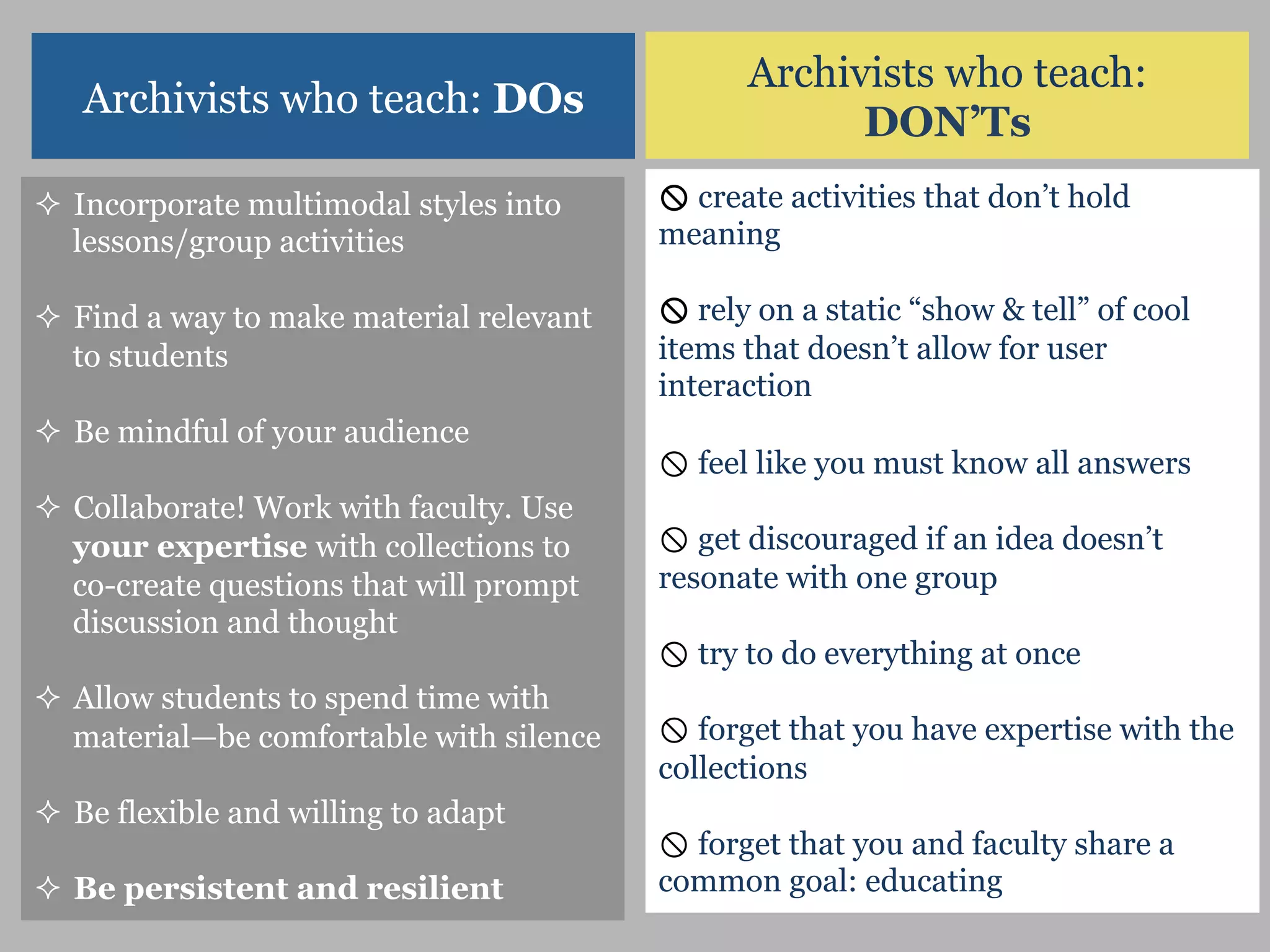
Archivists who teach: DOs
²  Incorporate multimodal styles into
lessons/group activities
²  Find a way to make material relevant
to students
²  Be mindful of your audience
²  Collaborate! Work with faculty. Use
your expertise with collections to
co-create questions that will prompt
discussion and thought
²  Allow students to spend time with
material—be comfortable with silence
²  Be flexible and willing to adapt
²  Be persistent and resilient
! create activities that don’t hold
meaning
! rely on a static “show & tell” of cool
items that doesn’t allow for user
interaction
! feel like you must know all answers
! get discouraged if an idea doesn’t
resonate with one group
! try to do everything at once
! forget that you have expertise with the
collections
! forget that you and faculty share a
common goal: educating
Archivists who teach:
DON’Ts
Successful class visits to archives
with engaged learning
•  Might look and feel chaotic:
Students may use mobile
devices to work
•  Might have alternating deadly
silence and noise
•  Faculty integrate experience
into course so archives has
relevance
Three models:
•  Create stations for group work:
opera class at archives
•  Give individual students folders and
worksheet: Forester records in
history survey class
•  Research “boot camp”
Collaborative
Partnership 		
•  Two or more parties
share resources to achieve
a common goal or goals


Customer Service
•  The service provider
works to support the
customer’s goals and
needs.
Archivist’s Perspective
Case Study #1: Civil Rights and Social
Justice Class
•  Multiple visits to Archives reading room for research/tours/sessions
with archivist
•  Used sensitive collection of essays, so we met with Law Department
and spent time redacting
•  Students investigated/tracked down authors of student
desegregation essays and interviewed them
•  Excellent student work and project website produced
Missed Opportunities
•  Project website did not cite Archives
•  Class imaged city records, but Archives didn’t get copies
of these images
•  Class visit measured as 1 reference appointment rather
than multiple, even though multiple students did
research. No metrics produced measuring staff time
spent with class
•  https://www.brandeis.edu/investigate/race-justice/
busing-desegregation-student-essays-from-1975.html
Case Study #2: Digital Approaches to
Boston’s Culture
•  Class designing a virtual museum of the Mayor
James Curley House
•  Students produced museum “exhibits” or posters
related to Curley
•  Final product was a project website and poster
projects
Outcomes
•  Project website pointing to
our collections
•  Exhibits using our collections
•  Empowered students and a
less exhausted archivist
•  Ongoing relationship with
Wentworth
Teaching Goal: Create a digital archive and
interactive exhibit
Challenges (Faculty perspective):
²  Resources (funding, archival collections, technological support, time)
²  Combatting stereotypes of archives and attitudes about “real” history
²  Communication beyond classroom
²  Creating a supportive classroom community
²  Setting new & different expectations
Solution: Collaborative Partnership with Boston City Archives 
Meeting Challenges by
Creating Collaborations
Boston City Archives and UMass Boston
UMB and City Archives
Collaboration
First Year
•  Class visit to talk about public records and doing
research in our collections
•  Scanned documents for students
•  Gave input and feedback on metadata
•  Discussion of privacy issues
UMB and City Archives
Collaboration
Second Year
•  Class is held at City Archives
•  Students image documents under supervision
•  Students do research during class time rather than
multiple visits
•  Metadata spreadsheet
Planning a Collaboration
Ø  Look for opportunities
Ø  Remember that collaborations should be mutual
Ø  Be creative in find the appropriate balance of
access and security
Ø  Get comfortable with imperfection and
discomfort
© Morgan 2016. Adapted from the "Business Model Canvas," by Strategyzer.com. Creative Commons license.
Success	Metrics
Challenges Desired	Outcomes Unique	Value	Proposition
Key	Activities
Unique	assets
Key	Collaborators
Target	Audience/Users
Cost	&	Resources
Iden&fy	and	state		
challenges	clearly	
and	individually.	
	
Ex.,	“some	of	our	
faculty	colleagues	are	
resist	to	new	ways	of	
teaching”	
	
“how	to	define	my	
role	vs.	the	faculty/
teacher	role	during	
the	class	visit”	
	
“how	do	you	get	
teachers	to	
communicate?”	


AAer	you	meet	
these	goals	what	
unique	service	do	
you	want	to	provide	
to	users?		
	
Ex.,	We	teach	and	
work	with	faculty	to	
create	assignments	
that	are	compelling	
to	students	and	
helps	them	develop	
research/deep	
reading/analysis	
skills	
	
Ex.,	Because	we’re	
fluent	with	digital	
plaIorms	and	tools,	
we	can	reach	an	
expanded	audience.	
Think	of	your	
collec&ons.	Which	
stand	out	as	
unique?	Describe	
one	(or	two)	you’d	
like	to	highlight	
first.		
	
See	example	on	
next	page.	
List	concrete	ac&ons	
that	you	can	take.	
List	separately.	
	
Ex.,	Iden&fy	4	
poten&al	classes	and	
faculty	to	contact	
	
What	are	your	goals?	
Choose		as	many	as	
three.		
Ex.,	“I’d	like	to	teach	
people	how	to	conduct	
research	using	primary	
sources”		
“Reach	expanded	
audiences	with	digital	
tools”	
	
How	will	you	measure	success?	Be	specific.		
	
Ex.,	Increased	research	appointments?	Web	analy&cs?		
Iden&fy	your	target	
user.	
	
Ex.,	pre-K-12	at	Chase	
	
Ex.,	Students	studying	
history,	English,	
media	studies,	
journalism,	war	
studies	could	engage	
in	numerous	crea&ve	
projects	based	on	
these	archival	
materials.	TuAs	
students	and	faculty	
cons&tute	a	natural	
target	audience;	but	
lessons	could	be	
created/adapted	for	
local	high	school	and	
upper	school	students	
in	Cambridge	and	
Somerville	too.						
	
AAer	considering	goals,	
challenges,	UVP,	
resources,	etc.,	iden&fy	
other	people	(anyone	
who	is	not	your	target	
user).	These	might	
include	faculty,	other	
archives	staff,	
supervisor,	library	
director,	
communica&ons,	etc.	
Creating a canvas or action plan
What	costs	are	associated	with	your	goals?		
Ex.,	Time,	Publicity	costs?	Training?		
	
What	resources	are	associated	with	your	goals?	
Ex.,	Do	you	have	ample	space?	Do	rooms	need	to	be	
reserved?	
© Morgan 2016. Adapted from the "Business Model Canvas," by Strategyzer.com. Creative Commons license.
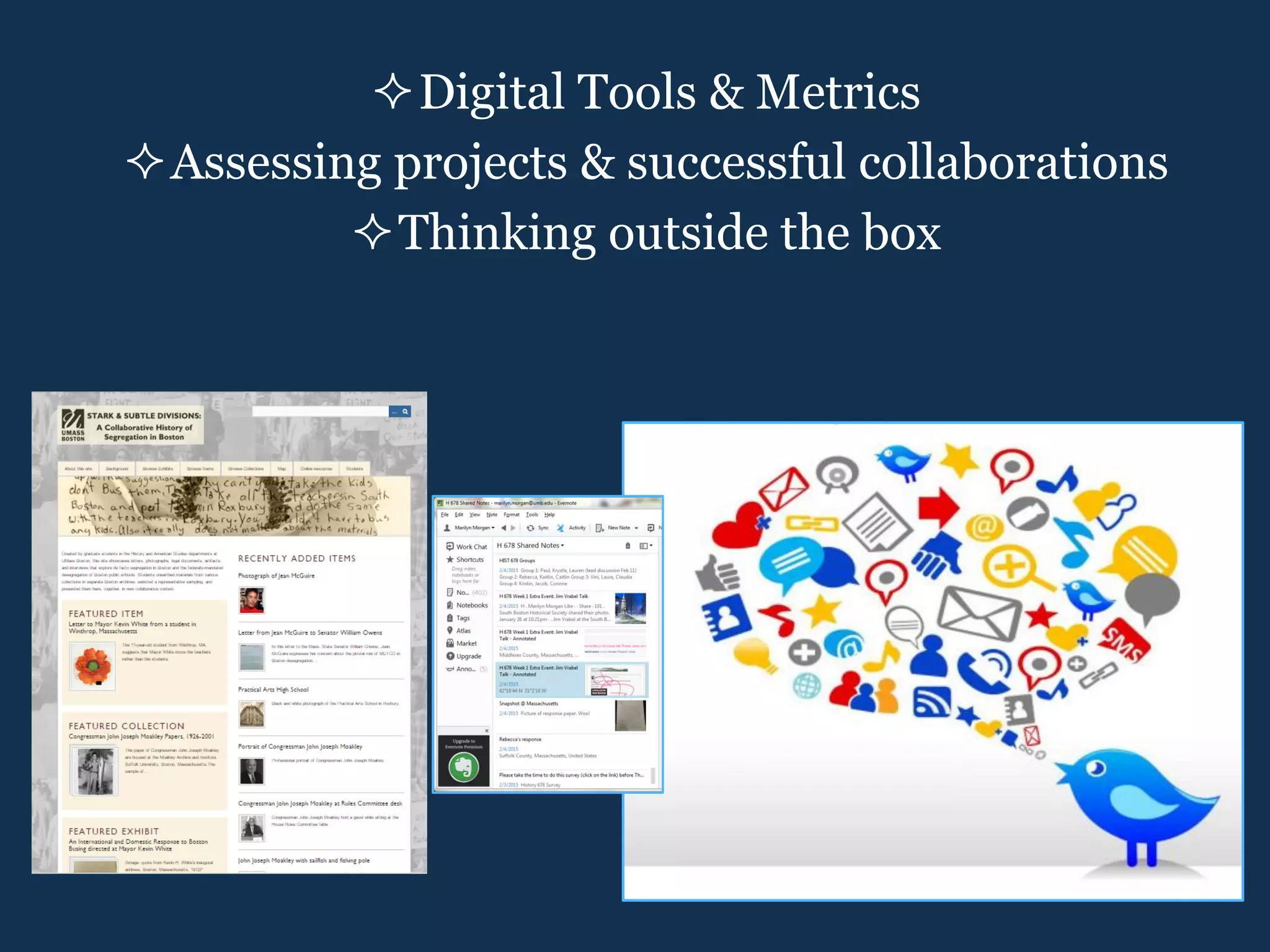
² Digital Tools & Metrics
² Assessing projects & successful collaborations
² Thinking outside the box
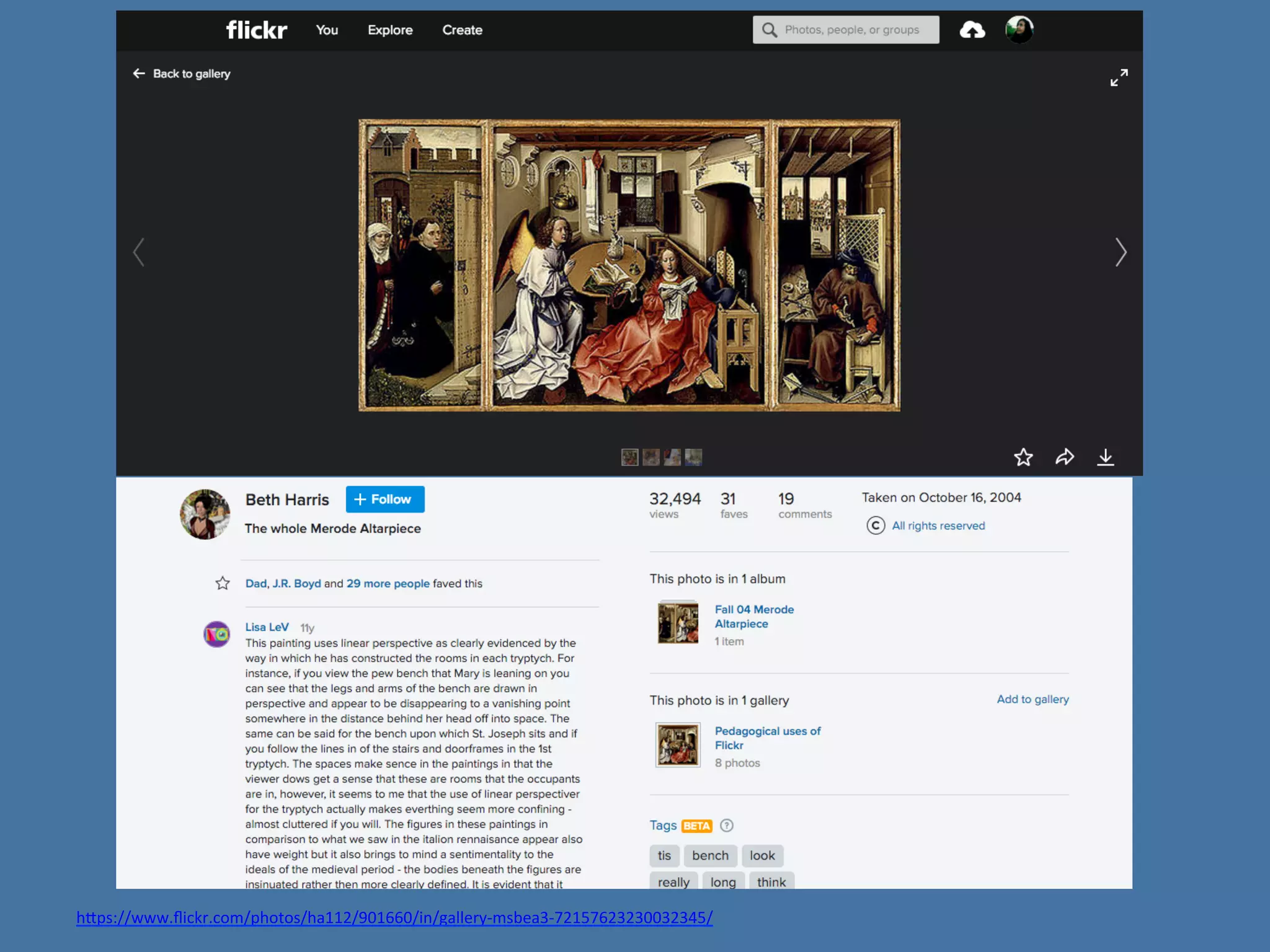
h`ps://www.flickr.com/photos/ha112/901660/in/gallery-msbea3-72157623230032345/
h`p://goo.gl/e3o32f	
h`p://goo.gl/NiagCc	
h`p://goo.gl/EO04Em	
Timeline JS3: Digital Archives-Based Active Learning Platform
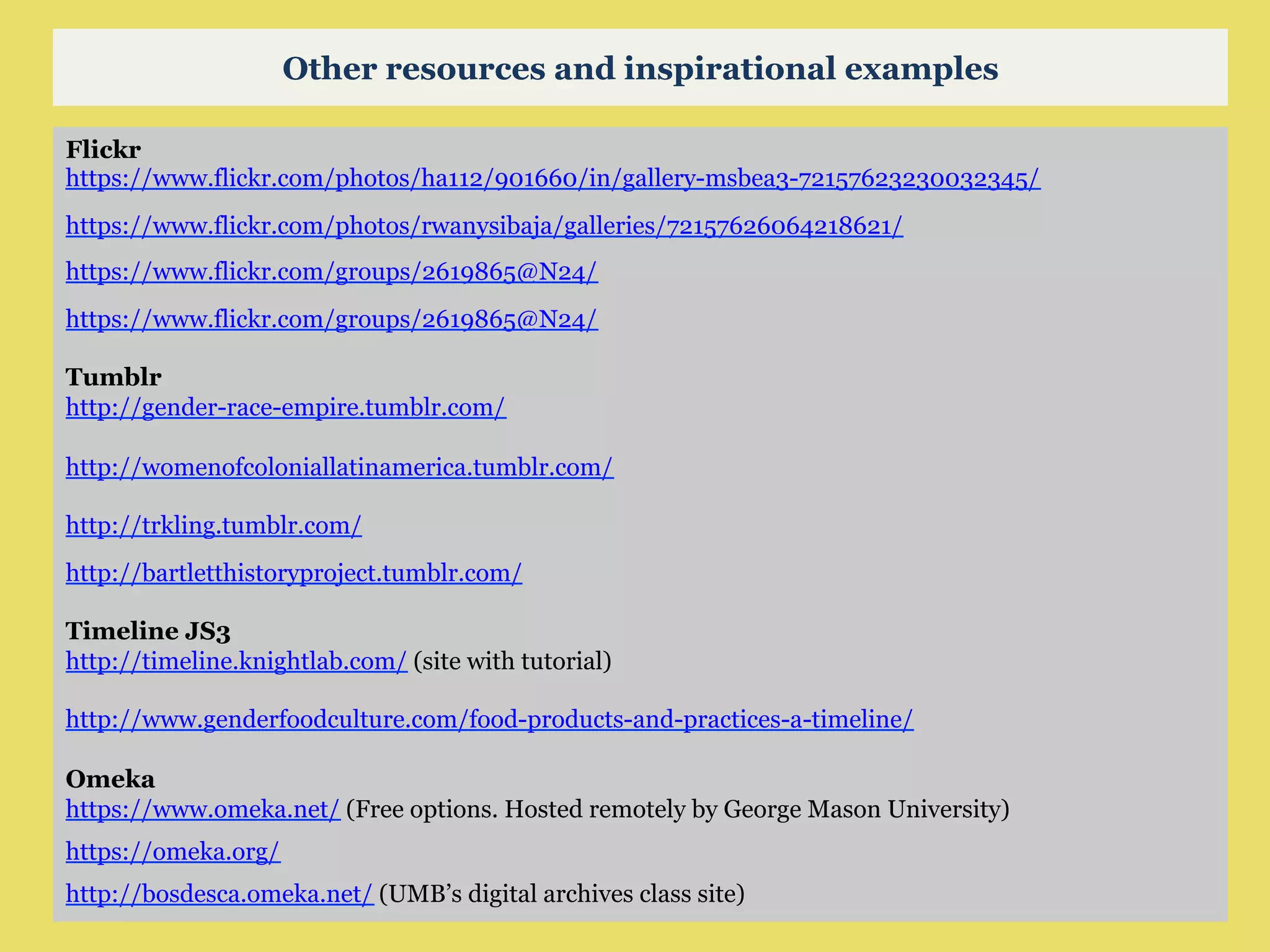
Tumblr
h`p://bartle`historyproject.tumblr.com/	
	
h`p://gender-race-empire.tumblr.com/
Omeka
h`p://bosdesca.omeka.net/
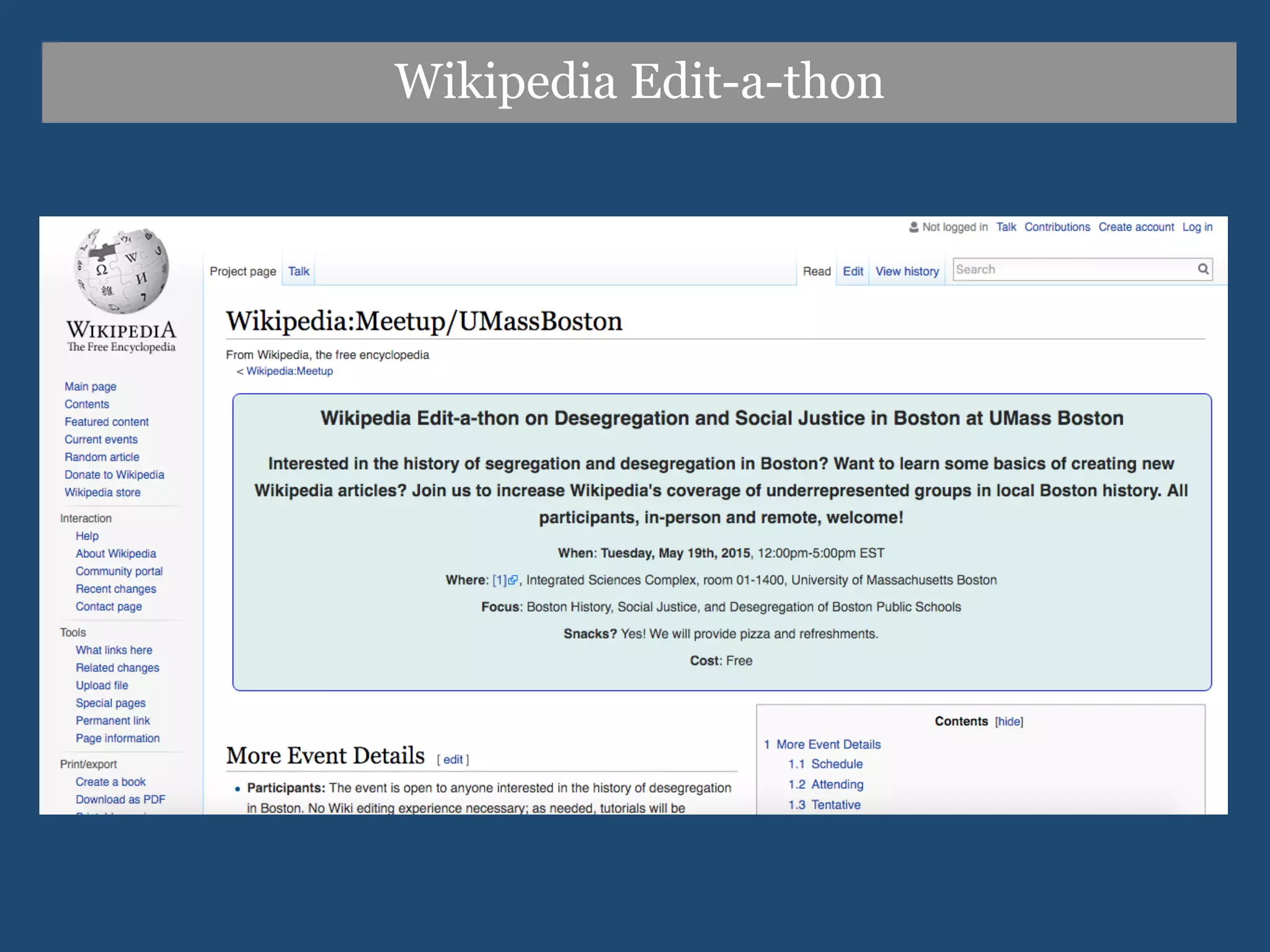
Wikipedia Edit-a-thon
Flickr
https://www.flickr.com/photos/ha112/901660/in/gallery-msbea3-72157623230032345/
https://www.flickr.com/photos/rwanysibaja/galleries/72157626064218621/
https://www.flickr.com/groups/2619865@N24/
Tumblr
http://gender-race-empire.tumblr.com/
http://womenofcoloniallatinamerica.tumblr.com/
http://trkling.tumblr.com/
http://bartletthistoryproject.tumblr.com/
Timeline JS3
http://timeline.knightlab.com/ (site with tutorial)
http://www.genderfoodculture.com/food-products-and-practices-a-timeline/
Omeka
https://www.omeka.net/ (Free options. Hosted remotely by George Mason University)
https://omeka.org/
http://bosdesca.omeka.net/ (UMB’s digital archives class site)
Other resources and inspirational examples
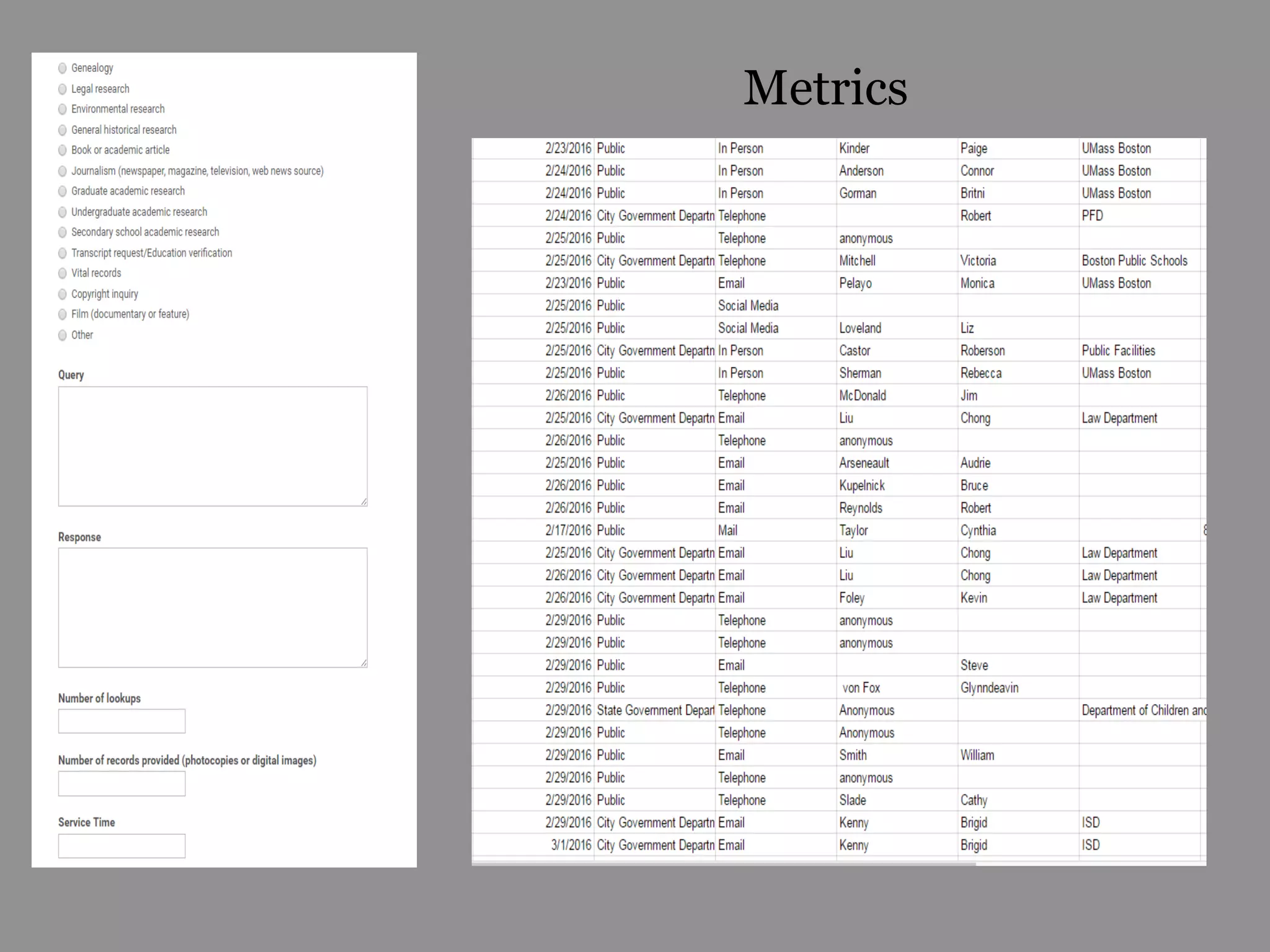
Metrics
Metrics
Boston City Archives
Reference Appointments, January-May 2015
Umass	Digital	Archives	
appointments	
All	other	appoinments
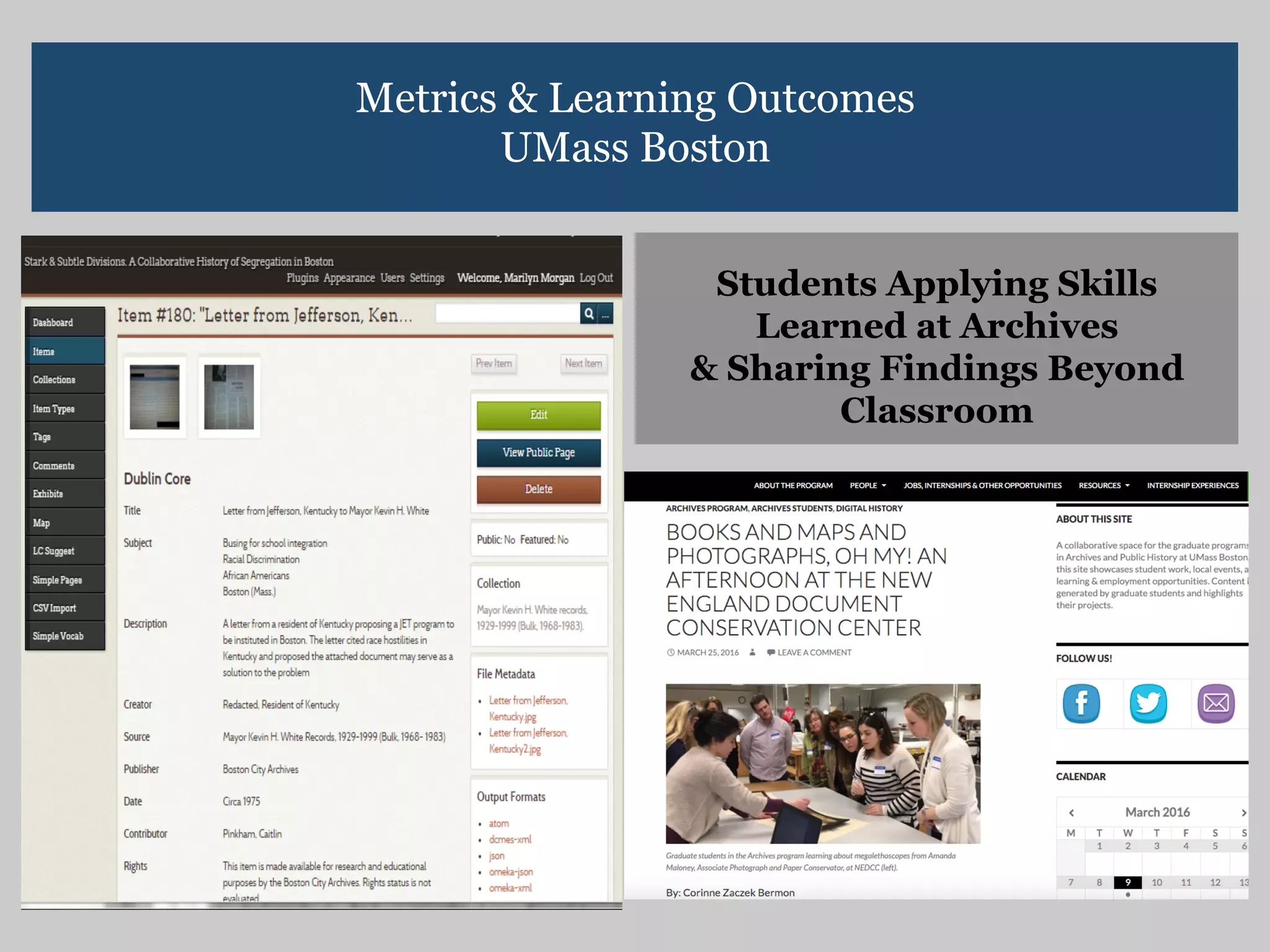
Metrics & Learning Outcomes
UMass Boston
Students Applying Skills
Learned at Archives
& Sharing Findings Beyond
Classroom
Metrics & Learning Outcomes:
New Understanding
Excerpt	from	student:		
Tue	4/28/2015	6:45	PM	
	
I	am	officially	frustrated.	I	created	a	
map	in	flickr	because	google	maps	
did	not	allow	me	to	a`ach	the	
images.	I	am	unsure	how	.	.	.	to	link	
it	to	the	Omeka	exhibit.	I	only	
a`ached	interna&onal	le`ers	so	
far.
	
Struggle	is	real.”	
“I loved going into the archives, and really being challenged to find a
variety of sources (images, maps, advertisements, etc.). It was a
pleasure to get to have creative assignments like blog posts instead of
standard response papers.”
~undergraduate, 2013
Lessons Learned
	
	
“Just do something. Do whatever you can within
the confines of the resources you have.”
-  Jason Evans Groth
User Experience Librarian for Digital Media
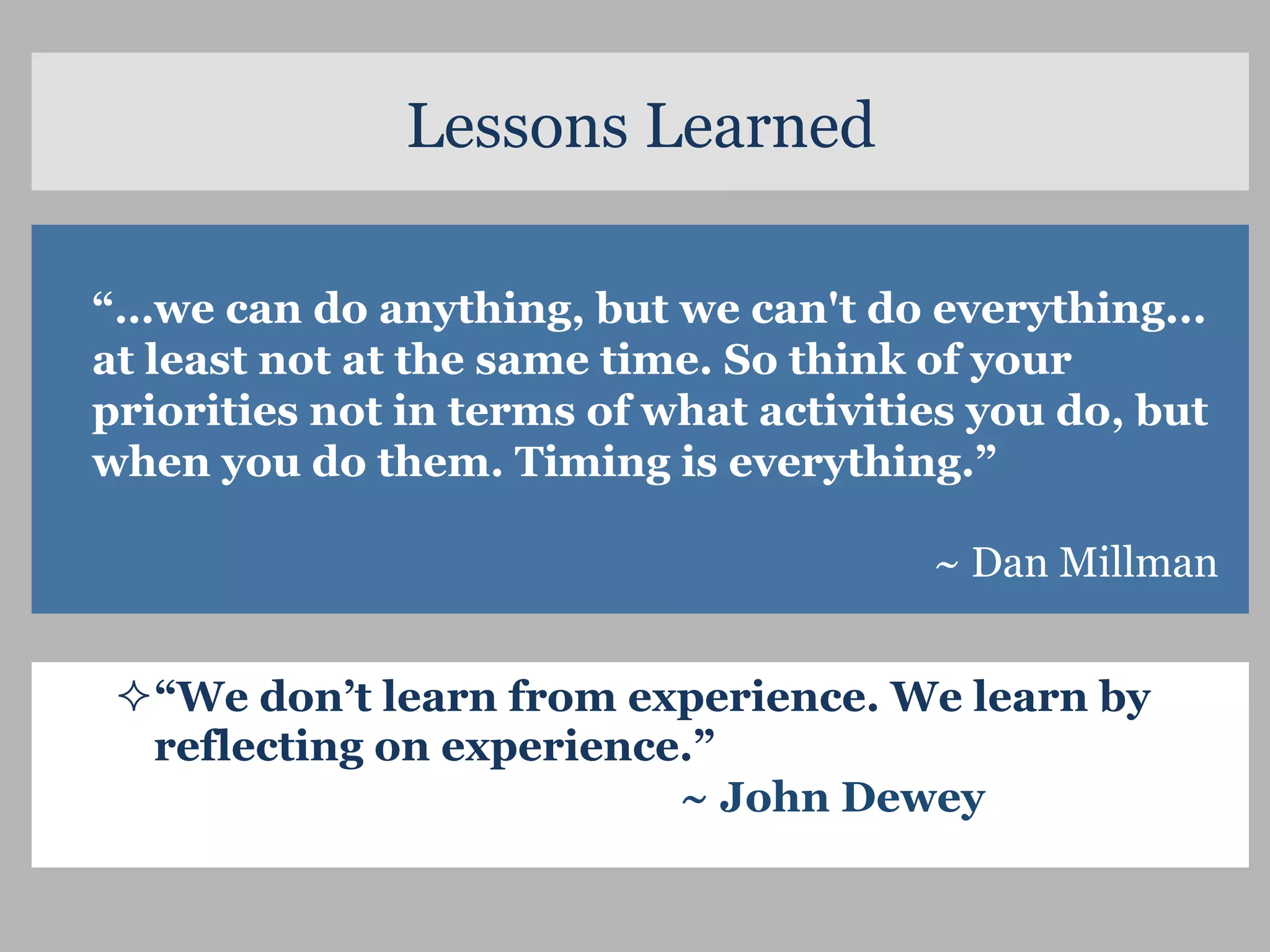
² “We don’t learn from experience. We learn by
reflecting on experience.”
~ John Dewey
 
“…we can do anything, but we can't do everything...
at least not at the same time. So think of your
priorities not in terms of what activities you do, but
when you do them. Timing is everything.”
~ Dan Millman
Lessons Learned

NEA active learning workshop 2016 Morgan-Crilly

  • 1.
    Archivists & ActiveLearning Fostering Student Engagement and Learning Opportunities in Archives A workshop for New England Archivists Annual Meeting, 2016 | Portland, ME. March 31, 2016 Slides created and presented by: Marilyn Morgan & Marta Crilly Full workshop co-led by: Marta Crilly, Boston City Archives, Jim Moran, American Antiquarian Society, Marilyn Morgan, University of Massachusetts Boston, Suzy Taraba, Wesleyan University
  • 2.
    “How do Iengage students/patrons with primary source documents?” ²  Involving students in doing things and thinking about the things they are doing [1] ²  “Active learning is most effective when the experience supports students to interact with and reflect on the subject matter in substantive ways.” [2] 1.Association for the Study of Higher Education (ASHE) report (Bonwell & Eison 1991, 2). 2. Bill Cerbin, UW-La Crosse Center for Advancing Teaching & Learning What is Active Learning, Exactly? ²  “Tell me and I forget. Teach me and I remember. Involve me and I learn.” ~Benjamin Franklin
  • 3.
    Building Collaborative Partnerships& Bridging the Divide Between Faculty and Archivists: A Tale of Two Perspectives Faculty with student at archives Archivist with student at archives
  • 4.
    So, I builtit. But no one came. . . . What happened? “What do I have to do to get faculty to incorporate archives into their curriculum?” “How can I reach undergraduates when their professors don’t bring them into the archives?”
  • 5.
    Understand Challenges Educator’s perspective: • “it sounds cool, but I can’t justify taking away from the classroom” •  Ego (“if anyone is going to teach my students about research, it’s me”) •  Lack of time to prepare •  Unwilling to invest time with uncertain ROI Archivists and faculty share a common goal: a genuine desire to enrich education. So, why aren’t faculty lined up at the archives’ doors? “How can I approach faculty to help them envision integrating collections into curriculum?” •  Outdated or lack of understanding of archives—or judgment based on colleague’s experience
  • 6.
  • 7.
    “How can Iimprove my chances of developing a successful and mutually beneficial collaboration with faculty?” •  Investigate: what classes are offered? Who teaches them when? •  Start small and set tangible goals •  Identify how many classes you can accommodate and make contact •  Consider timing •  Be specific in your goals and how the archives fits with their class •  Follow up; “no” one semester doesn’t mean “no” forever •  Document success •  Promote and publicize good collaborations Faculty & Staff Africana Studies American Studies Anthropology Applied Linguistics Art Asian Studies Classics and Religious Studies Communication Economics English History Latin American Studies Latino Studies Modern Languages Native American Studies Performing Arts Philosophy Political Science Psychology Sociology Women's and Gender Studies
  • 8.
    Archivists who teach:DOs ²  Incorporate multimodal styles into lessons/group activities ²  Find a way to make material relevant to students ²  Be mindful of your audience ²  Collaborate! Work with faculty. Use your expertise with collections to co-create questions that will prompt discussion and thought ²  Allow students to spend time with material—be comfortable with silence ²  Be flexible and willing to adapt ²  Be persistent and resilient ! create activities that don’t hold meaning ! rely on a static “show & tell” of cool items that doesn’t allow for user interaction ! feel like you must know all answers ! get discouraged if an idea doesn’t resonate with one group ! try to do everything at once ! forget that you have expertise with the collections ! forget that you and faculty share a common goal: educating Archivists who teach: DON’Ts
  • 9.
    Successful class visitsto archives with engaged learning •  Might look and feel chaotic: Students may use mobile devices to work •  Might have alternating deadly silence and noise •  Faculty integrate experience into course so archives has relevance Three models: •  Create stations for group work: opera class at archives •  Give individual students folders and worksheet: Forester records in history survey class •  Research “boot camp”
  • 10.
    Collaborative Partnership •  Twoor more parties share resources to achieve a common goal or goals Customer Service •  The service provider works to support the customer’s goals and needs. Archivist’s Perspective
  • 11.
    Case Study #1:Civil Rights and Social Justice Class •  Multiple visits to Archives reading room for research/tours/sessions with archivist •  Used sensitive collection of essays, so we met with Law Department and spent time redacting •  Students investigated/tracked down authors of student desegregation essays and interviewed them •  Excellent student work and project website produced
  • 12.
    Missed Opportunities •  Projectwebsite did not cite Archives •  Class imaged city records, but Archives didn’t get copies of these images •  Class visit measured as 1 reference appointment rather than multiple, even though multiple students did research. No metrics produced measuring staff time spent with class •  https://www.brandeis.edu/investigate/race-justice/ busing-desegregation-student-essays-from-1975.html
  • 13.
    Case Study #2:Digital Approaches to Boston’s Culture •  Class designing a virtual museum of the Mayor James Curley House •  Students produced museum “exhibits” or posters related to Curley •  Final product was a project website and poster projects
  • 14.
    Outcomes •  Project websitepointing to our collections •  Exhibits using our collections •  Empowered students and a less exhausted archivist •  Ongoing relationship with Wentworth
  • 15.
    Teaching Goal: Createa digital archive and interactive exhibit Challenges (Faculty perspective): ²  Resources (funding, archival collections, technological support, time) ²  Combatting stereotypes of archives and attitudes about “real” history ²  Communication beyond classroom ²  Creating a supportive classroom community ²  Setting new & different expectations Solution: Collaborative Partnership with Boston City Archives  Meeting Challenges by Creating Collaborations Boston City Archives and UMass Boston
  • 16.
    UMB and CityArchives Collaboration First Year •  Class visit to talk about public records and doing research in our collections •  Scanned documents for students •  Gave input and feedback on metadata •  Discussion of privacy issues
  • 17.
    UMB and CityArchives Collaboration Second Year •  Class is held at City Archives •  Students image documents under supervision •  Students do research during class time rather than multiple visits •  Metadata spreadsheet
  • 18.
    Planning a Collaboration Ø Look for opportunities Ø  Remember that collaborations should be mutual Ø  Be creative in find the appropriate balance of access and security Ø  Get comfortable with imperfection and discomfort
  • 19.
    © Morgan 2016.Adapted from the "Business Model Canvas," by Strategyzer.com. Creative Commons license. Success Metrics Challenges Desired Outcomes Unique Value Proposition Key Activities Unique assets Key Collaborators Target Audience/Users Cost & Resources Iden&fy and state challenges clearly and individually. Ex., “some of our faculty colleagues are resist to new ways of teaching” “how to define my role vs. the faculty/ teacher role during the class visit” “how do you get teachers to communicate?” AAer you meet these goals what unique service do you want to provide to users? Ex., We teach and work with faculty to create assignments that are compelling to students and helps them develop research/deep reading/analysis skills Ex., Because we’re fluent with digital plaIorms and tools, we can reach an expanded audience. Think of your collec&ons. Which stand out as unique? Describe one (or two) you’d like to highlight first. See example on next page. List concrete ac&ons that you can take. List separately. Ex., Iden&fy 4 poten&al classes and faculty to contact What are your goals? Choose as many as three. Ex., “I’d like to teach people how to conduct research using primary sources” “Reach expanded audiences with digital tools” How will you measure success? Be specific. Ex., Increased research appointments? Web analy&cs? Iden&fy your target user. Ex., pre-K-12 at Chase Ex., Students studying history, English, media studies, journalism, war studies could engage in numerous crea&ve projects based on these archival materials. TuAs students and faculty cons&tute a natural target audience; but lessons could be created/adapted for local high school and upper school students in Cambridge and Somerville too. AAer considering goals, challenges, UVP, resources, etc., iden&fy other people (anyone who is not your target user). These might include faculty, other archives staff, supervisor, library director, communica&ons, etc. Creating a canvas or action plan What costs are associated with your goals? Ex., Time, Publicity costs? Training? What resources are associated with your goals? Ex., Do you have ample space? Do rooms need to be reserved? © Morgan 2016. Adapted from the "Business Model Canvas," by Strategyzer.com. Creative Commons license.
  • 20.
    ² Digital Tools &Metrics ² Assessing projects & successful collaborations ² Thinking outside the box
  • 21.
  • 22.
  • 23.
  • 24.
  • 25.
  • 26.
    Flickr https://www.flickr.com/photos/ha112/901660/in/gallery-msbea3-72157623230032345/ https://www.flickr.com/photos/rwanysibaja/galleries/72157626064218621/ https://www.flickr.com/groups/2619865@N24/ https://www.flickr.com/groups/2619865@N24/ Tumblr http://gender-race-empire.tumblr.com/ http://womenofcoloniallatinamerica.tumblr.com/ http://trkling.tumblr.com/ http://bartletthistoryproject.tumblr.com/ Timeline JS3 http://timeline.knightlab.com/ (sitewith tutorial) http://www.genderfoodculture.com/food-products-and-practices-a-timeline/ Omeka https://www.omeka.net/ (Free options. Hosted remotely by George Mason University) https://omeka.org/ http://bosdesca.omeka.net/ (UMB’s digital archives class site) Other resources and inspirational examples
  • 27.
  • 28.
    Metrics Boston City Archives ReferenceAppointments, January-May 2015 Umass Digital Archives appointments All other appoinments
  • 29.
    Metrics & LearningOutcomes UMass Boston Students Applying Skills Learned at Archives & Sharing Findings Beyond Classroom
  • 30.
    Metrics & LearningOutcomes: New Understanding Excerpt from student: Tue 4/28/2015 6:45 PM I am officially frustrated. I created a map in flickr because google maps did not allow me to a`ach the images. I am unsure how . . . to link it to the Omeka exhibit. I only a`ached interna&onal le`ers so far. Struggle is real.” “I loved going into the archives, and really being challenged to find a variety of sources (images, maps, advertisements, etc.). It was a pleasure to get to have creative assignments like blog posts instead of standard response papers.” ~undergraduate, 2013
  • 31.
    Lessons Learned “Just dosomething. Do whatever you can within the confines of the resources you have.” -  Jason Evans Groth User Experience Librarian for Digital Media
  • 32.
    ² “We don’t learnfrom experience. We learn by reflecting on experience.” ~ John Dewey   “…we can do anything, but we can't do everything... at least not at the same time. So think of your priorities not in terms of what activities you do, but when you do them. Timing is everything.” ~ Dan Millman Lessons Learned