We analyzed over 1 Million sales meetings with AI and uncovered
the following patterns and trends of successful cold calls.
Closing a dealis like embarking
on a sea voyage
The goal:
paradise
but...
sales conversations
are like
ocean storms
Times between sales conversations are easy
compared to conversations themselves
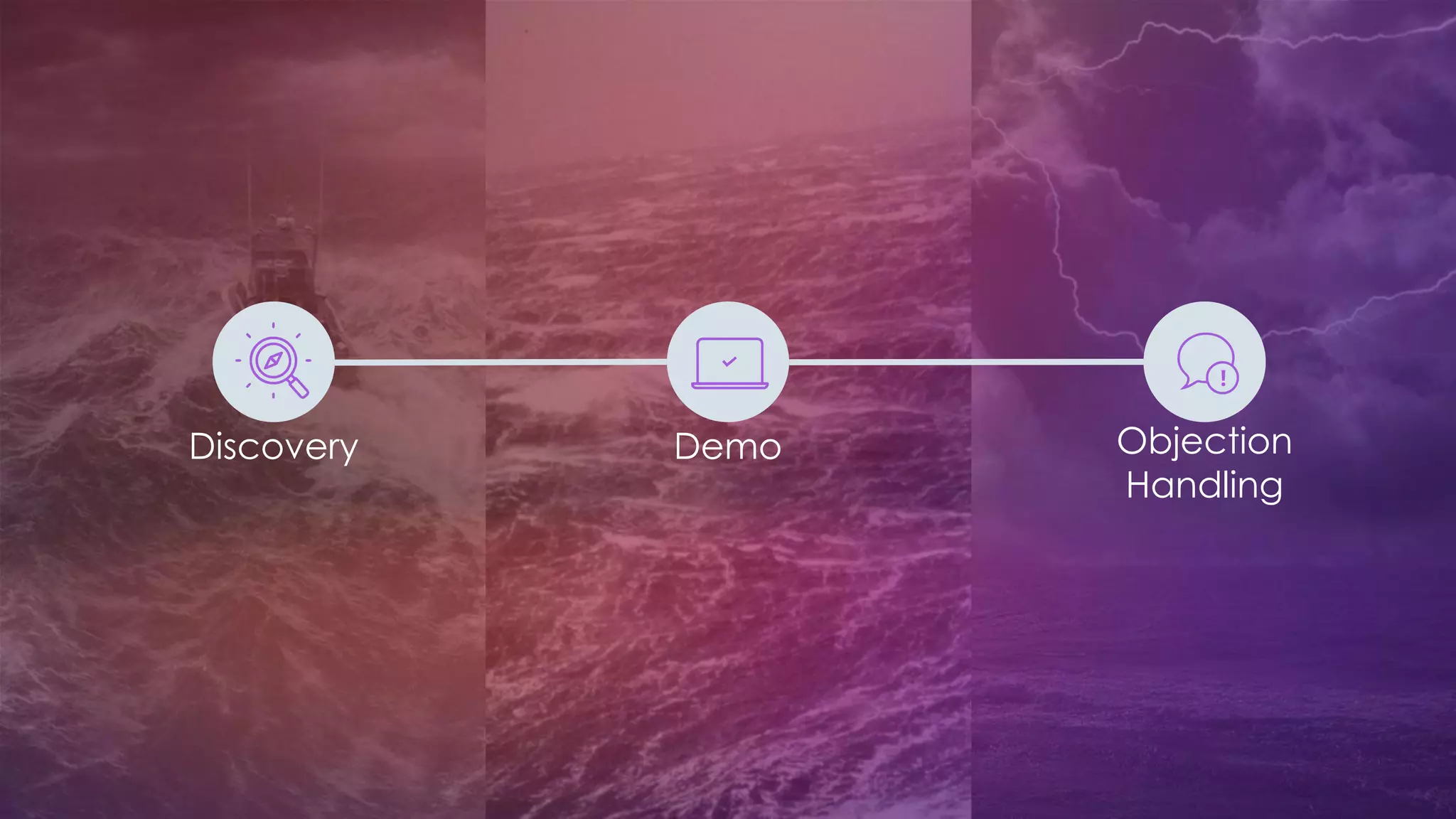
Discovery Demo Objection
Handling
These insights are your
Compass
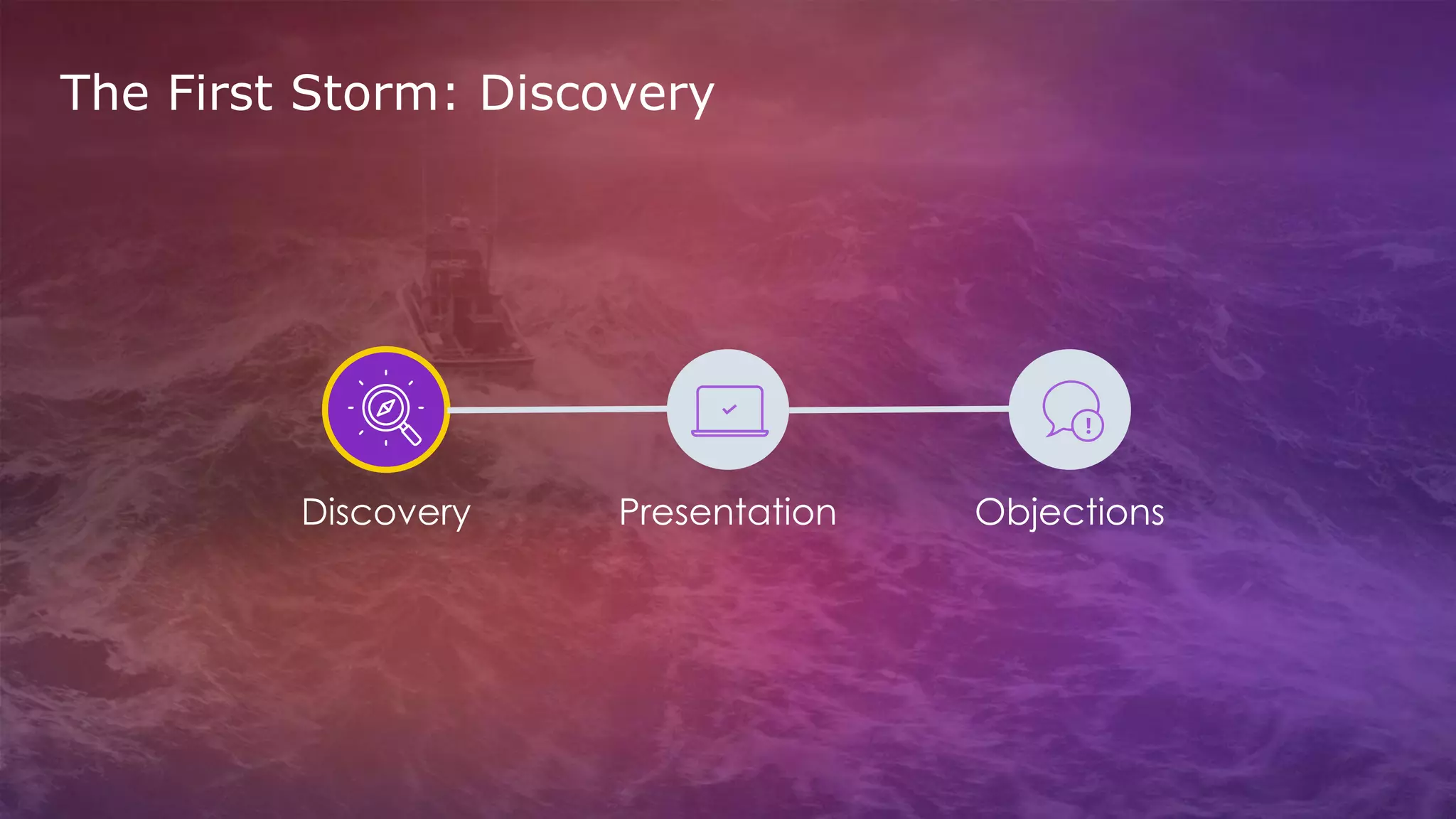
The First Storm: Discovery
Discovery Presentation Objections
Opening lines that don’t work
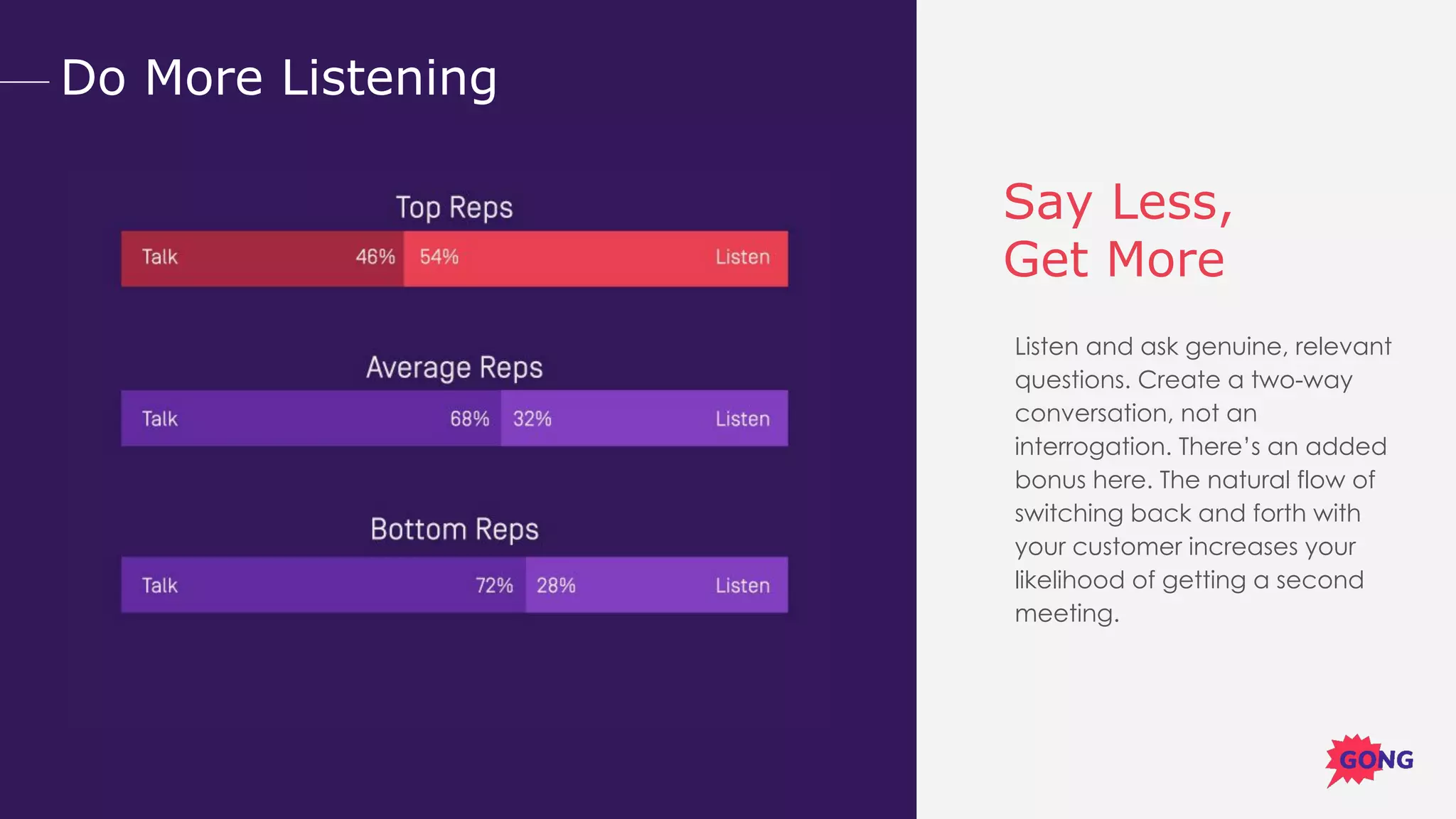
Say Less,
Get More
Listen and ask genuine, relevant
questions. Create a two-way
conversation, not an
interrogation. There’s an added
bonus here. The natural flow of
switching back and forth with
your customer increases your
likelihood of getting a second
meeting.
Do More Listening
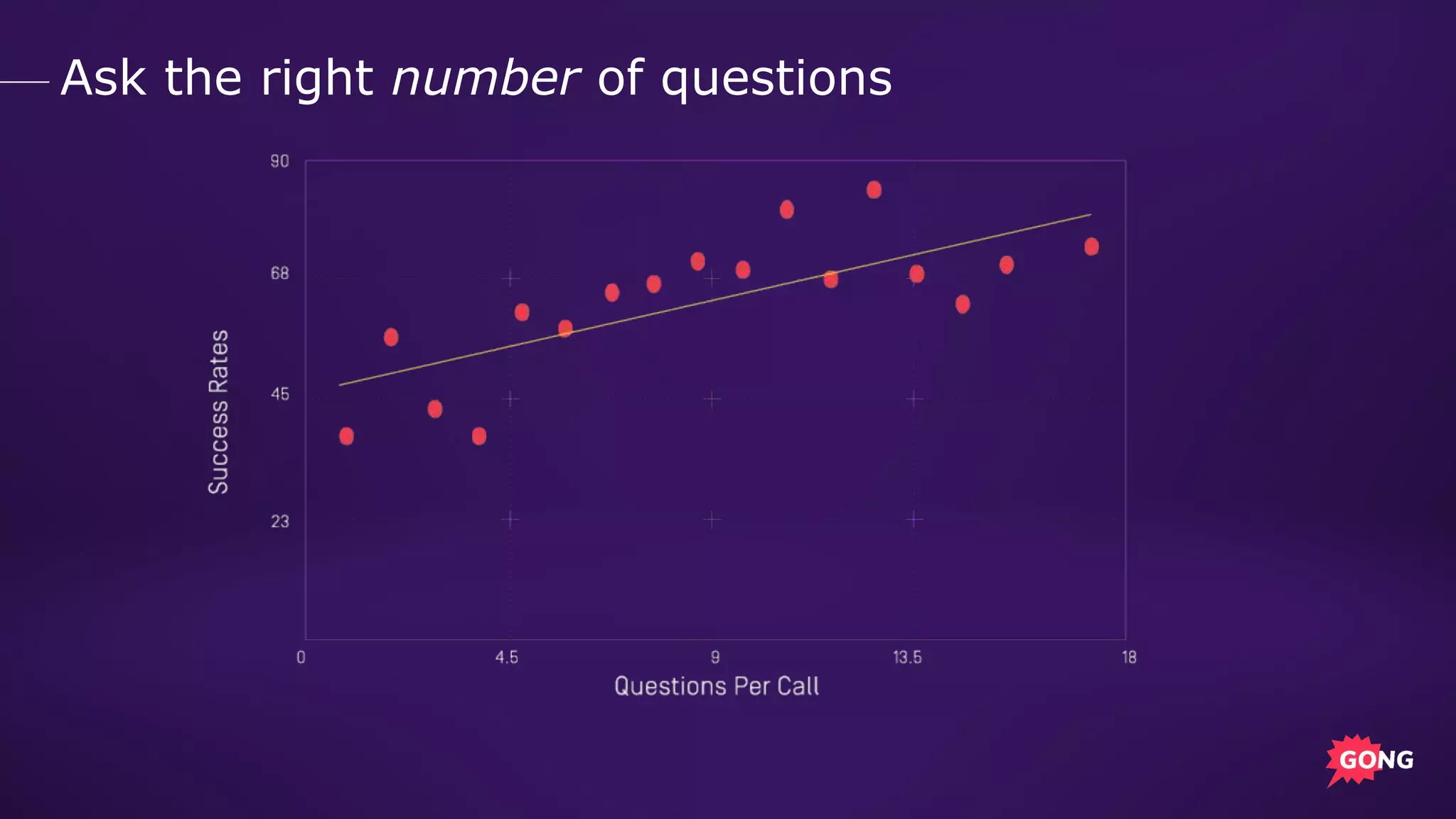
Ask the right number of questions
Opening lines that don’t work
80
60
40
20
0
SuccessRates
1-6 (low) 7-10 (med) 11-14 (high) 15-18 (very high)
Ask the right number of questions
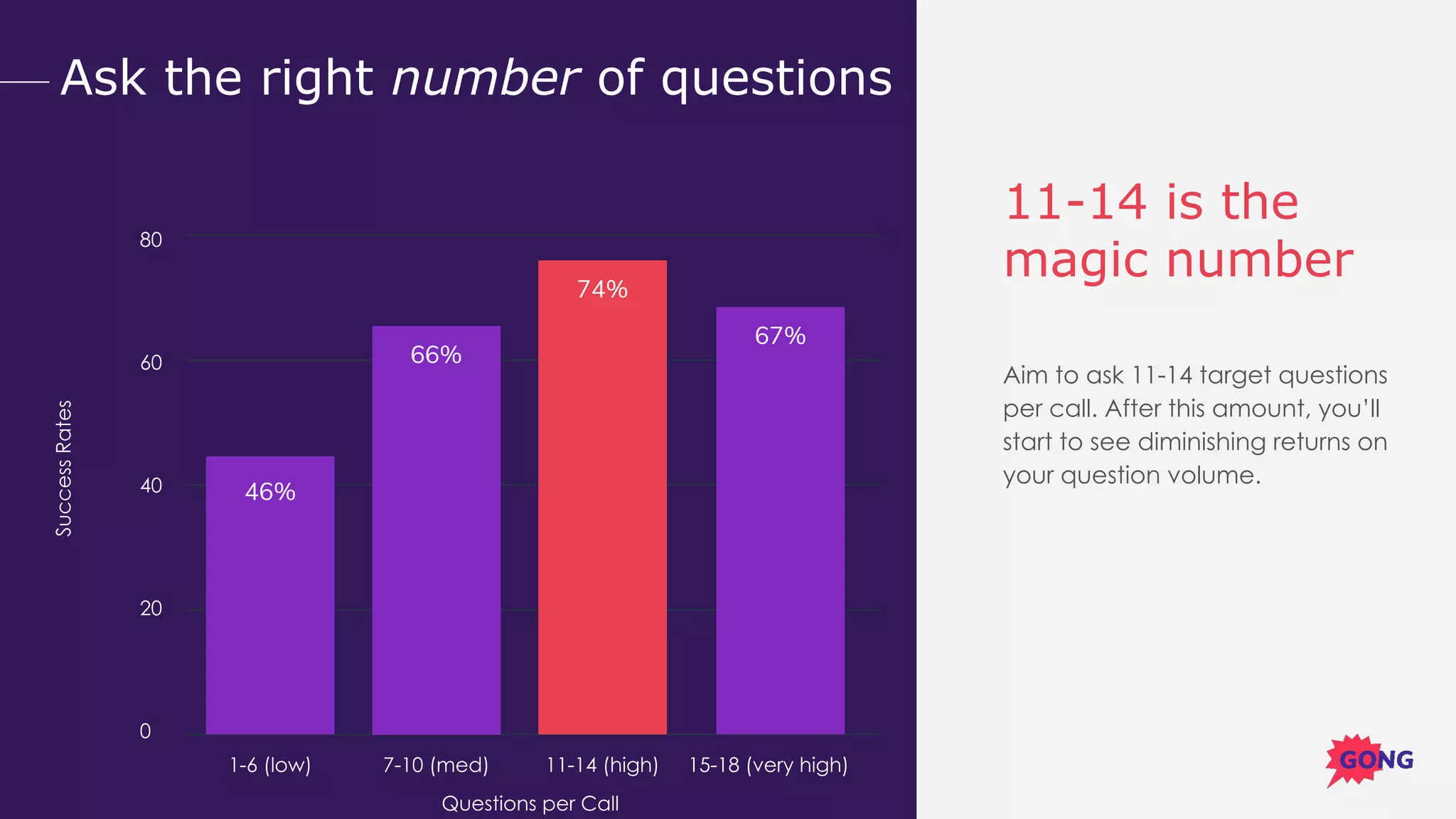
11-14 is the
magic number
Aim to ask 11-14 target questions
per call. After this amount, you’ll
start to see diminishing returns on
your question volume.
67%
74%
66%
46%
Questions per Call
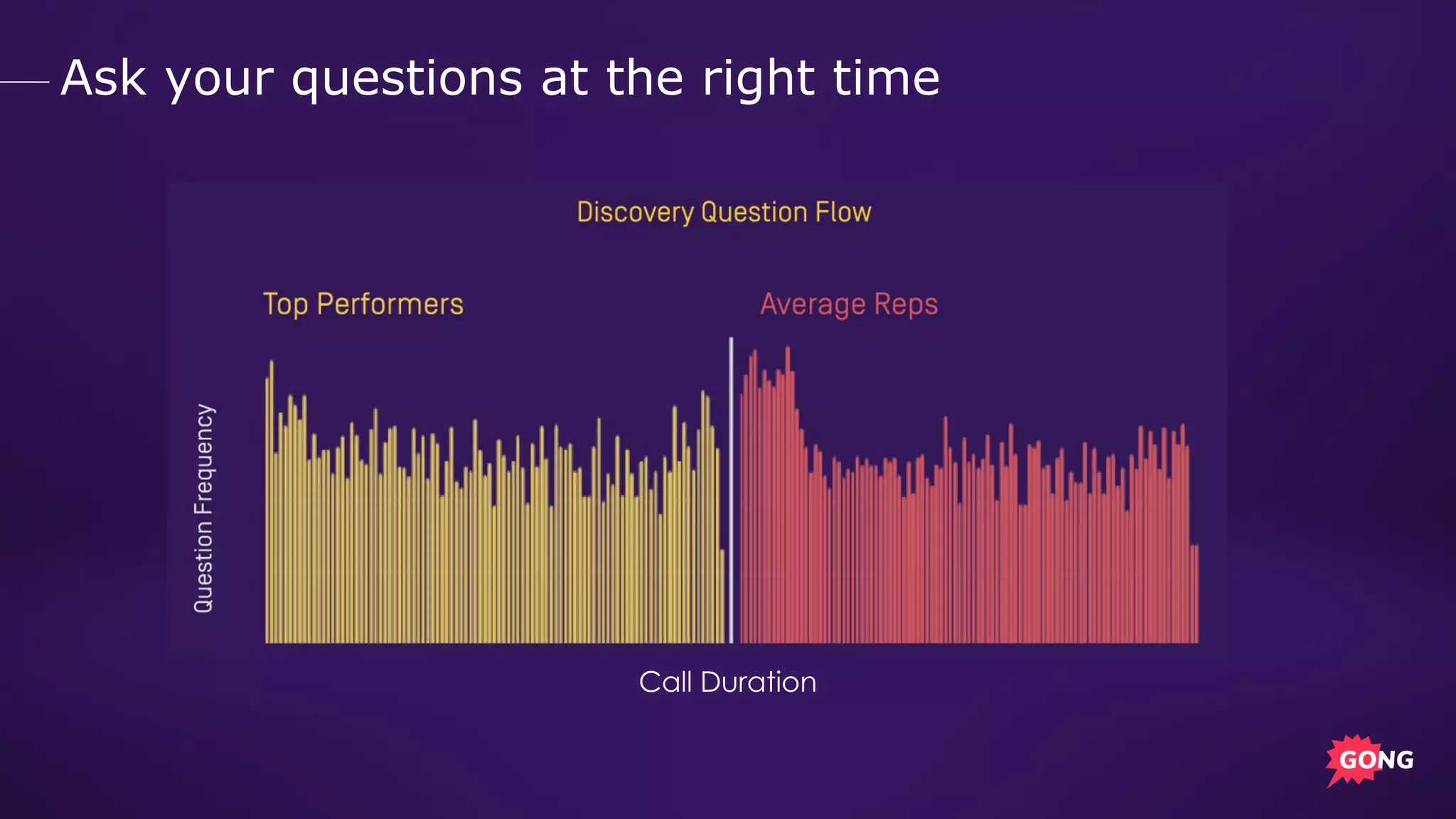
Ask your questions at the right time
Call Duration
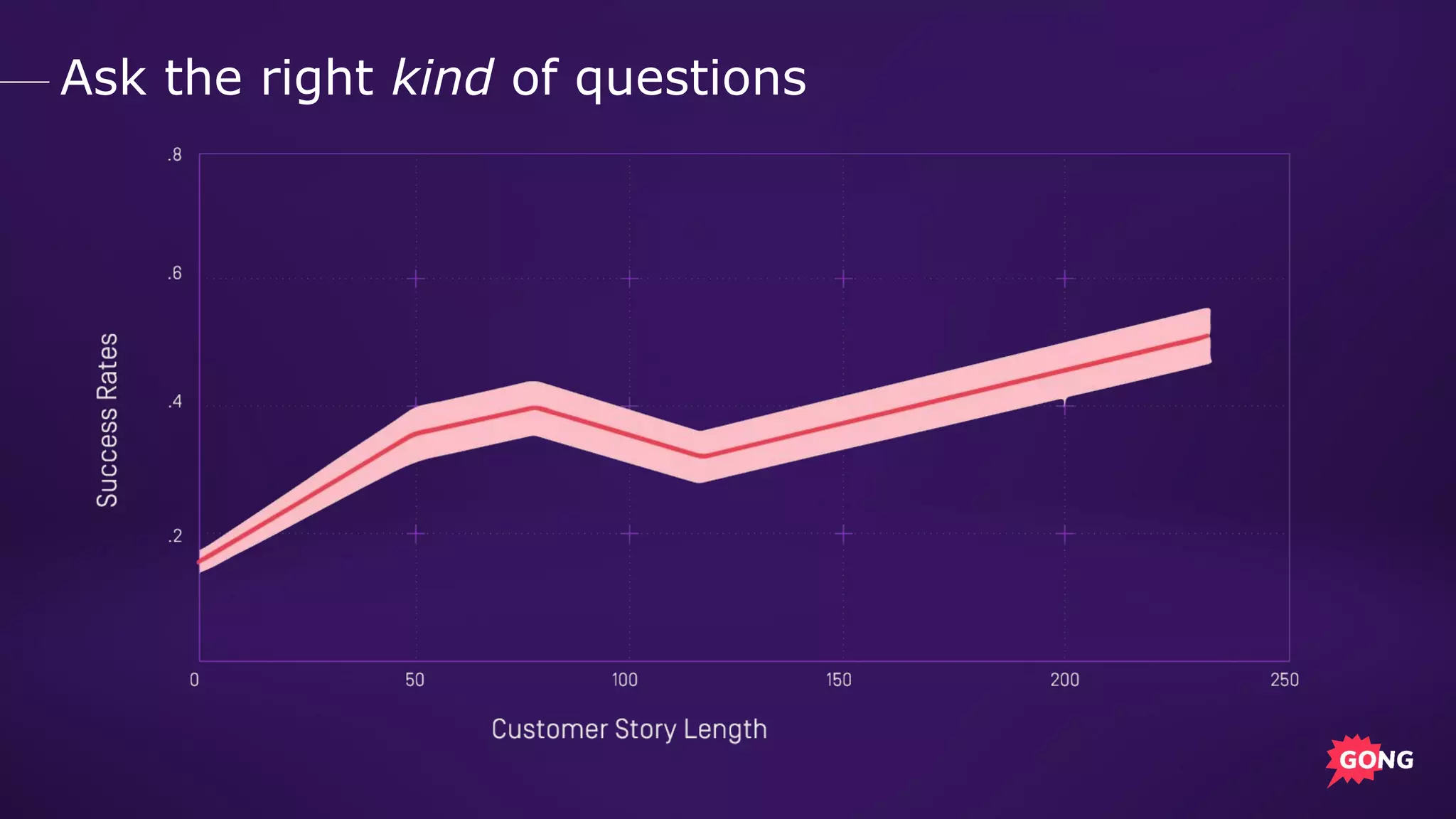
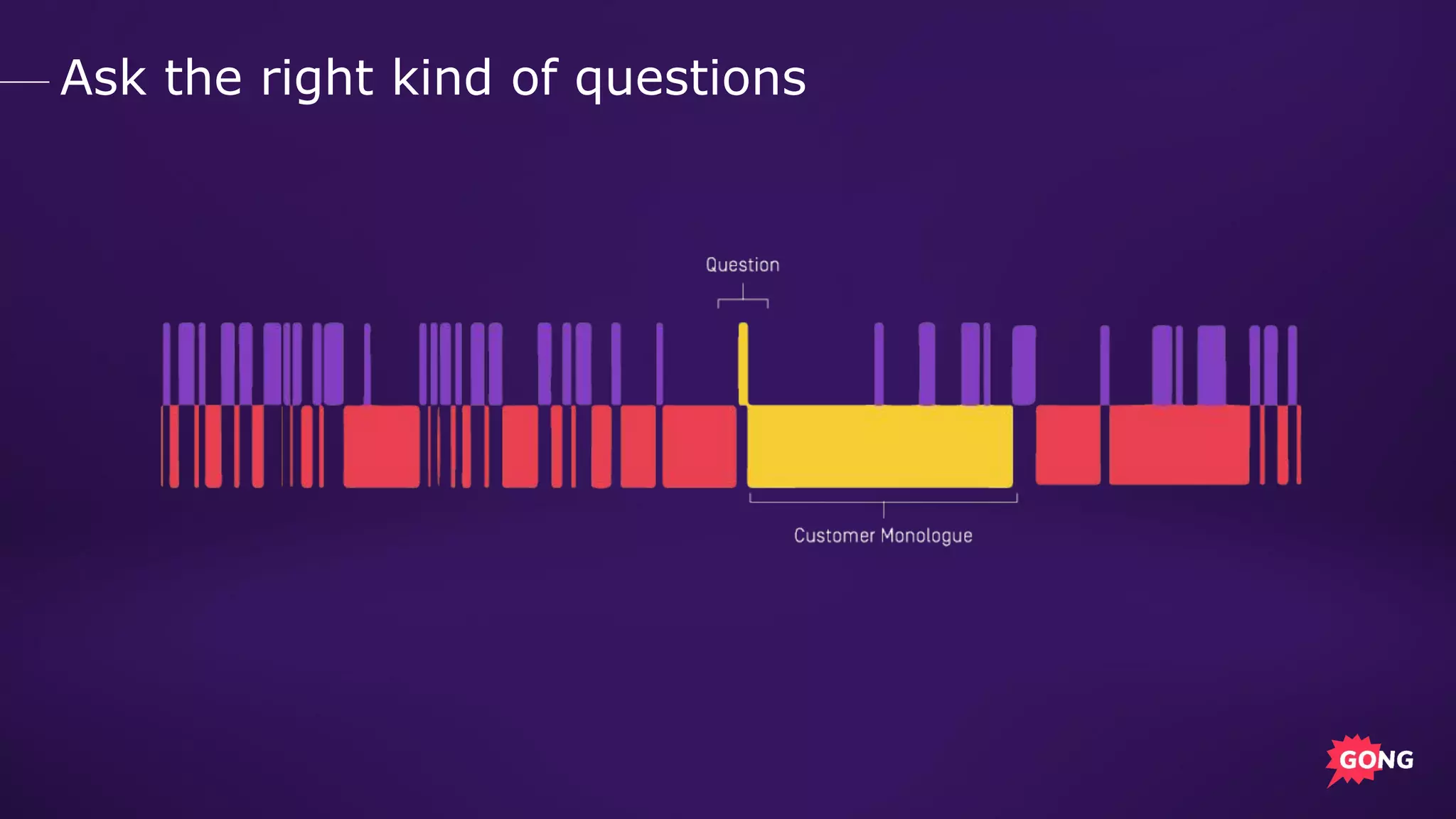
Ask the right kind of questions
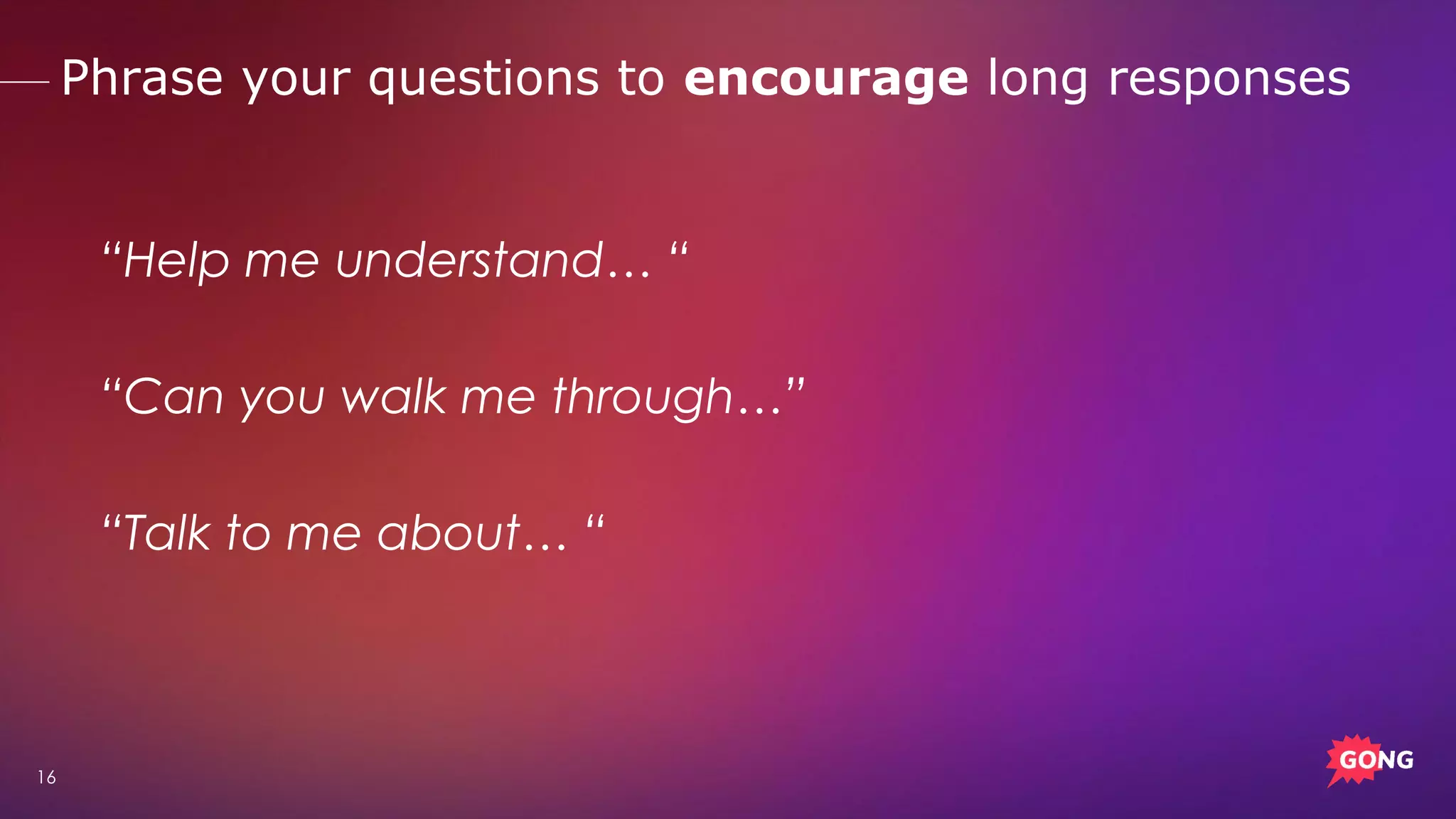
16
“Help me understand… “
“Can you walk me through…”
“Talk to me about… “
Phrase your questions to encourage long responses
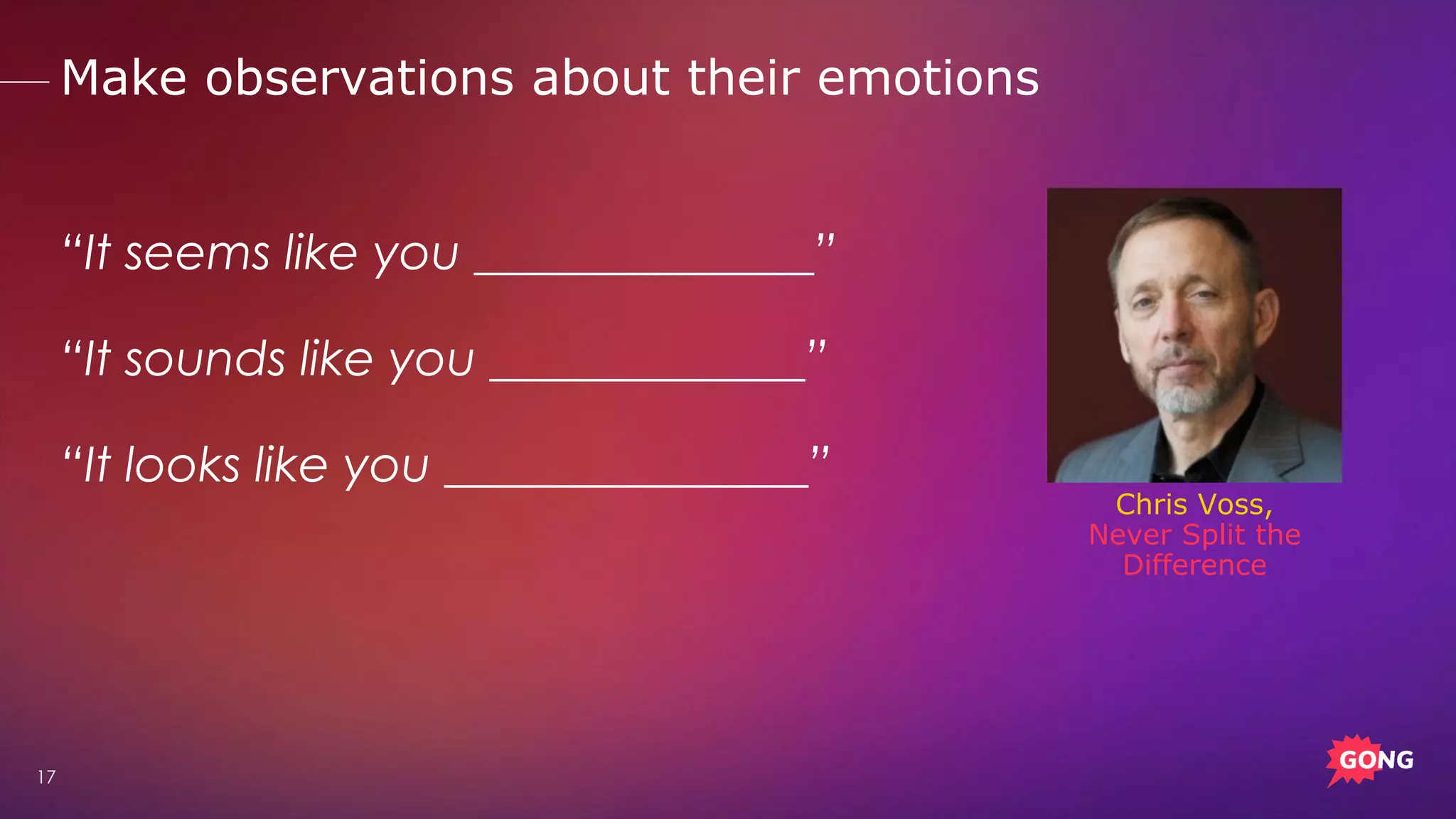
17
“It seems like you ______________”
“It sounds like you _____________”
“It looks like you _______________”
Chris Voss,
Never Split the
Difference
Make observations about their emotions
The calm before the
NEXT STORM
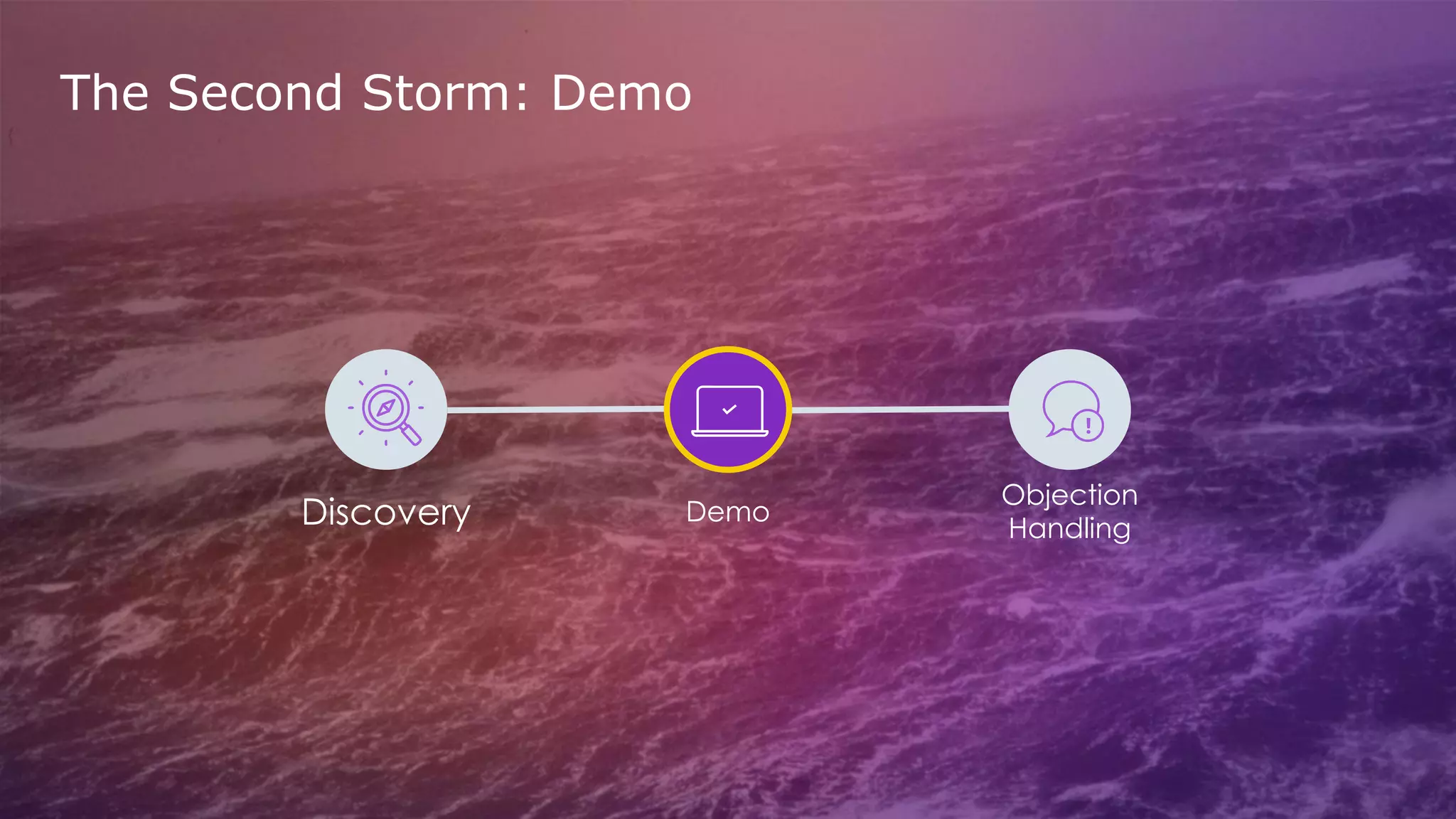
The Second Storm: Demo
Discovery Demo
Objection
Handling
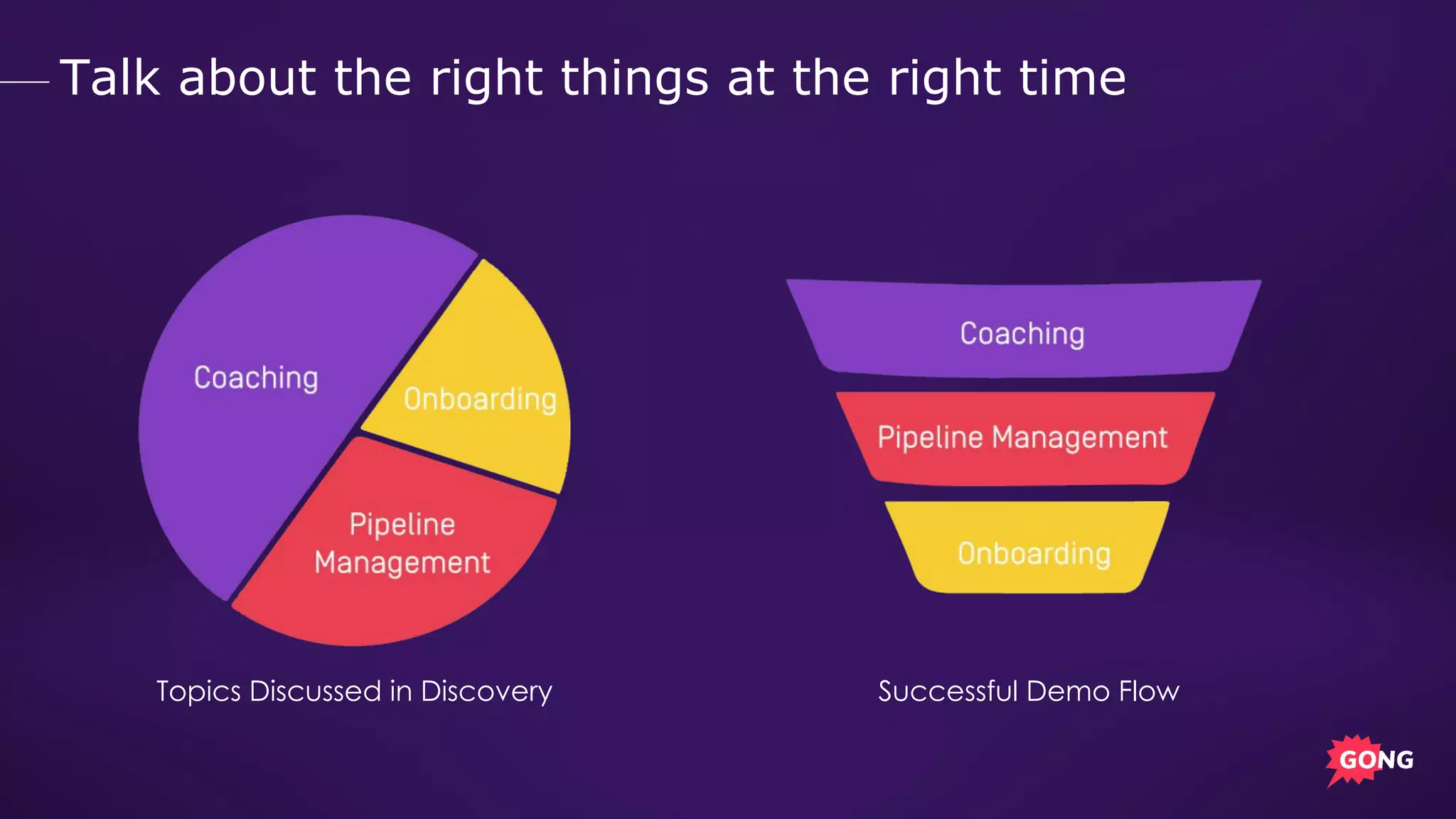
Topics Discussed in Discovery
Talk about the right things at the right time
Successful Demo Flow
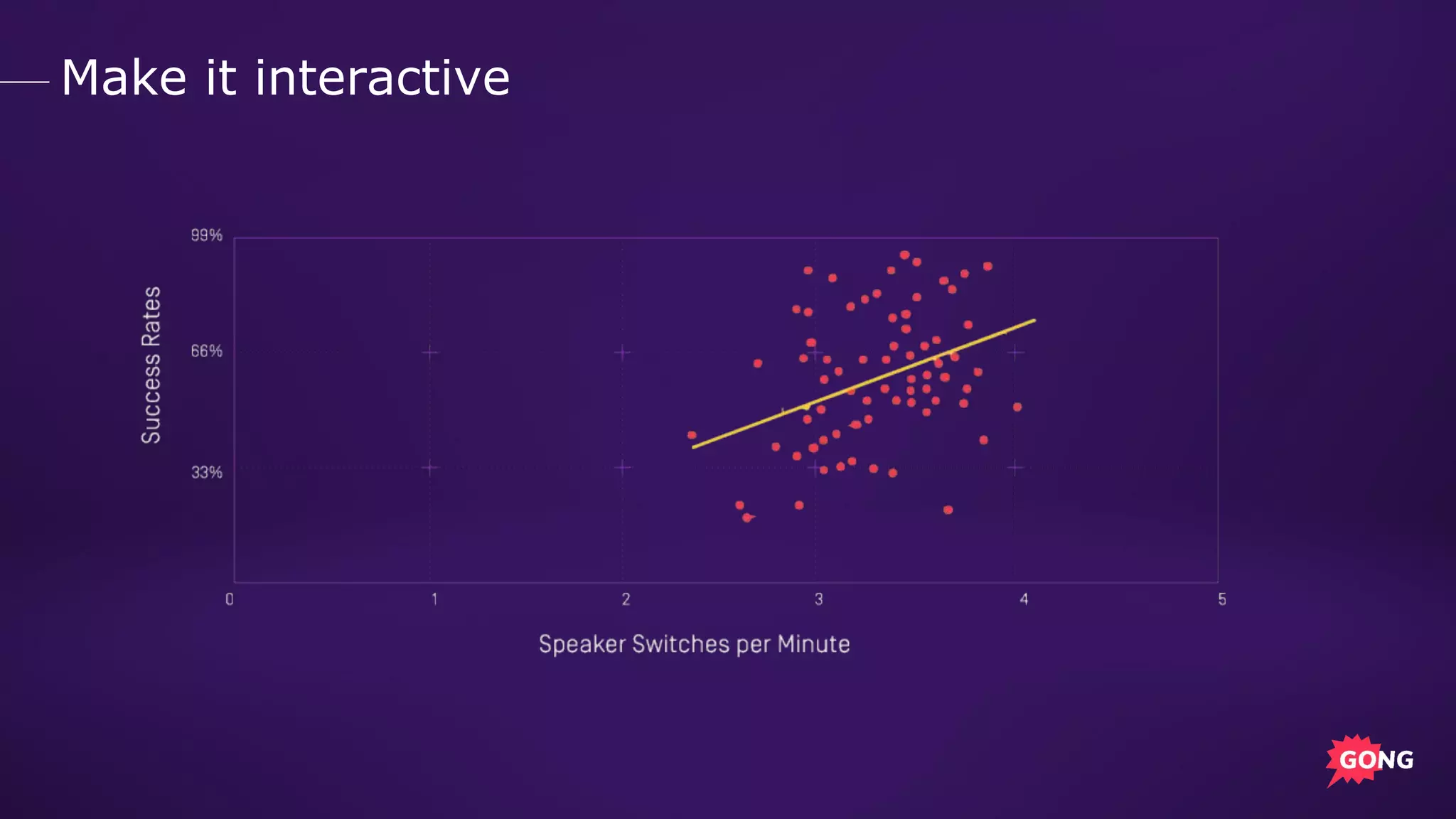
Make it interactive
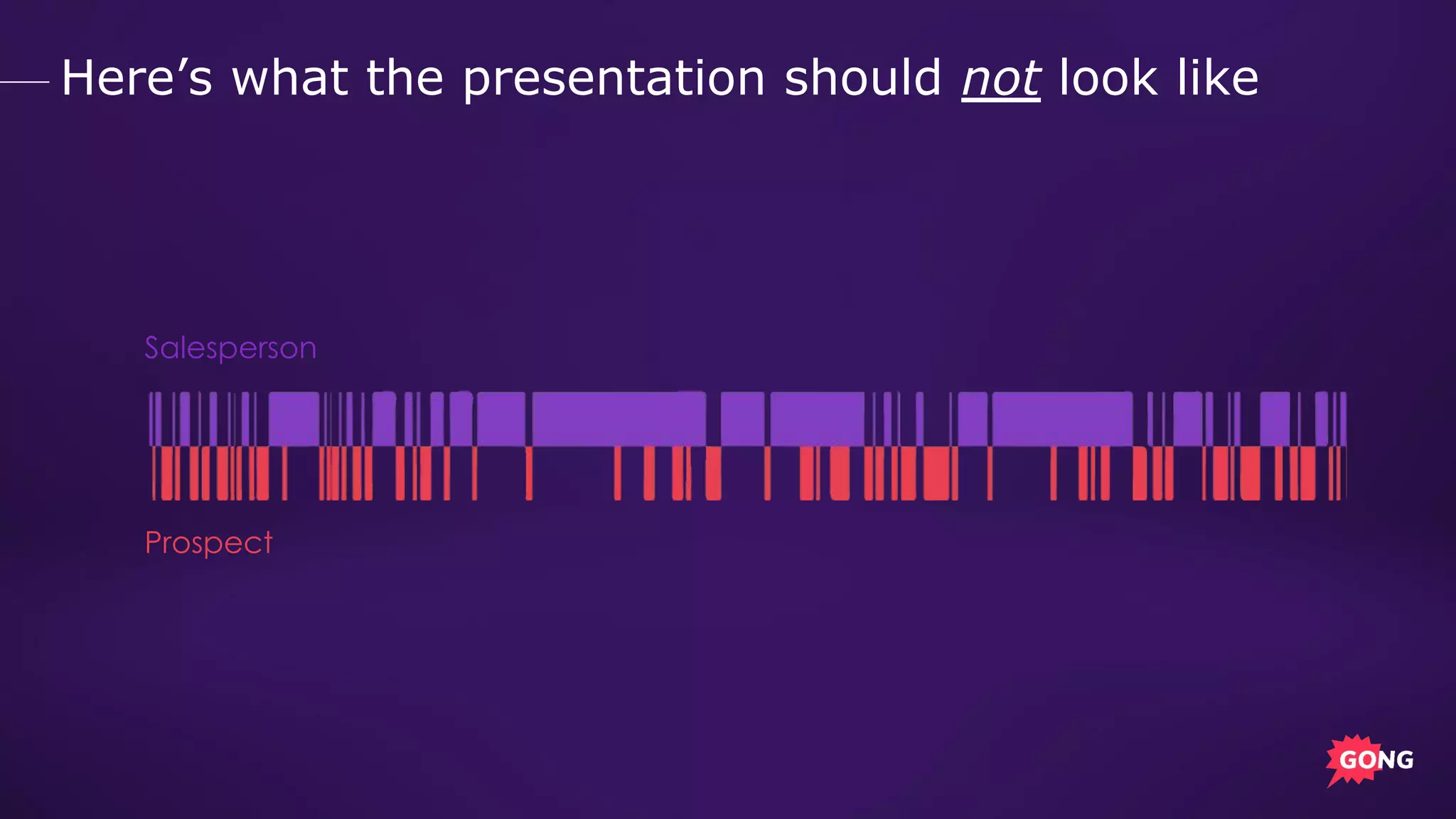
Salesperson
Prospect
Here’s what the presentation should not look like
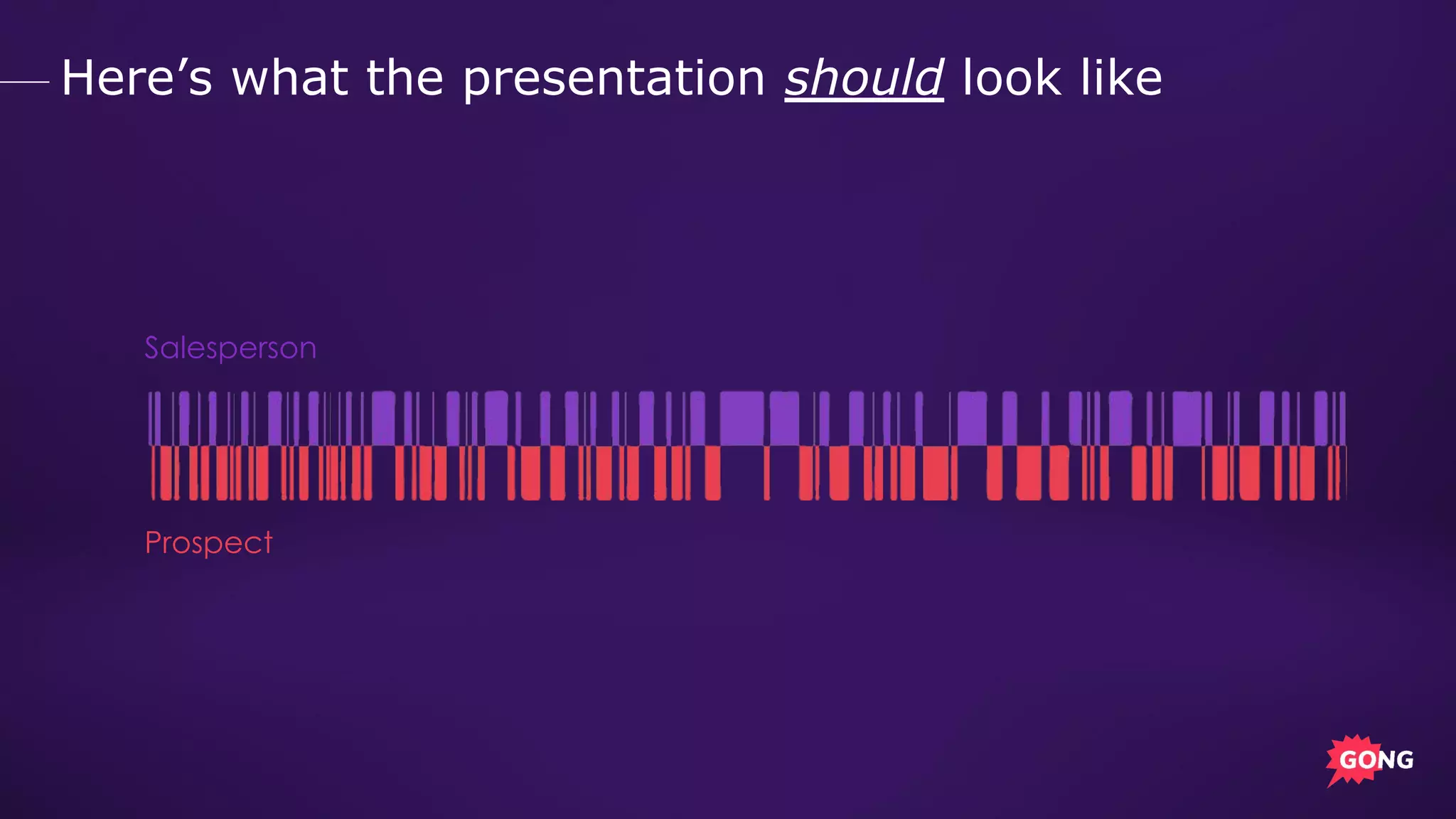
Here’s what the presentation should look like
Salesperson
Prospect
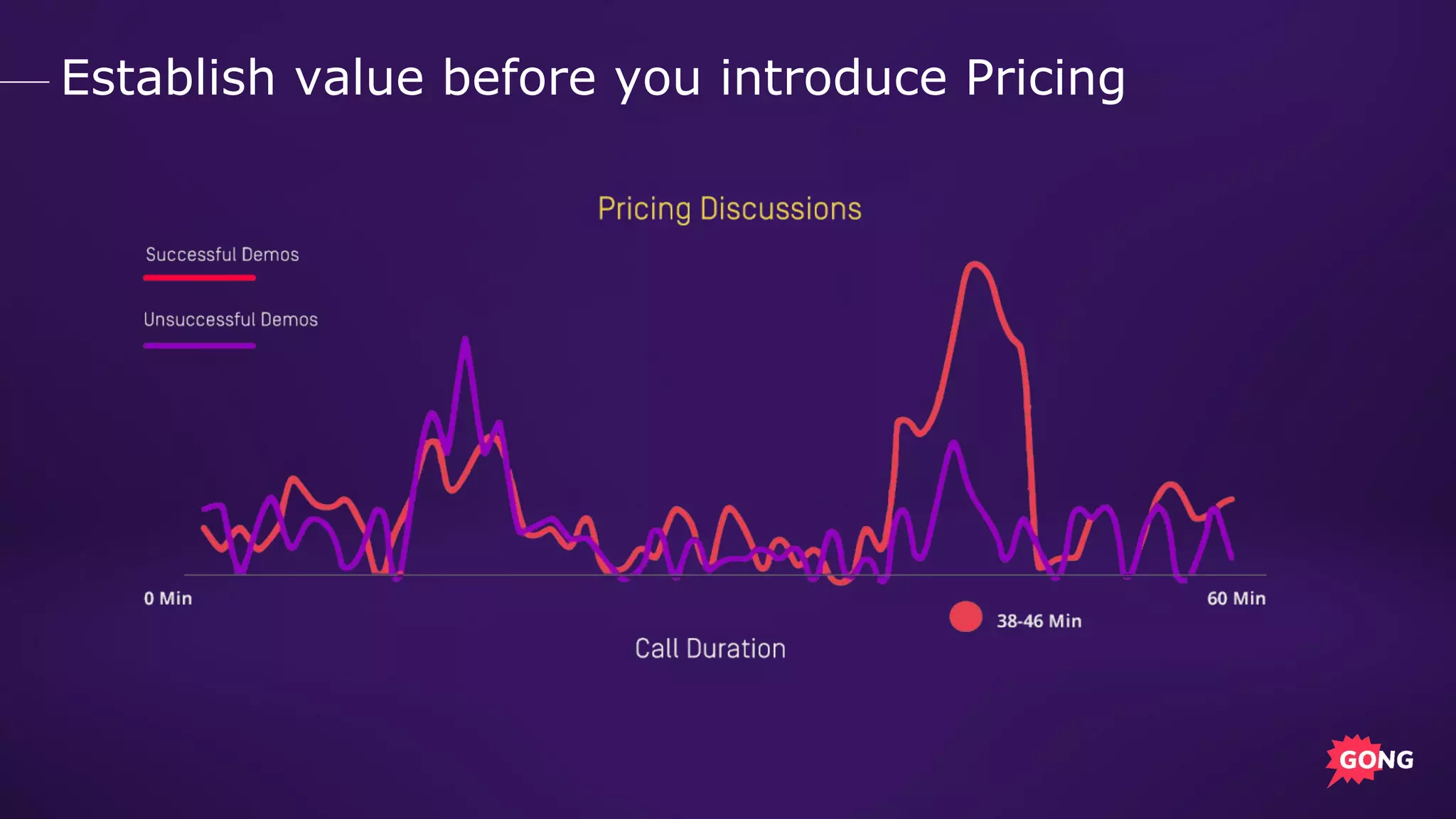
Establish value before you introduce Pricing
Opening lines that don’t work
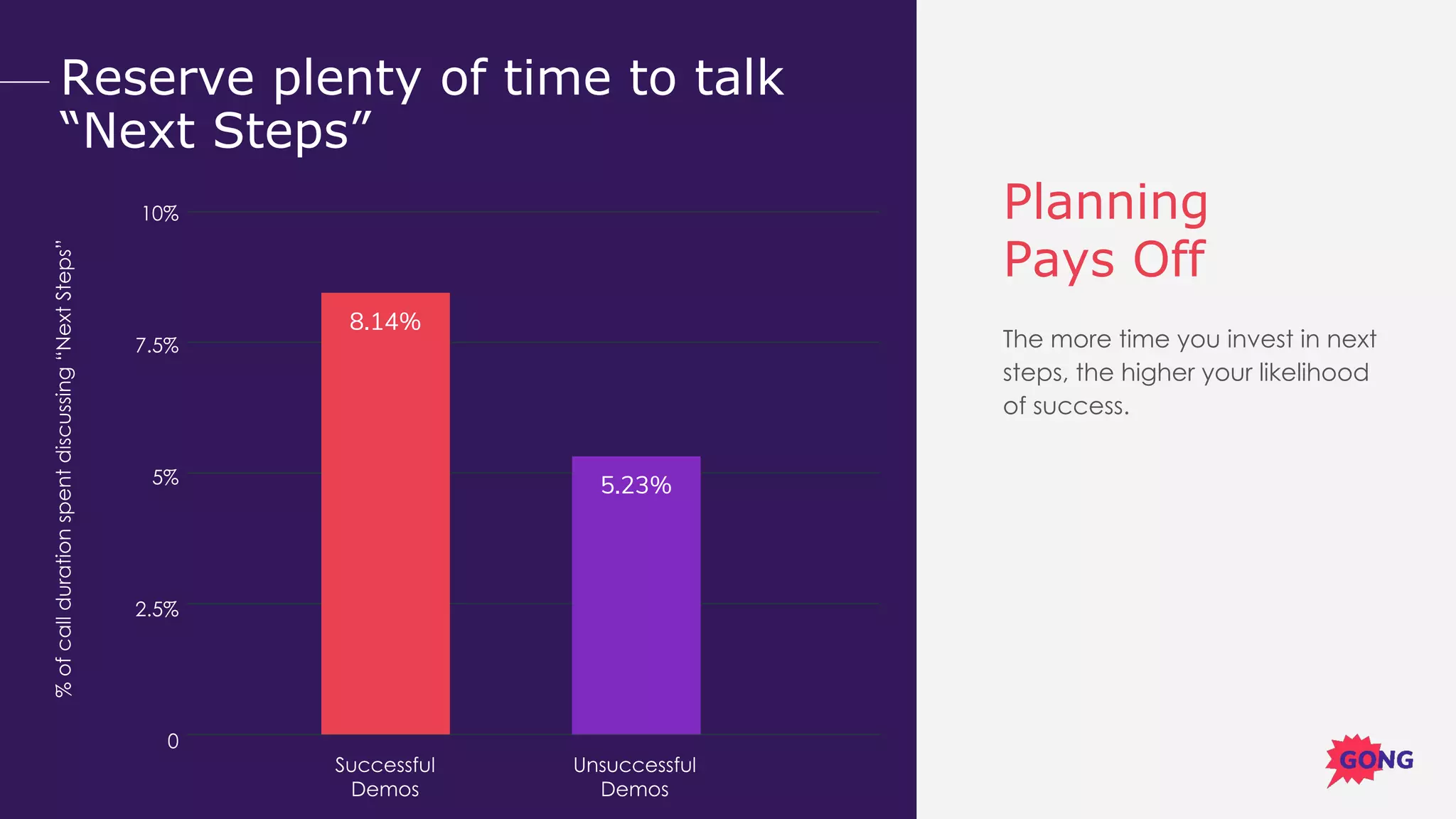
Planning
Pays Off
The more time you invest in next
steps, the higher your likelihood
of success.
10%
7.5%
5%
2.5%
0
%ofcalldurationspentdiscussing“NextSteps”
Successful
Demos
Unsuccessful
Demos
Reserve plenty of time to talk
“Next Steps”
5.23%
8.14%
One last calm before you reach the
PROMISED LAND
The Third Storm: Objection Handling
Discovery Presentation
Objection
Handling
Paradise is in sight! We’re
getting CLOSE!
But not without one more intense storm
to navigate… objections
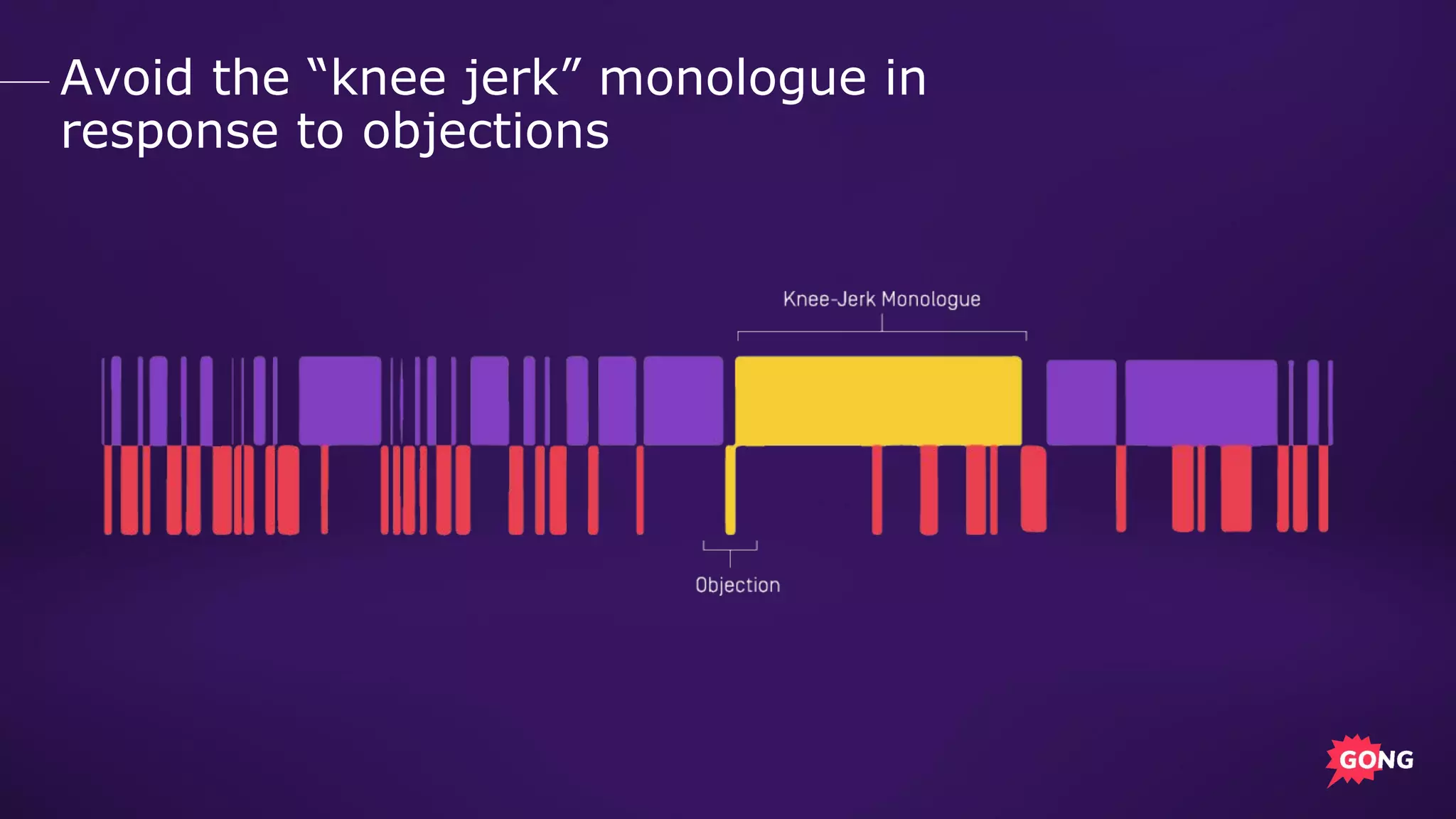
Avoid the “knee jerk” monologue in
response to objections
Opening lines that don’t work
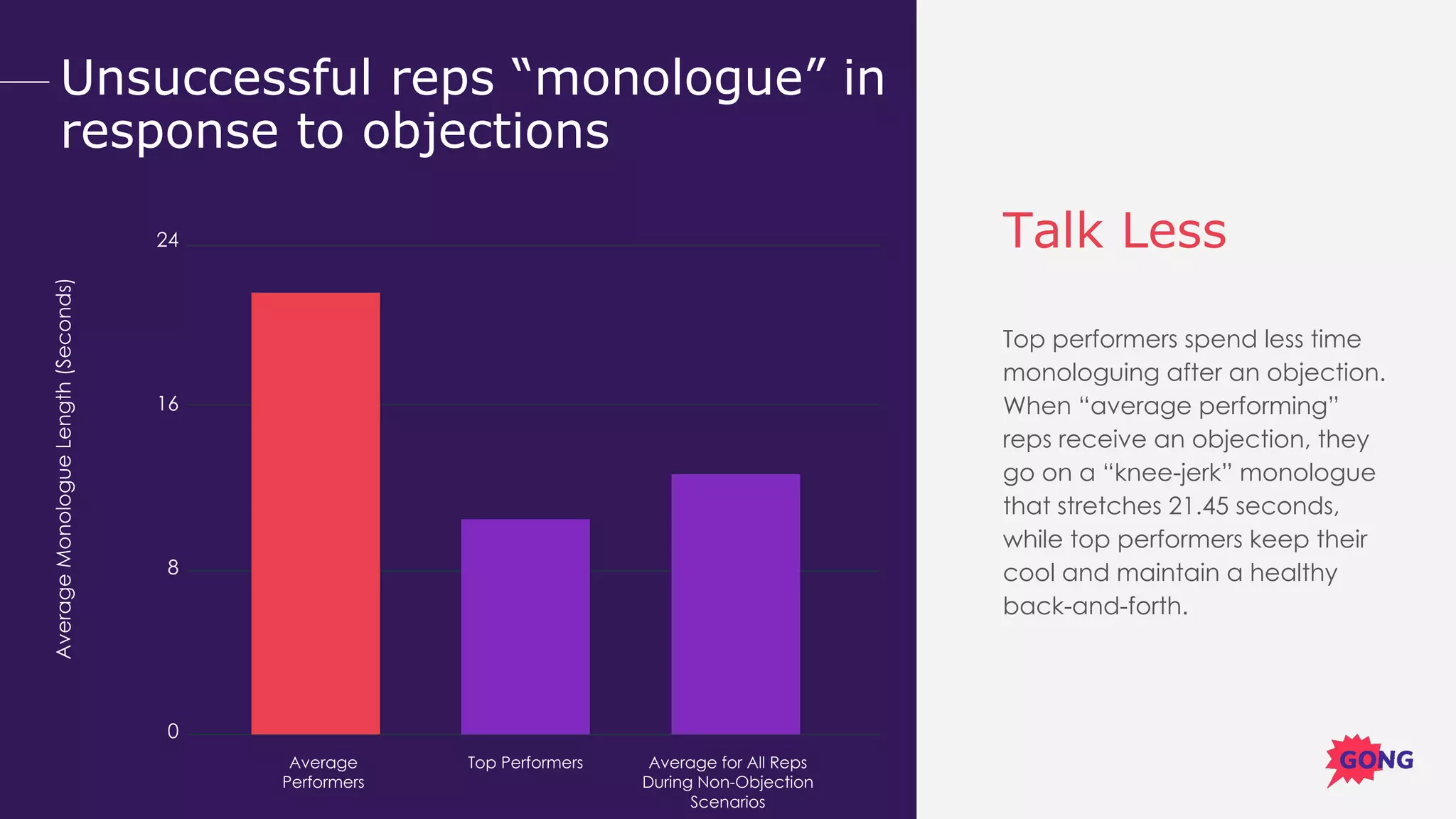
Talk Less
Top performers spend less time
monologuing after an objection.
When “average performing”
reps receive an objection, they
go on a “knee-jerk” monologue
that stretches 21.45 seconds,
while top performers keep their
cool and maintain a healthy
back-and-forth.
24
16
8
0
AverageMonologueLength(Seconds)
Average
Performers
Average for All Reps
During Non-Objection
Scenarios
Unsuccessful reps “monologue” in
response to objections
Top Performers
Opening lines that don’t work
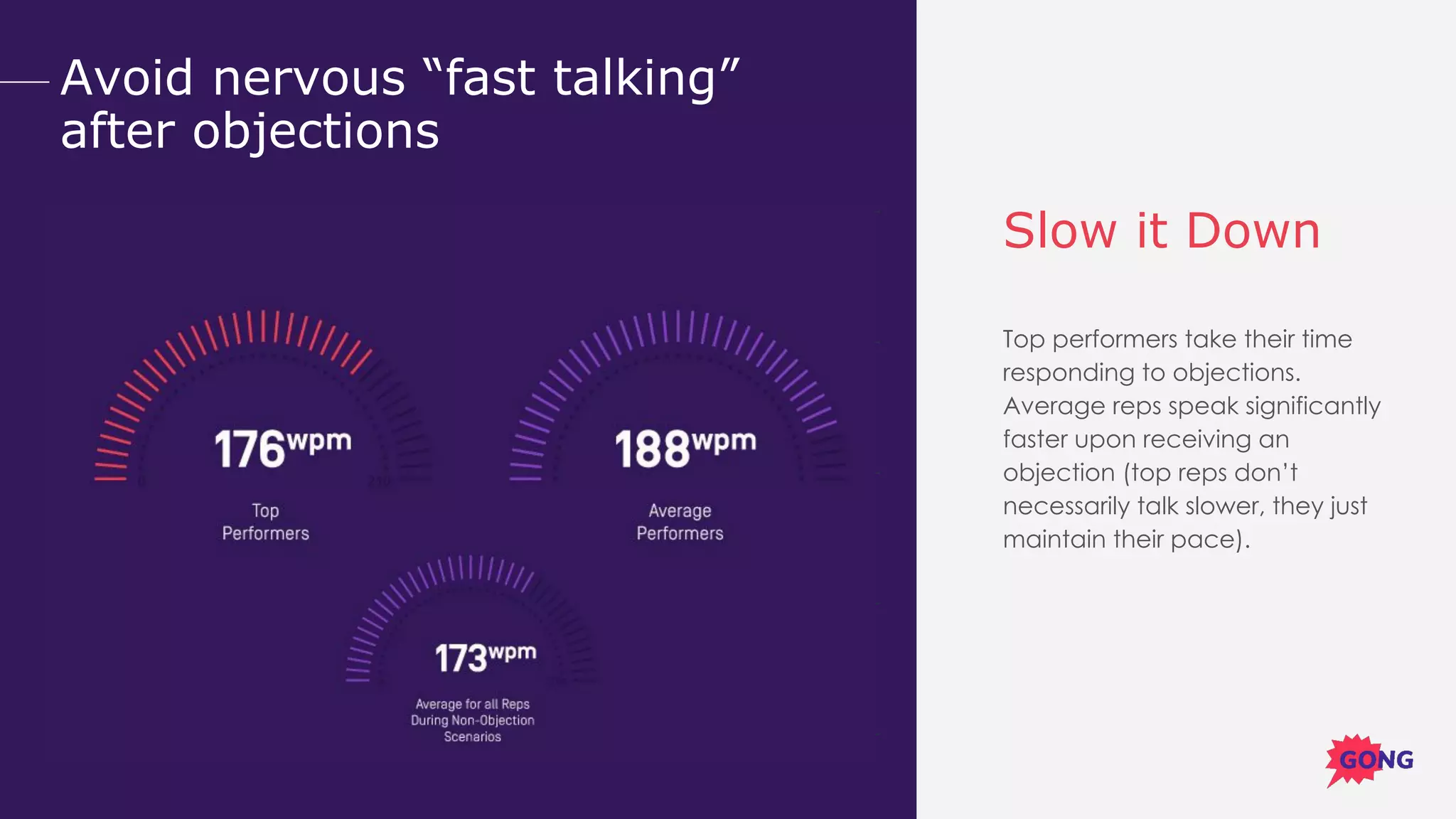
Slow it Down
Top performers take their time
responding to objections.
Average reps speak significantly
faster upon receiving an
objection (top reps don’t
necessarily talk slower, they just
maintain their pace).
Avoid nervous “fast talking”
after objections
Opening lines that don’t work
Just Press
Pause
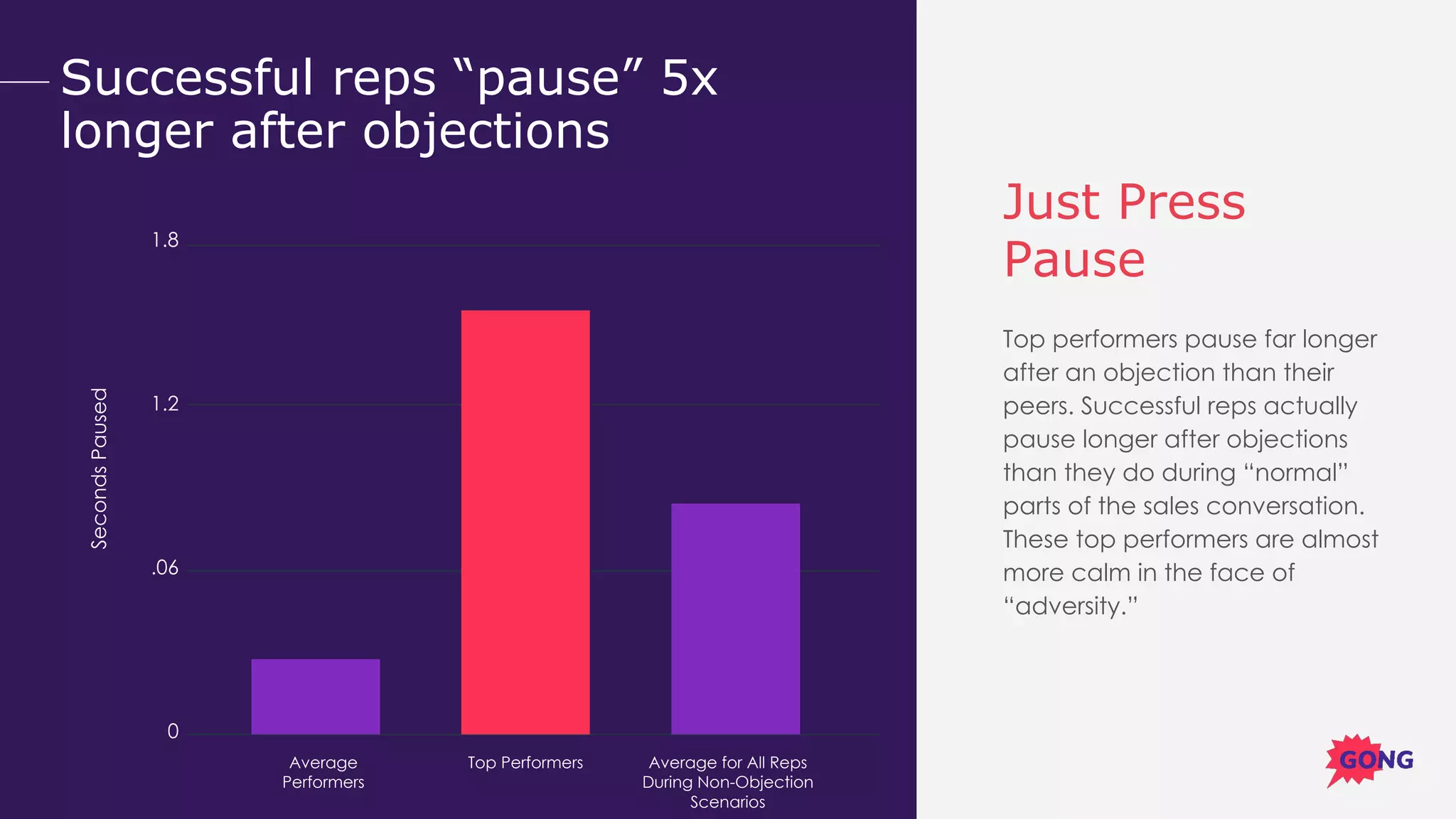
Top performers pause far longer
after an objection than their
peers. Successful reps actually
pause longer after objections
than they do during “normal”
parts of the sales conversation.
These top performers are almost
more calm in the face of
“adversity.”
1.8
1.2
.06
0
SecondsPaused
Average
Performers
Average for All Reps
During Non-Objection
Scenarios
Successful reps “pause” 5x
longer after objections
Top Performers
Opening lines that don’t work
Ask Questions
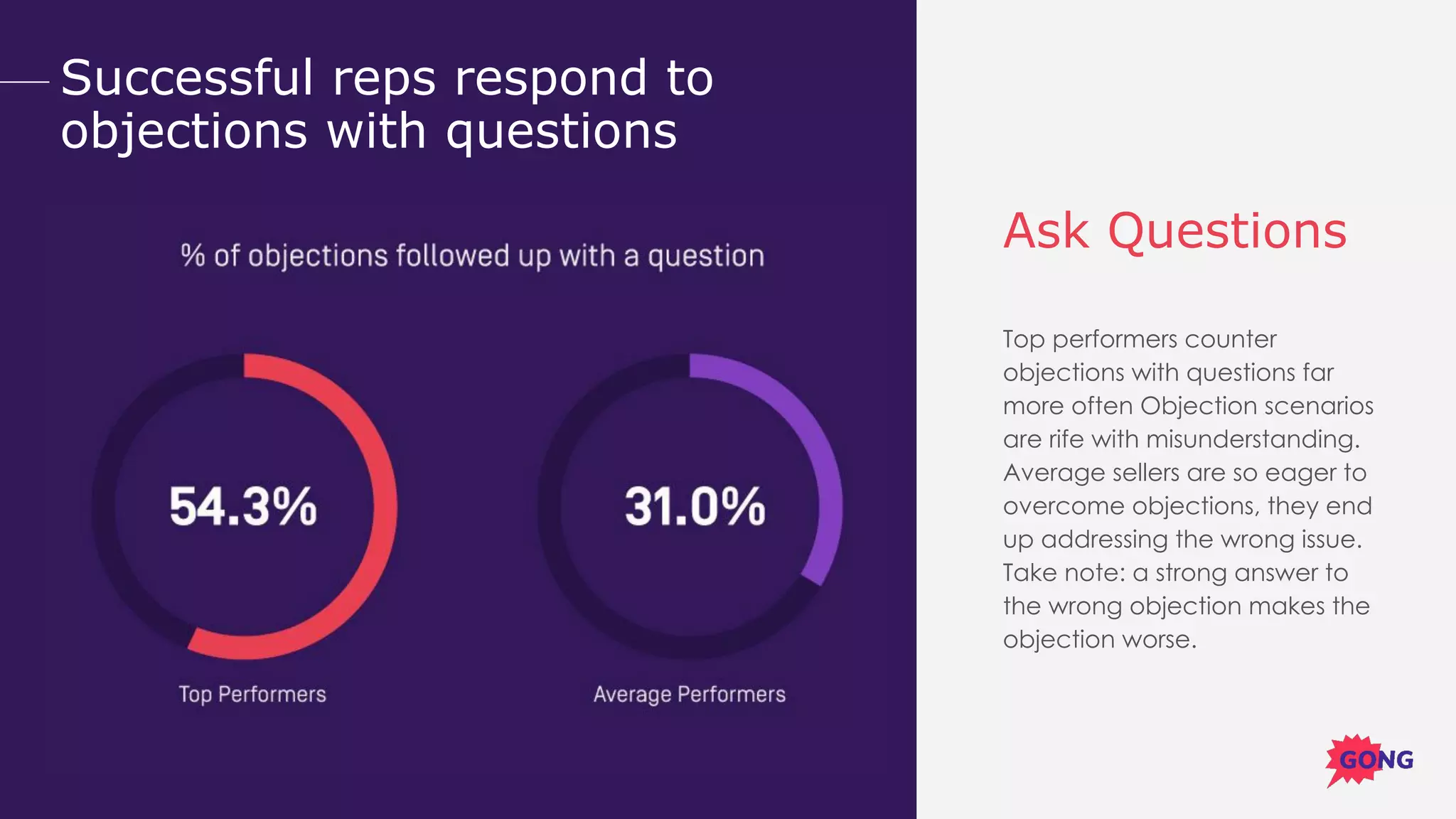
Top performers counter
objections with questions far
more often Objection scenarios
are rife with misunderstanding.
Average sellers are so eager to
overcome objections, they end
up addressing the wrong issue.
Take note: a strong answer to
the wrong objection makes the
objection worse.
Successful reps respond to
objections with questions
Opening lines that don’t work
Keep the Flow
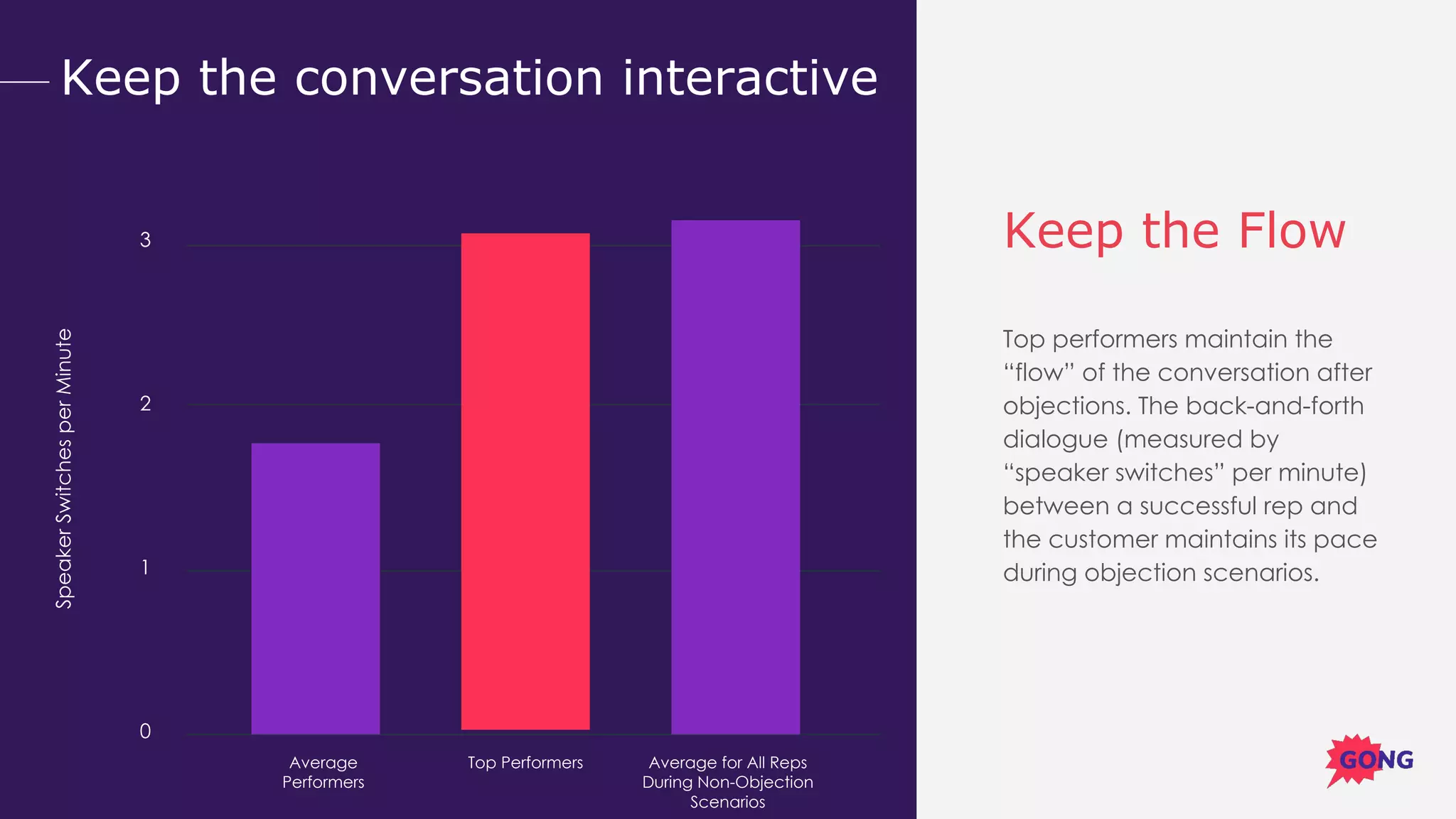
Top performers maintain the
“flow” of the conversation after
objections. The back-and-forth
dialogue (measured by
“speaker switches” per minute)
between a successful rep and
the customer maintains its pace
during objection scenarios.
3
2
1
0
SpeakerSwitchesperMinute
Keep the conversation interactive
Average
Performers
Average for All Reps
During Non-Objection
Scenarios
Top Performers
We made it!
37
BONUS!
Close by LEADING,
not MANIPULATING
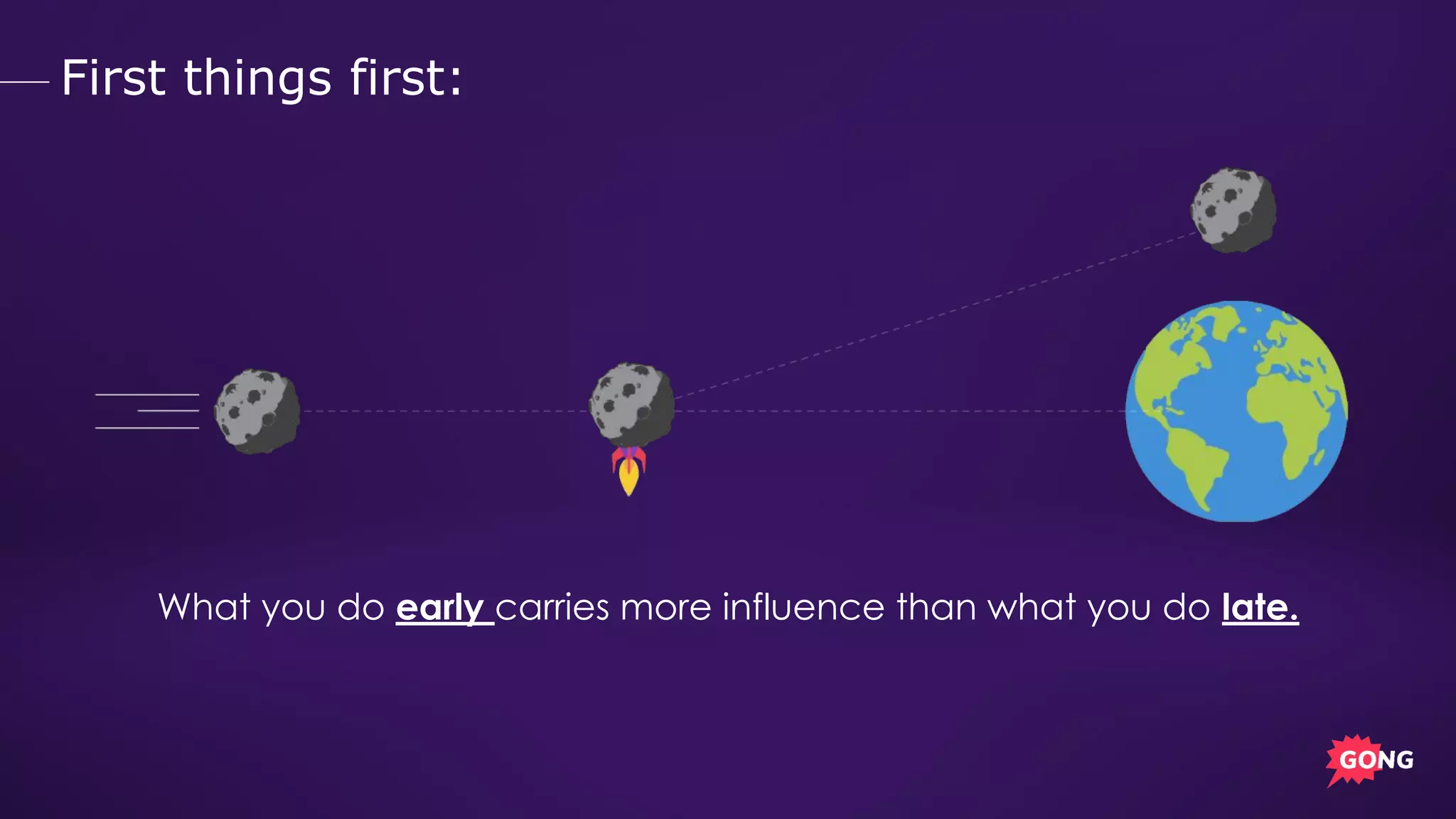
First things first:
What you do early carries more influence than what you do late.
Opening lines that don’t work
Questions for
The Win
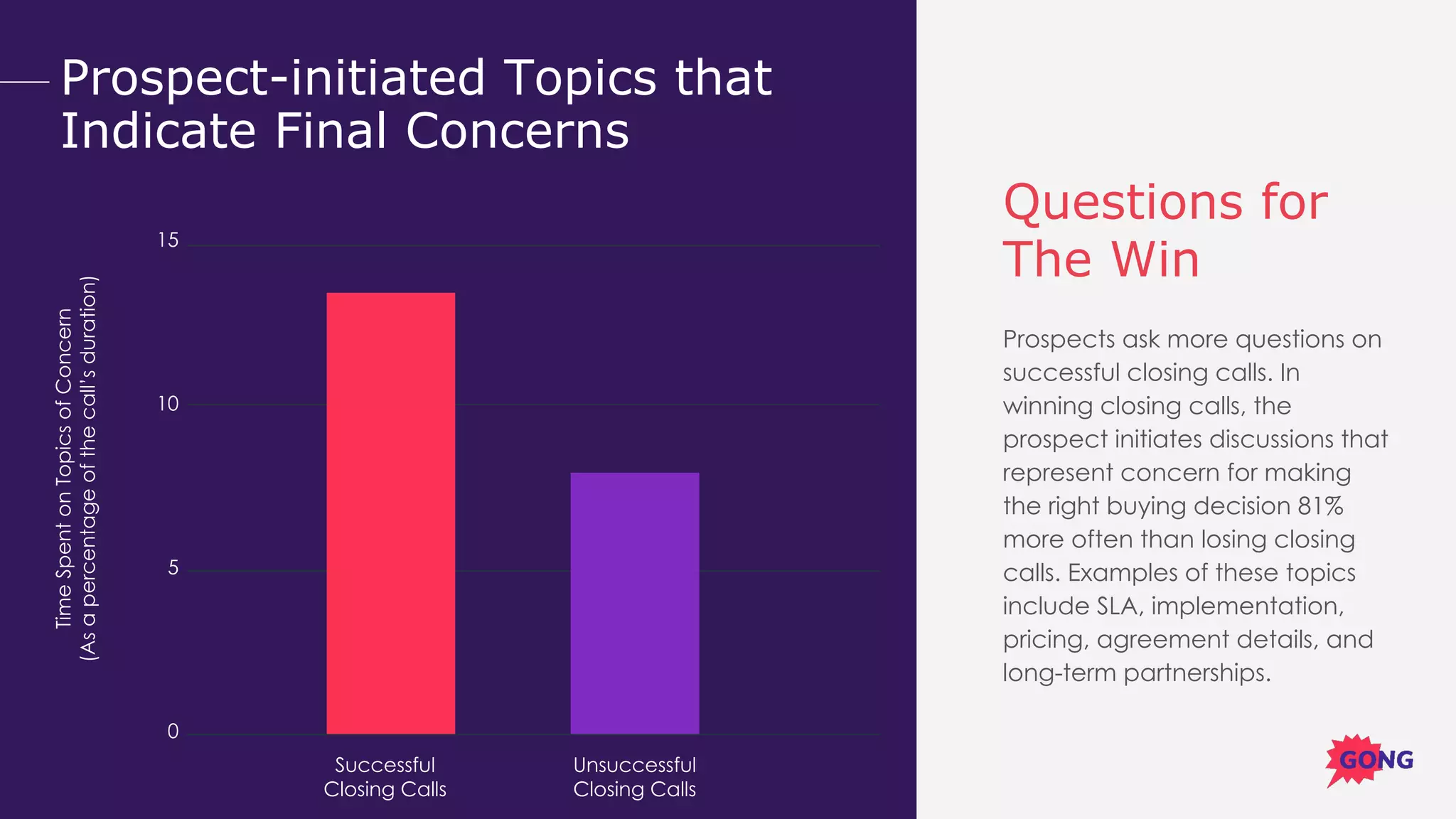
Prospects ask more questions on
successful closing calls. In
winning closing calls, the
prospect initiates discussions that
represent concern for making
the right buying decision 81%
more often than losing closing
calls. Examples of these topics
include SLA, implementation,
pricing, agreement details, and
long-term partnerships.
15
10
5
0
TimeSpentonTopicsofConcern
(Asapercentageofthecall’sduration)
Successful
Closing Calls
Unsuccessful
Closing Calls
Prospect-initiated Topics that
Indicate Final Concerns
www.gong.io/blog

Navigating Sales Conversations from First Call to Closed Deal

  • 1.
    We analyzed over1 Million sales meetings with AI and uncovered the following patterns and trends of successful cold calls.
  • 2.
    Closing a dealislike embarking on a sea voyage
  • 3.
  • 4.
  • 5.
    Times between salesconversations are easy compared to conversations themselves
  • 6.
  • 7.
    These insights areyour Compass
  • 9.
    The First Storm:Discovery Discovery Presentation Objections
  • 10.
    Opening lines thatdon’t work Say Less, Get More Listen and ask genuine, relevant questions. Create a two-way conversation, not an interrogation. There’s an added bonus here. The natural flow of switching back and forth with your customer increases your likelihood of getting a second meeting. Do More Listening
  • 11.
    Ask the rightnumber of questions
  • 12.
    Opening lines thatdon’t work 80 60 40 20 0 SuccessRates 1-6 (low) 7-10 (med) 11-14 (high) 15-18 (very high) Ask the right number of questions 11-14 is the magic number Aim to ask 11-14 target questions per call. After this amount, you’ll start to see diminishing returns on your question volume. 67% 74% 66% 46% Questions per Call
  • 13.
    Ask your questionsat the right time Call Duration
  • 14.
    Ask the rightkind of questions
  • 15.
    Ask the rightkind of questions
  • 16.
    16 “Help me understand…“ “Can you walk me through…” “Talk to me about… “ Phrase your questions to encourage long responses
  • 17.
    17 “It seems likeyou ______________” “It sounds like you _____________” “It looks like you _______________” Chris Voss, Never Split the Difference Make observations about their emotions
  • 18.
    The calm beforethe NEXT STORM
  • 19.
    The Second Storm:Demo Discovery Demo Objection Handling
  • 20.
    Topics Discussed inDiscovery Talk about the right things at the right time Successful Demo Flow
  • 21.
  • 22.
    Salesperson Prospect Here’s what thepresentation should not look like
  • 23.
    Here’s what thepresentation should look like Salesperson Prospect
  • 24.
    Establish value beforeyou introduce Pricing
  • 25.
    Opening lines thatdon’t work Planning Pays Off The more time you invest in next steps, the higher your likelihood of success. 10% 7.5% 5% 2.5% 0 %ofcalldurationspentdiscussing“NextSteps” Successful Demos Unsuccessful Demos Reserve plenty of time to talk “Next Steps” 5.23% 8.14%
  • 26.
    One last calmbefore you reach the PROMISED LAND
  • 27.
    The Third Storm:Objection Handling Discovery Presentation Objection Handling
  • 28.
    Paradise is insight! We’re getting CLOSE!
  • 29.
    But not withoutone more intense storm to navigate… objections
  • 30.
    Avoid the “kneejerk” monologue in response to objections
  • 31.
    Opening lines thatdon’t work Talk Less Top performers spend less time monologuing after an objection. When “average performing” reps receive an objection, they go on a “knee-jerk” monologue that stretches 21.45 seconds, while top performers keep their cool and maintain a healthy back-and-forth. 24 16 8 0 AverageMonologueLength(Seconds) Average Performers Average for All Reps During Non-Objection Scenarios Unsuccessful reps “monologue” in response to objections Top Performers
  • 32.
    Opening lines thatdon’t work Slow it Down Top performers take their time responding to objections. Average reps speak significantly faster upon receiving an objection (top reps don’t necessarily talk slower, they just maintain their pace). Avoid nervous “fast talking” after objections
  • 33.
    Opening lines thatdon’t work Just Press Pause Top performers pause far longer after an objection than their peers. Successful reps actually pause longer after objections than they do during “normal” parts of the sales conversation. These top performers are almost more calm in the face of “adversity.” 1.8 1.2 .06 0 SecondsPaused Average Performers Average for All Reps During Non-Objection Scenarios Successful reps “pause” 5x longer after objections Top Performers
  • 34.
    Opening lines thatdon’t work Ask Questions Top performers counter objections with questions far more often Objection scenarios are rife with misunderstanding. Average sellers are so eager to overcome objections, they end up addressing the wrong issue. Take note: a strong answer to the wrong objection makes the objection worse. Successful reps respond to objections with questions
  • 35.
    Opening lines thatdon’t work Keep the Flow Top performers maintain the “flow” of the conversation after objections. The back-and-forth dialogue (measured by “speaker switches” per minute) between a successful rep and the customer maintains its pace during objection scenarios. 3 2 1 0 SpeakerSwitchesperMinute Keep the conversation interactive Average Performers Average for All Reps During Non-Objection Scenarios Top Performers
  • 36.
  • 37.
  • 38.
    First things first: Whatyou do early carries more influence than what you do late.
  • 39.
    Opening lines thatdon’t work Questions for The Win Prospects ask more questions on successful closing calls. In winning closing calls, the prospect initiates discussions that represent concern for making the right buying decision 81% more often than losing closing calls. Examples of these topics include SLA, implementation, pricing, agreement details, and long-term partnerships. 15 10 5 0 TimeSpentonTopicsofConcern (Asapercentageofthecall’sduration) Successful Closing Calls Unsuccessful Closing Calls Prospect-initiated Topics that Indicate Final Concerns
  • 40.