• 10 Installations in NAVFAC Far East
• Widely varying missions including:
Combat readiness and repair, forward
deployment, communication and
logistical support to afloat and air units,
including family support.
• 5 INRMPs in Command Navy Region
Japan (CNRJ): all compliant
• 11,282 Total Acres on CNRJ INRMP
Managed Lands
• 6,029 Natural INRMP managed acres
• Limited near shore marine management
• 6 Japan Final Governing Standards
(FGS) Listed Species
• Natural Monument species managed in
Japan due to cultural importance
• All native species protected under Diego
Garcia FGS and British Law
• 12 Navy and 2 Marine Corps Natural
Resource Managers in the FEC
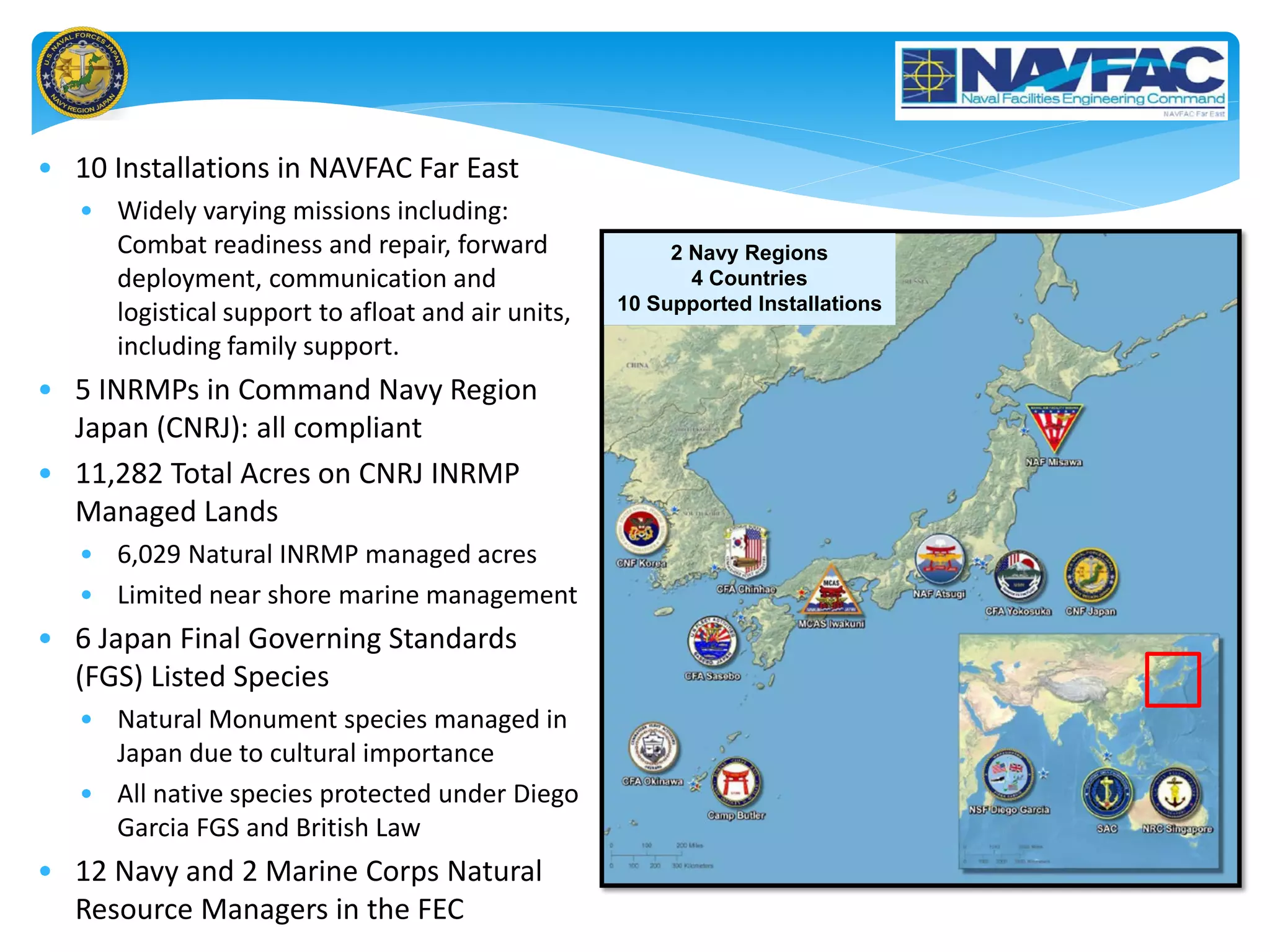
2 Navy Regions
4 Countries
10 Supported Installations
3/5/2020
Key Programs
Highlights/Recent Accomplishments
Lessons Learned/Shared
• General and special status species surveys
• Invasive species control
• Bird Aircraft Strike Hazard (BASH) program
• Outreach and public education
• Feral cat and other nuisance species control
• Emergent pest control issues
• Erosion control and habitat maintenance
• Recent increased focus on invasive species, such as raccoon and mongoose, at host nation
government request. This helps to maintain a positive relationship with the local community,
improving US Gov’t standing, which aids in host nation cooperation to complete the mission.
• Significant trash removal from Diego Garcia beaches, over 14 tons in the last 4 years, through
volunteer efforts organized by Installation Environmental. Also, cooperating with a host nation study
to determine micro-plastics present in beach sand throughout the British Indian Ocean Territories.
• Working with our financial specialists (EV4) we have had success converting Fiscal Year 2020 non-
labor to labor funds to continue to support NAVFAC Pacific execution of project requirements in-
house. Enabling natural resources program success in Diego Garcia, for which contractor support
is not affordable or feasible.

NAVFAC Far East

  • 1.
    • 10 Installationsin NAVFAC Far East • Widely varying missions including: Combat readiness and repair, forward deployment, communication and logistical support to afloat and air units, including family support. • 5 INRMPs in Command Navy Region Japan (CNRJ): all compliant • 11,282 Total Acres on CNRJ INRMP Managed Lands • 6,029 Natural INRMP managed acres • Limited near shore marine management • 6 Japan Final Governing Standards (FGS) Listed Species • Natural Monument species managed in Japan due to cultural importance • All native species protected under Diego Garcia FGS and British Law • 12 Navy and 2 Marine Corps Natural Resource Managers in the FEC 2 Navy Regions 4 Countries 10 Supported Installations
  • 2.
    3/5/2020 Key Programs Highlights/Recent Accomplishments LessonsLearned/Shared • General and special status species surveys • Invasive species control • Bird Aircraft Strike Hazard (BASH) program • Outreach and public education • Feral cat and other nuisance species control • Emergent pest control issues • Erosion control and habitat maintenance • Recent increased focus on invasive species, such as raccoon and mongoose, at host nation government request. This helps to maintain a positive relationship with the local community, improving US Gov’t standing, which aids in host nation cooperation to complete the mission. • Significant trash removal from Diego Garcia beaches, over 14 tons in the last 4 years, through volunteer efforts organized by Installation Environmental. Also, cooperating with a host nation study to determine micro-plastics present in beach sand throughout the British Indian Ocean Territories. • Working with our financial specialists (EV4) we have had success converting Fiscal Year 2020 non- labor to labor funds to continue to support NAVFAC Pacific execution of project requirements in- house. Enabling natural resources program success in Diego Garcia, for which contractor support is not affordable or feasible.