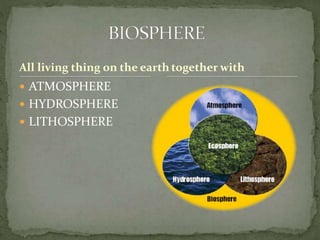
All living thing on the earth
 ATMOSPHERE
 HYDROSPHERE
 LITHOSPHERE
together with
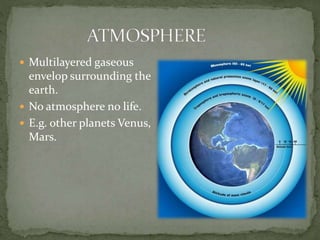
 Multilayered gaseous
envelop surrounding the
earth.
 No atmosphere no life.
 E.g. other planets Venus,
Mars.
 Air is bad conductor of heat- keeps the average
temperature of the Earth fairly steady during the day
and even during the course of whole year.
 Prevents the sudden increase in temperature during
the daylight hours. And during the night, it slows
down the escape of heat into outer space.
 Think of the moon - about the same distance from the
Sun – no atmosphere – the temperature ranges from –
190 degree Celsius to 110 degree Celsius.
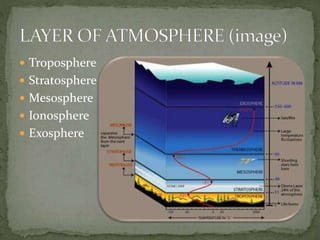
 Troposphere
 Stratosphere
 Mesosphere
 Ionosphere
 Exosphere
 In humans – respiratory & renal problems, high blood
pressure, problems of nervous system, eye irritation,
cancer.
 In plants – reduced growth, degeneration of
chlorophyll, mottling (patches/ spots of color) of
leaves etc.
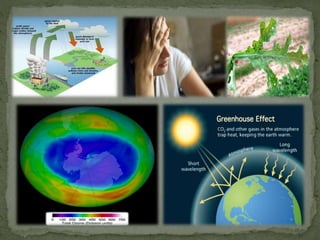
 Acid rain
 Green house effect
 Holes in ozone layers
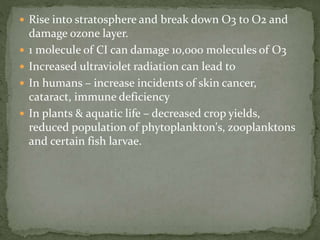
 CO2 keeps the earth warm much like glass which
keeps the green house warm.
 Increase in CO2 – intensified green house effect –
leads to global warming – increase in average
temperature of the earth – may lead to melting of
polar caps and ultimate rise in sea level – submerging
number of costal cities.
 Ozone(O3) in stratosphere blocks ultraviolet radiation
through it and protect biosphere.
 A hole in ozone layer was found over Antarctica caused
due to chlorofluorocarbons (CFCs).
 CFCs – compounds consists of CI, FI and C
 CFCs use as coolant in refrigerators and air
conditioners, in aerosol sprays.
 CFCs do not degrade easily.
 Rise into stratosphere and break down O3 to O2 and
damage ozone layer.
 1 molecule of CI can damage 10,000 molecules of O3
 Increased ultraviolet radiation can lead to
 In humans – increase incidents of skin cancer,
cataract, immune deficiency
 In plants & aquatic life – decreased crop yields,
reduced population of phytoplankton's, zooplanktons
and certain fish larvae.
 Water a medium for all the reaction that take place
within our body and within the cells occur between
substances that are dissolved in water.
 Transportation of substances from one part of the
body to the other in a dissolved form.
 Terrestrial life-forms require fresh water for this
because their bodies cannot tolerate or get rid of the
high amounts of dissolved salts in saline water.
 Water dissolves the fertilizer and pesticides that we use on
our farms. So some percentage of these substances are
washed into the water bodies.
 Sewage from towns and cities and the waste from the
factories are also dumped into rivers or lakes.
 Term water pollution cover the following affect :
1. The addition of undesirable substance to water bodies.
2.The removal of desirable substance from water bodies.
3.The change in temperature affect the breed of aquatic
animal.
 The lithosphere is
the solid, rocky
layer covering the
entire surface of
the planet,
composed of the
crust and the hard
uppermost mantle.
 Water helps in the formation of soil in two ways. One
of the way is that water could get into the cracks in the
rocks formed due to uneven heating by the sun. If this
water later freezes, it would cause cracks to widen. Fast
flowing water often carries big and small particles of
rock and downstream.
 Wind also helps in formation of soil as it carries sand
from one place to another.
 The lichen that we read about earlier, also grows on the
surface of rocks. While growing, they release certain
substances that cause the rock surface to powder down
and form a thin layer of soil. Other small plants like
moss, are able to grow on this surface now and they
cause the rock to break up further. The roots of big
trees sometimes go into cracks in the rocks and as the
roots grow bigger, the crack is forced bigger.
 There are 3 types of soil
1.Sandy soil
2.Clayey soil
3.Loamy soil
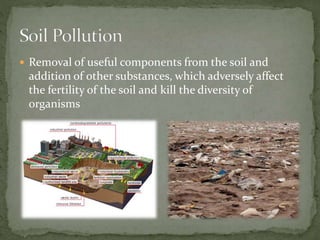
 Removal of useful components from the soil and
addition of other substances, which adversely affect
the fertility of the soil and kill the diversity of
organisms
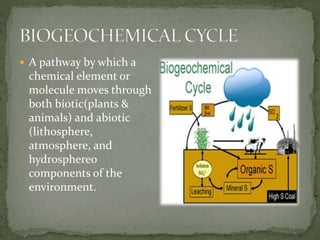
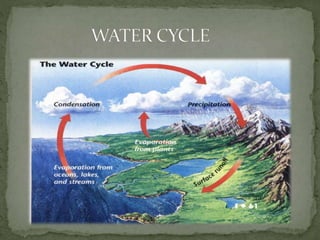
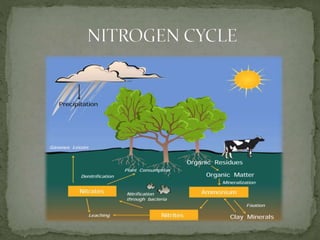
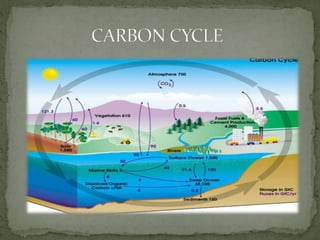
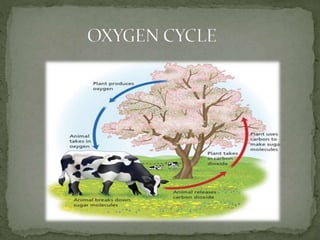
 A pathway by which a
chemical element or
molecule moves through
both biotic(plants &
animals) and abiotic
(lithosphere,
atmosphere, and
hydrosphere0
components of the
environment.
 Science Textbook for Class IX NCERT
 www.google.com
 www.wikipedia.org
 www.edurite.com
THANK
YOU
MADE BY:
ASHISH NIRWAL
IX C
KV, VIKASPURI

NATURAL RESOURCE

  • 2.
    All living thingon the earth  ATMOSPHERE  HYDROSPHERE  LITHOSPHERE together with
  • 3.
     Multilayered gaseous envelopsurrounding the earth.  No atmosphere no life.  E.g. other planets Venus, Mars.
  • 4.
     Air isbad conductor of heat- keeps the average temperature of the Earth fairly steady during the day and even during the course of whole year.  Prevents the sudden increase in temperature during the daylight hours. And during the night, it slows down the escape of heat into outer space.  Think of the moon - about the same distance from the Sun – no atmosphere – the temperature ranges from – 190 degree Celsius to 110 degree Celsius.
  • 5.
     Troposphere  Stratosphere Mesosphere  Ionosphere  Exosphere
  • 8.
     In humans– respiratory & renal problems, high blood pressure, problems of nervous system, eye irritation, cancer.  In plants – reduced growth, degeneration of chlorophyll, mottling (patches/ spots of color) of leaves etc.  Acid rain  Green house effect  Holes in ozone layers
  • 10.
     CO2 keepsthe earth warm much like glass which keeps the green house warm.  Increase in CO2 – intensified green house effect – leads to global warming – increase in average temperature of the earth – may lead to melting of polar caps and ultimate rise in sea level – submerging number of costal cities.
  • 11.
     Ozone(O3) instratosphere blocks ultraviolet radiation through it and protect biosphere.  A hole in ozone layer was found over Antarctica caused due to chlorofluorocarbons (CFCs).  CFCs – compounds consists of CI, FI and C  CFCs use as coolant in refrigerators and air conditioners, in aerosol sprays.  CFCs do not degrade easily.
  • 12.
     Rise intostratosphere and break down O3 to O2 and damage ozone layer.  1 molecule of CI can damage 10,000 molecules of O3  Increased ultraviolet radiation can lead to  In humans – increase incidents of skin cancer, cataract, immune deficiency  In plants & aquatic life – decreased crop yields, reduced population of phytoplankton's, zooplanktons and certain fish larvae.
  • 14.
     Water amedium for all the reaction that take place within our body and within the cells occur between substances that are dissolved in water.  Transportation of substances from one part of the body to the other in a dissolved form.  Terrestrial life-forms require fresh water for this because their bodies cannot tolerate or get rid of the high amounts of dissolved salts in saline water.
  • 15.
     Water dissolvesthe fertilizer and pesticides that we use on our farms. So some percentage of these substances are washed into the water bodies.  Sewage from towns and cities and the waste from the factories are also dumped into rivers or lakes.  Term water pollution cover the following affect : 1. The addition of undesirable substance to water bodies. 2.The removal of desirable substance from water bodies. 3.The change in temperature affect the breed of aquatic animal.
  • 16.
     The lithosphereis the solid, rocky layer covering the entire surface of the planet, composed of the crust and the hard uppermost mantle.
  • 18.
     Water helpsin the formation of soil in two ways. One of the way is that water could get into the cracks in the rocks formed due to uneven heating by the sun. If this water later freezes, it would cause cracks to widen. Fast flowing water often carries big and small particles of rock and downstream.  Wind also helps in formation of soil as it carries sand from one place to another.
  • 19.
     The lichenthat we read about earlier, also grows on the surface of rocks. While growing, they release certain substances that cause the rock surface to powder down and form a thin layer of soil. Other small plants like moss, are able to grow on this surface now and they cause the rock to break up further. The roots of big trees sometimes go into cracks in the rocks and as the roots grow bigger, the crack is forced bigger.  There are 3 types of soil 1.Sandy soil 2.Clayey soil 3.Loamy soil
  • 20.
     Removal ofuseful components from the soil and addition of other substances, which adversely affect the fertility of the soil and kill the diversity of organisms
  • 21.
     A pathwayby which a chemical element or molecule moves through both biotic(plants & animals) and abiotic (lithosphere, atmosphere, and hydrosphere0 components of the environment.
  • 26.
     Science Textbookfor Class IX NCERT  www.google.com  www.wikipedia.org  www.edurite.com
  • 27.