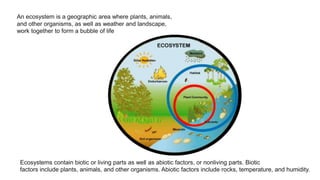
An ecosystem is a geographic area where plants, animals,
and other organisms, as well as weather and landscape,
work together to form a bubble of life
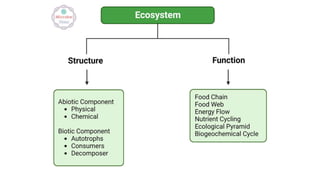
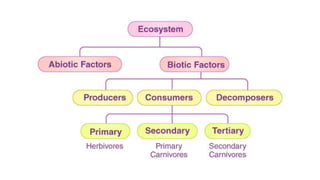
Ecosystems contain biotic or living parts as well as abiotic factors, or nonliving parts. Biotic
factors include plants, animals, and other organisms. Abiotic factors include rocks, temperature, and humidity.
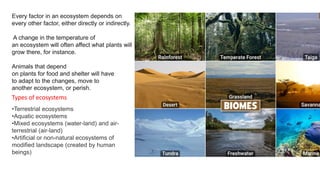
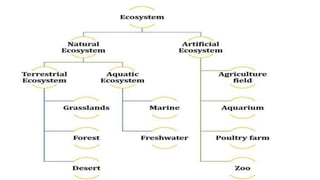
•Terrestrial ecosystems
•Aquatic ecosystems
•Mixed ecosystems (water-land) and air-
terrestrial (air-land)
•Artificial or non-natural ecosystems of
modified landscape (created by human
beings)
Types of ecosystems
Every factor in an ecosystem depends on
every other factor, either directly or indirectly.
A change in the temperature of
an ecosystem will often affect what plants will
grow there, for instance.
Animals that depend
on plants for food and shelter will have
to adapt to the changes, move to
another ecosystem, or perish.
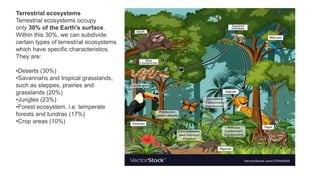
Terrestrial ecosystems
Terrestrial ecosystems occupy
only 30% of the Earth's surface.
Within this 30%, we can subdivide
certain types of terrestrial ecosystems
which have specific characteristics.
They are:
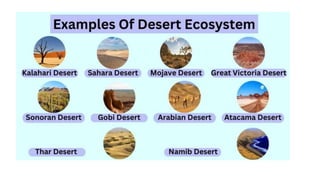
•Deserts (30%)
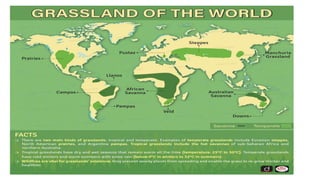
•Savannahs and tropical grasslands,
such as steppes, prairies and
grasslands (20%)
•Jungles (23%)
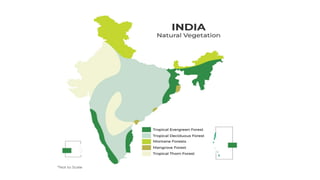
•Forest ecosystem, i.e. temperate
forests and tundras (17%)
•Crop areas (10%)
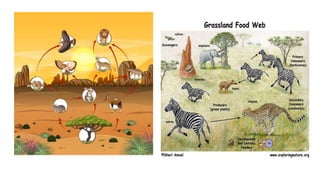
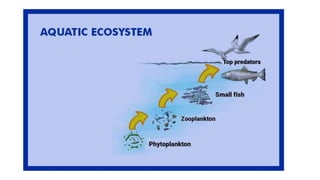
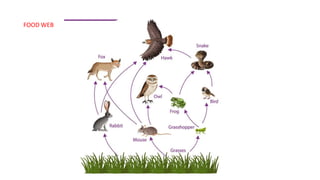
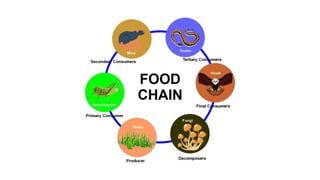
FOOD WEB
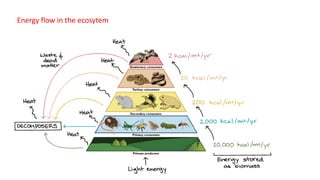
Energy flow in the ecosytem
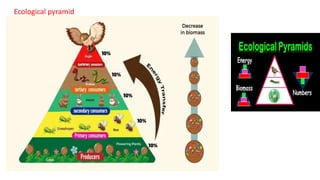
Ecological pyramid

natural Eco-systems environment studies.pptx

  • 1.
    An ecosystem isa geographic area where plants, animals, and other organisms, as well as weather and landscape, work together to form a bubble of life Ecosystems contain biotic or living parts as well as abiotic factors, or nonliving parts. Biotic factors include plants, animals, and other organisms. Abiotic factors include rocks, temperature, and humidity.
  • 2.
    •Terrestrial ecosystems •Aquatic ecosystems •Mixedecosystems (water-land) and air- terrestrial (air-land) •Artificial or non-natural ecosystems of modified landscape (created by human beings) Types of ecosystems Every factor in an ecosystem depends on every other factor, either directly or indirectly. A change in the temperature of an ecosystem will often affect what plants will grow there, for instance. Animals that depend on plants for food and shelter will have to adapt to the changes, move to another ecosystem, or perish.
  • 3.
    Terrestrial ecosystems Terrestrial ecosystemsoccupy only 30% of the Earth's surface. Within this 30%, we can subdivide certain types of terrestrial ecosystems which have specific characteristics. They are: •Deserts (30%) •Savannahs and tropical grasslands, such as steppes, prairies and grasslands (20%) •Jungles (23%) •Forest ecosystem, i.e. temperate forests and tundras (17%) •Crop areas (10%)
  • 12.
  • 14.
    Energy flow inthe ecosytem
  • 16.