Downloaded 24 times
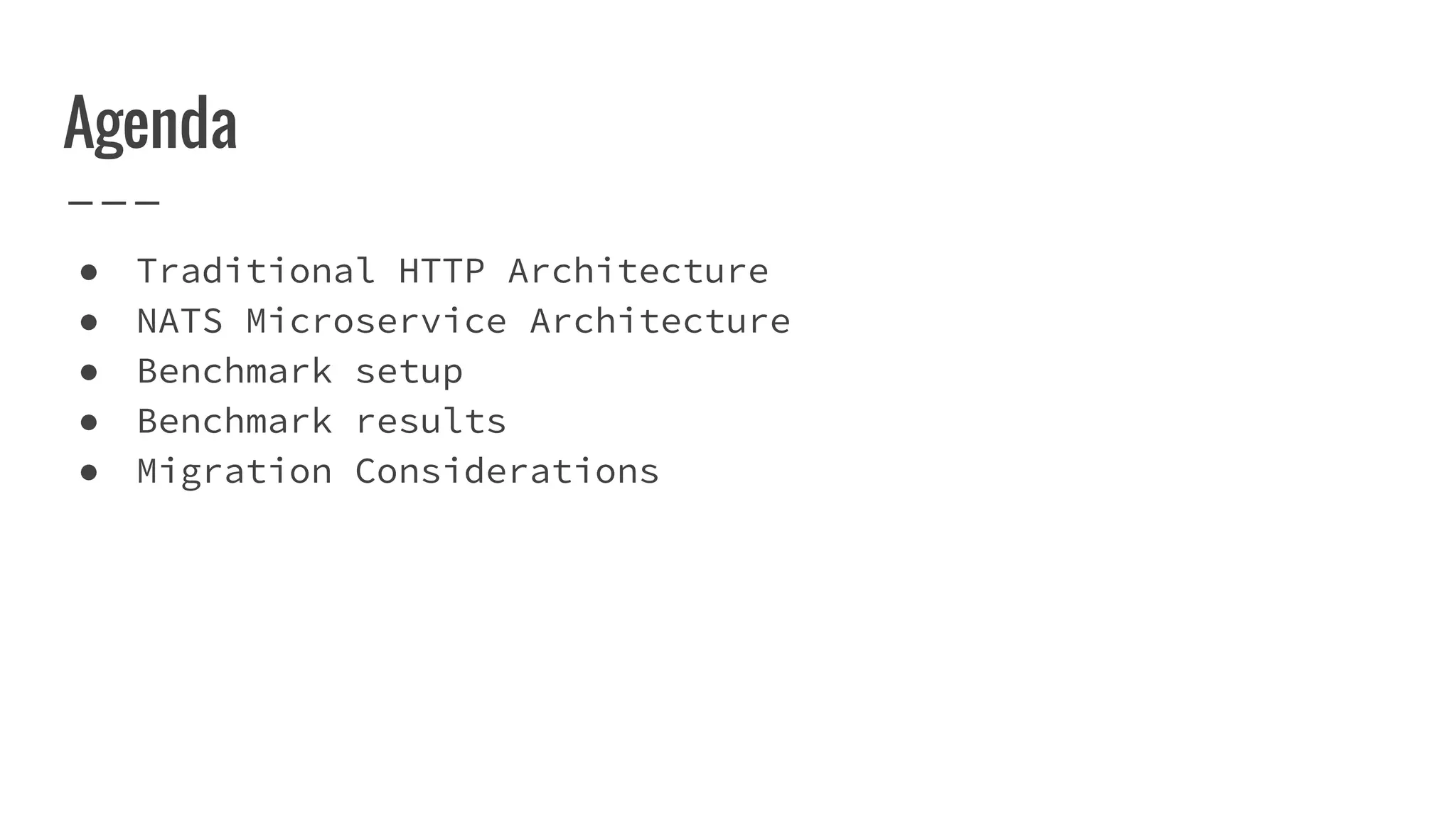
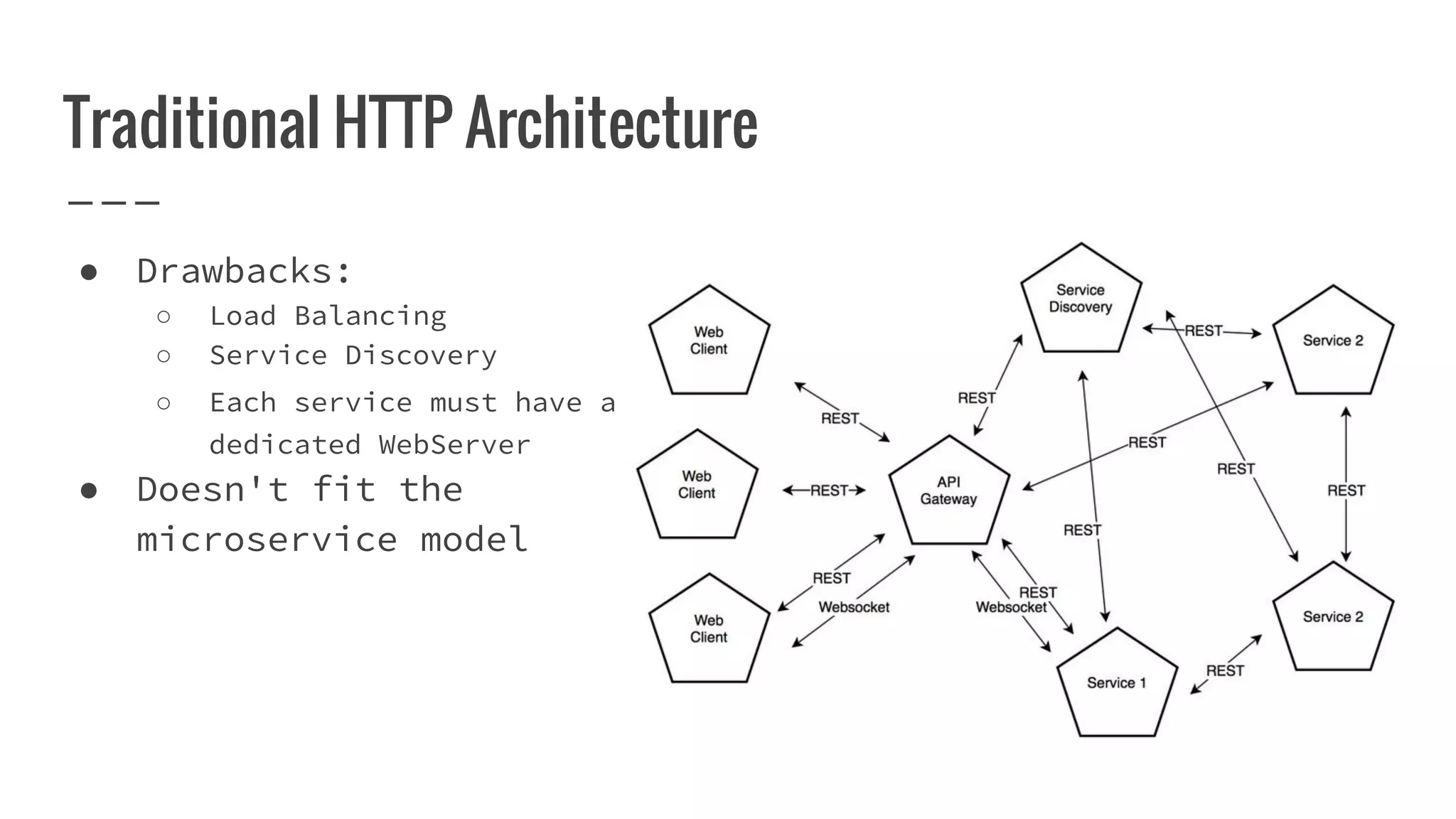
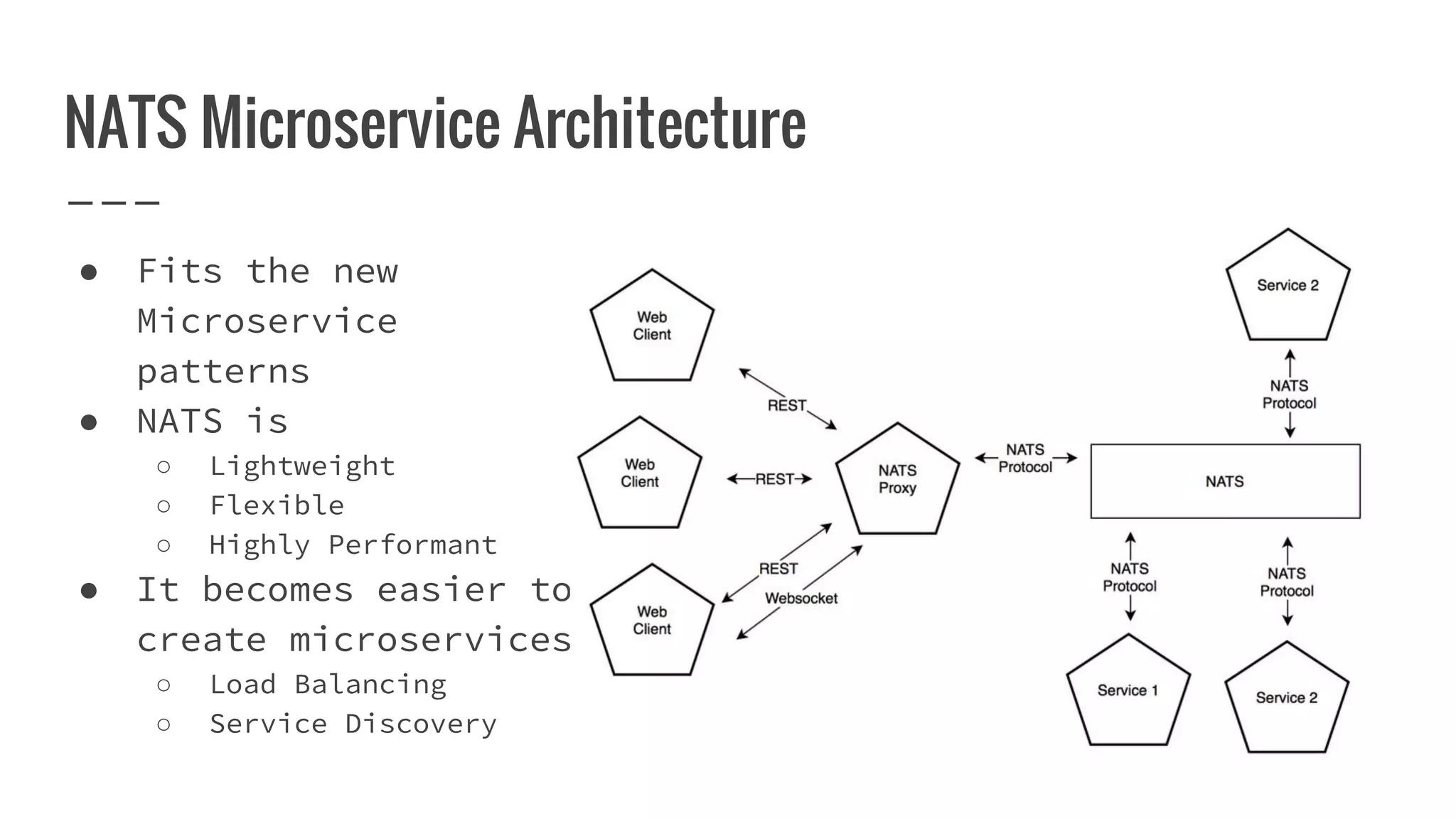
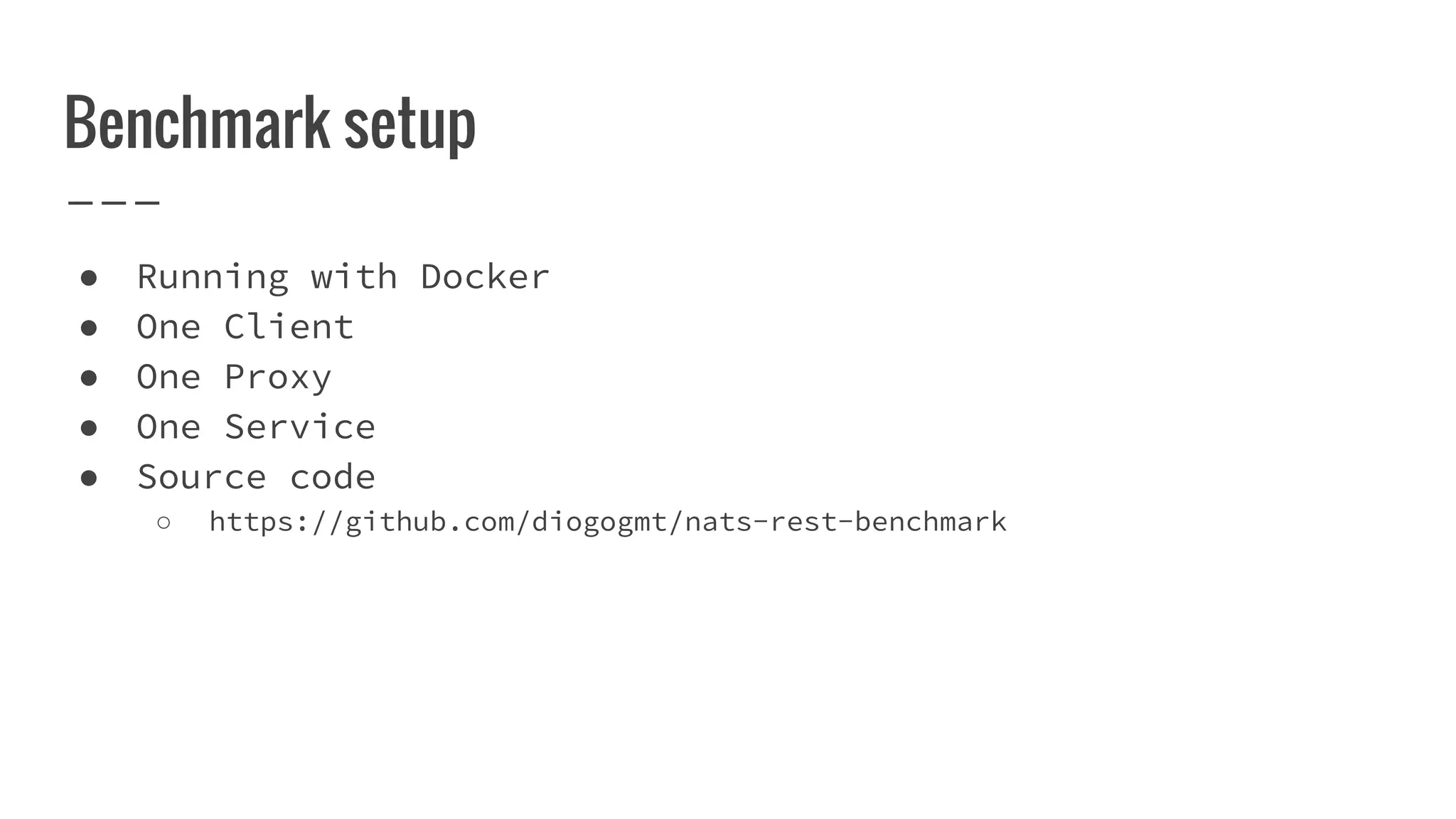
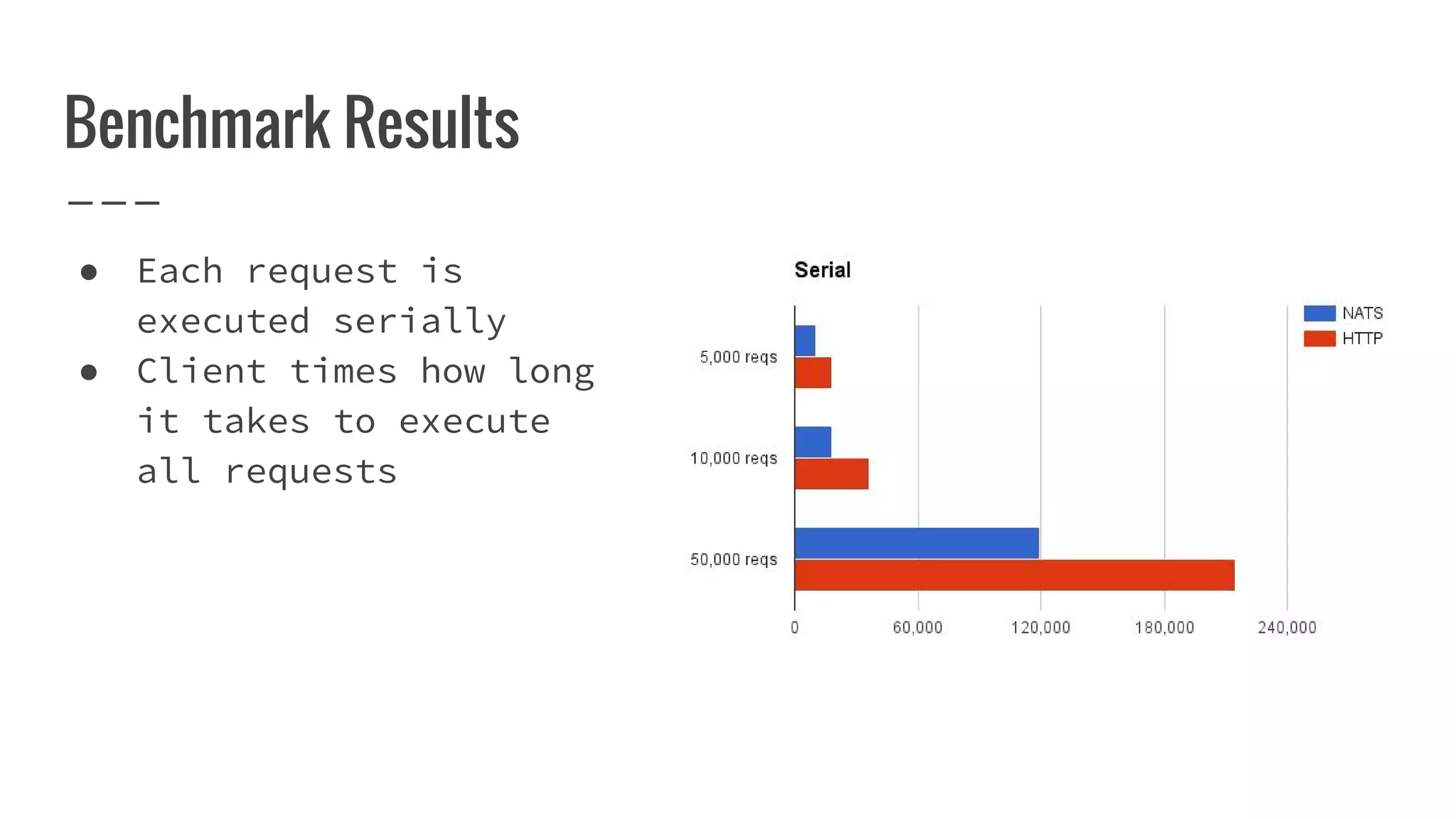
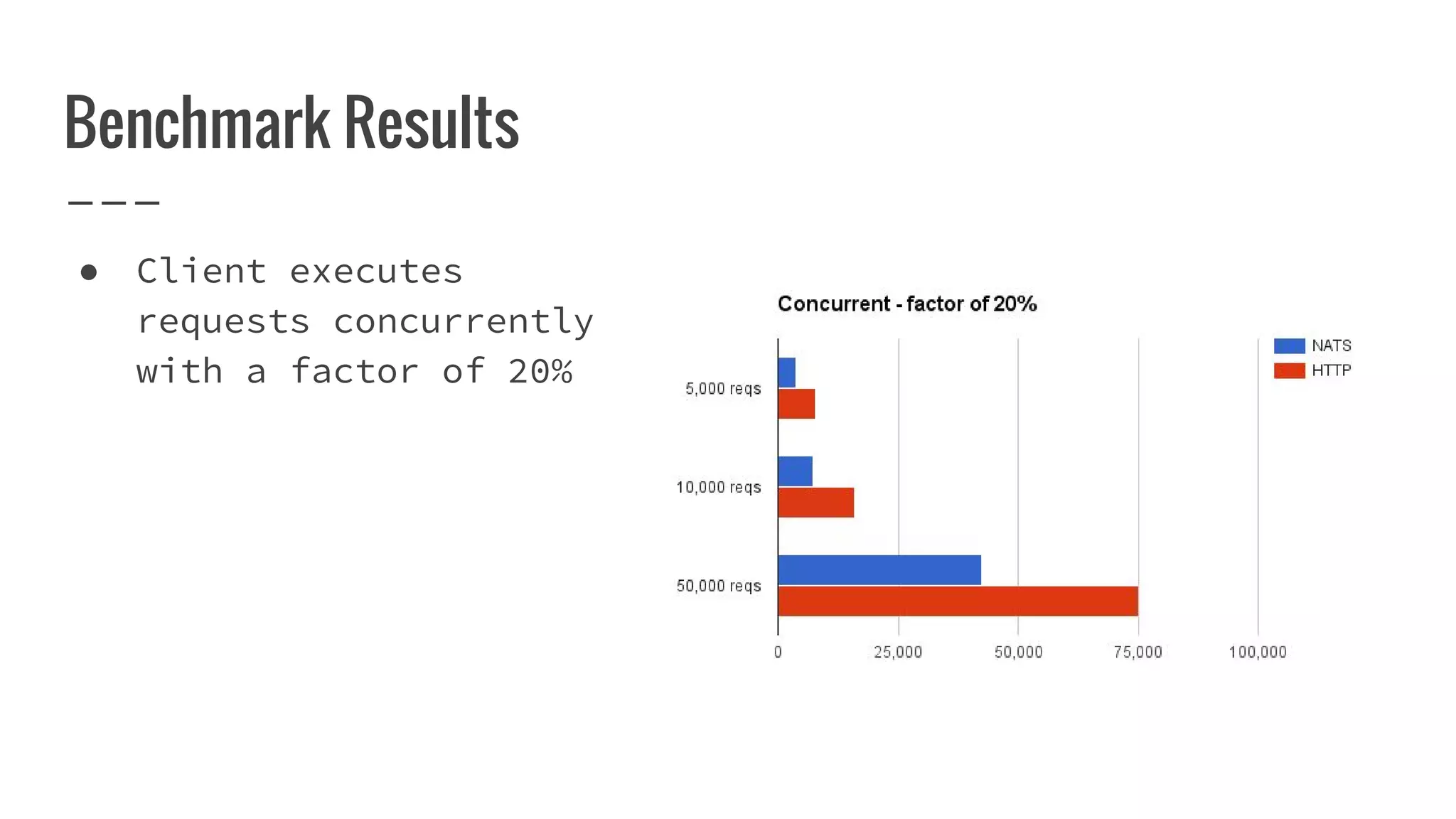
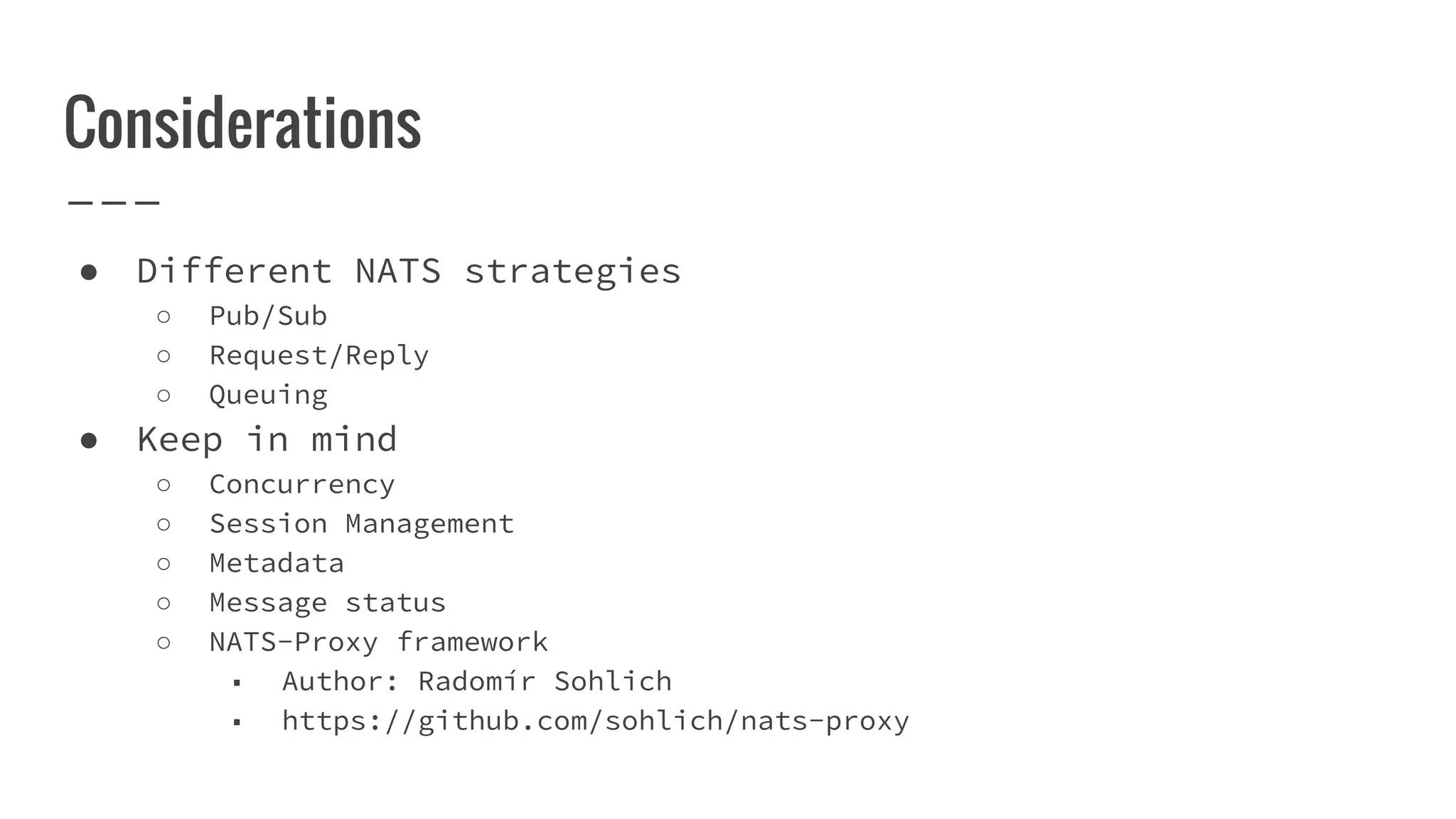


The document discusses the differences between traditional HTTP architecture and NATS microservice architecture, highlighting the drawbacks of HTTP such as the need for dedicated web servers and issues with load balancing and service discovery. It emphasizes how NATS is lightweight, flexible, and performant, making it more suitable for microservices. The document also outlines benchmark setup and results, considering various NATS strategies and factors affecting performance.


![[NDC17] Kubernetes로 개발서버 간단히 찍어내기](https://cdn.slidesharecdn.com/ss_thumbnails/ndc-170529041601-thumbnail.jpg?width=640&height=640&fit=bounds)


