NATIONALISM: SOUTH
AFRICA
THE RISE OF AFRICAN NATIONALISM
AFRICAN NATIONALISM INTRO
https://www.youtube.com/watch?v=v8COqx8HKWg&feature=youtu.be&themeRefres
h=1
THE RISE OF AFRICAN NATIONALISM
NATIONALISM??
THE RISE OF AFRICAN NATIONALISM
CONT: 1900s
 Began developing in the early 1900s
 Africans: wanted to be FREE and have a SAY
 People thought: NATIONALIST MOVEMENT include all South Africans equally
 Impossible due to being governed by the whites supporting segregation policies
 Eventually, believed that South Africans should develop their own sense of African
pride.
THE RISE OF AFRICAN NATIONALISM
CONT: 1900s
 A.N in South Africa began as a form of resistance to SEGREGATION AND
COLONIALISM
 Many S.A’s supported Britain in the South African War (1889-1902) between
BRITAIN AND AFRIKANERS
 This is because they hoped Britain will provide better economic and political
conditions.
 For example: abolishment of the pass laws
 the right to vote
 WHAT OTHER ECONOMIC AND POLITICAL CONDITIONS
WERE SA’s hoping for?
THE RISE OF AFRICAN NATIONALISM
CONT: 1900s
 After the war: became clear that the Union of SA would be based on white
political control at the cost of black S.A’s
 New government to be formed but excluding non-whites
 In all the 4 colonies, Native Congresses were formed
 What are those 4 colonies?
THE RISE OF AFRICAN NATIONALISM
CONT: 1900s
 The FOUR colonies are: (1) Cape Colony
 (2) Orange Free State
 (3) Natal
 (4) Transvaal
 1906: Transvaal Native Congress wrote a letter to the British Parliament
complaining about the PASS LAWS
 Unfortunately, the letter was ignored.
 1909: ignorance of delegation by British governrment
THE RISE OF AFRICAN NATIONALISM
CONT: 1900s
 1910 MAY: formation of the Union of South Africa wherein whites had political
power
 NEW GOVERNMENT: passed laws favoring the whites
 For example: only whites can vote
 only whites can own land in SA
 What does this mean??
 This means that the non-whites were not considered as citizens
 THIS WAS A HUGE SETBACK FOR THE SOUTH AFRICAN NATIONALISM
IONAL CONGRESS: 1910s
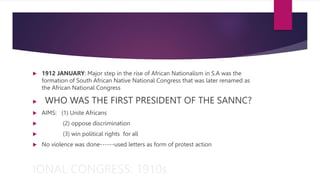
 1912 JANUARY: Major step in the rise of African Nationalism in S.A was the
formation of South African Native National Congress that was later renamed as
the African National Congress
 WHO WAS THE FIRST PRESIDENT OF THE SANNC?
 AIMS: (1) Unite Africans
 (2) oppose discrimination
 (3) win political rights for all
 No violence was done------used letters as form of protest action
ACTS
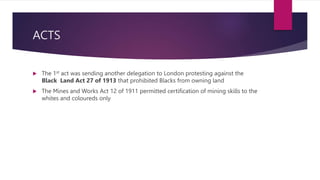
 The 1st act was sending another delegation to London protesting against the
Black Land Act 27 of 1913 that prohibited Blacks from owning land
 The Mines and Works Act 12 of 1911 permitted certification of mining skills to the
whites and coloureds only
.
 1919: delegation sent to Paris where the Peace Conference was held hoping to get
support from British government but unfortunately again it was ignored.
THE ICU DRAWS MASS SUPPORT: 1920s
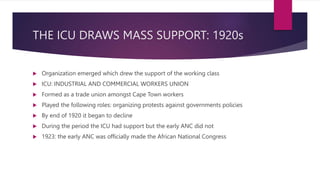
 Organization emerged which drew the support of the working class
 ICU: INDUSTRIAL AND COMMERCIAL WORKERS UNION
 Formed as a trade union amongst Cape Town workers
 Played the following roles: organizing protests against governments policies
 By end of 1920 it began to decline
 During the period the ICU had support but the early ANC did not
 1923: the early ANC was officially made the African National Congress
1930s
 ANC worked with other organizations to protest against the segregation laws
without success again
 People became frustrated meaning they were tired of olden ways of protesting
Early 1940s
 The Second World War (1939-1945) had a significant impact on the development
of African Nationalism in South Africa
 Alfred Xuma became the president of ANC in 1940
 Wanted the following: cooperation with Coloured and Indian leaders to fight
against discrimination
 1943: The African Claims in South Africa was drew by Xuma
 It called for the following : votes for adults
 fair land distribution
 end of discrimination in the workplaces
.
 1943: young members of the ANC formed the CONGRESS YOUTH LEAGUE
 The first president was Anton Lembede
 Supported by members such as Nelson Mandela, Walter Sisulu and Oliver Tambo
LATE 1940s
 After the Second World War: more determined form Nationalism emerged within
the ANC
 The NATIONAL PARTY came to power in 1948
 The youth members of the ANC were determined to turn it into a mass supported
organization
 1949: ANC adopted the PROGRAMME OF ACTION proposed by the youth
members of the ANC
 Accepted the following: boycotts
 strikes
 stay-at-home
QUICK CLASS ACTIVITY
https://wordwall.net/resource/35475259/south-african-nationalism
CONCLUSION CONT
CONCLUSION CONT

NATIONALISM grade 11 lesson.pptx

  • 1.
    NATIONALISM: SOUTH AFRICA THE RISEOF AFRICAN NATIONALISM
  • 2.
  • 3.
    THE RISE OFAFRICAN NATIONALISM NATIONALISM??
  • 4.
    THE RISE OFAFRICAN NATIONALISM CONT: 1900s  Began developing in the early 1900s  Africans: wanted to be FREE and have a SAY  People thought: NATIONALIST MOVEMENT include all South Africans equally  Impossible due to being governed by the whites supporting segregation policies  Eventually, believed that South Africans should develop their own sense of African pride.
  • 5.
    THE RISE OFAFRICAN NATIONALISM CONT: 1900s  A.N in South Africa began as a form of resistance to SEGREGATION AND COLONIALISM  Many S.A’s supported Britain in the South African War (1889-1902) between BRITAIN AND AFRIKANERS  This is because they hoped Britain will provide better economic and political conditions.  For example: abolishment of the pass laws  the right to vote  WHAT OTHER ECONOMIC AND POLITICAL CONDITIONS WERE SA’s hoping for?
  • 6.
    THE RISE OFAFRICAN NATIONALISM CONT: 1900s  After the war: became clear that the Union of SA would be based on white political control at the cost of black S.A’s  New government to be formed but excluding non-whites  In all the 4 colonies, Native Congresses were formed  What are those 4 colonies?
  • 7.
    THE RISE OFAFRICAN NATIONALISM CONT: 1900s  The FOUR colonies are: (1) Cape Colony  (2) Orange Free State  (3) Natal  (4) Transvaal  1906: Transvaal Native Congress wrote a letter to the British Parliament complaining about the PASS LAWS  Unfortunately, the letter was ignored.  1909: ignorance of delegation by British governrment
  • 8.
    THE RISE OFAFRICAN NATIONALISM CONT: 1900s  1910 MAY: formation of the Union of South Africa wherein whites had political power  NEW GOVERNMENT: passed laws favoring the whites  For example: only whites can vote  only whites can own land in SA  What does this mean??  This means that the non-whites were not considered as citizens  THIS WAS A HUGE SETBACK FOR THE SOUTH AFRICAN NATIONALISM
  • 9.
    IONAL CONGRESS: 1910s 1912 JANUARY: Major step in the rise of African Nationalism in S.A was the formation of South African Native National Congress that was later renamed as the African National Congress  WHO WAS THE FIRST PRESIDENT OF THE SANNC?  AIMS: (1) Unite Africans  (2) oppose discrimination  (3) win political rights for all  No violence was done------used letters as form of protest action
  • 10.
    ACTS  The 1stact was sending another delegation to London protesting against the Black Land Act 27 of 1913 that prohibited Blacks from owning land  The Mines and Works Act 12 of 1911 permitted certification of mining skills to the whites and coloureds only
  • 11.
    .  1919: delegationsent to Paris where the Peace Conference was held hoping to get support from British government but unfortunately again it was ignored.
  • 12.
    THE ICU DRAWSMASS SUPPORT: 1920s  Organization emerged which drew the support of the working class  ICU: INDUSTRIAL AND COMMERCIAL WORKERS UNION  Formed as a trade union amongst Cape Town workers  Played the following roles: organizing protests against governments policies  By end of 1920 it began to decline  During the period the ICU had support but the early ANC did not  1923: the early ANC was officially made the African National Congress
  • 13.
    1930s  ANC workedwith other organizations to protest against the segregation laws without success again  People became frustrated meaning they were tired of olden ways of protesting
  • 14.
    Early 1940s  TheSecond World War (1939-1945) had a significant impact on the development of African Nationalism in South Africa  Alfred Xuma became the president of ANC in 1940  Wanted the following: cooperation with Coloured and Indian leaders to fight against discrimination  1943: The African Claims in South Africa was drew by Xuma  It called for the following : votes for adults  fair land distribution  end of discrimination in the workplaces
  • 15.
    .  1943: youngmembers of the ANC formed the CONGRESS YOUTH LEAGUE  The first president was Anton Lembede  Supported by members such as Nelson Mandela, Walter Sisulu and Oliver Tambo
  • 16.
    LATE 1940s  Afterthe Second World War: more determined form Nationalism emerged within the ANC  The NATIONAL PARTY came to power in 1948  The youth members of the ANC were determined to turn it into a mass supported organization  1949: ANC adopted the PROGRAMME OF ACTION proposed by the youth members of the ANC  Accepted the following: boycotts  strikes  stay-at-home
  • 17.
  • 18.
  • 19.