National Population Policy (2000)
Background
• India's population policy has evolved since
independence.
• First policy initiative in 1976.
• Need for a comprehensive long-term policy
led to NPP 2000.
Evolution of Policies
• 1976: National Population Policy - coercive
methods criticized.
• 1997: Draft policy - not adopted.
• 2000: Final National Population Policy
adopted.
Vision and Goals
• Achieve stable population by 2045.
• Promote reproductive health and child
survival.
• Empower women for better decision-making.
Objectives
• Immediate: Address unmet needs for
contraception and healthcare.
• Medium-term: Bring TFR to replacement
levels by 2010.
• Long-term: Stabilize population by 2045.
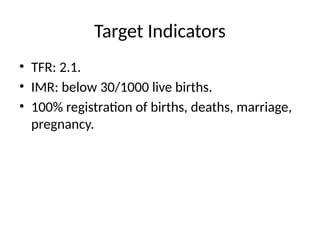
Target Indicators
• TFR: 2.1.
• IMR: below 30/1000 live births.
• 100% registration of births, deaths, marriage,
pregnancy.
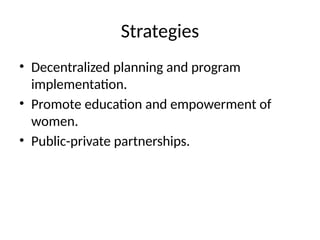
Strategies
• Decentralized planning and program
implementation.
• Promote education and empowerment of
women.
• Public-private partnerships.
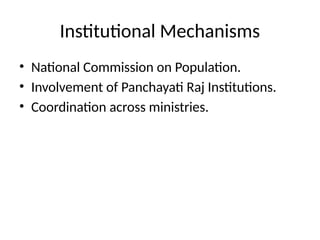
Institutional Mechanisms
• National Commission on Population.
• Involvement of Panchayati Raj Institutions.
• Coordination across ministries.
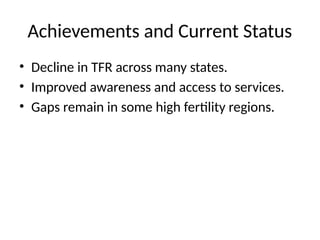
Achievements and Current Status
• Decline in TFR across many states.
• Improved awareness and access to services.
• Gaps remain in some high fertility regions.
Challenges and Way Forward
• Address socio-cultural barriers.
• Enhance male involvement.
• Improve service delivery and monitoring.
Conclusion
• NPP 2000 is a landmark in India’s demographic
transition.
• Needs sustained political and community
support.
• Focus on youth and gender equity is vital.

National_Population_Policy_2000 based on recent policy.pptx

  • 1.
  • 2.
    Background • India's populationpolicy has evolved since independence. • First policy initiative in 1976. • Need for a comprehensive long-term policy led to NPP 2000.
  • 3.
    Evolution of Policies •1976: National Population Policy - coercive methods criticized. • 1997: Draft policy - not adopted. • 2000: Final National Population Policy adopted.
  • 4.
    Vision and Goals •Achieve stable population by 2045. • Promote reproductive health and child survival. • Empower women for better decision-making.
  • 5.
    Objectives • Immediate: Addressunmet needs for contraception and healthcare. • Medium-term: Bring TFR to replacement levels by 2010. • Long-term: Stabilize population by 2045.
  • 6.
    Target Indicators • TFR:2.1. • IMR: below 30/1000 live births. • 100% registration of births, deaths, marriage, pregnancy.
  • 7.
    Strategies • Decentralized planningand program implementation. • Promote education and empowerment of women. • Public-private partnerships.
  • 8.
    Institutional Mechanisms • NationalCommission on Population. • Involvement of Panchayati Raj Institutions. • Coordination across ministries.
  • 9.
    Achievements and CurrentStatus • Decline in TFR across many states. • Improved awareness and access to services. • Gaps remain in some high fertility regions.
  • 10.
    Challenges and WayForward • Address socio-cultural barriers. • Enhance male involvement. • Improve service delivery and monitoring.
  • 11.
    Conclusion • NPP 2000is a landmark in India’s demographic transition. • Needs sustained political and community support. • Focus on youth and gender equity is vital.