1 
NAST 2014 Issues Conference 
State Initiatives to Expand the Availability and Effectiveness of 
Private Sector Retirement Plans 
How Federal Laws Apply to Plan Design Options 
David E. Morse, K&L Gates LLP 
david.morse@klgates.com
America’s Retirement Crisis 
• Most Americans rank having not enough money for 
retirement as one of their top concerns (Gallop, 2014). 
• A sizeable portion of workers report virtually having no 
savings or investments (EBRI, 2014). 
• Traditional pension plans are becoming rare in private 
sector. 
• Employees much more likely to save through company 
401(k) plan than on their own via IRA or taxable account. 
• Approximately one-half of private sector workers are not 
covered by an employer plan. 
2
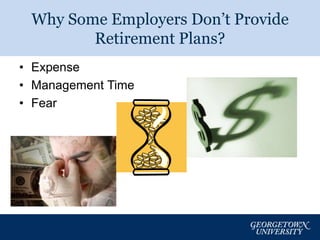
Why Some Employers Don’t Provide 
Retirement Plans? 
• Expense 
• Management Time 
• Fear 
3
States Can Take Action to Address 
• Pass enabling legislation. 
• State-appointed Board creates/runs turn-key 
retirement program. 
• Low-cost; low-risk; and user-friendly. 
• Allowing meaningful amounts to be saved for 
retirement. 
• While leaving room for the private sector to craft 
other solutions. 
4
But…Challenge for States 
• Familiar with managing traditional defined benefit 
pension plans for public sector. 
• Already aware of fiduciary responsibilities, pooled 
and professionally managed funds and risk 
management. 
• State pension plans have been exempt from ERISA. 
• How would ERISA and other laws apply to state 
actions to address need in private sector? 
5
Federal Law: ERISA 
• Covers all: 
– 401(k), traditional pensions, and other employer plans 
deferring payments until retirement; 
– Regulates plan operation and imposes strict duties on 
fiduciaries; but 
– Typical IRA is not an ERISA plan. 
• ERISA has lots of rules, but also provides workable 
standards, sound protections and a system for resolving 
benefit claims. 
6
Fiduciary Details 
• Includes: 
– Plan sponsor; 
– Administrative Board and trustees; 
– Anyone with control over plan money; and 
– Anyone with power to hire/fire another fiduciary. 
• Duties: 
– Prudent expert, but can outsource to professionals; 
– Act in best interest of participants; 
– Perfection is not required, just reasonable decision-making.
ERISA Preemption 
• ERISA trumps state law that “relates to a benefit 
plan.” 
• Shifting legal standard. 
• Is state law that requires employers to offer a 
no-cost benefit preempted? 
8
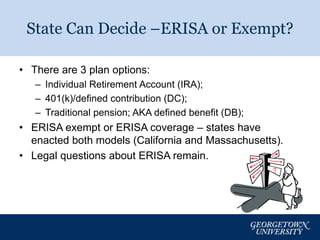
State Can Decide –ERISA or Exempt? 
• There are 3 plan options: 
– Individual Retirement Account (IRA); 
– 401(k)/defined contribution (DC); 
– Traditional pension; AKA defined benefit (DB); 
• ERISA exempt or ERISA coverage – states have 
enacted both models (California and Massachusetts). 
• Legal questions about ERISA remain. 
9
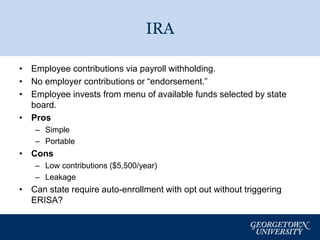
IRA 
• Employee contributions via payroll withholding. 
• No employer contributions or “endorsement.” 
• Employee invests from menu of available funds selected by state 
board. 
• Pros 
– Simple 
– Portable 
• Cons 
– Low contributions ($5,500/year) 
– Leakage 
• Can state require auto-enrollment with opt out without triggering 
ERISA? 
10
401(k)/DC 
• Employee contributions via payroll withholding. 
• Employer matching and non-matching contributions allowed. 
• Employee invests from menu of available funds selected by board. 
• Pros 
– Flexible 
– Auto-enrollment allowed 
– Higher contributions ($18,000/year) 
– Portable 
– Less leakage than IRA 
• Cons 
– More complex than IRA 
• Single plan (MEP) or many separate plans? 
11
Pension Plan/DB 
• Employees receive lifetime annuity. 
• Employers and employees may contribute. 
• Board, or its delegates, invests plan funds. 
• Pros 
– Ideal for providing retirement income 
– Less leakage 
• Cons 
– Employer has risk of underfunding (can reduce via design and hybrids) 
– More complex and costly to administer 
12
State-Sponsored Plans Can 
• Avoid risk and cost to taxpayers. 
• Be self-supporting. 
• Offer options for fund investment. 
13
Investments 
• IRAs and 401(k)s can have “default” investment of 
professionally managed, diversified low-cost fund. 
• Also offer “menu” of other professionally managed funds. 
• Pension plans invested by Board or delegate, would not 
have minimum return “bogey.” 
14
Bottom Line 
• States can help workers to save for retirement. 
• No “correct solution.” 
– IRA, 401(k), and pension each have pros and cons 
• Don’t fear ERISA! 
– ERISA should not be made the bogeyman to stop states 
from taking action to address the retirement crisis. 
15
cri.georgetown.edu 
@cri_states

NAST 2014 Issues Conference

  • 1.
    1 NAST 2014Issues Conference State Initiatives to Expand the Availability and Effectiveness of Private Sector Retirement Plans How Federal Laws Apply to Plan Design Options David E. Morse, K&L Gates LLP david.morse@klgates.com
  • 2.
    America’s Retirement Crisis • Most Americans rank having not enough money for retirement as one of their top concerns (Gallop, 2014). • A sizeable portion of workers report virtually having no savings or investments (EBRI, 2014). • Traditional pension plans are becoming rare in private sector. • Employees much more likely to save through company 401(k) plan than on their own via IRA or taxable account. • Approximately one-half of private sector workers are not covered by an employer plan. 2
  • 3.
    Why Some EmployersDon’t Provide Retirement Plans? • Expense • Management Time • Fear 3
  • 4.
    States Can TakeAction to Address • Pass enabling legislation. • State-appointed Board creates/runs turn-key retirement program. • Low-cost; low-risk; and user-friendly. • Allowing meaningful amounts to be saved for retirement. • While leaving room for the private sector to craft other solutions. 4
  • 5.
    But…Challenge for States • Familiar with managing traditional defined benefit pension plans for public sector. • Already aware of fiduciary responsibilities, pooled and professionally managed funds and risk management. • State pension plans have been exempt from ERISA. • How would ERISA and other laws apply to state actions to address need in private sector? 5
  • 6.
    Federal Law: ERISA • Covers all: – 401(k), traditional pensions, and other employer plans deferring payments until retirement; – Regulates plan operation and imposes strict duties on fiduciaries; but – Typical IRA is not an ERISA plan. • ERISA has lots of rules, but also provides workable standards, sound protections and a system for resolving benefit claims. 6
  • 7.
    Fiduciary Details •Includes: – Plan sponsor; – Administrative Board and trustees; – Anyone with control over plan money; and – Anyone with power to hire/fire another fiduciary. • Duties: – Prudent expert, but can outsource to professionals; – Act in best interest of participants; – Perfection is not required, just reasonable decision-making.
  • 8.
    ERISA Preemption •ERISA trumps state law that “relates to a benefit plan.” • Shifting legal standard. • Is state law that requires employers to offer a no-cost benefit preempted? 8
  • 9.
    State Can Decide–ERISA or Exempt? • There are 3 plan options: – Individual Retirement Account (IRA); – 401(k)/defined contribution (DC); – Traditional pension; AKA defined benefit (DB); • ERISA exempt or ERISA coverage – states have enacted both models (California and Massachusetts). • Legal questions about ERISA remain. 9
  • 10.
    IRA • Employeecontributions via payroll withholding. • No employer contributions or “endorsement.” • Employee invests from menu of available funds selected by state board. • Pros – Simple – Portable • Cons – Low contributions ($5,500/year) – Leakage • Can state require auto-enrollment with opt out without triggering ERISA? 10
  • 11.
    401(k)/DC • Employeecontributions via payroll withholding. • Employer matching and non-matching contributions allowed. • Employee invests from menu of available funds selected by board. • Pros – Flexible – Auto-enrollment allowed – Higher contributions ($18,000/year) – Portable – Less leakage than IRA • Cons – More complex than IRA • Single plan (MEP) or many separate plans? 11
  • 12.
    Pension Plan/DB •Employees receive lifetime annuity. • Employers and employees may contribute. • Board, or its delegates, invests plan funds. • Pros – Ideal for providing retirement income – Less leakage • Cons – Employer has risk of underfunding (can reduce via design and hybrids) – More complex and costly to administer 12
  • 13.
    State-Sponsored Plans Can • Avoid risk and cost to taxpayers. • Be self-supporting. • Offer options for fund investment. 13
  • 14.
    Investments • IRAsand 401(k)s can have “default” investment of professionally managed, diversified low-cost fund. • Also offer “menu” of other professionally managed funds. • Pension plans invested by Board or delegate, would not have minimum return “bogey.” 14
  • 15.
    Bottom Line •States can help workers to save for retirement. • No “correct solution.” – IRA, 401(k), and pension each have pros and cons • Don’t fear ERISA! – ERISA should not be made the bogeyman to stop states from taking action to address the retirement crisis. 15
  • 16.