Pelajran Bahasa Inggris
   Klas VIII semester 2
          Narrative text
   Mengungkapkan makna dalam teks
    tulis fungsional dan esei pendek
    sederhana berbentuk recount dan
    narrative untuk berinteraksi dengan
    lingkungan sekitar


Standar Kompetensi
Kompetensi dasar
Kompetensi Dasar
   Merespon makna yang terdapat dalam
    teks lisan fungsional pendek sangat
    sederhana secara akurat, lancar dan
    berterima untuk berinteraksi dengan
    lingkungan terdekat


Kompetensi Dasar
   Review ciri kebahasaan teks narrative/
    recount
   Membuat kalimat sederhana terkait teks
    narrative/ recount
   Mengembangkan langkah retorika teks
    recount dan narrative
   Membuat draft teks recount dan narrative
   Menulis teks recount dan narrative
    berdasarkan draft yang dibuat
   Memajang hasil tulisan di


Keiatan pembelajaran
What is narrative text


  Adalah sebuah teks, yang berhubungan
 dengan serangkaian peristiwa logis, dan
  secara kronologis terkait dengan faktor
             yang dialami oleh character
 Alur
 Karakter
 Latar


sebuah teks naratif biasanya
memiliki deskripsi fitur
Anderson (2003b) menjelaskan
lima langkah dalam membangun
sebuah teks naratif:


   Orientasi
   Komplikasi
   urutan peristiwa
   resolusi
   coda.
 plot
 tema
 karakter
 peristiwa, dan bagaimana mereka
  berhubungan


Kunci untuk memahami teks
narrative:
   Partisipan yang spesific individual
   Action Verbs(materrial proses,mental proses)
   Past tense
   Lingking words berkenaan dengan waktu
   Sering memasukan dialog(tense jadi
    berobah)
   Dalam menciptakan imajinasi sering
    menggunkan descriptive language
   Sering menggunakan orang pertama(I)
    Orang ketiga(she,he, they, it)


Dari segi Fitur bahasa ciri khas
dari teks naratif adalah:
    Rebecca (2003) says that plot is the
    sequence of events showing characters in
    action. This sequence is not accidental but
    is chosen by the author as the best way of
    telling his or her story. If the writer has
    chosen well, the plot will produce
    conflict, tension, and action that will
    arouse and hold the reader’s interest


WHAT IS PLOT
   The plot answers the questions “What is
    happening in the story?” and “What is the
    sequence of events?” Some stories have
    simple and straightforward plots. Others
    have complex plots that make the reader
    think and ask questions: Who solves
    problems? Stories that flow well keep the
    reader involved and interested
   Characterization addresses the questions
    “Who are these people?” and “Are they
    believable?” Characters need to be
    authentic for the reader to connect with
    them


Characters
   Setting informs the reader of where the
    story is taking place. It answers the
    questions “Where am I?” and “What will I
    see if I walk around here?” More
    frequently, the setting falls into the
    background, and the reader is not
    particularly aware of it


Setting
   Additionally, Anderson and Anderson (2003a)
    state that narrative usually include the
    following grammatical features:
   a. nouns that identify the specific characters
    and places in the story.
   b. adjectives that provide accurate
    description of the characters and setting.
   c. time words that connect events to tell
    when they occur.
   c. verbs that show the actions that occur in
    the story.
   What is story about?
   What is the communicative purpose of
    the text?
   The first paragraph tells about
   Why did Nasredin get a ladder
   What is complication in the text?
   Why did the gardener not believe to
    Nasredin?


Some questions of Narrative text
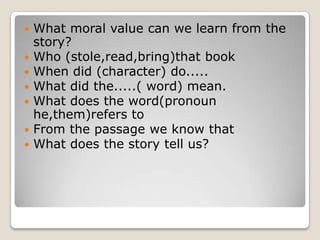
   What moral value can we learn from the
    story?
   Who (stole,read,bring)that book
   When did (character) do.....
   What did the.....( word) mean.
   What does the word(pronoun
    he,them)refers to
   From the passage we know that
   What does the story tell us?
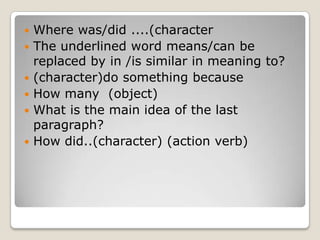
   Where was/did ....(character
   The underlined word means/can be
    replaced by in /is similar in meaning to?
   (character)do something because
   How many (object)
   What is the main idea of the last
    paragraph?
   How did..(character) (action verb)

Narrative teks

  • 1.
    Pelajran Bahasa Inggris Klas VIII semester 2 Narrative text
  • 2.
    Mengungkapkan makna dalam teks tulis fungsional dan esei pendek sederhana berbentuk recount dan narrative untuk berinteraksi dengan lingkungan sekitar Standar Kompetensi
  • 3.
  • 4.
  • 5.
    Merespon makna yang terdapat dalam teks lisan fungsional pendek sangat sederhana secara akurat, lancar dan berterima untuk berinteraksi dengan lingkungan terdekat Kompetensi Dasar
  • 6.
    Review ciri kebahasaan teks narrative/ recount  Membuat kalimat sederhana terkait teks narrative/ recount  Mengembangkan langkah retorika teks recount dan narrative  Membuat draft teks recount dan narrative  Menulis teks recount dan narrative berdasarkan draft yang dibuat  Memajang hasil tulisan di Keiatan pembelajaran
  • 7.
    What is narrativetext Adalah sebuah teks, yang berhubungan dengan serangkaian peristiwa logis, dan secara kronologis terkait dengan faktor yang dialami oleh character
  • 8.
     Alur  Karakter Latar sebuah teks naratif biasanya memiliki deskripsi fitur
  • 9.
    Anderson (2003b) menjelaskan limalangkah dalam membangun sebuah teks naratif:  Orientasi  Komplikasi  urutan peristiwa  resolusi  coda.
  • 10.
     plot  tema karakter  peristiwa, dan bagaimana mereka berhubungan Kunci untuk memahami teks narrative:
  • 11.
    Partisipan yang spesific individual  Action Verbs(materrial proses,mental proses)  Past tense  Lingking words berkenaan dengan waktu  Sering memasukan dialog(tense jadi berobah)  Dalam menciptakan imajinasi sering menggunkan descriptive language  Sering menggunakan orang pertama(I) Orang ketiga(she,he, they, it) Dari segi Fitur bahasa ciri khas dari teks naratif adalah:
  • 12.
    Rebecca (2003) says that plot is the sequence of events showing characters in action. This sequence is not accidental but is chosen by the author as the best way of telling his or her story. If the writer has chosen well, the plot will produce conflict, tension, and action that will arouse and hold the reader’s interest WHAT IS PLOT
  • 13.
    The plot answers the questions “What is happening in the story?” and “What is the sequence of events?” Some stories have simple and straightforward plots. Others have complex plots that make the reader think and ask questions: Who solves problems? Stories that flow well keep the reader involved and interested
  • 14.
    Characterization addresses the questions “Who are these people?” and “Are they believable?” Characters need to be authentic for the reader to connect with them Characters
  • 15.
    Setting informs the reader of where the story is taking place. It answers the questions “Where am I?” and “What will I see if I walk around here?” More frequently, the setting falls into the background, and the reader is not particularly aware of it Setting
  • 16.
    Additionally, Anderson and Anderson (2003a) state that narrative usually include the following grammatical features:  a. nouns that identify the specific characters and places in the story.  b. adjectives that provide accurate description of the characters and setting.  c. time words that connect events to tell when they occur.  c. verbs that show the actions that occur in the story.
  • 17.
    What is story about?  What is the communicative purpose of the text?  The first paragraph tells about  Why did Nasredin get a ladder  What is complication in the text?  Why did the gardener not believe to Nasredin? Some questions of Narrative text
  • 18.
    What moral value can we learn from the story?  Who (stole,read,bring)that book  When did (character) do.....  What did the.....( word) mean.  What does the word(pronoun he,them)refers to  From the passage we know that  What does the story tell us?
  • 19.
    Where was/did ....(character  The underlined word means/can be replaced by in /is similar in meaning to?  (character)do something because  How many (object)  What is the main idea of the last paragraph?  How did..(character) (action verb)