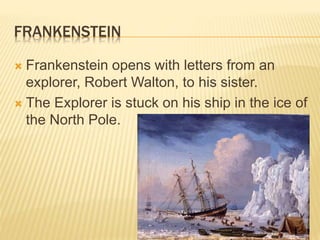
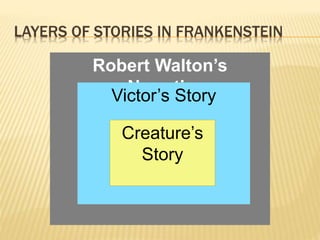
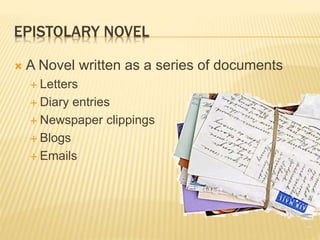
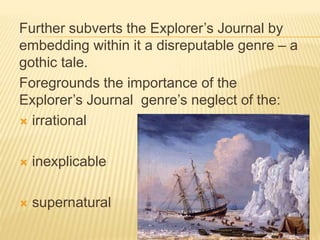
The document analyzes the narrative structure of Mary Shelley's 'Frankenstein,' highlighting its epistolary format and exploration of dual genres: the feminine epistolary novel and the masculine explorer's journal. It emphasizes how the novel subverts traditional conventions, portraying flawed characters and failures instead of celebrating heroic achievements, ultimately challenging Enlightenment ideals. The analysis also notes the gothic elements that further complicate distinctions between hero and villain, suggesting that monstrosity is a product of human action rather than external forces.