CHAPTER 1 INTRODUCTION
Common fluids such as water, ethylene glycol, and heat transfer oil play an important role in
many industrial processes such as power generation, heating or cooling processes, chemical
processes, and microelectronics. However, these fluids have relatively low thermal
conductivity and thus cannot reach high heat exchange rates in thermal engineering devices.
A way to overcome this barrier is using ultra-fine solid particles suspended in common fluids
to improve their thermal conductivity. The suspension of Nano-sized particles (1–100 nm) in
a conventional base fluid is called a Nano fluid. Choi first used the term ‘‘Nano fluid’’ in
1995. Nano fluids, compared to suspensions with particles of millimeter-or-micrometer size,
show better stability, rheological properties, and considerably higher thermal conductivities.
In recent years, many researchers have investigated the effects of Nano fluids on the
enhancement of heat transfer in thermal engineering devices, both experimentally and
theoretically. Researchers have also applied a variety of preparation methods, characteristics,
and different models used for the calculation of thermos physical properties of Nano fluids
(i.e., thermal conductivity, viscosity, density, specific heat capacity). Some investigators
have also summarized the effects of Nano fluids on flow and heat transfer in natural and
forced convection in different systems. The enhanced thermal behavior of Nano fluids could
provide a basis for an enormous innovation for heat transfer intensification, which is of major
importance to a number of industrial sectors including transportation, power generation,
micro manufacturing, thermal therapy for cancer treatment, chemical and metallurgical
sectors, as well as heating, cooling, ventilation and air-conditioning. And enhancing system
efficiency. This report presents a review of former studies on the application of Nano fluids in
solar thermal engineering systems.
The former works on applications of Nano fluids in solar energy are mainly related to their
applications in collectors. Therefore, this review mainly investigates the effects of Nano fluids
on the efficiency improvement of solar collectors as well as on economic and environmental
considerations regarding the usage of these systems. Nano fluids are also important for the
production of nanostructured materials for the engineering of complex fluids as well as for
cleaning oil from surfaces due to their excellent wetting and spreading behavior. Another
application of the Nano fluid flow is in the delivery of Nano-drug as suggested by
Kleinstreuer.
Page | 1
Reviewed the potential of Nano fluids in the improvement of heat transfer in refrigeration
systems. The authors concluded that more studies are required to find the reasons behind the
considerable improvements in heat transfer whereas an insignificant increase in pressure occurs.
Thomas and Siobhan presented experimental studies on Nano fluids, with emphasis on the
techniques of measuring the effective thermal conductivity. Investigated the applications of Nano
fluids in cooling electronics. Recently, applications of computer simulations and computational
fluid dynamics (CFD) used to model systems employing Nano fluids were reviewed and analyzed
by Abagail and Ahmadi and Kamyar. Ahn and Kim also published a review on the critical heat
flux of Nano fluids for both convective flow boiling and pool boiling applications. In another
publication, Saidur et al. reviewed the general applications of Nano fluids in some fields such as
cooling of electronics, heat exchangers, medical applications, fuel cells, nuclear reactors, and
many more. They also mentioned briefly the applications of Nano fluids in solar water heaters.
They investigated challenges in using Nano fluids, including an increased pressure drop and
pumping power, long-term stability of nanoparticles dispersion, and the high cost of Nano fluids.
In recent years, the use of solar energy has had a remarkable edge. The perceived shortage of
fossil fuels as well as environmental considerations will constrain the use of fossil fuels in the
future. Therefore, researchers are motivated to find alternative sources of energy. This has
become even more popular as the price of fossil fuels continues to rise. The earth receives in just
about 1 h more energy from the sun than that consumed by the entire world for 1 year. Most solar
energy applications are financially viable while small systems for individual use require just a
few kilowatts of power. It is important to apply solar energy to a wide range of applications and
provide solutions through the modification of the energy proportion, improving energy stability,
increasing energy sustainability, and enhancing system efficiency. This report presents a review
of former studies on the application of Nano fluids in solar thermal engineering systems. The
former works on applications of Nano fluids in solar energy are mainly related to their
applications in collectors. Therefore, this review mainly investigates the effects of Nano fluids
on the efficiency improvement of solar collectors as well as on economic and environmental
considerations regarding the usage of these systems. Finally, the attempt to reduce the overall
length of the report, without compromising the technical quality, only some very important
questions for problems of practical applications have been briefly described.
Page | 2
CHAPTER 2 APPLICATIONS OF NANOFLUIDS IN
SOLAR ENERGY
Initially, the application of Nano fluids in collectors and water heaters are investigated from
the efficiency, economic, and environmental aspects. Some studies conducted on thermal
conductivity and optical properties of Nano fluids are also briefly reviewed, because these
parameters can determine the capability of Nano fluids to enhance the performance of solar
systems.
2.1. Collectors And Solar Water Heaters
Solar collectors are particular kind of heat exchangers that transform solar radiation energy
into internal energy of the transport medium. These devices absorb the incoming solar
radiation, convert it into heat, and transfer the heat to a fluid (usually air, water, or oil) flowing
through the collector. The energy collected is carried from the working fluid, either directly to
the hot water or space conditioning equipment or to a thermal energy storage tank, from which it
can be drawn for use at night or on cloudy days. Other applications of Nano fluids in thermal
energy storage, solar cells, and solar stills are also reviewed. Some suggestions also are made for
future works in this field. In addition, the existing challenges of using Nano fluids in solar energy
applications are discussed. Solar water heaters are the most popular devices in the field of solar
energy. As mentioned in the introduction, the Nano fluid based solar collectors are investigated
in two aspects. In the first, these devices are studied from the efficiency viewpoint, and in the
second, from economic and environmental viewpoints. Therefore, this review mainly
investigates the effects of Nano fluids on the efficiency improvement of solar collectors as well
as on economic and environmental considerations regarding the usage of these systems. Other
applications of Nano fluids in thermal energy storage, solar cells, and solar stills are also
reviewed.
Page | 3
2.1.1. Efficiency Of Nano Fluid-Based Solar Collectors
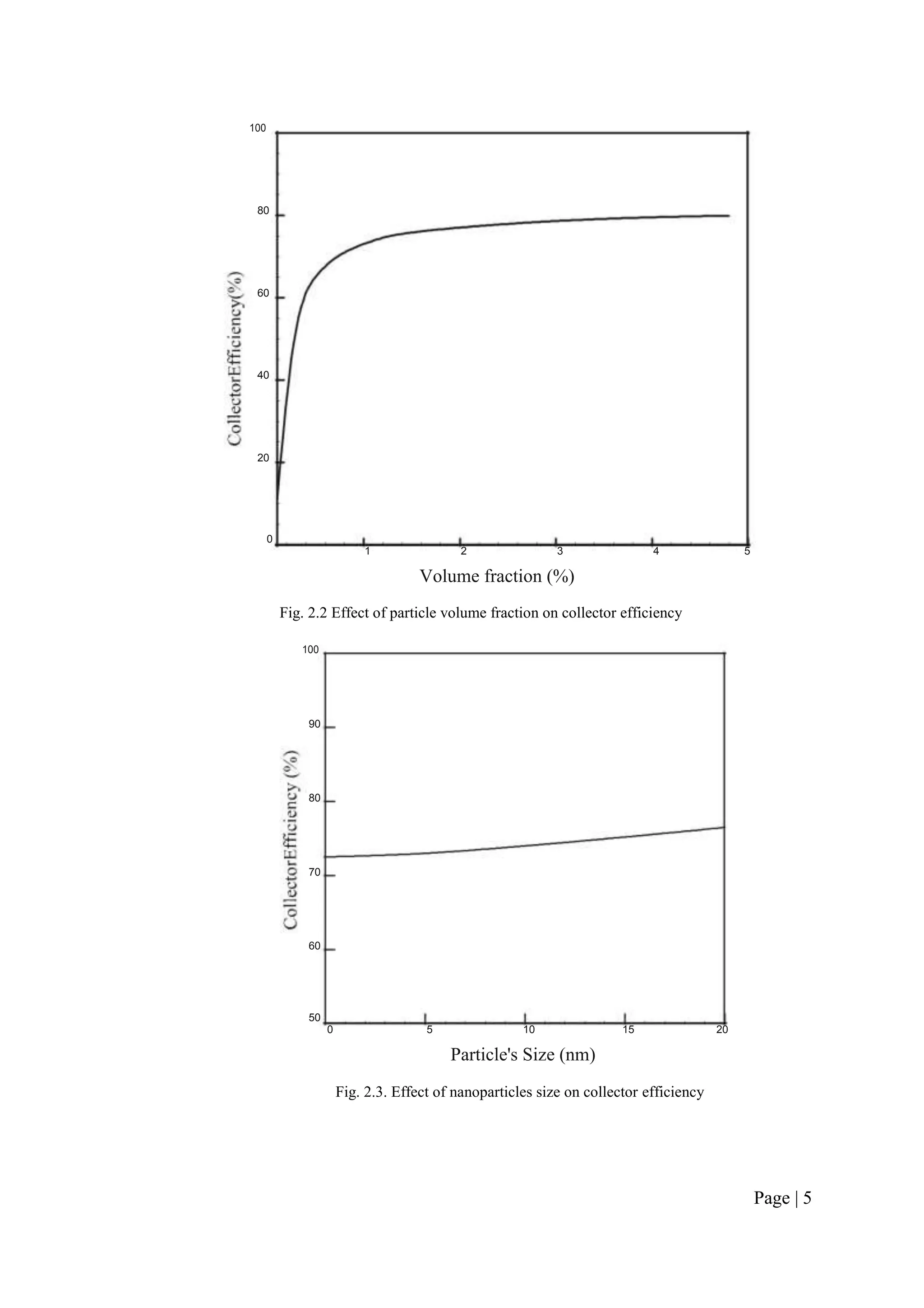
Tyagi plotted the variation of collector efficiency as a function of the particle volume fraction
(%), where the volume fraction varies from 0.1% to 5% (see Fig. 2.2). Their results showed that
by adding nanoparticles to the working fluid, the efficiency increases remarkably for low values
of volume fraction of nanoparticles. They attributed the increase of collector efficiency to the
increase in attenuation of sunlight passing through the collector due to the nanoparticles addition
that leads to the increase of collector efficiency. However, for a volume fraction higher than 2%,
the efficiency remains nearly constant, so adding more nanoparticles is not beneficial. Tyagi also
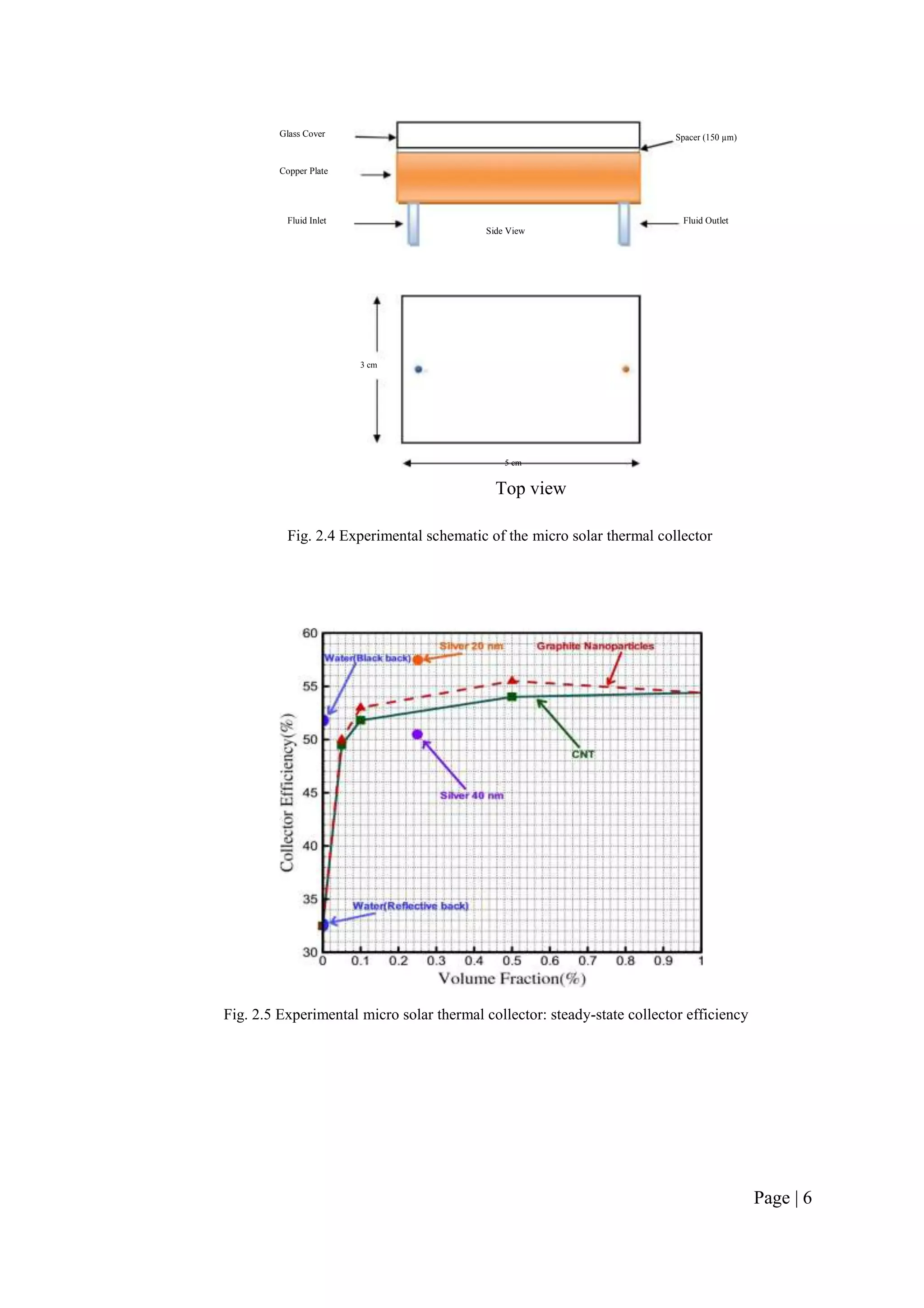
investigated the effects of nanoparticles size on the collector efficiency where the volume fraction
is equal to 0.8%. The results revealed that the efficiency increases slightly with an increase in the
size of nanoparticles (see Fig. 2.3).
Otanicar investigated both experimentally and numerically the effects of different Nano
fluids (carbon nanotubes, graphite, and silver) on the performance of a micro scale direct
absorption solar collector (DASC). The schematic of the experimental set up showing also
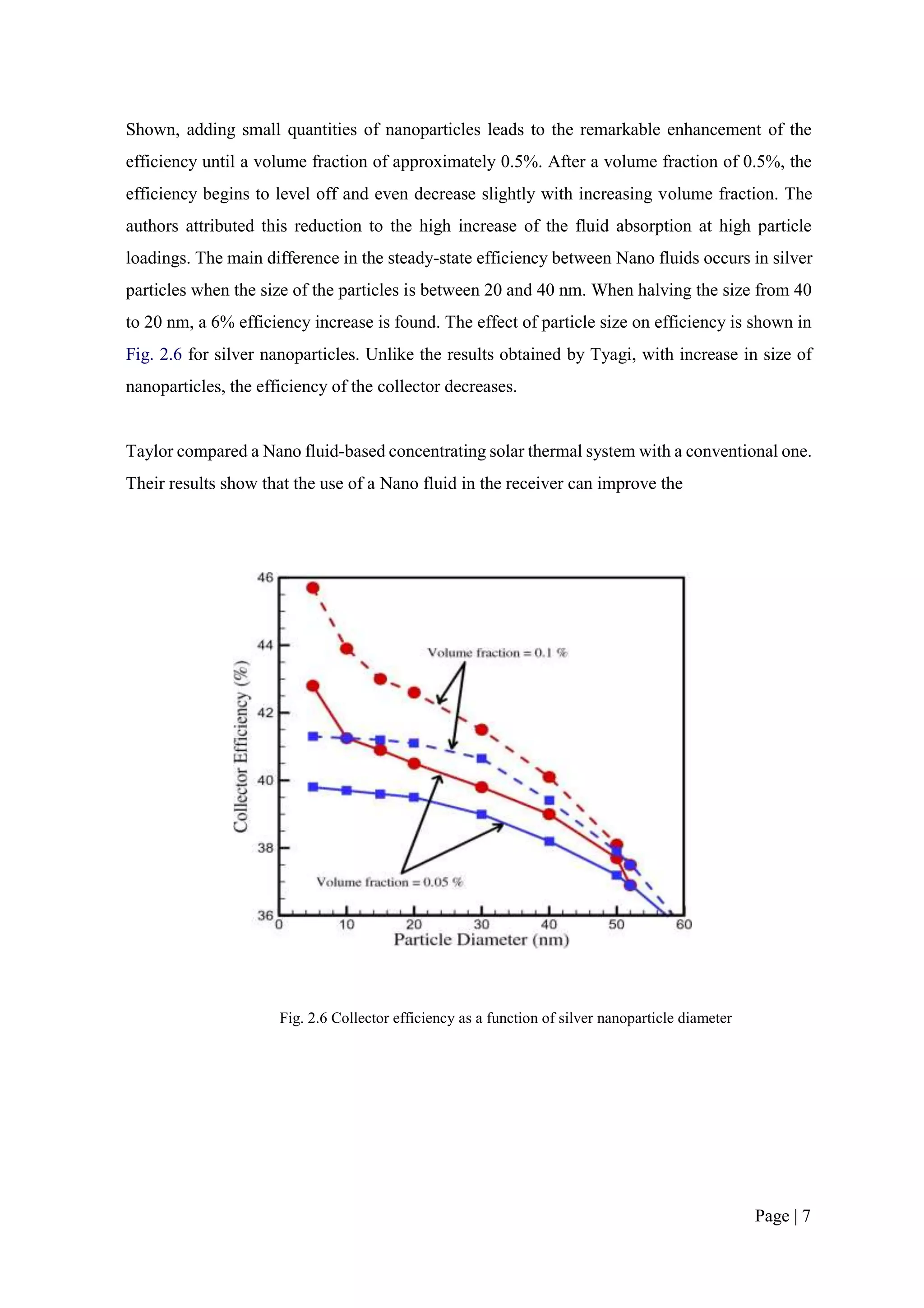
the dimensions of the collector is presented in Fig. 2.4. Fig. 2.5 shows the variation of
collector efficiency with volume fraction for different materials, estimated using. The DASC
data are compared to a conventional collector configuration where the solar energy is
absorbed on a black plate surface. As
Solar
Radiation
Convection
Transparent Surface
H
U Conduction
L
Adiabatic Surface
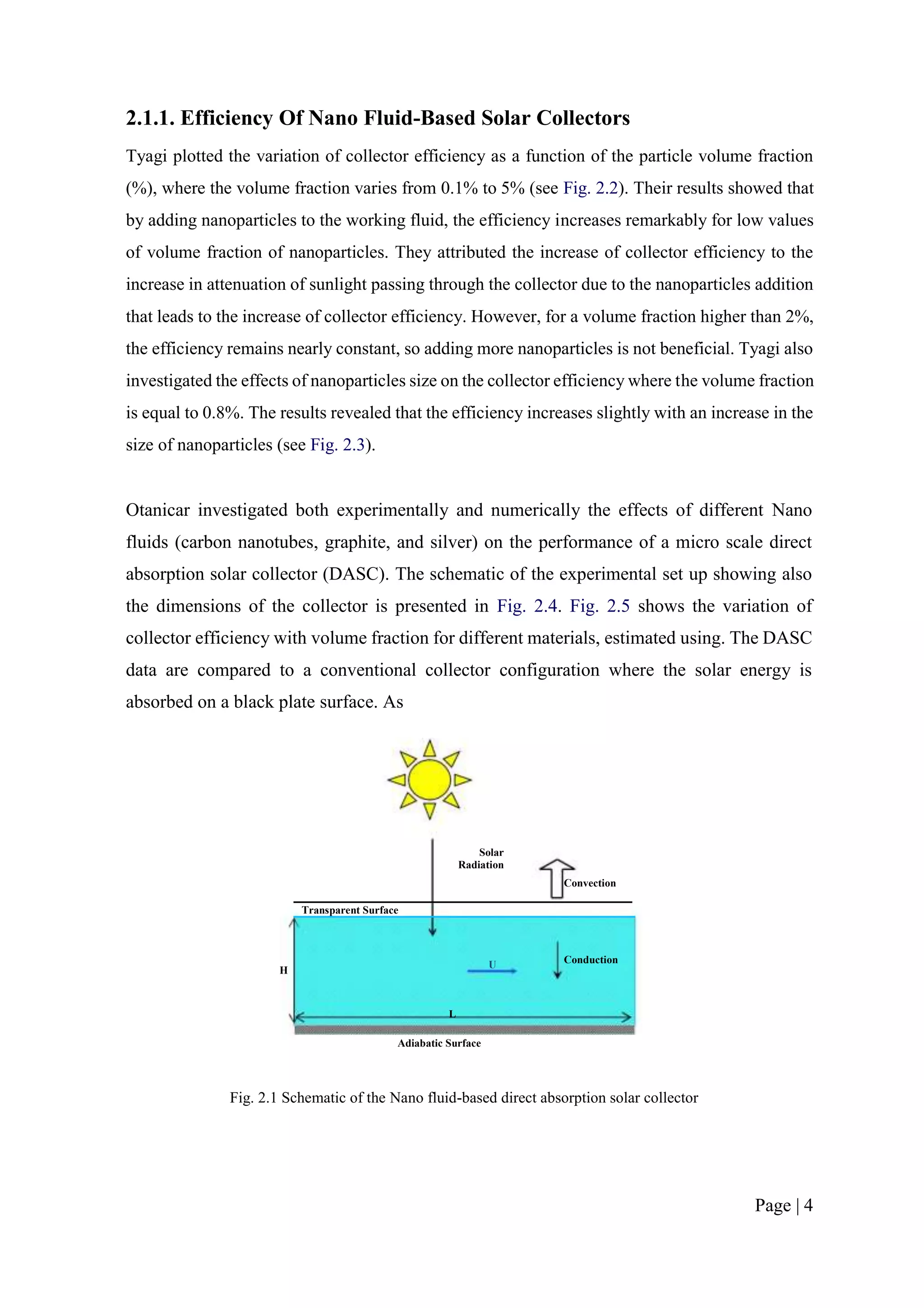
Fig. 2.1 Schematic of the Nano fluid-based direct absorption solar collector
Page | 4
100
80
60
40
20
0
1 2 3 4 5
Volume fraction (%)
Fig. 2.2 Effect of particle volume fraction on collector efficiency
100
90
80
70
60
50
0 5 10 15 20
Particle's Size (nm)
Fig. 2.3. Effect of nanoparticles size on collector efficiency
Page | 5
Glass Cover Spacer (150 µm)
Copper Plate
Fluid Inlet Fluid Outlet
Side View
3 cm
5 cm
Top view
Fig. 2.4 Experimental schematic of the micro solar thermal collector
Fig. 2.5 Experimental micro solar thermal collector: steady-state collector efficiency
Page | 6
Shown, adding small quantities of nanoparticles leads to the remarkable enhancement of the
efficiency until a volume fraction of approximately 0.5%. After a volume fraction of 0.5%, the
efficiency begins to level off and even decrease slightly with increasing volume fraction. The
authors attributed this reduction to the high increase of the fluid absorption at high particle
loadings. The main difference in the steady-state efficiency between Nano fluids occurs in silver
particles when the size of the particles is between 20 and 40 nm. When halving the size from 40
to 20 nm, a 6% efficiency increase is found. The effect of particle size on efficiency is shown in
Fig. 2.6 for silver nanoparticles. Unlike the results obtained by Tyagi, with increase in size of
nanoparticles, the efficiency of the collector decreases.
Taylor compared a Nano fluid-based concentrating solar thermal system with a conventional one.
Their results show that the use of a Nano fluid in the receiver can improve the
Fig. 2.6 Collector efficiency as a function of silver nanoparticle diameter
Page | 7
Efficiency by 10%. They also concluded that for 10–100 MWe power plants, using
graphite/therminol VP-1 Nano fluid with volume fractions approximately to 0.001% or less
could be beneficial. The authors estimated that combining a Nano fluid receiver with a solar
thermal power tower with the capacity of 100 MWe operating in a solar resource like Tucson,
Arizona, could generate $3.5 million more per year. Taylor considered two notional designs
of potential Nano fluid receivers, designated as A and B, as shown in Fig. 2.7.
He investigated the light-heat conversion characteristics of two Nano fluids, water– TiO2 and
water–carbon nanotube (CNT), in a vacuum tube solar collector under sunny and cloudy
weather conditions. The experimental results show a very good light heat conversion
characteristic of the CNT–H2O Nano fluid with the weight concentration of 0.5%. Because
of the better light-heat conversion characteristics of the CNT–H2O Nano fluid compared to
the TiO2–H2O Nano fluid, the temperature of the CNT–H2O Nano fluid is higher than that of
the TiO2–H2O one. This means that the CNT–H2O Nano fluid is more suitable than the TiO2–
H2O to be utilized in a vacuum tube solar collector.
Li studied the effects of three different Nano fluids, Al2O3/water, ZnO/water, and
MgO/water, on the performance of a tubular solar collector. Their results show that ZnO–
H2O Nano fluid with 0.2% volume concentration is the best selection for the collector. Taylor
investigated the optical property characterization of graphite, silver, copper, gold, and
aluminum nanoparticles in water and VP1 as the based fluids to determine their potential to
be used in direct absorption solar collectors. They revealed that over 95% of incoming
sunlight can be absorbed (in a Nano fluid thickness P10 cm) with very low nanoparticle
volume fractions (less than 1 105
, or 10 ppm).
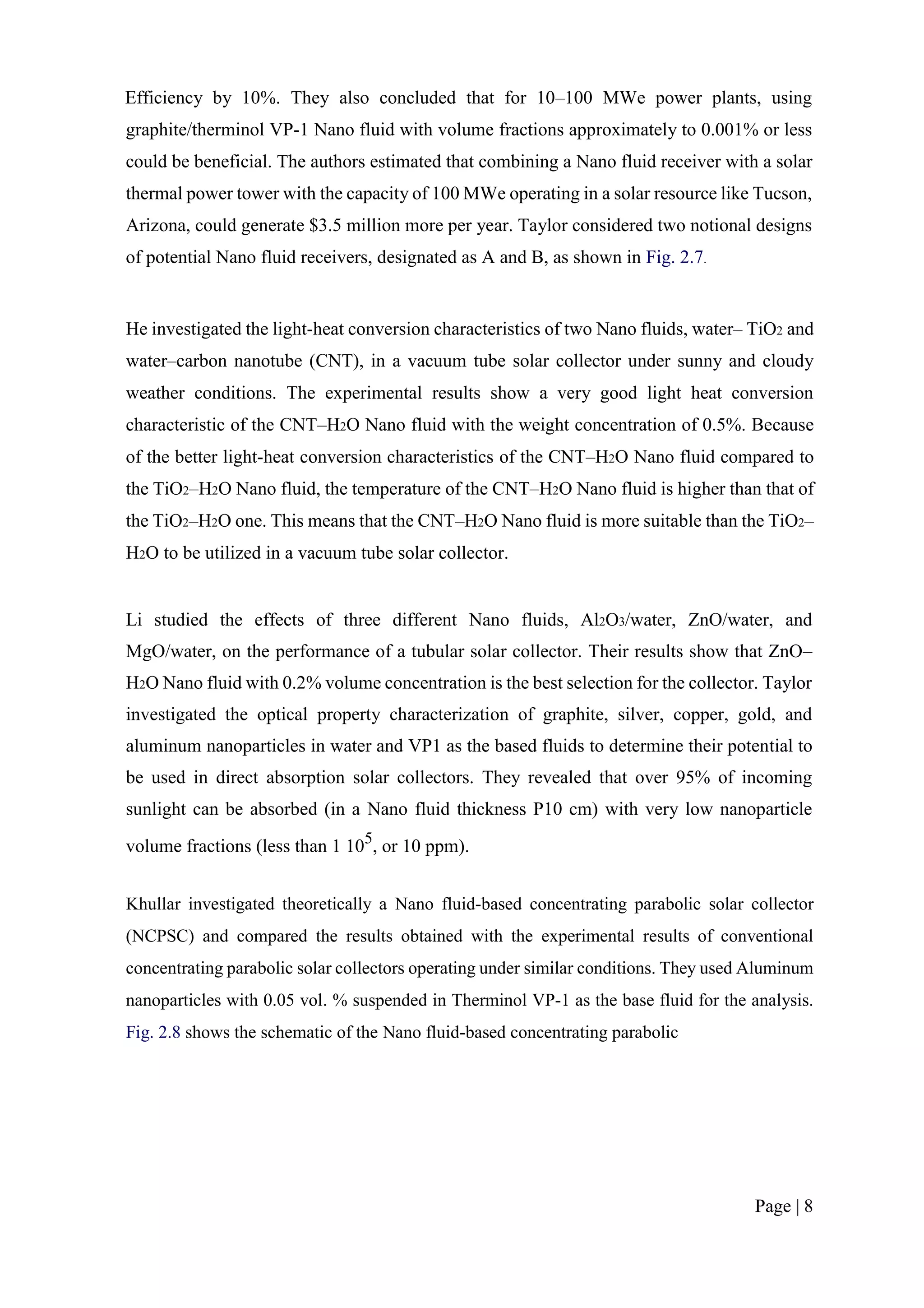
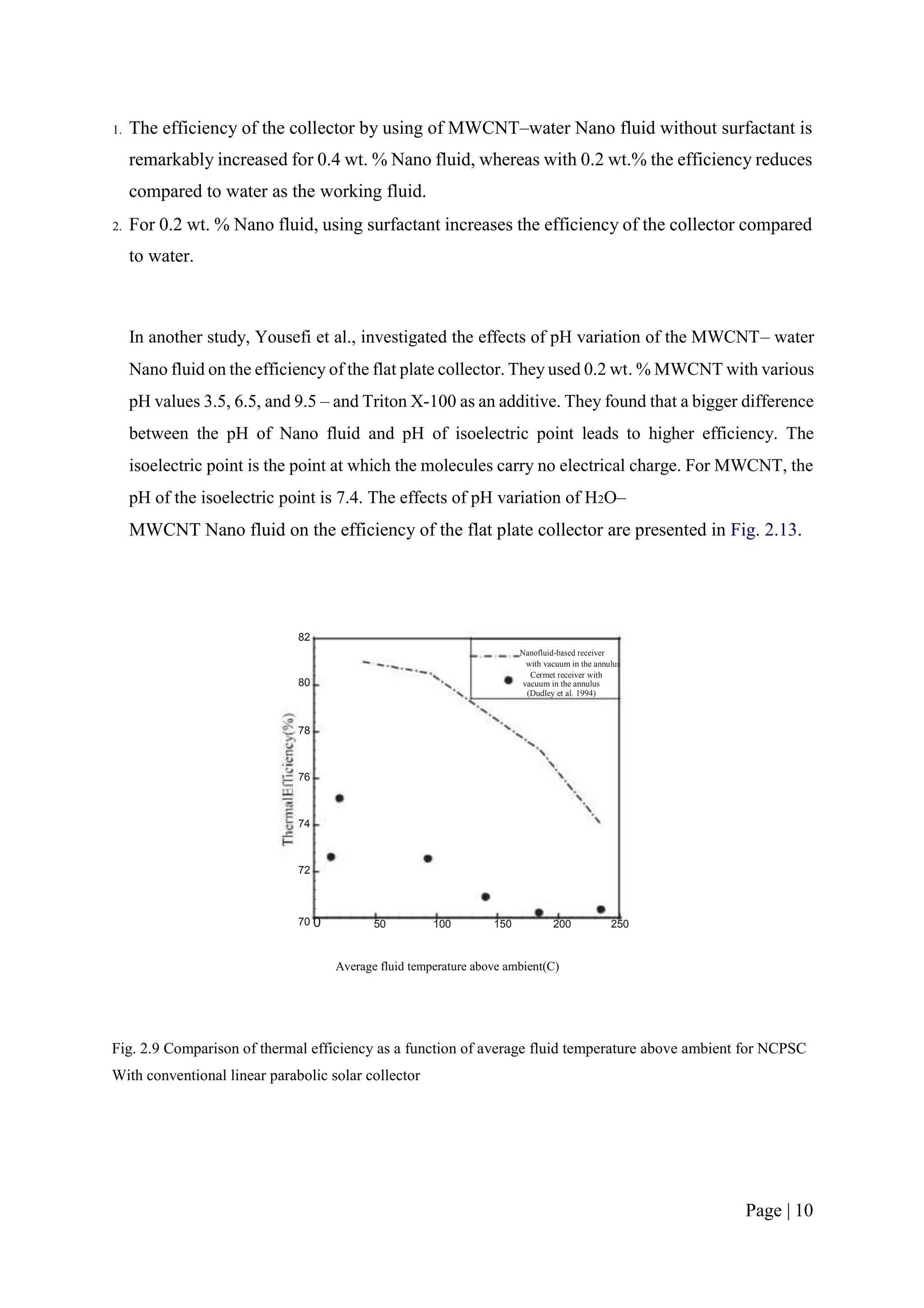
Khullar investigated theoretically a Nano fluid-based concentrating parabolic solar collector
(NCPSC) and compared the results obtained with the experimental results of conventional
concentrating parabolic solar collectors operating under similar conditions. They used Aluminum
nanoparticles with 0.05 vol. % suspended in Therminol VP-1 as the base fluid for the analysis.
Fig. 2.8 shows the schematic of the Nano fluid-based concentrating parabolic
Page | 8
A B
Concentrated Concentrated
Light Light
Out
Glazing
OutletNano fluid
Steel Fluidflui Steel
Insulation d Insulation
Inlet
Inle
t
Outlet Nanofluid Out
Steel
Fluid
Steel
Insulation Intel Insulation
C
Fluid
Outlet
Concentrated Ceramic / wire Mesh
Light Receiver
Insulation
Fluid
Inlet
Fig. 2.7 (a) Conceptual design of a Nano fluid concentrating collector with glazing. (b) Conceptual design of a
Nano fluid concentrating collector without glazing. (c) Conceptual drawing of a conventional power tower
solid surface absorber
Incoming Solar
Irradiance
Nanofluid
Receiver
Parabolic Concentrator
Fig. 2.8 Schematic of Nano fluid-based concentrated parabolic solar collector (NCPSC)
Page | 9
1. The efficiency of the collector by using of MWCNT–water Nano fluid without surfactant is
remarkably increased for 0.4 wt. % Nano fluid, whereas with 0.2 wt.% the efficiency reduces
compared to water as the working fluid.
2. For 0.2 wt. % Nano fluid, using surfactant increases the efficiency of the collector compared
to water.
In another study, Yousefi et al., investigated the effects of pH variation of the MWCNT– water
Nano fluid on the efficiency of the flat plate collector. They used 0.2 wt. % MWCNT with various
pH values 3.5, 6.5, and 9.5 – and Triton X-100 as an additive. They found that a bigger difference
between the pH of Nano fluid and pH of isoelectric point leads to higher efficiency. The
isoelectric point is the point at which the molecules carry no electrical charge. For MWCNT, the
pH of the isoelectric point is 7.4. The effects of pH variation of H2O–
MWCNT Nano fluid on the efficiency of the flat plate collector are presented in Fig. 2.13.
82
Nanofluid-based receiver
with vacuum in the annulus
80
Cermet receiver with
vacuum in the annulus
(Dudley et al. 1994)
78
76
74
72
70 0 50 100 150 200 250
Average fluid temperature above ambient(C)
Fig. 2.9 Comparison of thermal efficiency as a function of average fluid temperature above ambient for NCPSC
With conventional linear parabolic solar collector
Page | 10
In the following, some previous works are reviewed in which the potential of Nano fluids for
use in solar energy system is performed through the study of optical properties and thermal
conductivity of Nano fluids. Link and El-Sayed reviewed the optical properties of gold
nanoparticles. Particularly, they studied the shape and size dependence of radiative, and
photo thermal properties of gold Nano crystals. Khlebtsov investigated the effects of the size,
shape, and structure of gold and silver nanoparticles on the optical properties of the Nano
fluids and perceived that the shape and size of the nanoparticle have great effect on the optical
properties of a Nano fluid. Sani reported the-
Fig. 2.10 Flat-plate collector
Page | 11
Fig. 2.11 Schematic of the experiment
Table 2.1
The specifications of the flat-plate collector
Specification Dimension/value Unit
Occupied area 200 94 9.5 cm
Absorption area 1.51 m2
Weight 38.5 kg
Frame (Al6063 – –
extruded)
Glass (float) t = 4 mm
Header pipe (Cu) Ø22, t = 0.9 mm
Connector riser pipe to Ø10, t = 0.9 mm
absorber sheet
(Cu)
Absorption sheet: – –
Thermal emission: 7 %
Solar absorption: 96.2 %
Coating method: Vacuum –
magnetron
sputtering
Page | 12
Optical characterization of a new fluid consisting of single-wall carbon Nano horns and
ethylene glycol for solar energy applications. They concluded that carbon Nano horns could
enhance remarkably the sunlight absorption with respect to pure base-fluid. The results
obtained are compared with those obtained for fluids suspending more conventional carbon
forms, i.e., carbon-black particles. They found that Nano horn spectral features are
considerably more favorable than those of amorphous carbon for a specific Applica-
Fig. 2.12 the efficiencies of solar collectors for Al2O3 Nano fluid without surfactant and for water
They concluded that MWCNTs leads to more absorption than aluminum and carbon
nanoparticles. Finally, Gan and Qiao found that for ethanol based Nano fluids, the radiation
absorption for Nano fluids. Containing Al2O3 nanoparticles is higher than Nano fluids
containing aluminum nanoparticles.
Page | 13
2.1.2. Economic And Environment Considerations
An accepted way to determine the economic and environmental impacts of a product is life cycle
assessment. This section presents the economic and environment considerations of nanofluid-
based collectors. Otanicar and Golden compared the environmental and economic aspects of
using a conventional solar collector against a nanofluid based collector located in Phoenix,
Arizona. The economic analysis shows that the capital cost and maintenance costs of the
nanofluid-based solar collector compared to the conventional one are $120 and $20 higher,
respectively. However, because of the higher efficiency and annual solar fraction of the
nanofluid-based solar collector, the fuel cost savings per year, for both electricity and natural
gas, is greater than that of the conventional solar collector. Moreover, due to the high cost of
nanofluids compared the conventional collector, the payback period for a Nano fluid-based
collector is longer, but at the end of its useful life, it has the same life cycle savings as a
conventional collector.
Embodied energy for both solar collectors, including conventional and Nano fluid-based
collectors, are compared in. The embodied energy for the Nano fluid-based collector is about
9% lower. Additionally, from an environmental point of view, as shown, the manufacturing
of the Nano fluid-based solar collector leads to 34 kg fewer CO2 emissions while during its
operation it saves 50 kg year when compared to the conventional solar collector. The
magnitudes of other emissions including SOx and NOx are very small, so the differences are
not considerable. Over the 15-year expected lifetime of the solar collectors, the Nano fluid-
based solar collector would offset more than 740 kg of CO2 in comparison to a conventional
collector. The authors concluded that more than one million metric tons of CO2 could be
offset per year if the usage of Nano fluid-based solar collector systems for hot water heating
increases by 50% in Phoenix, Arizona.
Khullar and Tyagi examined the potential of the nanofluidbased concentrating solar water
heating system (NCSWHS) as an alternative for systems based on fossil fuels. Using
NCSWHS leads to annual electricity and liquefied petroleum gas (LPG) savings of
approximately 1716 kWh/household/year and 206 kg/household /year, respectively, which
produces significant economic benefits. Literature survey summarizes the most important
results obtained from the former works concerning the application or potential of Nano fluids
to use in solar collectors.
Page | 14
2.2. Other Applications
In this section, other applications of nanofluids in solar energy systems including their
applications in thermal energy storage materials, solar cells, and solar stills are reviewed. It
should be noted that the reported works in this field are very scarce.
2.2.1. Thermal Energy Storage
Typical solar thermal-energy storage facilities require the storage medium to have high heat
capacity and thermal conductivity. However, few materials are available with these
properties and applicable in high temperatures. Recently, Shin and Banerjee reported the
anomalous enhancement of specific heat capacity of high-temperature nanofluids. They
found that Alkali metal chloride salt eutectics when is doped with silica nanoparticles at 1%
mass concentration increases the specific heat capacity of the nanofluid by 14.5%, so that
this material can be a suitable one to use in solar thermal-energy storage facilities. One of
techniques of storing solar energy is the application of PCMs. Among lots of PCMs available,
paraffin is the most suitable due to its desirable characteristics, including large latent heat
capacity, negligible super cooling and low cost. However, the inherent low thermal
conductivity (0.21–0.24 W/mK) strongly prevents possible applications. Wua numerically
investigated the melting processes of Cu/paraffin nanofluids PCMs. Their results revealed
that with 1 wt.% Cu/paraffin, the melting time can be saved by 13.1%. Therefore, they
concluded that adding nanoparticles is an efficient technique to enhance the heat transfer in
latent heat thermal energy storage system.
2.2.2. Solar Cells
Cooling of solar cells can improve the efficiency of such solar devices. Nanofluids can be
used as a solution to cool the solar cells. Elmir simulated the cooling of a silicon solar cell
using the finite element method. They considered the solar panel as an inclined cavity (with
a slope of 30) and solved the equations in Cartesian coordinate system. They used
Al2O3/water nanofluid for their analysis, where the thermal conductivity and viscosity of the
nanofluid are estimated using the models. As seen in Fig. 4.14, they concluded that using
nanofluids leads to the increase of the average Nusselt with increases in volume fraction. Of
course, it should be noted that the thermophysical properties, which are used in this study,
are old and they do not predict the thermal conductivity and viscosity of nanofluids correctly.
Page | 15
Therefore, it is suggested that in the future works, temperature-dependent models, or at least
newer temperatureindependent models are used to calculate the thermophysical properties of
nanofluids. For example, to calculate the viscosity of nanofluids, the models and relation
presented by Maiga et al., Buongiorno, Nguyen et al., Koo and Kleinstreuer, and
Duangthongsuk and Wongwises can be used. To estimate the thermal conductivity of
nanofluids, the relations presented by Maiga et al., Xuan et al., Jang and Choi, Koo and
Kleinstreuer, Chon et al., Duangthongsuk and Wongwises and Yiamsawasd et al. can be
applied.
2.2.3. Solar Stills
Potable water demand is increasing due to rapid population increase and due to uncontrolled
pollution of freshwater resources. According to the World Health Organization, nearly 2.8 billion
people (approximately 40% of the world population) currently have no access to safe drinking
water, and water-borne diseases account for 90% of all infectious diseases in the developing
world. In arid remote regions in the world, the provision of fresh water is more critical. In these
regions, solar desalination systems can solve part of the problem where solar energy is available.
Solar stills can be used to avoid the greenhouse gas emissions from the production of fresh water.
Many researches have carried out research on solar stills, and different methods are applied to
improve their productivity. Recently, Gnanadason et al. reported that using Nano fluids in a solar
still can increase its productivity. The schematic of their experimental set-up is shown in Fig.
2.15. They investigated the effects of adding carbon nanotubes (CNTs) to the water inside a
single basin solar still. Their results revealed that adding Nano fluids increases the efficiency
by 50%. Nevertheless, they have not mentioned the amount of Nano fluid added to the water
inside the solar still. Regarding the addition of Nano fluids to the solar still, the economic
viability should be considered. In literature, some works reported that adding dyes to solar
stills could improve the efficiency. For instance, Nijmeh et al. [70] concluded that adding
violet dye to the water inside the solar still increases the efficiency by 29%, which is
considerable. On the other hand, it is evident that Nano fluids (especially CNTs) compared
to dyes are more expensive, hence this may be a challenge on using Nano fluids in solar stills,
because in this type of use of Nano fluids in solar stills the Nano fluids have no flow in a
closed loop so that they could be recovered.
Page | 16
CHAPTER 3 FUTURE WORK
The above review shows that the application of nanofluids in solar energy applications is still
in its infancy. Nanofluids can be used in many fields of solar energy. Here, some suggestions
are presented for future work in the area. The authors hope that these proposals will be helpful
for the development on the use of nanofluids in the solar thermal devices.
0.
3
5
0.
3
0.
2
5
0.
2
0.
1
5
0.
1
Re=
5
Re=
10
Re=
25
Re=
50
0.05
0 2 4 6 8 10
VolumeFraction(%)
Fig. 3.1 Effects of volume fraction on Nusselt number for cooling a solar cell
3.1. Parabolic Trough Systems
As mentioned, only a theoretical work has been done on parabolic trough collectors,
therefore some experimental studies can be performed on the effects of nanofluids on the
efficiency of parabolic trough systems.
Page | 17
3.2. Photovoltaic/Thermal Systems
A photovoltaic/thermal (PV/T) system is a hybrid structure that converts part of the sun’s
radiation to electricity and part to thermal energy. One can investigate experimentally the
effects of using different nanofluids on the cooling rate, and, hence, the efficiency of the PV/T
systems. In this area, the effects of different volume fractions, nanoparticle size on the
efficiency of the system can be studied. A review of the literature shows that many researches
have been carried out on the potential of nanofluids for cooling of different thermal systems
such as electronic devices, automobile radiator, and micro channel heat sinks. Therefore, using
nanofluids to cool the PV/T system may be reasonable.
3.3. Solar Thermoelectric Cells
In recent years, interest in the development of solar thermoelectric systems has been
considerably increased. The
Glass cover
Nanofluid
Fresh water
Brackish water
thermoelectric cells can be used to convert the solar energy to electricity due to the temperature
difference between two hot and cold surfaces. A greater temperature difference between the
Page | 18
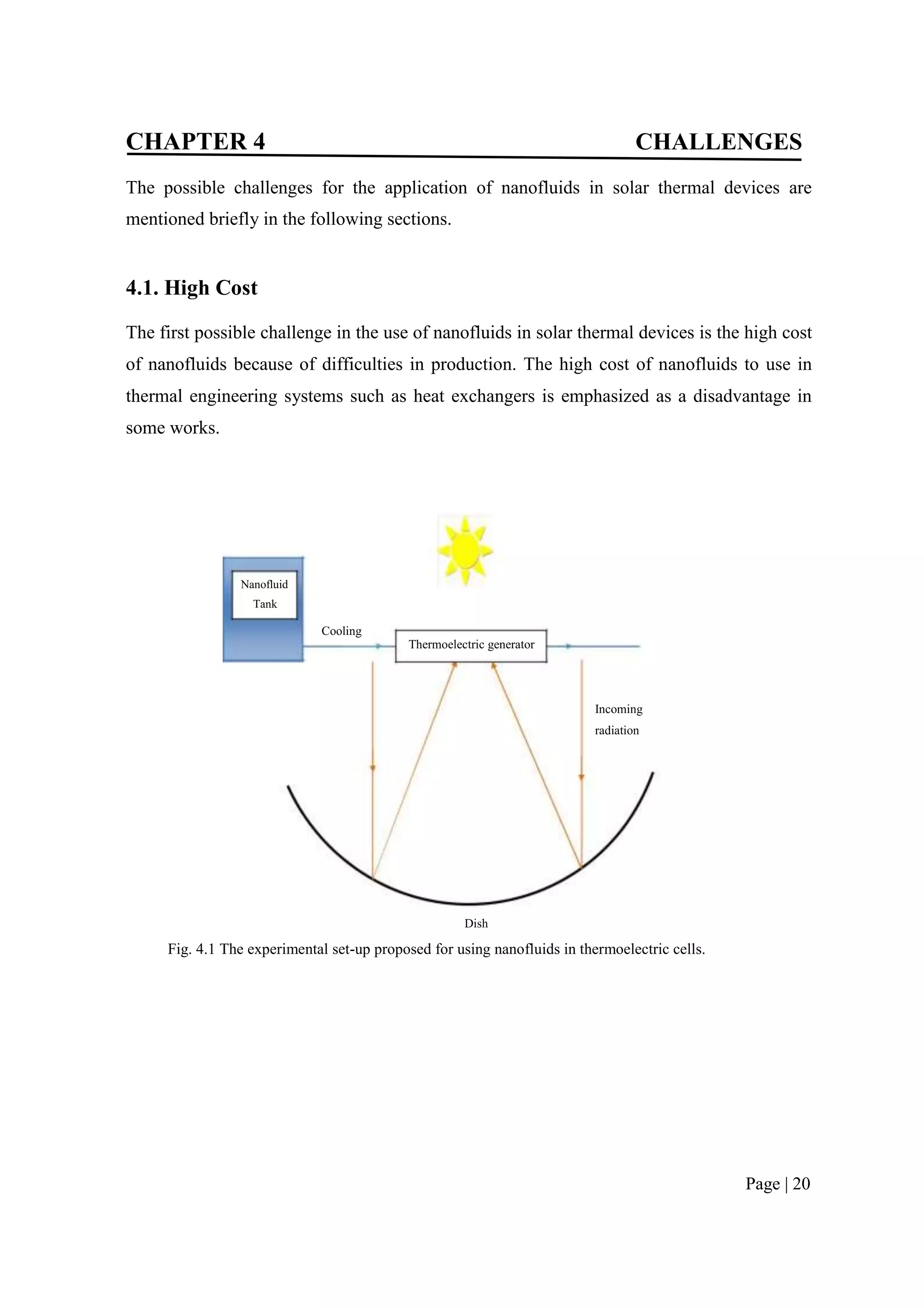
Hot and cold surfaces of the thermoelectric cell leads to a bigger electricity production. The
authors would like to suggest an experimental setup to investigate the effects
of nanofluids on the performance of such systems. Fig. 5.2 shows the schematic of the set-
up, which is a development of the work done by Fan. In this work, a dish concentrates the
solar radiation on the thermoelectric cells installed on the focal point of the dish. In this way
the effects of different nanofluids with various mass flow rates on the efficiency of the solar
thermoelectric cell can be studied.
3.4. Solar Ponds
Salinity gradient solar ponds are great bodies of water between 2–5 m deep, which could
collect solar radiation and store it in the form of heat. Heat can be extracted from the solar
ponds and has been used for industrial process heating, space heating, and power generation.
In all these applications heat is extracted from the bottom of the solar pond which is at a
temperature of about 50–60 C higher than the top surface of the solar pond. Concerning the
application of nanofluids in solar ponds an experimental set up is proposed in Fig. 5.3. As
seen, a nanofluid flows through a heat exchanger mounted at the bottom of the solar pond to
absorb the heat. It expects that nanofluids could enhance the rate of heat removal from the
bottom of the solar pond.
3.5. Other Possibilities
The above suggestions are only a few of the possible applications relating to the use of
nanofluids in solar energy. Besides the above ideas, nanofluids also can be used in solar
cooling systems, solar absorption refrigeration systems, and a combination of different solar
devices. Here, for instance, the authors would like to suggest some Refs. In which there is a
potential to use a nanofluid as the working fluid. In addition, in numerical studies such as the
simulation of solar cell cooling, which it is mentioned in Section 2.2.2, new models can be
used to calculate the thermophysical properties. Additionally, the nanofluid can be
considered as a two-phase mixture.
Page | 19
CHAPTER 4 CHALLENGES
The possible challenges for the application of nanofluids in solar thermal devices are
mentioned briefly in the following sections.
4.1. High Cost
The first possible challenge in the use of nanofluids in solar thermal devices is the high cost
of nanofluids because of difficulties in production. The high cost of nanofluids to use in
thermal engineering systems such as heat exchangers is emphasized as a disadvantage in
some works.
Nanofluid
Tank
Cooling
Thermoelectric generator
Incoming
radiation
Dish
Fig. 4.1 The experimental set-up proposed for using nanofluids in thermoelectric cells.
Page | 20
Touse
Fresh water Nanofluid
Tank
Increasing salt
Saturated salt water
Heat Exchanger
Fig. 4.2 The experimental set-up proposed for using nanofluids in solar ponds
4.2. Instability And Agglomerating
Instability and agglomerating of the nanoparticles is another problem. Therefore, using
nanofluids in solar systems with natural circulation (such as thermosiphons) where there is
no pump to circulate the fluid, is not reasonable. It should be also noted that for high
temperature gradients the agglomeration of nanoparticles seems to be more serious.
Therefore, exact investigations are needed for an appropriate selection of a nanofluid for
applications in high temperatures.
4.3. Pumping Power And Pressure Drop
Using a nanofluid with higher viscosity compared to the base fluid leads to the increase of
pressure drop and consequently the increases in the required power for pumping. For
example, Duangthongsuk and Wongwises found during their experiments that the pressure
drop under a turbulent regime increases with an increase in volume fraction of TiO2/water
nanofluid. In another experimental research, Razi also concluded that using CuO/oil
nanofluid increases the pressure drop under a laminar regime.
Page | 21
4.4. Erosion And Corrosion Of Components
Existing of nanoparticles in nanofluid may lead to corrosion and erosion of thermal devices
in a long time. Celata recently investigated the effects of nanofluid flow effects on erosion
and corrosion of metal surfaces. They conducted their experiments for TiO2, Al2O3, SiC,
ZrO2 nanoparticles with water as the base fluid where the nanofluids flow in pipes with three
different materials, i.e., aluminum, copper and stainless. They concluded that the nanofluids
have no effect on the erosion of the stainless pipe, while the aluminum pipe has highest
erosion. They also found that ZrO2 and TiO2 nanoparticles lead to highest erosion while SiC
nanoparticles results in lowest erosion.
Page | 22
CONCLUSION
Nano fluids are advanced fluids containing nano-sized particles that have emerged during the last
two decades. Nanofluids are used to improve system performance in many thermal engineering
systems. This report presented a review of the applications of nanofluids in solar thermal
engineering. The experimental and numerical studies for solar collectors showed that in some cases,
the efficiency could increase remarkably by using nanofluids. Of course, it is found that using a
nanofluid with higher volume fraction always is not the best option. Therefore, it is suggested that
the nanofluids in different volume fractions should be tested to find the optimum volume fraction.
It is also seen that the available theoretical works give different results on the effects of particle
size on the efficiency of the collectors it is worth to carry out an experimental work on the effect
of particle size on the collector efficiency. It is also concluded that some factors such as adding
surfactant to nanofluid and a suitable selection of the pH of nanofluid are effective in the collector
efficiency. From the economic and environmental point of view, the previous studies showed that
using nanofluids in collectors leads to a reduction in CO2 emissions and annual electricity and fuel
savings. Some other reported works of applications of nanofluids in solar cells, solar thermal
energy storage, and solar stills are also reviewed. It is also stressed that for the numerical study of
solar systems (for example cooling of solar cells), it is better to use the new thermophysical
(temperature-dependent) models and two phase mixture models for the nanofluid to have a more
exact prediction of the system performance. This review reveals that the application of nanofluids
in solar energy is yet in its infancy. Therefore, some proposals are presented to develop the use of
nanofluids in different solar systems such as solar ponds, solar thermoelectric cells, and so on.
Finally, the most important challenges on the use of nanofluids in solar systems including high
costs of production, instability and agglomeration problems, increased pumping power and erosion
are mentioned. These challenges may be reduced with the development of nanotechnology in the
future.
Page | 23
REFRENCES
[1] U.S. Choi, Enhancing thermal conductivity of fluids with nanoparticles, ASME FED 231
(1995) 99–103.
[2] Y. Li, J. Zhou, S. Tung, E. Schneider, S. Xi, A review on development of nanofluid
preparation and characterization, Powder Technol. 196 (2009) 89–101.
[3] J.H. Lee, S.H. Lee, C.J. Choi, S.P. Jang, S.U.S. Choi, A review of thermal conductivity
data, mechanics and models for nanofluids, Int. J. Micro–Nano Scale Transport 1 (2010)
269–322.
[4] A. Ghadimi, R. Saidur, H.S.C. Metselaar, A review of nanofluid stability properties and
characterization in stationary conditions, Int. J. Heat Mass Transfer 54 (2011) 4051–4068.
[5] G. Ramesh, N.K. Prabhu, Review of thermo-physical properties, wetting and heat transfer
characteristics of nanofluids and their applicability in industrial quench heat treatment,
Nanoscale Res. Lett. 6 (2011) 334.
[6] K. Khanafer, K. Vafai, A critical synthesis of thermophysical characteristics of
nanofluids, Int. J. Heat Mass Transfer 54 (2011) 4410–4428.
[7] J. Fan, L. Wang, Review of heat conduction in nanofluids, ASME J. Heat Transfer 133
(2011) 040801.
[8]R.S. Vajjha, D.K. Das, A review and analysis on influence of temperature and
concentration of nanofluids on thermophysical properties, heat transfer and pumping
power, Int. J. Heat Mass Transfer (2012), http://dx.doi.org/10.1016/
j.ijheatmasstransfer.2012.03.048.
[9] V. Trisaksri, S. Wongwises, Critical review of heat transfer characteristics of nanofluids,
Renew. Sustain. Energy Rev. 11 (2007) 512–523.
[10] W. Daungthongsuk, S. Wongwises, A critical review of convective heat transfer of
nanofluids, Renew. Sustain. Energy Rev. 11 (2007) 797–817.
[11] S. Kakaç, Pramuanjaroenkij, Review of convective heat transfer enhancement with
nanofluids, Int. J. Heat Mass Transfer 52 (2009) 3187–3196.
Page | 24

nano fluid thermal application seminar report

  • 1.
    CHAPTER 1 INTRODUCTION Commonfluids such as water, ethylene glycol, and heat transfer oil play an important role in many industrial processes such as power generation, heating or cooling processes, chemical processes, and microelectronics. However, these fluids have relatively low thermal conductivity and thus cannot reach high heat exchange rates in thermal engineering devices. A way to overcome this barrier is using ultra-fine solid particles suspended in common fluids to improve their thermal conductivity. The suspension of Nano-sized particles (1–100 nm) in a conventional base fluid is called a Nano fluid. Choi first used the term ‘‘Nano fluid’’ in 1995. Nano fluids, compared to suspensions with particles of millimeter-or-micrometer size, show better stability, rheological properties, and considerably higher thermal conductivities. In recent years, many researchers have investigated the effects of Nano fluids on the enhancement of heat transfer in thermal engineering devices, both experimentally and theoretically. Researchers have also applied a variety of preparation methods, characteristics, and different models used for the calculation of thermos physical properties of Nano fluids (i.e., thermal conductivity, viscosity, density, specific heat capacity). Some investigators have also summarized the effects of Nano fluids on flow and heat transfer in natural and forced convection in different systems. The enhanced thermal behavior of Nano fluids could provide a basis for an enormous innovation for heat transfer intensification, which is of major importance to a number of industrial sectors including transportation, power generation, micro manufacturing, thermal therapy for cancer treatment, chemical and metallurgical sectors, as well as heating, cooling, ventilation and air-conditioning. And enhancing system efficiency. This report presents a review of former studies on the application of Nano fluids in solar thermal engineering systems. The former works on applications of Nano fluids in solar energy are mainly related to their applications in collectors. Therefore, this review mainly investigates the effects of Nano fluids on the efficiency improvement of solar collectors as well as on economic and environmental considerations regarding the usage of these systems. Nano fluids are also important for the production of nanostructured materials for the engineering of complex fluids as well as for cleaning oil from surfaces due to their excellent wetting and spreading behavior. Another application of the Nano fluid flow is in the delivery of Nano-drug as suggested by Kleinstreuer. Page | 1
  • 2.
    Reviewed the potentialof Nano fluids in the improvement of heat transfer in refrigeration systems. The authors concluded that more studies are required to find the reasons behind the considerable improvements in heat transfer whereas an insignificant increase in pressure occurs. Thomas and Siobhan presented experimental studies on Nano fluids, with emphasis on the techniques of measuring the effective thermal conductivity. Investigated the applications of Nano fluids in cooling electronics. Recently, applications of computer simulations and computational fluid dynamics (CFD) used to model systems employing Nano fluids were reviewed and analyzed by Abagail and Ahmadi and Kamyar. Ahn and Kim also published a review on the critical heat flux of Nano fluids for both convective flow boiling and pool boiling applications. In another publication, Saidur et al. reviewed the general applications of Nano fluids in some fields such as cooling of electronics, heat exchangers, medical applications, fuel cells, nuclear reactors, and many more. They also mentioned briefly the applications of Nano fluids in solar water heaters. They investigated challenges in using Nano fluids, including an increased pressure drop and pumping power, long-term stability of nanoparticles dispersion, and the high cost of Nano fluids. In recent years, the use of solar energy has had a remarkable edge. The perceived shortage of fossil fuels as well as environmental considerations will constrain the use of fossil fuels in the future. Therefore, researchers are motivated to find alternative sources of energy. This has become even more popular as the price of fossil fuels continues to rise. The earth receives in just about 1 h more energy from the sun than that consumed by the entire world for 1 year. Most solar energy applications are financially viable while small systems for individual use require just a few kilowatts of power. It is important to apply solar energy to a wide range of applications and provide solutions through the modification of the energy proportion, improving energy stability, increasing energy sustainability, and enhancing system efficiency. This report presents a review of former studies on the application of Nano fluids in solar thermal engineering systems. The former works on applications of Nano fluids in solar energy are mainly related to their applications in collectors. Therefore, this review mainly investigates the effects of Nano fluids on the efficiency improvement of solar collectors as well as on economic and environmental considerations regarding the usage of these systems. Finally, the attempt to reduce the overall length of the report, without compromising the technical quality, only some very important questions for problems of practical applications have been briefly described. Page | 2
  • 3.
    CHAPTER 2 APPLICATIONSOF NANOFLUIDS IN SOLAR ENERGY Initially, the application of Nano fluids in collectors and water heaters are investigated from the efficiency, economic, and environmental aspects. Some studies conducted on thermal conductivity and optical properties of Nano fluids are also briefly reviewed, because these parameters can determine the capability of Nano fluids to enhance the performance of solar systems. 2.1. Collectors And Solar Water Heaters Solar collectors are particular kind of heat exchangers that transform solar radiation energy into internal energy of the transport medium. These devices absorb the incoming solar radiation, convert it into heat, and transfer the heat to a fluid (usually air, water, or oil) flowing through the collector. The energy collected is carried from the working fluid, either directly to the hot water or space conditioning equipment or to a thermal energy storage tank, from which it can be drawn for use at night or on cloudy days. Other applications of Nano fluids in thermal energy storage, solar cells, and solar stills are also reviewed. Some suggestions also are made for future works in this field. In addition, the existing challenges of using Nano fluids in solar energy applications are discussed. Solar water heaters are the most popular devices in the field of solar energy. As mentioned in the introduction, the Nano fluid based solar collectors are investigated in two aspects. In the first, these devices are studied from the efficiency viewpoint, and in the second, from economic and environmental viewpoints. Therefore, this review mainly investigates the effects of Nano fluids on the efficiency improvement of solar collectors as well as on economic and environmental considerations regarding the usage of these systems. Other applications of Nano fluids in thermal energy storage, solar cells, and solar stills are also reviewed. Page | 3
  • 4.
    2.1.1. Efficiency OfNano Fluid-Based Solar Collectors Tyagi plotted the variation of collector efficiency as a function of the particle volume fraction (%), where the volume fraction varies from 0.1% to 5% (see Fig. 2.2). Their results showed that by adding nanoparticles to the working fluid, the efficiency increases remarkably for low values of volume fraction of nanoparticles. They attributed the increase of collector efficiency to the increase in attenuation of sunlight passing through the collector due to the nanoparticles addition that leads to the increase of collector efficiency. However, for a volume fraction higher than 2%, the efficiency remains nearly constant, so adding more nanoparticles is not beneficial. Tyagi also investigated the effects of nanoparticles size on the collector efficiency where the volume fraction is equal to 0.8%. The results revealed that the efficiency increases slightly with an increase in the size of nanoparticles (see Fig. 2.3). Otanicar investigated both experimentally and numerically the effects of different Nano fluids (carbon nanotubes, graphite, and silver) on the performance of a micro scale direct absorption solar collector (DASC). The schematic of the experimental set up showing also the dimensions of the collector is presented in Fig. 2.4. Fig. 2.5 shows the variation of collector efficiency with volume fraction for different materials, estimated using. The DASC data are compared to a conventional collector configuration where the solar energy is absorbed on a black plate surface. As Solar Radiation Convection Transparent Surface H U Conduction L Adiabatic Surface Fig. 2.1 Schematic of the Nano fluid-based direct absorption solar collector Page | 4
  • 5.
    100 80 60 40 20 0 1 2 34 5 Volume fraction (%) Fig. 2.2 Effect of particle volume fraction on collector efficiency 100 90 80 70 60 50 0 5 10 15 20 Particle's Size (nm) Fig. 2.3. Effect of nanoparticles size on collector efficiency Page | 5
  • 6.
    Glass Cover Spacer(150 µm) Copper Plate Fluid Inlet Fluid Outlet Side View 3 cm 5 cm Top view Fig. 2.4 Experimental schematic of the micro solar thermal collector Fig. 2.5 Experimental micro solar thermal collector: steady-state collector efficiency Page | 6
  • 7.
    Shown, adding smallquantities of nanoparticles leads to the remarkable enhancement of the efficiency until a volume fraction of approximately 0.5%. After a volume fraction of 0.5%, the efficiency begins to level off and even decrease slightly with increasing volume fraction. The authors attributed this reduction to the high increase of the fluid absorption at high particle loadings. The main difference in the steady-state efficiency between Nano fluids occurs in silver particles when the size of the particles is between 20 and 40 nm. When halving the size from 40 to 20 nm, a 6% efficiency increase is found. The effect of particle size on efficiency is shown in Fig. 2.6 for silver nanoparticles. Unlike the results obtained by Tyagi, with increase in size of nanoparticles, the efficiency of the collector decreases. Taylor compared a Nano fluid-based concentrating solar thermal system with a conventional one. Their results show that the use of a Nano fluid in the receiver can improve the Fig. 2.6 Collector efficiency as a function of silver nanoparticle diameter Page | 7
  • 8.
    Efficiency by 10%.They also concluded that for 10–100 MWe power plants, using graphite/therminol VP-1 Nano fluid with volume fractions approximately to 0.001% or less could be beneficial. The authors estimated that combining a Nano fluid receiver with a solar thermal power tower with the capacity of 100 MWe operating in a solar resource like Tucson, Arizona, could generate $3.5 million more per year. Taylor considered two notional designs of potential Nano fluid receivers, designated as A and B, as shown in Fig. 2.7. He investigated the light-heat conversion characteristics of two Nano fluids, water– TiO2 and water–carbon nanotube (CNT), in a vacuum tube solar collector under sunny and cloudy weather conditions. The experimental results show a very good light heat conversion characteristic of the CNT–H2O Nano fluid with the weight concentration of 0.5%. Because of the better light-heat conversion characteristics of the CNT–H2O Nano fluid compared to the TiO2–H2O Nano fluid, the temperature of the CNT–H2O Nano fluid is higher than that of the TiO2–H2O one. This means that the CNT–H2O Nano fluid is more suitable than the TiO2– H2O to be utilized in a vacuum tube solar collector. Li studied the effects of three different Nano fluids, Al2O3/water, ZnO/water, and MgO/water, on the performance of a tubular solar collector. Their results show that ZnO– H2O Nano fluid with 0.2% volume concentration is the best selection for the collector. Taylor investigated the optical property characterization of graphite, silver, copper, gold, and aluminum nanoparticles in water and VP1 as the based fluids to determine their potential to be used in direct absorption solar collectors. They revealed that over 95% of incoming sunlight can be absorbed (in a Nano fluid thickness P10 cm) with very low nanoparticle volume fractions (less than 1 105 , or 10 ppm). Khullar investigated theoretically a Nano fluid-based concentrating parabolic solar collector (NCPSC) and compared the results obtained with the experimental results of conventional concentrating parabolic solar collectors operating under similar conditions. They used Aluminum nanoparticles with 0.05 vol. % suspended in Therminol VP-1 as the base fluid for the analysis. Fig. 2.8 shows the schematic of the Nano fluid-based concentrating parabolic Page | 8
  • 9.
    A B Concentrated Concentrated LightLight Out Glazing OutletNano fluid Steel Fluidflui Steel Insulation d Insulation Inlet Inle t Outlet Nanofluid Out Steel Fluid Steel Insulation Intel Insulation C Fluid Outlet Concentrated Ceramic / wire Mesh Light Receiver Insulation Fluid Inlet Fig. 2.7 (a) Conceptual design of a Nano fluid concentrating collector with glazing. (b) Conceptual design of a Nano fluid concentrating collector without glazing. (c) Conceptual drawing of a conventional power tower solid surface absorber Incoming Solar Irradiance Nanofluid Receiver Parabolic Concentrator Fig. 2.8 Schematic of Nano fluid-based concentrated parabolic solar collector (NCPSC) Page | 9
  • 10.
    1. The efficiencyof the collector by using of MWCNT–water Nano fluid without surfactant is remarkably increased for 0.4 wt. % Nano fluid, whereas with 0.2 wt.% the efficiency reduces compared to water as the working fluid. 2. For 0.2 wt. % Nano fluid, using surfactant increases the efficiency of the collector compared to water. In another study, Yousefi et al., investigated the effects of pH variation of the MWCNT– water Nano fluid on the efficiency of the flat plate collector. They used 0.2 wt. % MWCNT with various pH values 3.5, 6.5, and 9.5 – and Triton X-100 as an additive. They found that a bigger difference between the pH of Nano fluid and pH of isoelectric point leads to higher efficiency. The isoelectric point is the point at which the molecules carry no electrical charge. For MWCNT, the pH of the isoelectric point is 7.4. The effects of pH variation of H2O– MWCNT Nano fluid on the efficiency of the flat plate collector are presented in Fig. 2.13. 82 Nanofluid-based receiver with vacuum in the annulus 80 Cermet receiver with vacuum in the annulus (Dudley et al. 1994) 78 76 74 72 70 0 50 100 150 200 250 Average fluid temperature above ambient(C) Fig. 2.9 Comparison of thermal efficiency as a function of average fluid temperature above ambient for NCPSC With conventional linear parabolic solar collector Page | 10
  • 11.
    In the following,some previous works are reviewed in which the potential of Nano fluids for use in solar energy system is performed through the study of optical properties and thermal conductivity of Nano fluids. Link and El-Sayed reviewed the optical properties of gold nanoparticles. Particularly, they studied the shape and size dependence of radiative, and photo thermal properties of gold Nano crystals. Khlebtsov investigated the effects of the size, shape, and structure of gold and silver nanoparticles on the optical properties of the Nano fluids and perceived that the shape and size of the nanoparticle have great effect on the optical properties of a Nano fluid. Sani reported the- Fig. 2.10 Flat-plate collector Page | 11
  • 12.
    Fig. 2.11 Schematicof the experiment Table 2.1 The specifications of the flat-plate collector Specification Dimension/value Unit Occupied area 200 94 9.5 cm Absorption area 1.51 m2 Weight 38.5 kg Frame (Al6063 – – extruded) Glass (float) t = 4 mm Header pipe (Cu) Ø22, t = 0.9 mm Connector riser pipe to Ø10, t = 0.9 mm absorber sheet (Cu) Absorption sheet: – – Thermal emission: 7 % Solar absorption: 96.2 % Coating method: Vacuum – magnetron sputtering Page | 12
  • 13.
    Optical characterization ofa new fluid consisting of single-wall carbon Nano horns and ethylene glycol for solar energy applications. They concluded that carbon Nano horns could enhance remarkably the sunlight absorption with respect to pure base-fluid. The results obtained are compared with those obtained for fluids suspending more conventional carbon forms, i.e., carbon-black particles. They found that Nano horn spectral features are considerably more favorable than those of amorphous carbon for a specific Applica- Fig. 2.12 the efficiencies of solar collectors for Al2O3 Nano fluid without surfactant and for water They concluded that MWCNTs leads to more absorption than aluminum and carbon nanoparticles. Finally, Gan and Qiao found that for ethanol based Nano fluids, the radiation absorption for Nano fluids. Containing Al2O3 nanoparticles is higher than Nano fluids containing aluminum nanoparticles. Page | 13
  • 14.
    2.1.2. Economic AndEnvironment Considerations An accepted way to determine the economic and environmental impacts of a product is life cycle assessment. This section presents the economic and environment considerations of nanofluid- based collectors. Otanicar and Golden compared the environmental and economic aspects of using a conventional solar collector against a nanofluid based collector located in Phoenix, Arizona. The economic analysis shows that the capital cost and maintenance costs of the nanofluid-based solar collector compared to the conventional one are $120 and $20 higher, respectively. However, because of the higher efficiency and annual solar fraction of the nanofluid-based solar collector, the fuel cost savings per year, for both electricity and natural gas, is greater than that of the conventional solar collector. Moreover, due to the high cost of nanofluids compared the conventional collector, the payback period for a Nano fluid-based collector is longer, but at the end of its useful life, it has the same life cycle savings as a conventional collector. Embodied energy for both solar collectors, including conventional and Nano fluid-based collectors, are compared in. The embodied energy for the Nano fluid-based collector is about 9% lower. Additionally, from an environmental point of view, as shown, the manufacturing of the Nano fluid-based solar collector leads to 34 kg fewer CO2 emissions while during its operation it saves 50 kg year when compared to the conventional solar collector. The magnitudes of other emissions including SOx and NOx are very small, so the differences are not considerable. Over the 15-year expected lifetime of the solar collectors, the Nano fluid- based solar collector would offset more than 740 kg of CO2 in comparison to a conventional collector. The authors concluded that more than one million metric tons of CO2 could be offset per year if the usage of Nano fluid-based solar collector systems for hot water heating increases by 50% in Phoenix, Arizona. Khullar and Tyagi examined the potential of the nanofluidbased concentrating solar water heating system (NCSWHS) as an alternative for systems based on fossil fuels. Using NCSWHS leads to annual electricity and liquefied petroleum gas (LPG) savings of approximately 1716 kWh/household/year and 206 kg/household /year, respectively, which produces significant economic benefits. Literature survey summarizes the most important results obtained from the former works concerning the application or potential of Nano fluids to use in solar collectors. Page | 14
  • 15.
    2.2. Other Applications Inthis section, other applications of nanofluids in solar energy systems including their applications in thermal energy storage materials, solar cells, and solar stills are reviewed. It should be noted that the reported works in this field are very scarce. 2.2.1. Thermal Energy Storage Typical solar thermal-energy storage facilities require the storage medium to have high heat capacity and thermal conductivity. However, few materials are available with these properties and applicable in high temperatures. Recently, Shin and Banerjee reported the anomalous enhancement of specific heat capacity of high-temperature nanofluids. They found that Alkali metal chloride salt eutectics when is doped with silica nanoparticles at 1% mass concentration increases the specific heat capacity of the nanofluid by 14.5%, so that this material can be a suitable one to use in solar thermal-energy storage facilities. One of techniques of storing solar energy is the application of PCMs. Among lots of PCMs available, paraffin is the most suitable due to its desirable characteristics, including large latent heat capacity, negligible super cooling and low cost. However, the inherent low thermal conductivity (0.21–0.24 W/mK) strongly prevents possible applications. Wua numerically investigated the melting processes of Cu/paraffin nanofluids PCMs. Their results revealed that with 1 wt.% Cu/paraffin, the melting time can be saved by 13.1%. Therefore, they concluded that adding nanoparticles is an efficient technique to enhance the heat transfer in latent heat thermal energy storage system. 2.2.2. Solar Cells Cooling of solar cells can improve the efficiency of such solar devices. Nanofluids can be used as a solution to cool the solar cells. Elmir simulated the cooling of a silicon solar cell using the finite element method. They considered the solar panel as an inclined cavity (with a slope of 30) and solved the equations in Cartesian coordinate system. They used Al2O3/water nanofluid for their analysis, where the thermal conductivity and viscosity of the nanofluid are estimated using the models. As seen in Fig. 4.14, they concluded that using nanofluids leads to the increase of the average Nusselt with increases in volume fraction. Of course, it should be noted that the thermophysical properties, which are used in this study, are old and they do not predict the thermal conductivity and viscosity of nanofluids correctly. Page | 15
  • 16.
    Therefore, it issuggested that in the future works, temperature-dependent models, or at least newer temperatureindependent models are used to calculate the thermophysical properties of nanofluids. For example, to calculate the viscosity of nanofluids, the models and relation presented by Maiga et al., Buongiorno, Nguyen et al., Koo and Kleinstreuer, and Duangthongsuk and Wongwises can be used. To estimate the thermal conductivity of nanofluids, the relations presented by Maiga et al., Xuan et al., Jang and Choi, Koo and Kleinstreuer, Chon et al., Duangthongsuk and Wongwises and Yiamsawasd et al. can be applied. 2.2.3. Solar Stills Potable water demand is increasing due to rapid population increase and due to uncontrolled pollution of freshwater resources. According to the World Health Organization, nearly 2.8 billion people (approximately 40% of the world population) currently have no access to safe drinking water, and water-borne diseases account for 90% of all infectious diseases in the developing world. In arid remote regions in the world, the provision of fresh water is more critical. In these regions, solar desalination systems can solve part of the problem where solar energy is available. Solar stills can be used to avoid the greenhouse gas emissions from the production of fresh water. Many researches have carried out research on solar stills, and different methods are applied to improve their productivity. Recently, Gnanadason et al. reported that using Nano fluids in a solar still can increase its productivity. The schematic of their experimental set-up is shown in Fig. 2.15. They investigated the effects of adding carbon nanotubes (CNTs) to the water inside a single basin solar still. Their results revealed that adding Nano fluids increases the efficiency by 50%. Nevertheless, they have not mentioned the amount of Nano fluid added to the water inside the solar still. Regarding the addition of Nano fluids to the solar still, the economic viability should be considered. In literature, some works reported that adding dyes to solar stills could improve the efficiency. For instance, Nijmeh et al. [70] concluded that adding violet dye to the water inside the solar still increases the efficiency by 29%, which is considerable. On the other hand, it is evident that Nano fluids (especially CNTs) compared to dyes are more expensive, hence this may be a challenge on using Nano fluids in solar stills, because in this type of use of Nano fluids in solar stills the Nano fluids have no flow in a closed loop so that they could be recovered. Page | 16
  • 17.
    CHAPTER 3 FUTUREWORK The above review shows that the application of nanofluids in solar energy applications is still in its infancy. Nanofluids can be used in many fields of solar energy. Here, some suggestions are presented for future work in the area. The authors hope that these proposals will be helpful for the development on the use of nanofluids in the solar thermal devices. 0. 3 5 0. 3 0. 2 5 0. 2 0. 1 5 0. 1 Re= 5 Re= 10 Re= 25 Re= 50 0.05 0 2 4 6 8 10 VolumeFraction(%) Fig. 3.1 Effects of volume fraction on Nusselt number for cooling a solar cell 3.1. Parabolic Trough Systems As mentioned, only a theoretical work has been done on parabolic trough collectors, therefore some experimental studies can be performed on the effects of nanofluids on the efficiency of parabolic trough systems. Page | 17
  • 18.
    3.2. Photovoltaic/Thermal Systems Aphotovoltaic/thermal (PV/T) system is a hybrid structure that converts part of the sun’s radiation to electricity and part to thermal energy. One can investigate experimentally the effects of using different nanofluids on the cooling rate, and, hence, the efficiency of the PV/T systems. In this area, the effects of different volume fractions, nanoparticle size on the efficiency of the system can be studied. A review of the literature shows that many researches have been carried out on the potential of nanofluids for cooling of different thermal systems such as electronic devices, automobile radiator, and micro channel heat sinks. Therefore, using nanofluids to cool the PV/T system may be reasonable. 3.3. Solar Thermoelectric Cells In recent years, interest in the development of solar thermoelectric systems has been considerably increased. The Glass cover Nanofluid Fresh water Brackish water thermoelectric cells can be used to convert the solar energy to electricity due to the temperature difference between two hot and cold surfaces. A greater temperature difference between the Page | 18
  • 19.
    Hot and coldsurfaces of the thermoelectric cell leads to a bigger electricity production. The authors would like to suggest an experimental setup to investigate the effects of nanofluids on the performance of such systems. Fig. 5.2 shows the schematic of the set- up, which is a development of the work done by Fan. In this work, a dish concentrates the solar radiation on the thermoelectric cells installed on the focal point of the dish. In this way the effects of different nanofluids with various mass flow rates on the efficiency of the solar thermoelectric cell can be studied. 3.4. Solar Ponds Salinity gradient solar ponds are great bodies of water between 2–5 m deep, which could collect solar radiation and store it in the form of heat. Heat can be extracted from the solar ponds and has been used for industrial process heating, space heating, and power generation. In all these applications heat is extracted from the bottom of the solar pond which is at a temperature of about 50–60 C higher than the top surface of the solar pond. Concerning the application of nanofluids in solar ponds an experimental set up is proposed in Fig. 5.3. As seen, a nanofluid flows through a heat exchanger mounted at the bottom of the solar pond to absorb the heat. It expects that nanofluids could enhance the rate of heat removal from the bottom of the solar pond. 3.5. Other Possibilities The above suggestions are only a few of the possible applications relating to the use of nanofluids in solar energy. Besides the above ideas, nanofluids also can be used in solar cooling systems, solar absorption refrigeration systems, and a combination of different solar devices. Here, for instance, the authors would like to suggest some Refs. In which there is a potential to use a nanofluid as the working fluid. In addition, in numerical studies such as the simulation of solar cell cooling, which it is mentioned in Section 2.2.2, new models can be used to calculate the thermophysical properties. Additionally, the nanofluid can be considered as a two-phase mixture. Page | 19
  • 20.
    CHAPTER 4 CHALLENGES Thepossible challenges for the application of nanofluids in solar thermal devices are mentioned briefly in the following sections. 4.1. High Cost The first possible challenge in the use of nanofluids in solar thermal devices is the high cost of nanofluids because of difficulties in production. The high cost of nanofluids to use in thermal engineering systems such as heat exchangers is emphasized as a disadvantage in some works. Nanofluid Tank Cooling Thermoelectric generator Incoming radiation Dish Fig. 4.1 The experimental set-up proposed for using nanofluids in thermoelectric cells. Page | 20
  • 21.
    Touse Fresh water Nanofluid Tank Increasingsalt Saturated salt water Heat Exchanger Fig. 4.2 The experimental set-up proposed for using nanofluids in solar ponds 4.2. Instability And Agglomerating Instability and agglomerating of the nanoparticles is another problem. Therefore, using nanofluids in solar systems with natural circulation (such as thermosiphons) where there is no pump to circulate the fluid, is not reasonable. It should be also noted that for high temperature gradients the agglomeration of nanoparticles seems to be more serious. Therefore, exact investigations are needed for an appropriate selection of a nanofluid for applications in high temperatures. 4.3. Pumping Power And Pressure Drop Using a nanofluid with higher viscosity compared to the base fluid leads to the increase of pressure drop and consequently the increases in the required power for pumping. For example, Duangthongsuk and Wongwises found during their experiments that the pressure drop under a turbulent regime increases with an increase in volume fraction of TiO2/water nanofluid. In another experimental research, Razi also concluded that using CuO/oil nanofluid increases the pressure drop under a laminar regime. Page | 21
  • 22.
    4.4. Erosion AndCorrosion Of Components Existing of nanoparticles in nanofluid may lead to corrosion and erosion of thermal devices in a long time. Celata recently investigated the effects of nanofluid flow effects on erosion and corrosion of metal surfaces. They conducted their experiments for TiO2, Al2O3, SiC, ZrO2 nanoparticles with water as the base fluid where the nanofluids flow in pipes with three different materials, i.e., aluminum, copper and stainless. They concluded that the nanofluids have no effect on the erosion of the stainless pipe, while the aluminum pipe has highest erosion. They also found that ZrO2 and TiO2 nanoparticles lead to highest erosion while SiC nanoparticles results in lowest erosion. Page | 22
  • 23.
    CONCLUSION Nano fluids areadvanced fluids containing nano-sized particles that have emerged during the last two decades. Nanofluids are used to improve system performance in many thermal engineering systems. This report presented a review of the applications of nanofluids in solar thermal engineering. The experimental and numerical studies for solar collectors showed that in some cases, the efficiency could increase remarkably by using nanofluids. Of course, it is found that using a nanofluid with higher volume fraction always is not the best option. Therefore, it is suggested that the nanofluids in different volume fractions should be tested to find the optimum volume fraction. It is also seen that the available theoretical works give different results on the effects of particle size on the efficiency of the collectors it is worth to carry out an experimental work on the effect of particle size on the collector efficiency. It is also concluded that some factors such as adding surfactant to nanofluid and a suitable selection of the pH of nanofluid are effective in the collector efficiency. From the economic and environmental point of view, the previous studies showed that using nanofluids in collectors leads to a reduction in CO2 emissions and annual electricity and fuel savings. Some other reported works of applications of nanofluids in solar cells, solar thermal energy storage, and solar stills are also reviewed. It is also stressed that for the numerical study of solar systems (for example cooling of solar cells), it is better to use the new thermophysical (temperature-dependent) models and two phase mixture models for the nanofluid to have a more exact prediction of the system performance. This review reveals that the application of nanofluids in solar energy is yet in its infancy. Therefore, some proposals are presented to develop the use of nanofluids in different solar systems such as solar ponds, solar thermoelectric cells, and so on. Finally, the most important challenges on the use of nanofluids in solar systems including high costs of production, instability and agglomeration problems, increased pumping power and erosion are mentioned. These challenges may be reduced with the development of nanotechnology in the future. Page | 23
  • 24.
    REFRENCES [1] U.S. Choi,Enhancing thermal conductivity of fluids with nanoparticles, ASME FED 231 (1995) 99–103. [2] Y. Li, J. Zhou, S. Tung, E. Schneider, S. Xi, A review on development of nanofluid preparation and characterization, Powder Technol. 196 (2009) 89–101. [3] J.H. Lee, S.H. Lee, C.J. Choi, S.P. Jang, S.U.S. Choi, A review of thermal conductivity data, mechanics and models for nanofluids, Int. J. Micro–Nano Scale Transport 1 (2010) 269–322. [4] A. Ghadimi, R. Saidur, H.S.C. Metselaar, A review of nanofluid stability properties and characterization in stationary conditions, Int. J. Heat Mass Transfer 54 (2011) 4051–4068. [5] G. Ramesh, N.K. Prabhu, Review of thermo-physical properties, wetting and heat transfer characteristics of nanofluids and their applicability in industrial quench heat treatment, Nanoscale Res. Lett. 6 (2011) 334. [6] K. Khanafer, K. Vafai, A critical synthesis of thermophysical characteristics of nanofluids, Int. J. Heat Mass Transfer 54 (2011) 4410–4428. [7] J. Fan, L. Wang, Review of heat conduction in nanofluids, ASME J. Heat Transfer 133 (2011) 040801. [8]R.S. Vajjha, D.K. Das, A review and analysis on influence of temperature and concentration of nanofluids on thermophysical properties, heat transfer and pumping power, Int. J. Heat Mass Transfer (2012), http://dx.doi.org/10.1016/ j.ijheatmasstransfer.2012.03.048. [9] V. Trisaksri, S. Wongwises, Critical review of heat transfer characteristics of nanofluids, Renew. Sustain. Energy Rev. 11 (2007) 512–523. [10] W. Daungthongsuk, S. Wongwises, A critical review of convective heat transfer of nanofluids, Renew. Sustain. Energy Rev. 11 (2007) 797–817. [11] S. Kakaç, Pramuanjaroenkij, Review of convective heat transfer enhancement with nanofluids, Int. J. Heat Mass Transfer 52 (2009) 3187–3196. Page | 24