MENTAL HEALTH
BULIMIA NERVOSA
GROUP 6A
OBJECTIVES
At the end of this presentation, students should be able
 To define Bulimia Nervosa
 To understand the epidemiology of bulimia nervosa
 To describe the symptoms, causes and management of bulimia
nervosa
 To understand diagnosis criteria and investigation
 To understand treatment of bulimia nervosa
BULIMIA NERVOSA
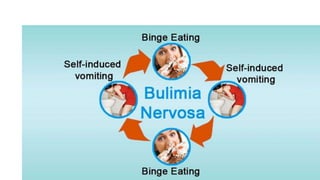
Bulimia nervosa is a life threatening eating disorder marked by binge-
eating and severe weight control.
This condition causes distress and disability, leading to compensatory
behaviors like self-induced vomiting and diuretic and laxative abuse ,
non-purging habits such as strenuous exercise, strict diets, and
extended fasting. Bulimia nervosa can develop after experiencing
physical, emotional, mental, sexual, or verbal abuse. BN patients often
have a normal weight, however some may be underweight or
overweight
Cont..
• . Bulimia nervosa typically affects normal physiological functioning,
Electrolyte and metabolic abnormalities are the leading causes of
illness and mortality among people with bulimia nervosa.
Types of bulimia nervosa
Purging type
• A person regularly engage in
self induced vomiting or the
misuse of laxatives, diuretics or
enemas.
• Most common cases
Non –purging type
• A person use the inappropriate
compensatory behavior e.g
fasting, excessive exercising to
control weight but has not
regularly engaged in self induced
vomiting, misuse of laxatives or
enemas.
Behavioral and emotional symptoms
• Frequent visit to the bathroom particularly after meals.
• Excessive exercising
• Preoccupation with body image
• Intense fear of gaining weight
• Depression, anxiety or substance abuse
• Feeling out of control
• Feeling guilty or shameful about eating
• Withdrawing socially from friends and family
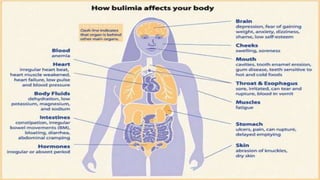
Physical symptoms
• Swollen cheeks or jawline
• Gastrointestinal problems such as constipation and acid reflux
• Scar, scrapes or calluses on the knuckles
• Fainting
• Irregular menstrual periods
• Muscles weakness
• Bloodshot eyes
• dehydration
EPIDEMIOLOGY
• - The prevalence of BN in the United States is believed to be between
1-3% of the overall population. The average age of onset is between
16 and 18 years old. Females are affected in greater numbers than
males, with a female to male ratio of 10 to 1. - According to a study
(Ho et al, 2006), the prevalence of eating disorders in Singapore is
approximately 7.4%.
. The prevalence rate of bulimia nervosa in women in Africa is within
the range recorded for western groups, including African Americans
and Latin Americans.
Cont..
• . The few studies undertaken suggest that the prevalence of bulimia
nervosa (BN) is lower in Africa than globally, In Tanzania, the research
by Eddy et. all (2007) focused in young Tanzanians female and found
that 1 woman (0.5%) met the criteria for bulimia nervosa, this
indicates as a relative low prevalence f bulimia nervosa in this
population compared to the eating disorders like anorexia nervosa .
CAUSES OF BULIMIA NERVOSA
• Genetic factors
Evidence suggest that genetics play a role in predisposing individual to
eating disorders such as bulimia nervosa, research has show that
individuals with family history of eating disorders are at high risk f
developing bulimia .
• Psychological factors
Low self esteem , body dissatisfaction and distorted body image,
stressful life event, trauma, difficulties in coping with emotions are
common characteristics.
Cont
• Environmental factors
• Societal pressure to attain unrealistic standards of beaut and thinness
portrayed in the media can impact body image and self esteem,
culture attitude towards weight and appearance also influence an
individual relationship with food and body image
• Peer influence
Individual with close friends or family members who engage in
disordered eating behavior may be more susceptible to adopt.
Cont..
• Co-occurring mental health disorders
Other mental disorders such as depression, anxiety, substance abuse
or personality disorders can contribute to bulimia development
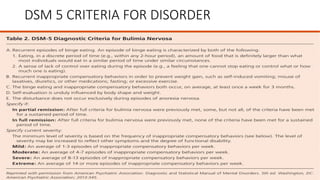
DSM 5 CRITERIA FOR DISORDER
DIAGNOSTIC TEST
• Physical examination findings
involves measuring weight and height ,checking vital signs ,skin ,nails,
heart and lungs and examining the abdomen.
Psychological evaluation
Mental health provider asses though ,feelings, and eating habits trough
interviews and questioners .
Conti…
Laboratory test
Complete blood count,
Electrolyte test
 liver ,kidney, and thyroid function
urinalysis
LABORATORY INVESTIGATIONS
Core laboratory findings
• FBC: leukopenia and lymphocytosis.
• U&Es: ↓ in K+, Na+, Cl-, ↑bicarbonate
• ↑ in serum amylase
• Metabolic acidosis due to laxative use
• Metabolic alkalosis due to repeated vomiting.
MANAGEMENT
• 1. PSYCHOTHERAPY ; COGNITIVE BEHAVIORAL THERAPY
This is the most commonly used psychotherapy approach for treating bulimia
nervosa. It focuses in changing the distorted thoughts and behaviors related
to food, body image and self esteem.
2. NUTRITION COUNSELING
Nutrition counseling involves establishing healthy eating patterns, break the
cycle of binge eating and purging and develop a balanced approach to food
and nutrition and also it help him or her to learn to listen to their body’s
hunger and fullness cues and make informed choices about food.
Cont…
• 3. REGULAR MEDICAL CHECK UP
• This help to monitor physical health and address any complications
related to bulimia nervosa such as electrolyte imbalances,
dehydration or gastrointestinal problems. In severe cases
hospitalization will be necessary to stabilize the individual’s health
• 4. SUPPORTIVE GROUPS
• Engaging in group therapy can help individual with the peer support
and encouragement by sharing experience with others who
understand the challenges of living with bulimia .
Cont…
• 5. MEDICATION
• Selective serotonin reuptake inhibitors which are type of
antidepressant are used to reduce the frequency of binge eating and
vomiting. They are effective in treating also anxiety and depression.
Nursing management
• Engage patient in therapeutic alliance to obtain commitment to
treatment.
• Monitor the weight
• Correction of the nutritional deficiency by providing the nutritious
diet
• Establish the contact with the patient that specify the amount and
type of food he/she must eat
• Teach the patient to keep journal to monitor high risk situations that
brings purging behavior
Cont..
• Control vomiting by making bathroom inaccessible for at least 2hr
after food
• Monitor serum electrolysis level
• Encourage the patient to recognize and verbalize her feeling about
her eating disorder
• Explain the risks of laxative, emetics and diuretics abuse.
REFERENCES
• DSM 5 2013
• K.P Neerja Essential of mental Health and psychiatry Nursing second
editions. Jaypee brother publishers. Page 380-390
• Lippincot William and Wilkins, A textbook of the psychiatry mental
health nursing fifth editions, Wolter Klower publication, page 380-394
PARTICIPANTS
• Happiness Ariya
• Annastazia Sebastian
• Josephine magoma

NANA SEBASTIAN. .pptx

  • 1.
  • 3.
    OBJECTIVES At the endof this presentation, students should be able  To define Bulimia Nervosa  To understand the epidemiology of bulimia nervosa  To describe the symptoms, causes and management of bulimia nervosa  To understand diagnosis criteria and investigation  To understand treatment of bulimia nervosa
  • 4.
    BULIMIA NERVOSA Bulimia nervosais a life threatening eating disorder marked by binge- eating and severe weight control. This condition causes distress and disability, leading to compensatory behaviors like self-induced vomiting and diuretic and laxative abuse , non-purging habits such as strenuous exercise, strict diets, and extended fasting. Bulimia nervosa can develop after experiencing physical, emotional, mental, sexual, or verbal abuse. BN patients often have a normal weight, however some may be underweight or overweight
  • 5.
    Cont.. • . Bulimianervosa typically affects normal physiological functioning, Electrolyte and metabolic abnormalities are the leading causes of illness and mortality among people with bulimia nervosa.
  • 6.
    Types of bulimianervosa Purging type • A person regularly engage in self induced vomiting or the misuse of laxatives, diuretics or enemas. • Most common cases Non –purging type • A person use the inappropriate compensatory behavior e.g fasting, excessive exercising to control weight but has not regularly engaged in self induced vomiting, misuse of laxatives or enemas.
  • 7.
    Behavioral and emotionalsymptoms • Frequent visit to the bathroom particularly after meals. • Excessive exercising • Preoccupation with body image • Intense fear of gaining weight • Depression, anxiety or substance abuse • Feeling out of control • Feeling guilty or shameful about eating • Withdrawing socially from friends and family
  • 8.
    Physical symptoms • Swollencheeks or jawline • Gastrointestinal problems such as constipation and acid reflux • Scar, scrapes or calluses on the knuckles • Fainting • Irregular menstrual periods • Muscles weakness • Bloodshot eyes • dehydration
  • 9.
    EPIDEMIOLOGY • - Theprevalence of BN in the United States is believed to be between 1-3% of the overall population. The average age of onset is between 16 and 18 years old. Females are affected in greater numbers than males, with a female to male ratio of 10 to 1. - According to a study (Ho et al, 2006), the prevalence of eating disorders in Singapore is approximately 7.4%. . The prevalence rate of bulimia nervosa in women in Africa is within the range recorded for western groups, including African Americans and Latin Americans.
  • 10.
    Cont.. • . Thefew studies undertaken suggest that the prevalence of bulimia nervosa (BN) is lower in Africa than globally, In Tanzania, the research by Eddy et. all (2007) focused in young Tanzanians female and found that 1 woman (0.5%) met the criteria for bulimia nervosa, this indicates as a relative low prevalence f bulimia nervosa in this population compared to the eating disorders like anorexia nervosa .
  • 11.
    CAUSES OF BULIMIANERVOSA • Genetic factors Evidence suggest that genetics play a role in predisposing individual to eating disorders such as bulimia nervosa, research has show that individuals with family history of eating disorders are at high risk f developing bulimia . • Psychological factors Low self esteem , body dissatisfaction and distorted body image, stressful life event, trauma, difficulties in coping with emotions are common characteristics.
  • 12.
    Cont • Environmental factors •Societal pressure to attain unrealistic standards of beaut and thinness portrayed in the media can impact body image and self esteem, culture attitude towards weight and appearance also influence an individual relationship with food and body image • Peer influence Individual with close friends or family members who engage in disordered eating behavior may be more susceptible to adopt.
  • 13.
    Cont.. • Co-occurring mentalhealth disorders Other mental disorders such as depression, anxiety, substance abuse or personality disorders can contribute to bulimia development
  • 14.
    DSM 5 CRITERIAFOR DISORDER
  • 15.
    DIAGNOSTIC TEST • Physicalexamination findings involves measuring weight and height ,checking vital signs ,skin ,nails, heart and lungs and examining the abdomen. Psychological evaluation Mental health provider asses though ,feelings, and eating habits trough interviews and questioners .
  • 16.
    Conti… Laboratory test Complete bloodcount, Electrolyte test  liver ,kidney, and thyroid function urinalysis
  • 17.
    LABORATORY INVESTIGATIONS Core laboratoryfindings • FBC: leukopenia and lymphocytosis. • U&Es: ↓ in K+, Na+, Cl-, ↑bicarbonate • ↑ in serum amylase • Metabolic acidosis due to laxative use • Metabolic alkalosis due to repeated vomiting.
  • 18.
    MANAGEMENT • 1. PSYCHOTHERAPY; COGNITIVE BEHAVIORAL THERAPY This is the most commonly used psychotherapy approach for treating bulimia nervosa. It focuses in changing the distorted thoughts and behaviors related to food, body image and self esteem. 2. NUTRITION COUNSELING Nutrition counseling involves establishing healthy eating patterns, break the cycle of binge eating and purging and develop a balanced approach to food and nutrition and also it help him or her to learn to listen to their body’s hunger and fullness cues and make informed choices about food.
  • 19.
    Cont… • 3. REGULARMEDICAL CHECK UP • This help to monitor physical health and address any complications related to bulimia nervosa such as electrolyte imbalances, dehydration or gastrointestinal problems. In severe cases hospitalization will be necessary to stabilize the individual’s health • 4. SUPPORTIVE GROUPS • Engaging in group therapy can help individual with the peer support and encouragement by sharing experience with others who understand the challenges of living with bulimia .
  • 20.
    Cont… • 5. MEDICATION •Selective serotonin reuptake inhibitors which are type of antidepressant are used to reduce the frequency of binge eating and vomiting. They are effective in treating also anxiety and depression.
  • 22.
    Nursing management • Engagepatient in therapeutic alliance to obtain commitment to treatment. • Monitor the weight • Correction of the nutritional deficiency by providing the nutritious diet • Establish the contact with the patient that specify the amount and type of food he/she must eat • Teach the patient to keep journal to monitor high risk situations that brings purging behavior
  • 23.
    Cont.. • Control vomitingby making bathroom inaccessible for at least 2hr after food • Monitor serum electrolysis level • Encourage the patient to recognize and verbalize her feeling about her eating disorder • Explain the risks of laxative, emetics and diuretics abuse.
  • 24.
    REFERENCES • DSM 52013 • K.P Neerja Essential of mental Health and psychiatry Nursing second editions. Jaypee brother publishers. Page 380-390 • Lippincot William and Wilkins, A textbook of the psychiatry mental health nursing fifth editions, Wolter Klower publication, page 380-394
  • 25.
    PARTICIPANTS • Happiness Ariya •Annastazia Sebastian • Josephine magoma