Mythology
August 30-31
Basham
Mythology
A category of writing is
called Genre. Mythology
falls in the category or
genre of Folklore.
Folktales
Generally know to be Fictitious
About a specific geographical
area
Often has magic
Examples: Paul Bunyan, Johnny Appleseed
Legends
Story based on a historic event,
fact, or person
Not typically moral
Limited involvement of gods and
supernatural forces
Examples: King Author and the Knights of the Round Table, Atlantis
Fables
Emphasis on the moral of
the story
Animals often talk
Examples: The Boy Who Cried Wolf, The Tortoise and the
Hare
 Myths
Explain how things began or
why they happen
Involve Gods and the
supernatural
Reflect the cultural beliefs of a
particular people
Examples: The Odyssey, The Iliad
What you should know about Myths:
cultures create myths to
explain their origins
all cultures use myths to
preserve and spread values
and traditions
What you should know about Myths:
similar myths exist in every
culture
differences in creation myths
reflect the uniqueness of each
culture
What you should learn about Myths:
How do different cultures
explain how the world begun?
How do different peoples
explain how man was
created?
What you should learn about Myths:
 What are the similarities and
differences in creation myths from
around the world?
 What unique cultural traits are
revealed in myths?
 What can we learn about ourselves
through myths?
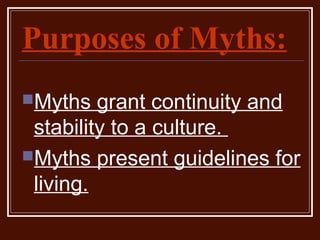
Purposes of Myths:
Myths grant continuity and
stability to a culture.
Myths present guidelines for
living.
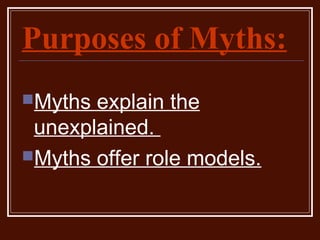
Purposes of Myths:
Myths explain the
unexplained.
Myths offer role models.

Mythology

  • 1.
  • 2.
    Mythology A category ofwriting is called Genre. Mythology falls in the category or genre of Folklore.
  • 3.
    Folktales Generally know tobe Fictitious About a specific geographical area Often has magic Examples: Paul Bunyan, Johnny Appleseed
  • 4.
    Legends Story based ona historic event, fact, or person Not typically moral Limited involvement of gods and supernatural forces Examples: King Author and the Knights of the Round Table, Atlantis
  • 5.
    Fables Emphasis on themoral of the story Animals often talk Examples: The Boy Who Cried Wolf, The Tortoise and the Hare
  • 6.
     Myths Explain howthings began or why they happen Involve Gods and the supernatural Reflect the cultural beliefs of a particular people Examples: The Odyssey, The Iliad
  • 7.
    What you shouldknow about Myths: cultures create myths to explain their origins all cultures use myths to preserve and spread values and traditions
  • 8.
    What you shouldknow about Myths: similar myths exist in every culture differences in creation myths reflect the uniqueness of each culture
  • 9.
    What you shouldlearn about Myths: How do different cultures explain how the world begun? How do different peoples explain how man was created?
  • 10.
    What you shouldlearn about Myths:  What are the similarities and differences in creation myths from around the world?  What unique cultural traits are revealed in myths?  What can we learn about ourselves through myths?
  • 11.
    Purposes of Myths: Mythsgrant continuity and stability to a culture. Myths present guidelines for living.
  • 12.
    Purposes of Myths: Mythsexplain the unexplained. Myths offer role models.