Mazda Consultance Pvt. Ltd.


       MVC Architecture
What is ASP.NET MVC ?

•   A new Web Application Project type
•   Separation of concerns
•   Built on top of ASP.NET platform
•   Tight control over HTML
•   Designed to be testable
•   Extensible routing system
•   Better integration with 3rd party libraries
•   Open source
•   Language innovations
What MVC is?

•   Maintain Clean Separation of Concerns
•   Extensible and Pluggable
•   Enable clean URLs and HTML
•   Great integration within ASP.NET
•   Tooling Support
Advantages of MVC are:

• Separation of concerns (SoC) : -
   – From a technical standpoint, the organization of code within
     MVC is very clean, organized and granular, making it easier
     (hopefully) for a web application to scale in terms of
     functionality. Promotes great design from a development
     standpoint.
• Easier integration with client side tools (rich user
  interface tools) :-
   –    More than ever, web applications are increasingly becoming
       as rich as the applications you see on your desktops. With
       MVC, it gives you the ability to integrate with such toolkits
       (such as jQuery) with greater ease and more seamless than
       in Web Forms.
Advantages of MVC are:

• Search Engine Optimization (SEO) Friendly /
  Stateless :-
   – URL's are more friendly to search engines (i.e.
     mywebapplication.com/users/ 1 - retrieve user with an ID of
     1 vs mywebapplication/users/getuser.aspx (id passed in
     session)). Similarly, since MVC is stateless, this removes the
     headache of users who spawn multiple web browsers from
     the same window (session collisions). Along those same
     lines, MVC adheres to the stateless web protocol rather than
     'battling' against it.
Advantages of MVC are:

• Works well with developers who need high degree of
  control : -
   – Many controls in ASP.NET web forms automatically
     generate much of the raw HTML you see when an page is
     rendered. This can cause headaches for developers. With
     MVC, it lends itself better towards having complete control
     with what is rendered and there are no surprises. Even
     more important, is that the HTML forms typically are much
     smaller than the Web forms which can equate to a
     performance boost - something to seriously consider.
• Test Driven Development (TDD) : -
   – With MVC, you can more easily create tests for the web side
     of things. An additional layer of testing will provide yet
     another layer of defense against unexpected behavior.
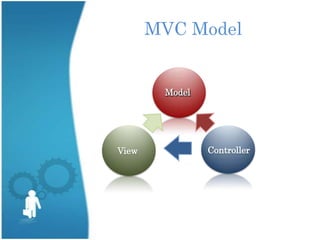
MVC Model


        Model


View            Controller
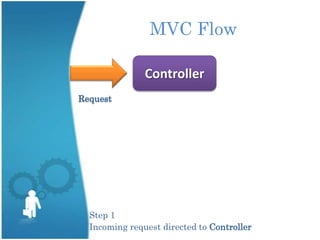
MVC Flow

               Controller
Request


  Step 1
  Incoming request directed to Controller
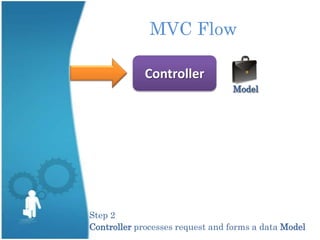
MVC Flow

             Controller
                                 Model


Step 2
Controller processes request and forms a data Model
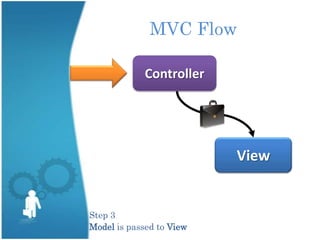
MVC Flow

             Controller


                          View


Step 3
Model is passed to View
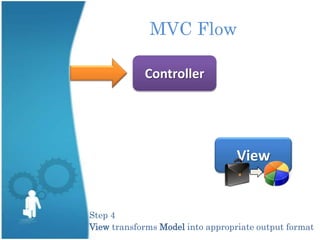
MVC Flow

            Controller


                                  View


Step 4
View transforms Model into appropriate output format
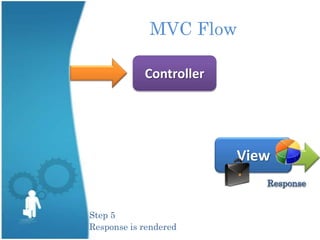
MVC Flow

            Controller


                         View
                            Response


Step 5
Response is rendered

Mvc part 1

  • 1.
    Mazda Consultance Pvt.Ltd. MVC Architecture
  • 2.
    What is ASP.NETMVC ? • A new Web Application Project type • Separation of concerns • Built on top of ASP.NET platform • Tight control over HTML • Designed to be testable • Extensible routing system • Better integration with 3rd party libraries • Open source • Language innovations
  • 3.
    What MVC is? • Maintain Clean Separation of Concerns • Extensible and Pluggable • Enable clean URLs and HTML • Great integration within ASP.NET • Tooling Support
  • 4.
    Advantages of MVCare: • Separation of concerns (SoC) : - – From a technical standpoint, the organization of code within MVC is very clean, organized and granular, making it easier (hopefully) for a web application to scale in terms of functionality. Promotes great design from a development standpoint. • Easier integration with client side tools (rich user interface tools) :- – More than ever, web applications are increasingly becoming as rich as the applications you see on your desktops. With MVC, it gives you the ability to integrate with such toolkits (such as jQuery) with greater ease and more seamless than in Web Forms.
  • 5.
    Advantages of MVCare: • Search Engine Optimization (SEO) Friendly / Stateless :- – URL's are more friendly to search engines (i.e. mywebapplication.com/users/ 1 - retrieve user with an ID of 1 vs mywebapplication/users/getuser.aspx (id passed in session)). Similarly, since MVC is stateless, this removes the headache of users who spawn multiple web browsers from the same window (session collisions). Along those same lines, MVC adheres to the stateless web protocol rather than 'battling' against it.
  • 6.
    Advantages of MVCare: • Works well with developers who need high degree of control : - – Many controls in ASP.NET web forms automatically generate much of the raw HTML you see when an page is rendered. This can cause headaches for developers. With MVC, it lends itself better towards having complete control with what is rendered and there are no surprises. Even more important, is that the HTML forms typically are much smaller than the Web forms which can equate to a performance boost - something to seriously consider. • Test Driven Development (TDD) : - – With MVC, you can more easily create tests for the web side of things. An additional layer of testing will provide yet another layer of defense against unexpected behavior.
  • 7.
    MVC Model Model View Controller
  • 8.
    MVC Flow Controller Request Step 1 Incoming request directed to Controller
  • 9.
    MVC Flow Controller Model Step 2 Controller processes request and forms a data Model
  • 10.
    MVC Flow Controller View Step 3 Model is passed to View
  • 11.
    MVC Flow Controller View Step 4 View transforms Model into appropriate output format
  • 12.
    MVC Flow Controller View Response Step 5 Response is rendered