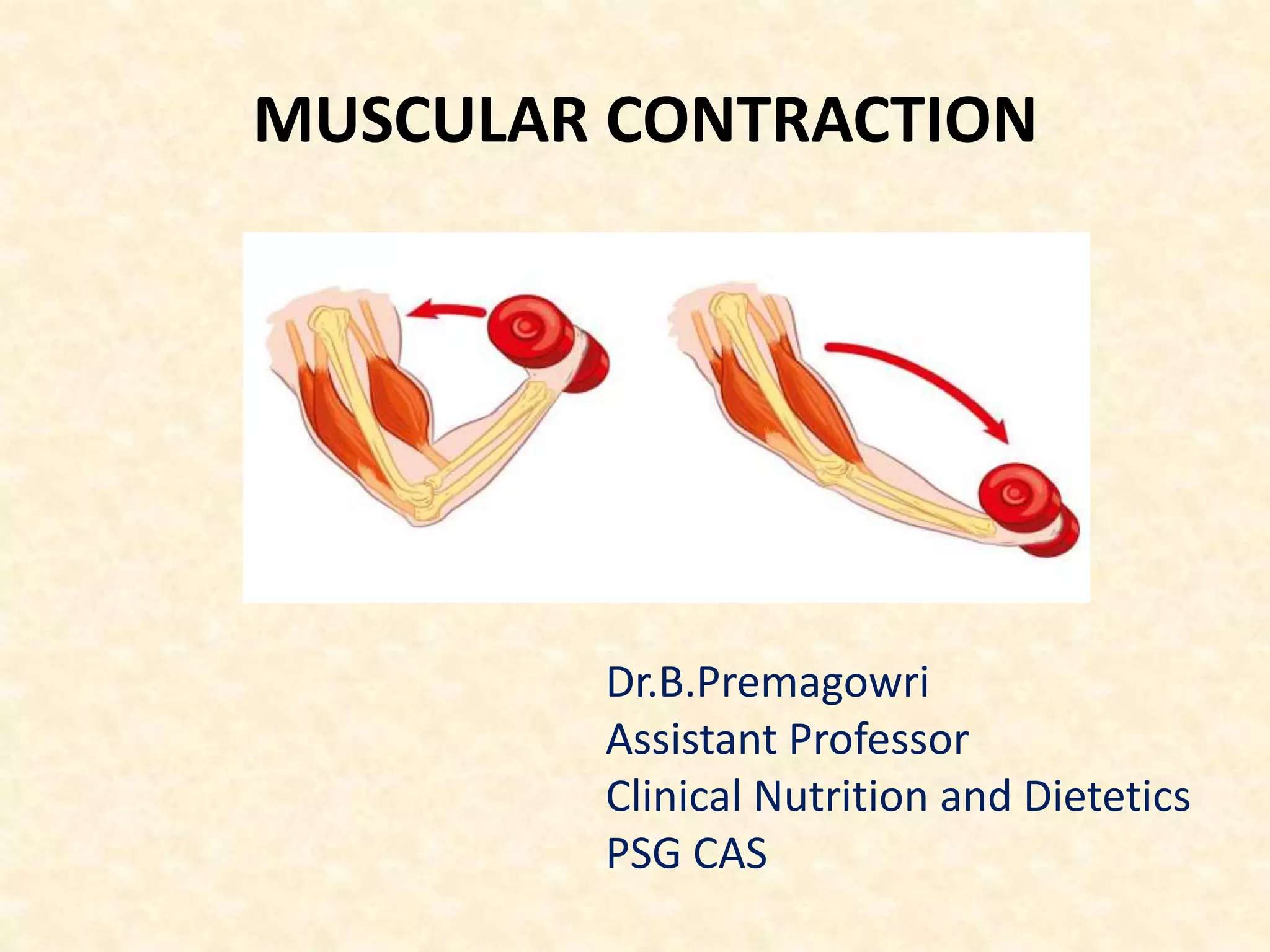
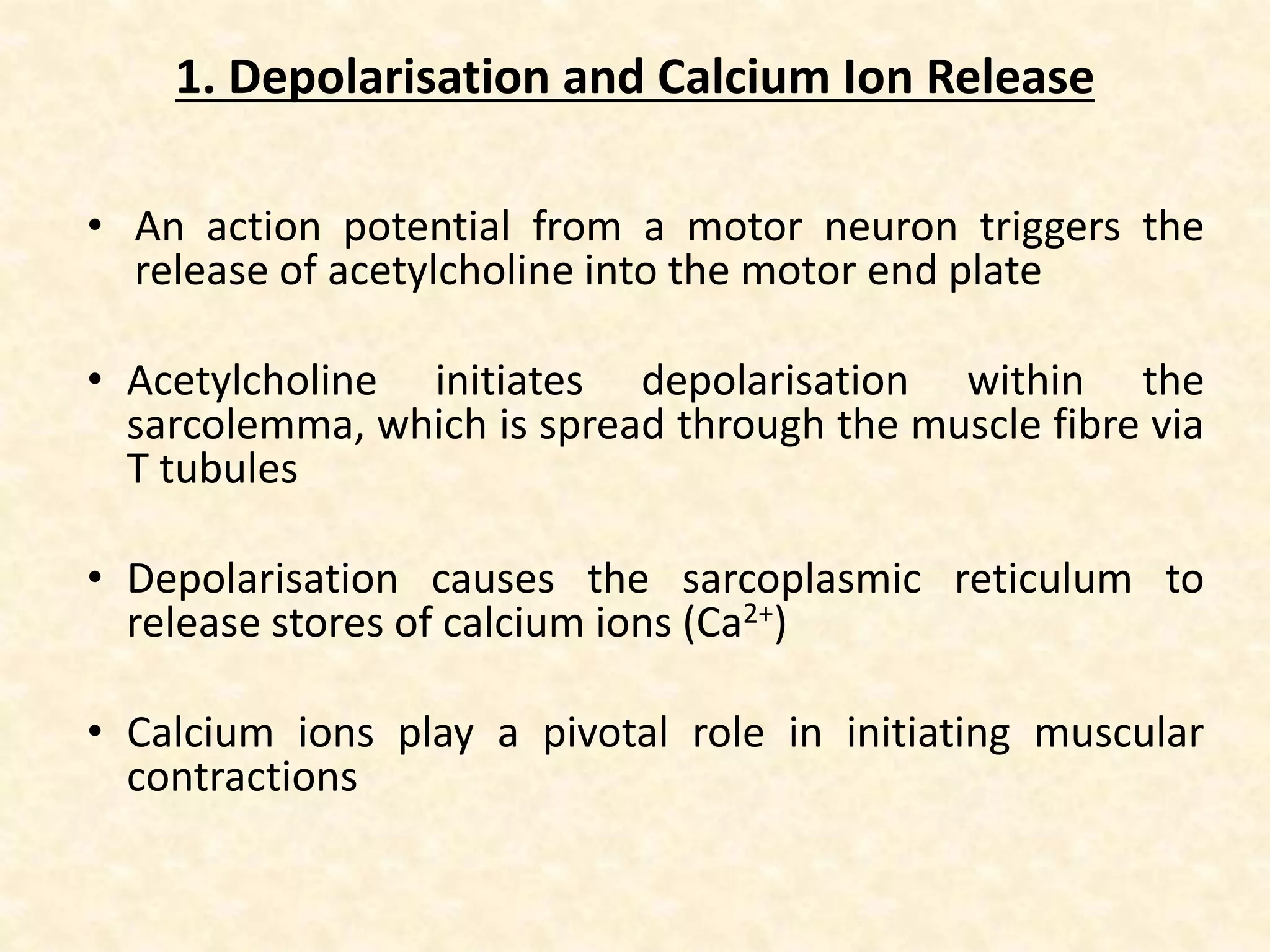
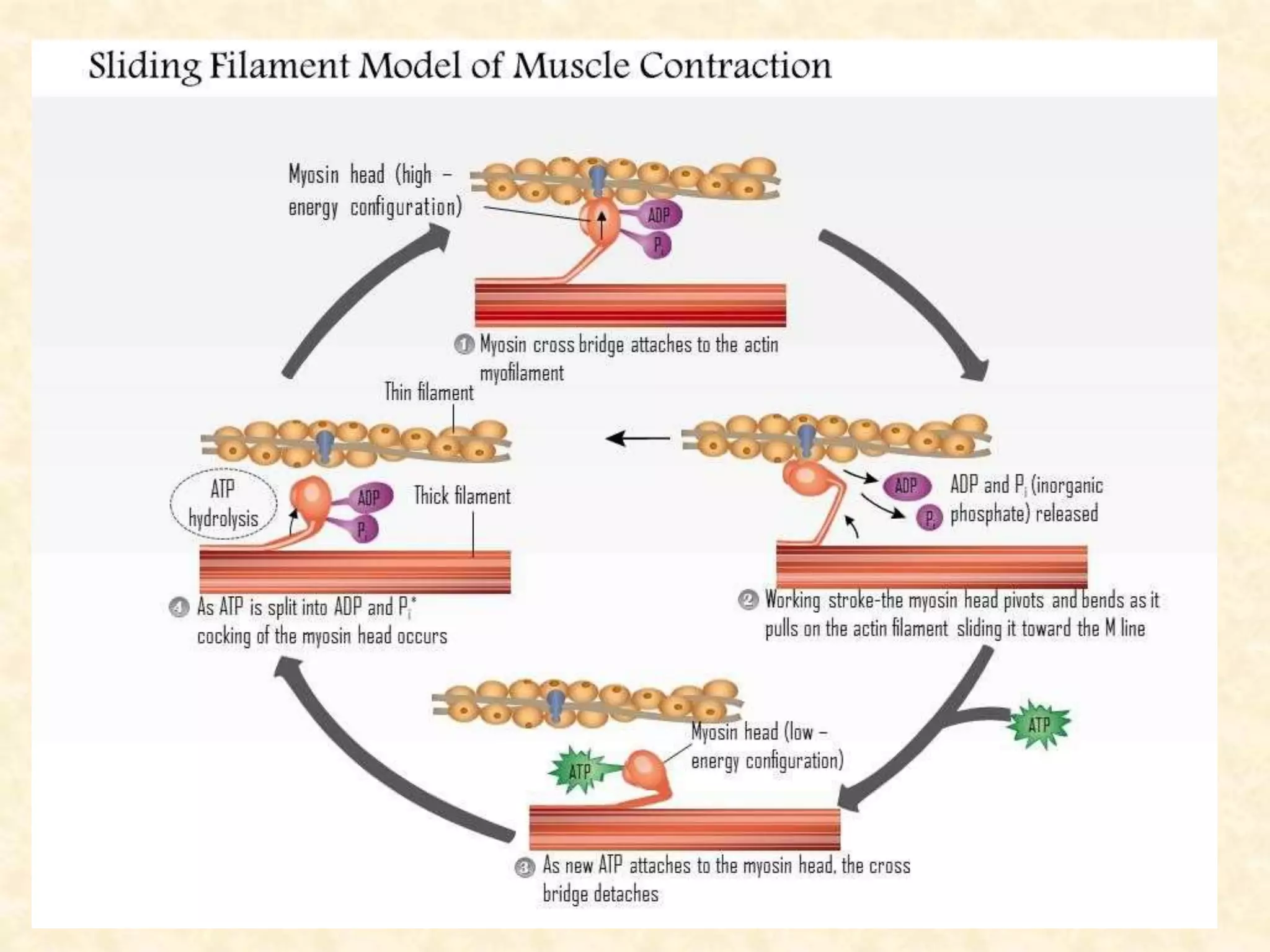
The process of muscular contraction begins with an action potential triggering the release of calcium ions from the sarcoplasmic reticulum. Calcium ions bind to troponin, exposing binding sites on actin for myosin heads to form cross-bridges. Myosin heads hydrolyze ATP, changing orientation and dragging actin toward the center as they re-bind actin. This sliding mechanism shortens sarcomeres by pulling z-lines closer together, resulting in muscle fiber contraction.




![Chapt09 Holes Lecture Animation[1]](https://cdn.slidesharecdn.com/ss_thumbnails/chapt09holeslectureanimation1-091122122851-phpapp02-thumbnail.jpg?width=640&height=640&fit=bounds)


