Leveraging DifferencesMultigenerational Workforce
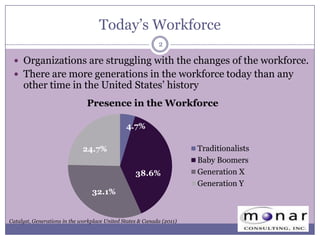
Today’s WorkforceOrganizations are struggling with the changes of the workforce. There are more generations in the workforce today than any other time in the United States’ history10%    24.7%34%24.7%24.7%38.6%32.1%Catalyst, Generations in the workplace United States & Canada (2011)
OverviewHow is this affecting organizations?Lack of generational awarenessDifferences in motivation  Generational clash at workDisconnect among supervisors, subordinates, and co-workersWhy does it matter?May lead to communication barriers that cause conflict within the workplaceLeader/EmployeeCo-worker/Co-workerWhat is the solution:Organizations need to utilize the generation differences to create innovative results to stay ahead of the competition3
Factors of Generational DifferencesThe origin of these differences vary across all employees (not just generations)Origins of differencesGenerationCultureValuesNormsBeliefs GenderExperiences4
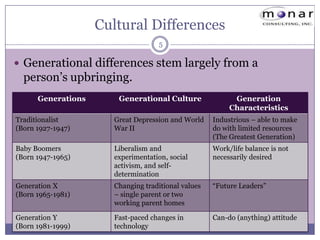
Cultural DifferencesGenerational differences stem largely from a person’s upbringing.5
Generational DifferencesEmployees’ upbringings are vastly different and can be attributed to cultural factors.Additionally, cultural factors can cultivate differences within the workforce.Work ethicFeeling/reactions to organizational changePerceptions of organizational hierarchyOrientation toward workplace relationshipsMotivation6
Work DifferencesGenerational differences can affect the perception of work and boundariesMultigenerational employees bring different life experiences and frames of references to the workplace that influence how they perceive management and authorityPlease note that not every employee will fall into a specific category7
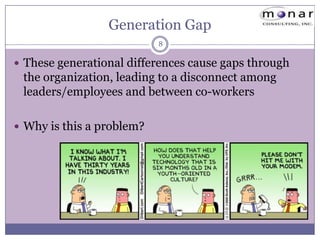
Generation GapThese generational differences cause gaps through the organization, leading to a disconnect among leaders/employees and between co-workersWhy is this a problem?8
Not Addressed:How Does Addressing or Not Addressing the Differences Affect the Workforce Dynamic?Successfully Addressed:Needs are not being metBarriers in communication (across generations)Unrealistic expectations of othersDistrustExclusionOpen communicationCollaborative work environmentKnowledge sharingTransferring of skillsTrustInclusion 9
Why Organizations Need to Embrace the Idea of Having A Multigenerational WorkforceAttract, motivate, and retain employees based on the specific generational needs of its employees and the organization as a whole.Creates awareness and understanding for others’ points of view.When employees are better able to appreciate diverse perspectives they will work more cohesively together and increase the amount of knowledge shared and transferred.Employees remain engaged and productive in the workplace.Increase employee engagement  Heightened job satisfaction10
How to Leverage the Differences to Benefit the OrganizationProvide resources to enhance generational strengthsEach generation brings something of value to the workplace.Knowledge sharing and transferring of skillsMentoring programsInclusionMultigenerational teams and task forces 11
ConclusionGenerational awareness helps to foster an environment of understanding, respect, and inclusion.Companies that fail to adapt to societal changes risk stagnation, which stemsfrom being caught up in the “old way” of doing things. 12
Contact13If you would like more information or training on Multigenerational Workforces please check out our website at http://www.monarconsulting.comFollow us on Twitter @MikeMonar

Multigenerational Workforces

  • 1.
  • 2.
    Today’s WorkforceOrganizations arestruggling with the changes of the workforce. There are more generations in the workforce today than any other time in the United States’ history10% 24.7%34%24.7%24.7%38.6%32.1%Catalyst, Generations in the workplace United States & Canada (2011)
  • 3.
    OverviewHow is thisaffecting organizations?Lack of generational awarenessDifferences in motivation Generational clash at workDisconnect among supervisors, subordinates, and co-workersWhy does it matter?May lead to communication barriers that cause conflict within the workplaceLeader/EmployeeCo-worker/Co-workerWhat is the solution:Organizations need to utilize the generation differences to create innovative results to stay ahead of the competition3
  • 4.
    Factors of GenerationalDifferencesThe origin of these differences vary across all employees (not just generations)Origins of differencesGenerationCultureValuesNormsBeliefs GenderExperiences4
  • 5.
    Cultural DifferencesGenerational differencesstem largely from a person’s upbringing.5
  • 6.
    Generational DifferencesEmployees’ upbringingsare vastly different and can be attributed to cultural factors.Additionally, cultural factors can cultivate differences within the workforce.Work ethicFeeling/reactions to organizational changePerceptions of organizational hierarchyOrientation toward workplace relationshipsMotivation6
  • 7.
    Work DifferencesGenerational differencescan affect the perception of work and boundariesMultigenerational employees bring different life experiences and frames of references to the workplace that influence how they perceive management and authorityPlease note that not every employee will fall into a specific category7
  • 8.
    Generation GapThese generationaldifferences cause gaps through the organization, leading to a disconnect among leaders/employees and between co-workersWhy is this a problem?8
  • 9.
    Not Addressed:How DoesAddressing or Not Addressing the Differences Affect the Workforce Dynamic?Successfully Addressed:Needs are not being metBarriers in communication (across generations)Unrealistic expectations of othersDistrustExclusionOpen communicationCollaborative work environmentKnowledge sharingTransferring of skillsTrustInclusion 9
  • 10.
    Why Organizations Needto Embrace the Idea of Having A Multigenerational WorkforceAttract, motivate, and retain employees based on the specific generational needs of its employees and the organization as a whole.Creates awareness and understanding for others’ points of view.When employees are better able to appreciate diverse perspectives they will work more cohesively together and increase the amount of knowledge shared and transferred.Employees remain engaged and productive in the workplace.Increase employee engagement  Heightened job satisfaction10
  • 11.
    How to Leveragethe Differences to Benefit the OrganizationProvide resources to enhance generational strengthsEach generation brings something of value to the workplace.Knowledge sharing and transferring of skillsMentoring programsInclusionMultigenerational teams and task forces 11
  • 12.
    ConclusionGenerational awareness helpsto foster an environment of understanding, respect, and inclusion.Companies that fail to adapt to societal changes risk stagnation, which stemsfrom being caught up in the “old way” of doing things. 12
  • 13.
    Contact13If you wouldlike more information or training on Multigenerational Workforces please check out our website at http://www.monarconsulting.comFollow us on Twitter @MikeMonar

Editor's Notes

  • #2 Put Monar Consulting logo on each slide
  • #7 Tie in from the previous slide/activityEmphasize what caused the differences…. How might that play into how they work?Have groups, if they do not mention it in their summary, elaborate further on how each character would approach work.
  • #8 Reiterate the the differences in work approach that have been noted through research.
  • #10 Differences in needsVariation among expectations for co-workers/superiorsBarriers in communication (across generations)DistrustOpen communicationCollaborative work environmentKnowledge sharring
  • #11 Follow up from the activity“What we’ve seen from the activity…”