GROUP 2
 John Patrick Caparoso
 Cedric Caquilala
 Juan Miguel Estillore
 Anna Carmella Luczon
WHO IS
Muhammad Yunus?
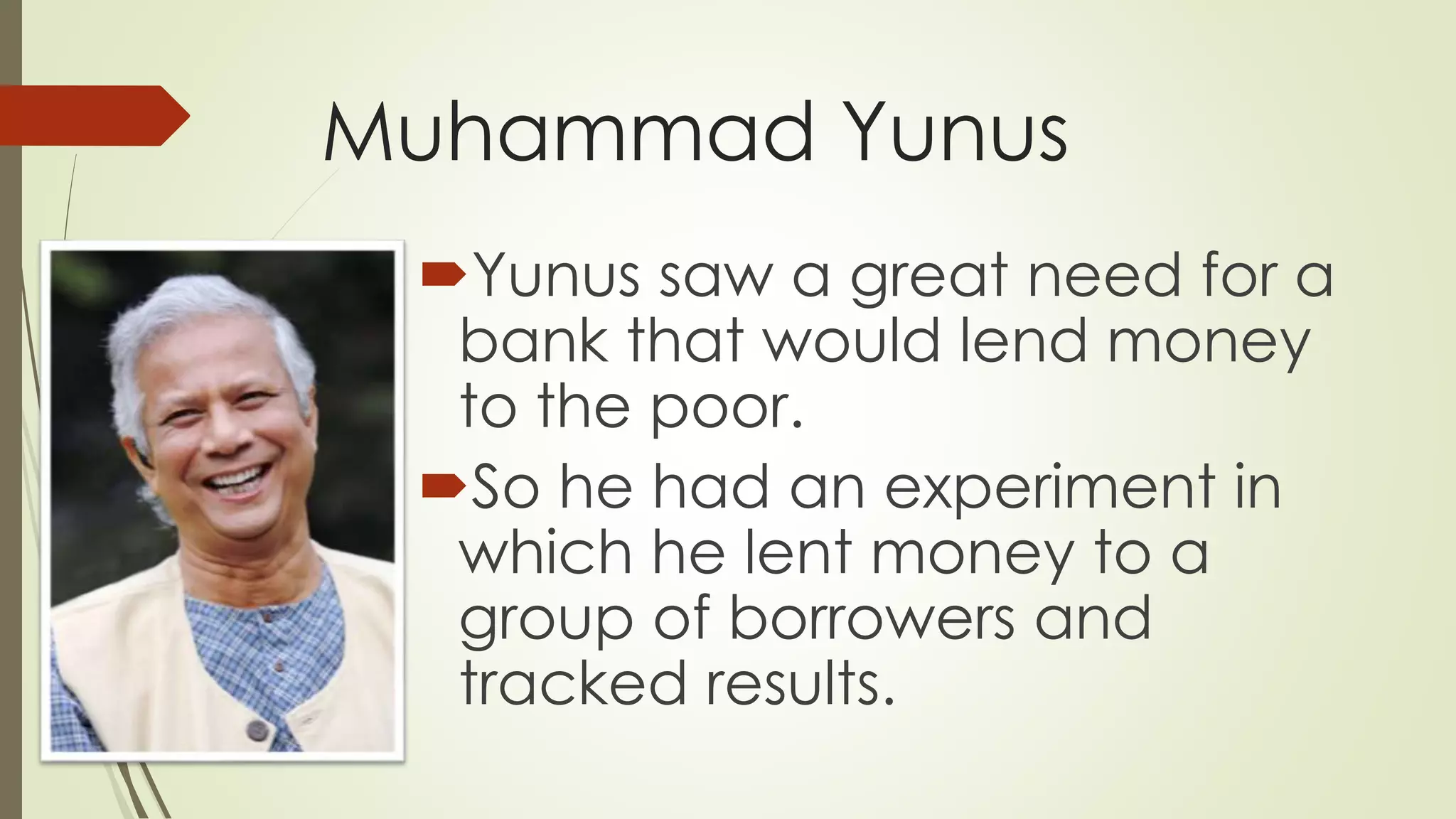
Muhammad Yunus
Yunus saw a great need for a
bank that would lend money
to the poor.
So he had an experiment in
which he lent money to a
group of borrowers and
tracked results.
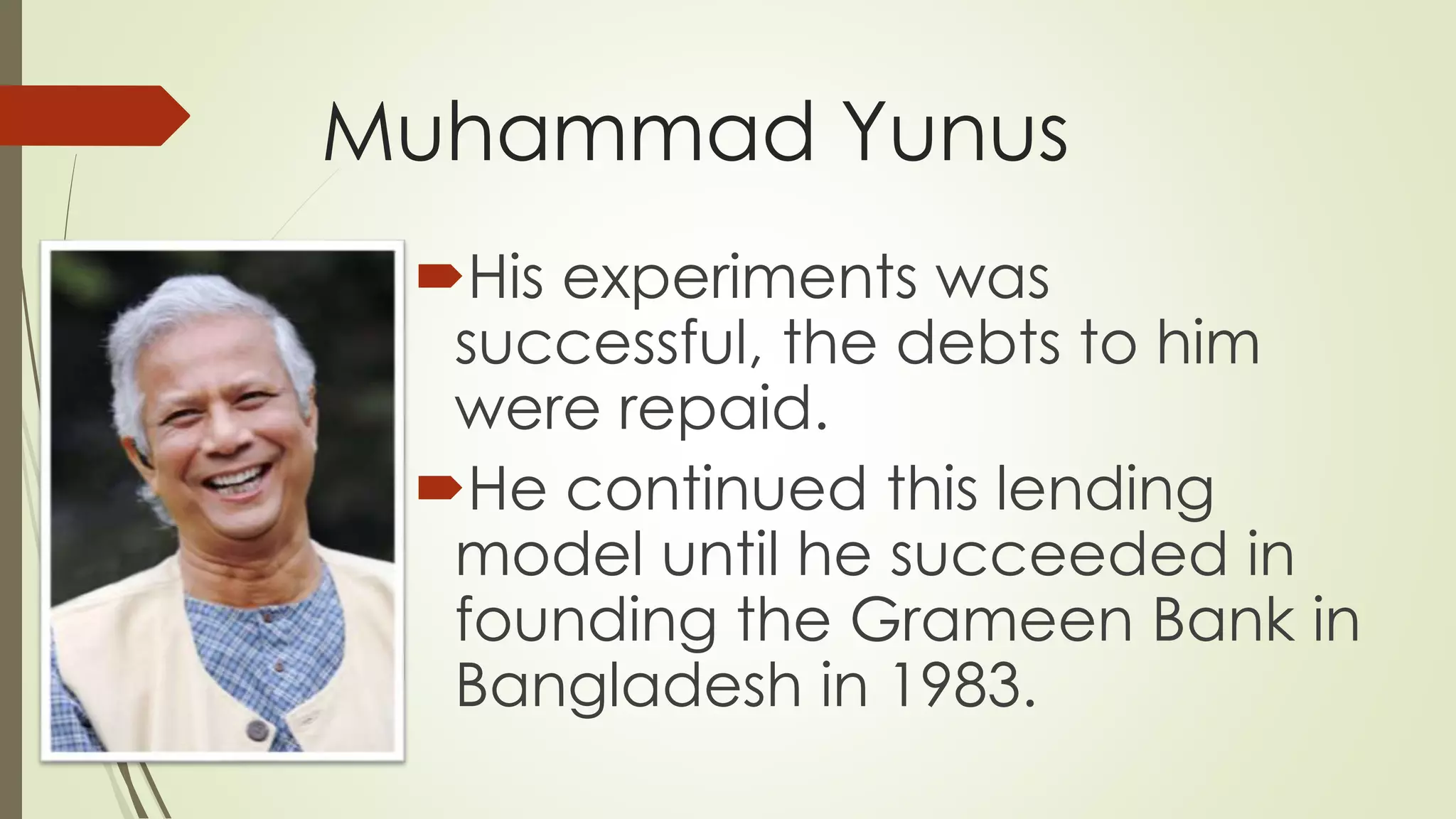
Muhammad Yunus
His experiments was
successful, the debts to him
were repaid.
He continued this lending
model until he succeeded in
founding the Grameen Bank in
Bangladesh in 1983.
Grameen Bank
“If you give a
man a fish, you
feed him for a
day. If you
teach him to
fish, you feed
him for a
lifetime.”
Grameen Bank
Grameen Bank in Bangladesh
pioneered the idea of giving out
micro-loans between $27 and
$500 to poor people.
These micro-loans were given to
the poor so they can start or
expand small businesses to pull
themselves out of poverty.
Grameen Bank
As of May 2008, Grameen Bank (GB)
has provided loans totalling $6-billion
to 7.5-million borrowers, 97% of
whom are women.
Most of the borrowers are women
because GB believes that they looks
to the future with a planned strategy
to improve the family situation.
Grameen Bank
Today, more than 250 institutions
in nearly 100 countries operate
micro-credit programs based on
the Grameen methodology,
placing Grameen Bank at the
forefront of a burgeoning world
movement toward eradicating
poverty through micro-lending.
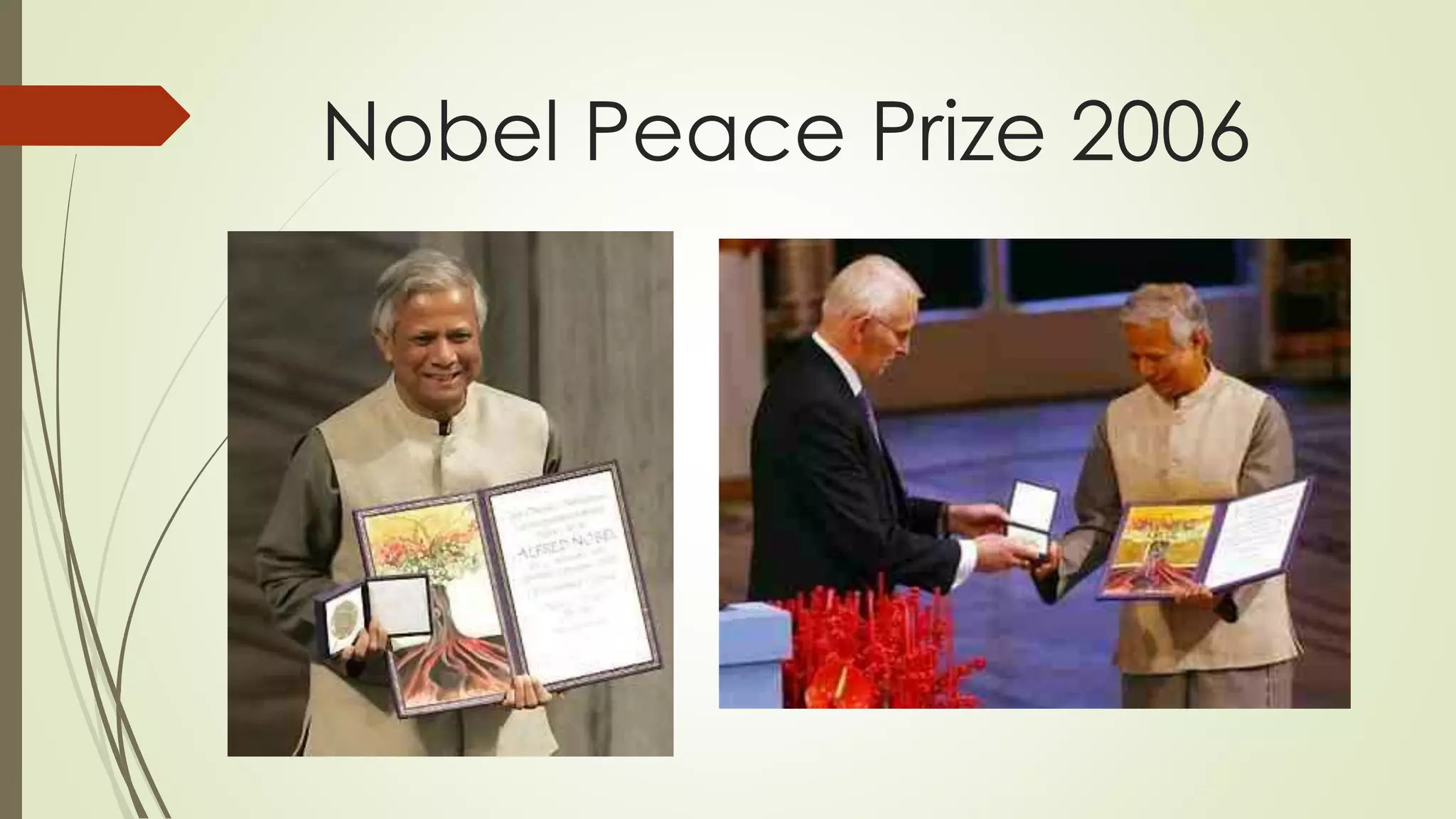
Nobel Peace Prize 2006
The Nobel Peace Prize 2006
was awarded jointly to
Muhammad Yunus and
Grameen Bank "for their efforts
to create economic and social
development from below."
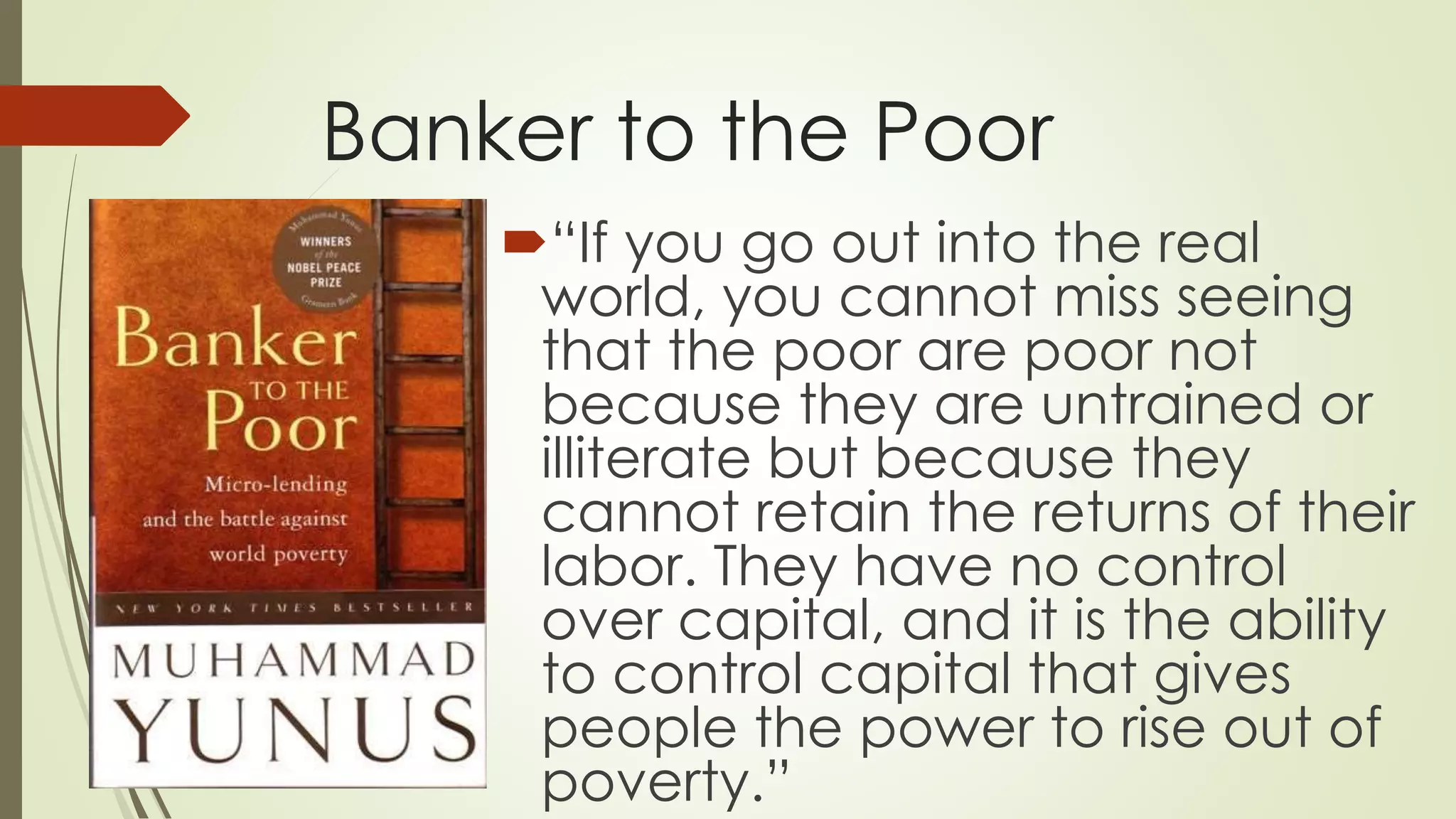
Banker to the Poor
Muhammad Yunus also
published a book that is
his autobiography entitled
“Banker to the Poor:
Micro-Lending and the
Battle Against World
Poverty.”
Banker to the Poor
“If you go out into the real
world, you cannot miss seeing
that the poor are poor not
because they are untrained or
illiterate but because they
cannot retain the returns of their
labor. They have no control
over capital, and it is the ability
to control capital that gives
people the power to rise out of
poverty.”

Muhammad Yunus

  • 1.
    GROUP 2  JohnPatrick Caparoso  Cedric Caquilala  Juan Miguel Estillore  Anna Carmella Luczon
  • 2.
  • 3.
    Muhammad Yunus Yunus sawa great need for a bank that would lend money to the poor. So he had an experiment in which he lent money to a group of borrowers and tracked results.
  • 4.
    Muhammad Yunus His experimentswas successful, the debts to him were repaid. He continued this lending model until he succeeded in founding the Grameen Bank in Bangladesh in 1983.
  • 5.
    Grameen Bank “If yougive a man a fish, you feed him for a day. If you teach him to fish, you feed him for a lifetime.”
  • 6.
    Grameen Bank Grameen Bankin Bangladesh pioneered the idea of giving out micro-loans between $27 and $500 to poor people. These micro-loans were given to the poor so they can start or expand small businesses to pull themselves out of poverty.
  • 7.
    Grameen Bank As ofMay 2008, Grameen Bank (GB) has provided loans totalling $6-billion to 7.5-million borrowers, 97% of whom are women. Most of the borrowers are women because GB believes that they looks to the future with a planned strategy to improve the family situation.
  • 8.
    Grameen Bank Today, morethan 250 institutions in nearly 100 countries operate micro-credit programs based on the Grameen methodology, placing Grameen Bank at the forefront of a burgeoning world movement toward eradicating poverty through micro-lending.
  • 9.
  • 10.
    Nobel Peace Prize2006 The Nobel Peace Prize 2006 was awarded jointly to Muhammad Yunus and Grameen Bank "for their efforts to create economic and social development from below."
  • 11.
    Banker to thePoor Muhammad Yunus also published a book that is his autobiography entitled “Banker to the Poor: Micro-Lending and the Battle Against World Poverty.”
  • 12.
    Banker to thePoor “If you go out into the real world, you cannot miss seeing that the poor are poor not because they are untrained or illiterate but because they cannot retain the returns of their labor. They have no control over capital, and it is the ability to control capital that gives people the power to rise out of poverty.”