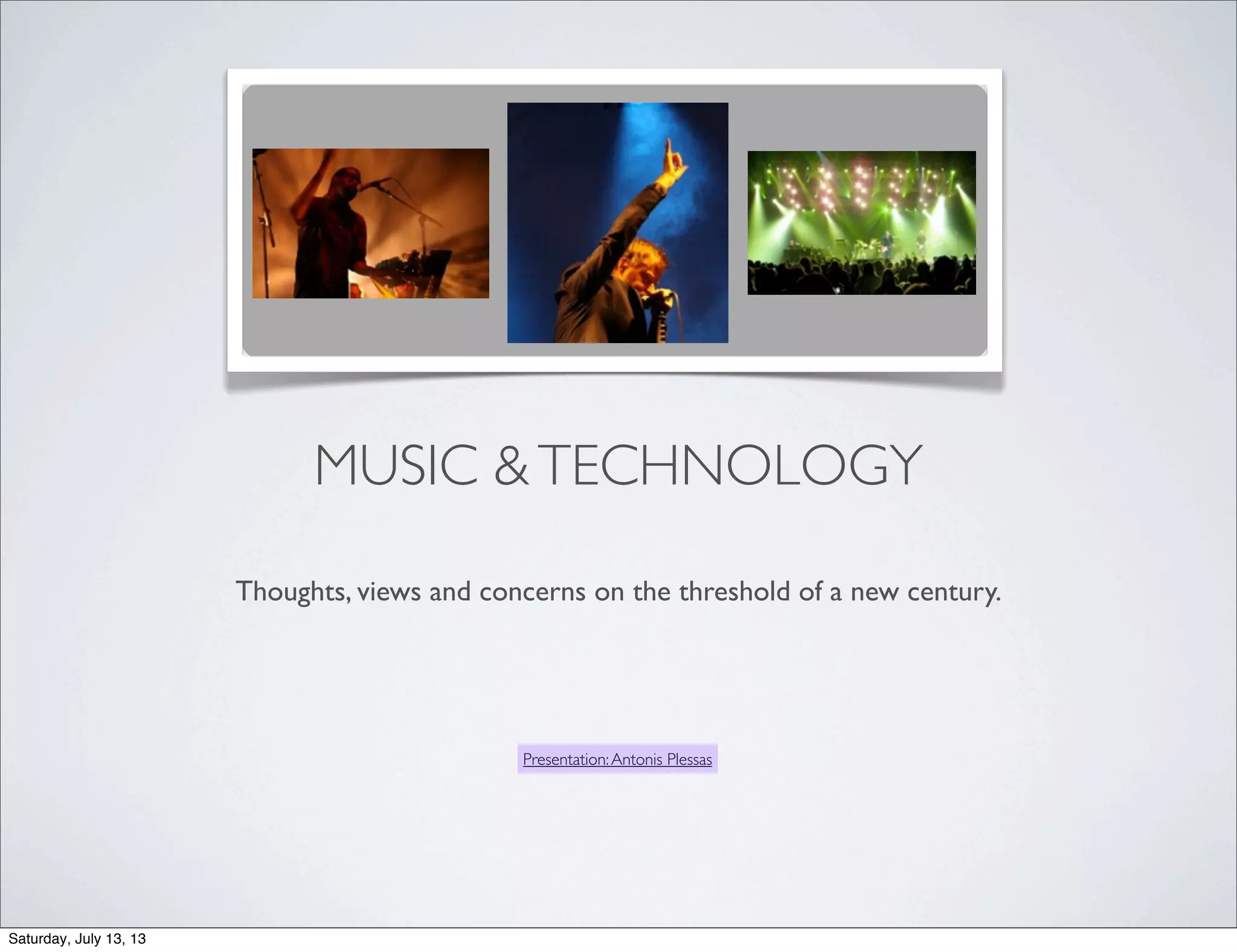
MUSIC &TECHNOLOGY
Thoughts, views and concerns on the threshold of a new century.
Presentation:Antonis Plessas
Saturday, July 13, 13
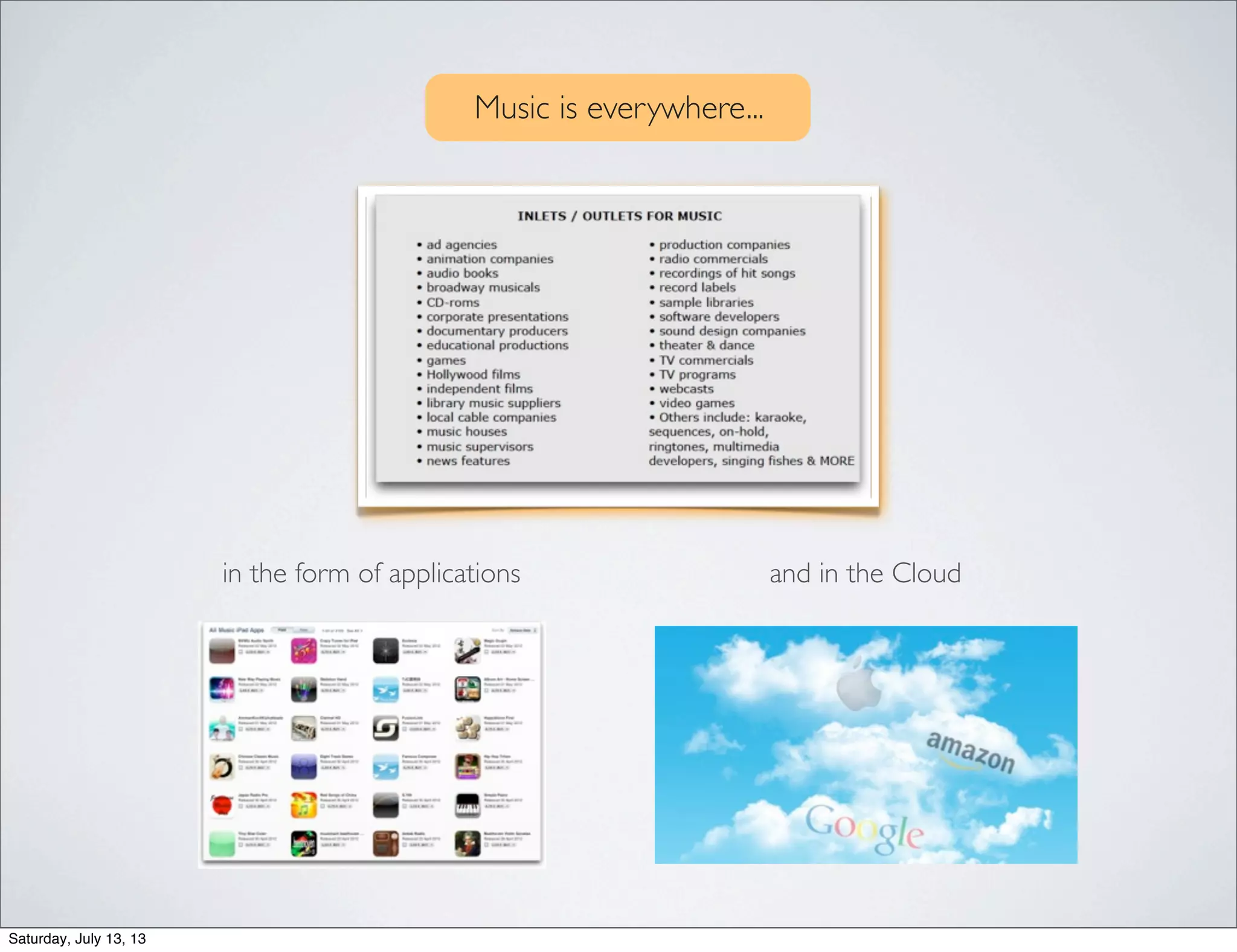
Music is everywhere...
and in the Cloudin the form of applications
Saturday, July 13, 13
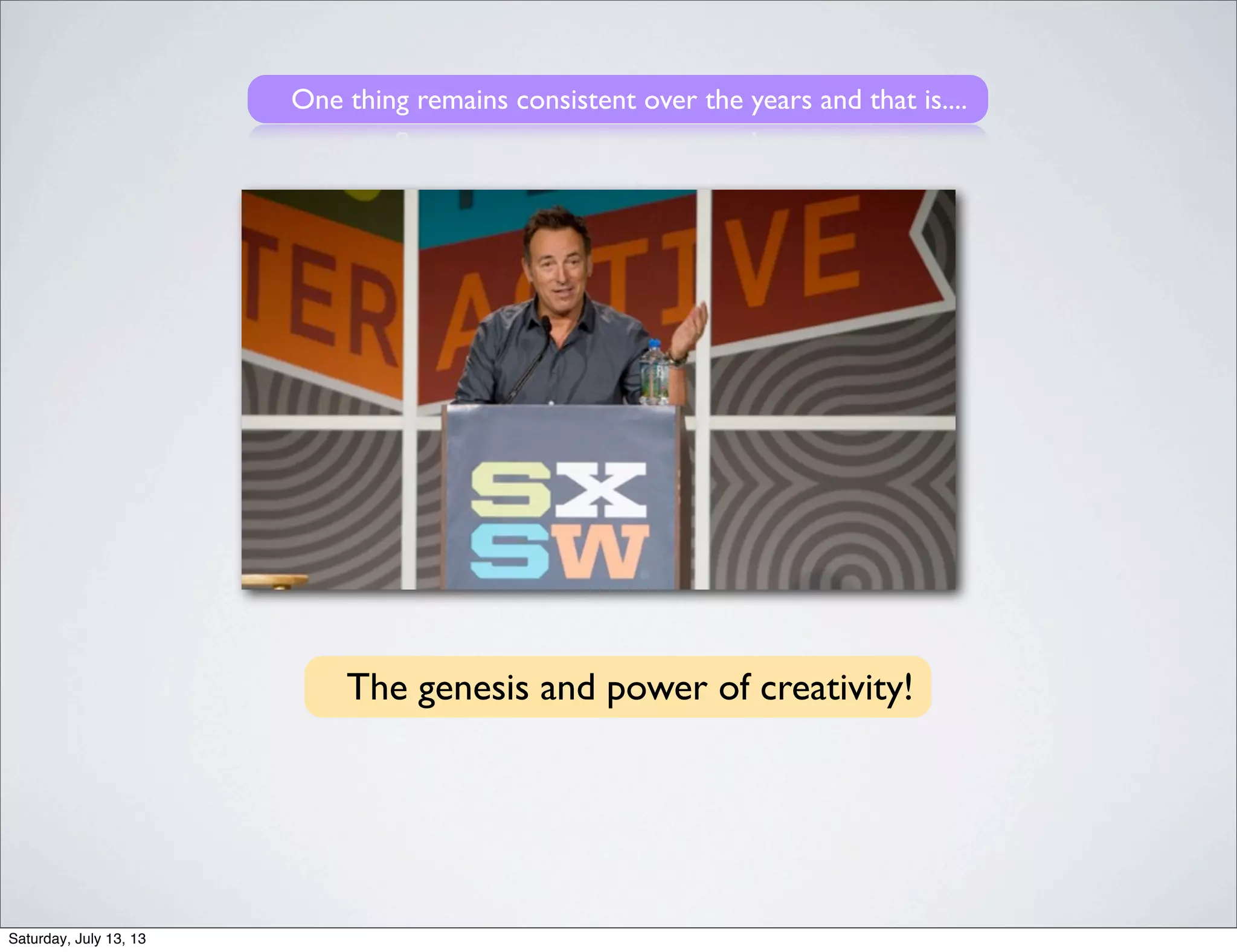
One thing remains consistent over the years and that is....
The genesis and power of creativity!
Saturday, July 13, 13
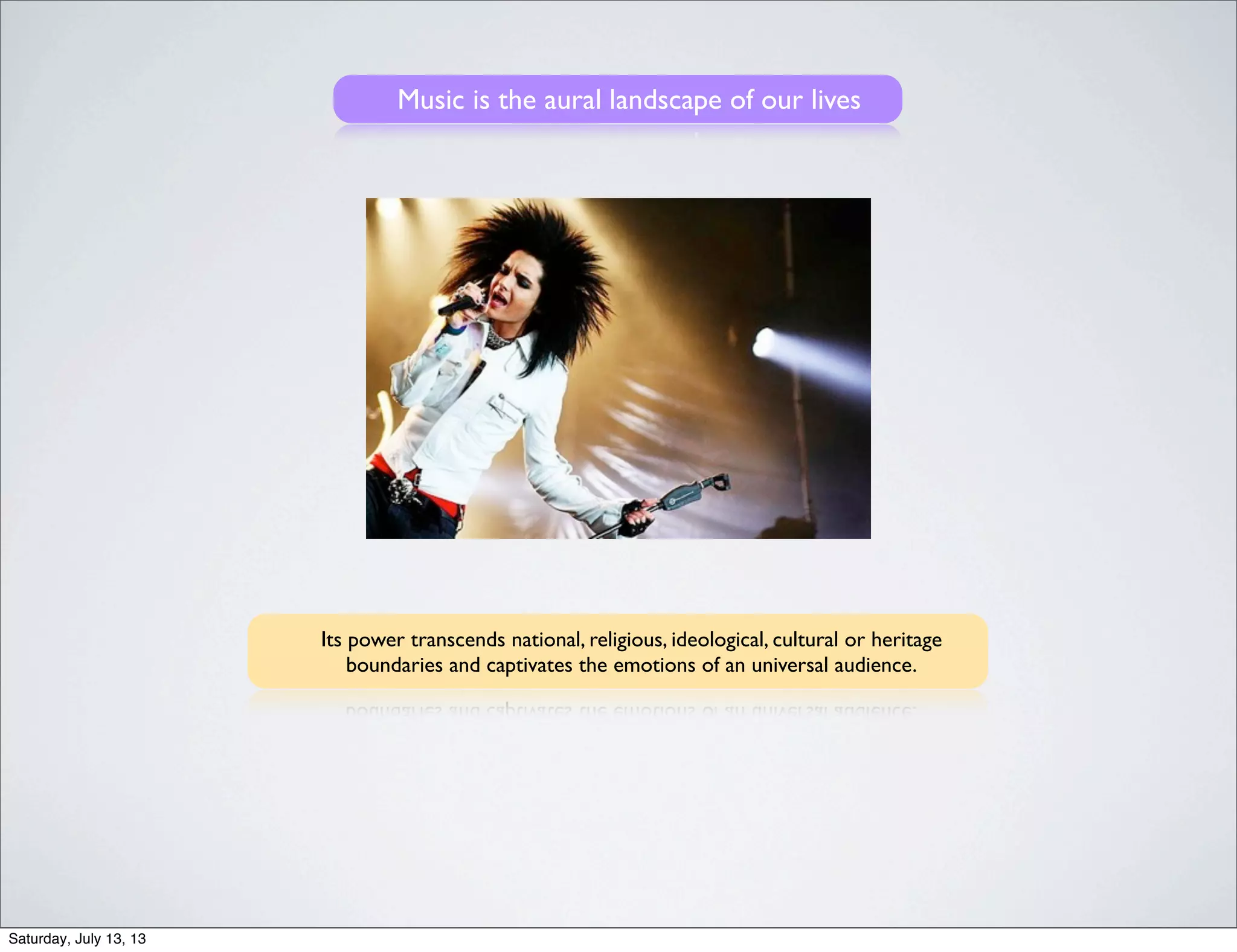
Music is the aural landscape of our lives
Its power transcends national, religious, ideological, cultural or heritage
boundaries and captivates the emotions of an universal audience.
Saturday, July 13, 13
Technology
Human Behavior
Culture
Business
Technology is
constantly and
irreversibly
affecting, formatting
and changing our
culture and habits.
The catalytic force of technological evolution
Saturday, July 13, 13
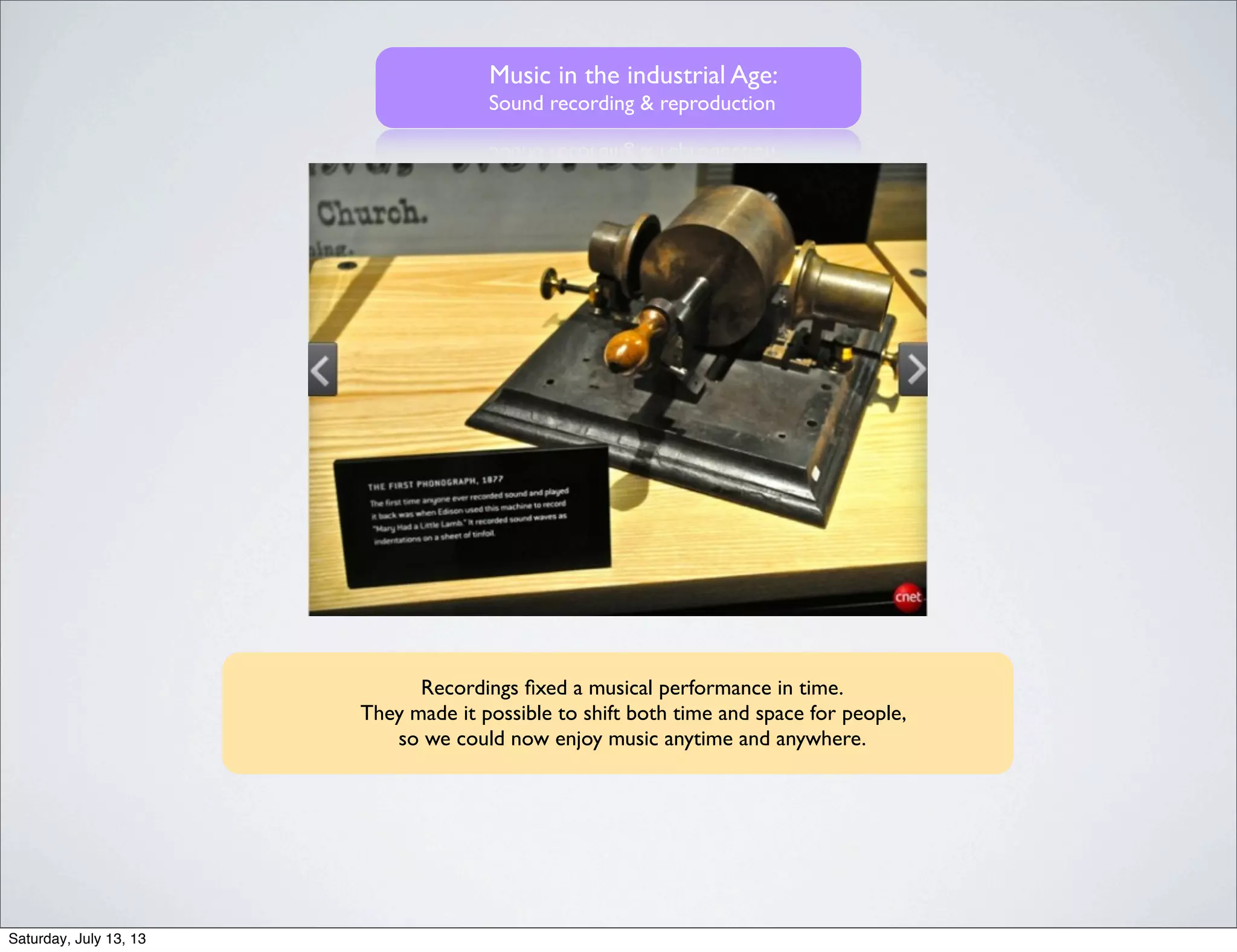
Music in the industrial Age:
Sound recording & reproduction
Recordings fixed a musical performance in time.
They made it possible to shift both time and space for people,
so we could now enjoy music anytime and anywhere.
Saturday, July 13, 13
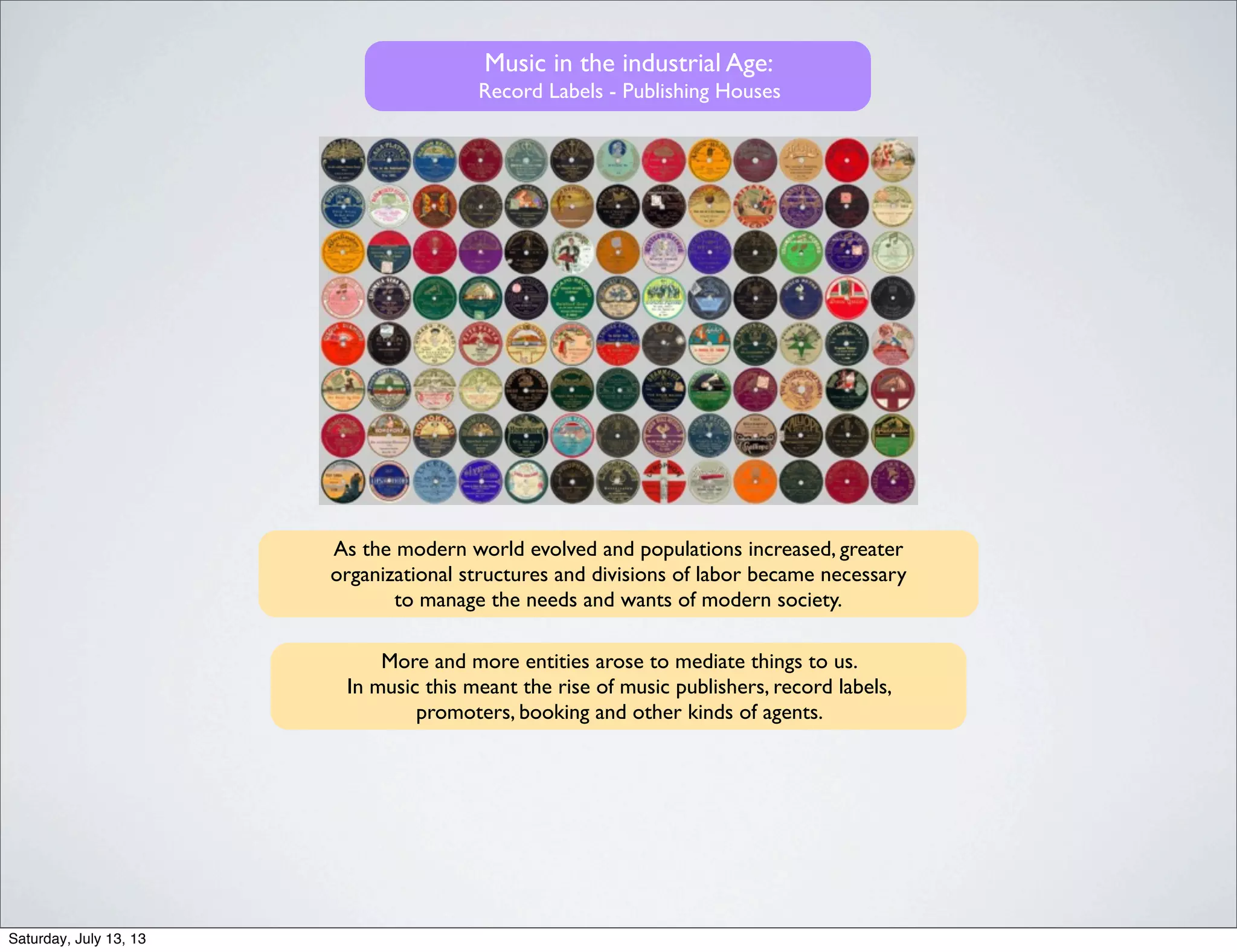
Music in the industrial Age:
Record Labels - Publishing Houses
As the modern world evolved and populations increased, greater
organizational structures and divisions of labor became necessary
to manage the needs and wants of modern society.
More and more entities arose to mediate things to us.
In music this meant the rise of music publishers, record labels,
promoters, booking and other kinds of agents.
Saturday, July 13, 13
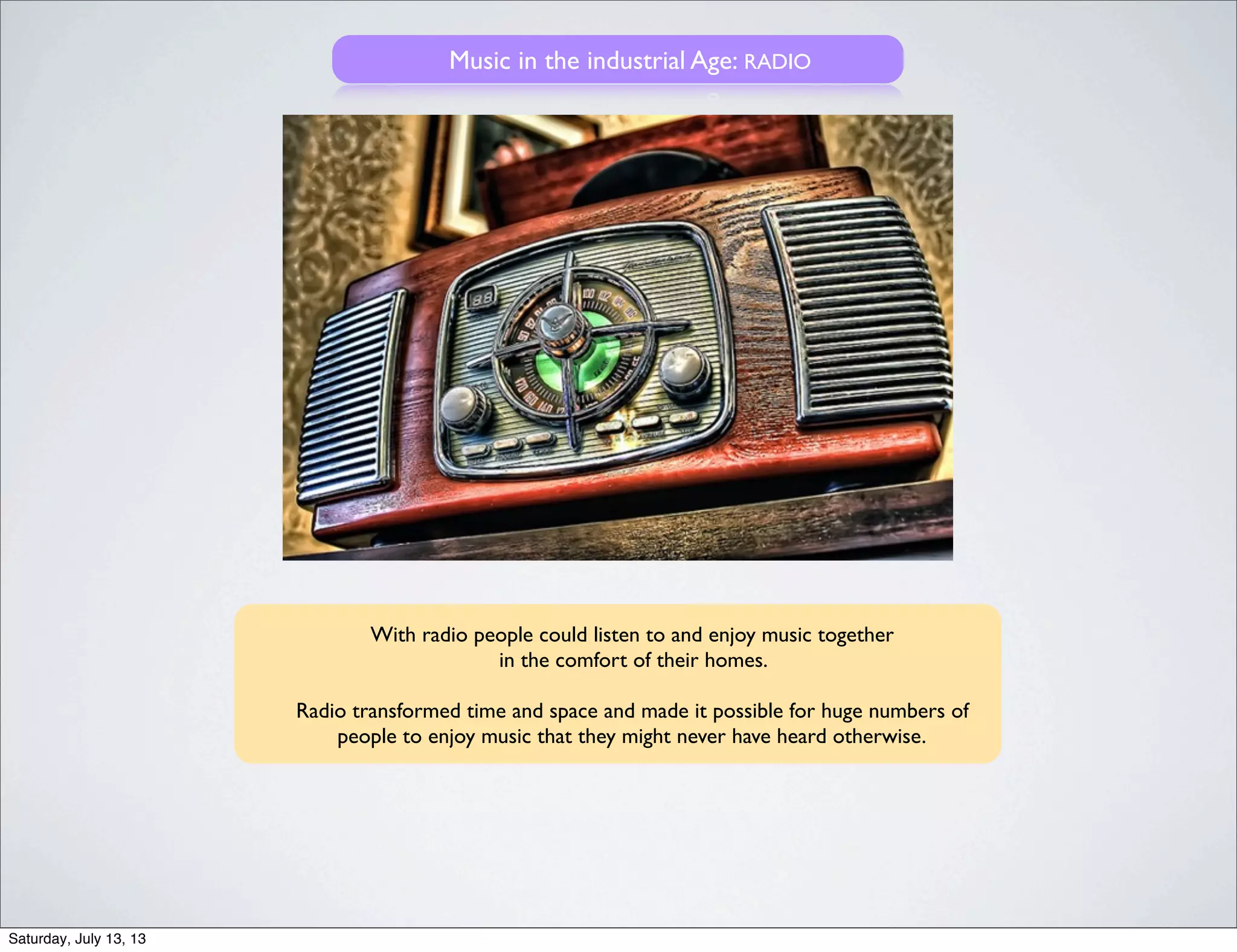
Music in the industrial Age: RADIO
With radio people could listen to and enjoy music together
in the comfort of their homes.
Radio transformed time and space and made it possible for huge numbers of
people to enjoy music that they might never have heard otherwise.
Saturday, July 13, 13
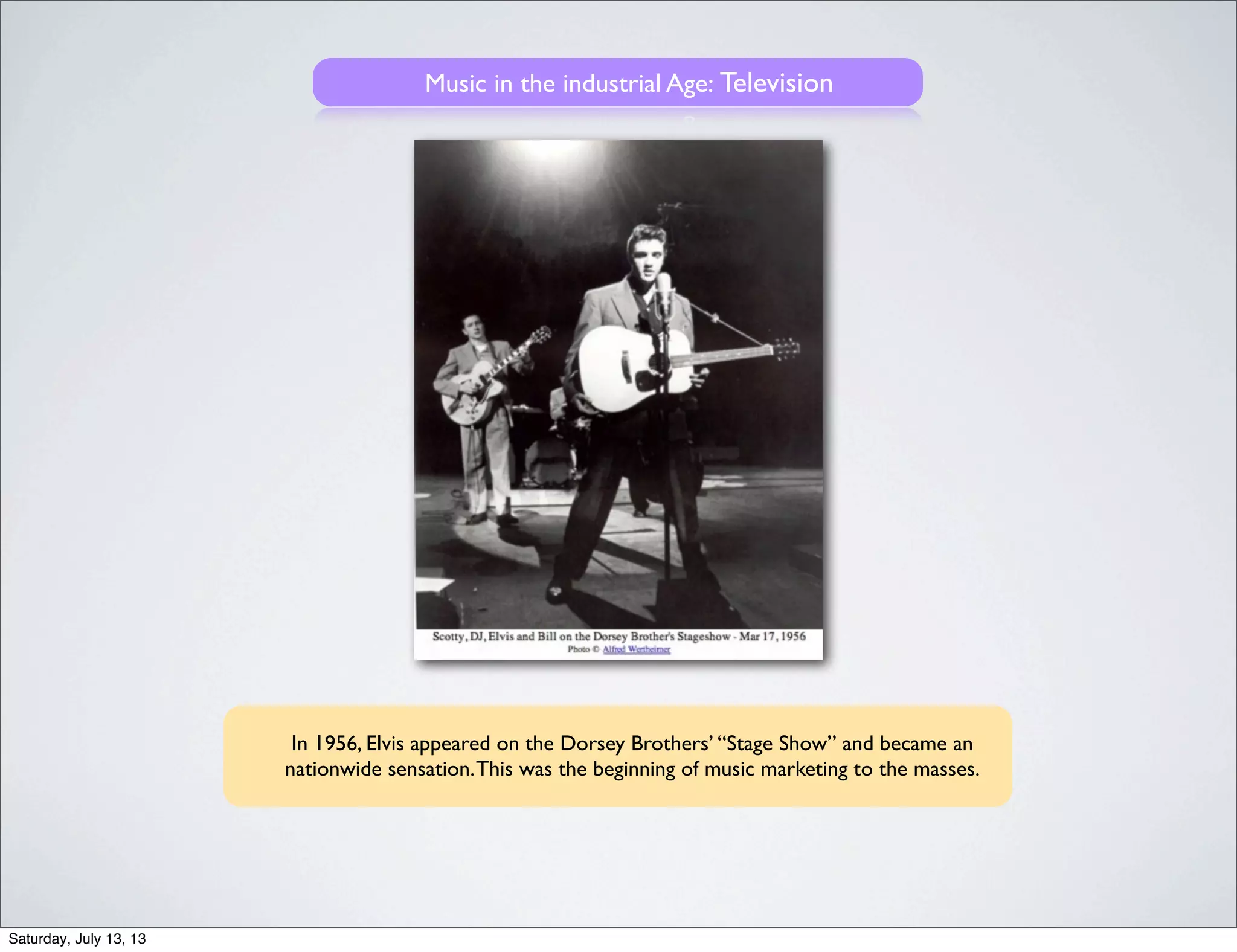
Music in the industrial Age: Television
In 1956, Elvis appeared on the Dorsey Brothers’ “Stage Show” and became an
nationwide sensation.This was the beginning of music marketing to the masses.
Saturday, July 13, 13
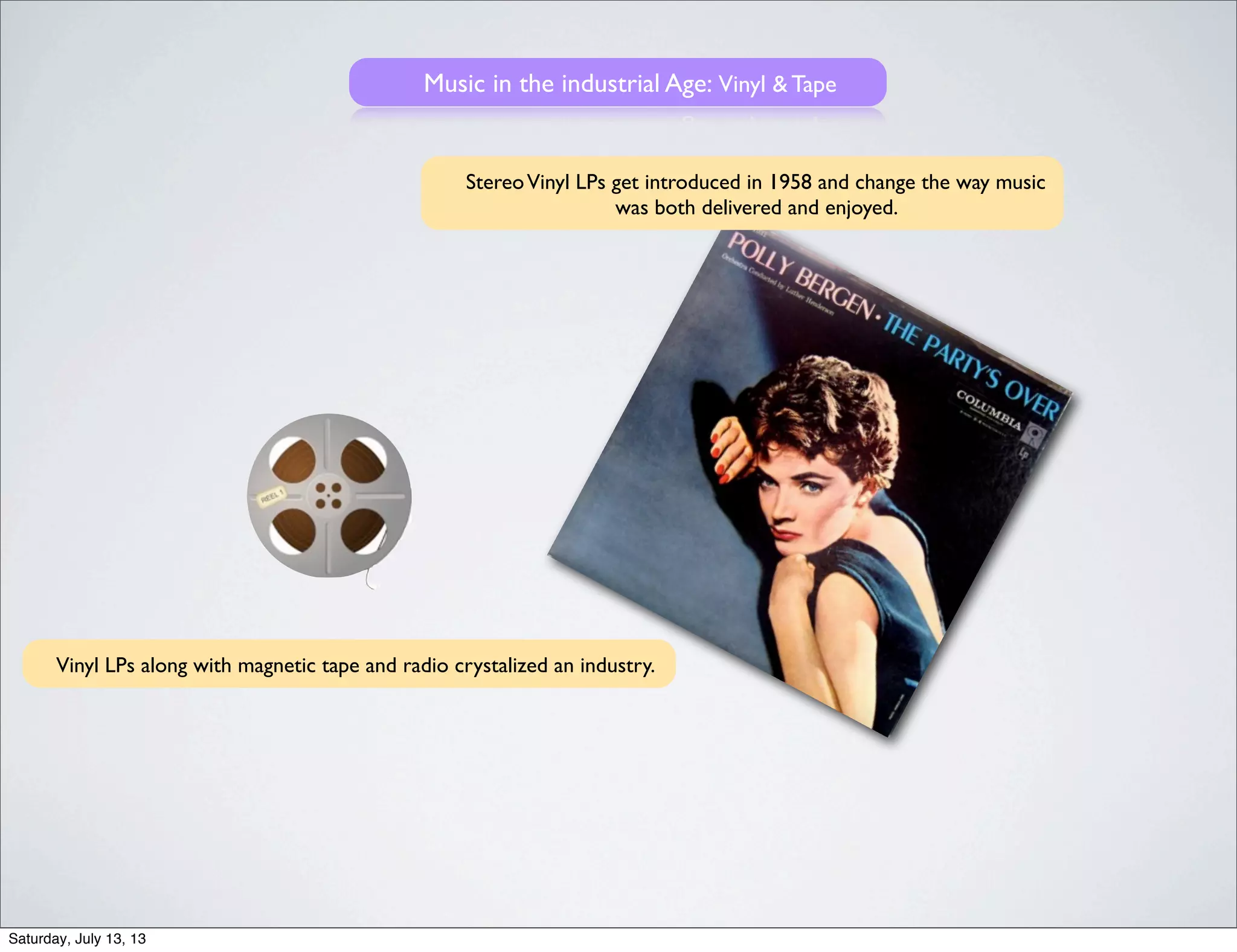
Music in the industrial Age: Vinyl & Tape
StereoVinyl LPs get introduced in 1958 and change the way music
was both delivered and enjoyed.
Vinyl LPs along with magnetic tape and radio crystalized an industry.
Saturday, July 13, 13
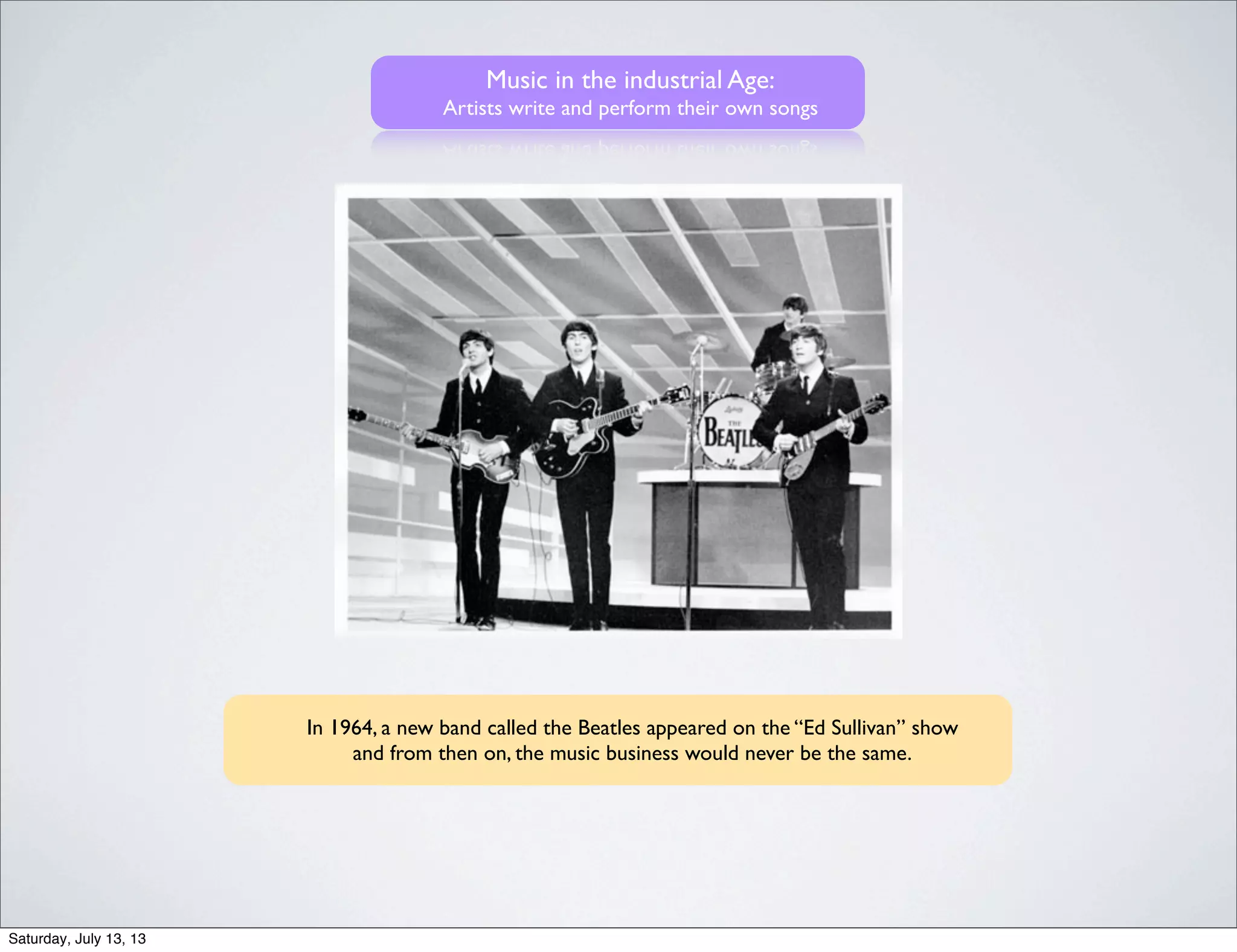
Music in the industrial Age:
Artists write and perform their own songs
In 1964, a new band called the Beatles appeared on the “Ed Sullivan” show
and from then on, the music business would never be the same.
Saturday, July 13, 13
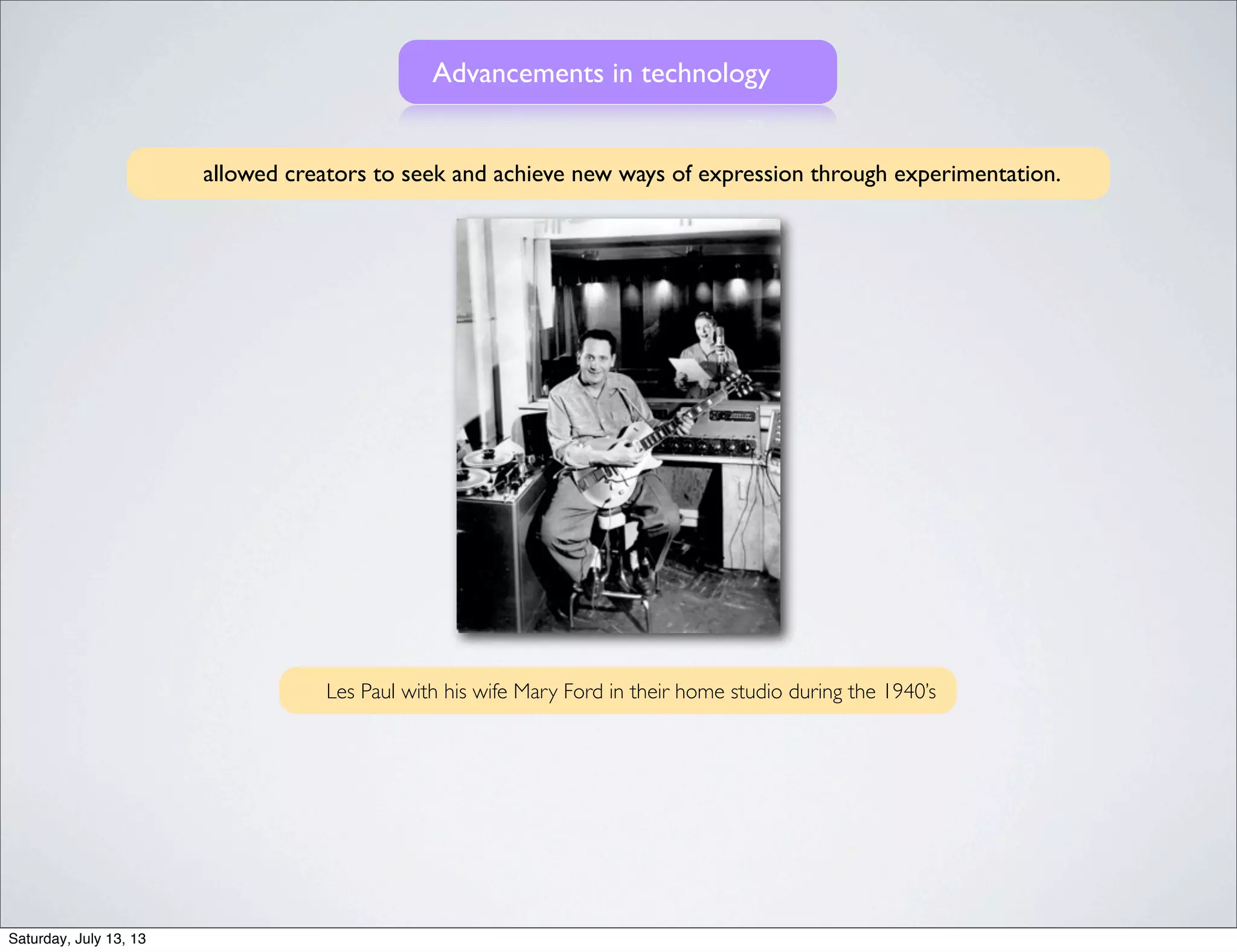
Advancements in technology
allowed creators to seek and achieve new ways of expression through experimentation.
Les Paul with his wife Mary Ford in their home studio during the 1940’s
Saturday, July 13, 13
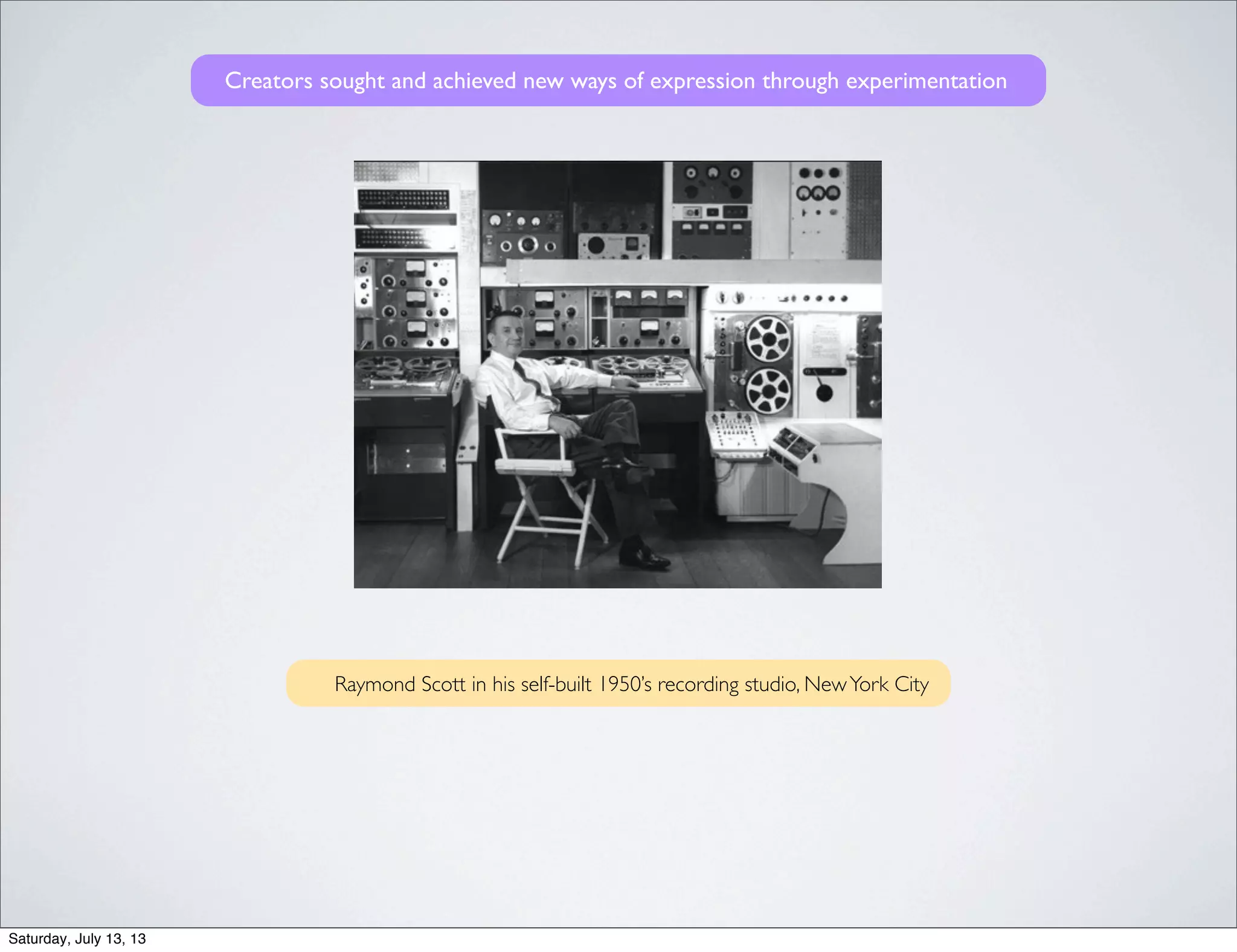
Raymond Scott in his self-built 1950’s recording studio, NewYork City
Creators sought and achieved new ways of expression through experimentation
Saturday, July 13, 13
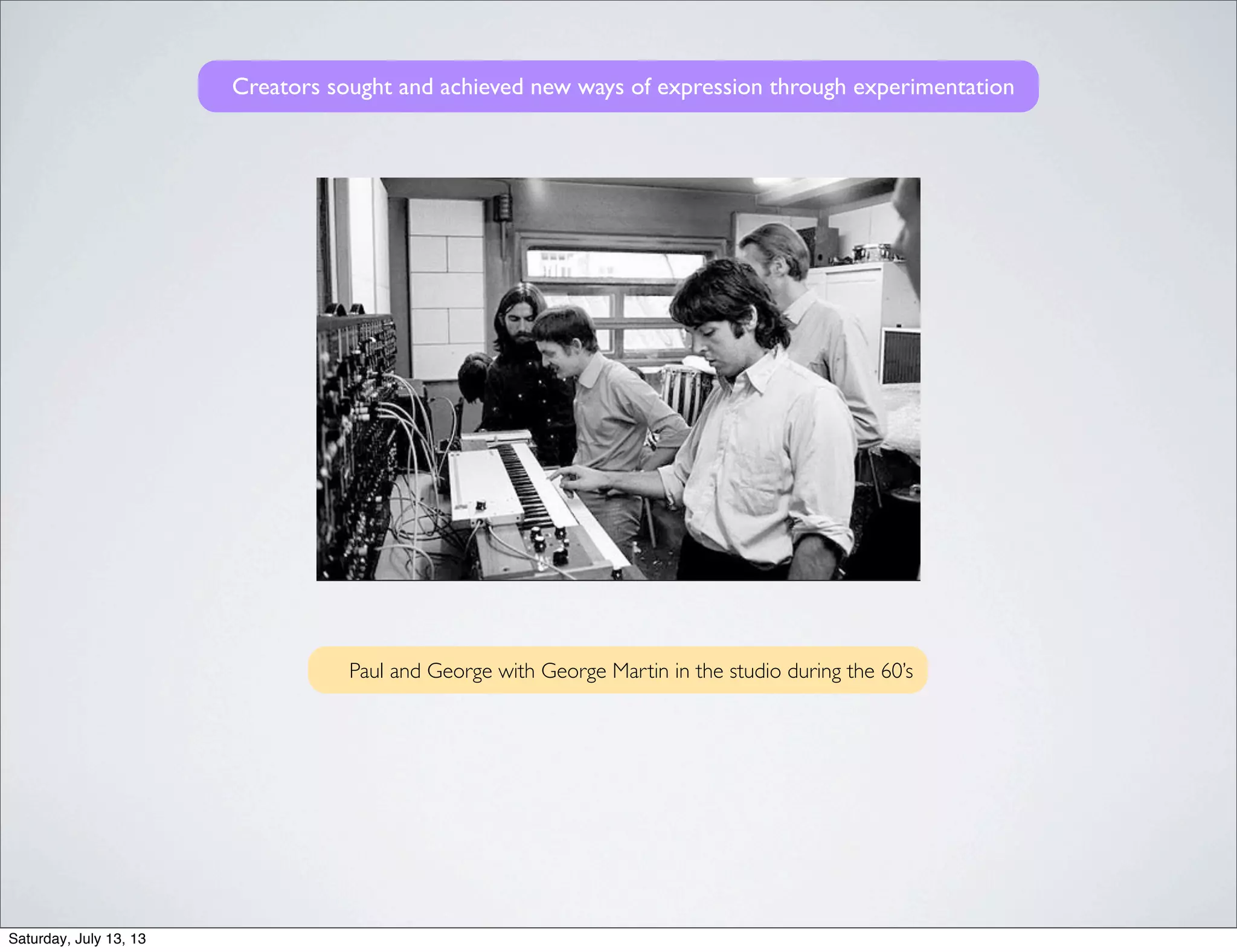
Paul and George with George Martin in the studio during the 60’s
Creators sought and achieved new ways of expression through experimentation
Saturday, July 13, 13
Synthesizers changed the way music was produced, adding a lot of new sounds to the palette.
MIDI brings a revolution in music making by transforming the way music was produced, mixed and distributed.
Sony and Phillips introduce the Compact Disc in 1982. Red Book specs didn’t provide for copy protection
The transition from analog to digital
A few years later Philips and Sony's Orange Book specifications enabled the first desktop disc writing.
Saturday, July 13, 13
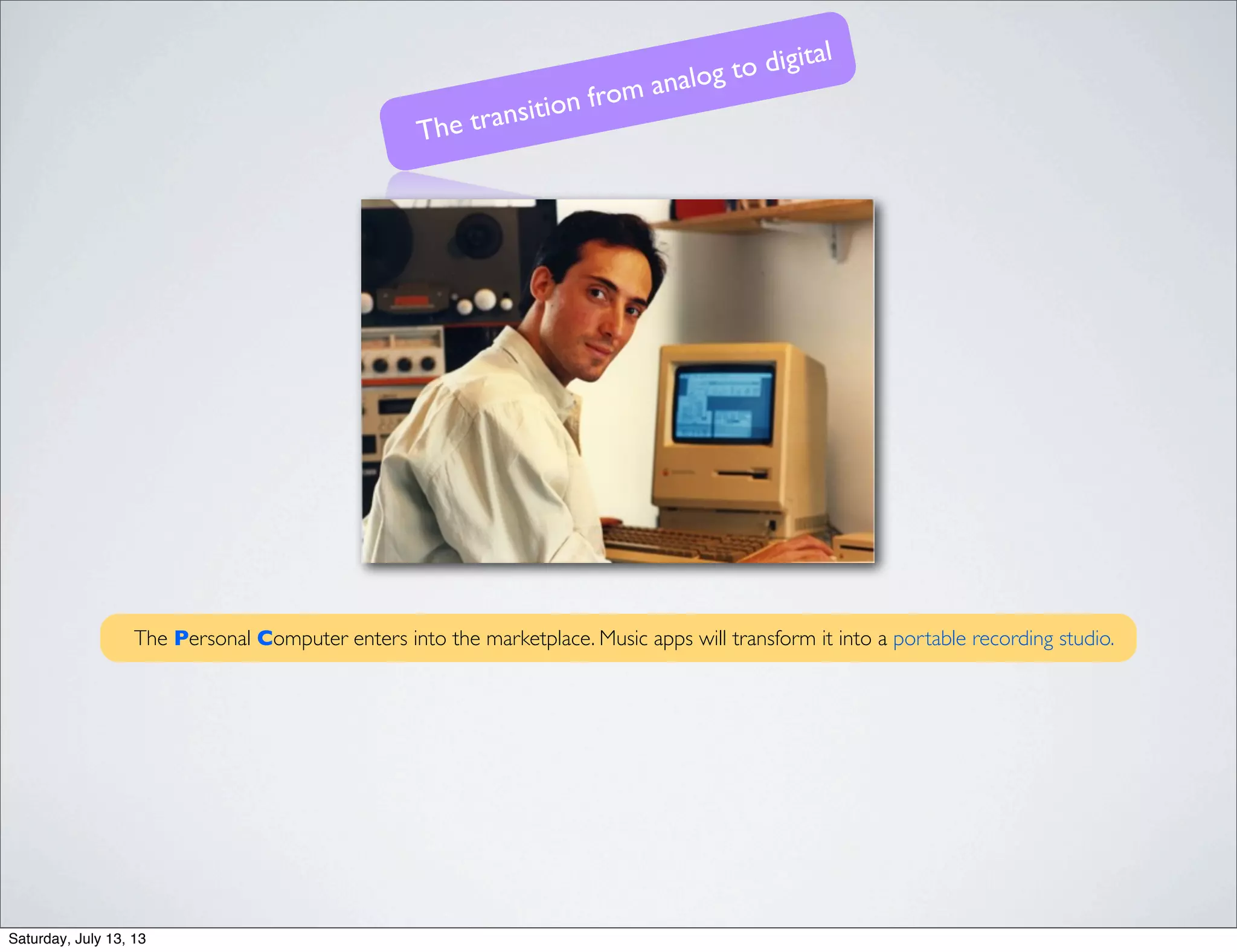
The transition from analog to digital
The Personal Computer enters into the marketplace. Music apps will transform it into a portable recording studio.
Saturday, July 13, 13
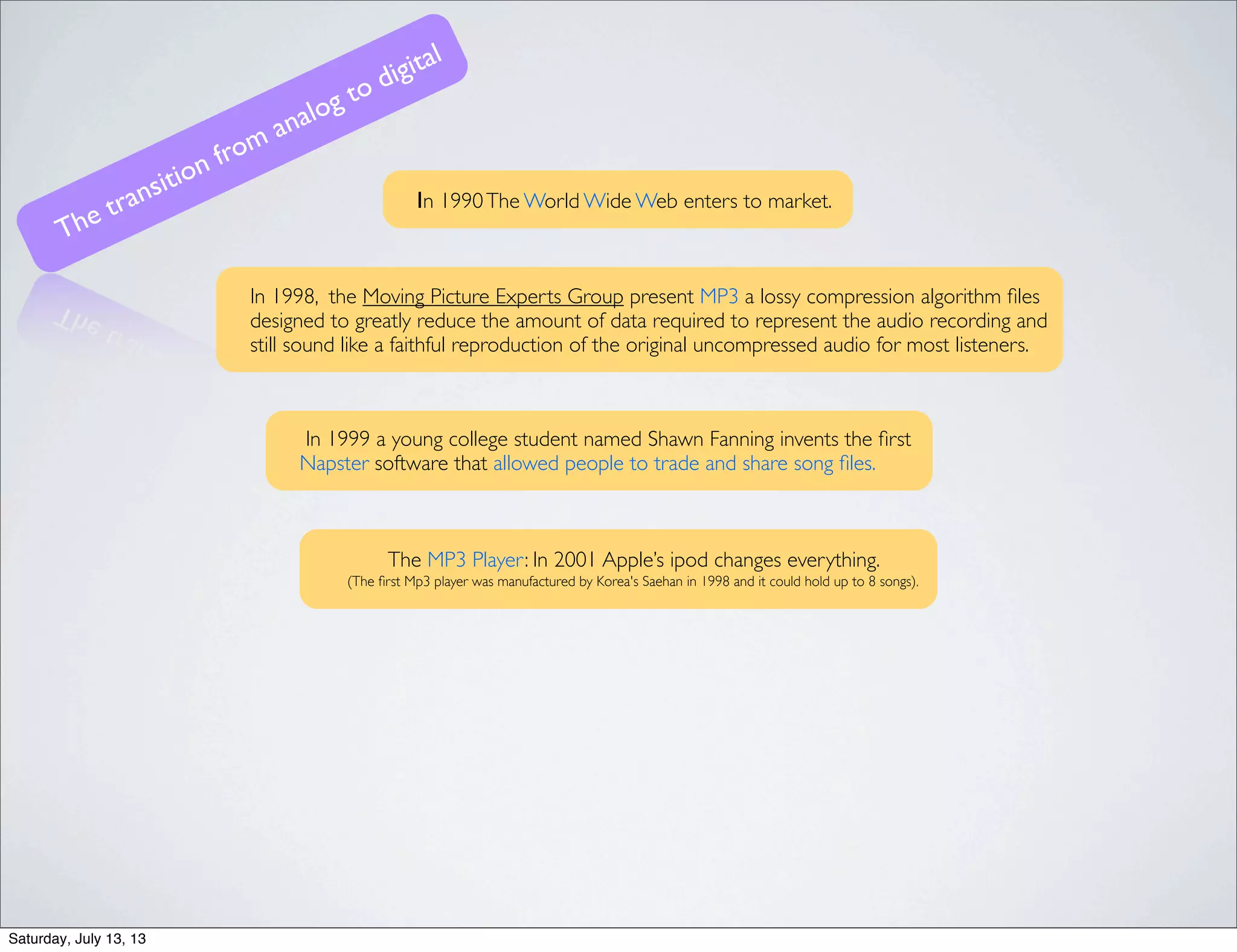
Ιn 1990The World Wide Web enters to market.
In 1998, the Moving Picture Experts Group present MP3 a lossy compression algorithm files
designed to greatly reduce the amount of data required to represent the audio recording and
still sound like a faithful reproduction of the original uncompressed audio for most listeners.
The MP3 Player: In 2001 Apple’s ipod changes everything.
(The first Mp3 player was manufactured by Korea's Saehan in 1998 and it could hold up to 8 songs).
The transition from analog to digital
In 1999 a young college student named Shawn Fanning invents the first
Napster software that allowed people to trade and share song files.
Saturday, July 13, 13
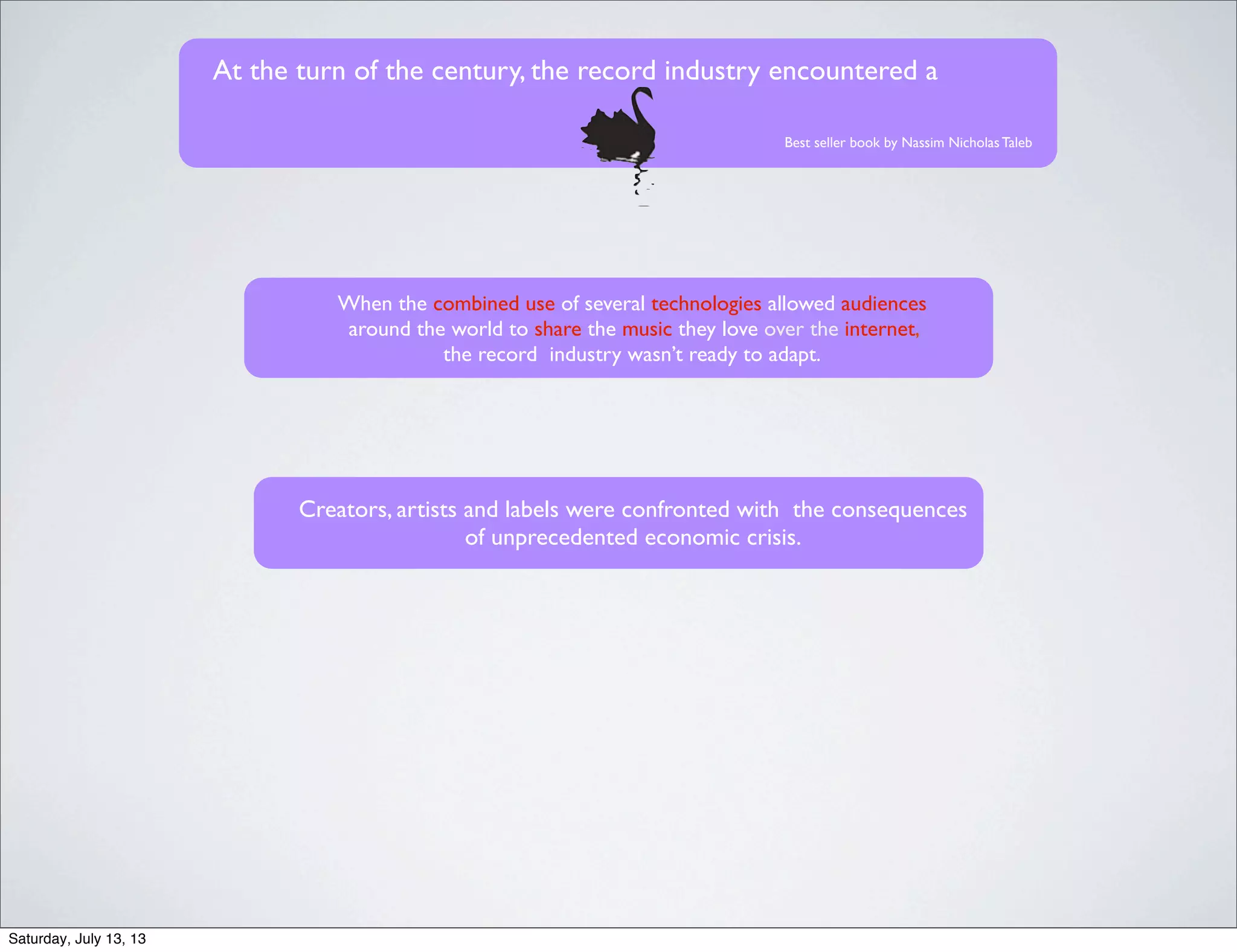
At the turn of the century, the record industry encountered a
Best seller book by Nassim Nicholas Taleb
When the combined use of several technologies allowed audiences
around the world to share the music they love over the internet,
the record industry wasn’t ready to adapt.
Creators, artists and labels were confronted with the consequences
of unprecedented economic crisis.
Saturday, July 13, 13
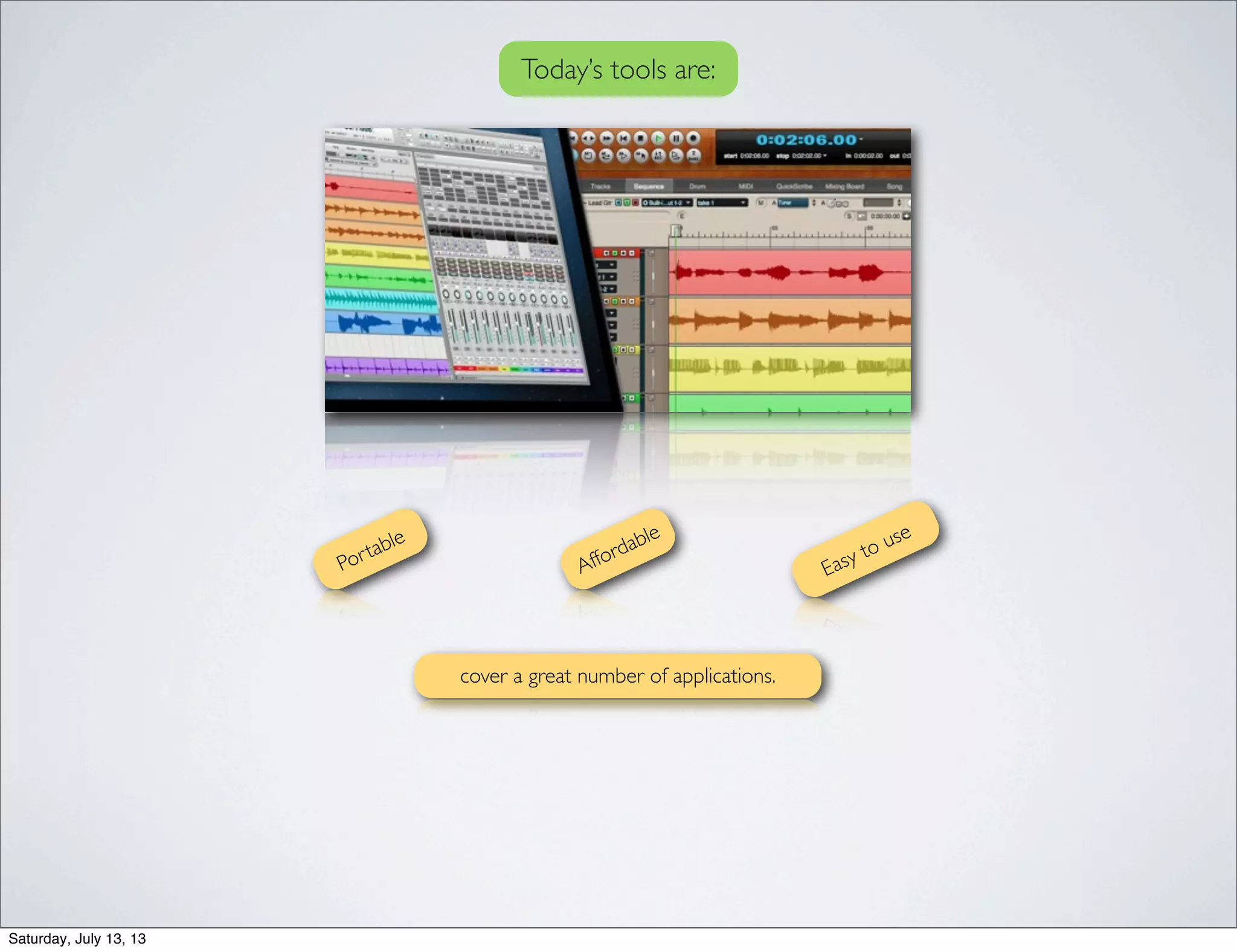
Easy to use
Today’s tools are:
Affordable
cover a great number of applications.
Portable
Saturday, July 13, 13
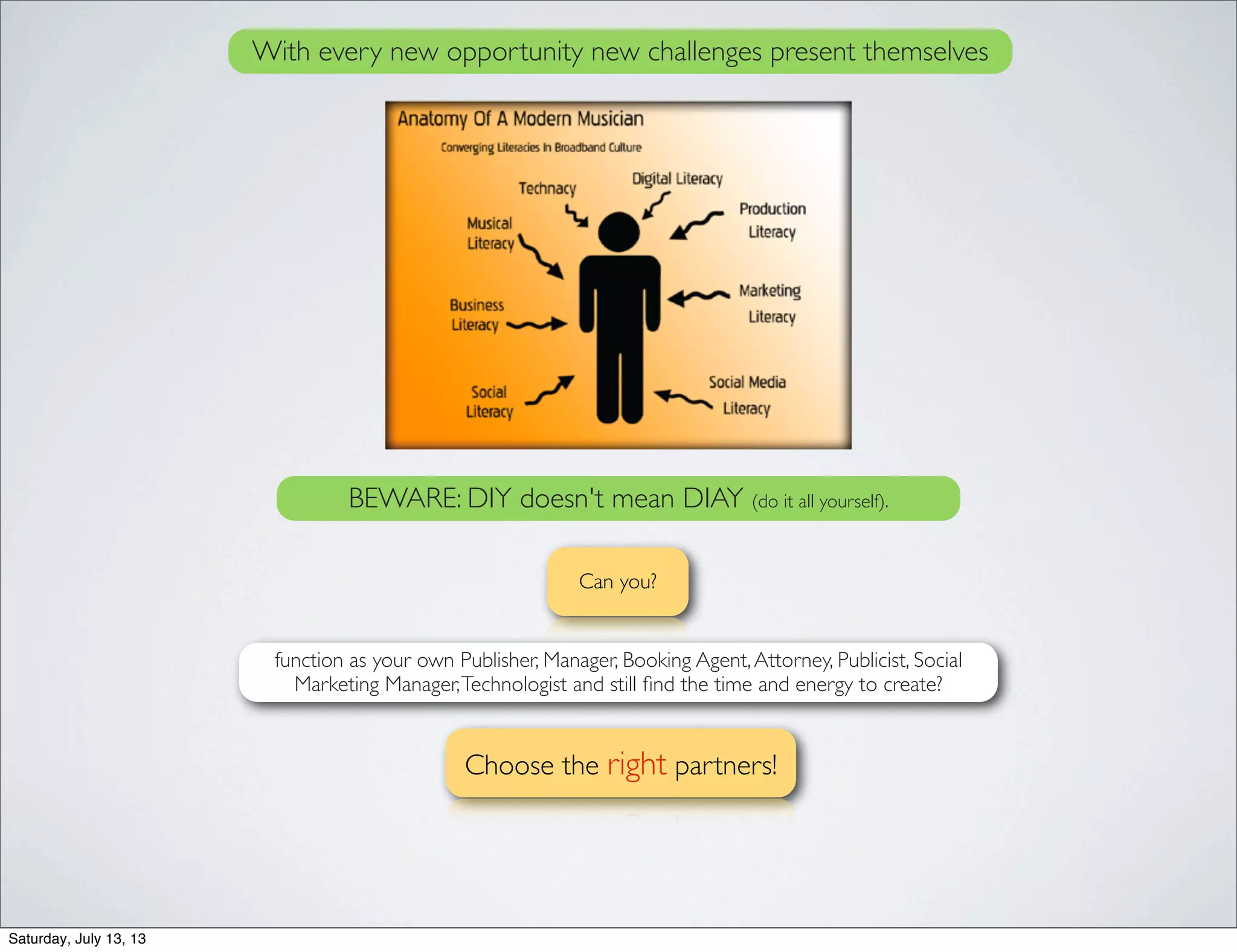
Can you?
function as your own Publisher, Manager, Booking Agent,Attorney, Publicist, Social
Marketing Manager,Technologist and still find the time and energy to create?
With every new opportunity new challenges present themselves
Choose the right partners!
BEWARE: DIY doesn't mean DIAY (do it all yourself).
Saturday, July 13, 13
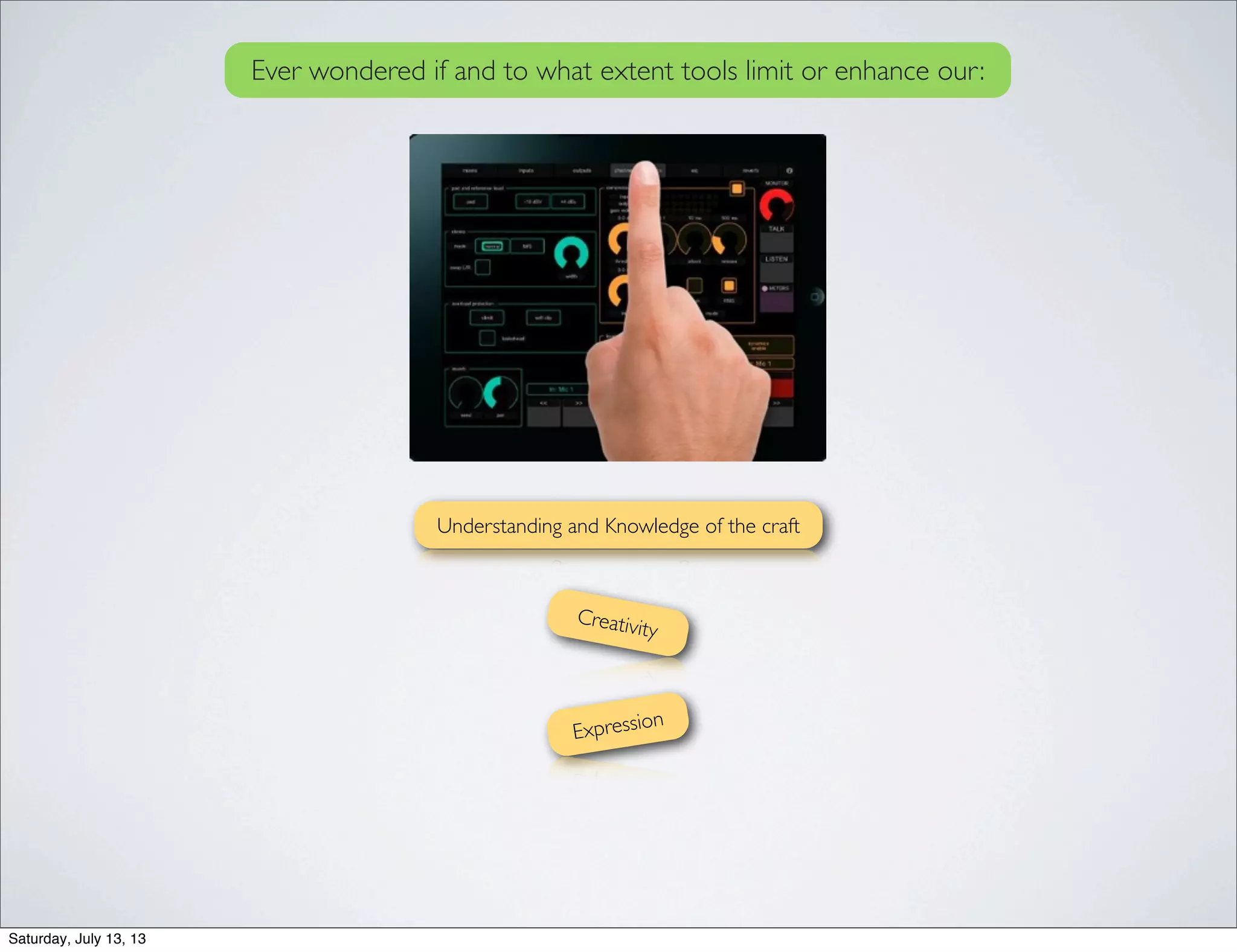
Creativity
Understanding and Knowledge of the craft
Expression
Ever wondered if and to what extent tools limit or enhance our:
Saturday, July 13, 13
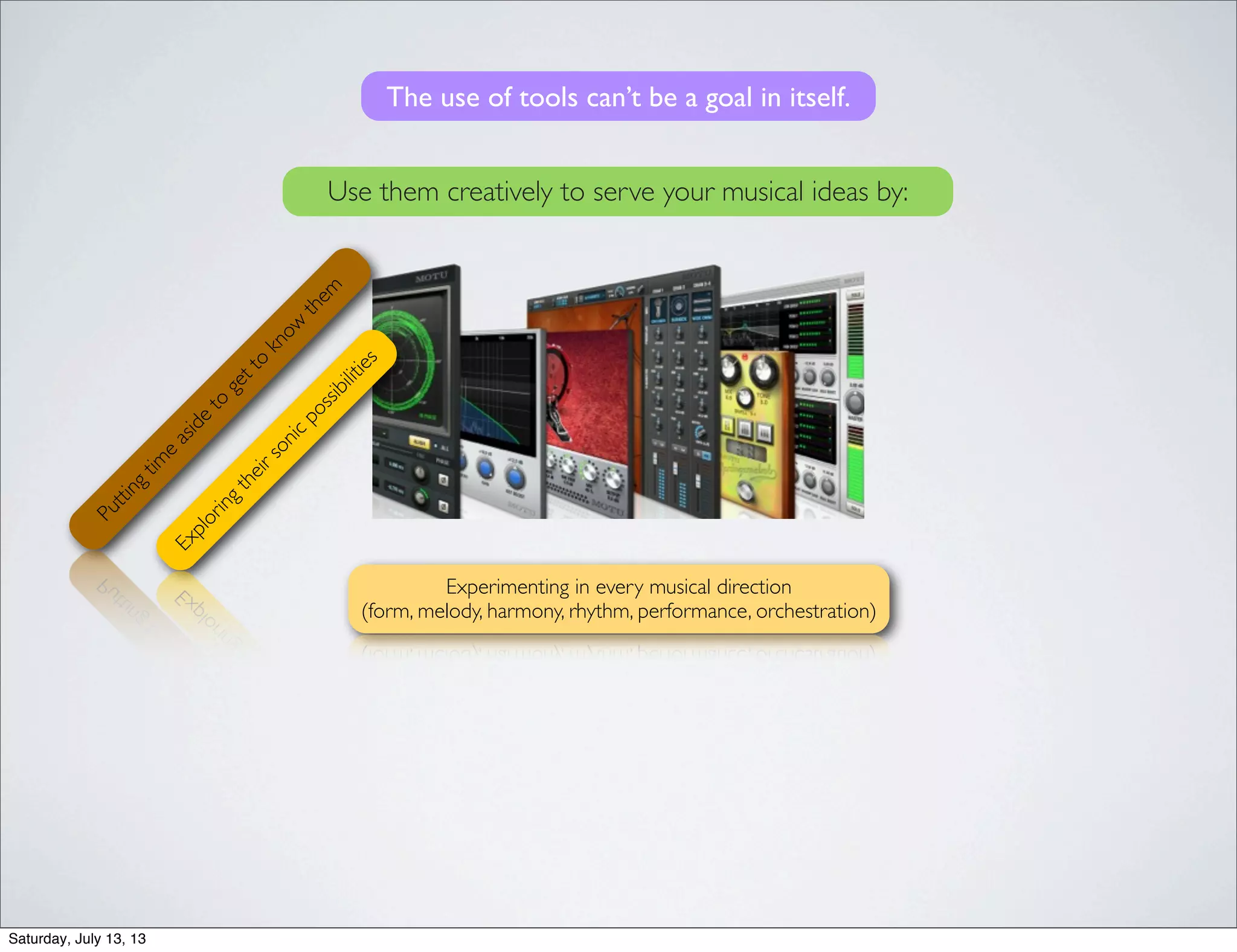
The use of tools can’t be a goal in itself.Puttingtim
e
aside
to
getto
know
them
Exploringtheirsonicpossibilities
Experimenting in every musical direction
(form, melody, harmony, rhythm, performance, orchestration)
Use them creatively to serve your musical ideas by:
Saturday, July 13, 13
My approach in using technology within the compositional process:
Don’t let tools influence or even worse dictate a direction in the creative process.
Take time off and revisit your work.
Be ready at any moment to make changes or even throw away material and start all over again.
Saturday, July 13, 13
My approach in using technology within the compositional process:
Make sure your music can stand on its own merit.
Welcome as much input as possible.
Saturday, July 13, 13
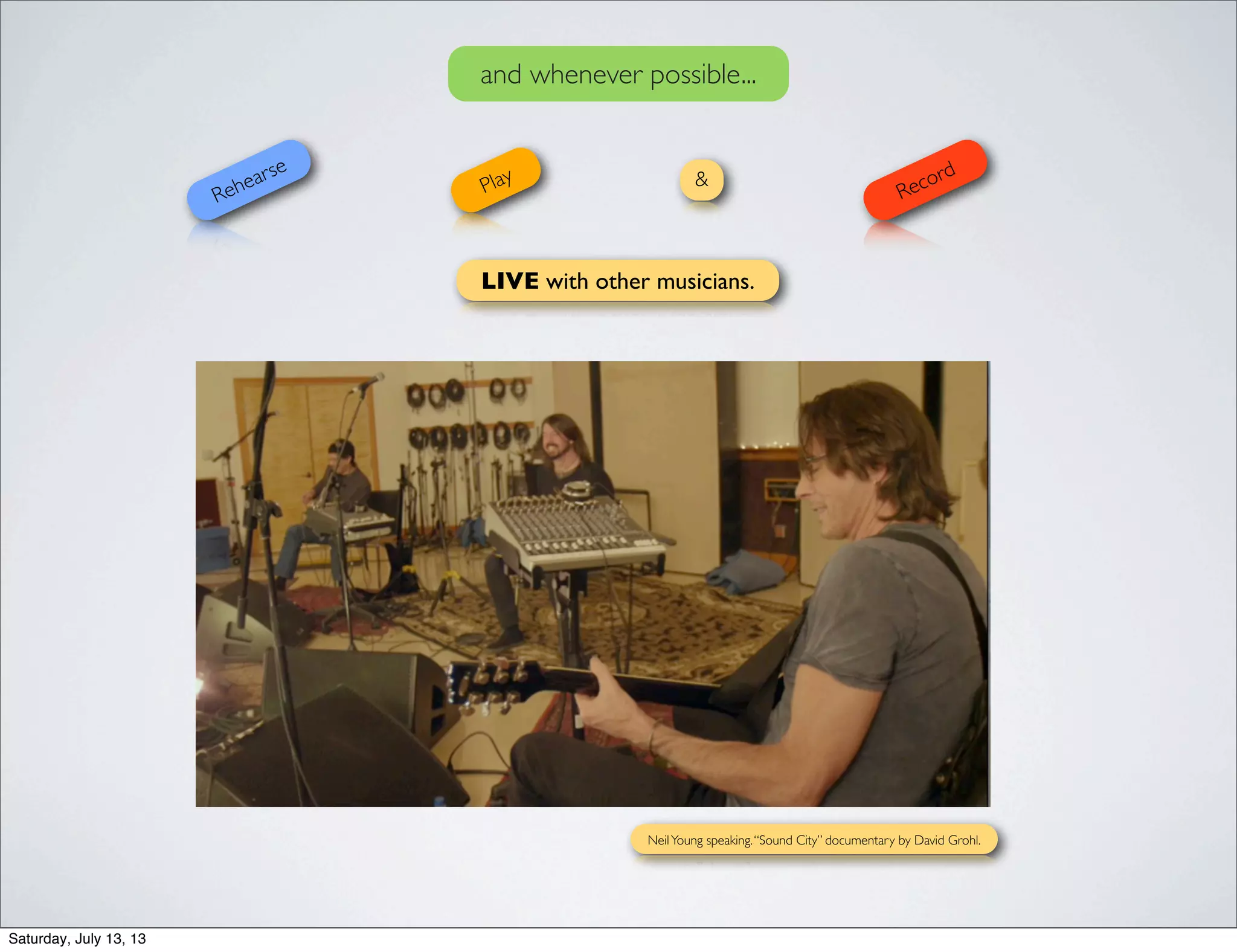
and whenever possible...
Rehearse
Play
Record
LIVE with other musicians.
&
NeilYoung speaking.“Sound City” documentary by David Grohl.
Saturday, July 13, 13
fundamental changes in the way music is
Created Produced Distributed SoldPromoted
+MusicTechnology Telecommunications
=
In a nutshell:
Saturday, July 13, 13
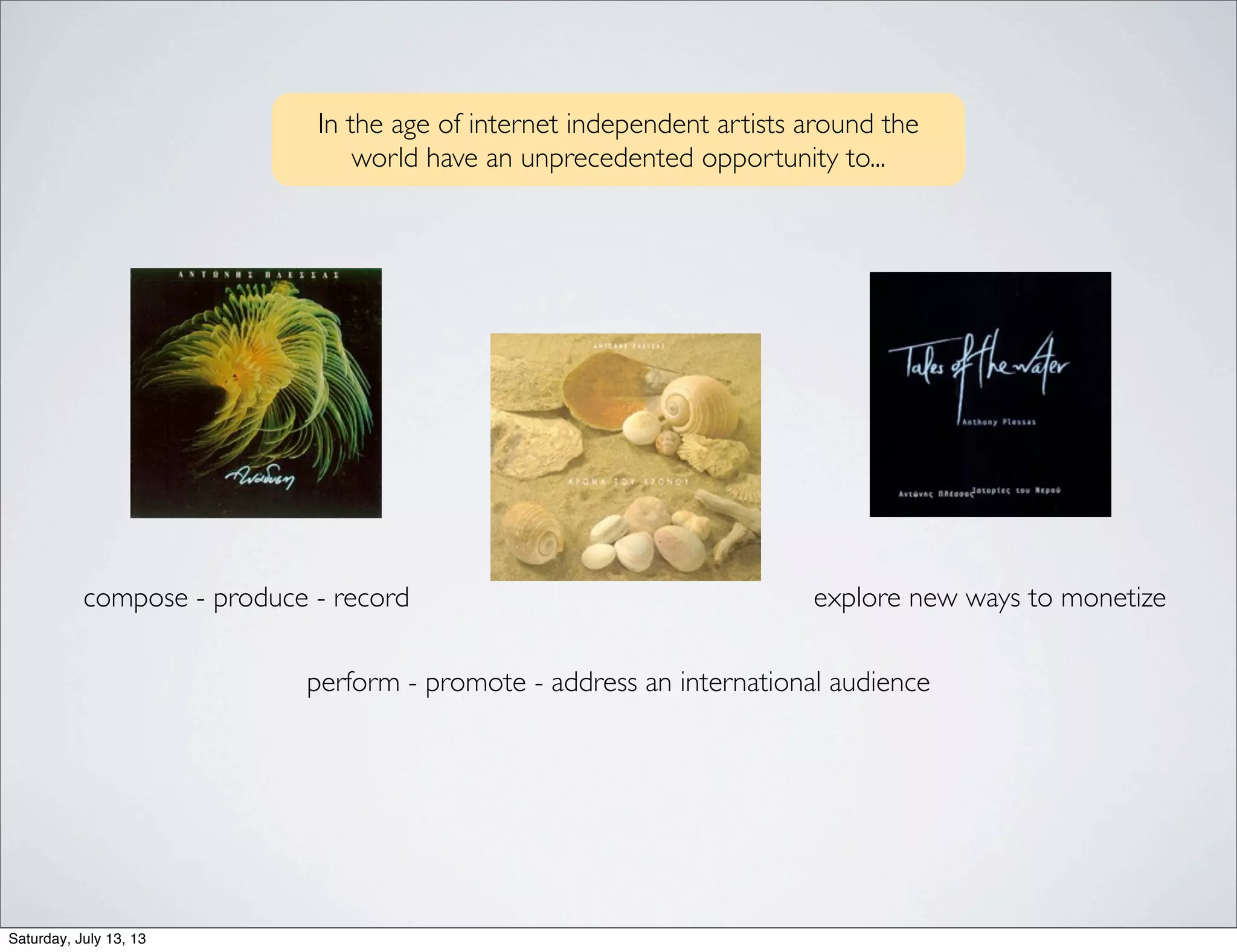
compose - produce - record
perform - promote - address an international audience
explore new ways to monetize
In the age of internet independent artists around the
world have an unprecedented opportunity to...
Saturday, July 13, 13
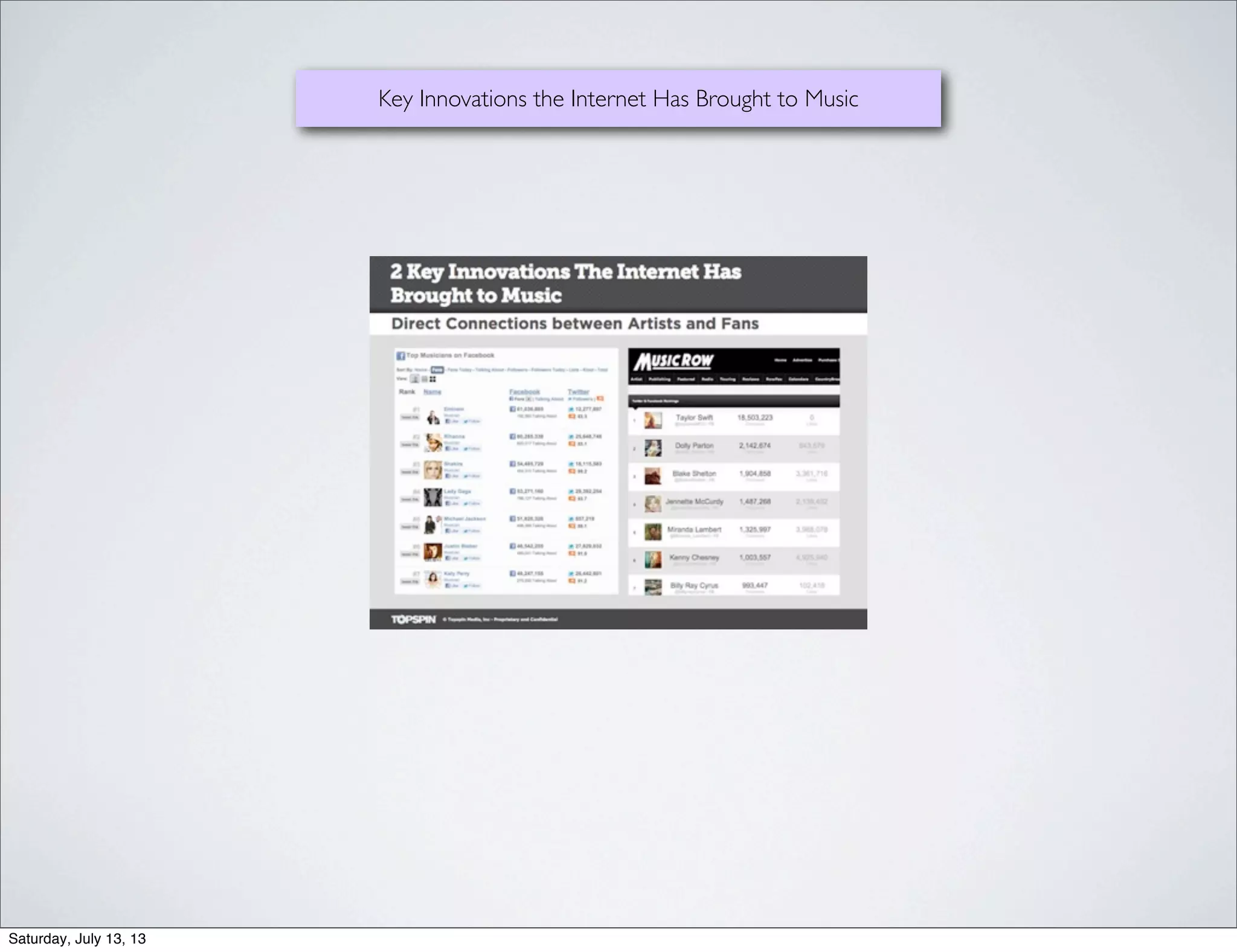
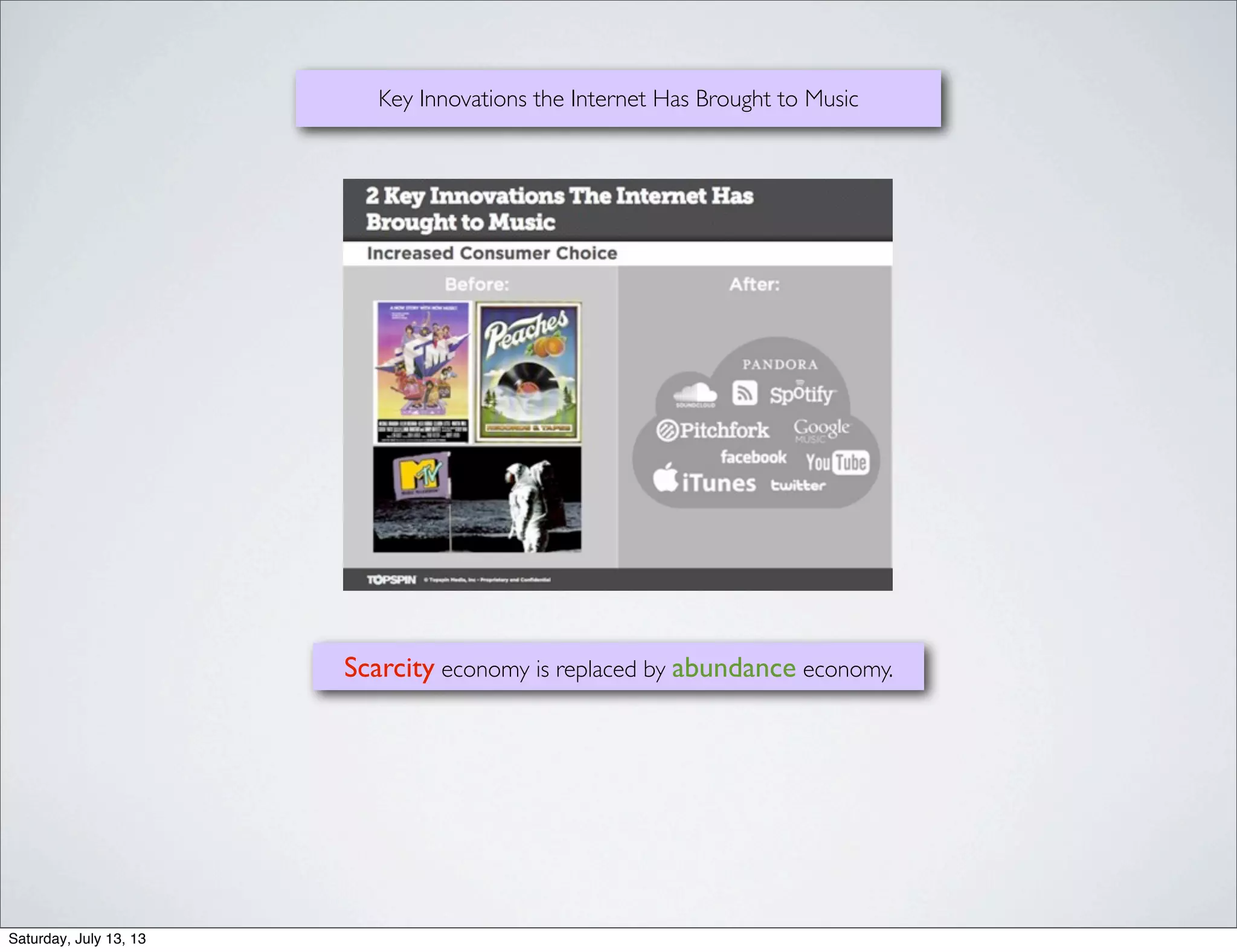
Key Innovations the Internet Has Brought to Music
Saturday, July 13, 13
Scarcity economy is replaced by abundance economy.
Key Innovations the Internet Has Brought to Music
Saturday, July 13, 13
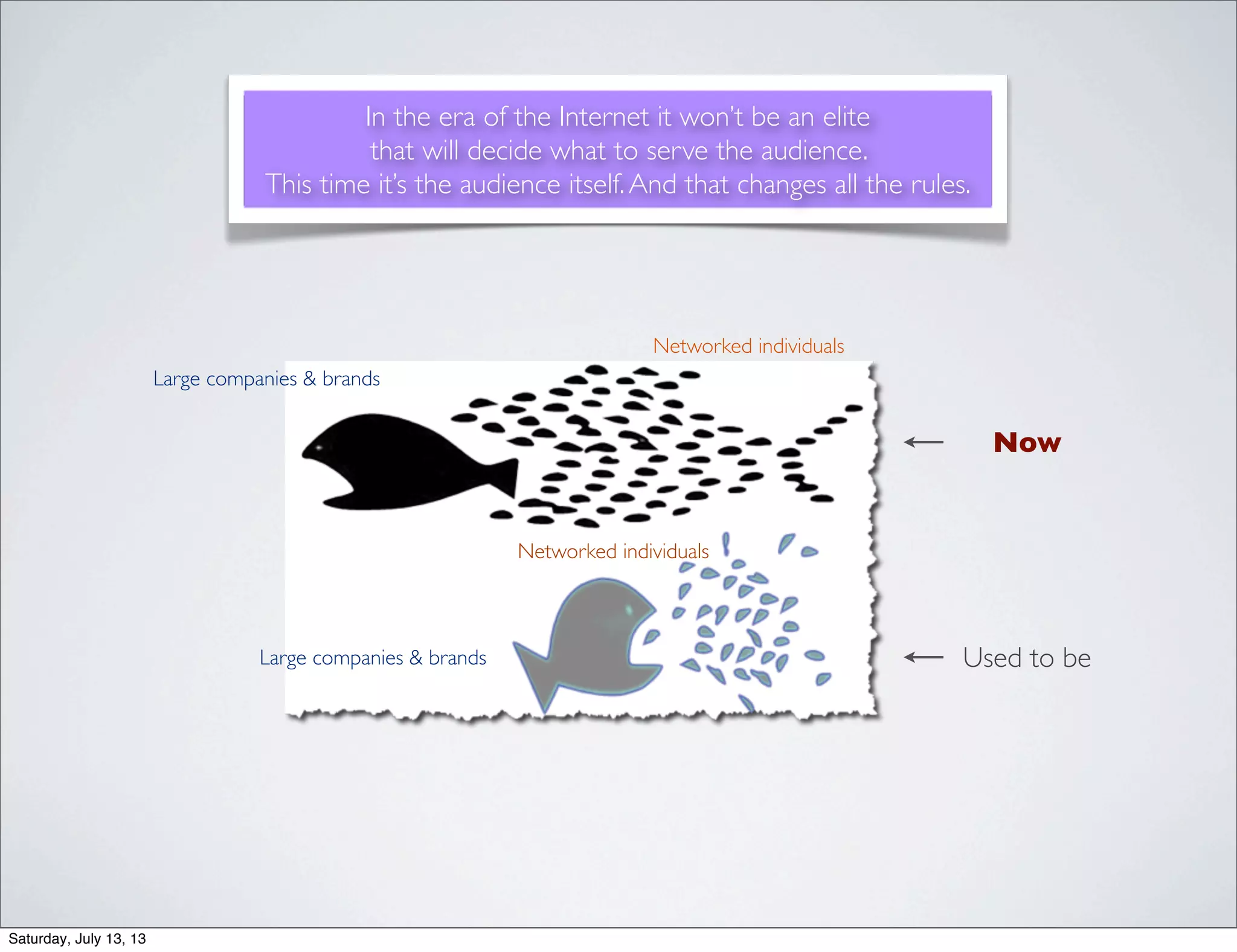
In the era of the Internet it won’t be an elite
that will decide what to serve the audience.
This time it’s the audience itself.And that changes all the rules.
Used to be
Now
Large companies & brands
Networked individuals
Saturday, July 13, 13
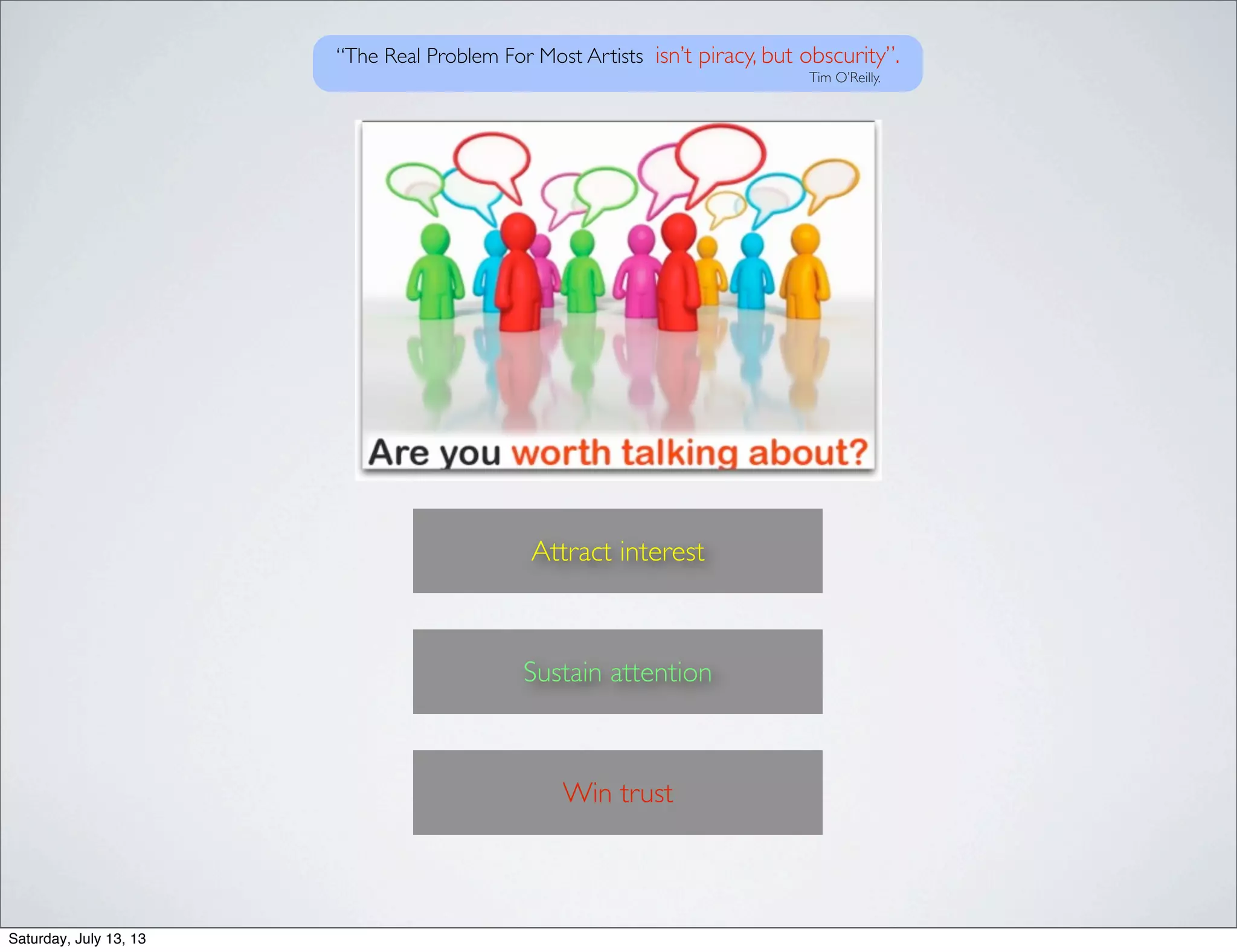
Attract interest
Sustain attention
Win trust
“The Real Problem For Most Artists isn’t piracy, but obscurity”.
Tim O’Reilly.
Saturday, July 13, 13
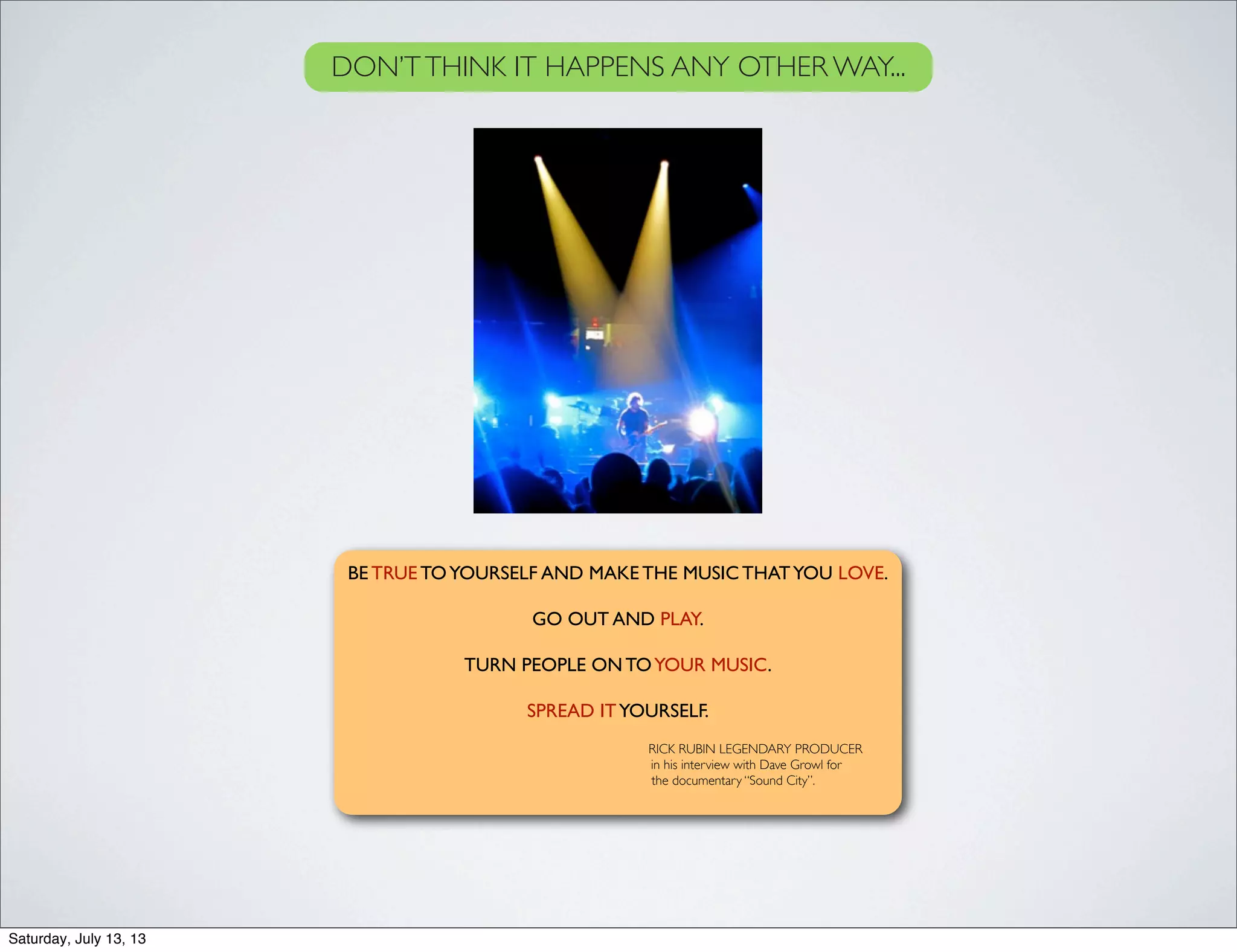
BE TRUE TOYOURSELF AND MAKE THE MUSIC THATYOU LOVE.
GO OUT AND PLAY.
TURN PEOPLE ON TOYOUR MUSIC.
SPREAD ITYOURSELF.
RICK RUBIN LEGENDARY PRODUCER
in his interview with Dave Growl for
the documentary “Sound City”.
DON’TTHINK IT HAPPENS ANY OTHER WAY...
Saturday, July 13, 13
Thank you for your presence
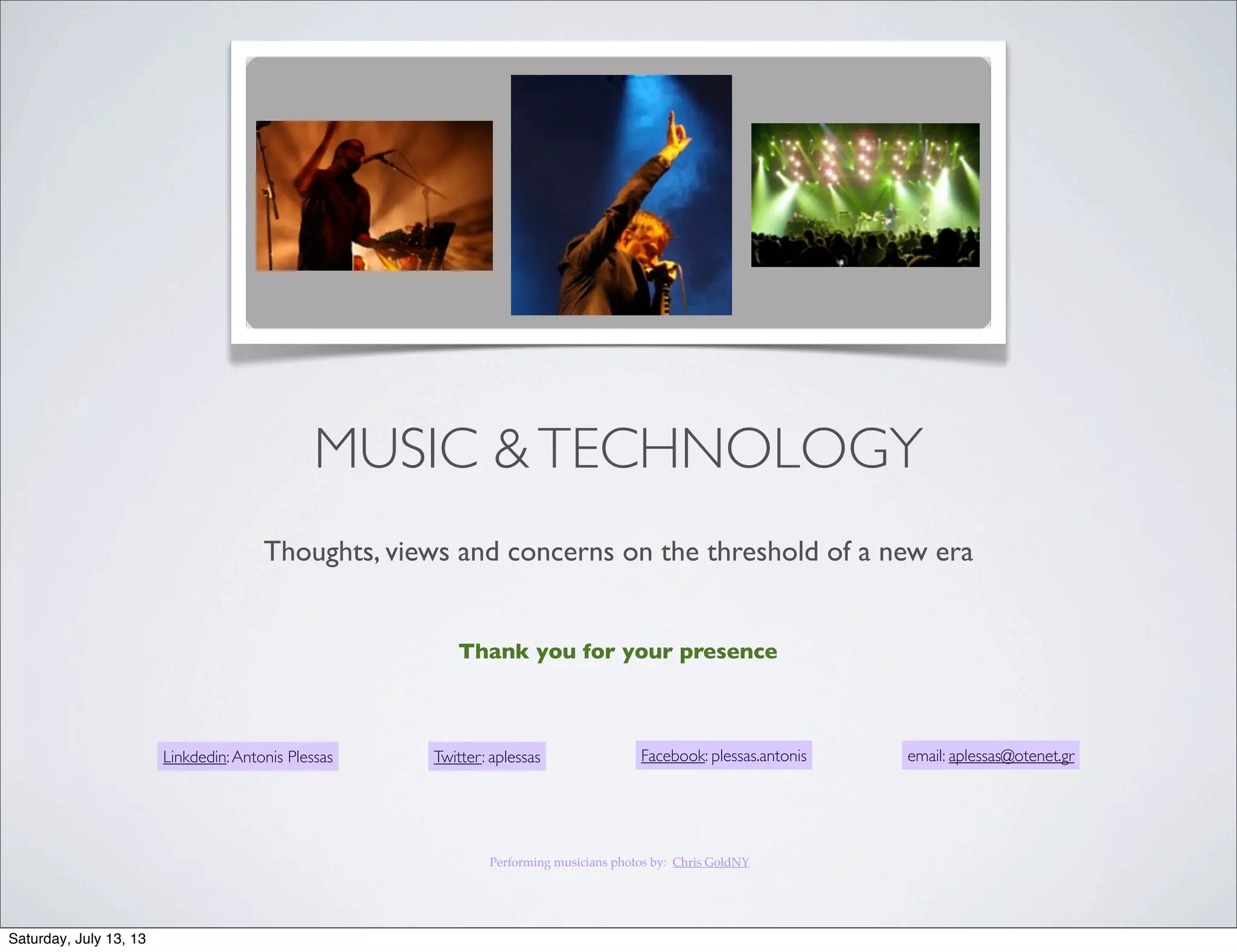
Performing musicians photos by: Chris GoldNY
email: aplessas@otenet.grLinkdedin:Antonis Plessas Twitter: aplessas Facebook: plessas.antonis
MUSIC &TECHNOLOGY
Thoughts, views and concerns on the threshold of a new era
Saturday, July 13, 13

Music & technology: Thoughts, views and concerns on the threshold of a new century

  • 1.
    MUSIC &TECHNOLOGY Thoughts, viewsand concerns on the threshold of a new century. Presentation:Antonis Plessas Saturday, July 13, 13
  • 2.
    Music is everywhere... andin the Cloudin the form of applications Saturday, July 13, 13
  • 3.
    One thing remainsconsistent over the years and that is.... The genesis and power of creativity! Saturday, July 13, 13
  • 4.
    Music is theaural landscape of our lives Its power transcends national, religious, ideological, cultural or heritage boundaries and captivates the emotions of an universal audience. Saturday, July 13, 13
  • 5.
    Technology Human Behavior Culture Business Technology is constantlyand irreversibly affecting, formatting and changing our culture and habits. The catalytic force of technological evolution Saturday, July 13, 13
  • 6.
    Music in theindustrial Age: Sound recording & reproduction Recordings fixed a musical performance in time. They made it possible to shift both time and space for people, so we could now enjoy music anytime and anywhere. Saturday, July 13, 13
  • 7.
    Music in theindustrial Age: Record Labels - Publishing Houses As the modern world evolved and populations increased, greater organizational structures and divisions of labor became necessary to manage the needs and wants of modern society. More and more entities arose to mediate things to us. In music this meant the rise of music publishers, record labels, promoters, booking and other kinds of agents. Saturday, July 13, 13
  • 8.
    Music in theindustrial Age: RADIO With radio people could listen to and enjoy music together in the comfort of their homes. Radio transformed time and space and made it possible for huge numbers of people to enjoy music that they might never have heard otherwise. Saturday, July 13, 13
  • 9.
    Music in theindustrial Age: Television In 1956, Elvis appeared on the Dorsey Brothers’ “Stage Show” and became an nationwide sensation.This was the beginning of music marketing to the masses. Saturday, July 13, 13
  • 10.
    Music in theindustrial Age: Vinyl & Tape StereoVinyl LPs get introduced in 1958 and change the way music was both delivered and enjoyed. Vinyl LPs along with magnetic tape and radio crystalized an industry. Saturday, July 13, 13
  • 11.
    Music in theindustrial Age: Artists write and perform their own songs In 1964, a new band called the Beatles appeared on the “Ed Sullivan” show and from then on, the music business would never be the same. Saturday, July 13, 13
  • 12.
    Advancements in technology allowedcreators to seek and achieve new ways of expression through experimentation. Les Paul with his wife Mary Ford in their home studio during the 1940’s Saturday, July 13, 13
  • 13.
    Raymond Scott inhis self-built 1950’s recording studio, NewYork City Creators sought and achieved new ways of expression through experimentation Saturday, July 13, 13
  • 14.
    Paul and Georgewith George Martin in the studio during the 60’s Creators sought and achieved new ways of expression through experimentation Saturday, July 13, 13
  • 15.
    Synthesizers changed theway music was produced, adding a lot of new sounds to the palette. MIDI brings a revolution in music making by transforming the way music was produced, mixed and distributed. Sony and Phillips introduce the Compact Disc in 1982. Red Book specs didn’t provide for copy protection The transition from analog to digital A few years later Philips and Sony's Orange Book specifications enabled the first desktop disc writing. Saturday, July 13, 13
  • 16.
    The transition fromanalog to digital The Personal Computer enters into the marketplace. Music apps will transform it into a portable recording studio. Saturday, July 13, 13
  • 17.
    Ιn 1990The WorldWide Web enters to market. In 1998, the Moving Picture Experts Group present MP3 a lossy compression algorithm files designed to greatly reduce the amount of data required to represent the audio recording and still sound like a faithful reproduction of the original uncompressed audio for most listeners. The MP3 Player: In 2001 Apple’s ipod changes everything. (The first Mp3 player was manufactured by Korea's Saehan in 1998 and it could hold up to 8 songs). The transition from analog to digital In 1999 a young college student named Shawn Fanning invents the first Napster software that allowed people to trade and share song files. Saturday, July 13, 13
  • 18.
    At the turnof the century, the record industry encountered a Best seller book by Nassim Nicholas Taleb When the combined use of several technologies allowed audiences around the world to share the music they love over the internet, the record industry wasn’t ready to adapt. Creators, artists and labels were confronted with the consequences of unprecedented economic crisis. Saturday, July 13, 13
  • 19.
    Easy to use Today’stools are: Affordable cover a great number of applications. Portable Saturday, July 13, 13
  • 20.
    Can you? function asyour own Publisher, Manager, Booking Agent,Attorney, Publicist, Social Marketing Manager,Technologist and still find the time and energy to create? With every new opportunity new challenges present themselves Choose the right partners! BEWARE: DIY doesn't mean DIAY (do it all yourself). Saturday, July 13, 13
  • 21.
    Creativity Understanding and Knowledgeof the craft Expression Ever wondered if and to what extent tools limit or enhance our: Saturday, July 13, 13
  • 22.
    The use oftools can’t be a goal in itself.Puttingtim e aside to getto know them Exploringtheirsonicpossibilities Experimenting in every musical direction (form, melody, harmony, rhythm, performance, orchestration) Use them creatively to serve your musical ideas by: Saturday, July 13, 13
  • 23.
    My approach inusing technology within the compositional process: Don’t let tools influence or even worse dictate a direction in the creative process. Take time off and revisit your work. Be ready at any moment to make changes or even throw away material and start all over again. Saturday, July 13, 13
  • 24.
    My approach inusing technology within the compositional process: Make sure your music can stand on its own merit. Welcome as much input as possible. Saturday, July 13, 13
  • 25.
    and whenever possible... Rehearse Play Record LIVEwith other musicians. & NeilYoung speaking.“Sound City” documentary by David Grohl. Saturday, July 13, 13
  • 26.
    fundamental changes inthe way music is Created Produced Distributed SoldPromoted +MusicTechnology Telecommunications = In a nutshell: Saturday, July 13, 13
  • 27.
    compose - produce- record perform - promote - address an international audience explore new ways to monetize In the age of internet independent artists around the world have an unprecedented opportunity to... Saturday, July 13, 13
  • 28.
    Key Innovations theInternet Has Brought to Music Saturday, July 13, 13
  • 29.
    Scarcity economy isreplaced by abundance economy. Key Innovations the Internet Has Brought to Music Saturday, July 13, 13
  • 30.
    In the eraof the Internet it won’t be an elite that will decide what to serve the audience. This time it’s the audience itself.And that changes all the rules. Used to be Now Large companies & brands Large companies & brands Networked individuals Networked individuals Saturday, July 13, 13
  • 31.
    Attract interest Sustain attention Wintrust “The Real Problem For Most Artists isn’t piracy, but obscurity”. Tim O’Reilly. Saturday, July 13, 13
  • 32.
    BE TRUE TOYOURSELFAND MAKE THE MUSIC THATYOU LOVE. GO OUT AND PLAY. TURN PEOPLE ON TOYOUR MUSIC. SPREAD ITYOURSELF. RICK RUBIN LEGENDARY PRODUCER in his interview with Dave Growl for the documentary “Sound City”. DON’TTHINK IT HAPPENS ANY OTHER WAY... Saturday, July 13, 13
  • 33.
    Thank you foryour presence Performing musicians photos by: Chris GoldNY email: aplessas@otenet.grLinkdedin:Antonis Plessas Twitter: aplessas Facebook: plessas.antonis MUSIC &TECHNOLOGY Thoughts, views and concerns on the threshold of a new era Saturday, July 13, 13