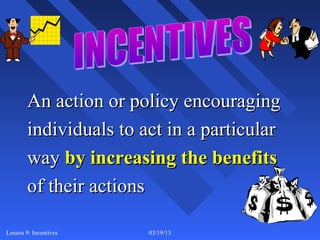
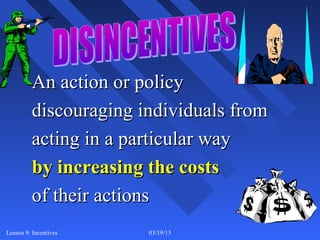
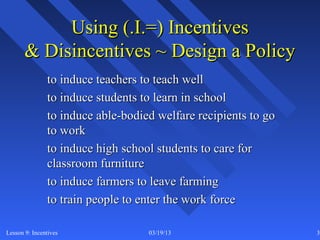
The document discusses how incentives and disincentives can be used to influence behavior in predictable ways. It provides examples of using incentives to reduce trash production and increase recycling by changing costs. Similarly, water usage can be influenced by charging market prices for farmers and implementing usage fees for households. Incentives may also work to increase organ donation but could have unintended consequences. Overall, incentives work best when they establish clear property rights, costs, and benefits in order to encourage beneficial behaviors.