A2 Micro
Monopsony Power
Tutor2u, Summer 2013
Monopsony Power in Markets
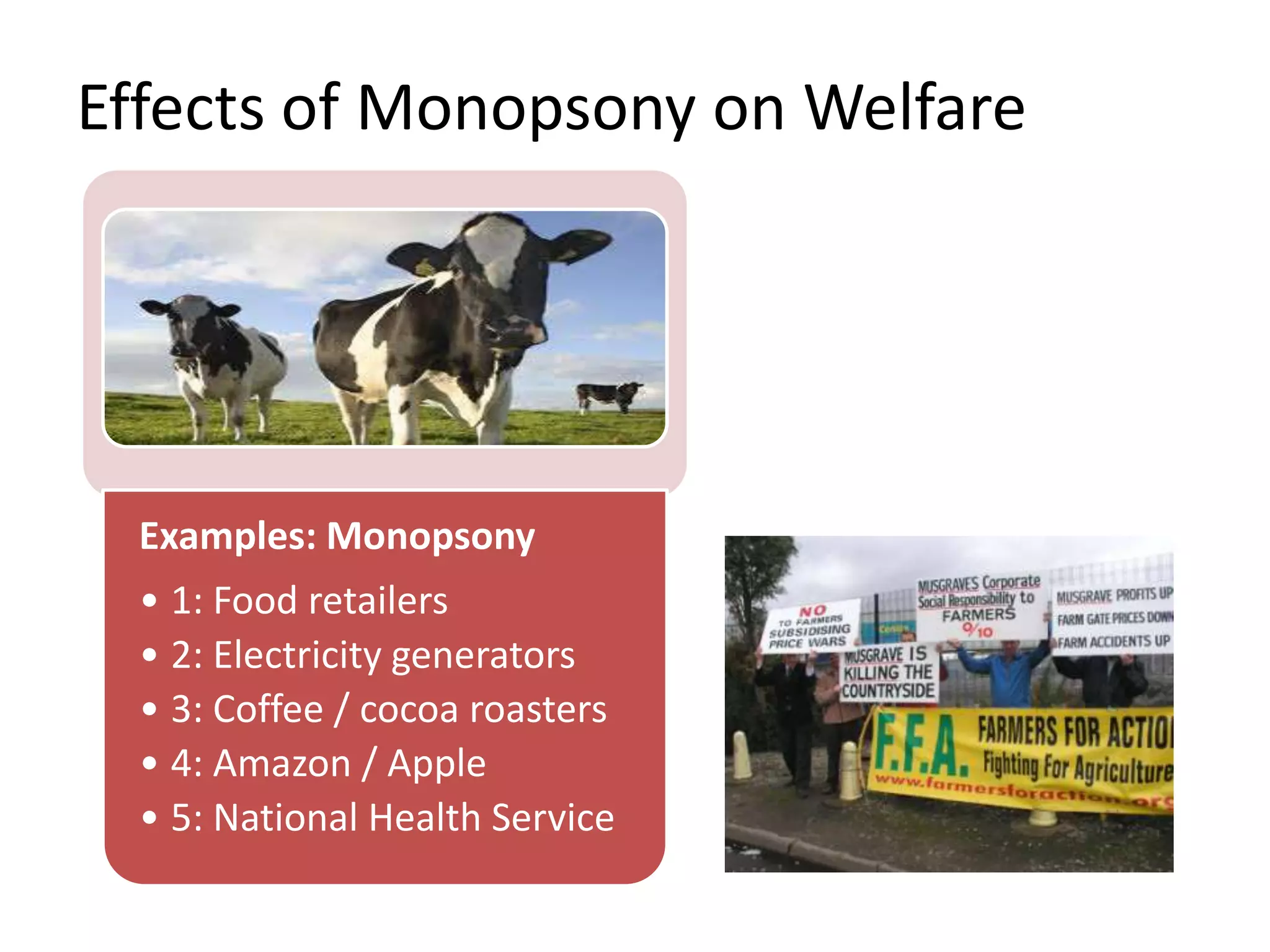
Effects of Monopsony on Welfare
Examples: Monopsony
• 1: Food retailers
• 2: Electricity generators
• 3: Coffee / cocoa roasters
• 4: Amazon / Apple
• 5: National Health Service
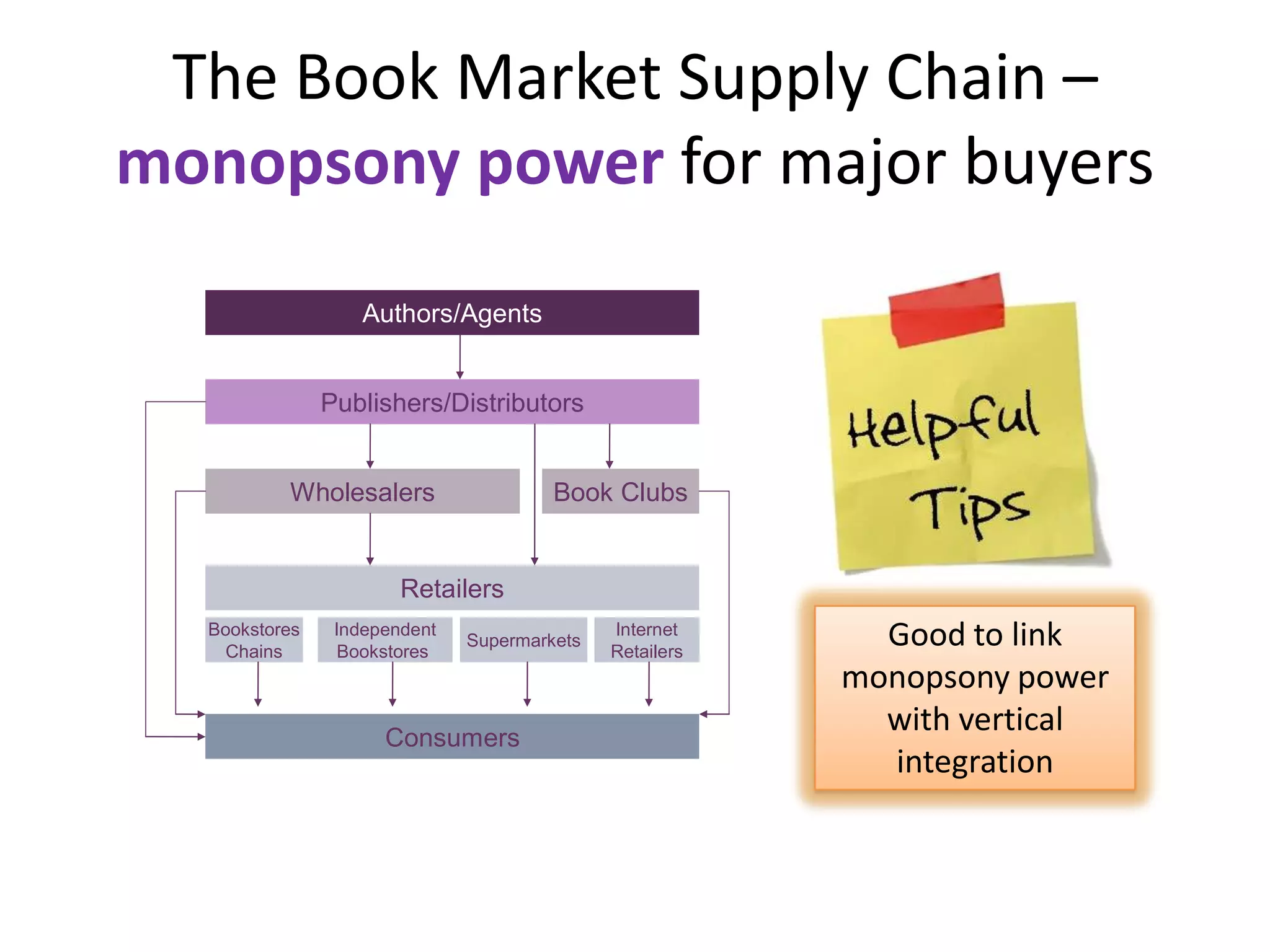
Authors/Agents
Wholesalers
Retailers
Consumers
Publishers/Distributors
Bookstores
Chains
Independent
Bookstores
Supermarkets
Internet
Retailers
Book Clubs
The Book Market Supply Chain –
monopsony power for major buyers
Good to link
monopsony power
with vertical
integration
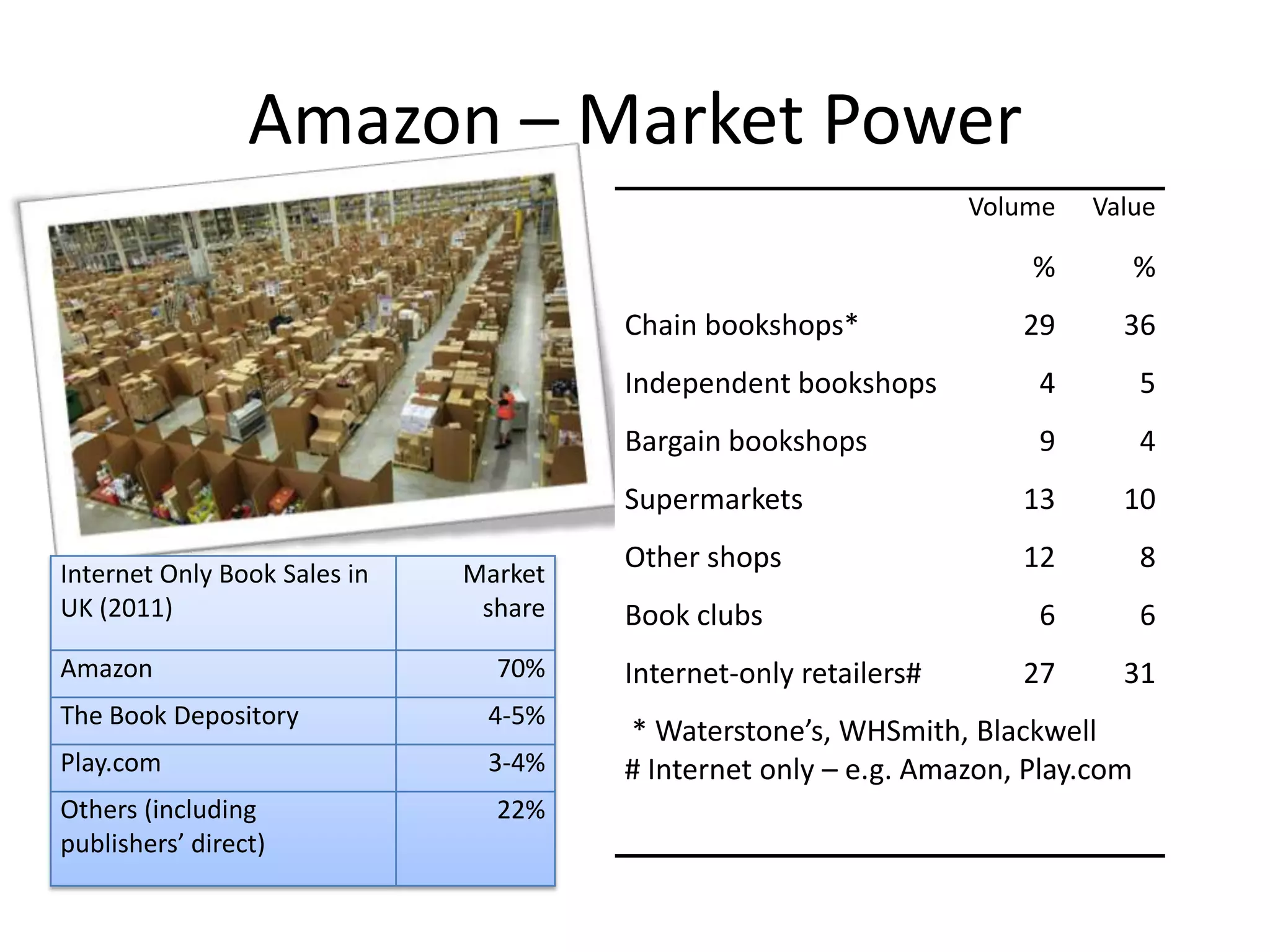
Amazon – Market Power
Volume Value
% %
Chain bookshops* 29 36
Independent bookshops 4 5
Bargain bookshops 9 4
Supermarkets 13 10
Other shops 12 8
Book clubs 6 6
Internet-only retailers# 27 31
* Waterstone’s, WHSmith, Blackwell
# Internet only – e.g. Amazon, Play.com
Internet Only Book Sales in
UK (2011)
Market
share
Amazon 70%
The Book Depository 4-5%
Play.com 3-4%
Others (including
publishers’ direct)
22%
Amazon’s Monopsony Power
How does Amazon gain from
monopsony power?
• 1: Cheaper prices from
publishers
• 2: Charges a premium for
sellers on Market Place
• 3: Ability to under-cut
other book retail channels
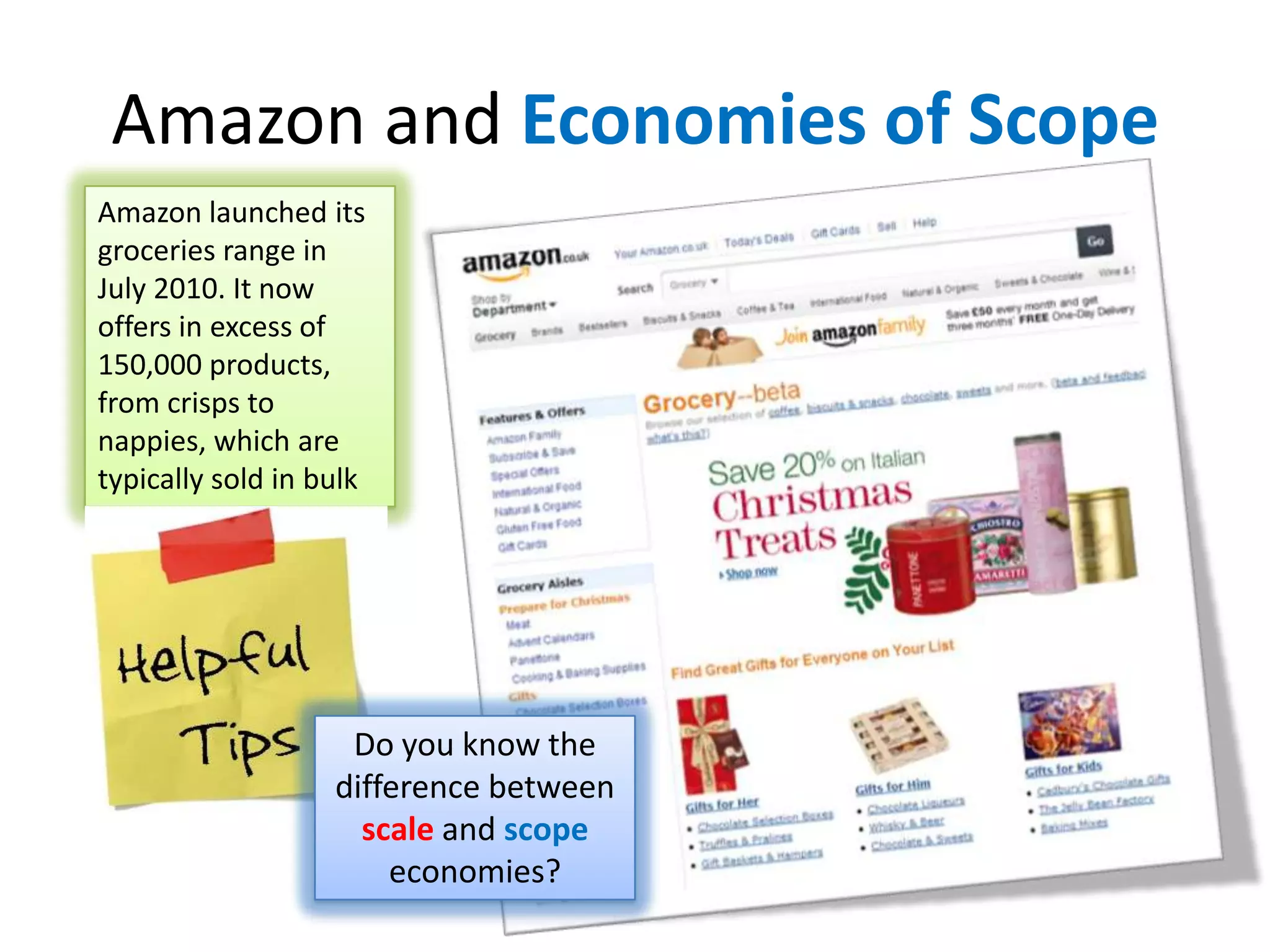
Amazon and Economies of Scope
Amazon launched its
groceries range in
July 2010. It now
offers in excess of
150,000 products,
from crisps to
nappies, which are
typically sold in bulk
Do you know the
difference between
scale and scope
economies?
The effect of monopsony on welfare
What can producers do if faced
with monopsony power?
• 1: Form co-operatives
• 2: Lobby competition
authorities
• 3: Build retail channels e.g.
small bookshops going online
Monopsony Power in Labour Markets
Wage
Labour
(Employment)
Monopsony Power in Labour Markets – Lower Wages?
Monopsony Employer
MC labour
Labour
Demand
(MRPL)
Labour
supply
Profit maximising employment
level is where MRPL = MC labour
This gives employment of E1 – the
marginal revenue product is W1
But employer needs only pay an
average weekly wage of W2 to
hire these workers
Monopsony employer using their
buying wage to pay wages below
the fair value of output from their
employees
An abuse of market power?
A cause of relative poverty?
W1
W2
E1
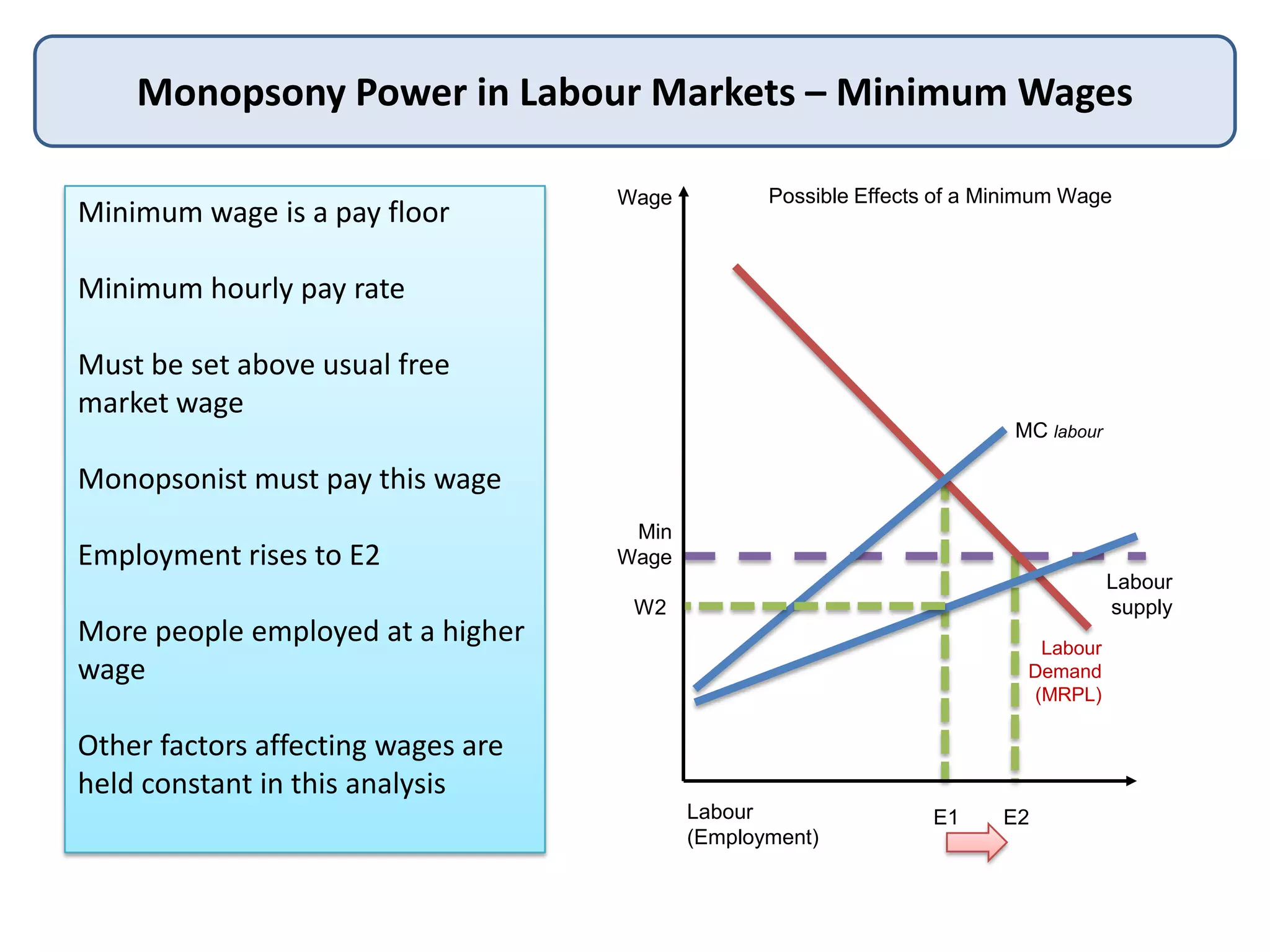
Monopsony Power in Labour Markets – Minimum Wages
Wage Possible Effects of a Minimum Wage
Labour
(Employment)
MC labour
Labour
Demand
(MRPL)
Labour
supply
Minimum wage is a pay floor
Minimum hourly pay rate
Must be set above usual free
market wage
Monopsonist must pay this wage
Employment rises to E2
More people employed at a higher
wage
Other factors affecting wages are
held constant in this analysis
Min
Wage
E2
W2
E1
Get help from fellow
students, teachers and
tutor2u on Twitter:
@tutor2u_econ

Monopsony Power in Markets

  • 1.
  • 2.
  • 3.
    Effects of Monopsonyon Welfare Examples: Monopsony • 1: Food retailers • 2: Electricity generators • 3: Coffee / cocoa roasters • 4: Amazon / Apple • 5: National Health Service
  • 4.
    Authors/Agents Wholesalers Retailers Consumers Publishers/Distributors Bookstores Chains Independent Bookstores Supermarkets Internet Retailers Book Clubs The BookMarket Supply Chain – monopsony power for major buyers Good to link monopsony power with vertical integration
  • 5.
    Amazon – MarketPower Volume Value % % Chain bookshops* 29 36 Independent bookshops 4 5 Bargain bookshops 9 4 Supermarkets 13 10 Other shops 12 8 Book clubs 6 6 Internet-only retailers# 27 31 * Waterstone’s, WHSmith, Blackwell # Internet only – e.g. Amazon, Play.com Internet Only Book Sales in UK (2011) Market share Amazon 70% The Book Depository 4-5% Play.com 3-4% Others (including publishers’ direct) 22%
  • 6.
    Amazon’s Monopsony Power Howdoes Amazon gain from monopsony power? • 1: Cheaper prices from publishers • 2: Charges a premium for sellers on Market Place • 3: Ability to under-cut other book retail channels
  • 7.
    Amazon and Economiesof Scope Amazon launched its groceries range in July 2010. It now offers in excess of 150,000 products, from crisps to nappies, which are typically sold in bulk Do you know the difference between scale and scope economies?
  • 8.
    The effect ofmonopsony on welfare What can producers do if faced with monopsony power? • 1: Form co-operatives • 2: Lobby competition authorities • 3: Build retail channels e.g. small bookshops going online
  • 9.
    Monopsony Power inLabour Markets
  • 10.
    Wage Labour (Employment) Monopsony Power inLabour Markets – Lower Wages? Monopsony Employer MC labour Labour Demand (MRPL) Labour supply Profit maximising employment level is where MRPL = MC labour This gives employment of E1 – the marginal revenue product is W1 But employer needs only pay an average weekly wage of W2 to hire these workers Monopsony employer using their buying wage to pay wages below the fair value of output from their employees An abuse of market power? A cause of relative poverty? W1 W2 E1
  • 12.
    Monopsony Power inLabour Markets – Minimum Wages Wage Possible Effects of a Minimum Wage Labour (Employment) MC labour Labour Demand (MRPL) Labour supply Minimum wage is a pay floor Minimum hourly pay rate Must be set above usual free market wage Monopsonist must pay this wage Employment rises to E2 More people employed at a higher wage Other factors affecting wages are held constant in this analysis Min Wage E2 W2 E1
  • 13.
    Get help fromfellow students, teachers and tutor2u on Twitter: @tutor2u_econ