Monocoque Chassis
By –
Abhishek K S
M.Tech Automobile Engineering
What is Monocoque?
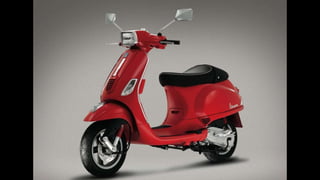
• Monocoque is a structural system where
loads are supported through an object’s
external skin, similar to an egg shell.
• The word “Monocoque” is a French term for
single shell.
• A true Monocoque carries both tensile and
compressive forces within the skin and can
be recognized by the absence of a load
carrying internal frame.
Brief History of Monocoque
• A monocoque-framed motorcycle was developed by the Spanish motorcycle
manufacturer, Ossa, for the 1967 Grand Prix motorcycle racing season.
• Although the single-cylinder Ossa had 20 horsepower (15 kW) less than its rivals,
it was 45 pounds (20 kg) lighter and its monocoque frame was much stiffer than
conventional motorcycle frames, giving it superior agility on the racetrack.
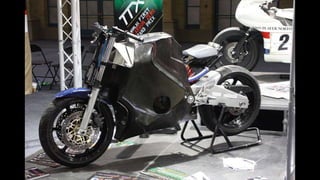
• The 1973 Isle of Man TT was won by Peter Williams on the monocoque-framed
Norton John Player Special that Eric Offenstadt and Dan Hanebrink helped design.
• In 1987 John Britten developed the Aero-D One, featuring a composite
monocoque chassis that weighed only 12 kg.
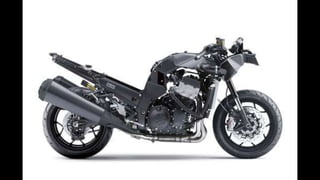
• The first time an aluminium monocoque frame appeared on a mass-produced
production motorcycle was the 2000 Kawasaki Ninja ZX-12R.
• Benefits:
• Complex designs can be achieved
which can help save weight, save
space & make the design more
aerodynamic
• Higher rigidity than Perimeter
frames
• Lighter than Perimeter frames
• Drawback
• Expensive
• Complex design
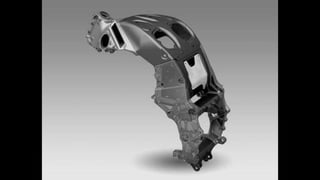
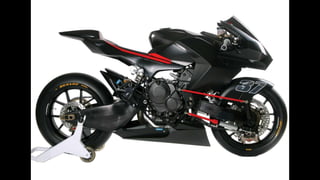
Monocoque chassis For Motorcycles

Monocoque chassis For Motorcycles

  • 1.
    Monocoque Chassis By – AbhishekK S M.Tech Automobile Engineering
  • 2.
    What is Monocoque? •Monocoque is a structural system where loads are supported through an object’s external skin, similar to an egg shell. • The word “Monocoque” is a French term for single shell. • A true Monocoque carries both tensile and compressive forces within the skin and can be recognized by the absence of a load carrying internal frame.
  • 3.
    Brief History ofMonocoque • A monocoque-framed motorcycle was developed by the Spanish motorcycle manufacturer, Ossa, for the 1967 Grand Prix motorcycle racing season. • Although the single-cylinder Ossa had 20 horsepower (15 kW) less than its rivals, it was 45 pounds (20 kg) lighter and its monocoque frame was much stiffer than conventional motorcycle frames, giving it superior agility on the racetrack. • The 1973 Isle of Man TT was won by Peter Williams on the monocoque-framed Norton John Player Special that Eric Offenstadt and Dan Hanebrink helped design. • In 1987 John Britten developed the Aero-D One, featuring a composite monocoque chassis that weighed only 12 kg. • The first time an aluminium monocoque frame appeared on a mass-produced production motorcycle was the 2000 Kawasaki Ninja ZX-12R.
  • 15.
    • Benefits: • Complexdesigns can be achieved which can help save weight, save space & make the design more aerodynamic • Higher rigidity than Perimeter frames • Lighter than Perimeter frames • Drawback • Expensive • Complex design