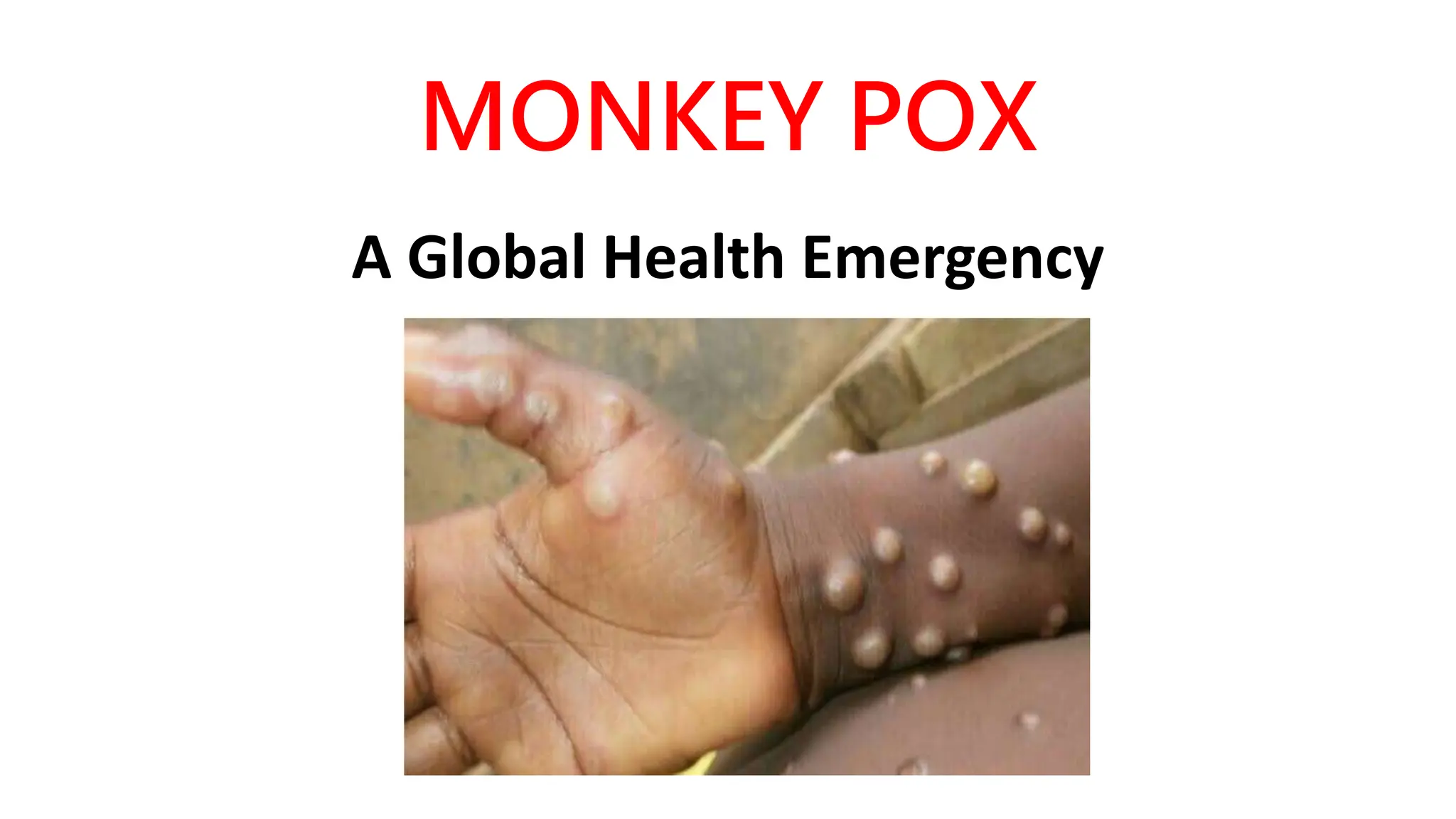
MONKEY POX
A Global Health Emergency
GUIDED BY:- Presented By:-
•DR.(COL)V.K. ARORA SIR Dr Atharva Ranade
PROFFESSOR AND HOD COMMUNITY MEDICINE Dr Deepti Tiwari
•DR. ARTI SAHASRABUDDHE Ma’am. Dr Shivam Sharma
PROFFESSOR COMMUNITY MEDICINE
•DR.G.D.BHIDE Sir
PROFFESSOR COMMUNITY MEDICINE
Contents
• Introduction
• History and Outbreaks
• Monkey pox a disease of Global Health Importance
• US outbreak 2022
• Monkeypox in India
• Epidemiology
• Case Defination
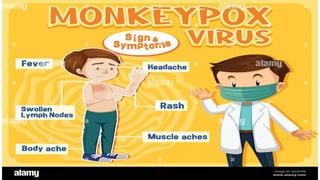
• Signs and Symptoms
• Diagnosis
• Surveillance Streatagy
• Treatment
• Monkeypox vaccine
What is Monkey Pox?
• Monkeypox is a viral zoonosis (a virus transmitted to humans from animals) with
symptoms similar to those seen in the past in smallpox patients.
• It is less sever than small pox.
• With the eradication of smallpox in 1980 and subsequent cessation of smallpox
vaccination, monkeypox has emerged as the most important orthopoxvirus for
public health.
• Monkeypox primarily occurs in central and west Africa, close to tropical rainforest
and increasing in urban areas.
HISTORY & OUTBREAKS
• Monkeypox was discovered in 1958 when two outbreaks of a pox-like
disease occurred in colonies of monkeys kept for research.
• Human monkeypox was first identified in humans in 1970 in the Democratic
Republic of the Congo in a 9-month-old boy in a region where smallpox had been
eliminated in 1968.
• Since then most the cases were reported from Republic of Congo and increased
in the region of central and west Africa.
• Till it has covered 11 contries in African continent.
• In 1996–97, an outbreak was reported in the Democratic Republic of
the Congo with a lower case fatality ratio and a higher attack rate than
usual.
• Since 2017, Nigeria has experienced a large outbreak, with over 500
suspected cases and over 200 confirmed cases and a case fatality ratio
of approximately 3%.
Disease of Global Health Importance
• Monkeypox is a disease of global public health importance as it not only affects
countries in west and central Africa, but the rest of the world.
• In 2003, the first monkeypox outbreak outside of Africa was in the United States
of America and was linked to contact with infected pet prairie dogs.
• This outbreak led to over 70 cases of monkeypox in the U.S.
Monkeypox has also been reported in travelers from Nigeria to:-
• Israel in September 2018
• The United Kingdom in September 2018, December 2019, May 2021 and May
2022.
• Singapore in May 2019.
• The United States of America in July and November 2021.
In May 2022, multiple cases of monkeypox were identified in several non-endemic
countries.
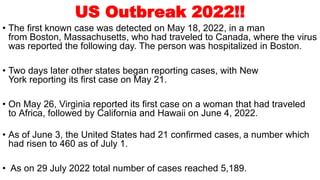
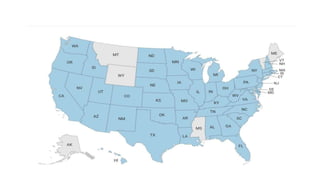
US Outbreak 2022!!
• The first known case was detected on May 18, 2022, in a man
from Boston, Massachusetts, who had traveled to Canada, where the virus
was reported the following day. The person was hospitalized in Boston.
• Two days later other states began reporting cases, with New
York reporting its first case on May 21.
• On May 26, Virginia reported its first case on a woman that had traveled
to Africa, followed by California and Hawaii on June 4, 2022.
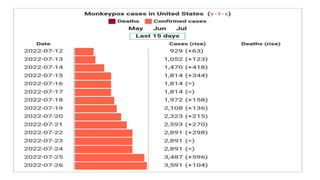
• As of June 3, the United States had 21 confirmed cases, a number which
had risen to 460 as of July 1.
• As on 29 July 2022 total number of cases reached 5,189.
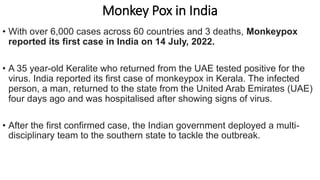
Monkey Pox in India
• With over 6,000 cases across 60 countries and 3 deaths, Monkeypox
reported its first case in India on 14 July, 2022.
• A 35 year-old Keralite who returned from the UAE tested positive for the
virus. India reported its first case of monkeypox in Kerala. The infected
person, a man, returned to the state from the United Arab Emirates (UAE)
four days ago and was hospitalised after showing signs of virus.
• After the first confirmed case, the Indian government deployed a multi-
disciplinary team to the southern state to tackle the outbreak.
• The 2nd case of monkeypox was reported from Kerala's Kannur
district on 18 July where a 31-year-old man had contracted the infection
and is currently undergoing treatment at a hospital.
• Kerala confirmed its 3rd monkeypox case Friday (July 22) after a 35-
year-old man, who reached the state from the UAE earlier this month,
tested positive for the zoonotic virus.
• On 24th July 2022 India reported it’s 4th case in New Delhi .
• A 34-year-old man from the national capital with no history of foreign travel
tested positive for the monkeypox virus on Sunday. A resident of West
Delhi, the man was admitted to the Maulana Azad Medical College
Hospital about three days ago after he showed symptoms of monkeypox.
The patient is currently undergoing treatment at LNJP Hospital.
•5th suspected case of monkeypox
• Telangana man was suspected to have contracted monkeypox disease. As
per reports, a 40-year-old man from Indiranagar Colony, Kamareddy
district showed monkeypox symptoms. He has returned from Kuwait on
July 6
Monkey Pox declared as “Public Health Emergency of
International Concern” (PHEIC)
• WHO declared Monkey Pox as PHEIC on 24th July 2022.
• For any disease PHEIC can be declared when three criteria are met:-
1. The situation is an extraordinary event.
2. There is a risk of spread to other countries
3. Situation might “potentially require a coordinated international response”
AGENT – Monkey Pox Virus
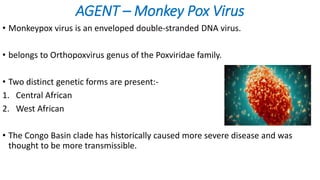
• Monkeypox virus is an enveloped double-stranded DNA virus.
• belongs to Orthopoxvirus genus of the Poxviridae family.
• Two distinct genetic forms are present:-
1. Central African
2. West African
• The Congo Basin clade has historically caused more severe disease and was
thought to be more transmissible.
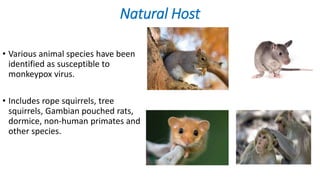
Natural Host
• Various animal species have been
identified as susceptible to
monkeypox virus.
• Includes rope squirrels, tree
squirrels, Gambian pouched rats,
dormice, non-human primates and
other species.
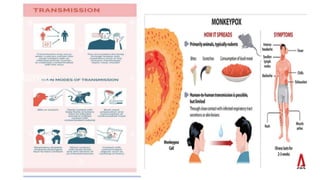
Modes of transmission
Animal-to-human transmission: may occur by bite or scratch of infected animals
like small mammals including rodents (rats, squirrels) and non-human primates
(monkeys, apes) or through bush meat preparation
Human-to-human transmission is known to occur primarily through large
respiratory droplets generally . It can also be transmitted through direct contact
with body fluids or lesion material, and indirect contact with lesion material, such
as through contaminated clothing or linens of an infected person.
Case Defination
• Suspectedcase
A person of any age having history of travel to affected countries within
last 21 days presenting with an unexplained acute rash AND one or more
of the following signs or symptoms
1. Swollen lymph nodes
2. Fever
3. Headache
4. Body aches
5. profound weakness
• Probable case:
A person meeting the case definition for a suspected case, clinically
compatible illness and has an epidemiological link
1. face-to-face exposure
2. including health care workers without appropriate PPE
3. direct physical contact with skin or skin lesions,
4. including sexual contact
5. contact with contaminated materials such as clothing, bedding or
utensils.
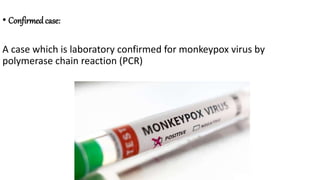
• Confirmed case:
A case which is laboratory confirmed for monkeypox virus by
polymerase chain reaction (PCR)
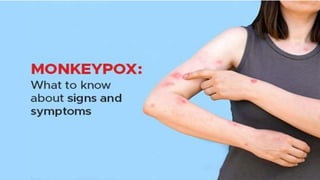
Signs and symptoms
The incubation period (interval from infection to onset of symptoms) of
monkeypox is usually from 6 to 13 days but can range from 5 to 21 days.
Most of the people infected with monkeypox are symptomatic but subclinical
infection can also occurs In 28% cases.
• The infection can be divided into two periods:
• The invasion period
1. lasts between 0–5 days
2. characterized by fever, intense headache, lymphadenopathy, back pain,
myalgia and intense asthenia.
3. Lymphadenopathy is a distinctive feature of monkeypox compared to other
diseases (chickenpox, measles, smallpox)
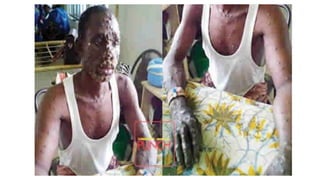
• Eruptive Phase
• the skin eruption usually begins within 1–3 days of appearance of fever.
The rash tends to be more concentrated on the face and extremities rather
than on the trunk.
• It affects the face (in 95% of cases), and palms of the hands and soles of
the feet (in 75% of cases).
• Also affected are oral mucous membranes (in 70% of cases), genitalia
(30%), and conjunctivae (20%), as well as the cornea
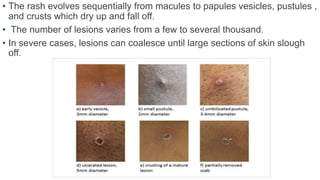
• The rash evolves sequentially from macules to papules vesicles, pustules ,
and crusts which dry up and fall off.
• The number of lesions varies from a few to several thousand.
• In severe cases, lesions can coalesce until large sections of skin slough
off.
• Monkeypox is usually a self-limited disease with the symptoms lasting
from 2 to 4 weeks.
• Severe cases occur more commonly among children and are related to
the extent of virus exposure, patient health status and nature of
complications.
• Underlying immune deficiencies may lead to worse outcomes.
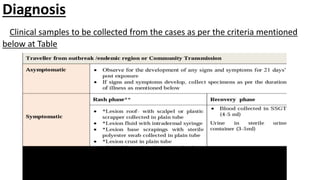
Diagnosis
Clinical samples to be collected from the cases as per the criteria mentioned
below at Table
Diagnostic modalities for Monkeypox with ICMR NIV Pune
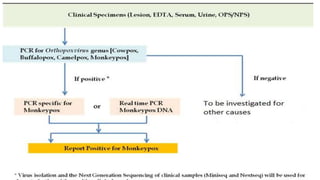
For the confirmation of Monkeypox on the suspected clinical specimens:
a) PCR for Orthopoxvirus genus will be done
b) If specimenis postive, it would be further confirmed by Monkeypox specific
conventional PCR or real time PCR for Monkeypox DNA
c) Additionally, virus isolation and the Next Generation Sequencing of clinical
samples (Miniseq and Nextseq) will be used for characterization of the positive
clinical specimens
All the clinical specimens should be transported to the Apex laboratory
of ICMR-NIV Pune routed through the Integrated Disease Surveillance
Programme network of the respective district/state
• When should you get tested?
Experts agree that vaccination and prevention should be prioritized to
slow the pace of the current outbreak.
But if you start to notice red lesions, pimples or pustules, you
should contact your primary care physician and let the physician
know that you suspect a monkeypox infection.
Your doctor will swab a lesion and order a monkeypox test for you. You
can also get tested at urgent care centers or sexual health clinics and
through other health providers.
• The test is a polymerase chain reaction, or P.C.R., much like those for
Covid-19 that detect a piece of the virus’s genetic material. But testing
capacity is still limited.
• Samples can be sent only to a public health laboratory or one of five
commercial labs for analysis.
• And although the turnaround time has improved, results can take
anywhere from 24 hours to three days or more.
• There is no home test for monkeypox. And even at a clinic, health care
workers need a lesion to swab in order to perform a monkeypox test.
• If you don’t have any symptoms, or have only fever and flulike
symptoms, there is no way to test for monkeypox yet.
• Another problem is that some health care workers may not be aware of
or able to recognize monkeypox when patients come in for a diagnosis.
Monkeypox lesions, especially in genital areas, may look very similar to
symptoms of more common diseases, like herpes or syphilis.
Surveillance Strategies
The aims of the proposed surveillance strategy are to rapidly identify cases and
clusters of infections and the sources of infections as soon as possible in order to:
a) isolate cases to prevent further transmission
b) provide optimal clinical care
c) identify and manage contacts
d) protect frontline health workers
e) effective control and preventive measures based on the identified routes of
transmission.
1. Surveillance outline
a) Use Standard Case Definitions by all District Surveillance Units (DSUs) under
Integrated Disease Surveillance Programme (IDSP) and at Points of Entry (PoEs).
b) Even one case of monkeypox is to be considered as an outbreak. A detailed
investigation by the Rapid Response Teams need to be initiated through IDSP.
c) Report any suspected case immediately to the DSU/State Surveillance Units
(SSUs) and CSU (Central Surveillance Unit), which shall report the same to Dte. GHS
MoHFW.
d) Send the samples as per the guidelines to the designated laboratories.
The salient features include:
a) Targeted surveillance for probable case or clusters.
b) Initiate contact tracing and testing of the symptomatic after the detection
of the probable/confirmed case.
Core Surveillance Strategy
a) Hospital based Surveillance: - Health facility-based surveillance & testing – in
Dermatology clinics, STD clinics, medicine, paediatrics OPDs etc.
b)Targeted Surveillance: This can be achieved by:
i) Measles surveillance by Immunization division
ii) Targeted intervention sites identified by NACO for MSM, FSW population
Contact tracing
1) Definition of a contact
A contact is defined as a person who, in the period beginning with the onset of the
source case’s first symptoms, and ending when all scabs have fallen off, has had
one or more of the following exposures with a probable or confirmed case of
monkey pox:
-face-to-face exposure (including health care workers without appropriate PPE)
-direct physical contact, including sexual contact
-contact with contaminated materials such as clothing or bedding
2) Contact identification
Cases can be prompted to identify contacts across household, workplace,
school/nursery, sexual contacts, healthcare, houses of worship, transportation,
sports, social gatherings, and any other recalled interactions.
3) Contact monitoring
a) Contacts should be monitored at least daily for the onset of signs/symptoms
for a period of 21 days from the last contact with a patient or their contaminated
materials during the infectious period. In case of occurrence of fever clinical/lab
evaluation is warranted.
b) Asymptomatic contacts should not donate blood, cells, tissue, organs or semen
while they are under surveillance.
c)Pre-school children may be excluded from day care, nursery, or other group
setting
d)Health workers who have unprotected exposures to patients with monkeypox
or possibly contaminated materials do not need to be excluded from work duty if
asymptomatic, but should undergo active surveillance for symptoms for 21 days.
•What’s the process of getting treatment for
monkeypox?
• Patients with anal or rectal lesions may experience a lot of pain,
especially while defecating, and in those cases a doctor may prescribe
pain killers or recommend stool softeners and shallow sitz baths,
used to relieve pain or itchiness in the genital area.
• Patients with sores in their mouth may have difficulty swallowing and can
get medication to help with that.
• Some may develop secondary bacterial infections and require
antibiotic treatment, especially if they have large, open lesions.
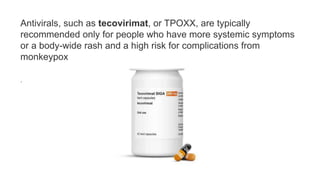
Antivirals, such as tecovirimat, or TPOXX, are typically
recommended only for people who have more systemic symptoms
or a body-wide rash and a high risk for complications from
monkeypox
.
• Regardless of whether they are able to get antiviral treatment, patients
should isolate at home as soon as they develop monkeypox symptoms.
• As with Covid-19, they should avoid close contact with friends,
family members and pets.
• cover all skin rashes as much as possible and wear good quality
masks if they must come in contact with others for medical care.
• The C.D.C. recommends limiting your exposure to others and staying in
isolation until any lesions are completely healed ie lesions crust over,
the scabs fall off and a fresh layer of intact skin has formed. And that can
take a long time — anywhere from two to four weeks.
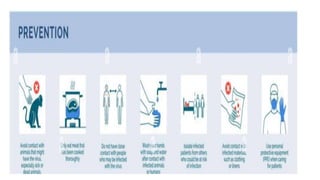
Prevention
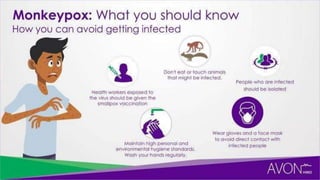
1.Reducing the risk of human-to-human transmission
• Surveillance and rapid identification of new cases is critical for outbreak
containment.
• During outbreaks, close contact with infected persons is the most significant risk
factor for monkeypox infection.
• Health workers and household members are at a greater risk of infection. Health
workers caring for patients with suspected or confirmed monkeypox virus
infection, or handling specimens from them, should implement standard
infection control precautions.
• Samples taken from people and animals with suspected monkeypox infection
should be handled by trained staff working in suitably equipped laboratories.
• Patient specimens must be safely prepared for transport with triple packaging in
accordance with WHO guidance for transport of infectious substances.
2.Infection Prevention and Control (IPC)
A combination of standard, contact, and droplet precautions should be applied
in all healthcare settings when a patient presents with fever and
vesicular/pustular rash.
In addition, airborne precautions should be applied as per risk assessment.
Clinical triage includes
early recognition and immediate placement of patient in separate area from
other patients (source control).
All individuals, including family members, visitors and HCWs should apply
standard, contact and droplet precautions.
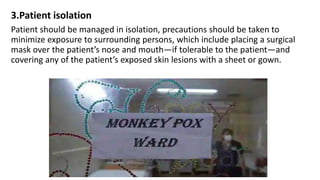
3.Patient isolation
Patient should be managed in isolation, precautions should be taken to
minimize exposure to surrounding persons, which include placing a surgical
mask over the patient’s nose and mouth—if tolerable to the patient—and
covering any of the patient’s exposed skin lesions with a sheet or gown.
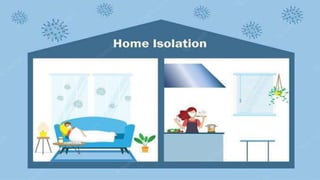
4) IPC at home
Patients who do not require hospitalization may be managed at home taking
following preventive measures:
• Patients should be isolated in a room or area separate from other family
members. Healthy household members should limit contact with the patient.
• Patients should not leave the home except for medical care.
• No visitors should be allowed at home.
• Patients, especially those who have respiratory symptoms (e.g., cough, shortness
of breath, sore throat) should wear a surgical mask.
• Disposable gloves should be worn for direct contact with lesions and disposed of
after use.
• Skin lesions should be covered to the best extent possible.p
• Contain and dispose of contaminated waste (such as dressings and bandages) in
the Biomedical waste disposable bag Do not dispose of waste in landfills or
dumps.
• Proper hand washing with soap and water (or use of an alcohol-based hand rub)
should be performed by the patient and other household members after
touching lesion material, clothing, linens, or environmental surfaces that may
have had contact with lesion material.
• Laundry (e.g., bedding, towels, clothing) may be washed with warm water and
detergent;
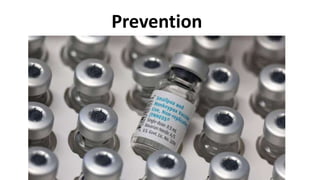
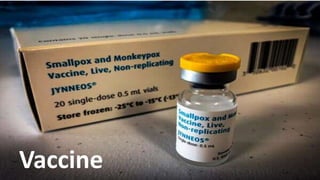
Vaccine
• When properly administered before an exposure, vaccines are effective at protecting
people against monkeypox.
• ACAM2000 and JYNNEOS (also known as Imvamune or Imvanex) are the two currently
the two currently licensed vaccines in the United States to prevent smallpox
• Pre-Exposure Prophylaxis To Prevent Monkeypox
• people whose jobs may expose them to orthopoxviruses, such as monkeypox, get
vaccinated with either ACAM2000 or JYNNEOS to protect them if they are exposed to
an orthopoxvirus. This is known as pre-exposure prophylaxis (PrEP).
• People who should get PrEP include:
• Clinical laboratory personnel who perform testing to diagnose orthopoxviruses, including
• ACAM2000 is administered as a live Vaccinia virus preparation that is inoculated into the
skin by pricking the skin surface. Following a successful inoculation, a lesion will develop
at the site of the vaccination (i.e., a “take”).
• The virus growing at the site of this inoculation lesion can be spread to other parts
of the body or even to other people.
• Individuals who receive vaccination with ACAM2000 must take precautions to prevent the
spread of the vaccine virus and are considered vaccinated within 28 days.
• JYNNEOS is administered as a live virus that is non-replicating. It is
administered as two subcutaneous injections four weeks apart.
and as a result, no risk for spread to other parts of the body or
• People who receive JYNNEOS are not considered vaccinated until 2
receive the second dose of the vaccine.
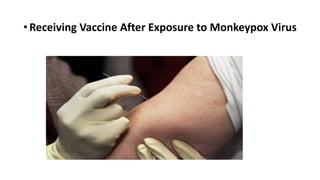
• Receiving Vaccine After Exposure to Monkeypox Virus
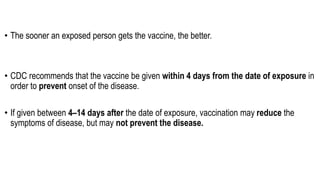
• The sooner an exposed person gets the vaccine, the better.
• CDC recommends that the vaccine be given within 4 days from the date of exposure in
order to prevent onset of the disease.
• If given between 4–14 days after the date of exposure, vaccination may reduce the
symptoms of disease, but may not prevent the disease.
Thank you

Monkey Pox , a global health emergency .

  • 1.
    MONKEY POX A GlobalHealth Emergency
  • 2.
    GUIDED BY:- PresentedBy:- •DR.(COL)V.K. ARORA SIR Dr Atharva Ranade PROFFESSOR AND HOD COMMUNITY MEDICINE Dr Deepti Tiwari •DR. ARTI SAHASRABUDDHE Ma’am. Dr Shivam Sharma PROFFESSOR COMMUNITY MEDICINE •DR.G.D.BHIDE Sir PROFFESSOR COMMUNITY MEDICINE
  • 3.
    Contents • Introduction • Historyand Outbreaks • Monkey pox a disease of Global Health Importance • US outbreak 2022 • Monkeypox in India • Epidemiology • Case Defination • Signs and Symptoms • Diagnosis • Surveillance Streatagy • Treatment • Monkeypox vaccine
  • 4.
    What is MonkeyPox? • Monkeypox is a viral zoonosis (a virus transmitted to humans from animals) with symptoms similar to those seen in the past in smallpox patients. • It is less sever than small pox. • With the eradication of smallpox in 1980 and subsequent cessation of smallpox vaccination, monkeypox has emerged as the most important orthopoxvirus for public health. • Monkeypox primarily occurs in central and west Africa, close to tropical rainforest and increasing in urban areas.
  • 5.
    HISTORY & OUTBREAKS •Monkeypox was discovered in 1958 when two outbreaks of a pox-like disease occurred in colonies of monkeys kept for research. • Human monkeypox was first identified in humans in 1970 in the Democratic Republic of the Congo in a 9-month-old boy in a region where smallpox had been eliminated in 1968. • Since then most the cases were reported from Republic of Congo and increased in the region of central and west Africa. • Till it has covered 11 contries in African continent.
  • 6.
    • In 1996–97,an outbreak was reported in the Democratic Republic of the Congo with a lower case fatality ratio and a higher attack rate than usual. • Since 2017, Nigeria has experienced a large outbreak, with over 500 suspected cases and over 200 confirmed cases and a case fatality ratio of approximately 3%.
  • 7.
    Disease of GlobalHealth Importance • Monkeypox is a disease of global public health importance as it not only affects countries in west and central Africa, but the rest of the world. • In 2003, the first monkeypox outbreak outside of Africa was in the United States of America and was linked to contact with infected pet prairie dogs. • This outbreak led to over 70 cases of monkeypox in the U.S.
  • 8.
    Monkeypox has alsobeen reported in travelers from Nigeria to:- • Israel in September 2018 • The United Kingdom in September 2018, December 2019, May 2021 and May 2022. • Singapore in May 2019. • The United States of America in July and November 2021. In May 2022, multiple cases of monkeypox were identified in several non-endemic countries.
  • 9.
    US Outbreak 2022!! •The first known case was detected on May 18, 2022, in a man from Boston, Massachusetts, who had traveled to Canada, where the virus was reported the following day. The person was hospitalized in Boston. • Two days later other states began reporting cases, with New York reporting its first case on May 21. • On May 26, Virginia reported its first case on a woman that had traveled to Africa, followed by California and Hawaii on June 4, 2022. • As of June 3, the United States had 21 confirmed cases, a number which had risen to 460 as of July 1. • As on 29 July 2022 total number of cases reached 5,189.
  • 12.
    Monkey Pox inIndia • With over 6,000 cases across 60 countries and 3 deaths, Monkeypox reported its first case in India on 14 July, 2022. • A 35 year-old Keralite who returned from the UAE tested positive for the virus. India reported its first case of monkeypox in Kerala. The infected person, a man, returned to the state from the United Arab Emirates (UAE) four days ago and was hospitalised after showing signs of virus. • After the first confirmed case, the Indian government deployed a multi- disciplinary team to the southern state to tackle the outbreak.
  • 13.
    • The 2ndcase of monkeypox was reported from Kerala's Kannur district on 18 July where a 31-year-old man had contracted the infection and is currently undergoing treatment at a hospital. • Kerala confirmed its 3rd monkeypox case Friday (July 22) after a 35- year-old man, who reached the state from the UAE earlier this month, tested positive for the zoonotic virus. • On 24th July 2022 India reported it’s 4th case in New Delhi . • A 34-year-old man from the national capital with no history of foreign travel tested positive for the monkeypox virus on Sunday. A resident of West Delhi, the man was admitted to the Maulana Azad Medical College Hospital about three days ago after he showed symptoms of monkeypox. The patient is currently undergoing treatment at LNJP Hospital.
  • 14.
    •5th suspected caseof monkeypox • Telangana man was suspected to have contracted monkeypox disease. As per reports, a 40-year-old man from Indiranagar Colony, Kamareddy district showed monkeypox symptoms. He has returned from Kuwait on July 6
  • 15.
    Monkey Pox declaredas “Public Health Emergency of International Concern” (PHEIC) • WHO declared Monkey Pox as PHEIC on 24th July 2022. • For any disease PHEIC can be declared when three criteria are met:- 1. The situation is an extraordinary event. 2. There is a risk of spread to other countries 3. Situation might “potentially require a coordinated international response”
  • 16.
    AGENT – MonkeyPox Virus • Monkeypox virus is an enveloped double-stranded DNA virus. • belongs to Orthopoxvirus genus of the Poxviridae family. • Two distinct genetic forms are present:- 1. Central African 2. West African • The Congo Basin clade has historically caused more severe disease and was thought to be more transmissible.
  • 17.
    Natural Host • Variousanimal species have been identified as susceptible to monkeypox virus. • Includes rope squirrels, tree squirrels, Gambian pouched rats, dormice, non-human primates and other species.
  • 18.
    Modes of transmission Animal-to-humantransmission: may occur by bite or scratch of infected animals like small mammals including rodents (rats, squirrels) and non-human primates (monkeys, apes) or through bush meat preparation Human-to-human transmission is known to occur primarily through large respiratory droplets generally . It can also be transmitted through direct contact with body fluids or lesion material, and indirect contact with lesion material, such as through contaminated clothing or linens of an infected person.
  • 20.
    Case Defination • Suspectedcase Aperson of any age having history of travel to affected countries within last 21 days presenting with an unexplained acute rash AND one or more of the following signs or symptoms 1. Swollen lymph nodes 2. Fever 3. Headache 4. Body aches 5. profound weakness
  • 21.
    • Probable case: Aperson meeting the case definition for a suspected case, clinically compatible illness and has an epidemiological link 1. face-to-face exposure 2. including health care workers without appropriate PPE 3. direct physical contact with skin or skin lesions, 4. including sexual contact 5. contact with contaminated materials such as clothing, bedding or utensils.
  • 22.
    • Confirmed case: Acase which is laboratory confirmed for monkeypox virus by polymerase chain reaction (PCR)
  • 24.
    Signs and symptoms Theincubation period (interval from infection to onset of symptoms) of monkeypox is usually from 6 to 13 days but can range from 5 to 21 days. Most of the people infected with monkeypox are symptomatic but subclinical infection can also occurs In 28% cases. • The infection can be divided into two periods: • The invasion period 1. lasts between 0–5 days 2. characterized by fever, intense headache, lymphadenopathy, back pain, myalgia and intense asthenia. 3. Lymphadenopathy is a distinctive feature of monkeypox compared to other diseases (chickenpox, measles, smallpox)
  • 26.
    • Eruptive Phase •the skin eruption usually begins within 1–3 days of appearance of fever. The rash tends to be more concentrated on the face and extremities rather than on the trunk. • It affects the face (in 95% of cases), and palms of the hands and soles of the feet (in 75% of cases). • Also affected are oral mucous membranes (in 70% of cases), genitalia (30%), and conjunctivae (20%), as well as the cornea
  • 28.
    • The rashevolves sequentially from macules to papules vesicles, pustules , and crusts which dry up and fall off. • The number of lesions varies from a few to several thousand. • In severe cases, lesions can coalesce until large sections of skin slough off.
  • 29.
    • Monkeypox isusually a self-limited disease with the symptoms lasting from 2 to 4 weeks. • Severe cases occur more commonly among children and are related to the extent of virus exposure, patient health status and nature of complications. • Underlying immune deficiencies may lead to worse outcomes.
  • 30.
    Diagnosis Clinical samples tobe collected from the cases as per the criteria mentioned below at Table
  • 31.
    Diagnostic modalities forMonkeypox with ICMR NIV Pune For the confirmation of Monkeypox on the suspected clinical specimens: a) PCR for Orthopoxvirus genus will be done b) If specimenis postive, it would be further confirmed by Monkeypox specific conventional PCR or real time PCR for Monkeypox DNA c) Additionally, virus isolation and the Next Generation Sequencing of clinical samples (Miniseq and Nextseq) will be used for characterization of the positive clinical specimens All the clinical specimens should be transported to the Apex laboratory of ICMR-NIV Pune routed through the Integrated Disease Surveillance Programme network of the respective district/state
  • 34.
    • When shouldyou get tested? Experts agree that vaccination and prevention should be prioritized to slow the pace of the current outbreak. But if you start to notice red lesions, pimples or pustules, you should contact your primary care physician and let the physician know that you suspect a monkeypox infection. Your doctor will swab a lesion and order a monkeypox test for you. You can also get tested at urgent care centers or sexual health clinics and through other health providers.
  • 35.
    • The testis a polymerase chain reaction, or P.C.R., much like those for Covid-19 that detect a piece of the virus’s genetic material. But testing capacity is still limited. • Samples can be sent only to a public health laboratory or one of five commercial labs for analysis. • And although the turnaround time has improved, results can take anywhere from 24 hours to three days or more.
  • 36.
    • There isno home test for monkeypox. And even at a clinic, health care workers need a lesion to swab in order to perform a monkeypox test. • If you don’t have any symptoms, or have only fever and flulike symptoms, there is no way to test for monkeypox yet. • Another problem is that some health care workers may not be aware of or able to recognize monkeypox when patients come in for a diagnosis. Monkeypox lesions, especially in genital areas, may look very similar to symptoms of more common diseases, like herpes or syphilis.
  • 37.
    Surveillance Strategies The aimsof the proposed surveillance strategy are to rapidly identify cases and clusters of infections and the sources of infections as soon as possible in order to: a) isolate cases to prevent further transmission b) provide optimal clinical care c) identify and manage contacts d) protect frontline health workers e) effective control and preventive measures based on the identified routes of transmission.
  • 38.
    1. Surveillance outline a)Use Standard Case Definitions by all District Surveillance Units (DSUs) under Integrated Disease Surveillance Programme (IDSP) and at Points of Entry (PoEs). b) Even one case of monkeypox is to be considered as an outbreak. A detailed investigation by the Rapid Response Teams need to be initiated through IDSP. c) Report any suspected case immediately to the DSU/State Surveillance Units (SSUs) and CSU (Central Surveillance Unit), which shall report the same to Dte. GHS MoHFW. d) Send the samples as per the guidelines to the designated laboratories.
  • 39.
    The salient featuresinclude: a) Targeted surveillance for probable case or clusters. b) Initiate contact tracing and testing of the symptomatic after the detection of the probable/confirmed case. Core Surveillance Strategy a) Hospital based Surveillance: - Health facility-based surveillance & testing – in Dermatology clinics, STD clinics, medicine, paediatrics OPDs etc. b)Targeted Surveillance: This can be achieved by: i) Measles surveillance by Immunization division ii) Targeted intervention sites identified by NACO for MSM, FSW population
  • 40.
    Contact tracing 1) Definitionof a contact A contact is defined as a person who, in the period beginning with the onset of the source case’s first symptoms, and ending when all scabs have fallen off, has had one or more of the following exposures with a probable or confirmed case of monkey pox: -face-to-face exposure (including health care workers without appropriate PPE) -direct physical contact, including sexual contact -contact with contaminated materials such as clothing or bedding 2) Contact identification Cases can be prompted to identify contacts across household, workplace, school/nursery, sexual contacts, healthcare, houses of worship, transportation, sports, social gatherings, and any other recalled interactions.
  • 41.
    3) Contact monitoring a)Contacts should be monitored at least daily for the onset of signs/symptoms for a period of 21 days from the last contact with a patient or their contaminated materials during the infectious period. In case of occurrence of fever clinical/lab evaluation is warranted. b) Asymptomatic contacts should not donate blood, cells, tissue, organs or semen while they are under surveillance. c)Pre-school children may be excluded from day care, nursery, or other group setting d)Health workers who have unprotected exposures to patients with monkeypox or possibly contaminated materials do not need to be excluded from work duty if asymptomatic, but should undergo active surveillance for symptoms for 21 days.
  • 43.
    •What’s the processof getting treatment for monkeypox? • Patients with anal or rectal lesions may experience a lot of pain, especially while defecating, and in those cases a doctor may prescribe pain killers or recommend stool softeners and shallow sitz baths, used to relieve pain or itchiness in the genital area. • Patients with sores in their mouth may have difficulty swallowing and can get medication to help with that. • Some may develop secondary bacterial infections and require antibiotic treatment, especially if they have large, open lesions.
  • 44.
    Antivirals, such astecovirimat, or TPOXX, are typically recommended only for people who have more systemic symptoms or a body-wide rash and a high risk for complications from monkeypox .
  • 45.
    • Regardless ofwhether they are able to get antiviral treatment, patients should isolate at home as soon as they develop monkeypox symptoms. • As with Covid-19, they should avoid close contact with friends, family members and pets. • cover all skin rashes as much as possible and wear good quality masks if they must come in contact with others for medical care. • The C.D.C. recommends limiting your exposure to others and staying in isolation until any lesions are completely healed ie lesions crust over, the scabs fall off and a fresh layer of intact skin has formed. And that can take a long time — anywhere from two to four weeks.
  • 46.
  • 48.
    1.Reducing the riskof human-to-human transmission • Surveillance and rapid identification of new cases is critical for outbreak containment. • During outbreaks, close contact with infected persons is the most significant risk factor for monkeypox infection. • Health workers and household members are at a greater risk of infection. Health workers caring for patients with suspected or confirmed monkeypox virus infection, or handling specimens from them, should implement standard infection control precautions. • Samples taken from people and animals with suspected monkeypox infection should be handled by trained staff working in suitably equipped laboratories. • Patient specimens must be safely prepared for transport with triple packaging in accordance with WHO guidance for transport of infectious substances.
  • 49.
    2.Infection Prevention andControl (IPC) A combination of standard, contact, and droplet precautions should be applied in all healthcare settings when a patient presents with fever and vesicular/pustular rash. In addition, airborne precautions should be applied as per risk assessment. Clinical triage includes early recognition and immediate placement of patient in separate area from other patients (source control). All individuals, including family members, visitors and HCWs should apply standard, contact and droplet precautions.
  • 50.
    3.Patient isolation Patient shouldbe managed in isolation, precautions should be taken to minimize exposure to surrounding persons, which include placing a surgical mask over the patient’s nose and mouth—if tolerable to the patient—and covering any of the patient’s exposed skin lesions with a sheet or gown.
  • 52.
    4) IPC athome Patients who do not require hospitalization may be managed at home taking following preventive measures: • Patients should be isolated in a room or area separate from other family members. Healthy household members should limit contact with the patient. • Patients should not leave the home except for medical care. • No visitors should be allowed at home. • Patients, especially those who have respiratory symptoms (e.g., cough, shortness of breath, sore throat) should wear a surgical mask.
  • 53.
    • Disposable glovesshould be worn for direct contact with lesions and disposed of after use. • Skin lesions should be covered to the best extent possible.p • Contain and dispose of contaminated waste (such as dressings and bandages) in the Biomedical waste disposable bag Do not dispose of waste in landfills or dumps. • Proper hand washing with soap and water (or use of an alcohol-based hand rub) should be performed by the patient and other household members after touching lesion material, clothing, linens, or environmental surfaces that may have had contact with lesion material. • Laundry (e.g., bedding, towels, clothing) may be washed with warm water and detergent;
  • 55.
  • 56.
    • When properlyadministered before an exposure, vaccines are effective at protecting people against monkeypox. • ACAM2000 and JYNNEOS (also known as Imvamune or Imvanex) are the two currently the two currently licensed vaccines in the United States to prevent smallpox • Pre-Exposure Prophylaxis To Prevent Monkeypox • people whose jobs may expose them to orthopoxviruses, such as monkeypox, get vaccinated with either ACAM2000 or JYNNEOS to protect them if they are exposed to an orthopoxvirus. This is known as pre-exposure prophylaxis (PrEP).
  • 57.
    • People whoshould get PrEP include: • Clinical laboratory personnel who perform testing to diagnose orthopoxviruses, including
  • 58.
    • ACAM2000 isadministered as a live Vaccinia virus preparation that is inoculated into the skin by pricking the skin surface. Following a successful inoculation, a lesion will develop at the site of the vaccination (i.e., a “take”). • The virus growing at the site of this inoculation lesion can be spread to other parts of the body or even to other people. • Individuals who receive vaccination with ACAM2000 must take precautions to prevent the spread of the vaccine virus and are considered vaccinated within 28 days.
  • 59.
    • JYNNEOS isadministered as a live virus that is non-replicating. It is administered as two subcutaneous injections four weeks apart. and as a result, no risk for spread to other parts of the body or • People who receive JYNNEOS are not considered vaccinated until 2 receive the second dose of the vaccine.
  • 60.
    • Receiving VaccineAfter Exposure to Monkeypox Virus
  • 61.
    • The sooneran exposed person gets the vaccine, the better. • CDC recommends that the vaccine be given within 4 days from the date of exposure in order to prevent onset of the disease. • If given between 4–14 days after the date of exposure, vaccination may reduce the symptoms of disease, but may not prevent the disease.
  • 62.