The Mongols 
Ling Lin
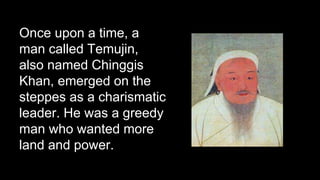
Once upon a time, a 
man called Temujin, 
also named Chinggis 
Khan, emerged on the 
steppes as a charismatic 
leader. He was a greedy 
man who wanted more 
land and power.
He assembled a huge 
army of soldiers who 
were ordered to go to 
many countries like 
Russia, the Middle East 
and China and conquer 
as much land as 
possible.
Smaller cities and 
towns gave in easily 
because they did not 
have the leadership of a 
strong empire to protect 
them. Despite this, 
thousands of people 
were slaughtered in the 
Mongol conquests.
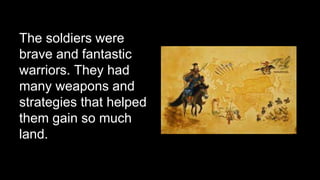
The soldiers were 
brave and fantastic 
warriors. They had 
many weapons and 
strategies that helped 
them gain so much 
land.
Spy networks spent 
months before an attack 
scouting defenses, 
mapping roads and 
escape routes, noting 
supply sources, and 
gathering intelligence on 
local defense and 
infrastructure.
Coordinated attacks 
included ambush, hit and 
run, and wave attacks. 
One of the most successful 
strategies was the feigned 
retreat in which Genghis’s 
troops would fake defeat 
and run, only to turn on 
pursuing enemies.
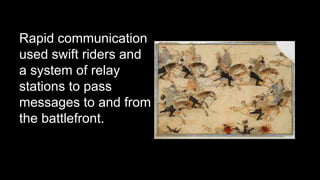
Rapid communication 
used swift riders and 
a system of relay 
stations to pass 
messages to and from 
the battlefront.
The bow and arrow was 
commonly used in battle. 
Six out of ten soldiers 
were horse archers, 
which means they shoot 
the enemy while riding. 
This let the Mongols kill 
as many of the opposing 
side as possible.
Light cavalry soldiers 
called keshik did not 
partake in as much 
heavy battle. Instead, 
they were the ones in 
charge of skirmishing 
and raiding.
Soldiers practiced 
fighting every chance 
they had to make sure 
they were ready for 
enemy attack at anytime. 
They focused on 
individual fighting like 
jousting and sometimes 
group fighting methods.
The Mongol soldiers 
were very loyal to 
those in charge as well 
as each other. This 
meant there was no 
need for unnecessarily 
strict rules and 
regulations.
However, there was 
a very harsh 
punishment for 
anyone who ran 
from danger in fear.
Gathering food was 
particularly interesting 
for these soldiers. 
They would all make a 
circle around a group 
of animals and force 
them to the center, all 
while practicing war 
maneuvers.
As the circle got 
smaller, they waited for 
their leader’s order to 
begin killing off the 
animals. This let them 
practice war moves as 
well as get enough 
food for a feast.
The Mongol soldiers 
were diligent and 
skilled. They are the 
backbone of the 
Mongol conquests.
Works Cited 
"Battle Tactics | Genghis Khan." Genghis Khan | Genghis Khan. N.p., n.d. Web. 24 Nov. 2014. 
<http://genghiskhan.fieldmuseum.org/behind-the-scenes/establishing-an-empire/battle-tactics>. 
"Mongol Combat Tactics." The Silver Horde. N.p., n.d. Web. 24 Nov. 2014. 
<http://silverhorde.viahistoria.com/research/tactics.html>.

Mongol Tactics

  • 1.
  • 2.
    Once upon atime, a man called Temujin, also named Chinggis Khan, emerged on the steppes as a charismatic leader. He was a greedy man who wanted more land and power.
  • 3.
    He assembled ahuge army of soldiers who were ordered to go to many countries like Russia, the Middle East and China and conquer as much land as possible.
  • 4.
    Smaller cities and towns gave in easily because they did not have the leadership of a strong empire to protect them. Despite this, thousands of people were slaughtered in the Mongol conquests.
  • 5.
    The soldiers were brave and fantastic warriors. They had many weapons and strategies that helped them gain so much land.
  • 6.
    Spy networks spent months before an attack scouting defenses, mapping roads and escape routes, noting supply sources, and gathering intelligence on local defense and infrastructure.
  • 7.
    Coordinated attacks includedambush, hit and run, and wave attacks. One of the most successful strategies was the feigned retreat in which Genghis’s troops would fake defeat and run, only to turn on pursuing enemies.
  • 8.
    Rapid communication usedswift riders and a system of relay stations to pass messages to and from the battlefront.
  • 9.
    The bow andarrow was commonly used in battle. Six out of ten soldiers were horse archers, which means they shoot the enemy while riding. This let the Mongols kill as many of the opposing side as possible.
  • 10.
    Light cavalry soldiers called keshik did not partake in as much heavy battle. Instead, they were the ones in charge of skirmishing and raiding.
  • 11.
    Soldiers practiced fightingevery chance they had to make sure they were ready for enemy attack at anytime. They focused on individual fighting like jousting and sometimes group fighting methods.
  • 12.
    The Mongol soldiers were very loyal to those in charge as well as each other. This meant there was no need for unnecessarily strict rules and regulations.
  • 13.
    However, there was a very harsh punishment for anyone who ran from danger in fear.
  • 14.
    Gathering food was particularly interesting for these soldiers. They would all make a circle around a group of animals and force them to the center, all while practicing war maneuvers.
  • 15.
    As the circlegot smaller, they waited for their leader’s order to begin killing off the animals. This let them practice war moves as well as get enough food for a feast.
  • 16.
    The Mongol soldiers were diligent and skilled. They are the backbone of the Mongol conquests.
  • 17.
    Works Cited "BattleTactics | Genghis Khan." Genghis Khan | Genghis Khan. N.p., n.d. Web. 24 Nov. 2014. <http://genghiskhan.fieldmuseum.org/behind-the-scenes/establishing-an-empire/battle-tactics>. "Mongol Combat Tactics." The Silver Horde. N.p., n.d. Web. 24 Nov. 2014. <http://silverhorde.viahistoria.com/research/tactics.html>.