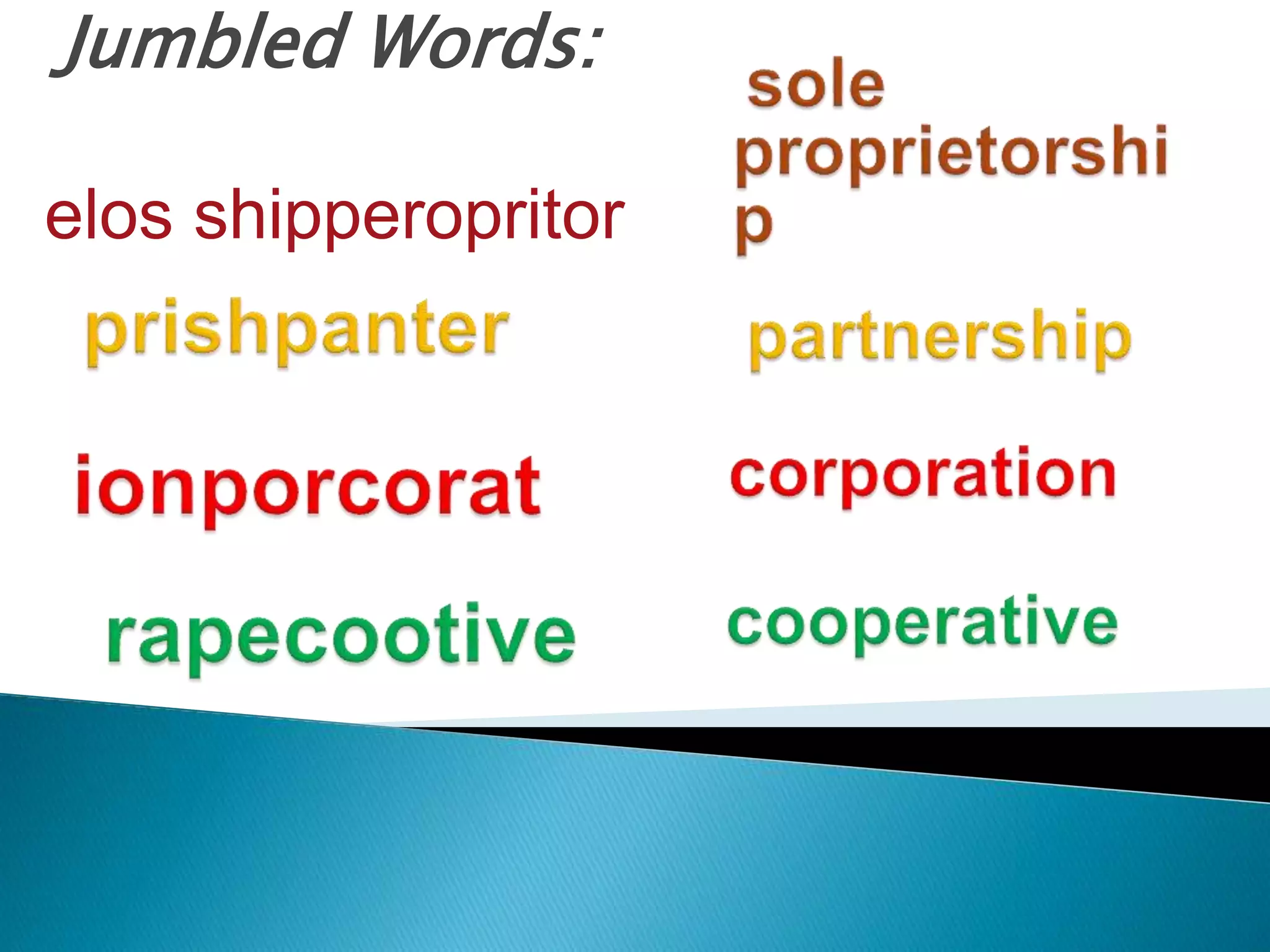
Jumbled Words:
elos shipperopritor
EXPECTATIONS
1. Analyze the forms and economic roles
of business organizations.
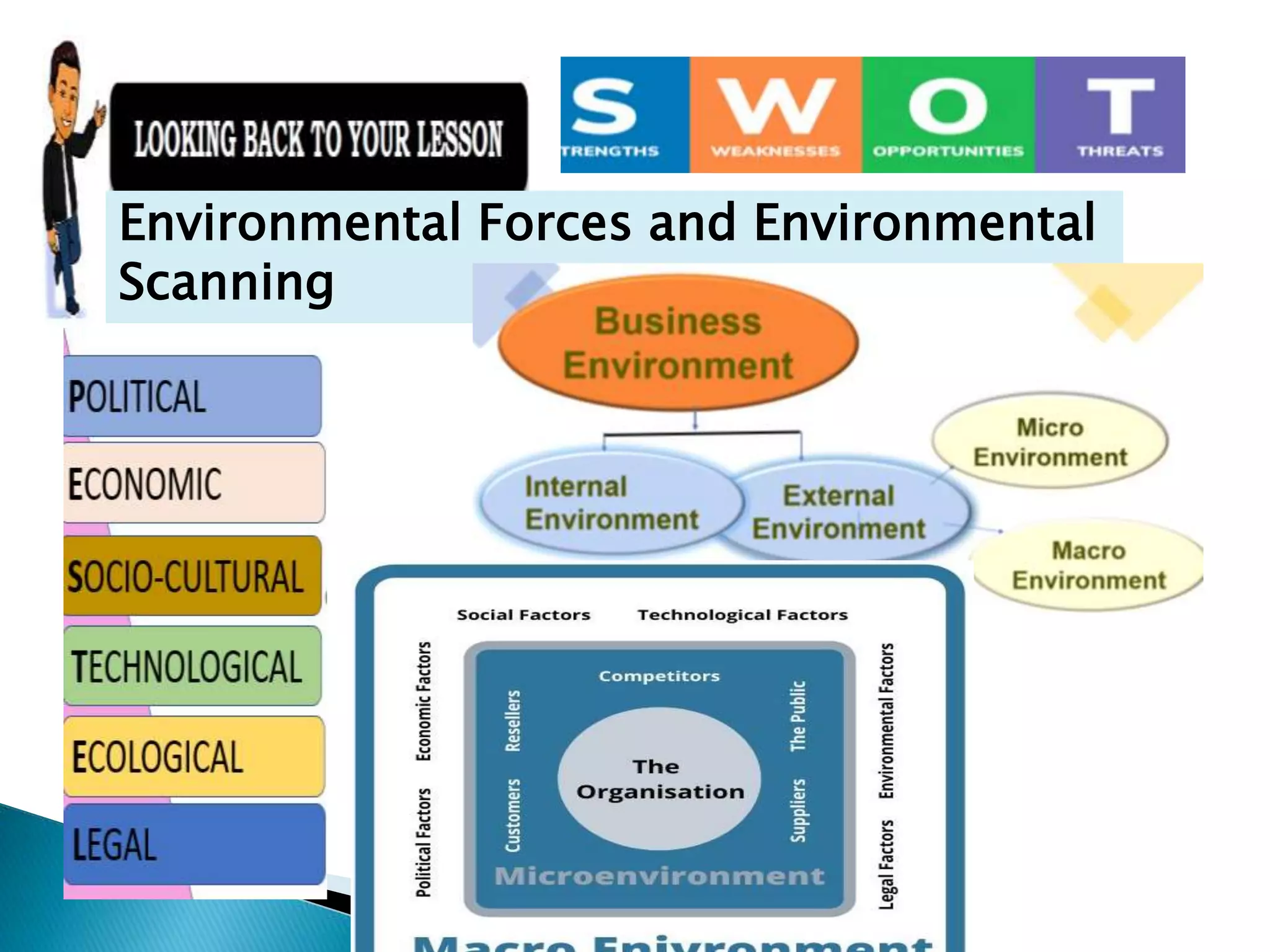
Environmental Forces and Environmental
Scanning
 it is a business
organized by one
person
 Easy and inexpensive to register
 Low start-up cost
 All profits go to owner
 Owner in direct control
 Some tax advantages - a lower tax
bracket when profits are low
 Unlimited liability (if you have business
debts, claims can be made against your
personal assets to pay them off)
 Lack of continuity
 Difficulty in raising capital
 Income is taxable at personal rate –
thus, a higher tax bracket if business is
profitable
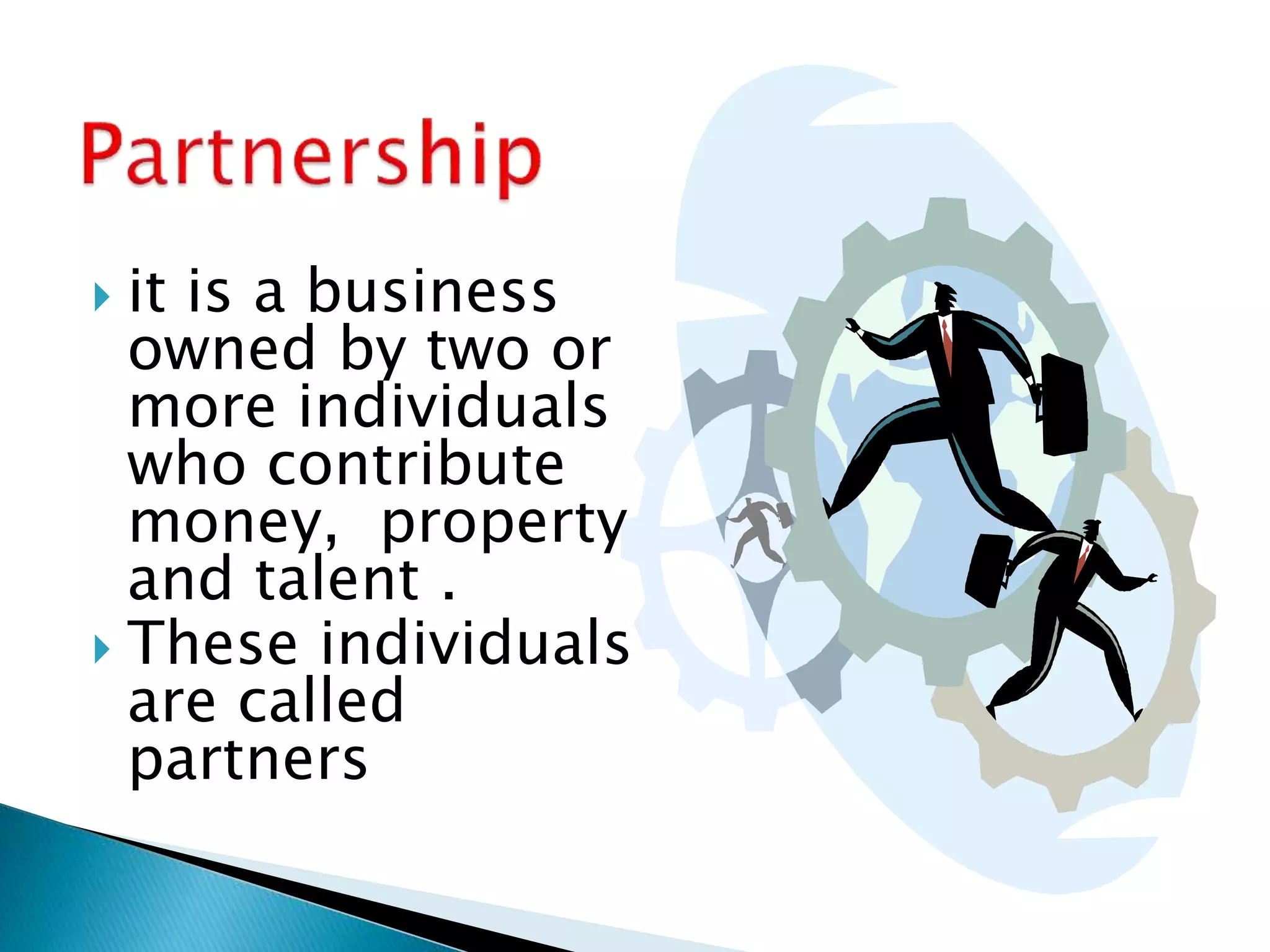
 it is a business
owned by two or
more individuals
who contribute
money, property
and talent .
 These individuals
are called
partners
Types of Partnerships that should be
considered:
1. General Partnership
2. Limited Partnership and
Partnership with limited liability
3. Joint Venture
General Partnership
Partners divide responsibility for
management and liability, as well as the
shares of profit or loss according to their
internal agreement. Equal shares are
assumed unless there is a written
agreement that states differently.
Limited Partnership and Partnership with
limited liability
“Limited” means that most of the partners
have limited liability (to the extent of their
investment) as well as limited input regarding
management decision, which generally
encourages investors for short term projects,
or for investing in capital assets. This form of
ownership is not often used for operating
retail or service businesses. Forming a
limited partnership is more complex and
formal than that of a general partnership.
Joint Venture
Acts like a general partnership but is clearly
for a limited period of time or a single
project. If the partners in a joint venture
repeat the activity, they will be recognized
as an ongoing partnership and will have to
file as such and distribute accumulated
partnership assets upon dissolution of the
entity.
 Easy and inexpensive to form
 Low start-up costs
 Sharing of responsibility
 Tax advantage — lower tax bracket if
income from the partnership is low or
loses money.
 Unlimited liability
 Lack of continuity
 Difficulty in finding a suitable partner
 Divided authority
 High tax bracket if income from the
partnership is high
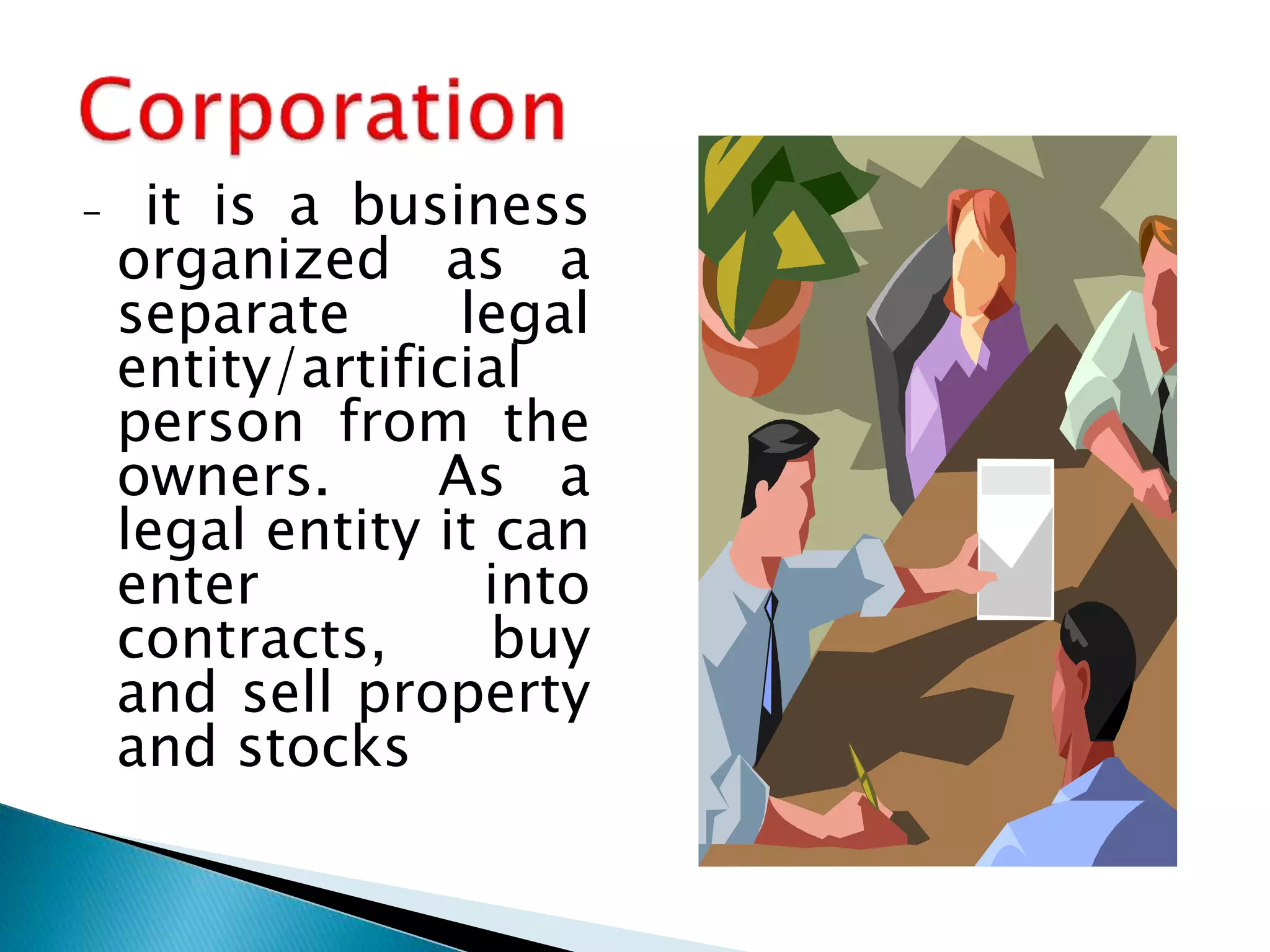
- it is a business
organized as a
separate legal
entity/artificial
person from the
owners. As a
legal entity it can
enter into
contracts, buy
and sell property
and stocks
 Limited liability
 Ownership is transferable
 Specialized management
 Ease of raising capital
 Possible tax advantage as taxes may
be lower for an incorporated business
 Close regulation
 Most expensive to organize
 Extensive record keeping
 Possible conflict between shareholders
and directors
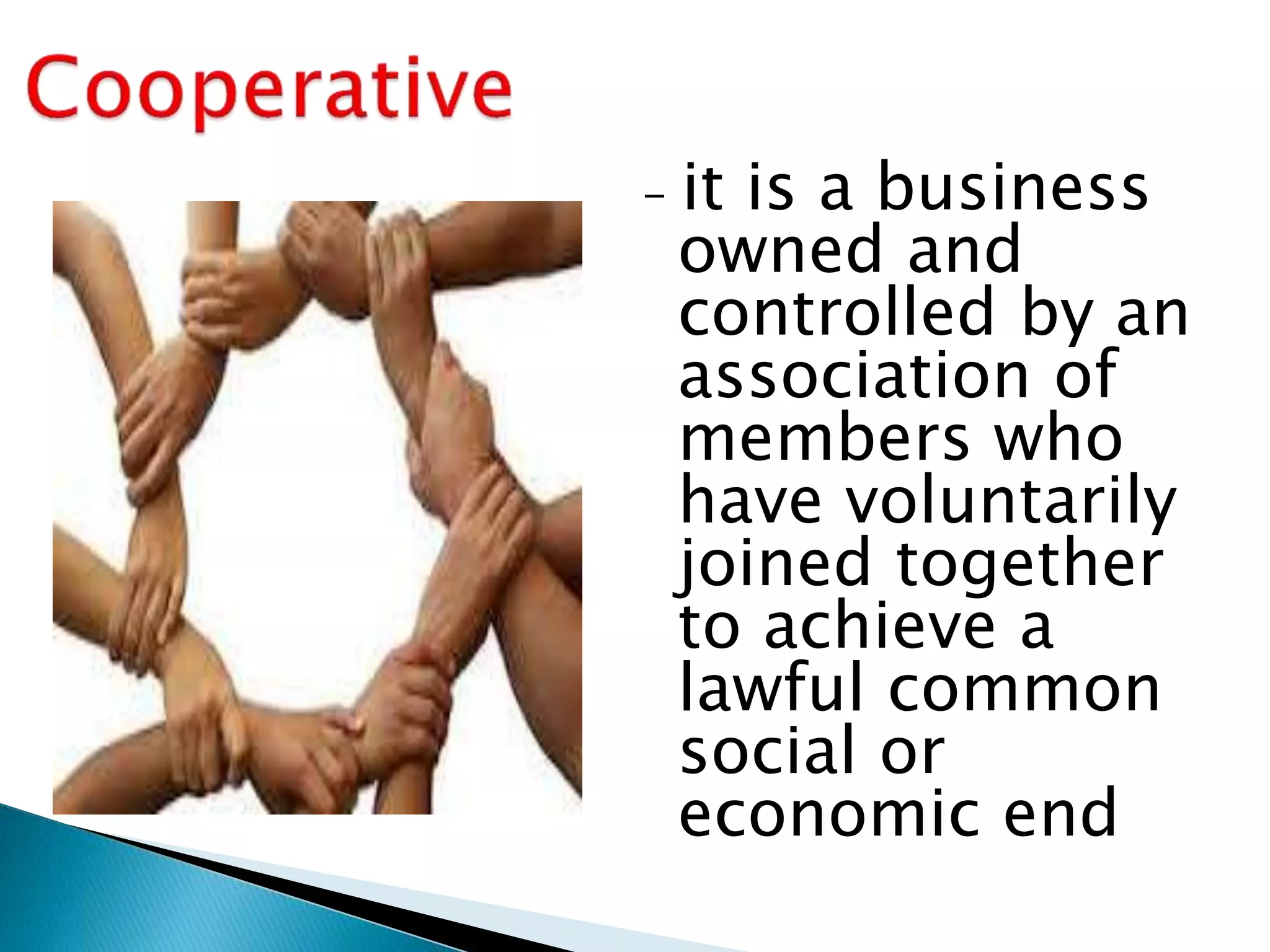
- it is a business
owned and
controlled by an
association of
members who
have voluntarily
joined together
to achieve a
lawful common
social or
economic end
 Owned and controlled by its members
 Democratic control (one member, one

vote)
 Limited liability
 Profit distribution
 Longer decision-making process
 Participation of all members is
required in order to succeed
 Possible conflict between members
 Extensive record keeping
Module3 forms of-business-organization

Module3 forms of-business-organization

  • 1.
  • 3.
    EXPECTATIONS 1. Analyze theforms and economic roles of business organizations.
  • 4.
    Environmental Forces andEnvironmental Scanning
  • 5.
     it isa business organized by one person
  • 6.
     Easy andinexpensive to register  Low start-up cost  All profits go to owner  Owner in direct control  Some tax advantages - a lower tax bracket when profits are low
  • 7.
     Unlimited liability(if you have business debts, claims can be made against your personal assets to pay them off)  Lack of continuity  Difficulty in raising capital  Income is taxable at personal rate – thus, a higher tax bracket if business is profitable
  • 8.
     it isa business owned by two or more individuals who contribute money, property and talent .  These individuals are called partners
  • 9.
    Types of Partnershipsthat should be considered: 1. General Partnership 2. Limited Partnership and Partnership with limited liability 3. Joint Venture
  • 10.
    General Partnership Partners divideresponsibility for management and liability, as well as the shares of profit or loss according to their internal agreement. Equal shares are assumed unless there is a written agreement that states differently.
  • 11.
    Limited Partnership andPartnership with limited liability “Limited” means that most of the partners have limited liability (to the extent of their investment) as well as limited input regarding management decision, which generally encourages investors for short term projects, or for investing in capital assets. This form of ownership is not often used for operating retail or service businesses. Forming a limited partnership is more complex and formal than that of a general partnership.
  • 12.
    Joint Venture Acts likea general partnership but is clearly for a limited period of time or a single project. If the partners in a joint venture repeat the activity, they will be recognized as an ongoing partnership and will have to file as such and distribute accumulated partnership assets upon dissolution of the entity.
  • 13.
     Easy andinexpensive to form  Low start-up costs  Sharing of responsibility  Tax advantage — lower tax bracket if income from the partnership is low or loses money.
  • 14.
     Unlimited liability Lack of continuity  Difficulty in finding a suitable partner  Divided authority  High tax bracket if income from the partnership is high
  • 15.
    - it isa business organized as a separate legal entity/artificial person from the owners. As a legal entity it can enter into contracts, buy and sell property and stocks
  • 16.
     Limited liability Ownership is transferable  Specialized management  Ease of raising capital  Possible tax advantage as taxes may be lower for an incorporated business
  • 17.
     Close regulation Most expensive to organize  Extensive record keeping  Possible conflict between shareholders and directors
  • 18.
    - it isa business owned and controlled by an association of members who have voluntarily joined together to achieve a lawful common social or economic end
  • 19.
     Owned andcontrolled by its members  Democratic control (one member, one vote)  Limited liability  Profit distribution
  • 20.
     Longer decision-makingprocess  Participation of all members is required in order to succeed  Possible conflict between members  Extensive record keeping