MODULE 5
Health services data utilization for
planning and advocacy
Module 6 1
Aim
• To introduce the concepts of monitoring and
evaluation and its uses in quality
improvement and action planning
Module 6 2
Learning Outcomes
• Plan , implement and monitor the sensitive
health services in the community
• Plan for the establishment of improvement
collaboratives to monitor service performance
• Action plan for developing functional referral
mechanisms from community to higher level
health services.
Module 6 3
Definitions
• Monitoring is the routine reporting of
data on program implementation and
performance
• Evaluation is the periodic assessment of
program impact at the population level
and value
Module 6 4
Monitoring
• Allows accurate understanding of program
implementation
– Has the program is implemented according to the
workplan ?
– Where are the gaps? What is working well?
– Who needs more training?
– Where is the supply chain breaking down?
Module 6 5
Evaluation
• Measurement of behaviors and/or health
outcomes in target population that can be
attributed to specific program activities or
interventions
– Are there any changes in behavior or health
outcomes in the target population?
– To what extent are observed changes in the target
population related to program efforts?
Module 6 6
Uses of M&E for program
management
• Informs decisions about program operations
and service delivery
• Ensures effective and efficient use of
resources
• Determine whether or not the program is
implemented according to plan
• Meets reporting requirements by funders and
government sectors
• Evaluates the extent to which the
program/project is having or has had the
desired impact
Module 6 7
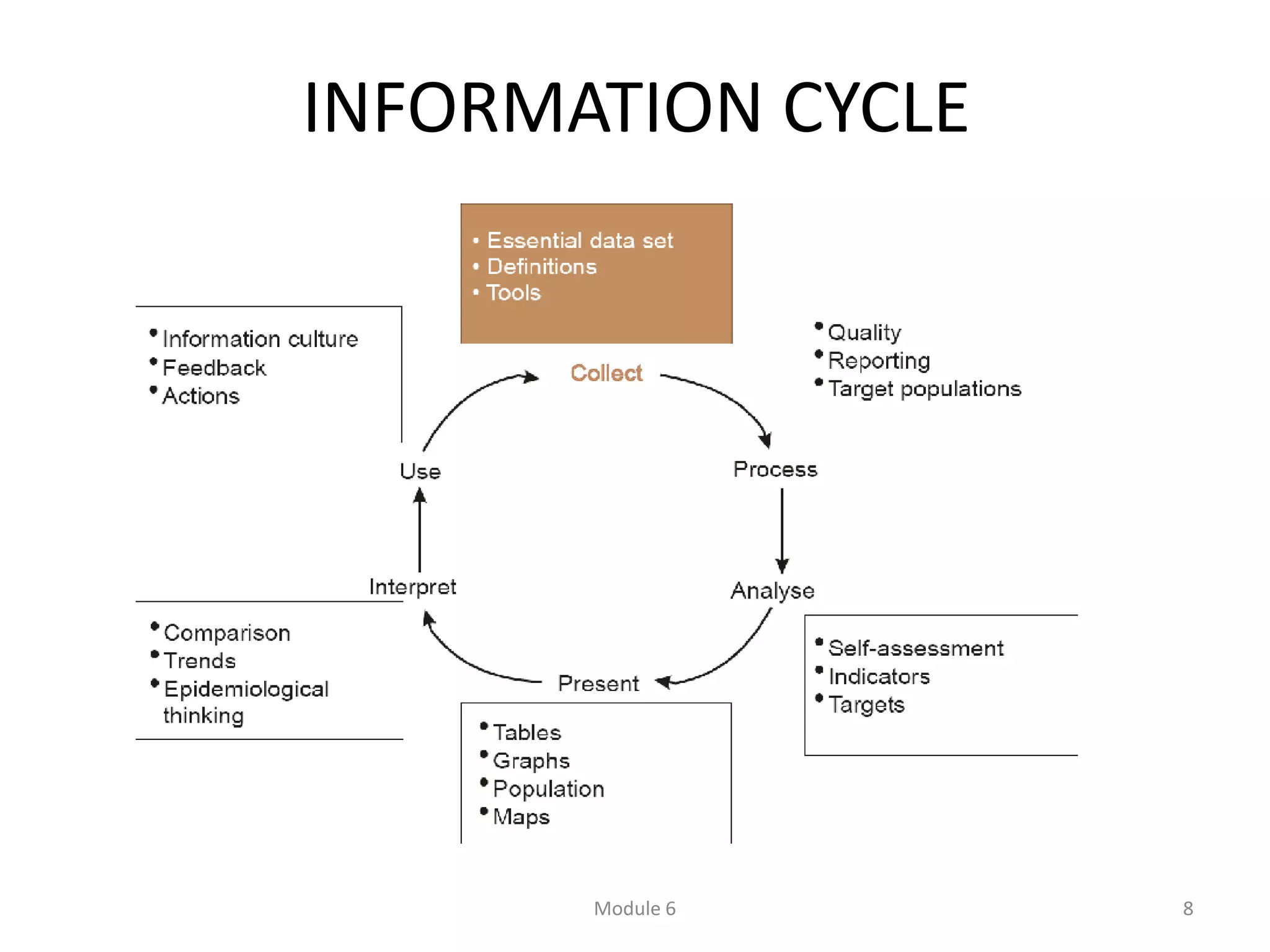
INFORMATION CYCLE
Module 6 8
Indicators
• Inputs, Process
‒ Was the program carried out as planned? How
well was it carried out?
• Outputs, Results
‒ Did the expected change occur? How much
change occurred?
• Outcome, Impact
‒ Has the outcome changed in desired direction?
Does the change signal program “success”?
Module 6 9
Preparing an action plan
• Determine what people and sectors of the
community should be included.
• Convene a planning group.
• Develop an action plan with action steps for all
proposed changes.
• Review completed plan.
• Follow through.
• Keep everyone informed.
• Keep track of what (and how well) you've done.
• Celebrate accomplishments.
Module 6 10
Contents of the action plan
• What action or change will occur?
• Who will carry it out?
• By when (for how long)?
• What resources are needed?
• Communication (who should know what?)
Module 6 11
Ensuring member accountability
• Supportive phone calls.
• Reports on progress at meetings.
• Celebrate accomplishments.
Module 6 12
Creating an action plan
• Exercise 5.1 Creating an action plan
Module 6 13
Module 6 14

Module 5

  • 1.
    MODULE 5 Health servicesdata utilization for planning and advocacy Module 6 1
  • 2.
    Aim • To introducethe concepts of monitoring and evaluation and its uses in quality improvement and action planning Module 6 2
  • 3.
    Learning Outcomes • Plan, implement and monitor the sensitive health services in the community • Plan for the establishment of improvement collaboratives to monitor service performance • Action plan for developing functional referral mechanisms from community to higher level health services. Module 6 3
  • 4.
    Definitions • Monitoring isthe routine reporting of data on program implementation and performance • Evaluation is the periodic assessment of program impact at the population level and value Module 6 4
  • 5.
    Monitoring • Allows accurateunderstanding of program implementation – Has the program is implemented according to the workplan ? – Where are the gaps? What is working well? – Who needs more training? – Where is the supply chain breaking down? Module 6 5
  • 6.
    Evaluation • Measurement ofbehaviors and/or health outcomes in target population that can be attributed to specific program activities or interventions – Are there any changes in behavior or health outcomes in the target population? – To what extent are observed changes in the target population related to program efforts? Module 6 6
  • 7.
    Uses of M&Efor program management • Informs decisions about program operations and service delivery • Ensures effective and efficient use of resources • Determine whether or not the program is implemented according to plan • Meets reporting requirements by funders and government sectors • Evaluates the extent to which the program/project is having or has had the desired impact Module 6 7
  • 8.
  • 9.
    Indicators • Inputs, Process ‒Was the program carried out as planned? How well was it carried out? • Outputs, Results ‒ Did the expected change occur? How much change occurred? • Outcome, Impact ‒ Has the outcome changed in desired direction? Does the change signal program “success”? Module 6 9
  • 10.
    Preparing an actionplan • Determine what people and sectors of the community should be included. • Convene a planning group. • Develop an action plan with action steps for all proposed changes. • Review completed plan. • Follow through. • Keep everyone informed. • Keep track of what (and how well) you've done. • Celebrate accomplishments. Module 6 10
  • 11.
    Contents of theaction plan • What action or change will occur? • Who will carry it out? • By when (for how long)? • What resources are needed? • Communication (who should know what?) Module 6 11
  • 12.
    Ensuring member accountability •Supportive phone calls. • Reports on progress at meetings. • Celebrate accomplishments. Module 6 12
  • 13.
    Creating an actionplan • Exercise 5.1 Creating an action plan Module 6 13
  • 14.

Editor's Notes

  • #3 REVIEW the objectives for the module with participants.
  • #4 REVIEW the learning outcomes with the participants
  • #5 EXPLAIN that the importance of both activities
  • #7 EMPHASISE that this is a specialised activity normally carried out by researchers. The KNB project has engaged the services of the Wits School of Public to conduct this activity
  • #9 DESCRIBE The information Cycle is a series of steps carried out to extract information from raw data. ASK the participant to describe the information cycle in their own context
  • #10 EXPLAIN the indicators using examples
  • #14 ASK Participants to form small groups of 2- 4 people READ through instructions on handout   FACILITATE Report back and round robin.   ASK one to two groups to present their action plan