Module 2
Individual Behavior:
Personality, Perception
and Learning
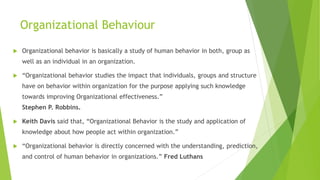
Organizational Behaviour
 Organizational behavior is basically a study of human behavior in both, group as
well as an individual in an organization.
 “Organizational behavior studies the impact that individuals, groups and structure
have on behavior within organization for the purpose applying such knowledge
towards improving Organizational effectiveness.”
Stephen P. Robbins.
 Keith Davis said that, “Organizational Behavior is the study and application of
knowledge about how people act within organization.”
 “Organizational behavior is directly concerned with the understanding, prediction,
and control of human behavior in organizations.” Fred Luthans
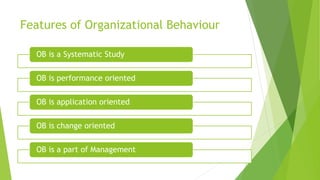
Features of Organizational Behaviour
OB is a Systematic Study
OB is performance oriented
OB is application oriented
OB is change oriented
OB is a part of Management
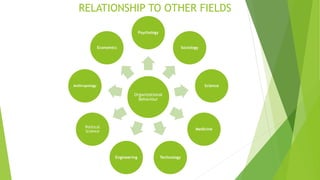
RELATIONSHIP TO OTHER FIELDS
Organizational
Behaviour
Psychology
Sociology
Science
Medicine
Technology
Engineering
Political
Science
Anthropology
Economics
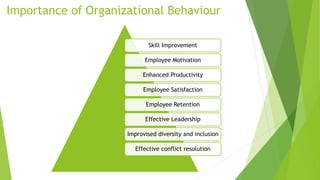
Importance of Organizational Behaviour
Skill Improvement
Employee Motivation
Enhanced Productivity
Employee Satisfaction
Employee Retention
Effective Leadership
Improvised diversity and inclusion
Effective conflict resolution
Models of Organizational Behaviour
 Every organization develops a particular model in which behaviourof
the people takes place.
 This model is developed on the basis of managements assumptions
about the people and the vision of the management. This can be vary
to a great extent . These leads to develop various OB models.
 “Most of the organization tend to be arranged on the assumption that
people cannot be trusted or relied on even tiny matters.
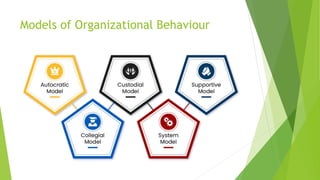
Models of Organizational Behaviour
Models of Organizational Behavior
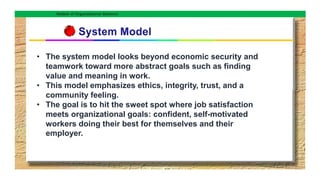
• The system model looks beyond economic security and
teamwork toward more abstract goals such as finding
value and meaning in work.
• This model emphasizes ethics, integrity, trust, and a
community feeling.
• The goal is to hit the sweet spot where job satisfaction
meets organizational goals: confident, self-motivated
workers doing their best for themselves and their
employer.
Models of Organizational Behavior
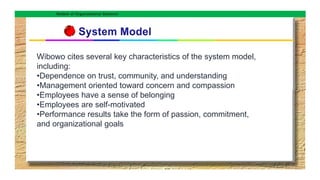
Wibowo cites several key characteristics of the system model,
including:
•Dependence on trust, community, and understanding
•Management oriented toward concern and compassion
•Employees have a sense of belonging
•Employees are self-motivated
•Performance results take the form of passion, commitment,
and organizational goals
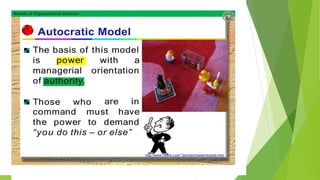
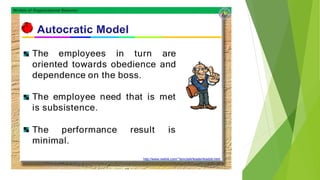
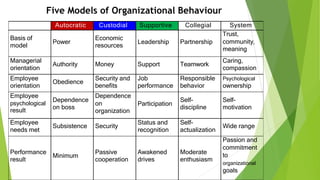
Autocratic Custodial Supportive Collegial System
Basis of
model
Power
Economic
resources
Leadership Partnership
Trust,
community,
meaning
Managerial
orientation
Authority Money Support Teamwork
Caring,
compassion
Employee
orientation
Obedience
Security and
benefits
Job
performance
Responsible
behavior
Psychological
ownership
Employee
psychological
result
Dependence
on boss
Dependence
on
organization
Participation
Self-
discipline
Self-
motivation
Employee
needs met
Subsistence Security
Status and
recognition
Self-
actualization
Wide range
Performance
result
Minimum
Passive
cooperation
Awakened
drives
Moderate
enthusiasm
Passion and
commitment
to
organizational
goals
Five Models of Organizational Behaviour

Module 2_Session 1.pptx_organizational behaviour

  • 1.
  • 2.
    Organizational Behaviour  Organizationalbehavior is basically a study of human behavior in both, group as well as an individual in an organization.  “Organizational behavior studies the impact that individuals, groups and structure have on behavior within organization for the purpose applying such knowledge towards improving Organizational effectiveness.” Stephen P. Robbins.  Keith Davis said that, “Organizational Behavior is the study and application of knowledge about how people act within organization.”  “Organizational behavior is directly concerned with the understanding, prediction, and control of human behavior in organizations.” Fred Luthans
  • 3.
    Features of OrganizationalBehaviour OB is a Systematic Study OB is performance oriented OB is application oriented OB is change oriented OB is a part of Management
  • 4.
    RELATIONSHIP TO OTHERFIELDS Organizational Behaviour Psychology Sociology Science Medicine Technology Engineering Political Science Anthropology Economics
  • 5.
    Importance of OrganizationalBehaviour Skill Improvement Employee Motivation Enhanced Productivity Employee Satisfaction Employee Retention Effective Leadership Improvised diversity and inclusion Effective conflict resolution
  • 6.
    Models of OrganizationalBehaviour  Every organization develops a particular model in which behaviourof the people takes place.  This model is developed on the basis of managements assumptions about the people and the vision of the management. This can be vary to a great extent . These leads to develop various OB models.  “Most of the organization tend to be arranged on the assumption that people cannot be trusted or relied on even tiny matters.
  • 7.
  • 19.
    Models of OrganizationalBehavior • The system model looks beyond economic security and teamwork toward more abstract goals such as finding value and meaning in work. • This model emphasizes ethics, integrity, trust, and a community feeling. • The goal is to hit the sweet spot where job satisfaction meets organizational goals: confident, self-motivated workers doing their best for themselves and their employer.
  • 20.
    Models of OrganizationalBehavior Wibowo cites several key characteristics of the system model, including: •Dependence on trust, community, and understanding •Management oriented toward concern and compassion •Employees have a sense of belonging •Employees are self-motivated •Performance results take the form of passion, commitment, and organizational goals
  • 21.
    Autocratic Custodial SupportiveCollegial System Basis of model Power Economic resources Leadership Partnership Trust, community, meaning Managerial orientation Authority Money Support Teamwork Caring, compassion Employee orientation Obedience Security and benefits Job performance Responsible behavior Psychological ownership Employee psychological result Dependence on boss Dependence on organization Participation Self- discipline Self- motivation Employee needs met Subsistence Security Status and recognition Self- actualization Wide range Performance result Minimum Passive cooperation Awakened drives Moderate enthusiasm Passion and commitment to organizational goals Five Models of Organizational Behaviour