THEORIES ON
FACTORS
AFFECTING
MOTIVATION
ATTRIBUTION
THEORY
This theory explains that we
attributes our successes or failures
or other events to several factors.
THREE WAYS
1. Locus (place) -Internal
versus external.
2.Stability -Stable versus
unstable.
3..Controllability -Controllable
versus uncontrollable.
LOCUS (SPACE)
The locus of attribution is
the location (figuratively
speaking) of the source of
success or failure.
Internal- is the belief that you are
in control of your life and that your
actions determine your
Outcomes External- is the belief
that outside forces like luck, fate, or
other people control what happens to
you.
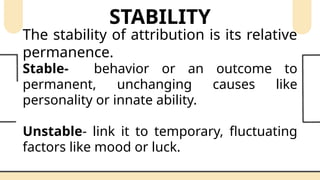
STABILITY
The stability of attribution is its relative
permanence.
Stable- behavior or an outcome to
permanent, unchanging causes like
personality or innate ability.
Unstable- link it to temporary, fluctuating
factors like mood or luck.
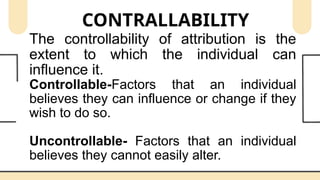
CONTRALLABILITY
The controllability of attribution is the
extent to which the individual can
influence it.
Controllable-Factors that an individual
believes they can influence or change if they
wish to do so.
Uncontrollable- Factors that an individual
believes they cannot easily alter.
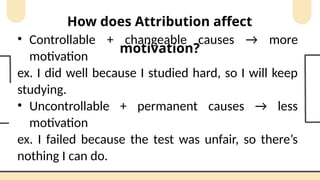
How does Attribution affect
motivation?
• Controllable + changeable causes → more
motivation
ex. I did well because I studied hard, so I will keep
studying.
• Uncontrollable + permanent causes → less
motivation
ex. I failed because the test was unfair, so there’s
nothing I can do.
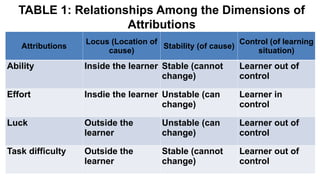
TABLE 1: Relationships Among the Dimensions of
Attributions
Attributions
Locus (Location of
cause)
Stability (of cause)
Control (of learning
situation)
Ability Inside the learner Stable (cannot
change)
Learner out of
control
Effort Insdie the learner Unstable (can
change)
Learner in
control
Luck Outside the
learner
Unstable (can
change)
Learner out of
control
Task difficulty Outside the
learner
Stable (cannot
change)
Learner out of
control
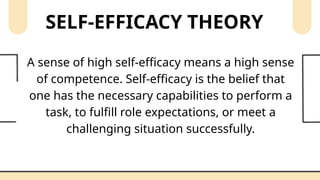
SELF-EFFICACY THEORY
A sense of high self-efficacy means a high sense
of competence. Self-efficacy is the belief that
one has the necessary capabilities to perform a
task, to fulfill role expectations, or meet a
challenging situation successfully.
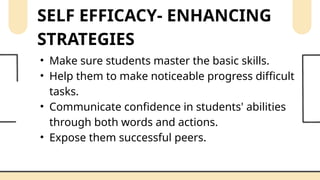
SELF EFFICACY- ENHANCING
STRATEGIES
• Make sure students master the basic skills.
• Help them to make noticeable progress difficult
tasks.
• Communicate confidence in students' abilities
through both words and actions.
• Expose them successful peers.
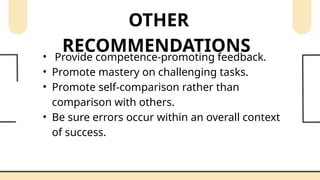
OTHER
RECOMMENDATIONS
• Provide competence-promoting feedback.
• Promote mastery on challenging tasks.
• Promote self-comparison rather than
comparison with others.
• Be sure errors occur within an overall context
of success.
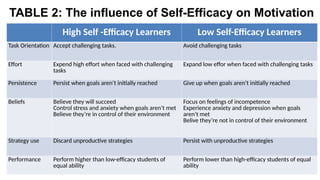
TABLE 2: The influence of Self-Efficacy on Motivation
High Self -Efficacy Learners Low Self-Efficacy Learners
Task Orientation Accept challenging tasks. Avoid challenging tasks
Effort Expend high effort when faced with challenging
tasks
Expand low effor when faced with challenging tasks
Persistence Persist when goals aren’t initially reached Give up when goals aren’t initially reached
Beliefs Believe they will succeed
Control stress and anxiety when goals aren’t met
Believe they’re in control of their environment
Focus on feelings of incompetence
Experience anxiety and depression when goals
aren’t met
Belive they’re not in control of their environment
Strategy use Discard unproductive strategies Persist with unproductive strategies
Performance Perform higher than low-efficacy students of
equal ability
Perform lower than high-efficacy students of equal
ability
SELF-DETERMINATION
AND SELF
REGULATION
THEORIES
Students are more likely intrinsically motivated
when they have a schee of self-determination -
when they believe that they have some choice and
control regarding the things they do and the
directions their lives take. A student's sense of self
determination is demonstrated in his capacity for
self-regulation. Self-regulation refers to a person's
ability to master himself. He is the "I am the captain
of my soul" type of person. He is not a victim of
circumstances. He is capable of directing himself.
WHAT ARE INDICATORS
OF SELF-REGULATION?
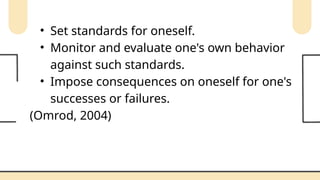
• Set standards for oneself.
• Monitor and evaluate one's own behavior
against such standards.
• Impose consequences on oneself for one's
successes or failures.
(Omrod, 2004)
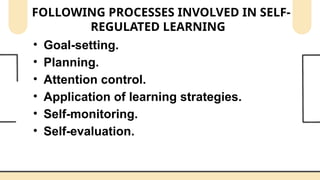
FOLLOWING PROCESSES INVOLVED IN SELF-
REGULATED LEARNING
• Goal-setting.
• Planning.
• Attention control.
• Application of learning strategies.
• Self-monitoring.
• Self-evaluation.
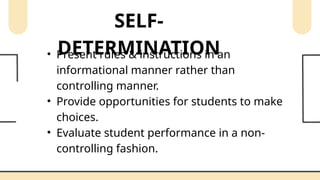
SELF-
DETERMINATION
• Present rules & instructions in an
informational manner rather than
controlling manner.
• Provide opportunities for students to make
choices.
• Evaluate student performance in a non-
controlling fashion.
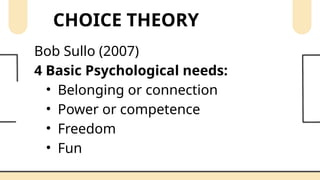
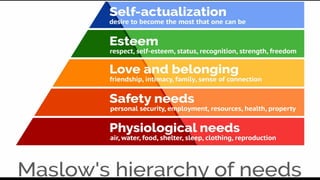
CHOICE THEORY
Bob Sullo (2007)
4 Basic Psychological needs:
• Belonging or connection
• Power or competence
• Freedom
• Fun
GOAL THEORY
LEARNING GOALS
VERSUS
PERFORMANCE
GOALS
LEARNING GOAL
"desire to acquire additional
knowledge or master new
skills."
PERFORMANCE GOAL
"desire to look good and receive
favorable judgments from others
or else look bad and receive
unfavorable judgments."
SELF-DETERMINED
GOALS
-personally relevant goals
and self-determined goals
enhance a student's
motivation.
GOAL SETTING
Setting goals is undoubtedly beneficial for
individuals, teams, and organizations.
Numerous studies show that goal setting
positively impacts productivity and
performance. However, not everyone, and not
every organization, can stick to goals or drive
positive results.
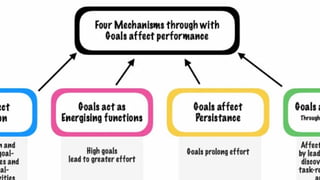
Goals serve as a directive function: they direct attention
and effort toward goal-relevant activities and away from
goal-irrelevant activities. This effect occurs both cognitively
and behaviorally.
• Goals have an energizing function: High goals lead to
greater effort than low goals. This applies to all kinds of
tasks, including those that entail physical effort,
repeated performance, subjective effort, and
physiological effort.
• Goals have an energizing function: High goals lead
to greater effort than low goals. This applies to all
kinds of tasks, including those that entail physical
effort, repeated performance, subjective effort, and
physiological effort.
• Goals affect action: They indirectly lead to arousal,
discovery, and/or promote the use of task-relevant
knowledge and strategies. Research indicates that
when people face task goals, they instinctively utilize
their existing relevant knowledge and skills.
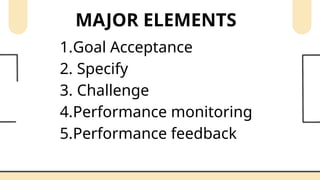
MAJOR ELEMENTS
1.Goal Acceptance
2. Specify
3. Challenge
4.Performance monitoring
5.Performance feedback
GOAL ACCEPTANCE
This refers to how willingly and genuinely an
individual accepts or commits to a goal.
• When people accept a goal, they are more likely
to put effort into achieving it.
• Acceptance increases when individuals
participate in setting the goal or when they
understand and agree with its importance
SPECIFY
Specific goals are clear, precise, and well-
defined rather than vague or general.
• Specific goals tell exactly what needs to be
done and by when.
• They reduce confusion and make
performance measurable.
CHALLENGE
This refers to how difficult or challenging a goal is.
• Challenging (but realistic) goals motivate
individuals to exert more effort and use their
abilities effectively.
• However, if goals are too difficult or unrealistic,
motivation and performance can decrease.
PERFORMANCE
MONITORING
This involves tracking progress toward the goal.
• Regularly checking performance helps
individuals know how well they are doing and
whether they need to adjust their strategies.
• It ensures accountability and keeps focus on
the goal.
PERFORMANCE
FEEDBACK
Feedback provides information on how well one is
performing relative to the goal.
• Feedback helps individuals understand what’s
working and what needs improvement.
• Constructive feedback boosts motivation,
learning, and future performance.
THANK YOU

Module 20 Theories on Factors Affecting Motivation

  • 1.
  • 2.
    ATTRIBUTION THEORY This theory explainsthat we attributes our successes or failures or other events to several factors.
  • 3.
  • 4.
    1. Locus (place)-Internal versus external. 2.Stability -Stable versus unstable. 3..Controllability -Controllable versus uncontrollable.
  • 5.
    LOCUS (SPACE) The locusof attribution is the location (figuratively speaking) of the source of success or failure.
  • 6.
    Internal- is thebelief that you are in control of your life and that your actions determine your Outcomes External- is the belief that outside forces like luck, fate, or other people control what happens to you.
  • 7.
    STABILITY The stability ofattribution is its relative permanence. Stable- behavior or an outcome to permanent, unchanging causes like personality or innate ability. Unstable- link it to temporary, fluctuating factors like mood or luck.
  • 8.
    CONTRALLABILITY The controllability ofattribution is the extent to which the individual can influence it. Controllable-Factors that an individual believes they can influence or change if they wish to do so. Uncontrollable- Factors that an individual believes they cannot easily alter.
  • 9.
    How does Attributionaffect motivation? • Controllable + changeable causes → more motivation ex. I did well because I studied hard, so I will keep studying. • Uncontrollable + permanent causes → less motivation ex. I failed because the test was unfair, so there’s nothing I can do.
  • 10.
    TABLE 1: RelationshipsAmong the Dimensions of Attributions Attributions Locus (Location of cause) Stability (of cause) Control (of learning situation) Ability Inside the learner Stable (cannot change) Learner out of control Effort Insdie the learner Unstable (can change) Learner in control Luck Outside the learner Unstable (can change) Learner out of control Task difficulty Outside the learner Stable (cannot change) Learner out of control
  • 11.
    SELF-EFFICACY THEORY A senseof high self-efficacy means a high sense of competence. Self-efficacy is the belief that one has the necessary capabilities to perform a task, to fulfill role expectations, or meet a challenging situation successfully.
  • 12.
    SELF EFFICACY- ENHANCING STRATEGIES •Make sure students master the basic skills. • Help them to make noticeable progress difficult tasks. • Communicate confidence in students' abilities through both words and actions. • Expose them successful peers.
  • 13.
    OTHER RECOMMENDATIONS • Provide competence-promotingfeedback. • Promote mastery on challenging tasks. • Promote self-comparison rather than comparison with others. • Be sure errors occur within an overall context of success.
  • 14.
    TABLE 2: Theinfluence of Self-Efficacy on Motivation High Self -Efficacy Learners Low Self-Efficacy Learners Task Orientation Accept challenging tasks. Avoid challenging tasks Effort Expend high effort when faced with challenging tasks Expand low effor when faced with challenging tasks Persistence Persist when goals aren’t initially reached Give up when goals aren’t initially reached Beliefs Believe they will succeed Control stress and anxiety when goals aren’t met Believe they’re in control of their environment Focus on feelings of incompetence Experience anxiety and depression when goals aren’t met Belive they’re not in control of their environment Strategy use Discard unproductive strategies Persist with unproductive strategies Performance Perform higher than low-efficacy students of equal ability Perform lower than high-efficacy students of equal ability
  • 15.
  • 16.
    Students are morelikely intrinsically motivated when they have a schee of self-determination - when they believe that they have some choice and control regarding the things they do and the directions their lives take. A student's sense of self determination is demonstrated in his capacity for self-regulation. Self-regulation refers to a person's ability to master himself. He is the "I am the captain of my soul" type of person. He is not a victim of circumstances. He is capable of directing himself.
  • 17.
    WHAT ARE INDICATORS OFSELF-REGULATION?
  • 18.
    • Set standardsfor oneself. • Monitor and evaluate one's own behavior against such standards. • Impose consequences on oneself for one's successes or failures. (Omrod, 2004)
  • 19.
    FOLLOWING PROCESSES INVOLVEDIN SELF- REGULATED LEARNING • Goal-setting. • Planning. • Attention control. • Application of learning strategies. • Self-monitoring. • Self-evaluation.
  • 20.
    SELF- DETERMINATION • Present rules& instructions in an informational manner rather than controlling manner. • Provide opportunities for students to make choices. • Evaluate student performance in a non- controlling fashion.
  • 21.
    CHOICE THEORY Bob Sullo(2007) 4 Basic Psychological needs: • Belonging or connection • Power or competence • Freedom • Fun
  • 23.
  • 24.
  • 25.
    LEARNING GOAL "desire toacquire additional knowledge or master new skills."
  • 26.
    PERFORMANCE GOAL "desire tolook good and receive favorable judgments from others or else look bad and receive unfavorable judgments."
  • 27.
    SELF-DETERMINED GOALS -personally relevant goals andself-determined goals enhance a student's motivation.
  • 28.
    GOAL SETTING Setting goalsis undoubtedly beneficial for individuals, teams, and organizations. Numerous studies show that goal setting positively impacts productivity and performance. However, not everyone, and not every organization, can stick to goals or drive positive results.
  • 30.
    Goals serve asa directive function: they direct attention and effort toward goal-relevant activities and away from goal-irrelevant activities. This effect occurs both cognitively and behaviorally. • Goals have an energizing function: High goals lead to greater effort than low goals. This applies to all kinds of tasks, including those that entail physical effort, repeated performance, subjective effort, and physiological effort.
  • 31.
    • Goals havean energizing function: High goals lead to greater effort than low goals. This applies to all kinds of tasks, including those that entail physical effort, repeated performance, subjective effort, and physiological effort. • Goals affect action: They indirectly lead to arousal, discovery, and/or promote the use of task-relevant knowledge and strategies. Research indicates that when people face task goals, they instinctively utilize their existing relevant knowledge and skills.
  • 32.
    MAJOR ELEMENTS 1.Goal Acceptance 2.Specify 3. Challenge 4.Performance monitoring 5.Performance feedback
  • 33.
    GOAL ACCEPTANCE This refersto how willingly and genuinely an individual accepts or commits to a goal. • When people accept a goal, they are more likely to put effort into achieving it. • Acceptance increases when individuals participate in setting the goal or when they understand and agree with its importance
  • 34.
    SPECIFY Specific goals areclear, precise, and well- defined rather than vague or general. • Specific goals tell exactly what needs to be done and by when. • They reduce confusion and make performance measurable.
  • 35.
    CHALLENGE This refers tohow difficult or challenging a goal is. • Challenging (but realistic) goals motivate individuals to exert more effort and use their abilities effectively. • However, if goals are too difficult or unrealistic, motivation and performance can decrease.
  • 36.
    PERFORMANCE MONITORING This involves trackingprogress toward the goal. • Regularly checking performance helps individuals know how well they are doing and whether they need to adjust their strategies. • It ensures accountability and keeps focus on the goal.
  • 37.
    PERFORMANCE FEEDBACK Feedback provides informationon how well one is performing relative to the goal. • Feedback helps individuals understand what’s working and what needs improvement. • Constructive feedback boosts motivation, learning, and future performance.
  • 38.