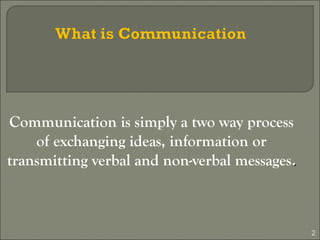
Communication is simply a two way process
of exchanging ideas, information or
transmitting verbal and non-verbal messages..
2
3
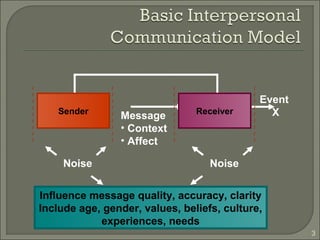
Event
XMessage
• Context
• Affect
Noise
/
/
/
/
/
/
/
/
/
/
/
/
/
/
/
/
/
/
/
/
/
/
/
/
/
/
/
/
/
/
/
/
/
/
/
/
Noise
Influence message quality, accuracy, clarity
Include age, gender, values, beliefs, culture,
experiences, needs
Influence message quality, accuracy, clarity
Include age, gender, values, beliefs, culture,
experiences, needs
ReceiverReceiverSenderSender
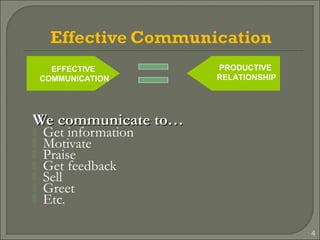
We communicate to…We communicate to…
 Get information
 Motivate
 Praise
 Get feedback
 Sell
 Greet
 Etc.
4
EFFECTIVE
COMMUNICATION
PRODUCTIVE
RELATIONSHIP
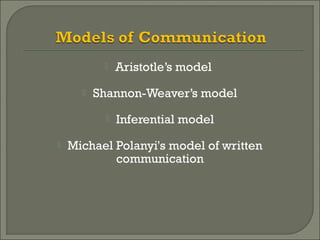
 Aristotle’s model
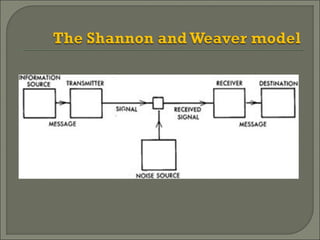
 Shannon-Weaver’s model
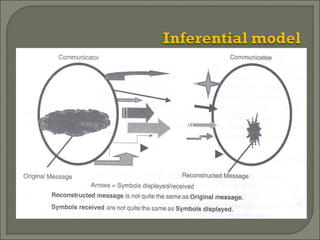
 Inferential model
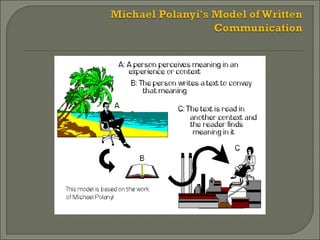
 Michael Polanyi's model of written
communication
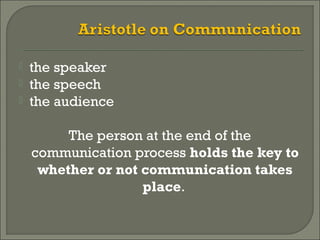
 the speaker
 the speech
 the audience
The person at the end of the
communication process holds the key to
whether or not communication takes
place.
10
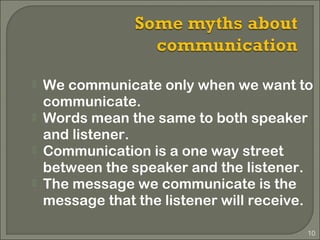
 We communicate only when we want to
communicate.
 Words mean the same to both speaker
and listener.
 Communication is a one way street
between the speaker and the listener.
 The message we communicate is the
message that the listener will receive.
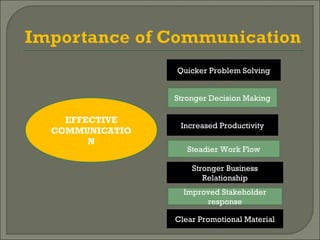
EFFECTIVE
COMMUNICATIO
N
Quicker Problem Solving
Stronger Decision Making
Steadier Work Flow
Improved Stakeholder
response
Stronger Business
Relationship
Clear Promotional Material
Increased Productivity
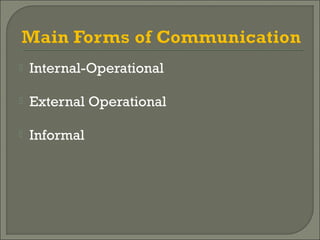
 Internal-Operational
 External Operational
 Informal
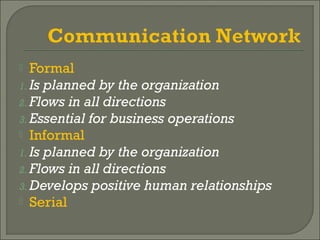
 Formal
1. Is planned by the organization
2. Flows in all directions
3. Essential for business operations
 Informal
1. Is planned by the organization
2. Flows in all directions
3. Develops positive human relationships
 Serial
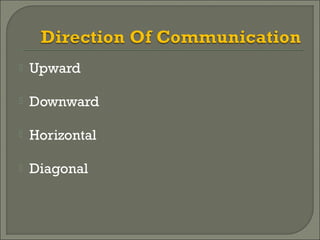
 Upward
 Downward
 Horizontal
 Diagonal
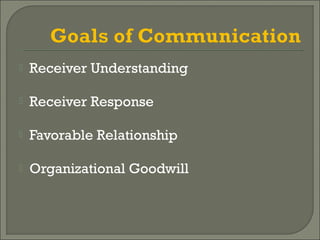
 Receiver Understanding
 Receiver Response
 Favorable Relationship
 Organizational Goodwill
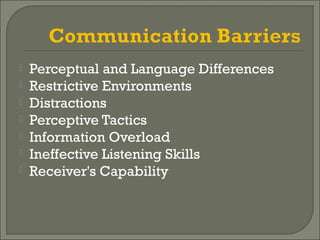
 Perceptual and Language Differences
 Restrictive Environments
 Distractions
 Perceptive Tactics
 Information Overload
 Ineffective Listening Skills
 Receiver's Capability
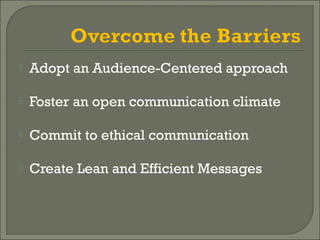
 Adopt an Audience-Centered approach
 Foster an open communication climate
 Commit to ethical communication
 Create Lean and Efficient Messages

Module 1 Introduction

  • 2.
    Communication is simplya two way process of exchanging ideas, information or transmitting verbal and non-verbal messages.. 2
  • 3.
    3 Event XMessage • Context • Affect Noise / / / / / / / / / / / / / / / / / / / / / / / / / / / / / / / / / / / / Noise Influencemessage quality, accuracy, clarity Include age, gender, values, beliefs, culture, experiences, needs Influence message quality, accuracy, clarity Include age, gender, values, beliefs, culture, experiences, needs ReceiverReceiverSenderSender
  • 4.
    We communicate to…Wecommunicate to…  Get information  Motivate  Praise  Get feedback  Sell  Greet  Etc. 4 EFFECTIVE COMMUNICATION PRODUCTIVE RELATIONSHIP
  • 5.
     Aristotle’s model Shannon-Weaver’s model  Inferential model  Michael Polanyi's model of written communication
  • 6.
     the speaker the speech  the audience The person at the end of the communication process holds the key to whether or not communication takes place.
  • 10.
    10  We communicateonly when we want to communicate.  Words mean the same to both speaker and listener.  Communication is a one way street between the speaker and the listener.  The message we communicate is the message that the listener will receive.
  • 11.
    EFFECTIVE COMMUNICATIO N Quicker Problem Solving StrongerDecision Making Steadier Work Flow Improved Stakeholder response Stronger Business Relationship Clear Promotional Material Increased Productivity
  • 12.
     Internal-Operational  ExternalOperational  Informal
  • 13.
     Formal 1. Isplanned by the organization 2. Flows in all directions 3. Essential for business operations  Informal 1. Is planned by the organization 2. Flows in all directions 3. Develops positive human relationships  Serial
  • 14.
     Upward  Downward Horizontal  Diagonal
  • 15.
     Receiver Understanding Receiver Response  Favorable Relationship  Organizational Goodwill
  • 16.
     Perceptual andLanguage Differences  Restrictive Environments  Distractions  Perceptive Tactics  Information Overload  Ineffective Listening Skills  Receiver's Capability
  • 17.
     Adopt anAudience-Centered approach  Foster an open communication climate  Commit to ethical communication  Create Lean and Efficient Messages