Practical authentication and
authorization for external facing service
mesh applications
Siim Kaspar Uustalu
Backend team lead
The plan
● Set the scene
● Introduce authentication
● Add authorization on top
whoami
● I’m a software engineer
○ Delivered work for TUNE, the Estonian Road Admin. & others
○ Currently in digital banking
● Mooncascade helps you develop products
○ Trusted by banks, telcos & startups
○ Helps you bridge the hiring gap
○ Does development work across the stack
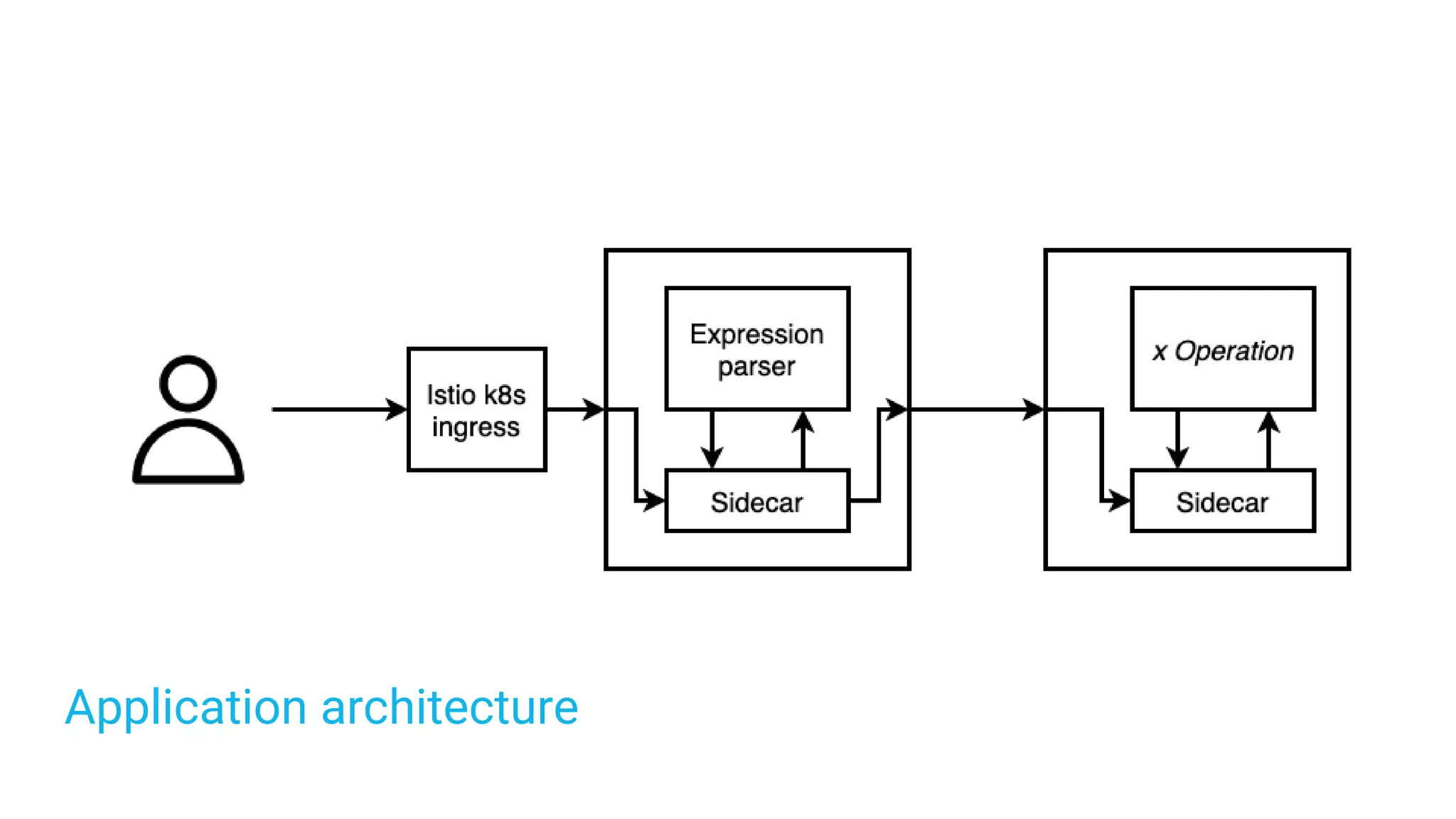
The scene: application
● Put on your architect hat
○ We’re building math as a service!
○ Service oriented architecture
■ HTTP expression parser + gRPC operation services
○ Containerised w/ k8s for orchestration
● Outsourced operations services
Application architecture
The scene: our mission
● Offer MaaS API
○ Identify users
○ Support authorization levels
● Support application growth
○ Avoid introducing code dependencies
○ Plan for team growth - autonomy matters
Authentication
● The usual scenarios
○ Machine users
○ Backend services as user agents
○ Client side applications
● Solved problem with the OAuth 2.0 framework
Authentication: implementation
● Make use of service mesh facilities
○ Istio: JWT based auth out of the box
■ Signature validation
■ Drawback: not good for user facing applications
● Extend minimally
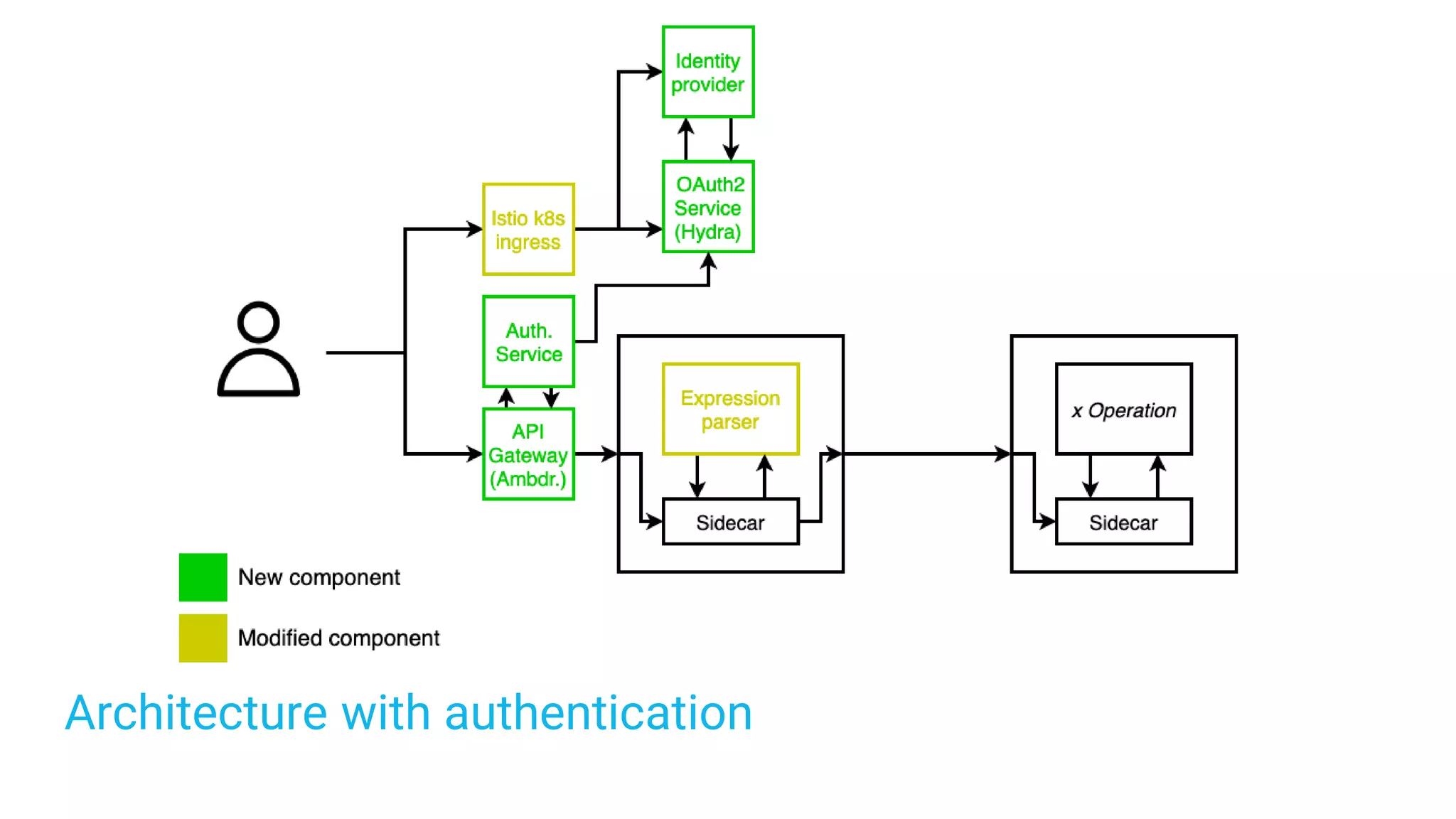
○ Replace out of box ingress with API gateway
○ Provide OAuth2 service + identity provider
○ Plug an authentication service into the API gateway
Authentication: the API gateway
● Authenticates requests
○ In combination with the authentication service
● Provides routing
● Terminates incoming TLS
○ Mutual TLS in the mesh
● Traefik, Ambassador & friends
Authentication: OAuth2 service
● Does the boring, but important parts
○ Client application management
○ Key management (maybe)
○ The actual protocol
● Integrates with an identity provider
○ That’s you!
● Should be off the shelf
Authentication: auth service
● Verifies issued OAuth token
○ Bridge between API gateway & OAuth2 service
● Issues short-lived internal JWTs
○ These carry requester identity, delegated down request chain
● Provides keys for the service mesh
○ Mesh verifies the signature using the public key
Architecture with authentication
Authorization
● Which actions are permitted given a set of facts?
● Retrofitting affects all services
● Separate domain with own rules in all services
● NB!: Distributed teams
● Idea: Separate the authorization policies from services
Authorization: implementation
● Istio enables policy definition out of the box
○ Based on JWT payload
○ Good enough for basic request control
● Adapters enable more fine-grained control
○ Response, better visibility over rule set
○ Lets roll with the Open Policy Agent adapter
Authorization: Open Policy Agent
● DSL for policy definition - Rego
○ Declarative policy definitions + capable standard library
○ Still testable
● Separate authorization domain per service
● Contract over library approach
○ Right tool for each job
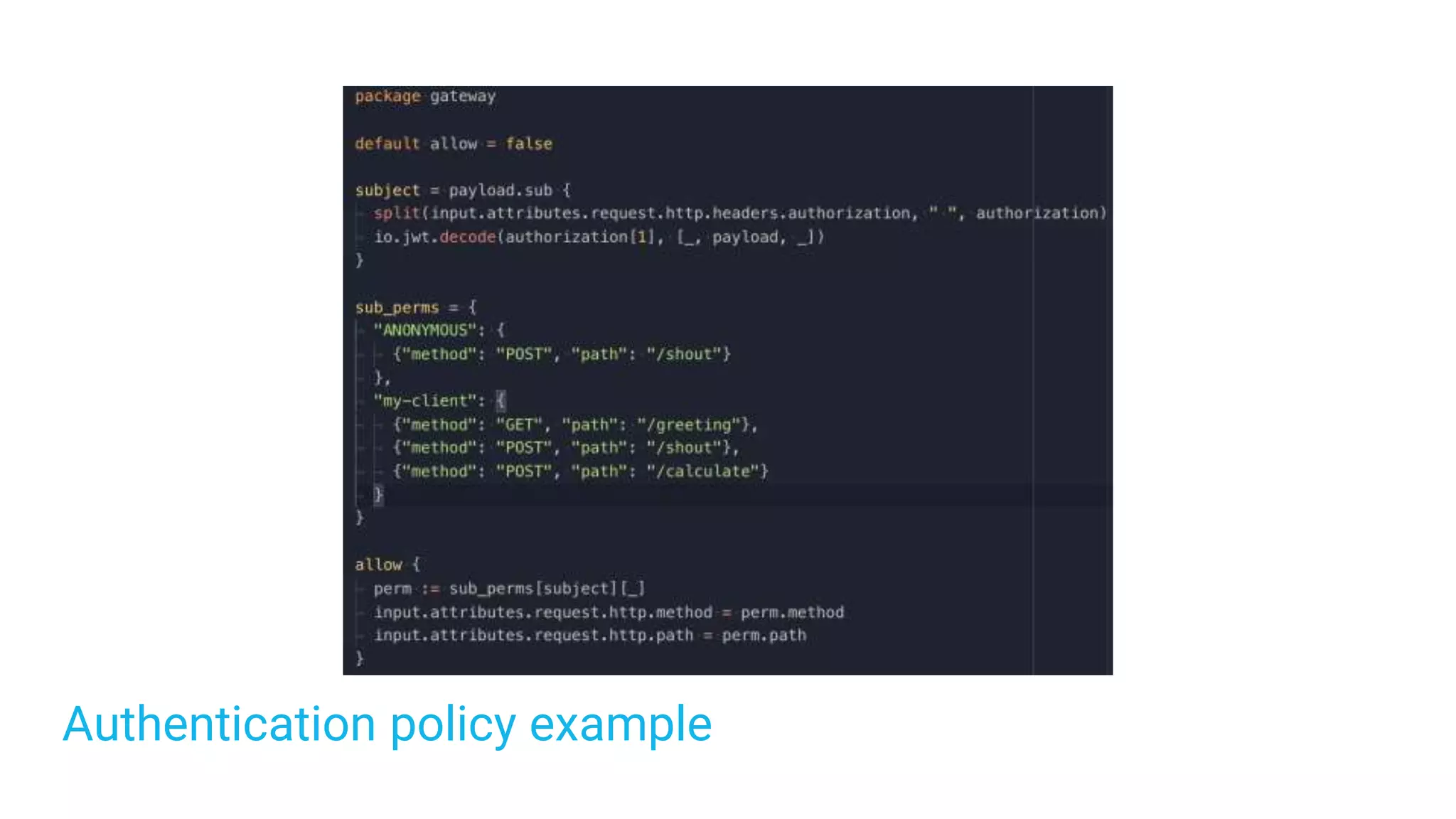
Authentication policy example
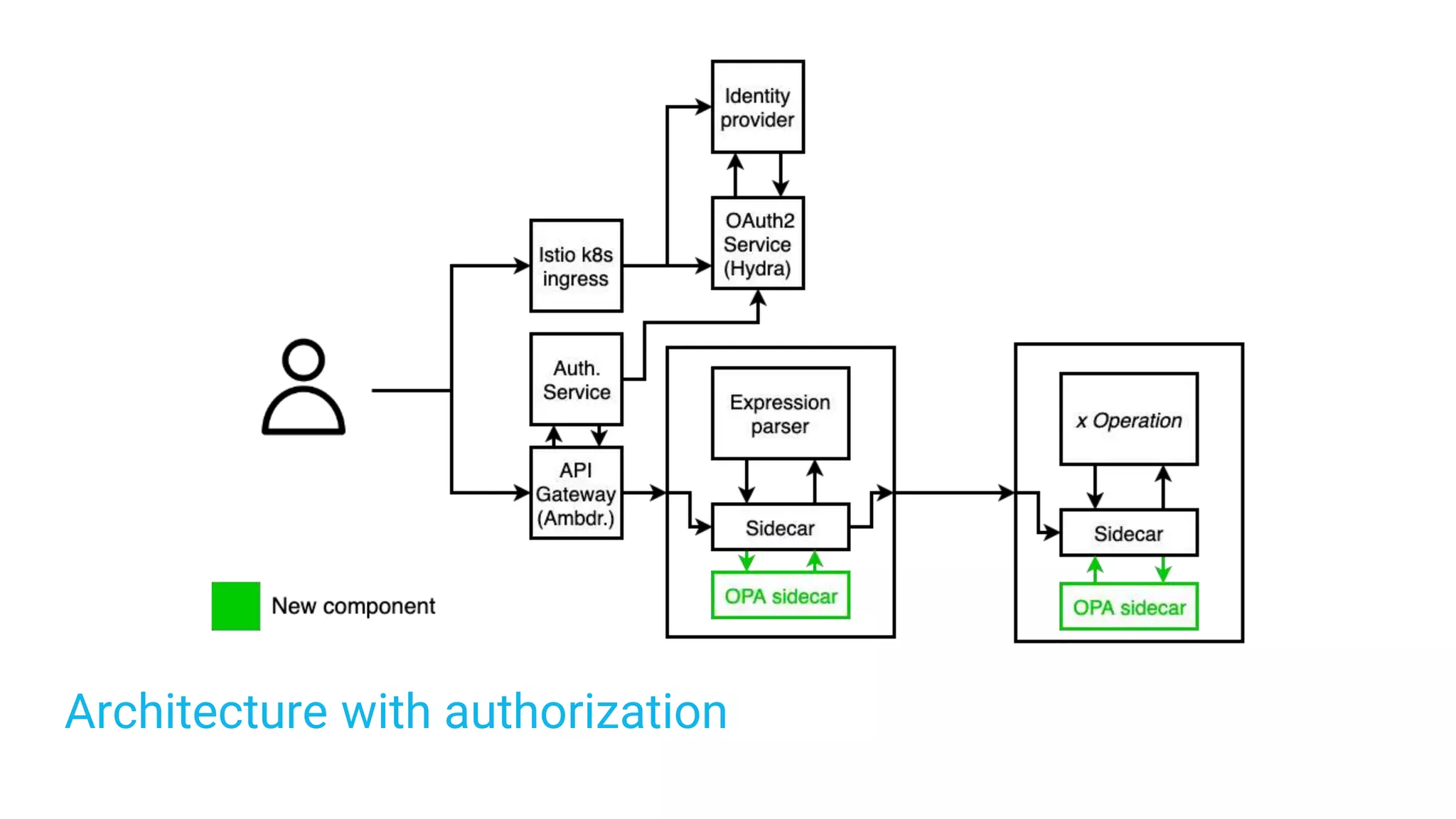
Architecture with authorization
Conclusion
● Extended an external facing service to...
○ Support the OAuth2 protocol
○ Support request authentication
○ Provide authorization from a sidecar service
● Made use of Istio facilities where possible
The service mesh pattern enables
cleaner separation between features and
the “glue”
siimkaspar.uustalu@mooncascade.com
mooncascade/service-mesh-auth-demo
Coming soon!

Modern problems in backend engineering, Siim Kaspar Uustalu

  • 1.
    Practical authentication and authorizationfor external facing service mesh applications Siim Kaspar Uustalu Backend team lead
  • 2.
    The plan ● Setthe scene ● Introduce authentication ● Add authorization on top
  • 3.
    whoami ● I’m asoftware engineer ○ Delivered work for TUNE, the Estonian Road Admin. & others ○ Currently in digital banking ● Mooncascade helps you develop products ○ Trusted by banks, telcos & startups ○ Helps you bridge the hiring gap ○ Does development work across the stack
  • 4.
    The scene: application ●Put on your architect hat ○ We’re building math as a service! ○ Service oriented architecture ■ HTTP expression parser + gRPC operation services ○ Containerised w/ k8s for orchestration ● Outsourced operations services
  • 5.
  • 6.
    The scene: ourmission ● Offer MaaS API ○ Identify users ○ Support authorization levels ● Support application growth ○ Avoid introducing code dependencies ○ Plan for team growth - autonomy matters
  • 7.
    Authentication ● The usualscenarios ○ Machine users ○ Backend services as user agents ○ Client side applications ● Solved problem with the OAuth 2.0 framework
  • 8.
    Authentication: implementation ● Makeuse of service mesh facilities ○ Istio: JWT based auth out of the box ■ Signature validation ■ Drawback: not good for user facing applications ● Extend minimally ○ Replace out of box ingress with API gateway ○ Provide OAuth2 service + identity provider ○ Plug an authentication service into the API gateway
  • 9.
    Authentication: the APIgateway ● Authenticates requests ○ In combination with the authentication service ● Provides routing ● Terminates incoming TLS ○ Mutual TLS in the mesh ● Traefik, Ambassador & friends
  • 10.
    Authentication: OAuth2 service ●Does the boring, but important parts ○ Client application management ○ Key management (maybe) ○ The actual protocol ● Integrates with an identity provider ○ That’s you! ● Should be off the shelf
  • 11.
    Authentication: auth service ●Verifies issued OAuth token ○ Bridge between API gateway & OAuth2 service ● Issues short-lived internal JWTs ○ These carry requester identity, delegated down request chain ● Provides keys for the service mesh ○ Mesh verifies the signature using the public key
  • 12.
  • 13.
    Authorization ● Which actionsare permitted given a set of facts? ● Retrofitting affects all services ● Separate domain with own rules in all services ● NB!: Distributed teams ● Idea: Separate the authorization policies from services
  • 14.
    Authorization: implementation ● Istioenables policy definition out of the box ○ Based on JWT payload ○ Good enough for basic request control ● Adapters enable more fine-grained control ○ Response, better visibility over rule set ○ Lets roll with the Open Policy Agent adapter
  • 15.
    Authorization: Open PolicyAgent ● DSL for policy definition - Rego ○ Declarative policy definitions + capable standard library ○ Still testable ● Separate authorization domain per service ● Contract over library approach ○ Right tool for each job
  • 16.
  • 17.
  • 18.
    Conclusion ● Extended anexternal facing service to... ○ Support the OAuth2 protocol ○ Support request authentication ○ Provide authorization from a sidecar service ● Made use of Istio facilities where possible
  • 19.
    The service meshpattern enables cleaner separation between features and the “glue” siimkaspar.uustalu@mooncascade.com mooncascade/service-mesh-auth-demo Coming soon!