MOBISERV - An Integrated Intelligent
Home Environment for the Provision of
Health, Nutrition and Mobility Services
for Older Adults
Bristol Robotics Laboratory
Sanja Dogramadzi,
Praminda Caleb-
Solly, Christine
Fear
Project Partners
• Smart Homes - The Netherlands, Coordinator;
• Bristol Robotics Laboratory, University of the West of
England - United Kingdom;
• Robosoft – France;
• Aristotle University of Thessaloniki – Greece;
• Centre Suisse d’Electronique – Switzerland;
• Lappeenranta University of Technology – Finland;
• Smartex s.r.l. – Italy;
• Stichting ST ANNA Zorggroep - The Netherlands
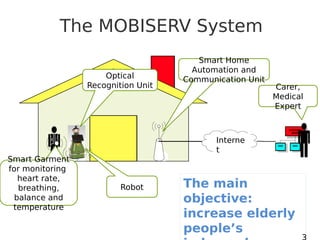
The MOBISERV System
Robot
Smart Home
Automation and
Communication Unit
Carer,
Medical
Expert
Interne
t
Smart Garment
for monitoring
heart rate,
breathing,
balance and
temperature
Optical
Recognition Unit
The main
objective:
increase elderly
people’s
Methods
• Integration of physiological and
monitoring sensors with a smart
environment and a mobile robot unit
• Extensive user needs elicitation and
evaluations
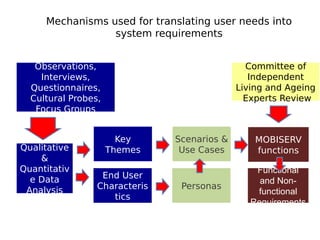
Mechanisms used for translating user needs into
system requirements
Qualitative
&
Quantitativ
e Data
Analysis
Key
Themes
Scenarios &
Use Cases
Personas
End User
Characteris
tics
Functional
and Non-
functional
Requirements
MOBISERV
functions
Observations,
Interviews,
Questionnaires,
Cultural Probes,
Focus Groups
Committee of
Independent
Living and Ageing
Experts Review
MOBISERV services
• nutrition assistance and dehydration prevention by
eating and drinking reminders and suggestions;
• encouraging physical activity and specific exercises
through monitoring vital signs;
• fall detection with direct communication to a care
centre;
• remote control for the home environment, including
warnings about unwanted situations;
• video communication to friends, family, and health
professionals, and
• games for entertainment and cognitive stimulation
Testing
The final MOBISERV system prototype and its
components have been tested in a large range of studies
with:
• primary users
• secondary users (partners, formal and informal carers)
• tertiary users (care managers and policy makers)
in various settings such as labs, people’s own homes, and
care homes.
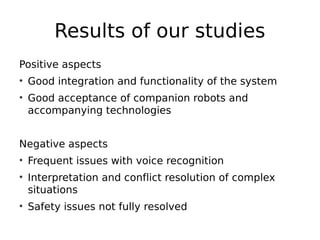
Results of our studies
Positive aspects
• Good integration and functionality of the system
• Good acceptance of companion robots and
accompanying technologies
Negative aspects
• Frequent issues with voice recognition
• Interpretation and conflict resolution of complex
situations
• Safety issues not fully resolved
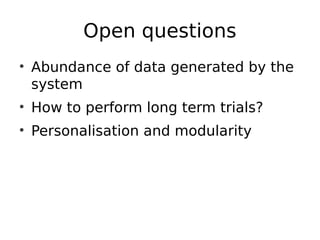
Open questions
• Abundance of data generated by the
system
• How to perform long term trials?
• Personalisation and modularity
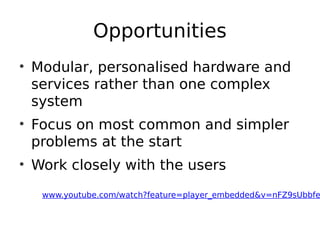
Opportunities
• Modular, personalised hardware and
services rather than one complex
system
• Focus on most common and simpler
problems at the start
• Work closely with the users
www.youtube.com/watch?feature=player_embedded&v=nFZ9sUbbfe
Thank you

MOBISERV

  • 1.
    MOBISERV - AnIntegrated Intelligent Home Environment for the Provision of Health, Nutrition and Mobility Services for Older Adults Bristol Robotics Laboratory Sanja Dogramadzi, Praminda Caleb- Solly, Christine Fear
  • 2.
    Project Partners • SmartHomes - The Netherlands, Coordinator; • Bristol Robotics Laboratory, University of the West of England - United Kingdom; • Robosoft – France; • Aristotle University of Thessaloniki – Greece; • Centre Suisse d’Electronique – Switzerland; • Lappeenranta University of Technology – Finland; • Smartex s.r.l. – Italy; • Stichting ST ANNA Zorggroep - The Netherlands
  • 3.
    The MOBISERV System Robot SmartHome Automation and Communication Unit Carer, Medical Expert Interne t Smart Garment for monitoring heart rate, breathing, balance and temperature Optical Recognition Unit The main objective: increase elderly people’s
  • 4.
    Methods • Integration ofphysiological and monitoring sensors with a smart environment and a mobile robot unit • Extensive user needs elicitation and evaluations
  • 5.
    Mechanisms used fortranslating user needs into system requirements Qualitative & Quantitativ e Data Analysis Key Themes Scenarios & Use Cases Personas End User Characteris tics Functional and Non- functional Requirements MOBISERV functions Observations, Interviews, Questionnaires, Cultural Probes, Focus Groups Committee of Independent Living and Ageing Experts Review
  • 6.
    MOBISERV services • nutritionassistance and dehydration prevention by eating and drinking reminders and suggestions; • encouraging physical activity and specific exercises through monitoring vital signs; • fall detection with direct communication to a care centre; • remote control for the home environment, including warnings about unwanted situations; • video communication to friends, family, and health professionals, and • games for entertainment and cognitive stimulation
  • 7.
    Testing The final MOBISERVsystem prototype and its components have been tested in a large range of studies with: • primary users • secondary users (partners, formal and informal carers) • tertiary users (care managers and policy makers) in various settings such as labs, people’s own homes, and care homes.
  • 8.
    Results of ourstudies Positive aspects • Good integration and functionality of the system • Good acceptance of companion robots and accompanying technologies Negative aspects • Frequent issues with voice recognition • Interpretation and conflict resolution of complex situations • Safety issues not fully resolved
  • 9.
    Open questions • Abundanceof data generated by the system • How to perform long term trials? • Personalisation and modularity
  • 10.
    Opportunities • Modular, personalisedhardware and services rather than one complex system • Focus on most common and simpler problems at the start • Work closely with the users www.youtube.com/watch?feature=player_embedded&v=nFZ9sUbbfe
  • 11.