Mobile Apps for Research Data Collection
Dr Simon Price (Research IT Manager)
Polly Eccleston (Research IT Facilitator)
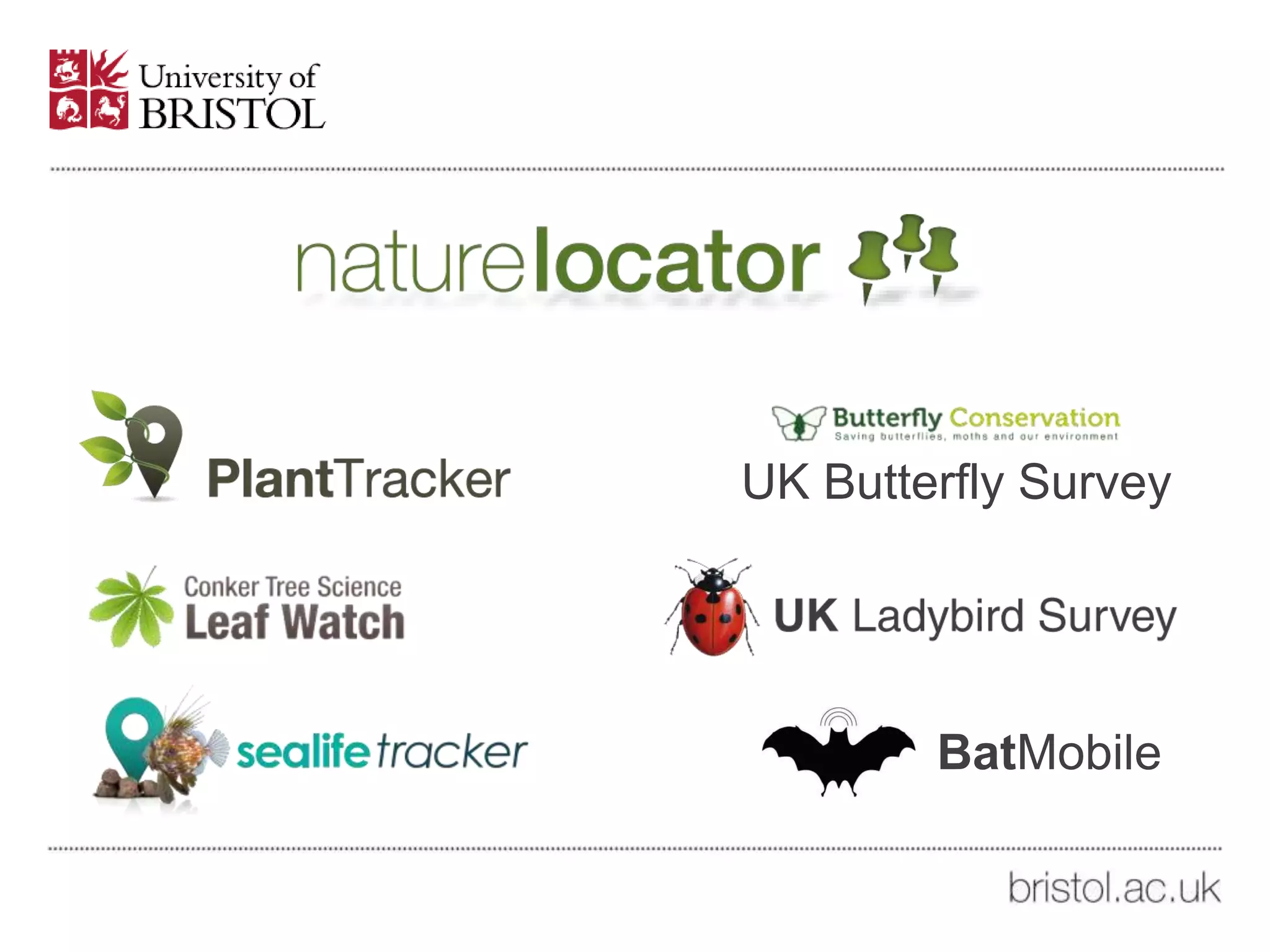
UK Butterfly Survey
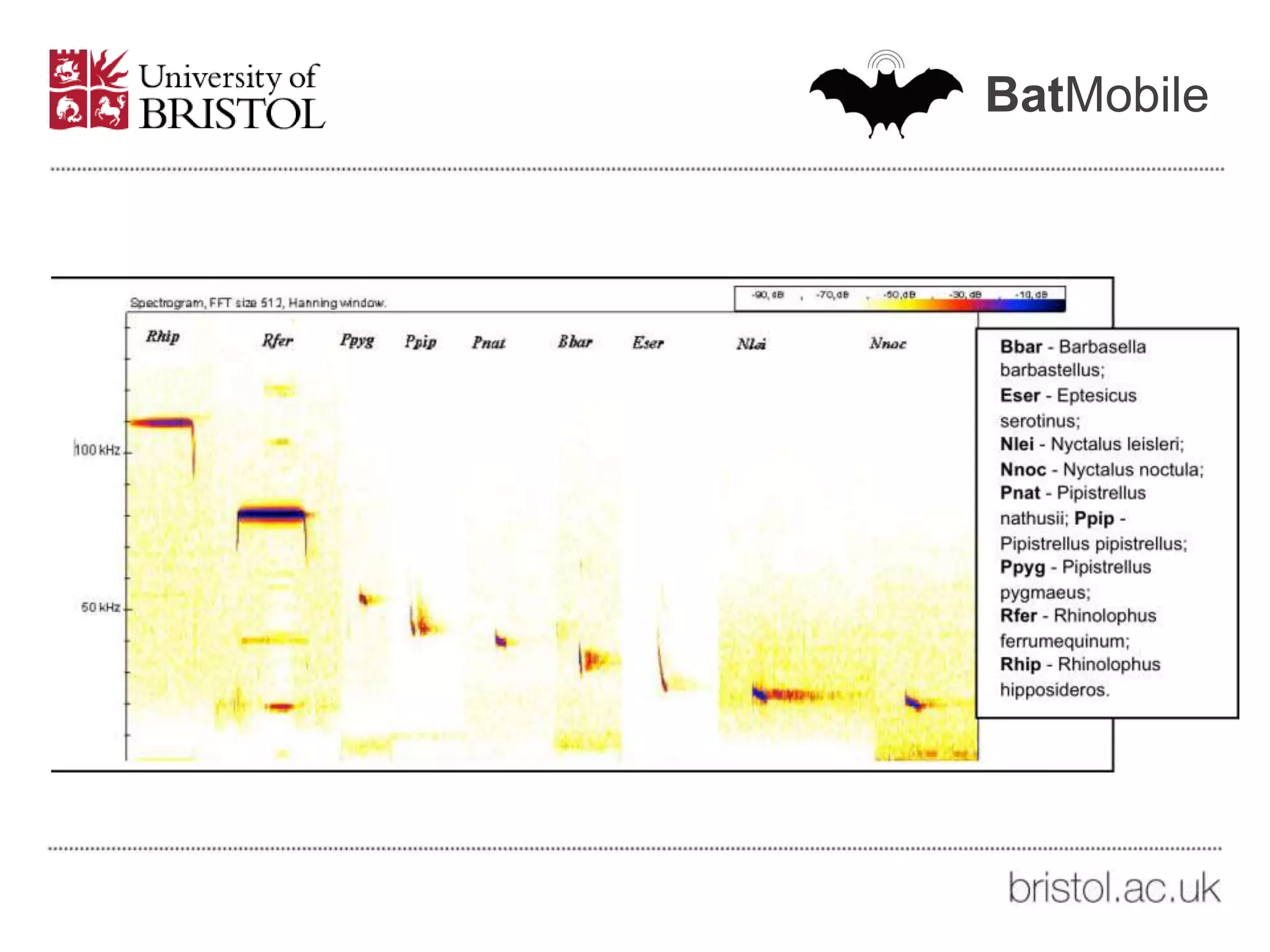
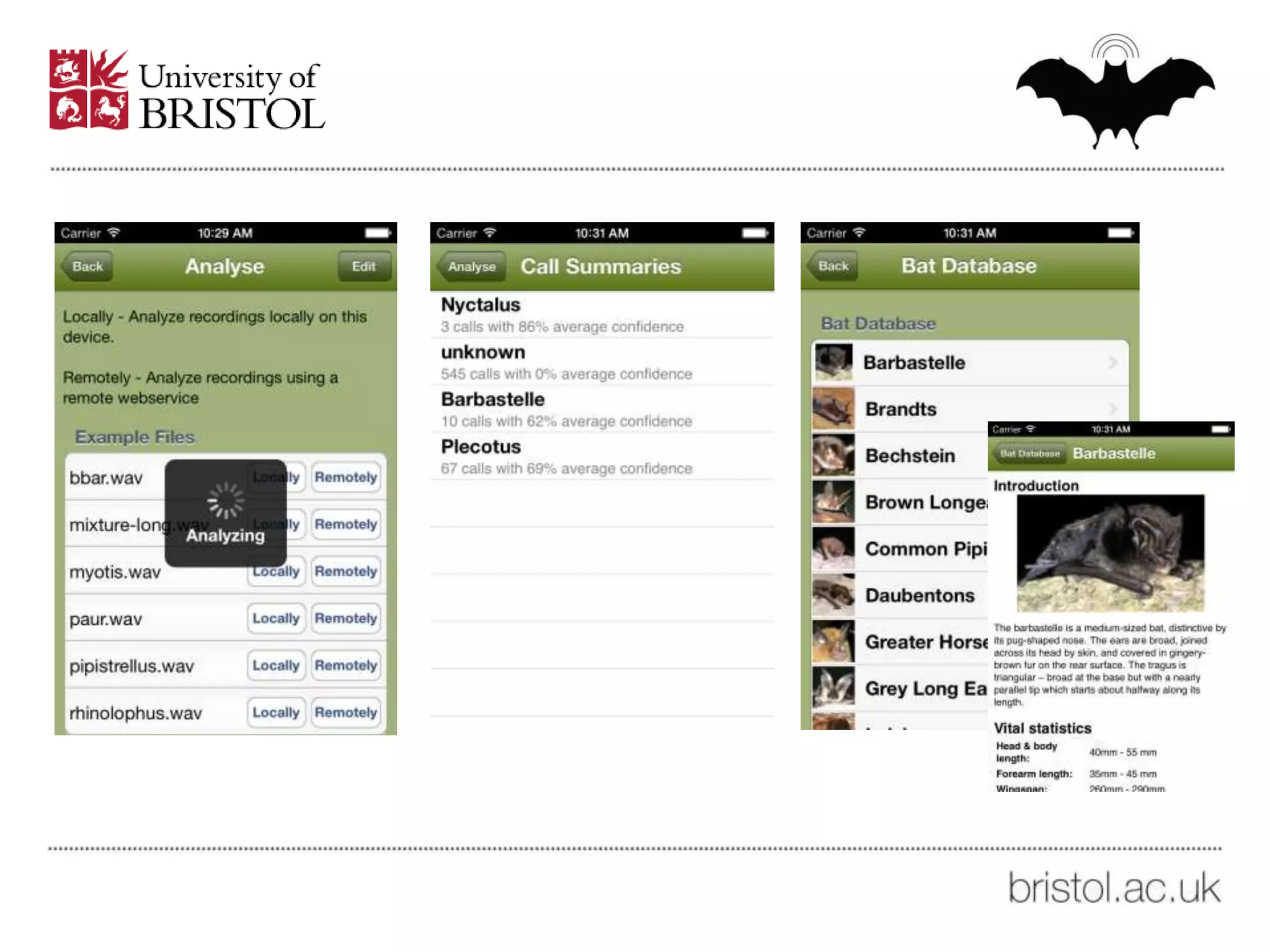
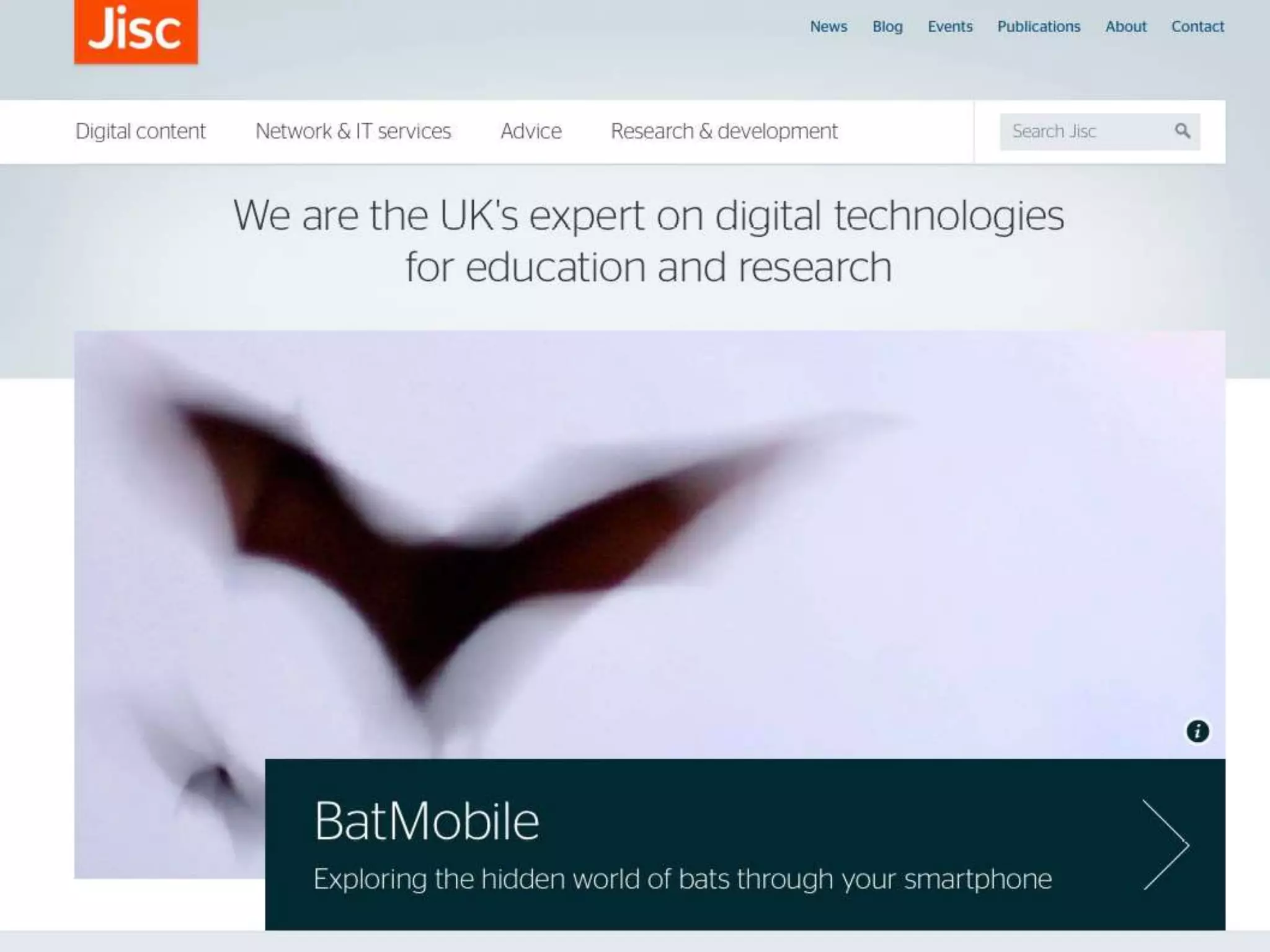
BatMobile
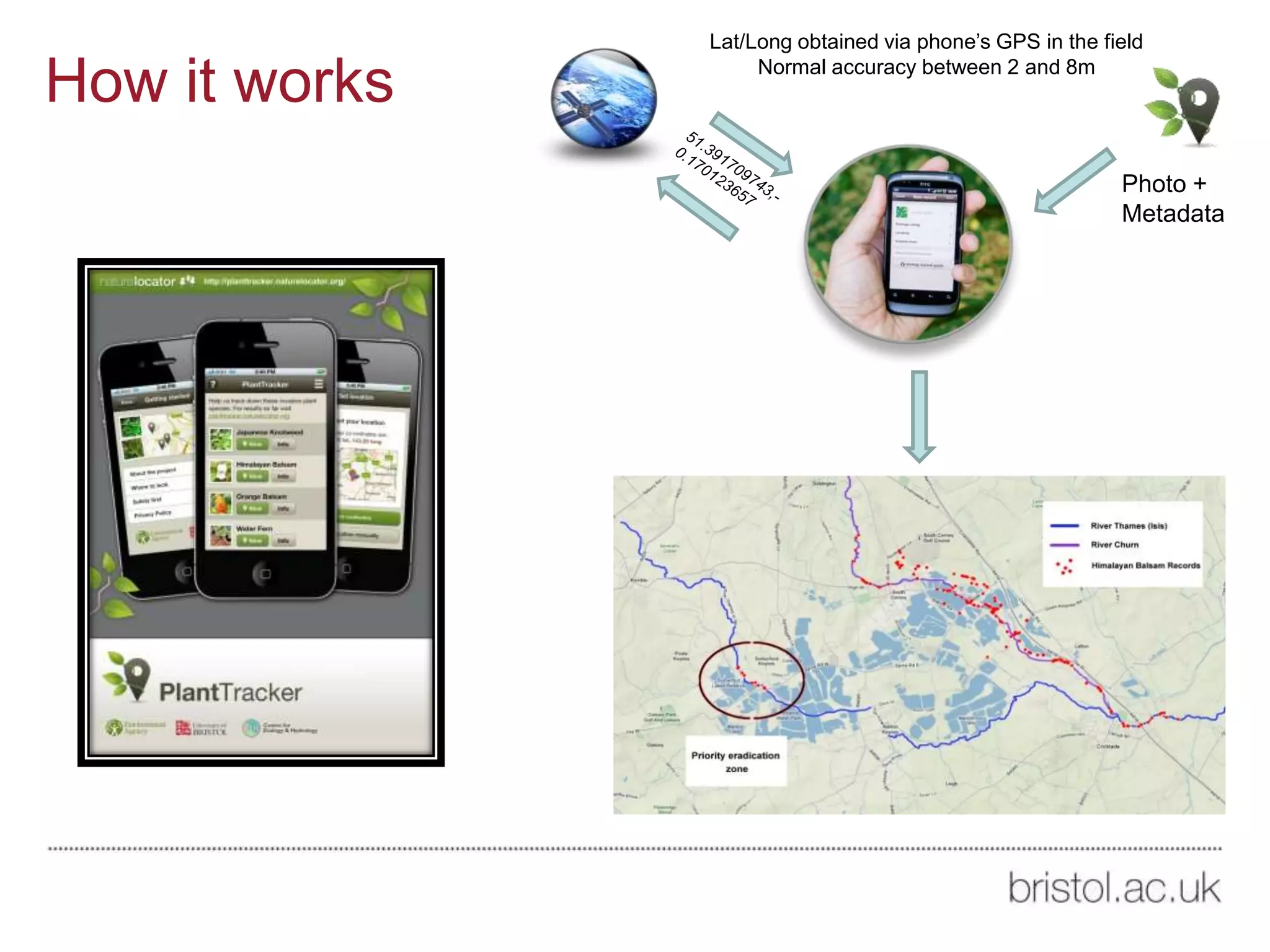
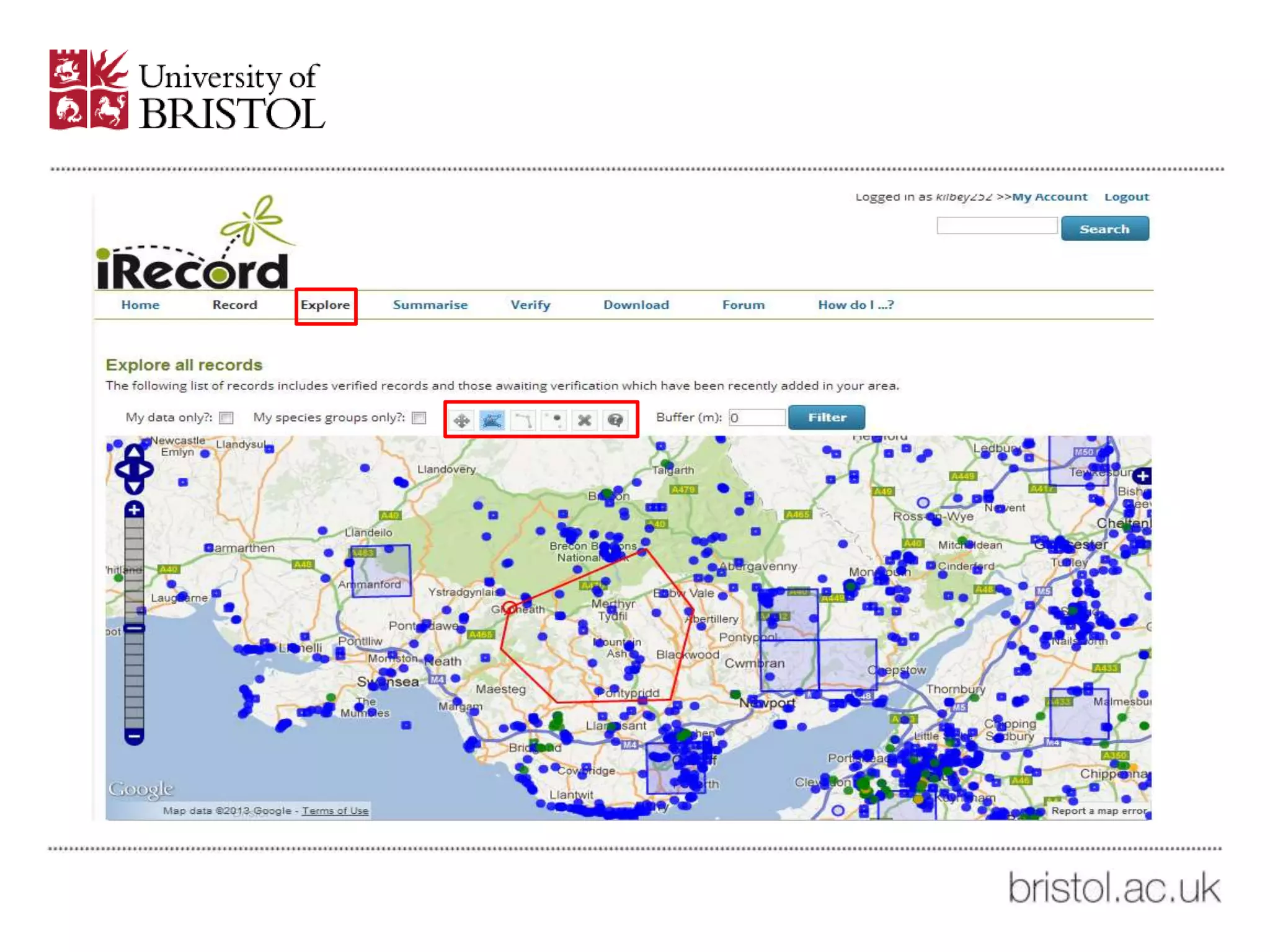
How it works
Lat/Long obtained via phone’s GPS in the field
Normal accuracy between 2 and 8m
Photo +
Metadata
iRecord Butterflies (Butterfly Conservation)
• 31,000 surveys submitted this year.
• 2x Springwatch 2014 and 1x Autumnwatch 2014
• Data is being used by Butterfly Conservation to
monitor butterfly populations year and year.
• A significant public engagement tool for them.
PlantTracker (Environment Agency)
• 10,000 verified records of invasive plants submitted.
• Many projects using the data to tackle invasive non-native
species. e.g. Yorkshire wildlife trust and Jersey Council
• Probably the highest quality data set on invasive plants on
the NBN Gateway
• Data downloaded at least once per week on average by
researchers and others interested in the data
Why it works
For researchers:
– Geo-located data
– Photo attached (verifiable… most of the time)
– Enables previously impractical surveys
– Improves public understanding of research
For the public:
– Apps themselves are informative
– Accessible by anyone (potentially)
– Feedback via immediate visibility of contribution
onlinesurveys.ac.uk
9
10
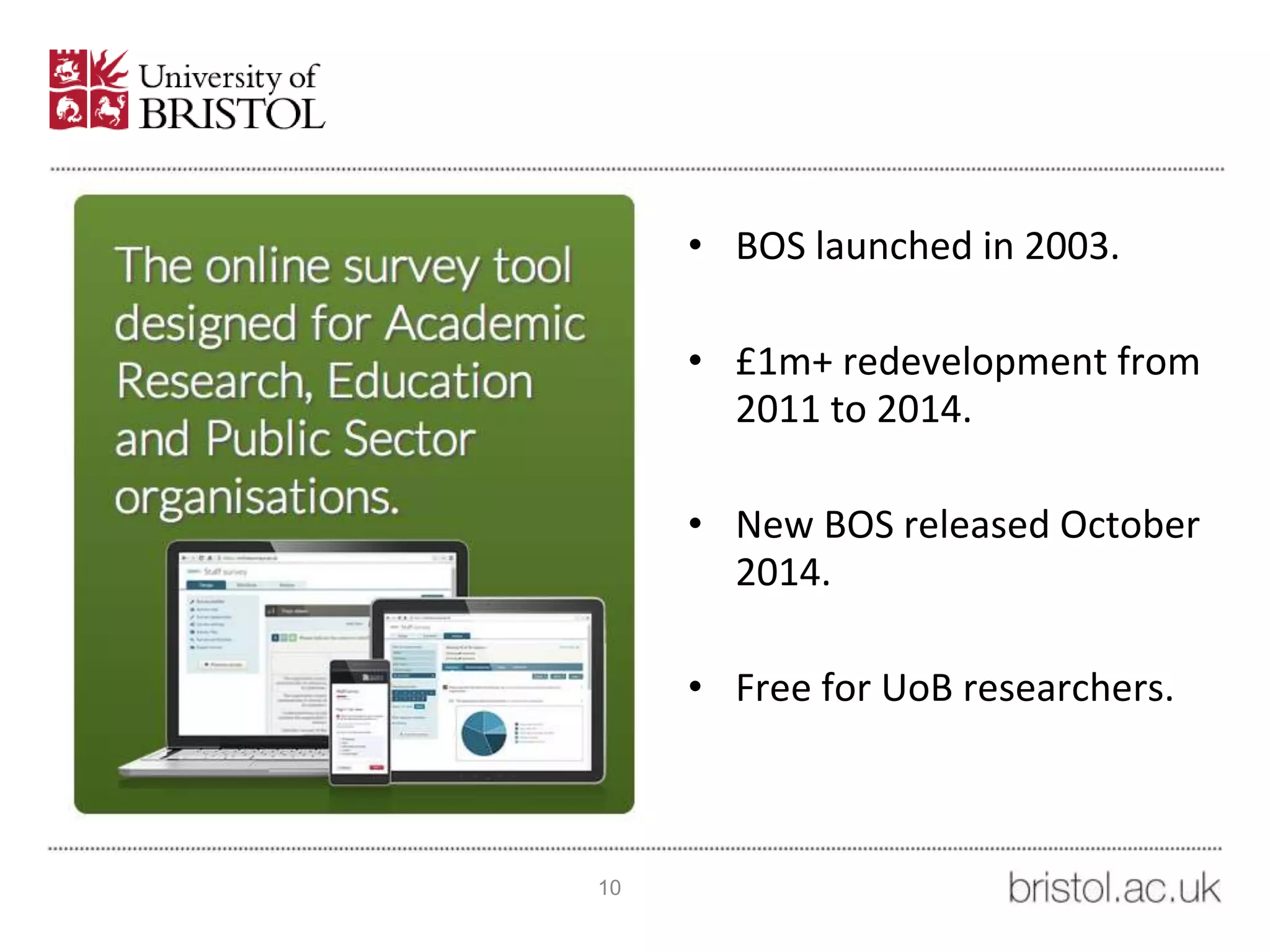
• BOS launched in 2003.
• £1m+ redevelopment from
2011 to 2014.
• New BOS released October
2014.
• Free for UoB researchers.
Who uses BOS?
• Over 85% of UK HEIs
• National "benchmarking" surveys (60+ universities)
– Careers in Research Online Survey (CROS)
– Postgraduate Research Experience Survey (PRES)
– Research Leaders survey
• Free for UoB researchers (180+ Bristol accounts)
App development in BOS
• Build data collection apps yourself without a developer.
• Mobile websites (& can package as app).
• Today:
• Surveys, web forms, logic and general data collection
• Planned:
• Geolocation, maps, access to camera and sensors
BatMobile
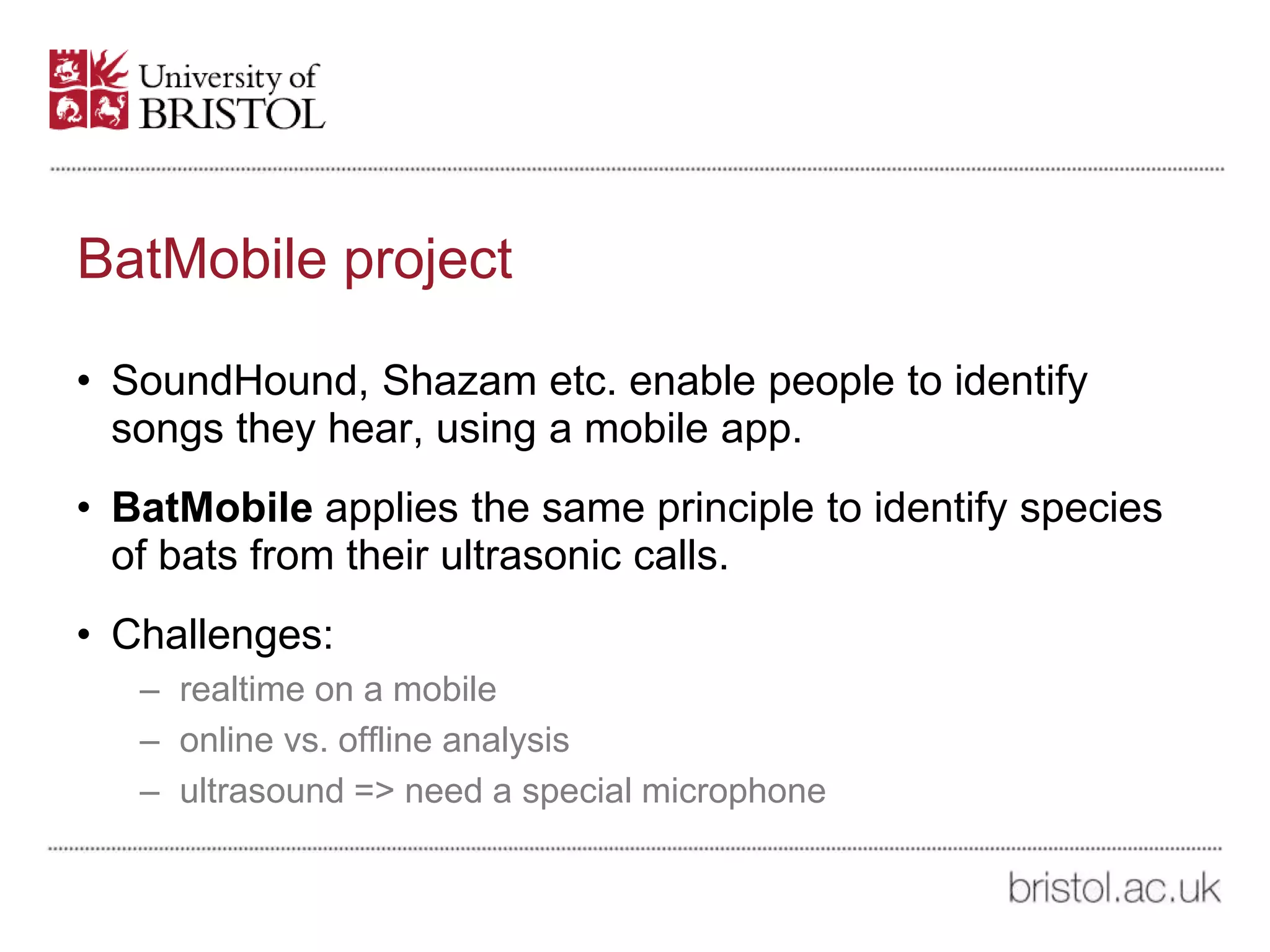
BatMobile project
• SoundHound, Shazam etc. enable people to identify
songs they hear, using a mobile app.
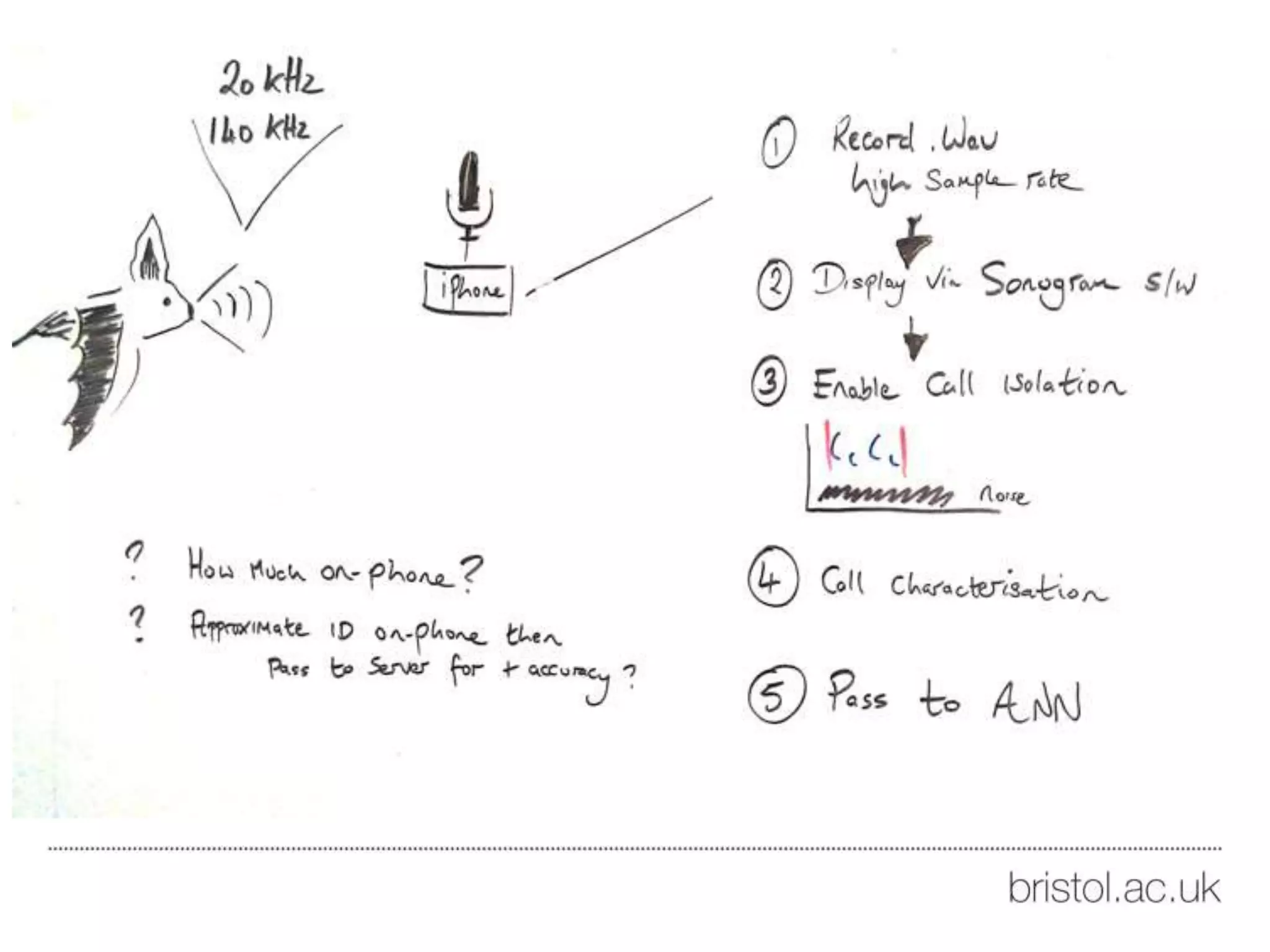
• BatMobile applies the same principle to identify species
of bats from their ultrasonic calls.
• Challenges:
– realtime on a mobile
– online vs. offline analysis
– ultrasound => need a special microphone
Research IT
simon.price@bristol.ac.uk
polly.eccleston@bristol.ac.uk
www.bristol.ac.uk/rit

Mobile Apps for Research Data Collection

  • 1.
    Mobile Apps forResearch Data Collection Dr Simon Price (Research IT Manager) Polly Eccleston (Research IT Facilitator)
  • 2.
  • 3.
    How it works Lat/Longobtained via phone’s GPS in the field Normal accuracy between 2 and 8m Photo + Metadata
  • 6.
    iRecord Butterflies (ButterflyConservation) • 31,000 surveys submitted this year. • 2x Springwatch 2014 and 1x Autumnwatch 2014 • Data is being used by Butterfly Conservation to monitor butterfly populations year and year. • A significant public engagement tool for them.
  • 7.
    PlantTracker (Environment Agency) •10,000 verified records of invasive plants submitted. • Many projects using the data to tackle invasive non-native species. e.g. Yorkshire wildlife trust and Jersey Council • Probably the highest quality data set on invasive plants on the NBN Gateway • Data downloaded at least once per week on average by researchers and others interested in the data
  • 8.
    Why it works Forresearchers: – Geo-located data – Photo attached (verifiable… most of the time) – Enables previously impractical surveys – Improves public understanding of research For the public: – Apps themselves are informative – Accessible by anyone (potentially) – Feedback via immediate visibility of contribution
  • 9.
  • 10.
    10 • BOS launchedin 2003. • £1m+ redevelopment from 2011 to 2014. • New BOS released October 2014. • Free for UoB researchers.
  • 11.
    Who uses BOS? •Over 85% of UK HEIs • National "benchmarking" surveys (60+ universities) – Careers in Research Online Survey (CROS) – Postgraduate Research Experience Survey (PRES) – Research Leaders survey • Free for UoB researchers (180+ Bristol accounts)
  • 12.
    App development inBOS • Build data collection apps yourself without a developer. • Mobile websites (& can package as app). • Today: • Surveys, web forms, logic and general data collection • Planned: • Geolocation, maps, access to camera and sensors
  • 13.
  • 14.
    BatMobile project • SoundHound,Shazam etc. enable people to identify songs they hear, using a mobile app. • BatMobile applies the same principle to identify species of bats from their ultrasonic calls. • Challenges: – realtime on a mobile – online vs. offline analysis – ultrasound => need a special microphone
  • 18.