Mnemonics in
Social Studies
Venus F. Baliling
Mnemonics are memory aids that help
individuals remember information more
easily.
They often involve creating associations
or using patterns to recall specific details.
 Mnemonics are often more effective when
they are personalized to match an
individual's unique associations and
experiences.
 Creating mnemonics for elementary-level
Araling Panlipunan topics can be a fun and
effective way to help students remember key
concepts.
Here are some mnemonics for elementary Araling
Panlipunan:
1. Mnemonic for Cardinal Directions:
o North
o East
o West
o South
Mnemonic: “NEWS"
2. Mnemonic for Philippine Islands:
o Luzon
o Visayas
o Mindanao
Mnemonic: "Let's Visit Mindanao."
3. Mnemonic for the Colors of the Philippine Flag:
o Blue
o Red
o White
o Yellow
Mnemonic: "Blue, Red, White, Yellow - Be Ready With
Your Brush Tomorrow."
4. Mnemonic for Days of the Week in Filipino:
o Lunes (Monday)
o Martes (Tuesday)
o Miyerkules (Wednesday)
o Huwebes (Thursday)
o Biyernes (Friday)
o Sabado (Saturday)
o Linggo (Sunday)
Mnemonic: "Laging Maganda Mag-Hangout Bawa't
Sabado’t Linggo."
5. Mnemonic for Philippine Money Denominations:
o Piso
o 5 Pesos
o 10 Pesos
o 20 Pesos
o 50 Pesos
o 100 Pesos
o 500 Pesos
o 1,000 Pesos
Mnemonic: "Please 5-1-2-5-1-5-1K my friend."
6. Mnemonic for the 3 Branches of Government:
o Executive - Enforces laws
o Legislative - Legislates laws
o Judicial - Judges laws
Mnemonic: "ELJ" (pronounced as "el-jay")
7. Mnemonic for the Philippine Presidents from 1986
Onward:
o Corazon C. Aquino
o Fidel V. Ramos
o Joseph E. Estrada
o Gloria Macapagal-Arroyo
o Benigno Simeon C. Aquino III
o Rodrigo R. Duterte
o Ferdinand R. Marcos Jr.
Mnemonic: "CFJGBRB" (pronounced as “Co-Fi-JoG-BeR-F")
Incorporating mnemonic activities into Araling Panlipunan
classes can make learning more engaging and memorable
for students. Here are some mnemonic activities tailored for
Araling Panlipunan:
:
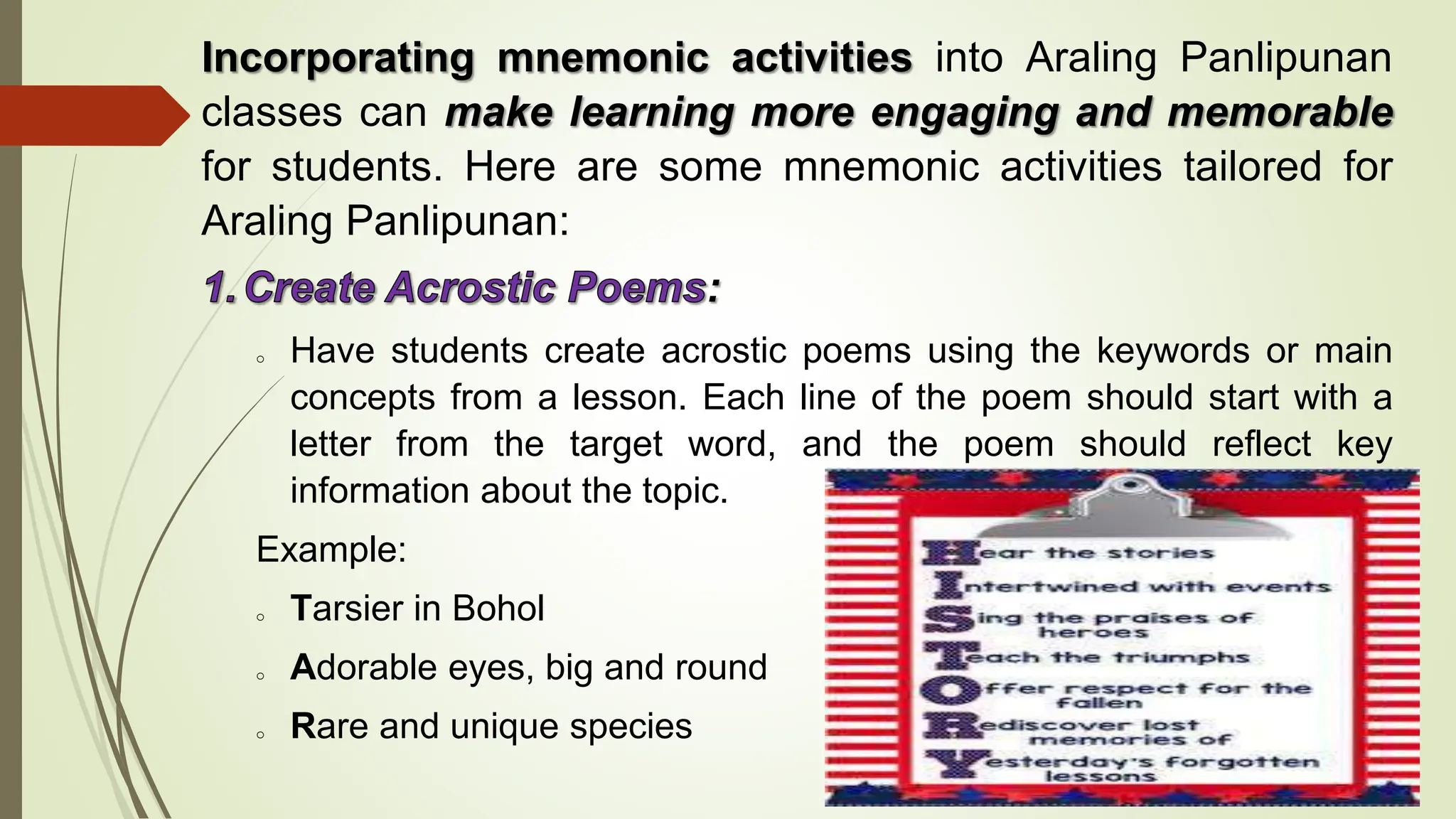
o Have students create acrostic poems using the keywords or main
concepts from a lesson. Each line of the poem should start with a
letter from the target word, and the poem should reflect key
information about the topic.
Example:
o Tarsier in Bohol
o Adorable eyes, big and round
o Rare and unique species
2. Mnemonic Storyboards:
o Ask learners to create visual storyboards
that represent key concepts or events in
Araling Panlipunan. The images should
be accompanied by short phrases or
sentences that serve as mnemonic
devices.
Example:
o Create a storyboard illustrating the
sequence of events during a
historical period or a social studies
concept.
3. Memory Maps:
o Have students draw memory maps
that depict the relationships
between different elements in a
lesson. Use symbols, colors, and
annotations to create a visual
representation of the information.
Example:
o Create a memory map showing the
connections between the branches
of the government and their
functions.
4. Song Parodies:
o Encourage students to create song parodies
related to Araling Panlipunan topics. They can
use familiar tunes and replace the lyrics with key
information from the lesson.
Example:
o Rewrite the lyrics of a popular song to highlight
the major rivers in the Philippines.
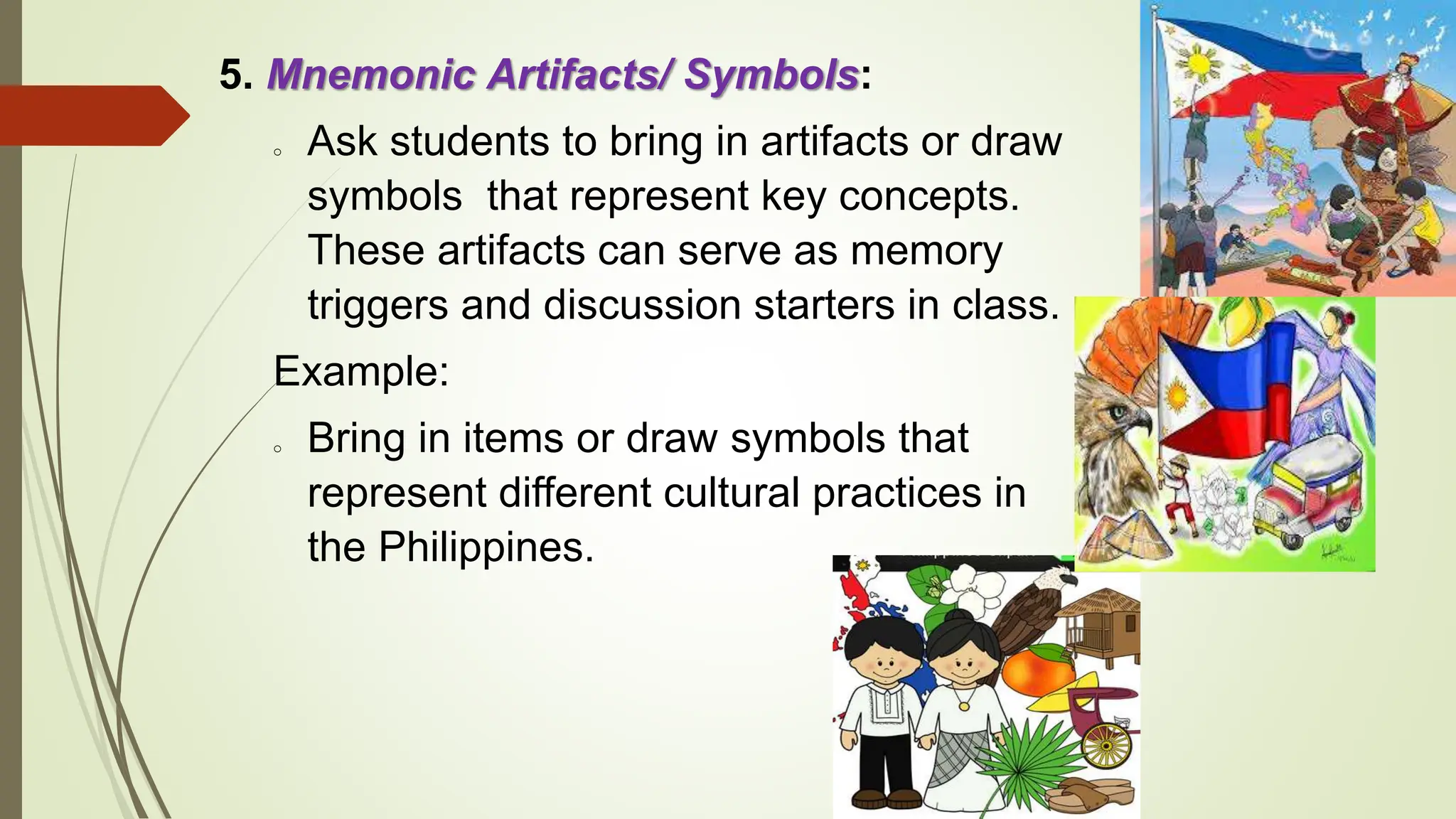
5. Mnemonic Artifacts/ Symbols:
o Ask students to bring in artifacts or draw
symbols that represent key concepts.
These artifacts can serve as memory
triggers and discussion starters in class.
Example:
o Bring in items or draw symbols that
represent different cultural practices in
the Philippines.
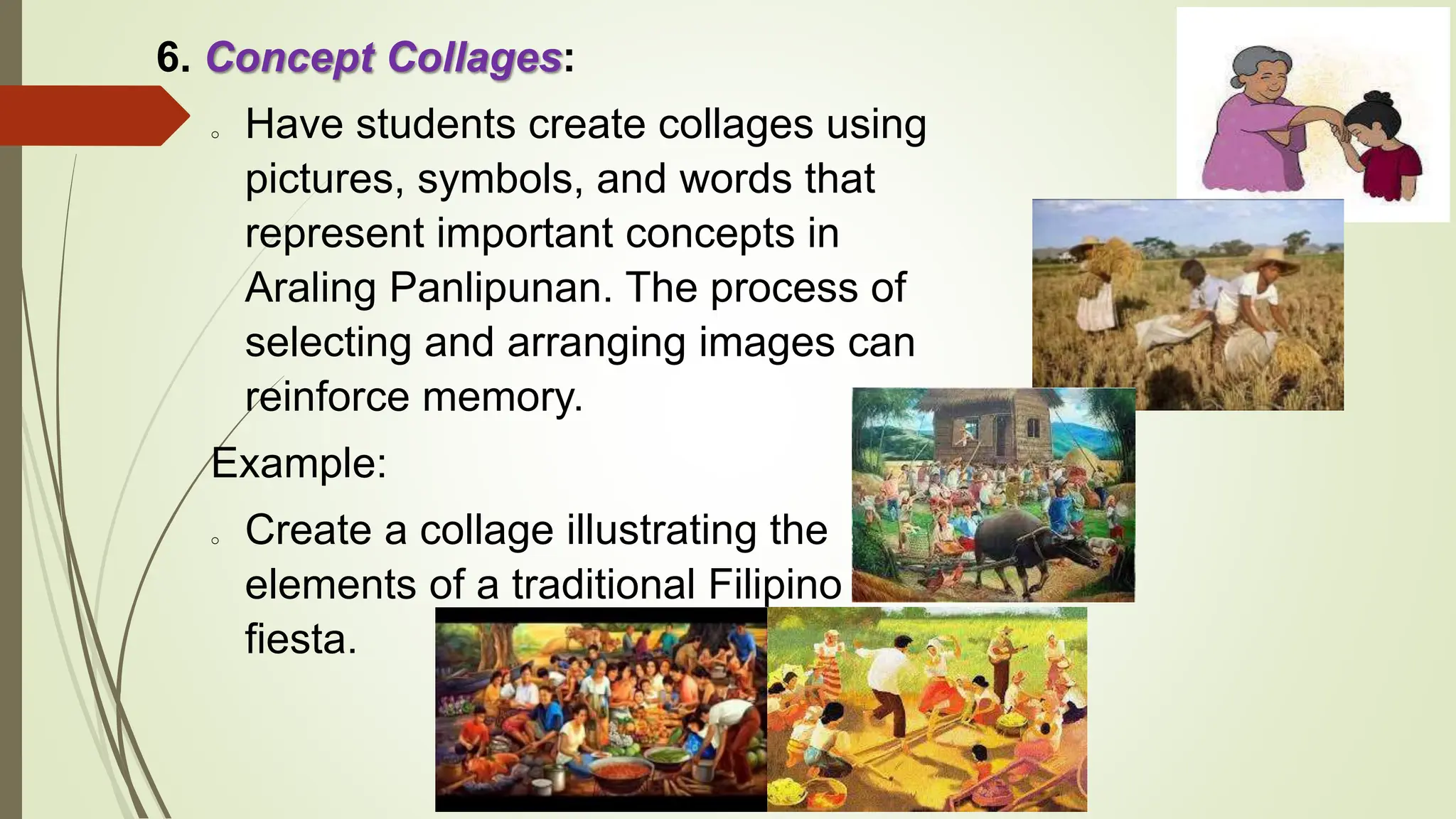
6. Concept Collages:
o Have students create collages using
pictures, symbols, and words that
represent important concepts in
Araling Panlipunan. The process of
selecting and arranging images can
reinforce memory.
Example:
o Create a collage illustrating the
elements of a traditional Filipino
fiesta.
 Encourage learners to create their own
mnemonics or modify these examples to better
suit their learning style. Personalized
mnemonics often stick better in memory because
they are more meaningful to the individual.
 Remember to adapt these activities based on
the specific content and learning objectives
of your Araling Panlipunan lessons. The goal is
to make learning enjoyable while reinforcing
key concepts through creative and mnemonic
strategies.
MNEMONICS STRATEGY in ARALING PANLIPUNAN.pptx

MNEMONICS STRATEGY in ARALING PANLIPUNAN.pptx

  • 1.
  • 2.
    Mnemonics are memoryaids that help individuals remember information more easily. They often involve creating associations or using patterns to recall specific details.
  • 4.
     Mnemonics areoften more effective when they are personalized to match an individual's unique associations and experiences.  Creating mnemonics for elementary-level Araling Panlipunan topics can be a fun and effective way to help students remember key concepts.
  • 5.
    Here are somemnemonics for elementary Araling Panlipunan: 1. Mnemonic for Cardinal Directions: o North o East o West o South Mnemonic: “NEWS"
  • 6.
    2. Mnemonic forPhilippine Islands: o Luzon o Visayas o Mindanao Mnemonic: "Let's Visit Mindanao."
  • 7.
    3. Mnemonic forthe Colors of the Philippine Flag: o Blue o Red o White o Yellow Mnemonic: "Blue, Red, White, Yellow - Be Ready With Your Brush Tomorrow."
  • 8.
    4. Mnemonic forDays of the Week in Filipino: o Lunes (Monday) o Martes (Tuesday) o Miyerkules (Wednesday) o Huwebes (Thursday) o Biyernes (Friday) o Sabado (Saturday) o Linggo (Sunday) Mnemonic: "Laging Maganda Mag-Hangout Bawa't Sabado’t Linggo."
  • 10.
    5. Mnemonic forPhilippine Money Denominations: o Piso o 5 Pesos o 10 Pesos o 20 Pesos o 50 Pesos o 100 Pesos o 500 Pesos o 1,000 Pesos Mnemonic: "Please 5-1-2-5-1-5-1K my friend."
  • 11.
    6. Mnemonic forthe 3 Branches of Government: o Executive - Enforces laws o Legislative - Legislates laws o Judicial - Judges laws Mnemonic: "ELJ" (pronounced as "el-jay")
  • 12.
    7. Mnemonic forthe Philippine Presidents from 1986 Onward: o Corazon C. Aquino o Fidel V. Ramos o Joseph E. Estrada o Gloria Macapagal-Arroyo o Benigno Simeon C. Aquino III o Rodrigo R. Duterte o Ferdinand R. Marcos Jr. Mnemonic: "CFJGBRB" (pronounced as “Co-Fi-JoG-BeR-F")
  • 13.
    Incorporating mnemonic activitiesinto Araling Panlipunan classes can make learning more engaging and memorable for students. Here are some mnemonic activities tailored for Araling Panlipunan: : o Have students create acrostic poems using the keywords or main concepts from a lesson. Each line of the poem should start with a letter from the target word, and the poem should reflect key information about the topic. Example: o Tarsier in Bohol o Adorable eyes, big and round o Rare and unique species
  • 14.
    2. Mnemonic Storyboards: oAsk learners to create visual storyboards that represent key concepts or events in Araling Panlipunan. The images should be accompanied by short phrases or sentences that serve as mnemonic devices. Example: o Create a storyboard illustrating the sequence of events during a historical period or a social studies concept.
  • 15.
    3. Memory Maps: oHave students draw memory maps that depict the relationships between different elements in a lesson. Use symbols, colors, and annotations to create a visual representation of the information. Example: o Create a memory map showing the connections between the branches of the government and their functions.
  • 16.
    4. Song Parodies: oEncourage students to create song parodies related to Araling Panlipunan topics. They can use familiar tunes and replace the lyrics with key information from the lesson. Example: o Rewrite the lyrics of a popular song to highlight the major rivers in the Philippines.
  • 18.
    5. Mnemonic Artifacts/Symbols: o Ask students to bring in artifacts or draw symbols that represent key concepts. These artifacts can serve as memory triggers and discussion starters in class. Example: o Bring in items or draw symbols that represent different cultural practices in the Philippines.
  • 19.
    6. Concept Collages: oHave students create collages using pictures, symbols, and words that represent important concepts in Araling Panlipunan. The process of selecting and arranging images can reinforce memory. Example: o Create a collage illustrating the elements of a traditional Filipino fiesta.
  • 20.
     Encourage learnersto create their own mnemonics or modify these examples to better suit their learning style. Personalized mnemonics often stick better in memory because they are more meaningful to the individual.
  • 21.
     Remember toadapt these activities based on the specific content and learning objectives of your Araling Panlipunan lessons. The goal is to make learning enjoyable while reinforcing key concepts through creative and mnemonic strategies.