Community conversations 2.0 Putting it into practice DateName, Wisconsin Association of School Boards
The Effective Leader“The ability to communicate across the various constituencies of the organization (both internal and external) is the key to effective leadership.”Margaret Wheatley
Organizational EffectivenessDepends on the relationships between and among team members…and the staff…and the community
The  Context Is ChangingThe Worldand Expectations of Public Schools Are ChangingNCLBMCA
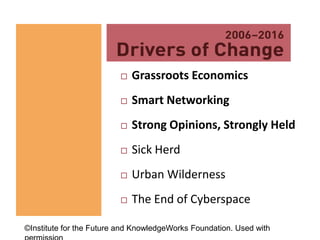
Grassroots Economics
Smart Networking
Strong Opinions, Strongly Held
Sick Herd
Urban Wilderness
The End of Cyberspace©Institute for the Future and KnowledgeWorks Foundation. Used with permission
Expectations of public education have changedFrom inputs to outputsAll children can learn
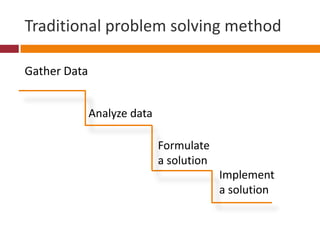
Traditional problem solving methodGather DataAnalyze dataFormulate a solutionImplement a solution
“Some problems are so complex that you have to be highly intelligent and well-informed just to be undecided about them.”Laurence J. Peter
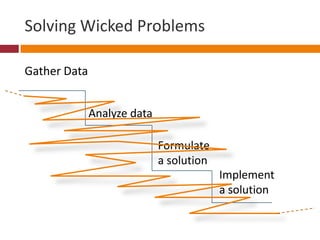
Solving Wicked ProblemsGather DataAnalyze dataFormulate a solutionImplement a solution
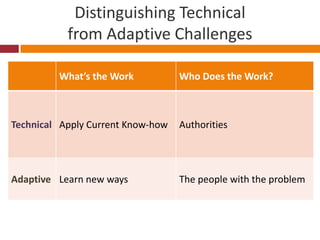
Distinguishing Technical from Adaptive Challenges
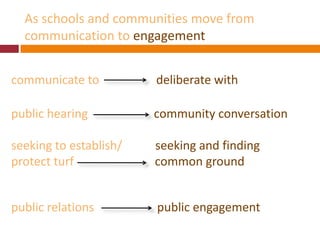
As schools and communities move fromcommunication to engagementcommunicate to                   deliberate withpublic hearing                      community conversationseeking to establish/           seeking and findingprotect turf                           common groundpublic relations                     public engagement
“The alternative to engaging with  the public will not be an unengaged public, but a public with its own agenda and an understandable hostility to decision-making processes that ignore them.”  Steve Coleman and John Gotze, Bowling Together, 2002
IAP2 definitionAny process that involves the public (community) in identifying issues or decision-making and uses public input to make better decisions.International Association for Public Participation
Who are the public/community?“The public/community is any individual orgroup of individuals, organization orpolitical entity with an interest in theoutcome of a decision.”                                                                                                    IAP2
Doing it so that it counts..“Public participation is most effective and delivers best value for effort when it is undertaken for a specific purpose: to influence and add value to an issue or an opportunity so that the best quality, or most sustainable decision can be made.”IAP2
Why undertake community engagement?Fulfill a legislative requirementBuild a bigger window of knowledge and understanding of the issue/the problem/the opportunityStrengthen the link between your project planning and community
Why undertake community engagement?Bridge the gap between people and policy makers and build confidence in how decisions are madeBring integrity to decision making process and build your reputation as a leader in the communityPromote local democracy, integrity and robust and sustainable decision making
Values basedCommunity values Sponsor (organizational values)Process values (IAP2 Core Values)
Community Values…Know the community– What is important in this place?– What do they care about?– What’s going on?
District Values…– What does your organization stand for?– How is this communicated?– How does this influence how the community/others relate to you?
International Association of Public Participation Core Values for the Practice of Public ParticipationSpectrum of Public Participation

MN Summer Meeting

  • 1.
    Community conversations 2.0Putting it into practice DateName, Wisconsin Association of School Boards
  • 3.
    The Effective Leader“Theability to communicate across the various constituencies of the organization (both internal and external) is the key to effective leadership.”Margaret Wheatley
  • 4.
    Organizational EffectivenessDepends onthe relationships between and among team members…and the staff…and the community
  • 5.
    The ContextIs ChangingThe Worldand Expectations of Public Schools Are ChangingNCLBMCA
  • 6.
  • 7.
  • 8.
  • 9.
  • 10.
  • 11.
    The End ofCyberspace©Institute for the Future and KnowledgeWorks Foundation. Used with permission
  • 12.
    Expectations of publiceducation have changedFrom inputs to outputsAll children can learn
  • 13.
    Traditional problem solvingmethodGather DataAnalyze dataFormulate a solutionImplement a solution
  • 14.
    “Some problems areso complex that you have to be highly intelligent and well-informed just to be undecided about them.”Laurence J. Peter
  • 15.
    Solving Wicked ProblemsGatherDataAnalyze dataFormulate a solutionImplement a solution
  • 16.
  • 17.
    As schools andcommunities move fromcommunication to engagementcommunicate to deliberate withpublic hearing community conversationseeking to establish/ seeking and findingprotect turf common groundpublic relations public engagement
  • 18.
    “The alternative toengaging with the public will not be an unengaged public, but a public with its own agenda and an understandable hostility to decision-making processes that ignore them.”  Steve Coleman and John Gotze, Bowling Together, 2002
  • 19.
    IAP2 definitionAny processthat involves the public (community) in identifying issues or decision-making and uses public input to make better decisions.International Association for Public Participation
  • 20.
    Who are thepublic/community?“The public/community is any individual orgroup of individuals, organization orpolitical entity with an interest in theoutcome of a decision.” IAP2
  • 21.
    Doing it sothat it counts..“Public participation is most effective and delivers best value for effort when it is undertaken for a specific purpose: to influence and add value to an issue or an opportunity so that the best quality, or most sustainable decision can be made.”IAP2
  • 22.
    Why undertake communityengagement?Fulfill a legislative requirementBuild a bigger window of knowledge and understanding of the issue/the problem/the opportunityStrengthen the link between your project planning and community
  • 23.
    Why undertake communityengagement?Bridge the gap between people and policy makers and build confidence in how decisions are madeBring integrity to decision making process and build your reputation as a leader in the communityPromote local democracy, integrity and robust and sustainable decision making
  • 24.
    Values basedCommunity valuesSponsor (organizational values)Process values (IAP2 Core Values)
  • 25.
    Community Values…Know thecommunity– What is important in this place?– What do they care about?– What’s going on?
  • 26.
    District Values…– Whatdoes your organization stand for?– How is this communicated?– How does this influence how the community/others relate to you?
  • 27.
    International Association ofPublic Participation Core Values for the Practice of Public ParticipationSpectrum of Public Participation

Editor's Notes

  • #3 We need to remember the ultimate goal of our work: children who are able to enjoy success--academic, social, artistic--in our schools. This is an important goal, one that is difficult to realize as school districts are complex organizations affected by numerous factors. Further complicating your job as the district leadership, you are removed from the day-to-day interaction with students. We will talk about some of this complexity today and give you some tools to help you with your work. Arne Duncan, Secretary of Education, spoke at the National School Board Association’s annual meeting in San Diego. He said, the adults need to set aside their own wants and desires and do what is best for kids. There are a whole lot of reasons why we need to get really serious about addresses the challenges in public education today.
  • #5 How do we develop trusting relationships?How do we manage conflict?
  • #7 The KnowledgeWorks Foundation has created a Map of Future Forces and developed this list of drivers of change. You can googleKnowledgeWorks to see an interactive version of the mapGrassroots Economics No longer economies of scale Economies of relationships Peer-to-peer self-organizing systems Anyone use E-bay—no central authority Wikipedia—as accurate as the Encyclopedia Britannica Openness MIT courses online Procter and GambleRejecting mass offerings You can design your own Mini-CooperHow does this work in public education when we have to consider standards? There is a tension between what is happening in the economic world and what is happening in the policy world of public education Social Networking People want to self-organize to create shared experiencesMoving from Information Age to Connected AgeMySpaceFacebookMeet Up Often no real apparent purpose beyond self-organizingThese sites can and have been used for organizing MoveOn.org Grassfire.org—700,000 people signed a petition that derailed immigration legislationThe latest social networking option—Twitter (look at the TED video to see how this works) What collective actions can educators, parents, students take?Kids want to connect. How do we do this in school while keeping them safe? How can we make schools reflect the world our kids live in when they are outside of school? Strong Opinions Strongly Held Polarization, multiple ideologies Congress, legislatures, Creationism, other social issues We often see only the either/or Can further isolate us CNN, msnbc, Fox News—validates your opinion How can we find common ground in this cacophony? We see this in the debate over Arlen Specter’s change in party.  Sick Herd Ecology term—environment is no longer able to sustain a population  Compromised health The Swine Flue outbreak is the latest health issue to emerge. But we have had a series of these. A few years back it was bird flu.Chronic illness Asthma Diabetes Depression AllergiesHealth needs to be managed every day. What are the implications for education? Urban WildernessIn the United States, 80% of the population lives in urban areasCities are becoming extreme Social cities—contingent on a creative knowledge base Feral cities—no social services or safety net, corruption, violenceWhat is the impact on public education in these extreme environments? Are we creating a divided society? Chicago as an example. End of Cyberspace No separation of virtual and physical Technology becomes embedded in our environmentPhysical space enhanced by technologyMap—Mapquest—GPSI can get a text message from the Madison Metro telling me of weather-related delays.  What does this mean for public education?What do we do with this information? How do we use it to inform ourselves, district staff, and our communities about what we need to do in our schools? These are dramatic changes. How do schools keep up with this environment? I don’t have the answers. I am putting this out there for you to think about. Maybe you take this back to your community and talk about it with your board and with others in the district and community.  
  • #9 The problems we face require more skills and different ways of approaching them. Traditionally, we tend to take a rational approach when it comes to thinking about how to solve problems. It looks something like this, following a set process whereby we gather and analyze data and use this data to formulate and implement a solution. Yet….
  • #10 The problems we face today are not only complex—they are wicked
  • #11 Wicked problems don’t follow the rational pattern. Instead, it is an iterative process, where we continue to learn about the problem as we attempt to develop the solution. We learn we need to go back and gather and analyze more data as we formulate a solution. As we attempt to implement the solution, we further learn and have to make adjustment, maybe returning to the data gathering stage as we further refine what we know about the problem.Solutions are not right or wrongThere is no stopping ruleEach problem is unique and novelYou don’t understand the problem until you have developed the solutionWicked problems have certain characteristics that make them wicked. It is not simply that they are complicated that problems are wicked. Wicked problems do not have right or wrong solutions; no easily discernable end; are unique and novel; and perhaps most importantly are not easily understandable.A problem can be quite complicated yet be relatively tame. For example, putting a human being on the moon was a complicated process but it was not complex, not a wicked problem.In education, we have a number of issues that can be created wicked.Crime and violence in our schoolsClosing the achievement gapConnecting with the public
  • #12 Part of the reason we have had difficulty addressing these kinds of issues is that we think we need to apply technical expertise to address them. If it were that simple, we would have already solved issues like the achievement gap. Instead, the challenges require adaptive change.For example—on the surface, making evidence-based decisions might seem like a technical change. However, deeply embedded in this practice is the need for adaptive change. There are all kinds of values and traditions in the old way of doing things. What happens when you try to change report cards? What happens when we talk about linking teacher pay to achievement? What happens when we talk about moving resources from class size to professional development? All of these decisions require a shift in the way we work—adaptive change.Adaptive change is culture change. And we need different kinds of leadership to address adaptive change. Effective leaders understand that command-and-control doesn’t work when you are attempting adaptive work. Instead, leaders encourage involvement of stakeholders. This is where the hard work resides. For example, focusing on individual students, differentiated teaching and learning, is very different than the mass education system that was created, and still exists in many places, today. What are some of the issues we face in trying to change the model?As you work on adaptive change you will find yourself in the whitewater.
  • #13 Communication 1.0 looks like the left hand columnCommunication 2.0 looks like the right hand column
  • #14 Because we have had a difficult time moving to Communication 2.0 we often experience this phenomenon.Can you recall times when you have experienced this on your board? And I am guessing that you feel a bit betrayed, like you are doing the best you can and they just don’t understand. But, as the data suggests, they are displaying their hostility toward a process that has largely ignored their input.Now, it is not easy to do, because the public is only involved when they want to be involved, so you don’t have an easy time of it. But, it is your job to move the district to Communication 2.0, and recognize that this will not occur over night.I have often heard board members say they want to do the right thing, but they are not sure what that is.
  • #15 What do we mean by community engagement?
  • #17 If you are going to “do” community engagement, you need to do it right, otherwise you can make things worse.
  • #19 Some of the same characteristics of the grassroots economy can be seen here
  • #20 You are not trying to seek approval for specific recommendations. You want to begin the process early so that you can understand the values of all involved and ensure that those values are represented in both the engagement process and the plans produced by that process.
  • #21 Honor these in both process and product
  • #22 Do the values of the district have anything in common with the community? Use these to begin the discussion. Work from a place of agreement when attempting to address a controversy.
  • #23 We are suggesting that you use the ideas in these documents to guide your community engagement work. These focus on the engagement process. We are going to talk about them more later on this evening.
  • #24 There are some things for you to think about in planning your engagement process. This work needs to begin well-before your deadline for making a decision.Remember: You want input, feedback, NOT APPROVAL
  • #26 Use the IAP2 Toolbox to help determine activities that best address your goals.Other resources for thinking about community engagement:MSBA and MASA resource pageNSBA Key Work web site—Community Engagement
  • #27 Community conversations are data (themeseekr)NSBA Key Work web site has links on Community EngagementReport back to the community (capzules—Cashton process)
  • #28 How might these documents help with the development of community engagement processes in your district?