MINORITIES
AND TURKEY
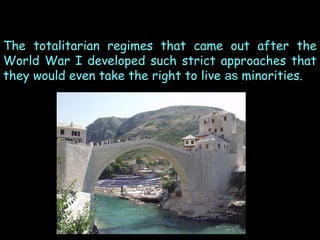
The totalitarian regimes that came out after the
World War I developed such strict approaches that
they would even take the right to live as minorities.
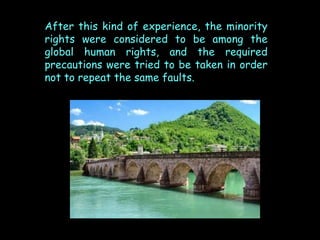
After this kind of experience, the minority
rights were considered to be among the
global human rights, and the required
precautions were tried to be taken in order
not to repeat the same faults.
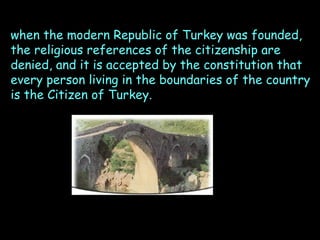
when the modern Republic of Turkey was founded,
the religious references of the citizenship are
denied, and it is accepted by the constitution that
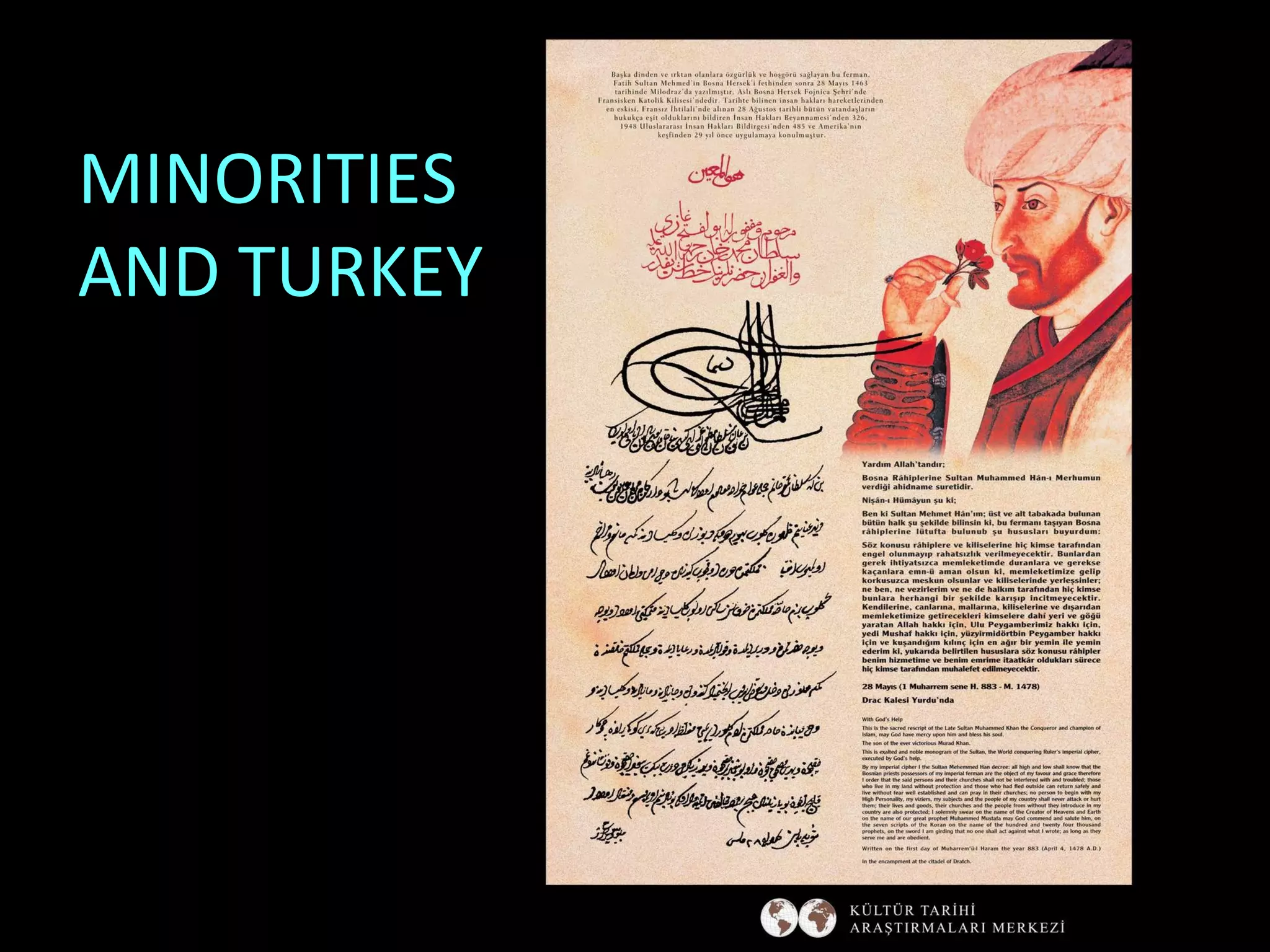
every person living in the boundaries of the country
is the Citizen of Turkey.
It has been adopted that every citizen has
equal right and freedom disregarding the
ethnic structure or local culture of each.
It is legally and practically possible that people who
come from different cultural backgrounds throughout
the history of the Empire could adopt, and they could
reach every position so long as they deserve.
Any person who adopts the constitutional
structure can be positioned in any official
job in the Republic of Turkey. There occurs
no problem of representation at this point.
The origins of many rulers, those of the most
important figures in the Turkish history, are from
diverse ethnic groups. In our history, the rulers
such as the viziers/ prime ministers, Tonyukuk,
Nizamülmülk, Sokullu Mehmet Pasha, all came
from different origins.
Neither were the differences of the origins of
the Ottoman rulers considered to be important,
nor was there any other expectation than
serving the state properly and sharing the
ideals of the state.
In the Ottoman army, there were a great many
military officers from these groups, which
were regarded as the minorities. Moreover, the
military officers in the Bulgarian Army, which
had its independence recently, fought against
their classmates in the Military Academy of
the Ottoman Army during the Balkan War.
The medical group of the Ottoman Army
comprised significantly of the soldiers from
Greek origin.
The Turkish state structure, which comes from such
tradition, does not constitute any barrier against
organizing any kind of political activity that adopts
the unitary and secular structure in the constitution
for the promotion of the individuals upon the steps of
administration.
There is no such complication in our country.
The best example of this attitude is the
edict that Fatih Sultan Mehmet (Mehmet
II the Conqueror) declared in 1462: “I,
Fatih Sultan Khan, declare the entire
world that the Bosnian Franciscans are
under my domain, and I command that no
one shall ever disturb or harm the
aforementioned people and their church.
Everyone shall live in peace in my Empire
and these people who are like immigrants
here shall live in freedom and security.
They shall return to all the countries in
my Empire, and settle at their
monasteries without any fear.”
With this edict, unlimited rights upon the
soil of the country were given to a religious
community which had been oppressed by
Vatican and other states for three
hundred years. This is an unprecedented
document in the world’s history.
In other words, equal rights and the
guarantee of unlimited security were
provided for a community which had a
different belief from the emperor and
which received no compassion from their
fellow Christians.
Also, a significant part of the Jewish population, who lived in
the area of Al-Andalucía at the end of the 15th century, was
settled in the Ottoman country after the collapse of AlAndalucía.

Besides, the Hungarians and the Polish, who ran away from
the monarchy of Austria-Habsburg during the 18th century,
and the Jewish people who were departed from the entire
Europe during the Nazi era in Germany (Contrary to the
Hollywood movies, the majority of the Jewish people who
were expelled from every part of Europe either came to
Turkey or were sent to secure places over Turkey.
Even though there was threat of war by the
Germans and the English declared that no more
Jewish immigrant would be admitted to Palestine,
Turkey was still an important shelter for them ).
Indeed, today, our country defines everyone who
shares the same lands, the same future ideal by
constitution as Turkish Nation .
Turkey has a structure in which everyone, who
considers himself/herself as the member of this
country and adopts the secular and unitary structure
of the state, is the majority both in legal terms and in
the minds of other people.
Even though the legal equality and the relevant
proceedings have already written down beforehand,
the creed and the eagerness in practice of the
members of the community is more important as it is
well known, the racism, the xenophobia, the violation
of the minority rights are still being experienced
severely, even in many states which are considered to
apply the liberal democracy for centuries.
Even though there is no law supporting the
racism or the xenophobia in such countries,
the activities made by the individuals,
constitutions, state institutions individually
or in an organized manner have led to an
important problem.
In general, the inheritance of the Ottoman Empire and
the motivation of having the habit of living with
different cultures in harmony keep the exceptional
negative activities in the marginal levels; thus the
general public responds against such activities and does
not lead them to find basis.
Thus, it is extremely difficult for people who have the
European point of view to understand the structure in our
country. Just as famous thinker Edward Said puts or Michael
Foucault states, European nationalisms are founded upon
defining themselves, alienating from others, and marginalizing
them.
However, the figures that provided the ideological basis of
Turkish nationalism such as Ziya Gökalp, Tekin Alp, Abdullah
Cevdet were not even from Turkish origin.
They were just romantics who loved these
lands, lived on these lands for a thousand
years, and wanted to live there together for a
longer time.
For this reason, it would contradict the spirit
of the structure to constitute a nationalism
project which would marginalize the
ethnicities they were also involved. Thus, our
nationalism is not based on marginalizing the
other while defining ourselves but looking at
the future together with the other.
The population which is accepted as the minority in
legal terms in Turkey is only the non-Muslim ethnic
groups.

The rights of these groups are taken under
guarantee by the Treaty of Lausanne, which is not
only a constitutional treaty but also an international
one.

Minorities

  • 1.
  • 2.
    The totalitarian regimesthat came out after the World War I developed such strict approaches that they would even take the right to live as minorities.
  • 3.
    After this kindof experience, the minority rights were considered to be among the global human rights, and the required precautions were tried to be taken in order not to repeat the same faults.
  • 4.
    when the modernRepublic of Turkey was founded, the religious references of the citizenship are denied, and it is accepted by the constitution that every person living in the boundaries of the country is the Citizen of Turkey.
  • 5.
    It has beenadopted that every citizen has equal right and freedom disregarding the ethnic structure or local culture of each.
  • 6.
    It is legallyand practically possible that people who come from different cultural backgrounds throughout the history of the Empire could adopt, and they could reach every position so long as they deserve.
  • 7.
    Any person whoadopts the constitutional structure can be positioned in any official job in the Republic of Turkey. There occurs no problem of representation at this point.
  • 8.
    The origins ofmany rulers, those of the most important figures in the Turkish history, are from diverse ethnic groups. In our history, the rulers such as the viziers/ prime ministers, Tonyukuk, Nizamülmülk, Sokullu Mehmet Pasha, all came from different origins.
  • 9.
    Neither were thedifferences of the origins of the Ottoman rulers considered to be important, nor was there any other expectation than serving the state properly and sharing the ideals of the state.
  • 10.
    In the Ottomanarmy, there were a great many military officers from these groups, which were regarded as the minorities. Moreover, the military officers in the Bulgarian Army, which had its independence recently, fought against their classmates in the Military Academy of the Ottoman Army during the Balkan War.
  • 11.
    The medical groupof the Ottoman Army comprised significantly of the soldiers from Greek origin.
  • 12.
    The Turkish statestructure, which comes from such tradition, does not constitute any barrier against organizing any kind of political activity that adopts the unitary and secular structure in the constitution for the promotion of the individuals upon the steps of administration. There is no such complication in our country.
  • 13.
    The best exampleof this attitude is the edict that Fatih Sultan Mehmet (Mehmet II the Conqueror) declared in 1462: “I, Fatih Sultan Khan, declare the entire world that the Bosnian Franciscans are under my domain, and I command that no one shall ever disturb or harm the aforementioned people and their church.
  • 14.
    Everyone shall livein peace in my Empire and these people who are like immigrants here shall live in freedom and security. They shall return to all the countries in my Empire, and settle at their monasteries without any fear.”
  • 15.
    With this edict,unlimited rights upon the soil of the country were given to a religious community which had been oppressed by Vatican and other states for three hundred years. This is an unprecedented document in the world’s history.
  • 16.
    In other words,equal rights and the guarantee of unlimited security were provided for a community which had a different belief from the emperor and which received no compassion from their fellow Christians.
  • 17.
    Also, a significantpart of the Jewish population, who lived in the area of Al-Andalucía at the end of the 15th century, was settled in the Ottoman country after the collapse of AlAndalucía. Besides, the Hungarians and the Polish, who ran away from the monarchy of Austria-Habsburg during the 18th century, and the Jewish people who were departed from the entire Europe during the Nazi era in Germany (Contrary to the Hollywood movies, the majority of the Jewish people who were expelled from every part of Europe either came to Turkey or were sent to secure places over Turkey.
  • 18.
    Even though therewas threat of war by the Germans and the English declared that no more Jewish immigrant would be admitted to Palestine, Turkey was still an important shelter for them ).
  • 19.
    Indeed, today, ourcountry defines everyone who shares the same lands, the same future ideal by constitution as Turkish Nation . Turkey has a structure in which everyone, who considers himself/herself as the member of this country and adopts the secular and unitary structure of the state, is the majority both in legal terms and in the minds of other people.
  • 20.
    Even though thelegal equality and the relevant proceedings have already written down beforehand, the creed and the eagerness in practice of the members of the community is more important as it is well known, the racism, the xenophobia, the violation of the minority rights are still being experienced severely, even in many states which are considered to apply the liberal democracy for centuries.
  • 21.
    Even though thereis no law supporting the racism or the xenophobia in such countries, the activities made by the individuals, constitutions, state institutions individually or in an organized manner have led to an important problem.
  • 22.
    In general, theinheritance of the Ottoman Empire and the motivation of having the habit of living with different cultures in harmony keep the exceptional negative activities in the marginal levels; thus the general public responds against such activities and does not lead them to find basis.
  • 23.
    Thus, it isextremely difficult for people who have the European point of view to understand the structure in our country. Just as famous thinker Edward Said puts or Michael Foucault states, European nationalisms are founded upon defining themselves, alienating from others, and marginalizing them. However, the figures that provided the ideological basis of Turkish nationalism such as Ziya Gökalp, Tekin Alp, Abdullah Cevdet were not even from Turkish origin.
  • 24.
    They were justromantics who loved these lands, lived on these lands for a thousand years, and wanted to live there together for a longer time. For this reason, it would contradict the spirit of the structure to constitute a nationalism project which would marginalize the ethnicities they were also involved. Thus, our nationalism is not based on marginalizing the other while defining ourselves but looking at the future together with the other.
  • 25.
    The population whichis accepted as the minority in legal terms in Turkey is only the non-Muslim ethnic groups. The rights of these groups are taken under guarantee by the Treaty of Lausanne, which is not only a constitutional treaty but also an international one.