WHAT IS A MIND MAP?
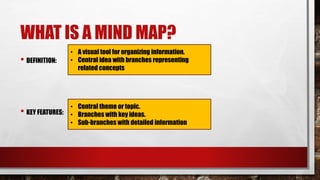
• DEFINITION:
• KEY FEATURES:
• A visual tool for organizing information.
• Central idea with branches representing
related concepts
• Central theme or topic.
• Branches with key ideas.
• Sub-branches with detailed information
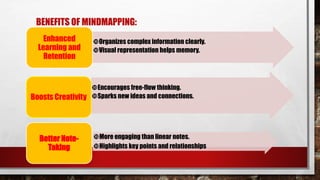
Organizes complex information clearly.
Visual representation helps memory.
Enhanced
Learning and
Retention
Encourages free-flow thinking.
Sparks new ideas and connections.
Boosts Creativity
More engaging than linear notes.
Highlights key points and relationships
Better Note-
Taking
BENEFITS OF MINDMAPPING:
LATEST TOOLS FOR MIND MAPPING
1) MindMeister
• COLLABORATIVE
ONLINE MIND
MAPPING.
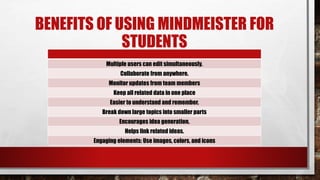
BENEFITS OF USING MINDMEISTER FOR
STUDENTS
Multiple users can edit simultaneously.
Collaborate from anywhere.
Monitor updates from team members
Keep all related data in one place
Easier to understand and remember.
Break down large topics into smaller parts
Encourages idea generation.
Helps link related ideas.
Engaging elements: Use images, colors, and icons
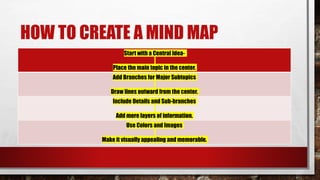
HOW TO CREATE A MIND MAP
Start with a Central Idea-
Place the main topic in the center.
Add Branches for Major Subtopics
Draw lines outward from the center.
Include Details and Sub-branches
Add more layers of information.
Use Colors and Images
Make it visually appealing and memorable.
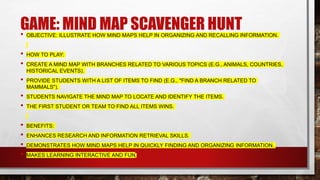
GAME: MIND MAP SCAVENGER HUNT
• OBJECTIVE: ILLUSTRATE HOW MIND MAPS HELP IN ORGANIZING AND RECALLING INFORMATION.
• HOW TO PLAY:
• CREATE A MIND MAP WITH BRANCHES RELATED TO VARIOUS TOPICS (E.G., ANIMALS, COUNTRIES,
HISTORICAL EVENTS).
• PROVIDE STUDENTS WITH A LIST OF ITEMS TO FIND (E.G., "FIND A BRANCH RELATED TO
MAMMALS").
• STUDENTS NAVIGATE THE MIND MAP TO LOCATE AND IDENTIFY THE ITEMS.
• THE FIRST STUDENT OR TEAM TO FIND ALL ITEMS WINS.
• BENEFITS:
• ENHANCES RESEARCH AND INFORMATION RETRIEVAL SKILLS.
• DEMONSTRATES HOW MIND MAPS HELP IN QUICKLY FINDING AND ORGANIZING INFORMATION.
• MAKES LEARNING INTERACTIVE AND FUN.
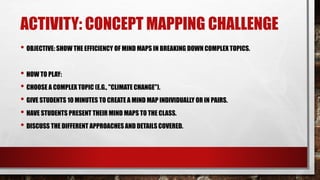
ACTIVITY: CONCEPT MAPPING CHALLENGE
• OBJECTIVE: SHOW THE EFFICIENCY OF MIND MAPS IN BREAKING DOWN COMPLEX TOPICS.
• HOW TO PLAY:
• CHOOSE A COMPLEX TOPIC (E.G., "CLIMATE CHANGE").
• GIVE STUDENTS 10 MINUTES TO CREATE A MIND MAP INDIVIDUALLY OR IN PAIRS.
• HAVE STUDENTS PRESENT THEIR MIND MAPS TO THE CLASS.
• DISCUSS THE DIFFERENT APPROACHES AND DETAILS COVERED.
ACTIVITY 2: MEMORY MIND MAP
• OBJECTIVE: DEMONSTRATE HOW MIND MAPS AID IN MEMORY RETENTION ANDRECALL.
• HOW TO PLAY:
• PRESENT A DETAILED MIND MAP ON A PROJECTOR FOR 2 MINUTES.
• REMOVE THE MIND MAP AND ASK STUDENTS TO RECREATE IT FROM MEMORY.
• COMPARE THEIR VERSIONS TO THE ORIGINAL.
• AWARD POINTS FOR ACCURACY AND DETAIL.
MIND MAP DEBATE
• OBJECTIVE: USE MIND MAPS TO ORGANIZE ARGUMENTS AND IMPROVE PUBLIC SPEAKING.
• HOW TO PLAY:
• DIVIDE STUDENTS INTO TWO TEAMS.
• ASSIGN A DEBATE TOPIC (E.G., "SHOULD SCHOOL UNIFORMS BE MANDATORY?").
• EACH TEAM CREATES A MIND MAP WITH THEIR ARGUMENTS AND SUPPORTING POINTS.
• CONDUCT THE DEBATE, ALLOWING TEAMS TO REFER TO THEIR MIND MAPS.
• EVALUATE THE CLARITY AND EFFECTIVENESS OF THEIR ARGUMENTS.
SCENARIO

MINDMAP is good for students to do creative workk

  • 2.
    WHAT IS AMIND MAP? • DEFINITION: • KEY FEATURES: • A visual tool for organizing information. • Central idea with branches representing related concepts • Central theme or topic. • Branches with key ideas. • Sub-branches with detailed information
  • 3.
    Organizes complex informationclearly. Visual representation helps memory. Enhanced Learning and Retention Encourages free-flow thinking. Sparks new ideas and connections. Boosts Creativity More engaging than linear notes. Highlights key points and relationships Better Note- Taking BENEFITS OF MINDMAPPING:
  • 4.
    LATEST TOOLS FORMIND MAPPING 1) MindMeister • COLLABORATIVE ONLINE MIND MAPPING.
  • 5.
    BENEFITS OF USINGMINDMEISTER FOR STUDENTS Multiple users can edit simultaneously. Collaborate from anywhere. Monitor updates from team members Keep all related data in one place Easier to understand and remember. Break down large topics into smaller parts Encourages idea generation. Helps link related ideas. Engaging elements: Use images, colors, and icons
  • 6.
    HOW TO CREATEA MIND MAP Start with a Central Idea- Place the main topic in the center. Add Branches for Major Subtopics Draw lines outward from the center. Include Details and Sub-branches Add more layers of information. Use Colors and Images Make it visually appealing and memorable.
  • 7.
    GAME: MIND MAPSCAVENGER HUNT • OBJECTIVE: ILLUSTRATE HOW MIND MAPS HELP IN ORGANIZING AND RECALLING INFORMATION. • HOW TO PLAY: • CREATE A MIND MAP WITH BRANCHES RELATED TO VARIOUS TOPICS (E.G., ANIMALS, COUNTRIES, HISTORICAL EVENTS). • PROVIDE STUDENTS WITH A LIST OF ITEMS TO FIND (E.G., "FIND A BRANCH RELATED TO MAMMALS"). • STUDENTS NAVIGATE THE MIND MAP TO LOCATE AND IDENTIFY THE ITEMS. • THE FIRST STUDENT OR TEAM TO FIND ALL ITEMS WINS. • BENEFITS: • ENHANCES RESEARCH AND INFORMATION RETRIEVAL SKILLS. • DEMONSTRATES HOW MIND MAPS HELP IN QUICKLY FINDING AND ORGANIZING INFORMATION. • MAKES LEARNING INTERACTIVE AND FUN.
  • 8.
    ACTIVITY: CONCEPT MAPPINGCHALLENGE • OBJECTIVE: SHOW THE EFFICIENCY OF MIND MAPS IN BREAKING DOWN COMPLEX TOPICS. • HOW TO PLAY: • CHOOSE A COMPLEX TOPIC (E.G., "CLIMATE CHANGE"). • GIVE STUDENTS 10 MINUTES TO CREATE A MIND MAP INDIVIDUALLY OR IN PAIRS. • HAVE STUDENTS PRESENT THEIR MIND MAPS TO THE CLASS. • DISCUSS THE DIFFERENT APPROACHES AND DETAILS COVERED.
  • 9.
    ACTIVITY 2: MEMORYMIND MAP • OBJECTIVE: DEMONSTRATE HOW MIND MAPS AID IN MEMORY RETENTION ANDRECALL. • HOW TO PLAY: • PRESENT A DETAILED MIND MAP ON A PROJECTOR FOR 2 MINUTES. • REMOVE THE MIND MAP AND ASK STUDENTS TO RECREATE IT FROM MEMORY. • COMPARE THEIR VERSIONS TO THE ORIGINAL. • AWARD POINTS FOR ACCURACY AND DETAIL.
  • 10.
    MIND MAP DEBATE •OBJECTIVE: USE MIND MAPS TO ORGANIZE ARGUMENTS AND IMPROVE PUBLIC SPEAKING. • HOW TO PLAY: • DIVIDE STUDENTS INTO TWO TEAMS. • ASSIGN A DEBATE TOPIC (E.G., "SHOULD SCHOOL UNIFORMS BE MANDATORY?"). • EACH TEAM CREATES A MIND MAP WITH THEIR ARGUMENTS AND SUPPORTING POINTS. • CONDUCT THE DEBATE, ALLOWING TEAMS TO REFER TO THEIR MIND MAPS. • EVALUATE THE CLARITY AND EFFECTIVENESS OF THEIR ARGUMENTS.
  • 11.