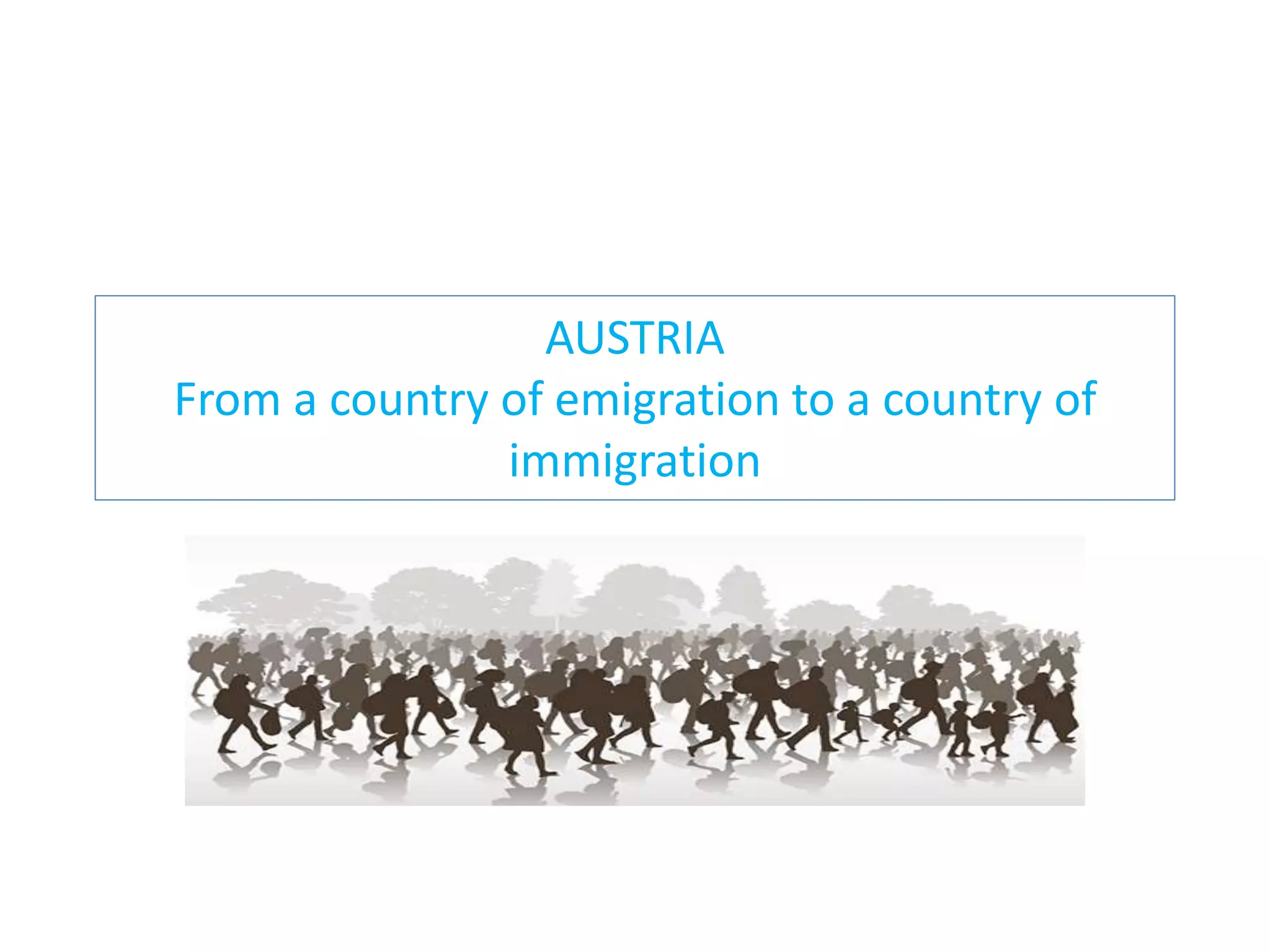
AUSTRIA
From a country of emigration to a country of
immigration
Reasons for migration in general
Push factors
• war
• persecution
• discrimination
• natural disasters
• poverty
Pull factors
• lack of workers
• potential sources of income
• social and political
advantages
• chance to get an education
• family networks
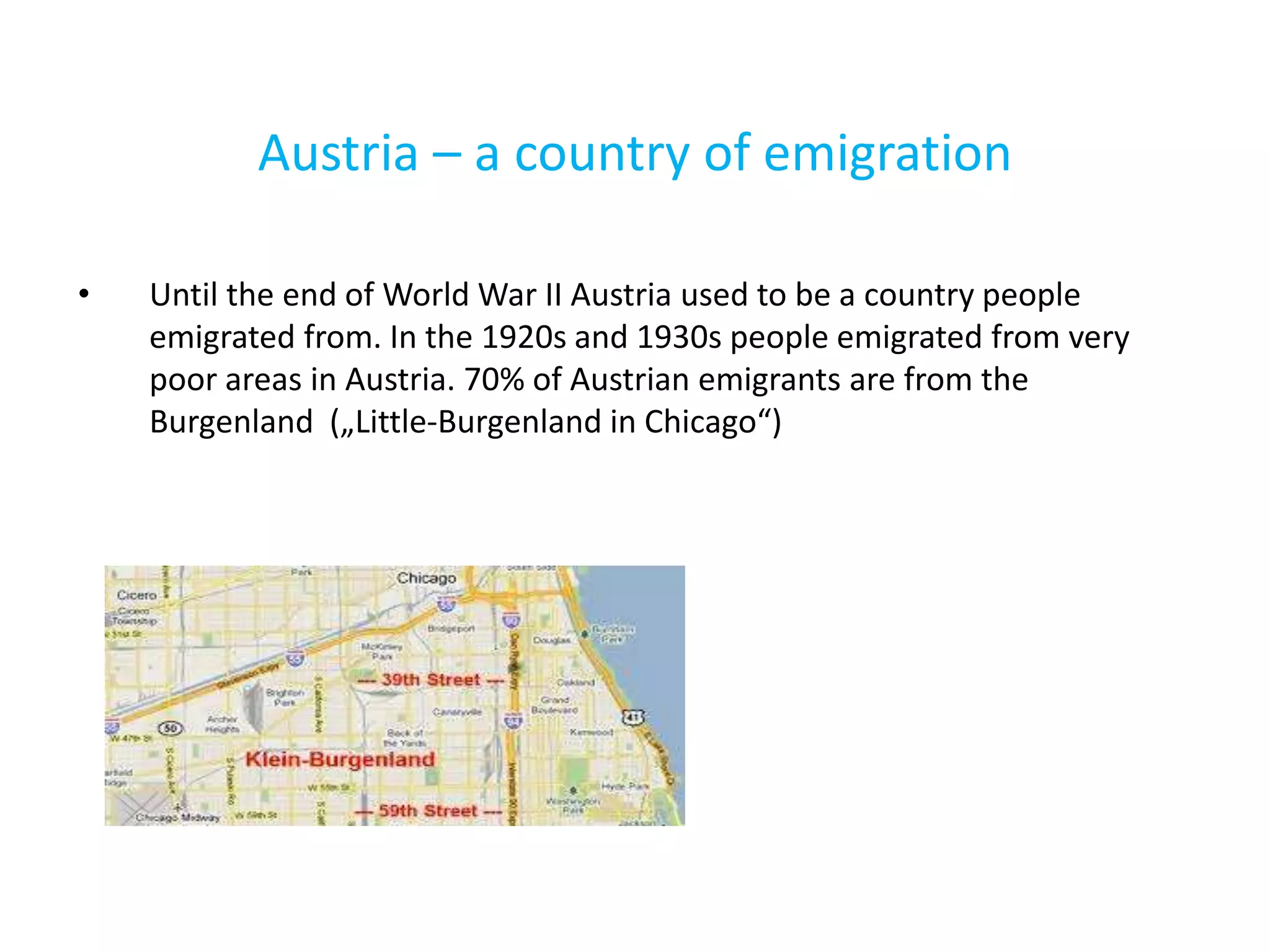
Austria – a country of emigration
• Until the end of World War II Austria used to be a country people
emigrated from. In the 1920s and 1930s people emigrated from very
poor areas in Austria. 70% of Austrian emigrants are from the
Burgenland („Little-Burgenland in Chicago“)
World War II / Post-war period
• 1938-45 –Jews and politically persecuted people flee from Nazi-Germany into exile
• 1945-50 – 10 million people in Europe are on the run
• Austria is the destination for many refugees and displaced people, especially
survivors of concentration camps, people sentenced to hard labour and people of
German ethnic origin living outside of Germany, who have to leave
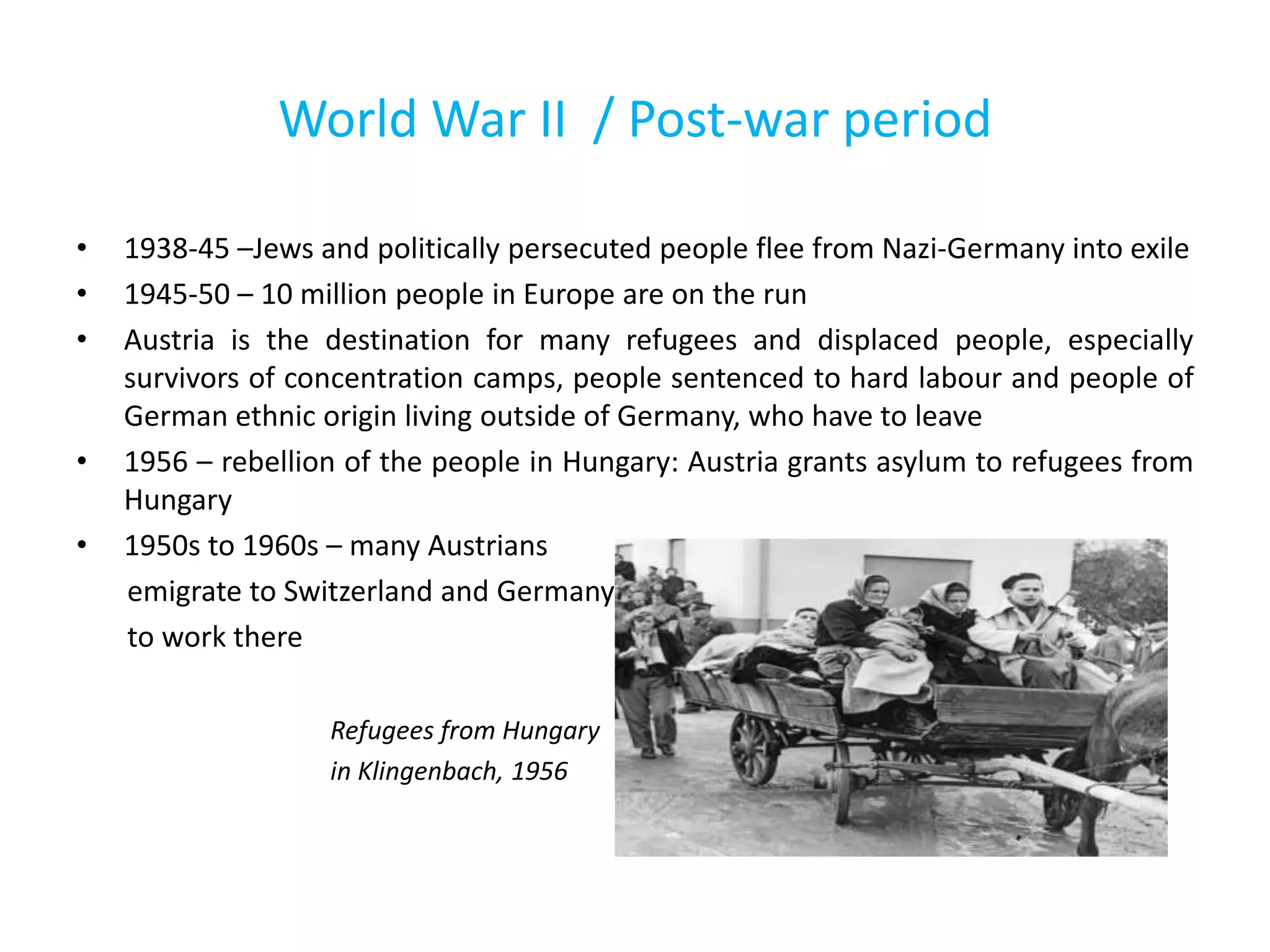
• 1956 – rebellion of the people in Hungary: Austria grants asylum to refugees from
Hungary
• 1950s to 1960s – many Austrians
emigrate to Switzerland and Germany
to work there
Refugees from Hungary
in Klingenbach, 1956
Austria becomes a country of immigration 1
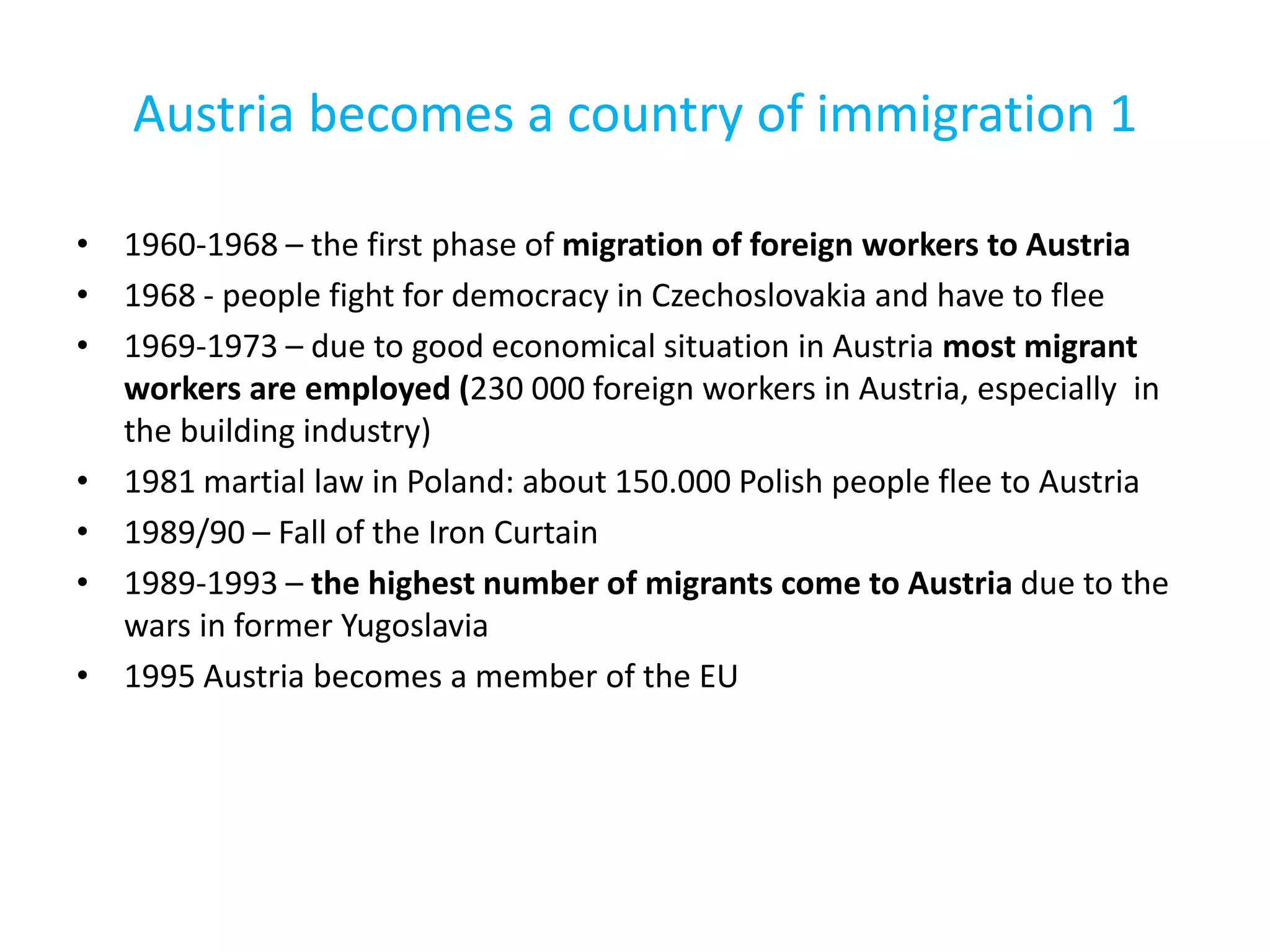
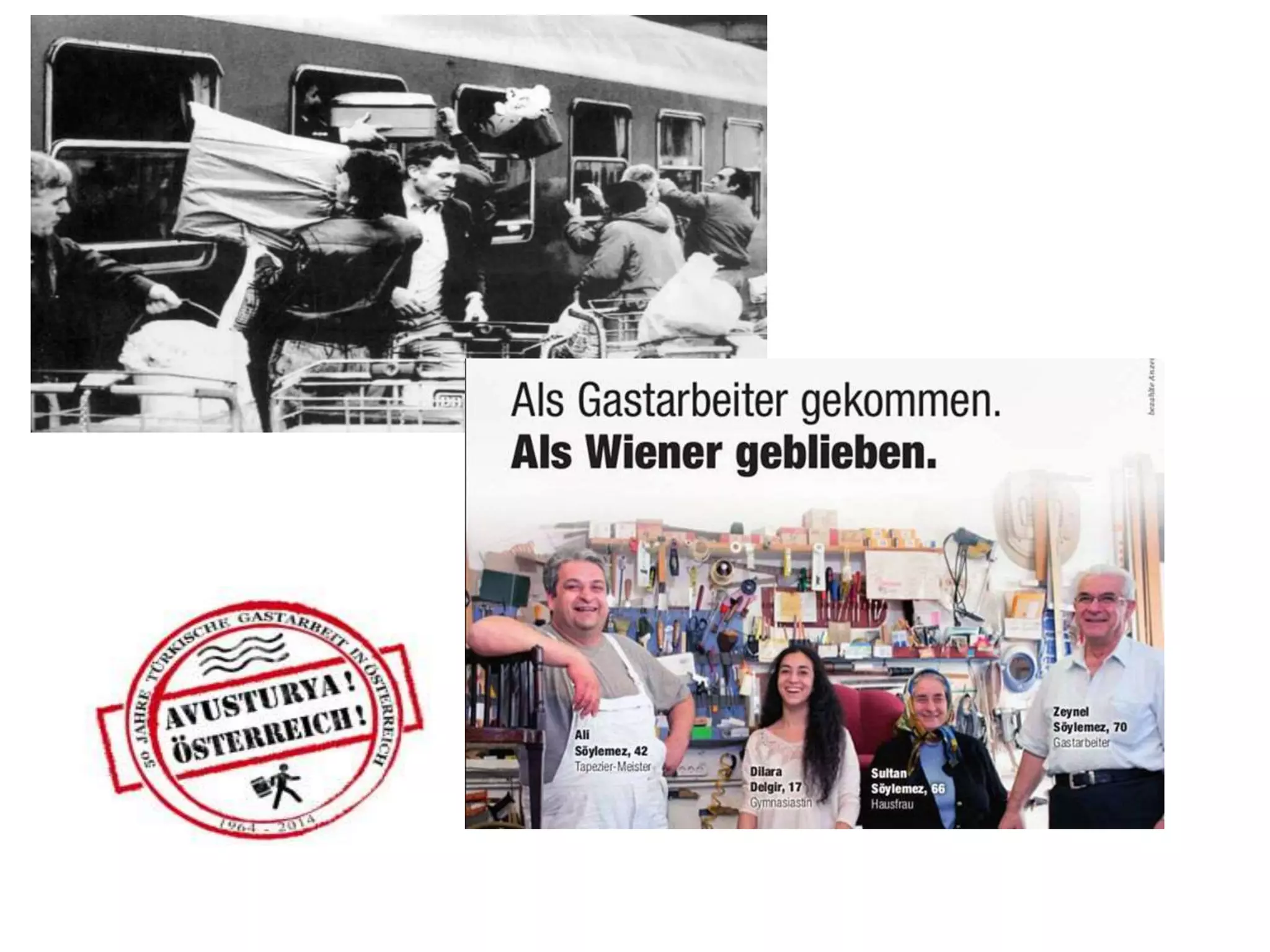
• 1960-1968 – the first phase of migration of foreign workers to Austria
• 1968 - people fight for democracy in Czechoslovakia and have to flee
• 1969-1973 – due to good economical situation in Austria most migrant
workers are employed (230 000 foreign workers in Austria, especially in
the building industry)
• 1981 martial law in Poland: about 150.000 Polish people flee to Austria
• 1989/90 – Fall of the Iron Curtain
• 1989-1993 – the highest number of migrants come to Austria due to the
wars in former Yugoslavia
• 1995 Austria becomes a member of the EU
Austria becomes a country of immigration 2
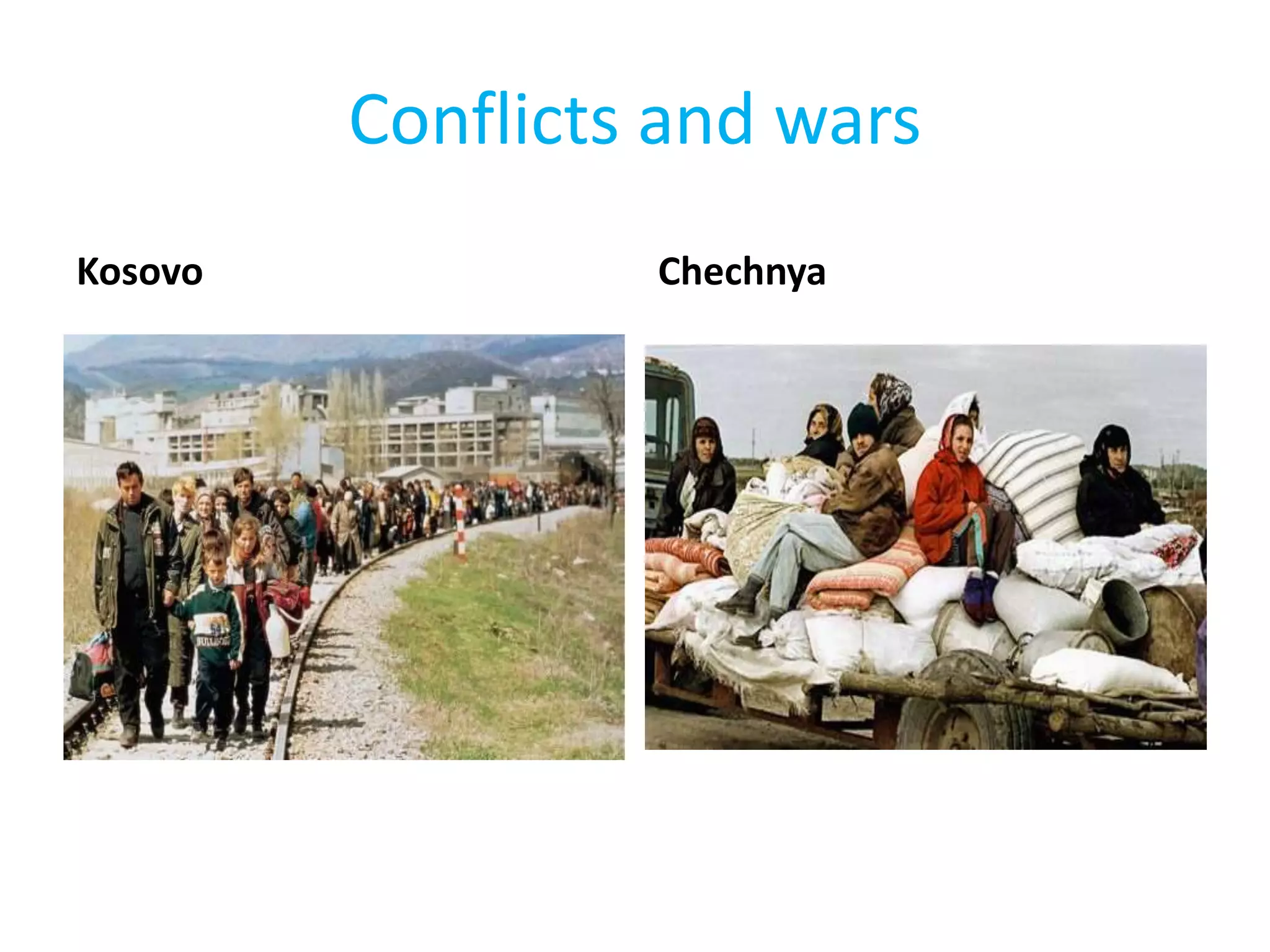
• 1991-1999 – wars in former Yugoslavia (Croatia, Bosnia, Kosovo)
• 1998/1999 conflict in the Kosovo ( 795 000 people on the run), 5000
refugees are taken in
• 1994 – 1996 - first war in Chechnya, 1999 - 2009 second war in Chechnya,
About 30 000 Chechens live in Austria
• From the 1990 until now: more and more refugees in Europe due to
conflicts and wars in Africa and Asia
• Since the beginning of 2000 – more and more Germans come to Austria to
study and work here
• 2004 – enlargement of the EU: 10 new member states, free choice
concerning place of work and of residence
• 2007 - Romania and Bulgaria become members of the EU
• 2015 - 17 500 Romanian citizens emigrated to Austria
Conflicts and wars
Kosovo Chechnya
LOVE
• Let us not forget that a lot of people have decided to
come to Austria or to leave Austria because of love.
• When asking our family and friends about people
who migrated to other countries, we often heard of
people who did not go because they HAD to leave
but because they WANTED to

Migration in Austria

  • 1.
    AUSTRIA From a countryof emigration to a country of immigration
  • 2.
    Reasons for migrationin general Push factors • war • persecution • discrimination • natural disasters • poverty Pull factors • lack of workers • potential sources of income • social and political advantages • chance to get an education • family networks
  • 3.
    Austria – acountry of emigration • Until the end of World War II Austria used to be a country people emigrated from. In the 1920s and 1930s people emigrated from very poor areas in Austria. 70% of Austrian emigrants are from the Burgenland („Little-Burgenland in Chicago“)
  • 4.
    World War II/ Post-war period • 1938-45 –Jews and politically persecuted people flee from Nazi-Germany into exile • 1945-50 – 10 million people in Europe are on the run • Austria is the destination for many refugees and displaced people, especially survivors of concentration camps, people sentenced to hard labour and people of German ethnic origin living outside of Germany, who have to leave • 1956 – rebellion of the people in Hungary: Austria grants asylum to refugees from Hungary • 1950s to 1960s – many Austrians emigrate to Switzerland and Germany to work there Refugees from Hungary in Klingenbach, 1956
  • 5.
    Austria becomes acountry of immigration 1 • 1960-1968 – the first phase of migration of foreign workers to Austria • 1968 - people fight for democracy in Czechoslovakia and have to flee • 1969-1973 – due to good economical situation in Austria most migrant workers are employed (230 000 foreign workers in Austria, especially in the building industry) • 1981 martial law in Poland: about 150.000 Polish people flee to Austria • 1989/90 – Fall of the Iron Curtain • 1989-1993 – the highest number of migrants come to Austria due to the wars in former Yugoslavia • 1995 Austria becomes a member of the EU
  • 7.
    Austria becomes acountry of immigration 2 • 1991-1999 – wars in former Yugoslavia (Croatia, Bosnia, Kosovo) • 1998/1999 conflict in the Kosovo ( 795 000 people on the run), 5000 refugees are taken in • 1994 – 1996 - first war in Chechnya, 1999 - 2009 second war in Chechnya, About 30 000 Chechens live in Austria • From the 1990 until now: more and more refugees in Europe due to conflicts and wars in Africa and Asia • Since the beginning of 2000 – more and more Germans come to Austria to study and work here • 2004 – enlargement of the EU: 10 new member states, free choice concerning place of work and of residence • 2007 - Romania and Bulgaria become members of the EU • 2015 - 17 500 Romanian citizens emigrated to Austria
  • 8.
  • 9.
    LOVE • Let usnot forget that a lot of people have decided to come to Austria or to leave Austria because of love. • When asking our family and friends about people who migrated to other countries, we often heard of people who did not go because they HAD to leave but because they WANTED to