1
15
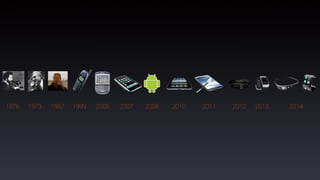
1876 1973 1987 1999 2005 2007 2008 2010 2011 2012 2013 2014
16
Top Ten
mHealth Trends
17
10
Increased Mobile
Usage & Adoption
18
Smartphones in use surpassed
1 billion worldwide in 2012
By 2015, there will be 2 billion in use
Source: Strategy Analytics
19
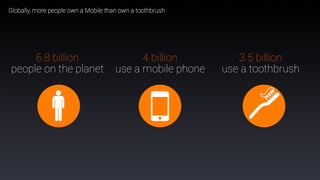
6.8 billion
people on the planet
4 billion
use a mobile phone
3.5 billion
use a toothbrush
Globally, more people own a Mobile than own a toothbrush
20 Source: US Census Bureau, ITU, CIA
Mobile Penetration by Region
21
91% of people keep their phone
within 3 feet, 24 hours a day
Source: Morgan Stanley
Users pick up their smartphones
upwards of 100 times each day
22
1 in 5 people have dropped their phone
in the toilet
Source: 11Mark’s “IT in the Toilet” Study, Plaxo, London School of Hygiene & Tropical Medicine
23 Sources: Phoenix Marketing, ImpigerMobile, CTIA.org
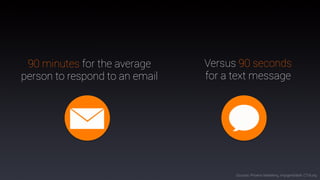
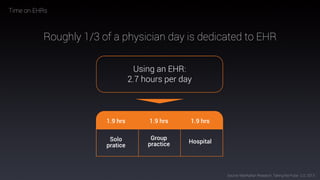
90 minutes for the average
person to respond to an email
Versus 90 seconds 
for a text message
24
SMS Text Advertising
SMS Text is 90% of
mobile marketing
revenue worldwide
Sources: Juniper Research, Wikipedia
25
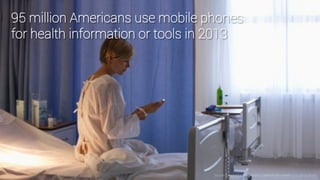
95 million Americans use mobile phones
for health information or tools in 2013
Source: Manhattan Research’s Cybercitizen Health U.S. 2013 Study
26
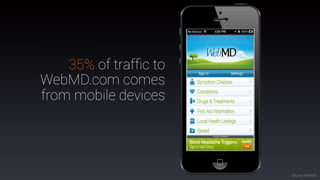
35% of traffic to
WebMD.com comes
from mobile devices
Source: WebMD
27
Patients suffering from the conditions below are
most likely to be “mobile health” users
1.  Cystic fibrosis
2.  Growth hormone deficiency
3.  Acne    
4.  ADD/ADHD
5.  Hepatitis C
6.  Migraine
7.  Crohn's disease  
8.  Chronic kidney disease     
9.  Generalized anxiety disorder
10. Bipolar disorder
Source: Manhattan Research’s Cybercitizen Health U.S. 2013 Study
28
Consumers research healthcare on their smartphone
Source: 2013 MARS Consumer Health Studies
72% of 18-49 mobile users
Track meals/
calories consumed
Track exercise/
workout schedule
Look up drug at
doctor’s or pharmacy
45% of 50+ mobile users
Track exercise/
workout schedule
29
64% own/use a
smartphone, tablet
and desktop/laptop
Source: Manhattan Research
30
On average, clinicians use
6.4different mobile
devices in a day
Sources: IDC Healthcare Insights Study, Kantar Media, HIMSS
36%of physicians use mobile
technology to collect
patient information
bedside
5OF 10HCPs access medical journals via
their mobile device
70%of physicians use mobile devices to view
patient information
31
Top 5 professional websites accessed via mobile:
30%
The WebMD
27%
Epocrates
22%
Wikipedia
13%
NIH Websites*
13%
Uptodate
Source: Manhattan Research, Taking the Pulse U.S. 2013
32
Usage: Conclusion
Mobile is the “go-to” tool in healthcare
We’ve only scratched the surface of Mobile Health
Some of the most innovation mobile solutions are
happening in healthcare
33
09
APPS and more APPS
34 Source: Research2Guidance
There are currently over 100,000
mobile health apps around the world
By 2017, mHealth app services
are projected to reach $26 billion
≥	
  
35
38%of physicians with mobile devices
use medical-related apps daily
1IN 5smartphone owners have at least
one health app on their phone
Sources: Demi & Cooper Advertising, DC Interactive Group, CompTIA
36
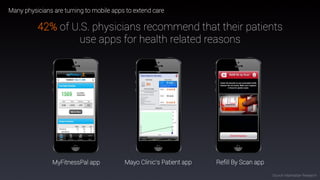
42% of U.S. physicians recommend that their patients
use apps for health related reasons
Mayo Clinic’s Patient appMyFitnessPal app Refill By Scan app
Many physicians are turning to mobile apps to extend care
Source: Manhattan Research
37
Education Apps
Netter’s Anatomy Atlas MedPage Today
EMR & Patient Monitoring Apps
CA Mobile Care360
Reference Apps
ePocrates Medscape
Imaging Apps
Siemens Syngo ResolutionMD
Point of Care Apps
EyeDecide MD Muscle Trigger Points
Medical apps for HCPs fall into multiple categories
and address diverse needs
38
39
On-the-Go Medical Imaging: Mobile MIM app
ResolutionMD app
40
Apps: Conclusion
Apps play a pivotal role in proactive healthcare habits
Healthcare Apps succeed when they are utility based
As Apps become more popular regulation is a bigger focus
Apps may turn your phone into a regulated “medical device”
41
08
Wearable Technology
42
Fitbit/Jawbone/ Fuel Band Android Wear
Google Smart LensiWatch / Health Kit
Samsung
Simband / SAMI
Google Glass
43
What do all of these wearable devices
have in common?
The ability to impact healthcare!
44
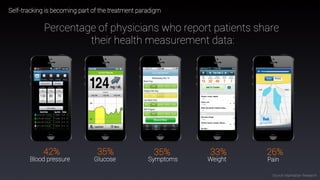
Percentage of physicians who report patients share
their health measurement data:
Blood pressure Symptoms Weight Pain
42% 26%33%
Glucose
35%35%
Self-tracking is becoming part of the treatment paradigm
Source: Manhattan Research
45
Function of Wearables Forecast
Source: PSFK
46
Wearables are going to be essential to the future of healthcare
Quickly moving from a tracking tool to a diagnostic tool
Wearables evolving even more quickly than mobile space
Opportunity for pharma to leverage generated data
Wearables: Conclusion
47
07
Electronic Health Records
48
In 2013, Physicians
More Tethered to
EHRs than Predicted
Source: Manhattan Research, Taking the Pulse U.S. 2013
49
Time on EHRs
Roughly 1/3 of a physician day is dedicated to EHR
Source: Manhattan Research, Taking the Pulse U.S. 2013
50
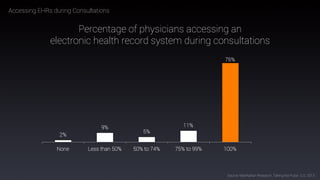
Accessing EHRs during Consultations
2%
9%
5%
11%
76%
None Less than 50% 50% to 74% 75% to 99% 100%
Percentage of physicians accessing an
electronic health record system during consultations
Source: Manhattan Research, Taking the Pulse U.S. 2013
51
Accessing EHRs during Consultations
2%
9%
5%
11%
76%
None Less than 50% 50% to 74% 75% to 99% 100%
Percentage of physicians accessing an
electronic health record system during consultations
Source: Manhattan Research, Taking the Pulse U.S. 2013
52
EHR Use by Mobile
37% of Physicians currently access EHRs via Mobile
Source: Manhattan Research, Taking the Pulse U.S. 2013
53
“Digital Omnivores are becoming the standard:
connected, mobile-centric clinicians who show
preference for mobile screens in all professional
tasks and spend more time accessing digital
information than their colleagues.”
Source: epocrates
54
Remote EHR Patient Monitoring
AirStrip
55
EHR: Conclusion
Care summaries can now be shared between care settings
EHRs offer ability to message physicians with relevant information
Healthcare professionals can send patients electronic copies of HRs
Patients can view, download, and transmit their health records
We must now determine how best to leverage this groundswell
of behavior to support providers
56
06
Increased Data and Analytics
57
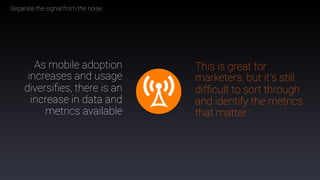
As mobile adoption
increases and usage
diversifies, there is an
increase in data and
metrics available
	
  
Separate the signal from the noise
	
  
This is great for
marketers, but it’s still
difficult to sort through
and identify the metrics
that matter
	
  
58
Many marketers are trying to use the same metrics
for mobile as used for other channels
But you can’t because there are unique capabilities
Mobile is not the same
	
  
Tap to call iBeaconsMap your destination
59
HealthMaps Flu Trends
Third Party examples:
	
  
Youtube Allergy Search Trends	
  
Device ID is a currency
Pairing offline data to mobile activity
	
  
60
Site Analytics Tools
	
  
Marketer owned/1st party
	
  
Monitored, Google Analytics 	
  
DMPs
	
  
Ad Tech Analytics
	
  
DoubleClick, Adobe
	
  
BlueKai
	
  
61
More important than ever for brands, marketers, ad tech,
and publishers to work together:
Converging the silos
To test, learn, and establish measurement standards
62
Consolidated view of your consumer is priority #1
Leveraging data in every consumer touch-point
Data enables both Audience Targeting and Creative Strategy….
Data: Conclusion
63
05
Quality Content
64
“Content strategy is to copywriting as
information architecture is to design.”
–Rachel Lovinger
65
• Mobile isn't just about the device
• How does your audience really use mobile
• Think before you shrink
• Expand your understanding of conversions
66
Quality mobile content for a pill plus world
67
Increasingly healthcare marketers are turning to mobile
experiences to help differentiate their offering
68
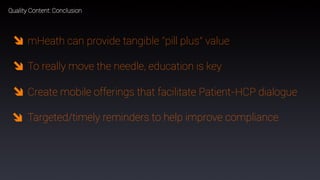
Quality Content: Conclusion
mHeath can provide tangible “pill plus” value
To really move the needle, education is key
Create mobile offerings that facilitate Patient-HCP dialogue
Targeted/timely reminders to help improve compliance
 
69
04
Video as a Constant
Companion
70
Smartphone Users are Avid Video Watchers
79%	
  
24%	
  
Watch video
Use video at least
once a day
71
Mobile Video ad spend is
projected to more than
double in 2014–
Fastest growing category
in all of advertising
72
Physicians on average spend 3 hours per week
watching online videos for professional purposes
73
70% of U.S. physicians watch online videos for professional purposes
Source: Manhattan Research, Taking the Pulse U.S. 2013,
29% The WebMD Professional Network 25% YouTube.com
16% QuantiaMD.com 16% A professional association website
74
Mobile video advertising is so new that best practices are still being worked out
Key considerations that marketers need to take into account
when exploring mobile video:
Screen Choices Creative Choices Ad TargetingAd Length
Ad Types Meeting Objectives Measuring Results
Source: eMarketer
75
Healthcare users source video for information and learning,
therefore content needs to be strong
Content creators are very important in this space
Mobile video advertising works best when adapted to
distinct devices
Launch, test, and iterate (its an evolving format and medium)
Video: Conclusion
76
03
Better User Experience
77
We need to acknowledge and understand the realities of today’s web
From Point and Click to Tap and Swipe
78
Multiple Webs
Over 14,000 device/browser/system configurations
…desktop/laptop web
…mobile web
…tablet web
…phablet web
79
Go Mobile First
People start their day and end their day with mobile
80
Recommended Approach
“Responsive” Websites
81
Responsive Design: Pros
Requires no assumptions about user needs
Compatibility with future devices
Consistency of content across all views
Ease of updates
SEO friendly
Allows specific enhancements of identical
underlying content for each platform
82
A striking color
palette can drive
ad recall, but
legibility is
paramount
Short, focused
messaging plays
well in mobile’s
small format
Consumers
respond to
mobile ads that
give them
something back
Clear and
persistent
branding is
important for
building brand
awareness
83
Rethink structure by designing with a phone/tablet-first mindset
themobileplaybook.com
84
Go Mobile First
Utilize the mobile capabilities
Distinguish between phone and tablet experiences
Progressively enhance experience for each device
	
  
Better User Experience: Conclusion
85
02
Location, Location, Location
86
Multiple ways to identify location on mobile
- IP address
- Geo-targeting
- Hyperlocal
- iBeacon/BLE
- Near Field Communication (NFC)
87
iBeacons
Hospital Navigation and Contextual information
88
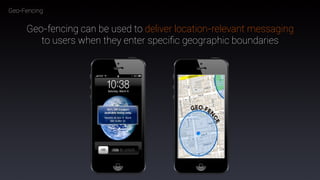
Geo-Fencing
Geo-fencing can be used to deliver location-relevant messaging
to users when they enter specific geographic boundaries
89
Sit or Squat
90
76% of users agree that location sharing
provides more meaningful content
91
With location there is no set standard: rapidly evolving
Retail and POS are driving innovation
Unique opportunity for healthcare to take advantage of
Ability to inform personalization of content
	
  
Location: Conclusion
92
01
Personalization
93
“The Day Ralph Ate the Whole Thing”
Source: Johannes Leonardo, Grow
94
Morning
Affair
Afternoon
Affair
Evening
Affair
12-piece cutlery set
or Chess board
Coupon value changes based on
demographic data of viewer
Under the Hood
Time of day GeographyDeviceData
Phone, tablet, desktop
97
So what does healthcare do next?

98
“Never in history has the world changed with such
extraordinary speed, rendering so much received
wisdom of such little value.”
99
A personal perception of “too much change in too
short a period of time.”
- Alvin Toffler
The result is future shock:
100
More choice sometimes leads to inferior decisions
We have a paradox of choice:
101
Make it Personal: Content, Local, Data and Mobile are converging
The Only Rule is There Are No Rules: Evolve or Die
Give it a Chance(s): Launch and iterate
Ideas Trump Technology: Emotional moments move the market
Avoid Future Shock: The fundamentals have not changed
102
Merci

Mighty Mobile

  • 1.
  • 2.
    15 1876 1973 19871999 2005 2007 2008 2010 2011 2012 2013 2014
  • 3.
  • 4.
  • 5.
    18 Smartphones in usesurpassed 1 billion worldwide in 2012 By 2015, there will be 2 billion in use Source: Strategy Analytics
  • 6.
    19 6.8 billion people onthe planet 4 billion use a mobile phone 3.5 billion use a toothbrush Globally, more people own a Mobile than own a toothbrush
  • 7.
    20 Source: USCensus Bureau, ITU, CIA Mobile Penetration by Region
  • 8.
    21 91% of peoplekeep their phone within 3 feet, 24 hours a day Source: Morgan Stanley Users pick up their smartphones upwards of 100 times each day
  • 9.
    22 1 in 5people have dropped their phone in the toilet Source: 11Mark’s “IT in the Toilet” Study, Plaxo, London School of Hygiene & Tropical Medicine
  • 10.
    23 Sources: PhoenixMarketing, ImpigerMobile, CTIA.org 90 minutes for the average person to respond to an email Versus 90 seconds  for a text message
  • 11.
    24 SMS Text Advertising SMSText is 90% of mobile marketing revenue worldwide Sources: Juniper Research, Wikipedia
  • 12.
    25 95 million Americansuse mobile phones for health information or tools in 2013 Source: Manhattan Research’s Cybercitizen Health U.S. 2013 Study
  • 13.
    26 35% of trafficto WebMD.com comes from mobile devices Source: WebMD
  • 14.
    27 Patients suffering fromthe conditions below are most likely to be “mobile health” users 1.  Cystic fibrosis 2.  Growth hormone deficiency 3.  Acne     4.  ADD/ADHD 5.  Hepatitis C 6.  Migraine 7.  Crohn's disease   8.  Chronic kidney disease      9.  Generalized anxiety disorder 10. Bipolar disorder Source: Manhattan Research’s Cybercitizen Health U.S. 2013 Study
  • 15.
    28 Consumers research healthcareon their smartphone Source: 2013 MARS Consumer Health Studies 72% of 18-49 mobile users Track meals/ calories consumed Track exercise/ workout schedule Look up drug at doctor’s or pharmacy 45% of 50+ mobile users Track exercise/ workout schedule
  • 16.
    29 64% own/use a smartphone,tablet and desktop/laptop Source: Manhattan Research
  • 17.
    30 On average, cliniciansuse 6.4different mobile devices in a day Sources: IDC Healthcare Insights Study, Kantar Media, HIMSS 36%of physicians use mobile technology to collect patient information bedside 5OF 10HCPs access medical journals via their mobile device 70%of physicians use mobile devices to view patient information
  • 18.
    31 Top 5 professionalwebsites accessed via mobile: 30% The WebMD 27% Epocrates 22% Wikipedia 13% NIH Websites* 13% Uptodate Source: Manhattan Research, Taking the Pulse U.S. 2013
  • 19.
    32 Usage: Conclusion Mobile isthe “go-to” tool in healthcare We’ve only scratched the surface of Mobile Health Some of the most innovation mobile solutions are happening in healthcare
  • 20.
  • 21.
    34 Source: Research2Guidance Thereare currently over 100,000 mobile health apps around the world By 2017, mHealth app services are projected to reach $26 billion ≥  
  • 22.
    35 38%of physicians withmobile devices use medical-related apps daily 1IN 5smartphone owners have at least one health app on their phone Sources: Demi & Cooper Advertising, DC Interactive Group, CompTIA
  • 23.
    36 42% of U.S.physicians recommend that their patients use apps for health related reasons Mayo Clinic’s Patient appMyFitnessPal app Refill By Scan app Many physicians are turning to mobile apps to extend care Source: Manhattan Research
  • 24.
    37 Education Apps Netter’s AnatomyAtlas MedPage Today EMR & Patient Monitoring Apps CA Mobile Care360 Reference Apps ePocrates Medscape Imaging Apps Siemens Syngo ResolutionMD Point of Care Apps EyeDecide MD Muscle Trigger Points Medical apps for HCPs fall into multiple categories and address diverse needs
  • 25.
  • 26.
    39 On-the-Go Medical Imaging:Mobile MIM app ResolutionMD app
  • 27.
    40 Apps: Conclusion Apps playa pivotal role in proactive healthcare habits Healthcare Apps succeed when they are utility based As Apps become more popular regulation is a bigger focus Apps may turn your phone into a regulated “medical device”
  • 28.
  • 29.
    42 Fitbit/Jawbone/ Fuel BandAndroid Wear Google Smart LensiWatch / Health Kit Samsung Simband / SAMI Google Glass
  • 30.
    43 What do allof these wearable devices have in common? The ability to impact healthcare!
  • 31.
    44 Percentage of physicianswho report patients share their health measurement data: Blood pressure Symptoms Weight Pain 42% 26%33% Glucose 35%35% Self-tracking is becoming part of the treatment paradigm Source: Manhattan Research
  • 32.
    45 Function of WearablesForecast Source: PSFK
  • 33.
    46 Wearables are goingto be essential to the future of healthcare Quickly moving from a tracking tool to a diagnostic tool Wearables evolving even more quickly than mobile space Opportunity for pharma to leverage generated data Wearables: Conclusion
  • 34.
  • 35.
    48 In 2013, Physicians MoreTethered to EHRs than Predicted Source: Manhattan Research, Taking the Pulse U.S. 2013
  • 36.
    49 Time on EHRs Roughly1/3 of a physician day is dedicated to EHR Source: Manhattan Research, Taking the Pulse U.S. 2013
  • 37.
    50 Accessing EHRs duringConsultations 2% 9% 5% 11% 76% None Less than 50% 50% to 74% 75% to 99% 100% Percentage of physicians accessing an electronic health record system during consultations Source: Manhattan Research, Taking the Pulse U.S. 2013
  • 38.
    51 Accessing EHRs duringConsultations 2% 9% 5% 11% 76% None Less than 50% 50% to 74% 75% to 99% 100% Percentage of physicians accessing an electronic health record system during consultations Source: Manhattan Research, Taking the Pulse U.S. 2013
  • 39.
    52 EHR Use byMobile 37% of Physicians currently access EHRs via Mobile Source: Manhattan Research, Taking the Pulse U.S. 2013
  • 40.
    53 “Digital Omnivores arebecoming the standard: connected, mobile-centric clinicians who show preference for mobile screens in all professional tasks and spend more time accessing digital information than their colleagues.” Source: epocrates
  • 41.
    54 Remote EHR PatientMonitoring AirStrip
  • 42.
    55 EHR: Conclusion Care summariescan now be shared between care settings EHRs offer ability to message physicians with relevant information Healthcare professionals can send patients electronic copies of HRs Patients can view, download, and transmit their health records We must now determine how best to leverage this groundswell of behavior to support providers
  • 43.
  • 44.
    57 As mobile adoption increasesand usage diversifies, there is an increase in data and metrics available   Separate the signal from the noise   This is great for marketers, but it’s still difficult to sort through and identify the metrics that matter  
  • 45.
    58 Many marketers aretrying to use the same metrics for mobile as used for other channels But you can’t because there are unique capabilities Mobile is not the same   Tap to call iBeaconsMap your destination
  • 46.
    59 HealthMaps Flu Trends ThirdParty examples:   Youtube Allergy Search Trends   Device ID is a currency Pairing offline data to mobile activity  
  • 47.
    60 Site Analytics Tools   Marketer owned/1st party   Monitored, Google Analytics   DMPs   Ad Tech Analytics   DoubleClick, Adobe   BlueKai  
  • 48.
    61 More important thanever for brands, marketers, ad tech, and publishers to work together: Converging the silos To test, learn, and establish measurement standards
  • 49.
    62 Consolidated view ofyour consumer is priority #1 Leveraging data in every consumer touch-point Data enables both Audience Targeting and Creative Strategy…. Data: Conclusion
  • 50.
  • 51.
    64 “Content strategy isto copywriting as information architecture is to design.” –Rachel Lovinger
  • 52.
    65 • Mobile isn'tjust about the device • How does your audience really use mobile • Think before you shrink • Expand your understanding of conversions
  • 53.
    66 Quality mobile contentfor a pill plus world
  • 54.
    67 Increasingly healthcare marketersare turning to mobile experiences to help differentiate their offering
  • 55.
    68 Quality Content: Conclusion mHeathcan provide tangible “pill plus” value To really move the needle, education is key Create mobile offerings that facilitate Patient-HCP dialogue Targeted/timely reminders to help improve compliance  
  • 56.
    69 04 Video as aConstant Companion
  • 57.
    70 Smartphone Users areAvid Video Watchers 79%   24%   Watch video Use video at least once a day
  • 58.
    71 Mobile Video adspend is projected to more than double in 2014– Fastest growing category in all of advertising
  • 59.
    72 Physicians on averagespend 3 hours per week watching online videos for professional purposes
  • 60.
    73 70% of U.S.physicians watch online videos for professional purposes Source: Manhattan Research, Taking the Pulse U.S. 2013, 29% The WebMD Professional Network 25% YouTube.com 16% QuantiaMD.com 16% A professional association website
  • 61.
    74 Mobile video advertisingis so new that best practices are still being worked out Key considerations that marketers need to take into account when exploring mobile video: Screen Choices Creative Choices Ad TargetingAd Length Ad Types Meeting Objectives Measuring Results Source: eMarketer
  • 62.
    75 Healthcare users sourcevideo for information and learning, therefore content needs to be strong Content creators are very important in this space Mobile video advertising works best when adapted to distinct devices Launch, test, and iterate (its an evolving format and medium) Video: Conclusion
  • 63.
  • 64.
    77 We need toacknowledge and understand the realities of today’s web From Point and Click to Tap and Swipe
  • 65.
    78 Multiple Webs Over 14,000device/browser/system configurations …desktop/laptop web …mobile web …tablet web …phablet web
  • 66.
    79 Go Mobile First Peoplestart their day and end their day with mobile
  • 67.
  • 68.
    81 Responsive Design: Pros Requiresno assumptions about user needs Compatibility with future devices Consistency of content across all views Ease of updates SEO friendly Allows specific enhancements of identical underlying content for each platform
  • 69.
    82 A striking color palettecan drive ad recall, but legibility is paramount Short, focused messaging plays well in mobile’s small format Consumers respond to mobile ads that give them something back Clear and persistent branding is important for building brand awareness
  • 70.
    83 Rethink structure bydesigning with a phone/tablet-first mindset themobileplaybook.com
  • 71.
    84 Go Mobile First Utilizethe mobile capabilities Distinguish between phone and tablet experiences Progressively enhance experience for each device   Better User Experience: Conclusion
  • 72.
  • 73.
    86 Multiple ways toidentify location on mobile - IP address - Geo-targeting - Hyperlocal - iBeacon/BLE - Near Field Communication (NFC)
  • 74.
  • 75.
    88 Geo-Fencing Geo-fencing can beused to deliver location-relevant messaging to users when they enter specific geographic boundaries
  • 76.
  • 77.
    90 76% of usersagree that location sharing provides more meaningful content
  • 78.
    91 With location thereis no set standard: rapidly evolving Retail and POS are driving innovation Unique opportunity for healthcare to take advantage of Ability to inform personalization of content   Location: Conclusion
  • 79.
  • 80.
    93 “The Day RalphAte the Whole Thing” Source: Johannes Leonardo, Grow
  • 81.
    94 Morning Affair Afternoon Affair Evening Affair 12-piece cutlery set orChess board Coupon value changes based on demographic data of viewer Under the Hood Time of day GeographyDeviceData Phone, tablet, desktop
  • 82.
    97 So what doeshealthcare do next? 
  • 83.
    98 “Never in historyhas the world changed with such extraordinary speed, rendering so much received wisdom of such little value.”
  • 84.
    99 A personal perceptionof “too much change in too short a period of time.” - Alvin Toffler The result is future shock:
  • 85.
    100 More choice sometimesleads to inferior decisions We have a paradox of choice:
  • 86.
    101 Make it Personal:Content, Local, Data and Mobile are converging The Only Rule is There Are No Rules: Evolve or Die Give it a Chance(s): Launch and iterate Ideas Trump Technology: Emotional moments move the market Avoid Future Shock: The fundamentals have not changed
  • 87.