Microsoft Office
Outlook
2010
Content Covered in this Module
 What is Microsoft Outlook
 Outlook Interface
 The Ribbon
 Backstage View
 Create Email Account
 Sending & Receiving Mail
 Organizing & Managing Mail
 Managing Contacts
 Managing Calendar
What is Microsoft Outlook 2010?
• Microsoft Outlook is a
personal information
manager from Microsoft,
available as a part of the
Microsoft office suite.
• Although often used
mainly as an email
application, it also
includes a calendar, task
manager, note taking,
journal and web browsing.
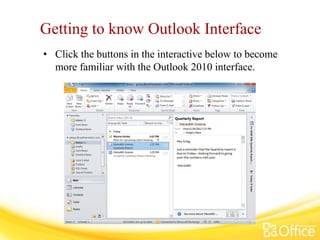
Getting to know Outlook Interface
• Click the buttons in the interactive below to become
more familiar with the Outlook 2010 interface.
The Ribbon
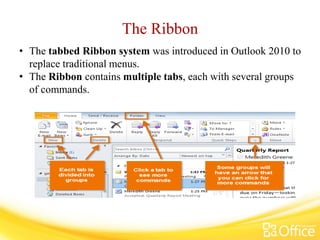
• The tabbed Ribbon system was introduced in Outlook 2010 to
replace traditional menus.
• The Ribbon contains multiple tabs, each with several groups
of commands.
Backstage View
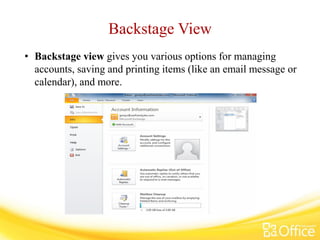
• Backstage view gives you various options for managing
accounts, saving and printing items (like an email message or
calendar), and more.
Using Outlook Create Email Account
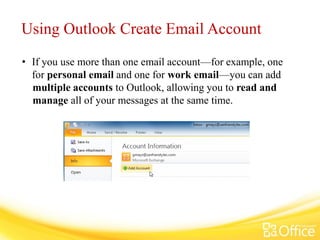
• If you use more than one email account—for example, one
for personal email and one for work email—you can add
multiple accounts to Outlook, allowing you to read and
manage all of your messages at the same time.
Sending & Receiving Mail
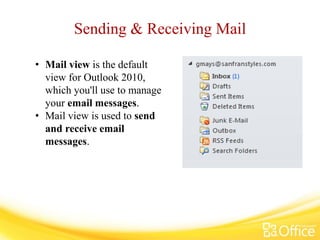
• Mail view is the default
view for Outlook 2010,
which you'll use to manage
your email messages.
• Mail view is used to send
and receive email
messages.
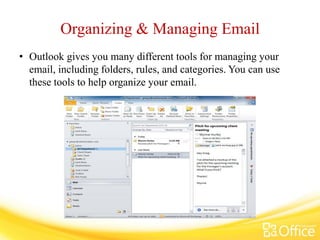
Organizing & Managing Email
• Outlook gives you many different tools for managing your
email, including folders, rules, and categories. You can use
these tools to help organize your email.
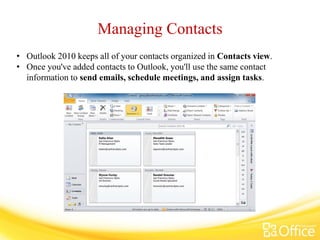
Managing Contacts
• Outlook 2010 keeps all of your contacts organized in Contacts view.
• Once you've added contacts to Outlook, you'll use the same contact
information to send emails, schedule meetings, and assign tasks.
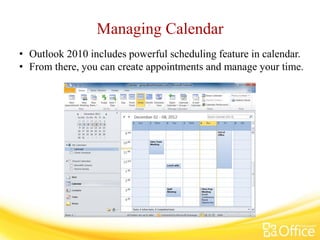
Managing Calendar
• Outlook 2010 includes powerful scheduling feature in calendar.
• From there, you can create appointments and manage your time.
Thank you

Microsoft outlook 2010

  • 1.
  • 2.
    Content Covered inthis Module  What is Microsoft Outlook  Outlook Interface  The Ribbon  Backstage View  Create Email Account  Sending & Receiving Mail  Organizing & Managing Mail  Managing Contacts  Managing Calendar
  • 3.
    What is MicrosoftOutlook 2010? • Microsoft Outlook is a personal information manager from Microsoft, available as a part of the Microsoft office suite. • Although often used mainly as an email application, it also includes a calendar, task manager, note taking, journal and web browsing.
  • 4.
    Getting to knowOutlook Interface • Click the buttons in the interactive below to become more familiar with the Outlook 2010 interface.
  • 5.
    The Ribbon • Thetabbed Ribbon system was introduced in Outlook 2010 to replace traditional menus. • The Ribbon contains multiple tabs, each with several groups of commands.
  • 6.
    Backstage View • Backstageview gives you various options for managing accounts, saving and printing items (like an email message or calendar), and more.
  • 7.
    Using Outlook CreateEmail Account • If you use more than one email account—for example, one for personal email and one for work email—you can add multiple accounts to Outlook, allowing you to read and manage all of your messages at the same time.
  • 8.
    Sending & ReceivingMail • Mail view is the default view for Outlook 2010, which you'll use to manage your email messages. • Mail view is used to send and receive email messages.
  • 9.
    Organizing & ManagingEmail • Outlook gives you many different tools for managing your email, including folders, rules, and categories. You can use these tools to help organize your email.
  • 10.
    Managing Contacts • Outlook2010 keeps all of your contacts organized in Contacts view. • Once you've added contacts to Outlook, you'll use the same contact information to send emails, schedule meetings, and assign tasks.
  • 11.
    Managing Calendar • Outlook2010 includes powerful scheduling feature in calendar. • From there, you can create appointments and manage your time.
  • 12.