MICROSERVICES
WHAT, WHY & DONT'S
key concepts for evaluation
effect
free!
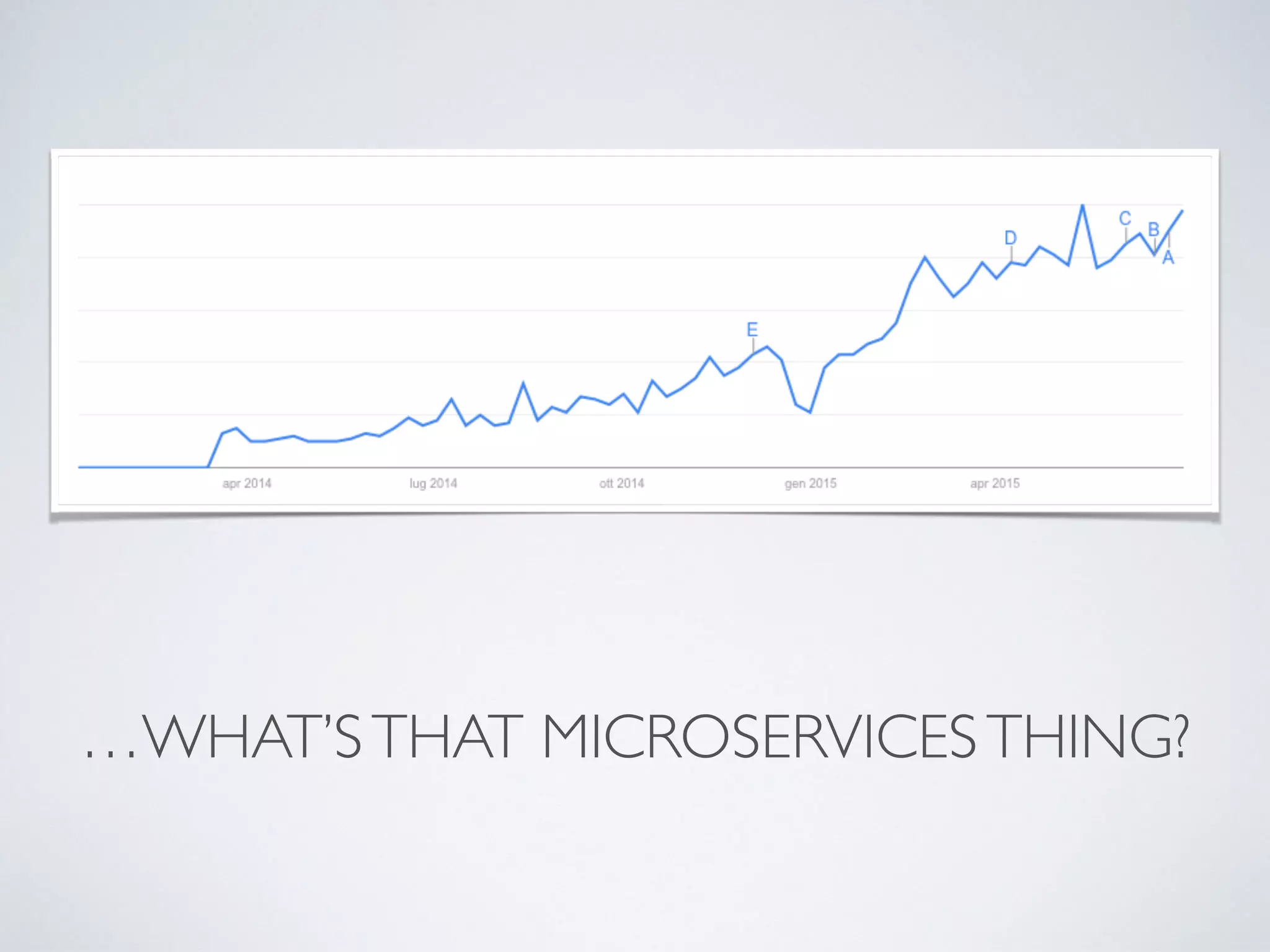
…WHAT’STHAT MICROSERVICESTHING?
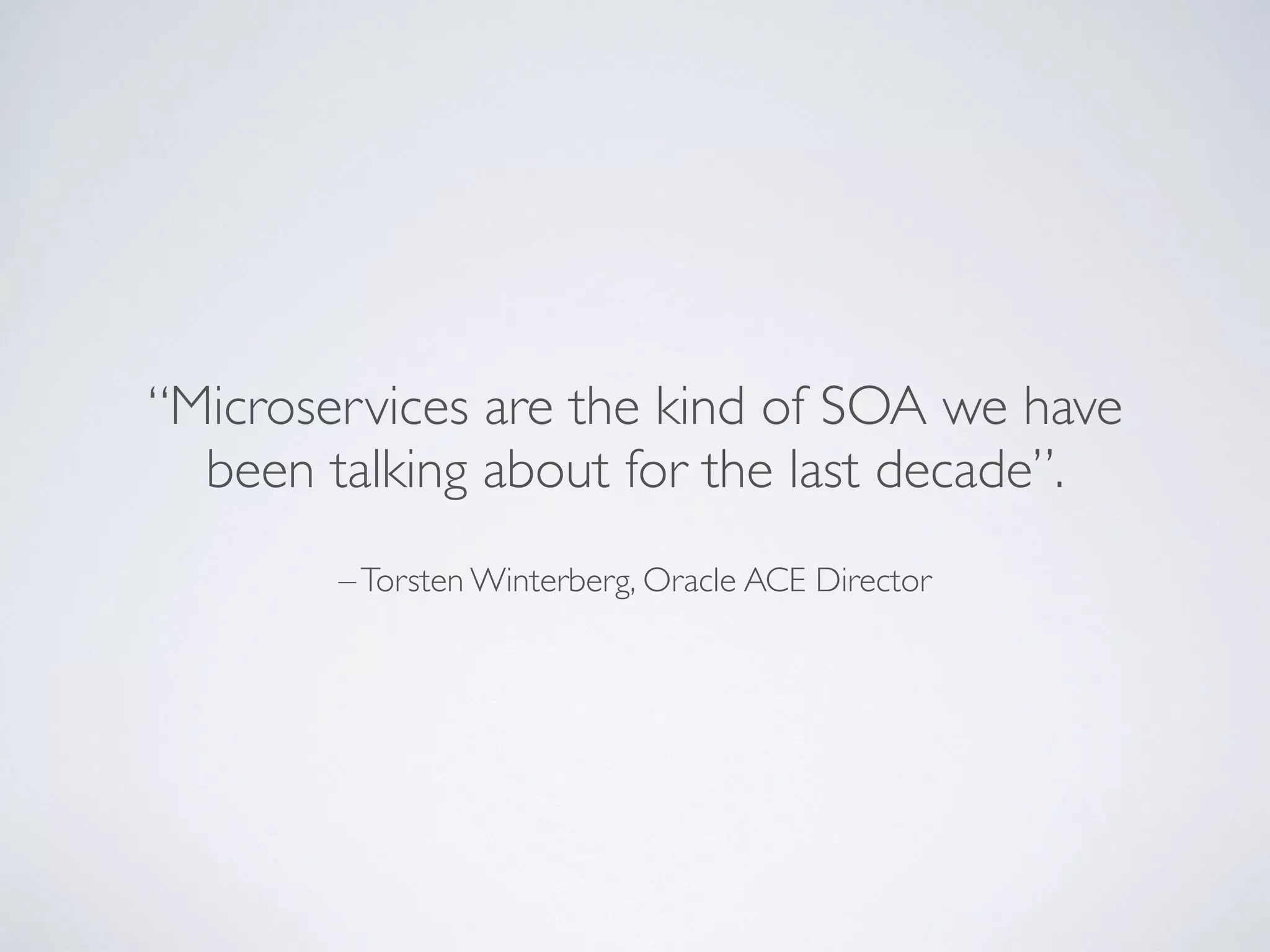
–Torsten Winterberg, Oracle ACE Director
“Microservices are the kind of SOA we have
been talking about for the last decade”.
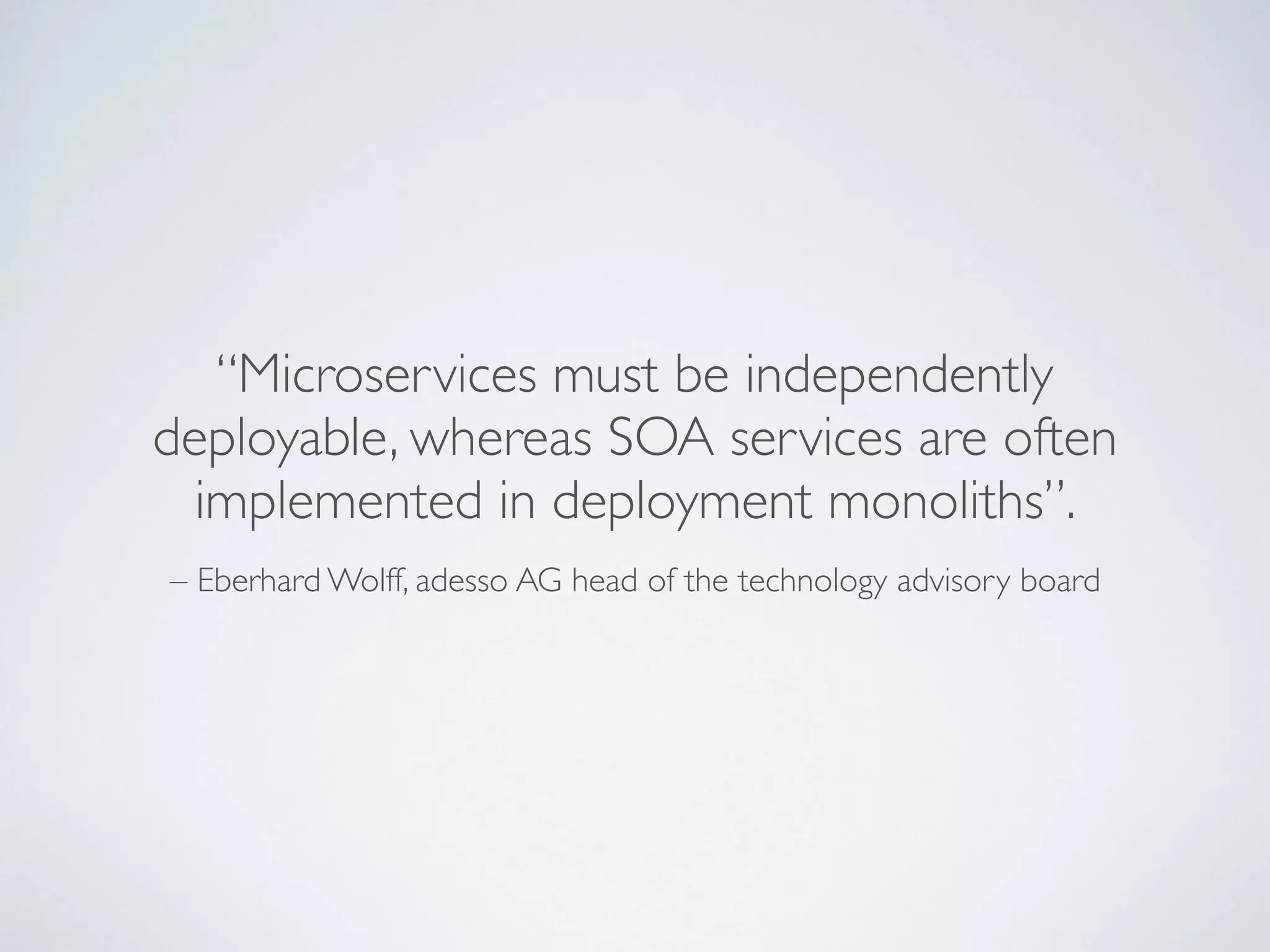
– Eberhard Wolff, adesso AG head of the technology advisory board
“Microservices must be independently
deployable, whereas SOA services are often
implemented in deployment monoliths”.
PSSSST! TELL NO ONE
(SOA failed)
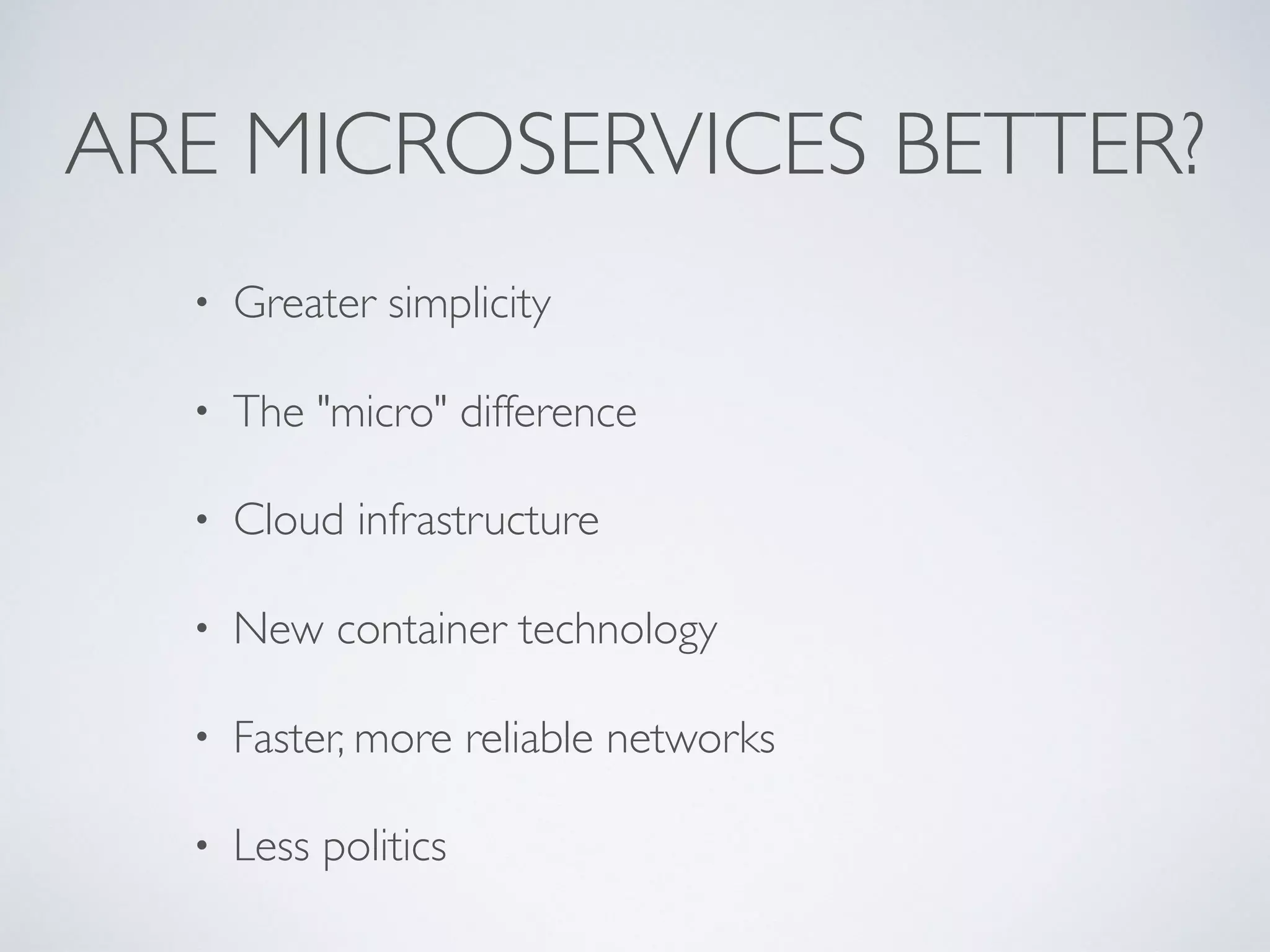
ARE MICROSERVICES BETTER?
• Greater simplicity
• The "micro" difference
• Cloud infrastructure
• New container technology
• Faster, more reliable networks
• Less politics
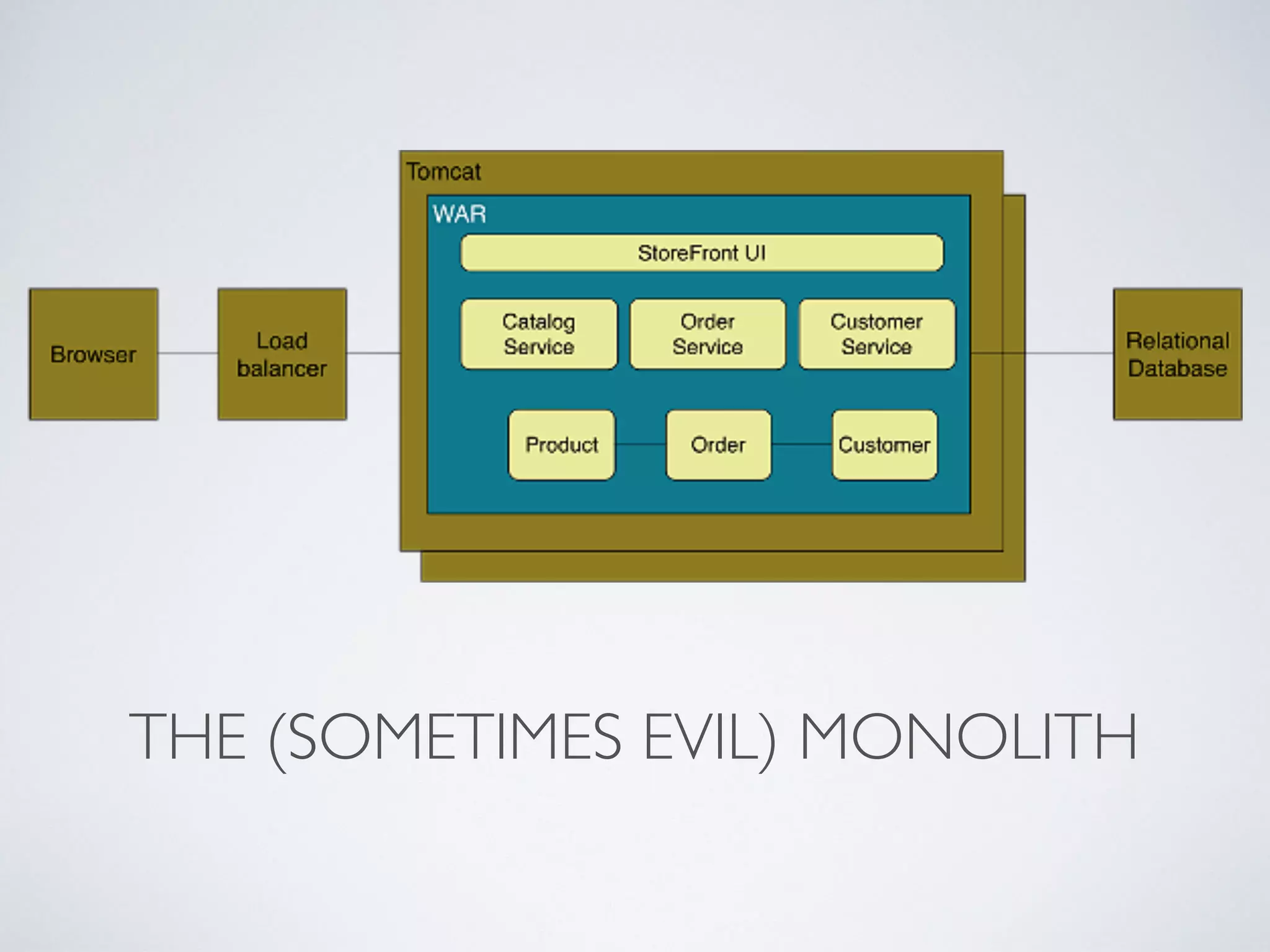
THE (SOMETIMES EVIL) MONOLITH
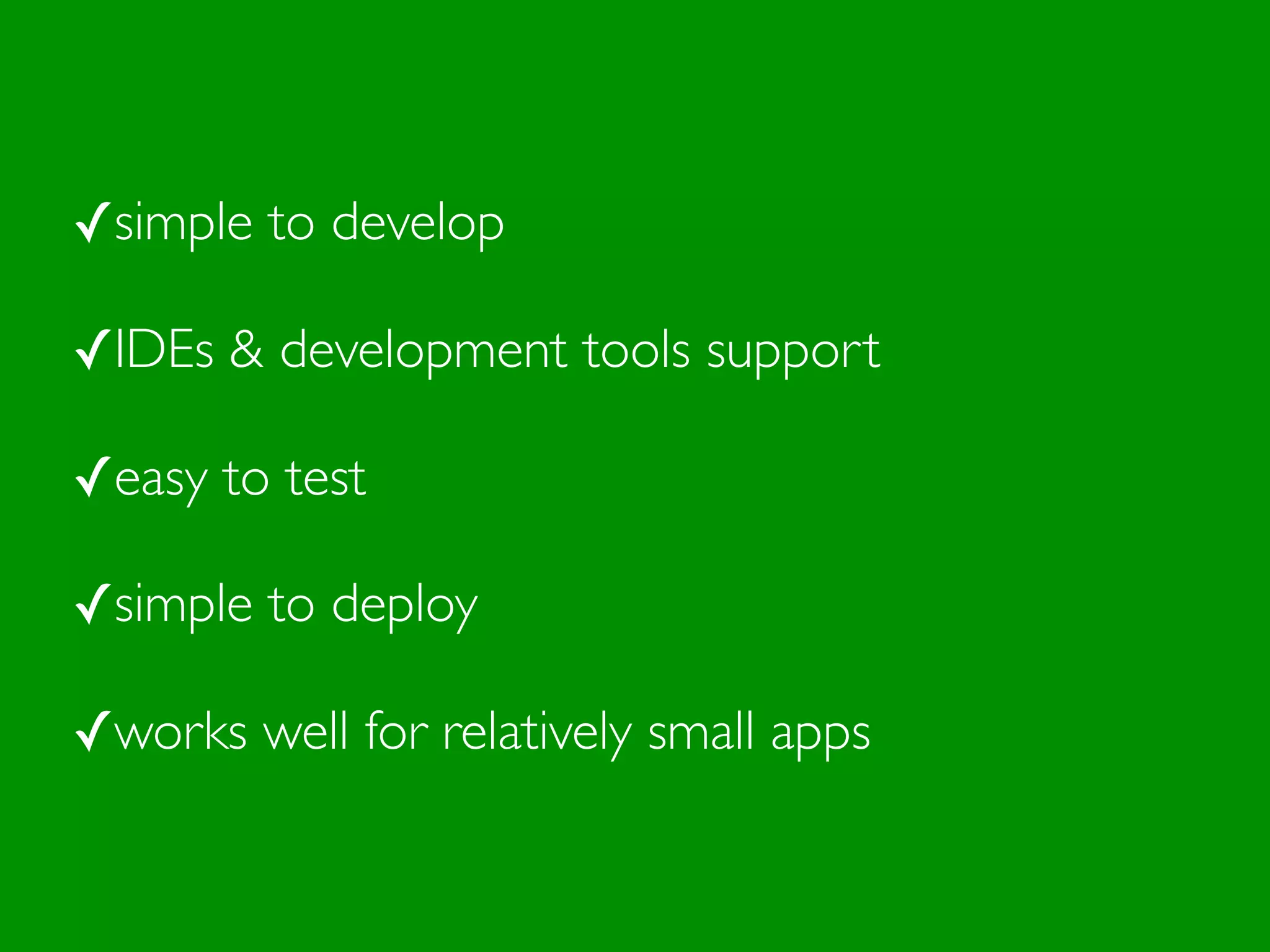
✓simple to develop
✓IDEs & development tools support
✓easy to test
✓simple to deploy
✓works well for relatively small apps
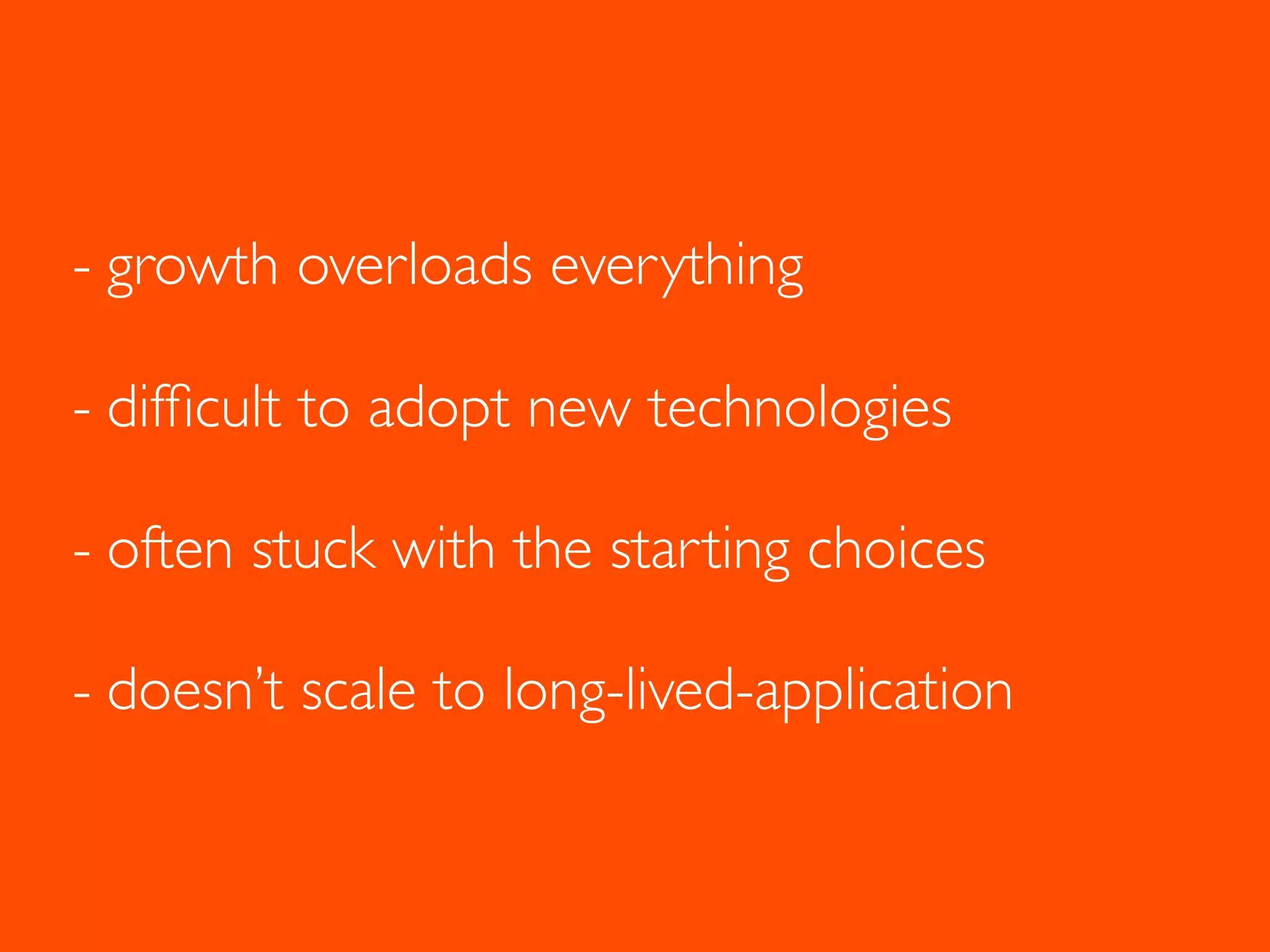
- growth overloads everything
- difficult to adopt new technologies
- often stuck with the starting choices
- doesn’t scale to long-lived-application
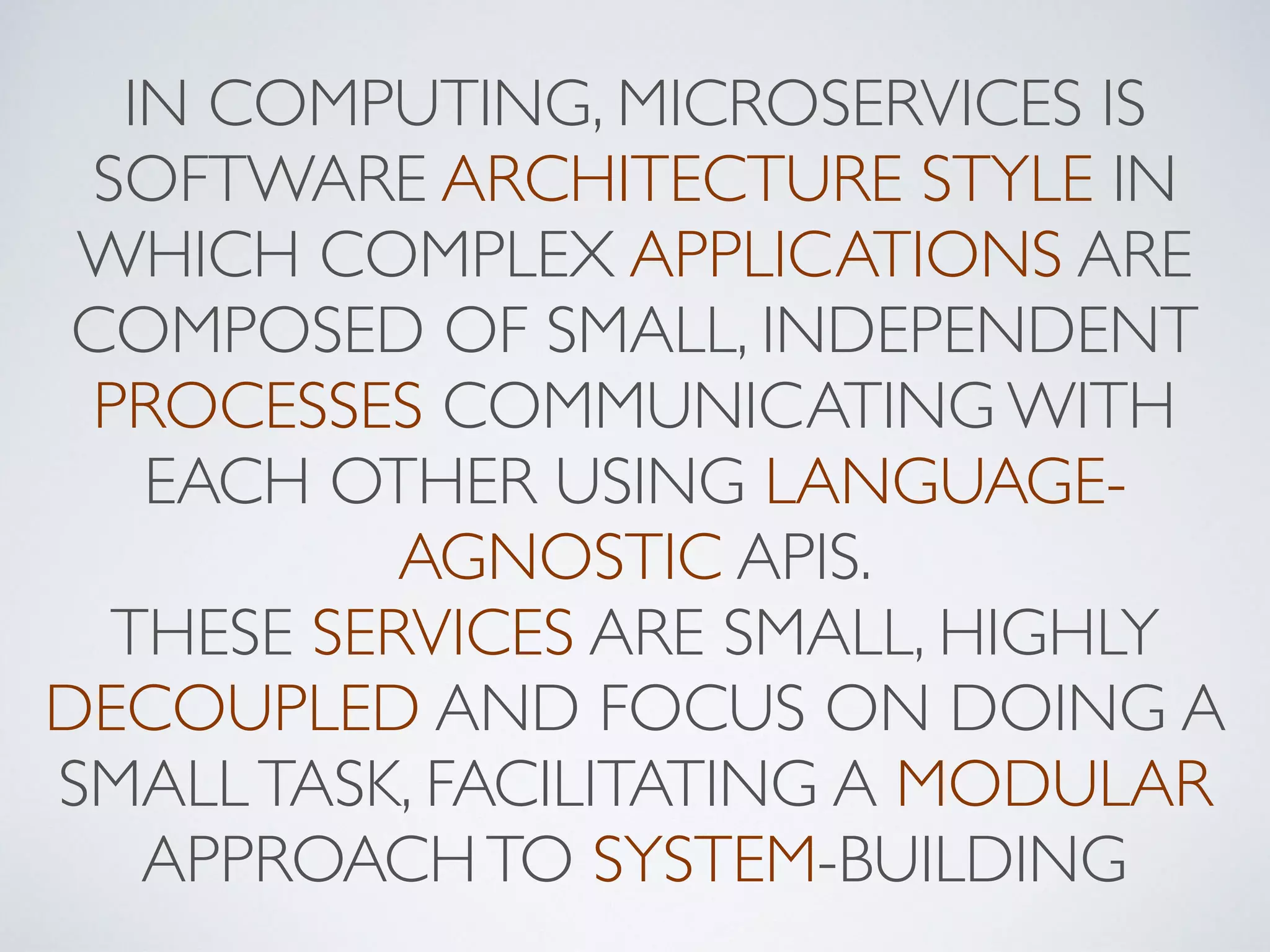
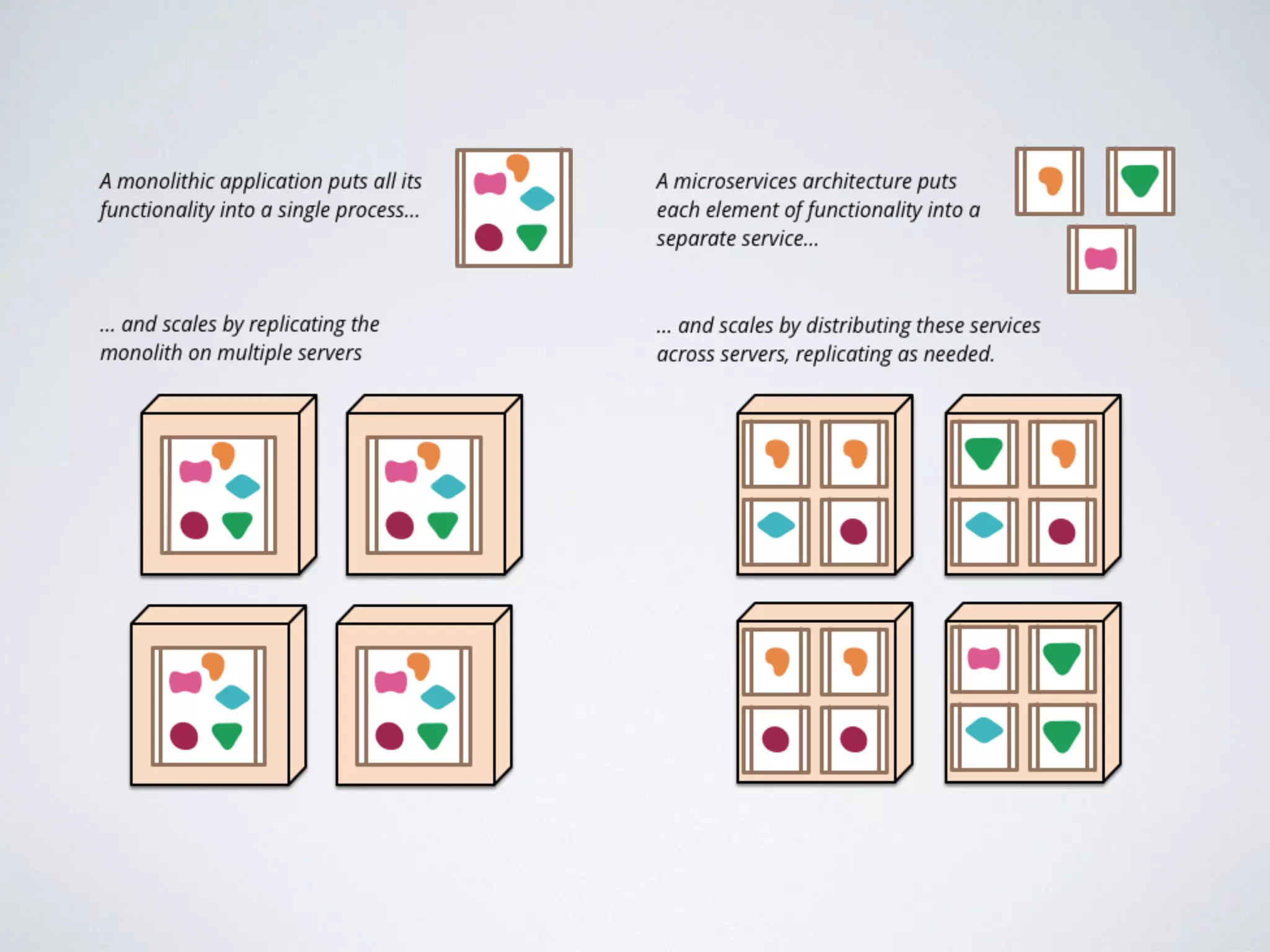
IN COMPUTING, MICROSERVICES IS
SOFTWARE ARCHITECTURE STYLE IN
WHICH COMPLEX APPLICATIONS ARE
COMPOSED OF SMALL, INDEPENDENT
PROCESSES COMMUNICATING WITH
EACH OTHER USING LANGUAGE-
AGNOSTIC APIS.
THESE SERVICES ARE SMALL, HIGHLY
DECOUPLED AND FOCUS ON DOING A
SMALLTASK, FACILITATING A MODULAR
APPROACHTO SYSTEM-BUILDING
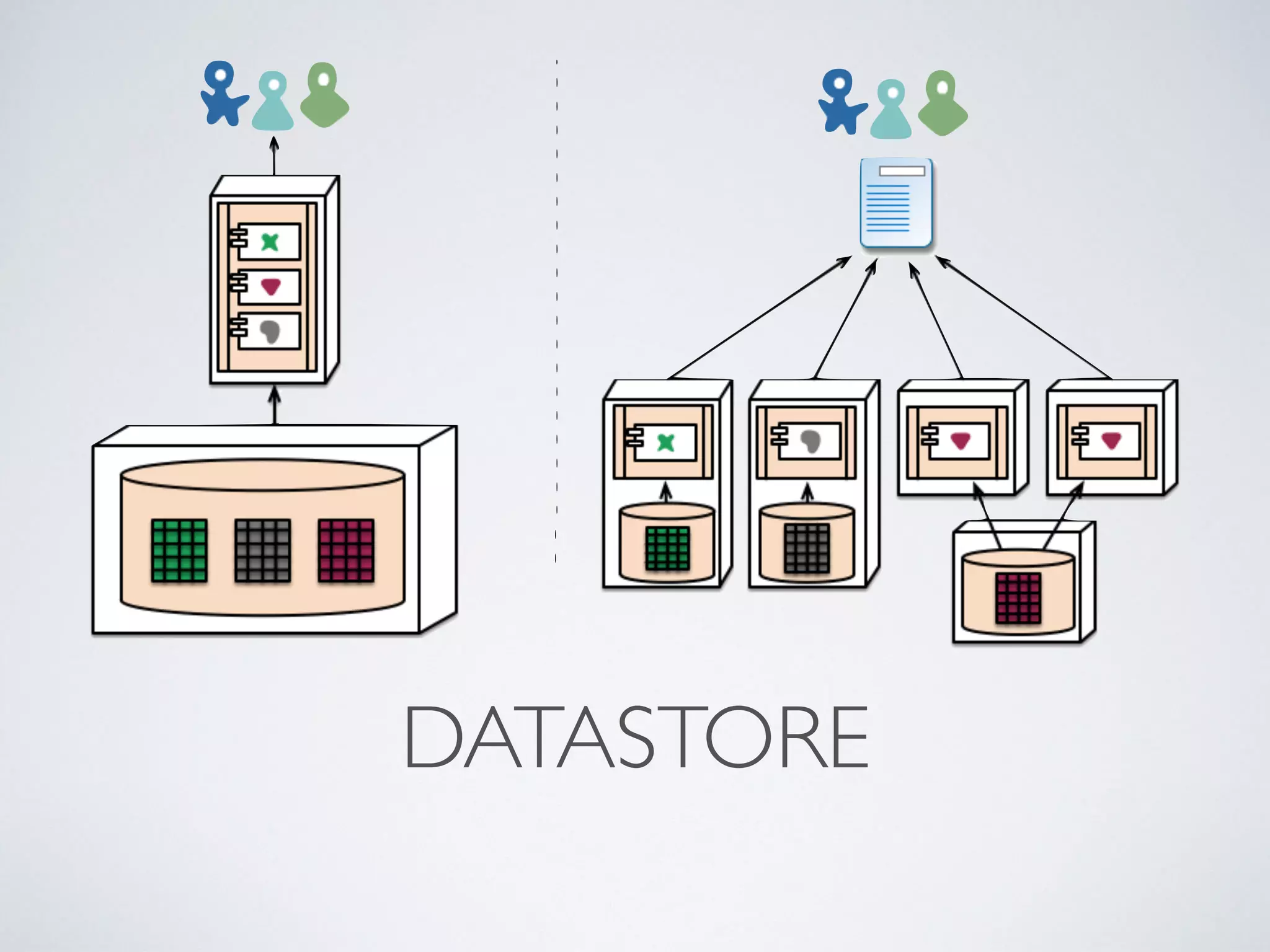
DATASTORE
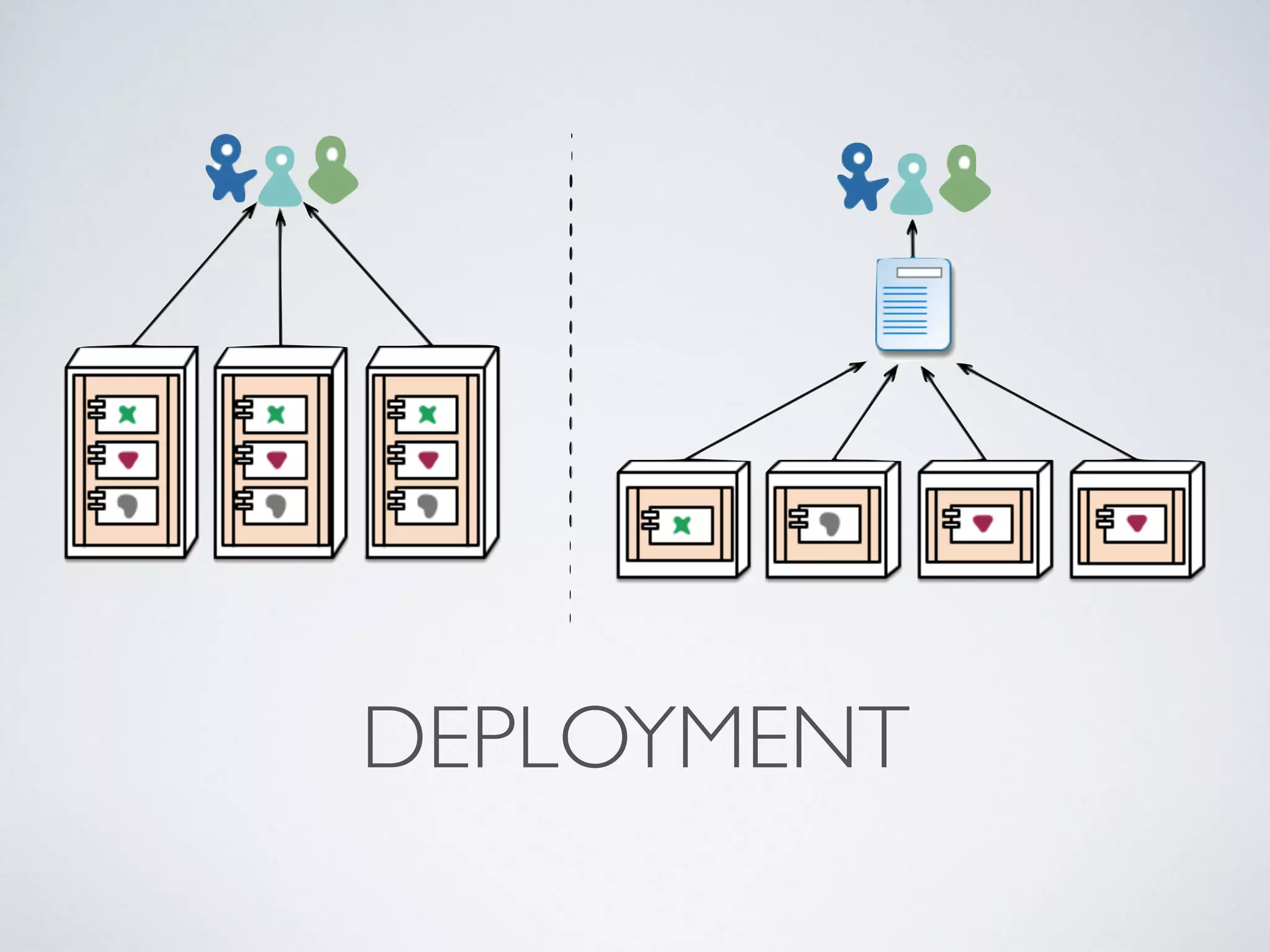
DEPLOYMENT
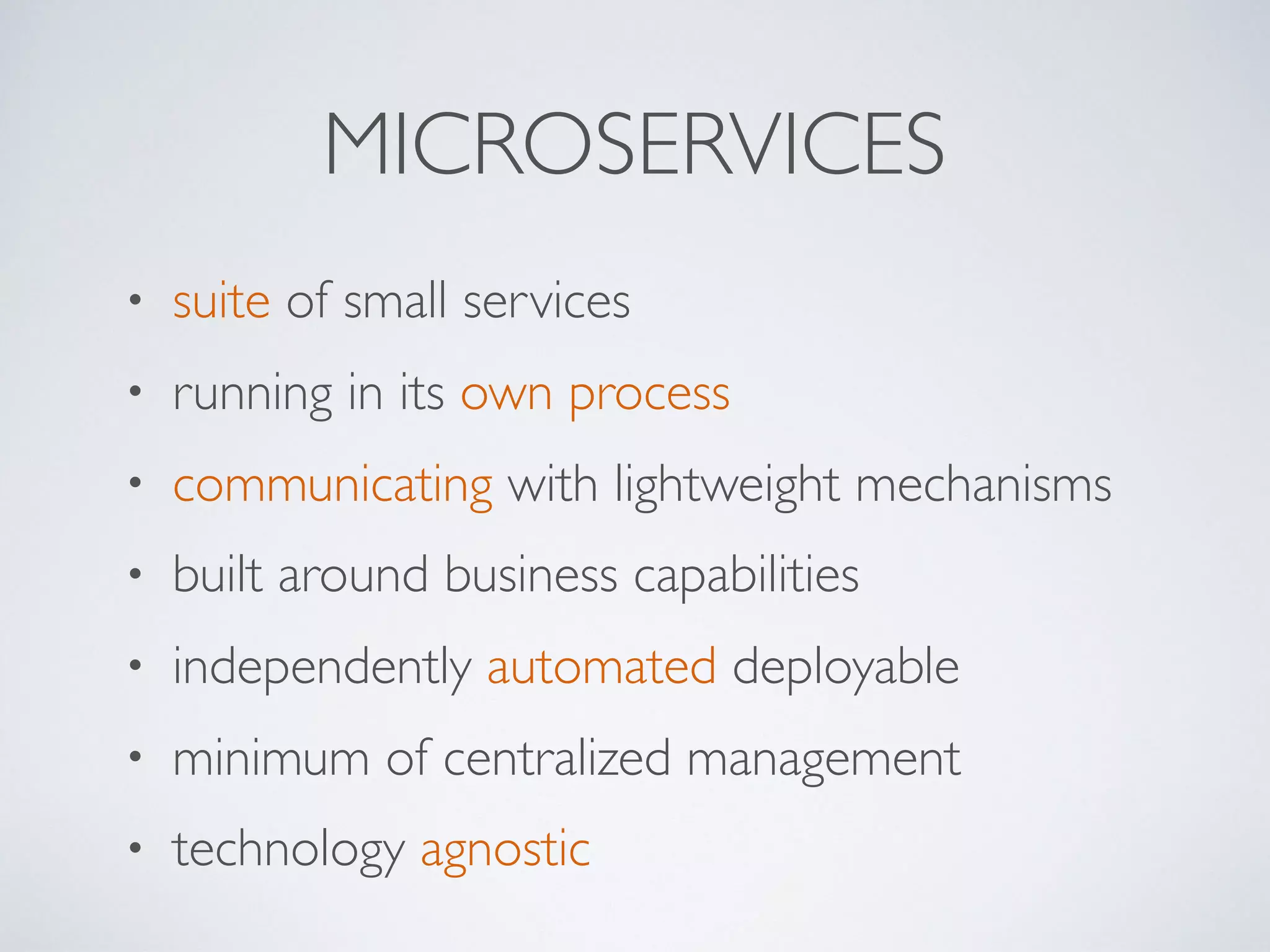
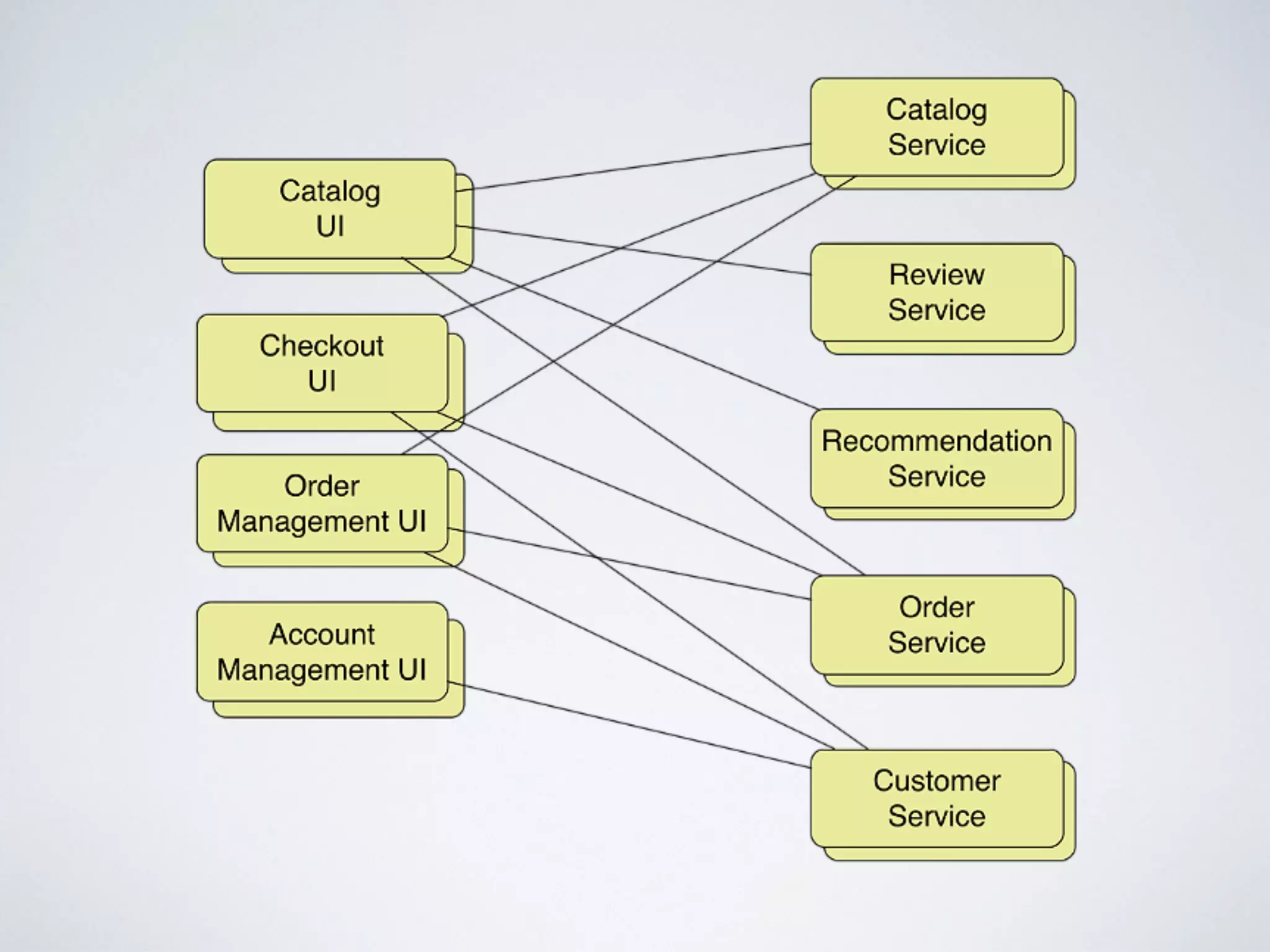
• suite of small services
• running in its own process
• communicating with lightweight mechanisms
• built around business capabilities
• independently automated deployable
• minimum of centralized management
• technology agnostic
MICROSERVICES
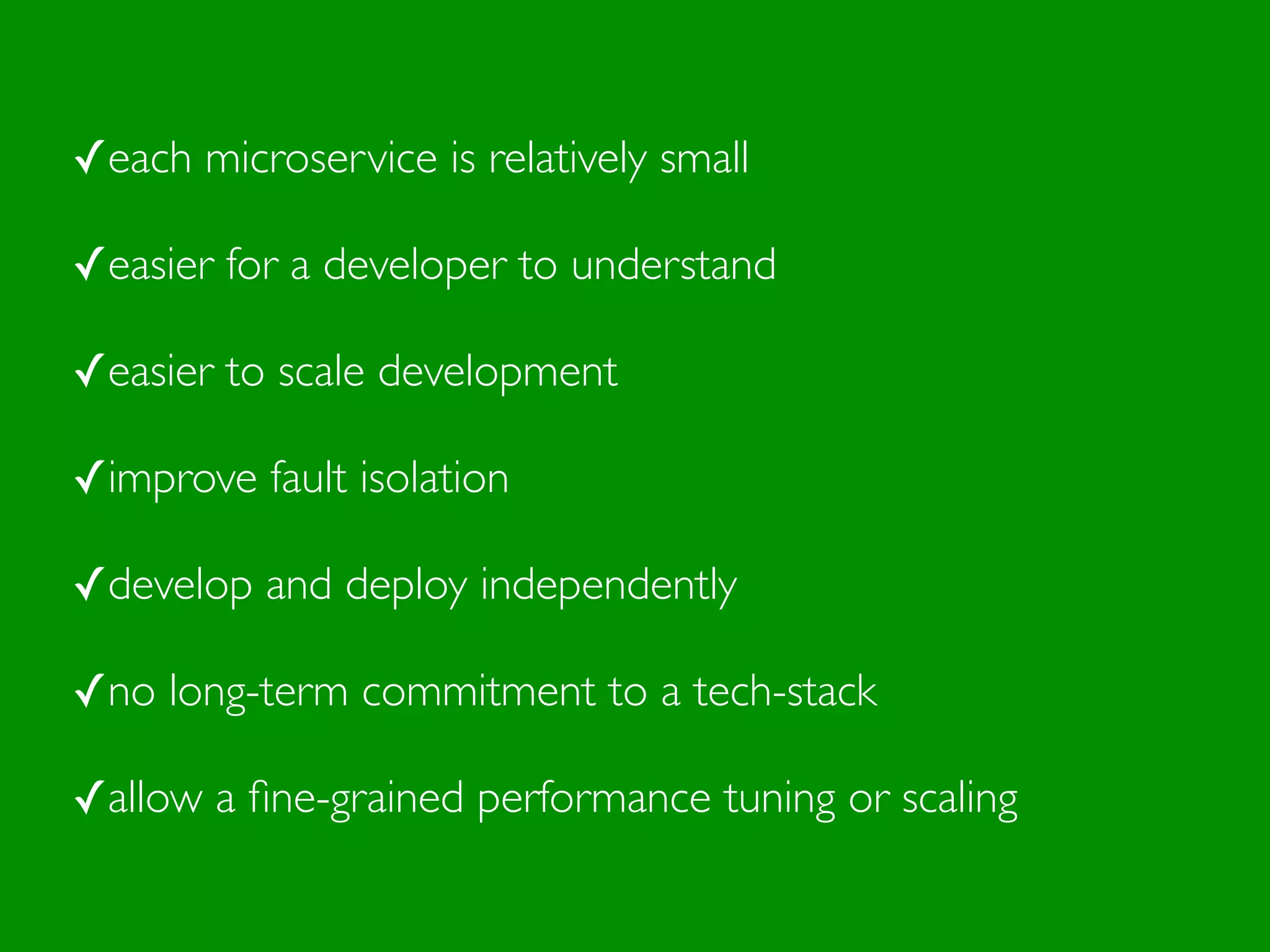
✓each microservice is relatively small
✓easier for a developer to understand
✓easier to scale development
✓improve fault isolation
✓develop and deploy independently
✓no long-term commitment to a tech-stack
✓allow a fine-grained performance tuning or scaling
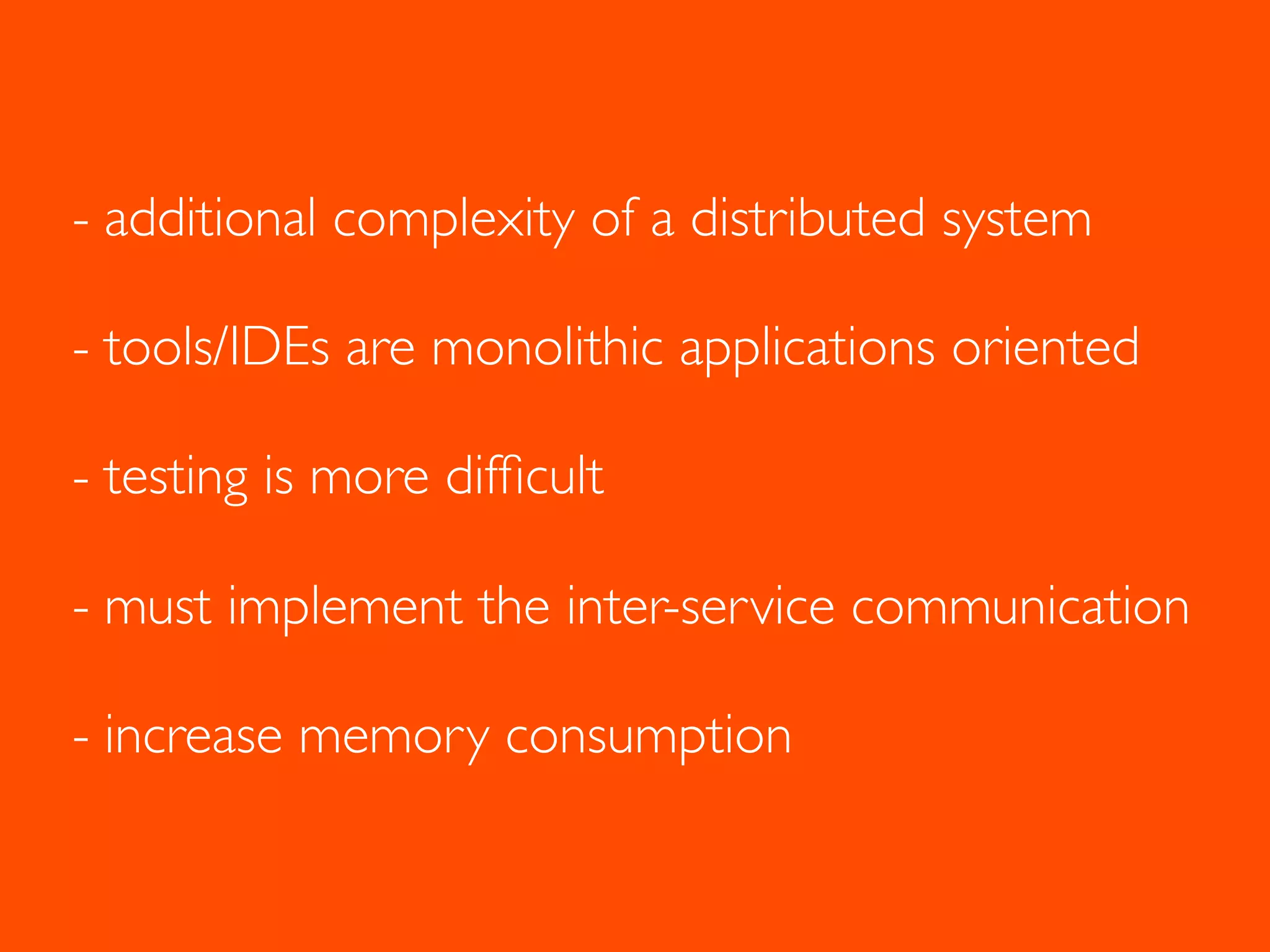
- additional complexity of a distributed system
- tools/IDEs are monolithic applications oriented
- testing is more difficult
- must implement the inter-service communication
- increase memory consumption
WHO HAS USEDTHEM?
IS A GOOD CHOICE FOR
THE SYSTEMYOU'RE
WORKING ON?
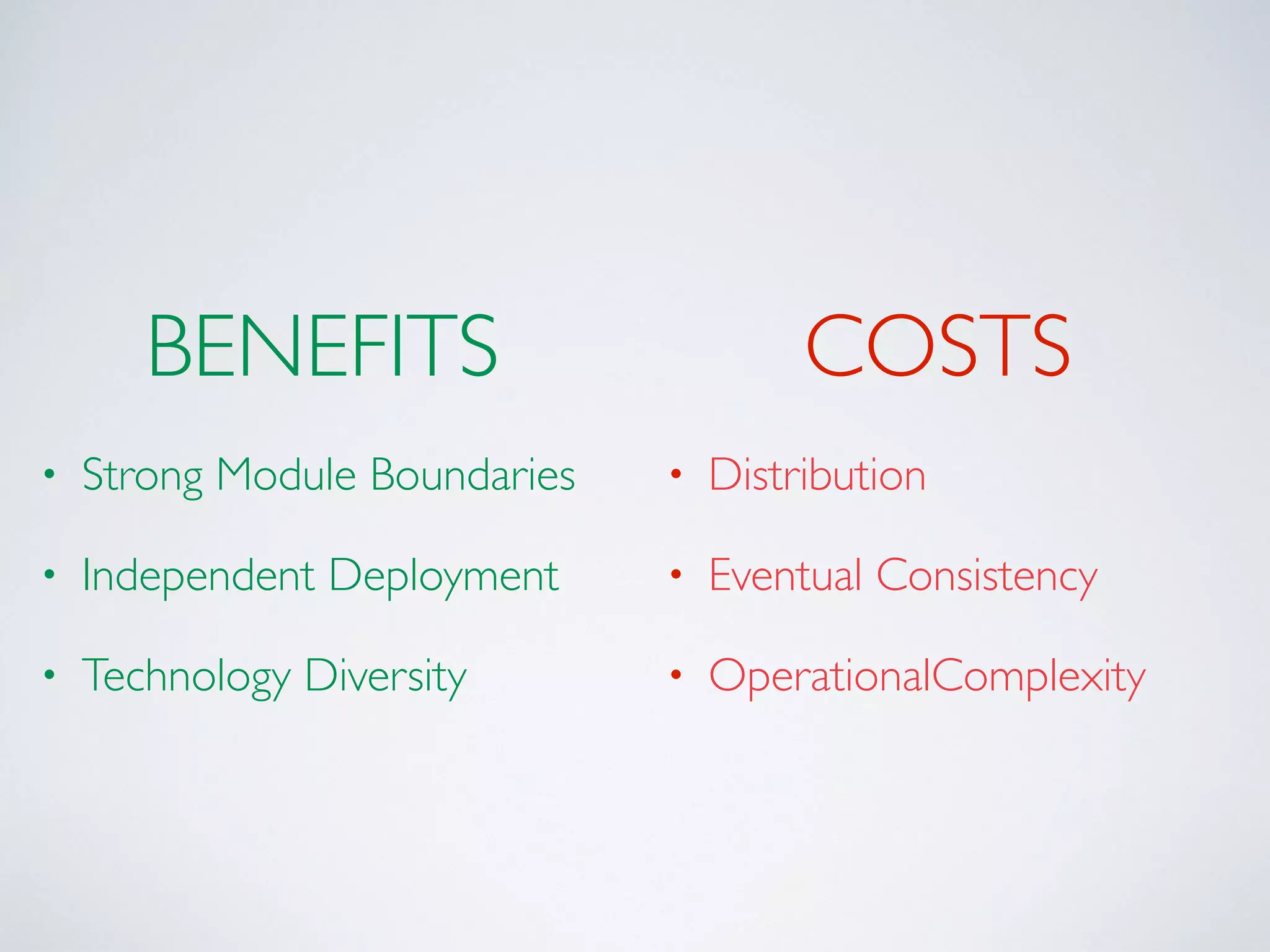
• Strong Module Boundaries
• Independent Deployment
• Technology Diversity
• Distribution
• Eventual Consistency
• OperationalComplexity
COSTSBENEFITS
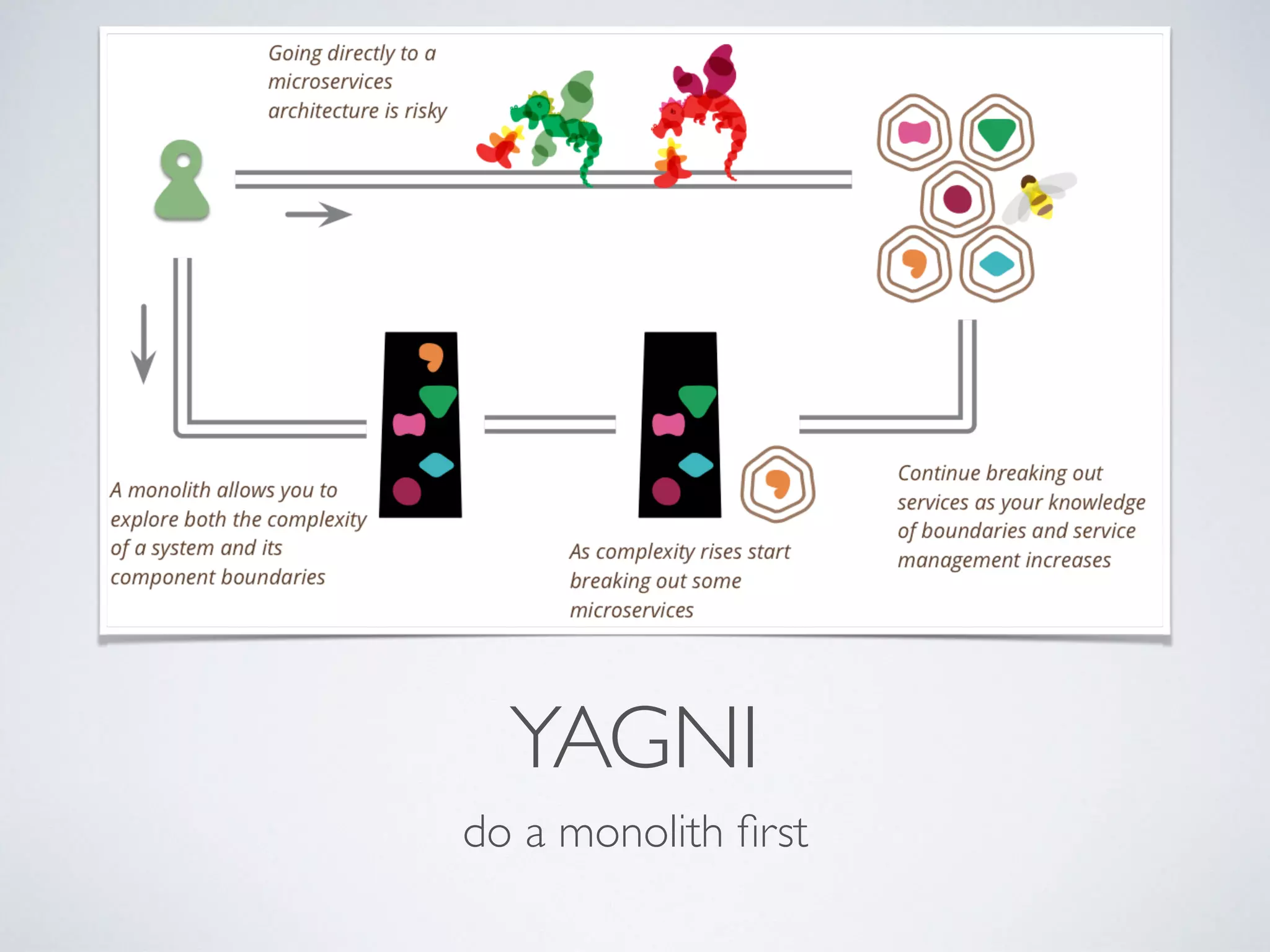
YAGNI
do a monolith first
MARTIN FOWLER
“you shouldn't start
a new project with
microservices, even if
you're sure your
application will be
big enough to make
it worthwhile”
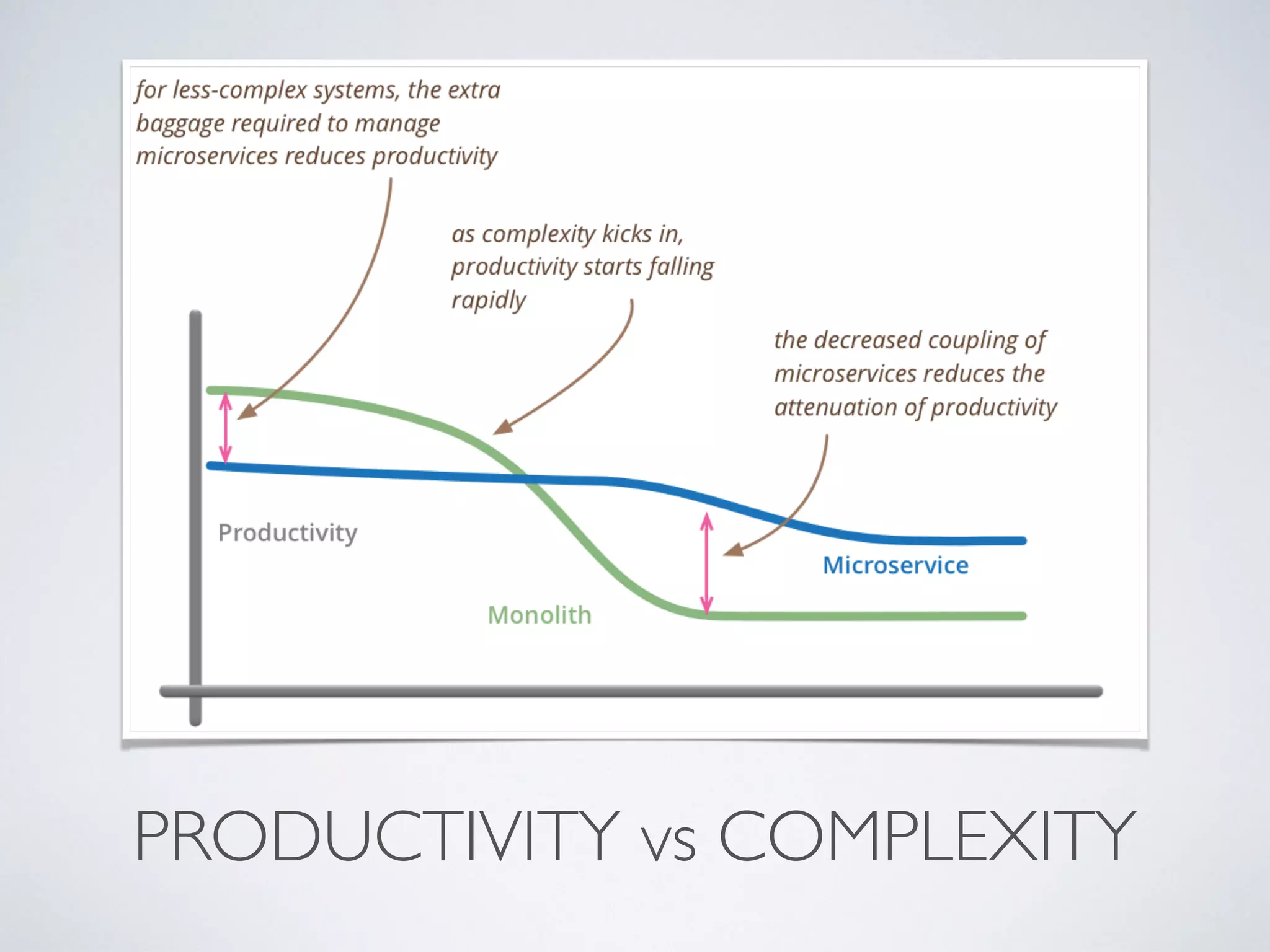
PRODUCTIVITY vs COMPLEXITY
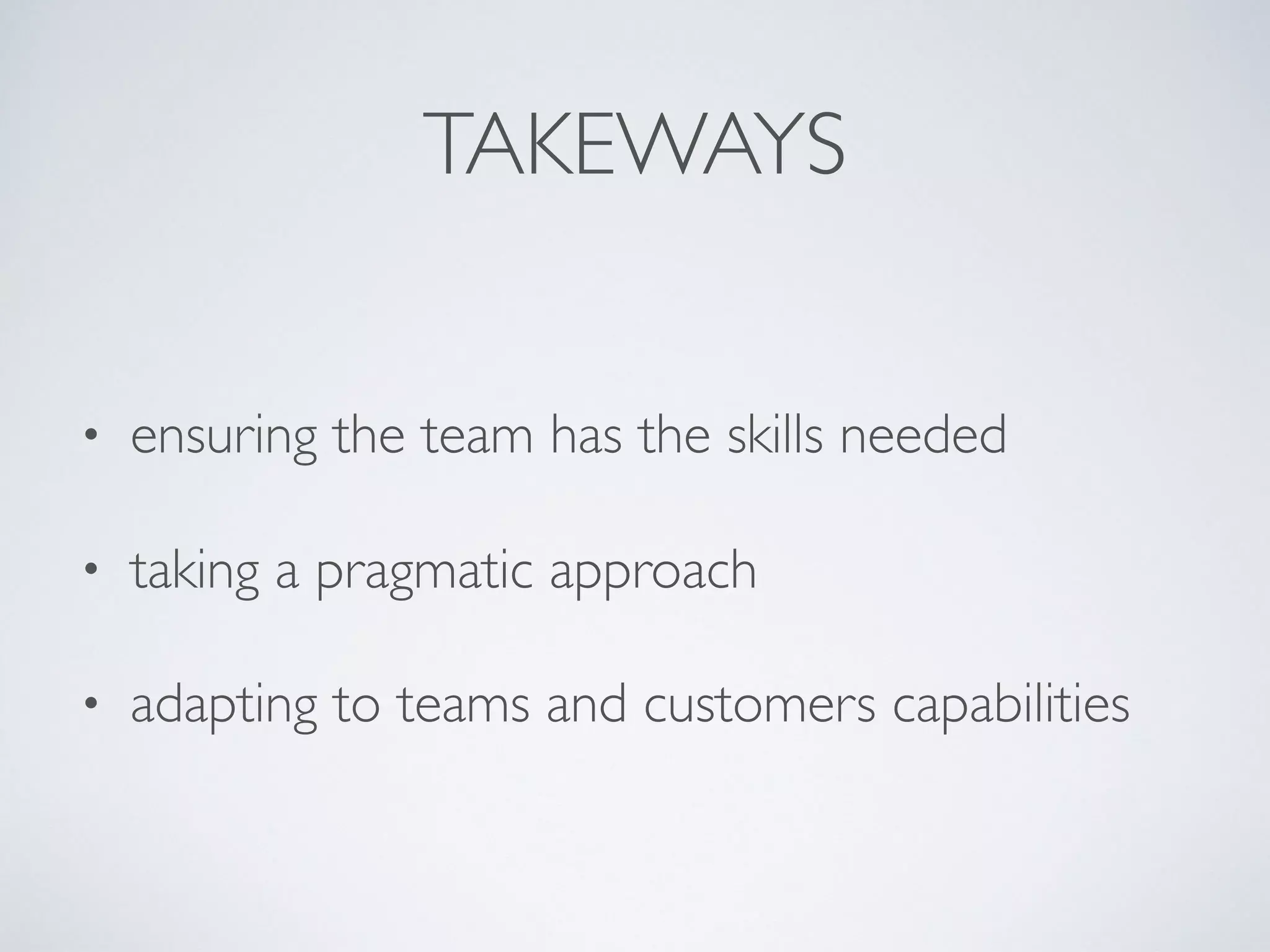
• ensuring the team has the skills needed
• taking a pragmatic approach
• adapting to teams and customers capabilities
TAKEWAYS
Thank you.
@realfuzzy
Michele Franzin
CREDITS
slides 7,15 - http://www.infoq.com/articles/microservices-intro
slides 11,12,13,21,23 - http://martinfowler.com/bliki/
slide 5 - http://apsblog.burtongroup.com/
http://martinfowler.com/bliki/microservices.html
http://www.infoq.com/articles/microservices-intro
https://en.wikipedia.org/wiki/Microservices
http://martinfowler.com/microservices/
RESOURCES

Microservices: cosa sono e quando non usarli

  • 1.
    MICROSERVICES WHAT, WHY &DONT'S key concepts for evaluation effect free!
  • 2.
  • 3.
    –Torsten Winterberg, OracleACE Director “Microservices are the kind of SOA we have been talking about for the last decade”.
  • 4.
    – Eberhard Wolff,adesso AG head of the technology advisory board “Microservices must be independently deployable, whereas SOA services are often implemented in deployment monoliths”.
  • 5.
    PSSSST! TELL NOONE (SOA failed)
  • 6.
    ARE MICROSERVICES BETTER? •Greater simplicity • The "micro" difference • Cloud infrastructure • New container technology • Faster, more reliable networks • Less politics
  • 7.
  • 8.
    ✓simple to develop ✓IDEs& development tools support ✓easy to test ✓simple to deploy ✓works well for relatively small apps
  • 9.
    - growth overloadseverything - difficult to adopt new technologies - often stuck with the starting choices - doesn’t scale to long-lived-application
  • 10.
    IN COMPUTING, MICROSERVICESIS SOFTWARE ARCHITECTURE STYLE IN WHICH COMPLEX APPLICATIONS ARE COMPOSED OF SMALL, INDEPENDENT PROCESSES COMMUNICATING WITH EACH OTHER USING LANGUAGE- AGNOSTIC APIS. THESE SERVICES ARE SMALL, HIGHLY DECOUPLED AND FOCUS ON DOING A SMALLTASK, FACILITATING A MODULAR APPROACHTO SYSTEM-BUILDING
  • 12.
  • 13.
  • 14.
    • suite ofsmall services • running in its own process • communicating with lightweight mechanisms • built around business capabilities • independently automated deployable • minimum of centralized management • technology agnostic MICROSERVICES
  • 16.
    ✓each microservice isrelatively small ✓easier for a developer to understand ✓easier to scale development ✓improve fault isolation ✓develop and deploy independently ✓no long-term commitment to a tech-stack ✓allow a fine-grained performance tuning or scaling
  • 17.
    - additional complexityof a distributed system - tools/IDEs are monolithic applications oriented - testing is more difficult - must implement the inter-service communication - increase memory consumption
  • 18.
  • 19.
    IS A GOODCHOICE FOR THE SYSTEMYOU'RE WORKING ON?
  • 20.
    • Strong ModuleBoundaries • Independent Deployment • Technology Diversity • Distribution • Eventual Consistency • OperationalComplexity COSTSBENEFITS
  • 21.
  • 22.
    MARTIN FOWLER “you shouldn'tstart a new project with microservices, even if you're sure your application will be big enough to make it worthwhile”
  • 23.
  • 24.
    • ensuring theteam has the skills needed • taking a pragmatic approach • adapting to teams and customers capabilities TAKEWAYS
  • 26.
  • 27.
    CREDITS slides 7,15 -http://www.infoq.com/articles/microservices-intro slides 11,12,13,21,23 - http://martinfowler.com/bliki/ slide 5 - http://apsblog.burtongroup.com/ http://martinfowler.com/bliki/microservices.html http://www.infoq.com/articles/microservices-intro https://en.wikipedia.org/wiki/Microservices http://martinfowler.com/microservices/ RESOURCES