MICRO-CONTROLLER 
By: 
M.Waleed Aslam (2013-CS-014) 
Shahrukh Mahesar (2013-CS-032) 
M.Daniyal Ashfaq (2013-CS-051) 
Sagar Kumar (2013-CS-039) 
To: 
Simra Najm 
Computer Architecture & Organization 
Department of Computer Science 
Sir Syed University of Engineering & Techology, Karachi
Contents 
What is MCU? 
Advantages of MCU 
Types of MCU 
MCU vs CPU 
Inside MCU 
MCU Programming 
Applications of MCU 
Conclusion 
References
What is MCU? 
 Small Computer. 
 Capable to performing specific task(s). 
 Generally, a Brain of Embeded System(s).
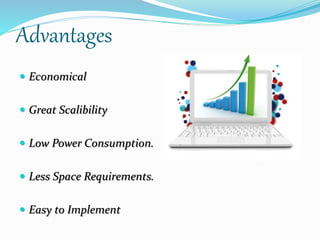
Advantages 
 Economical 
 Great Scalibility 
 Low Power Consumption. 
 Less Space Requirements. 
 Easy to Implement
Types of MCU 
 Divided According to following Categories:- 
Bits. 
Memory. 
Instruction Set.
Types of MCU 
 Bits:- 
8 bit MCU: 
Performs ALU operations 
16 bit MCU: 
Performs ALU operations with More Accuracy. 
32 bit MCU: 
Controls the Systems Automatically
Types of MCU 
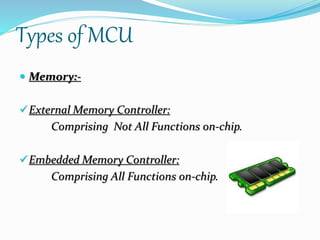
 Memory:- 
External Memory Controller: 
Comprising Not All Functions on-chip. 
Embedded Memory Controller: 
Comprising All Functions on-chip.
Types of MCU 
 Intruction Set:- 
CISC: 
Complete the Task, using more cycles. 
RISC: 
Makes the operations simpler, Uses Less Cycles.
MCU vs General CPU 
 General CPU Contains:- 
No Ram. 
No Rom. 
No I/O.
MCU vs General CPU 
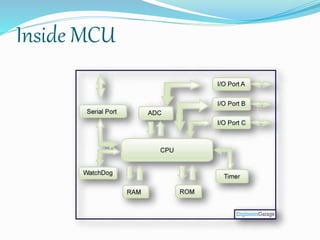
 MCU Contains:- 
CPU 
Ram 
Rom 
I/O ports. 
Timer. 
ADC and DAC
Inside MCU
Programming of MCU 
 Assembly Language:- 
More Efficient 
Less Understandable 
 AVR Similiar to ‘C’ Language:- 
Less Efficient 
More Understandable
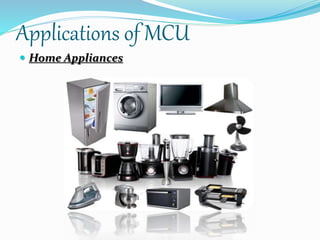
Applications of MCU 
 Home Appliances
Applications of MCU 
 Home Entertainment
Applications of MCU 
 Industrial Automation
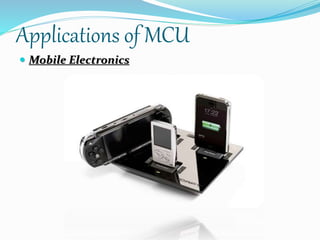
Applications of MCU 
 Mobile Electronics
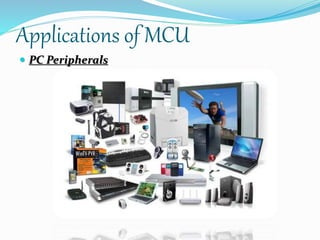
Applications of MCU 
 PC Peripherals
Applications of MCU 
 Internet of Things
Conclusion 
Where, there is a Will. There 
is a Way 
~ Anonymous
References 
Books: 
1) The Microcontroller and Embedded Systems by Mazidi. 
2) PIC Microcontrollers by Milan Verle. 
Websites: 
1) http://www.csee.umbc.edu/courses/undergraduate/CMSC 
391/summer04/burt/lectures/arch/architectures.html 
2) http://www.electronicshub.org/microcontrollers/ 
3) http://en.wikipedia.org/wiki/Microcontroller#Types_of_mi 
crocontrollers 
4) http://www.atmel.com/products/microcontrollers/
Thank you!

Microcontroller

  • 1.
    MICRO-CONTROLLER By: M.WaleedAslam (2013-CS-014) Shahrukh Mahesar (2013-CS-032) M.Daniyal Ashfaq (2013-CS-051) Sagar Kumar (2013-CS-039) To: Simra Najm Computer Architecture & Organization Department of Computer Science Sir Syed University of Engineering & Techology, Karachi
  • 2.
    Contents What isMCU? Advantages of MCU Types of MCU MCU vs CPU Inside MCU MCU Programming Applications of MCU Conclusion References
  • 3.
    What is MCU?  Small Computer.  Capable to performing specific task(s).  Generally, a Brain of Embeded System(s).
  • 4.
    Advantages  Economical  Great Scalibility  Low Power Consumption.  Less Space Requirements.  Easy to Implement
  • 5.
    Types of MCU  Divided According to following Categories:- Bits. Memory. Instruction Set.
  • 6.
    Types of MCU  Bits:- 8 bit MCU: Performs ALU operations 16 bit MCU: Performs ALU operations with More Accuracy. 32 bit MCU: Controls the Systems Automatically
  • 7.
    Types of MCU  Memory:- External Memory Controller: Comprising Not All Functions on-chip. Embedded Memory Controller: Comprising All Functions on-chip.
  • 8.
    Types of MCU  Intruction Set:- CISC: Complete the Task, using more cycles. RISC: Makes the operations simpler, Uses Less Cycles.
  • 9.
    MCU vs GeneralCPU  General CPU Contains:- No Ram. No Rom. No I/O.
  • 10.
    MCU vs GeneralCPU  MCU Contains:- CPU Ram Rom I/O ports. Timer. ADC and DAC
  • 11.
  • 12.
    Programming of MCU  Assembly Language:- More Efficient Less Understandable  AVR Similiar to ‘C’ Language:- Less Efficient More Understandable
  • 13.
    Applications of MCU  Home Appliances
  • 14.
    Applications of MCU  Home Entertainment
  • 15.
    Applications of MCU  Industrial Automation
  • 16.
    Applications of MCU  Mobile Electronics
  • 17.
    Applications of MCU  PC Peripherals
  • 18.
    Applications of MCU  Internet of Things
  • 19.
    Conclusion Where, thereis a Will. There is a Way ~ Anonymous
  • 20.
    References Books: 1)The Microcontroller and Embedded Systems by Mazidi. 2) PIC Microcontrollers by Milan Verle. Websites: 1) http://www.csee.umbc.edu/courses/undergraduate/CMSC 391/summer04/burt/lectures/arch/architectures.html 2) http://www.electronicshub.org/microcontrollers/ 3) http://en.wikipedia.org/wiki/Microcontroller#Types_of_mi crocontrollers 4) http://www.atmel.com/products/microcontrollers/
  • 21.