Matija Bažec, Črtomir Grlj, Jan Eller & Petra Trstenjak
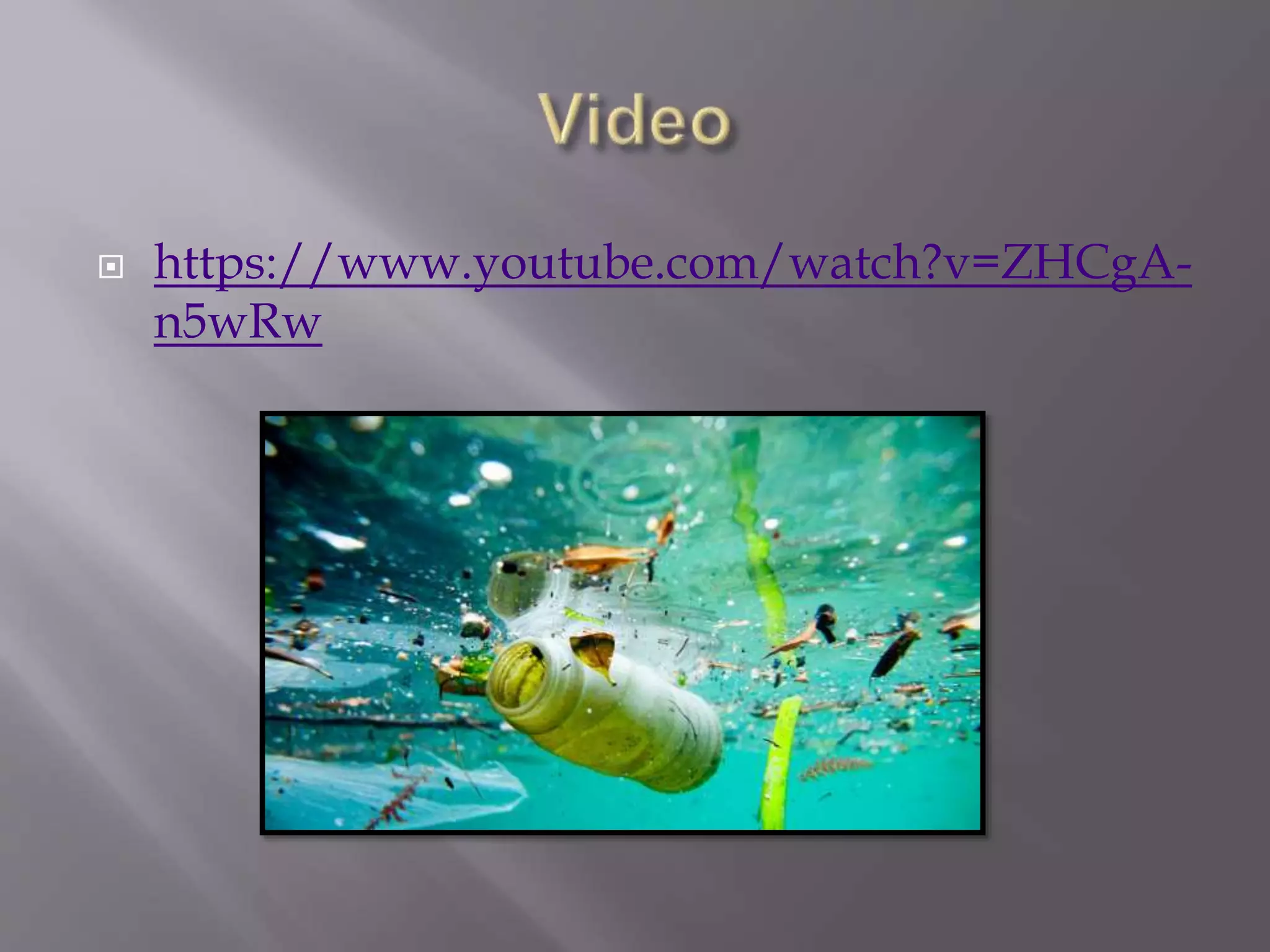
 https://www.youtube.com/watch?v=ZHCgA-
n5wRw
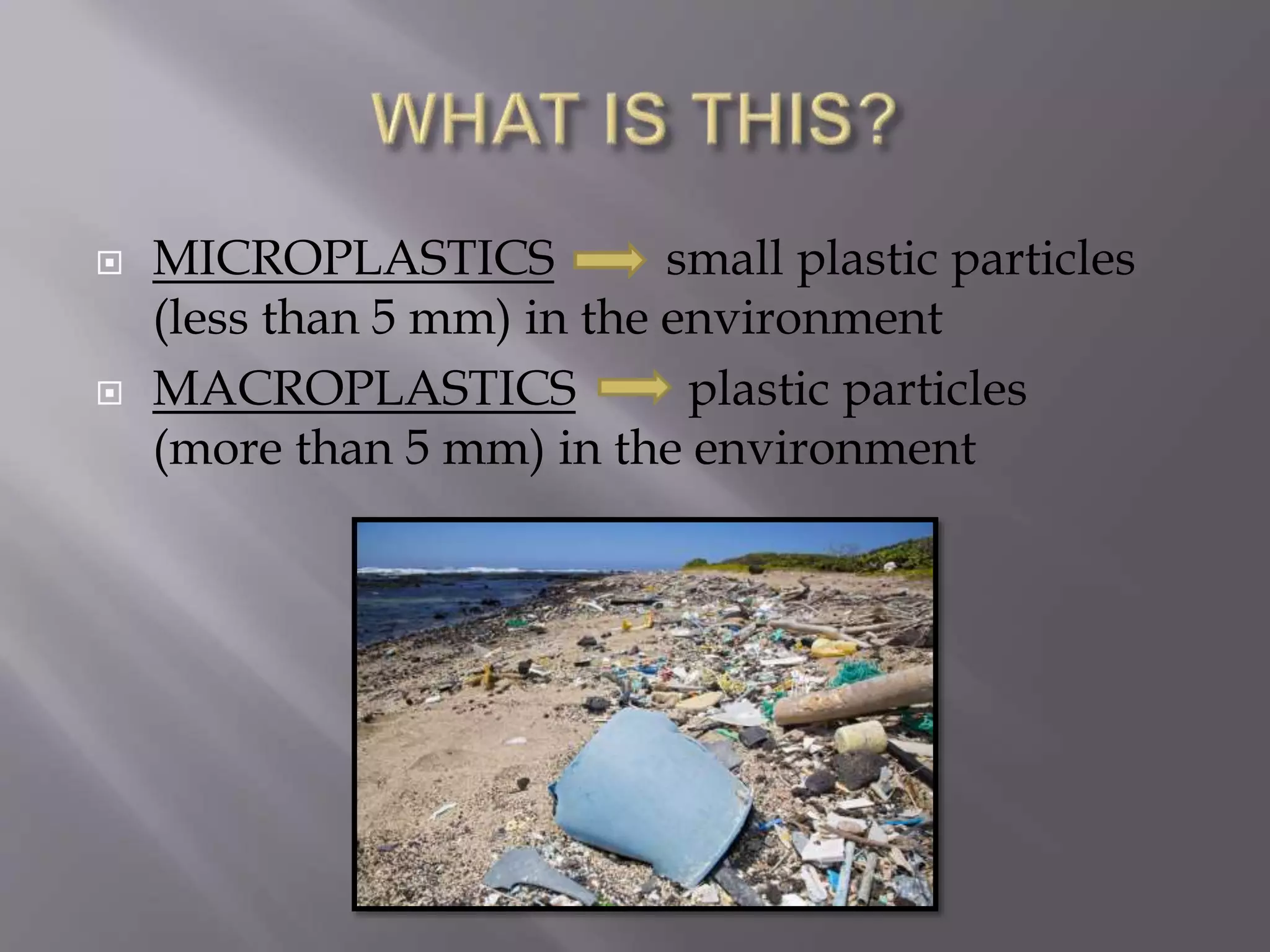
 MICROPLASTICS small plastic particles
(less than 5 mm) in the environment
 MACROPLASTICS plastic particles
(more than 5 mm) in the environment
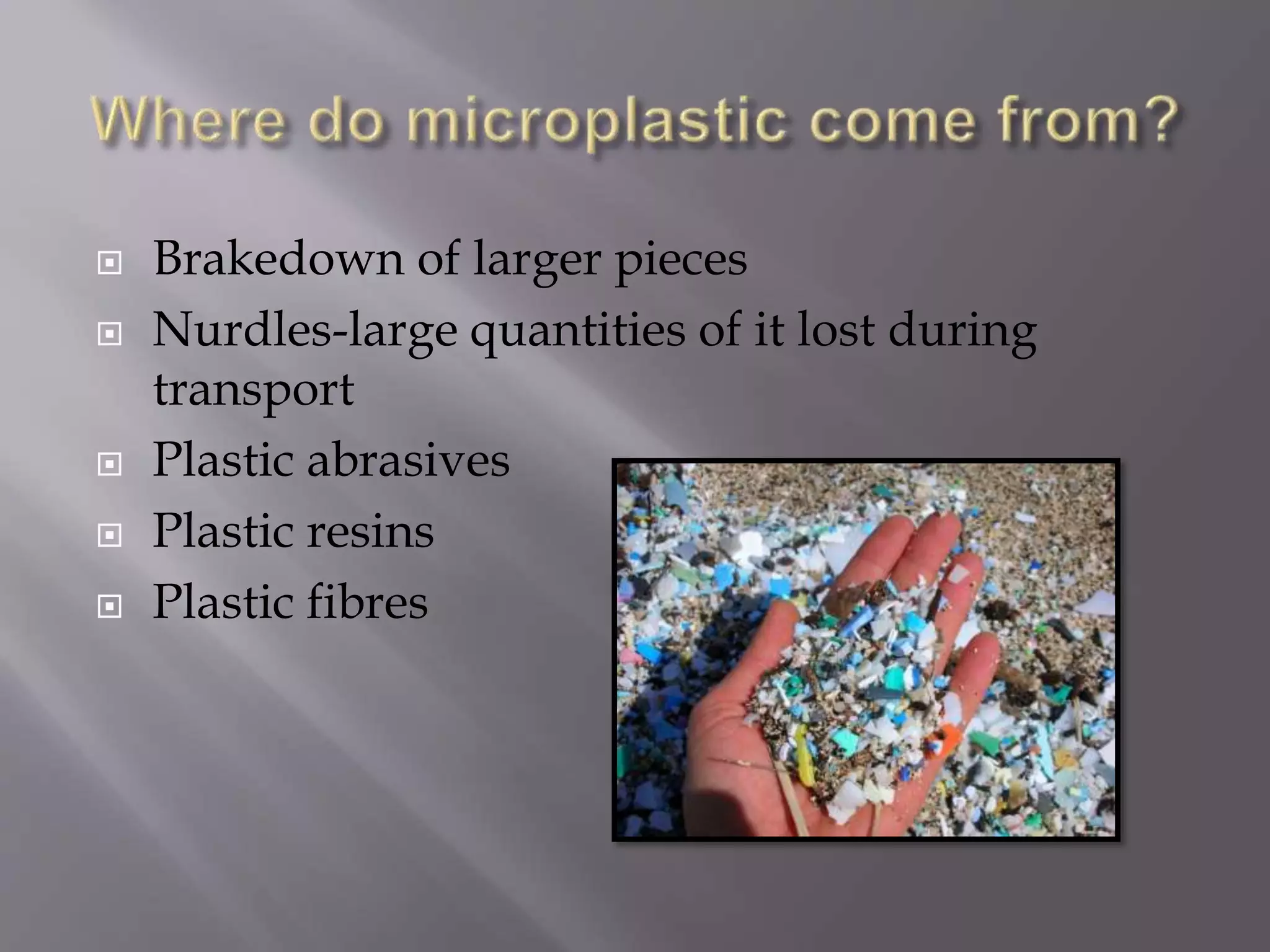
 Brakedown of larger pieces
 Nurdles-large quantities of it lost during
transport
 Plastic abrasives
 Plastic resins
 Plastic fibres
 1.
• They are hard to contain (once they entre the
water)
 2.
• It becomes colonized by microorganizems
• These alter the properties of plastics
• Causing it to sink
 It embades in to the seabad and shoreline
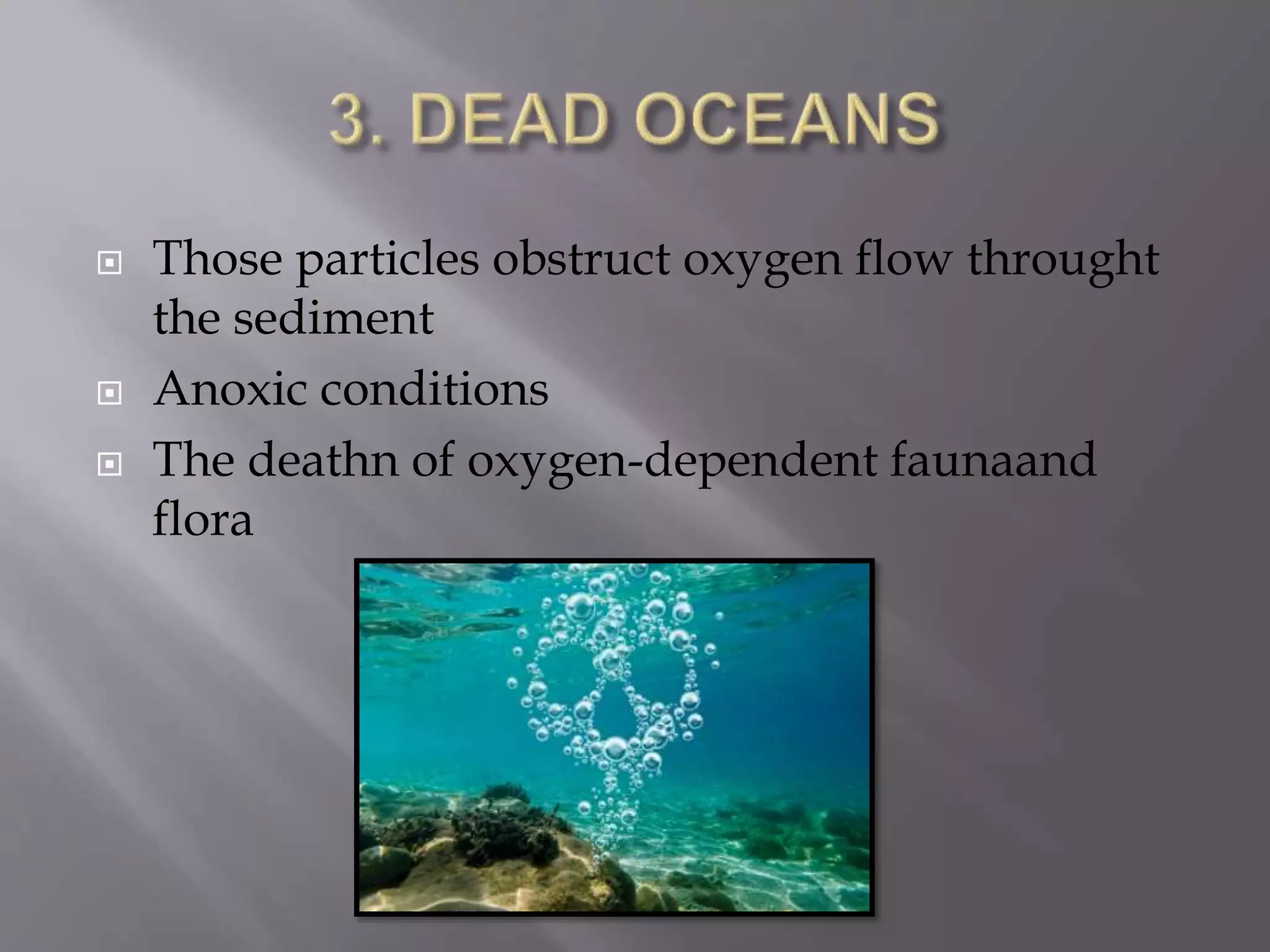
 Those particles obstruct oxygen flow throught
the sediment
 Anoxic conditions
 The deathn of oxygen-dependent faunaand
flora
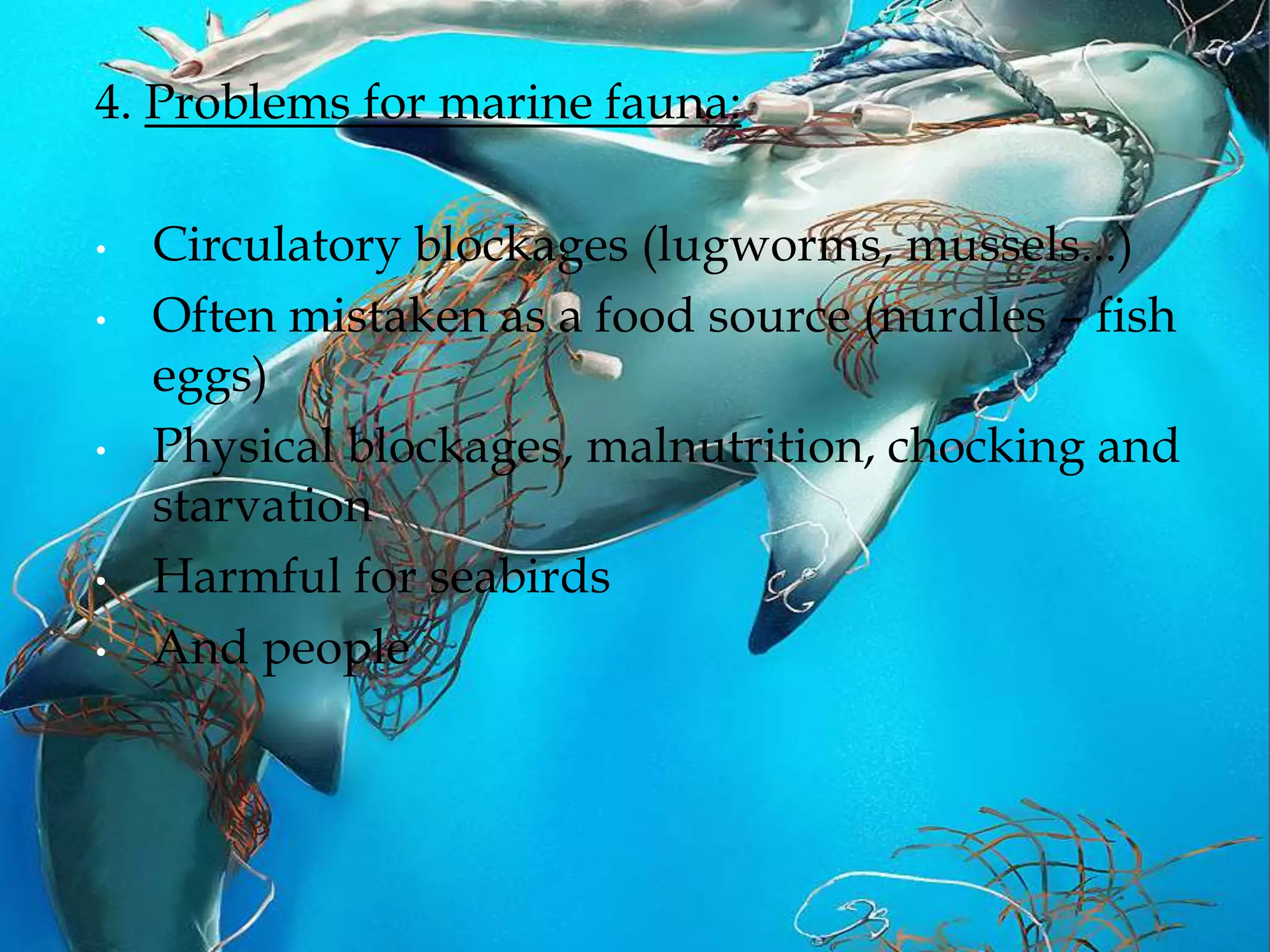
4. Problems for marine fauna:
• Circulatory blockages (lugworms, mussels...)
• Often mistaken as a food source (nurdles – fish
eggs)
• Physical blockages, malnutrition, chocking and
starvation
• Harmful for seabirds
• And people
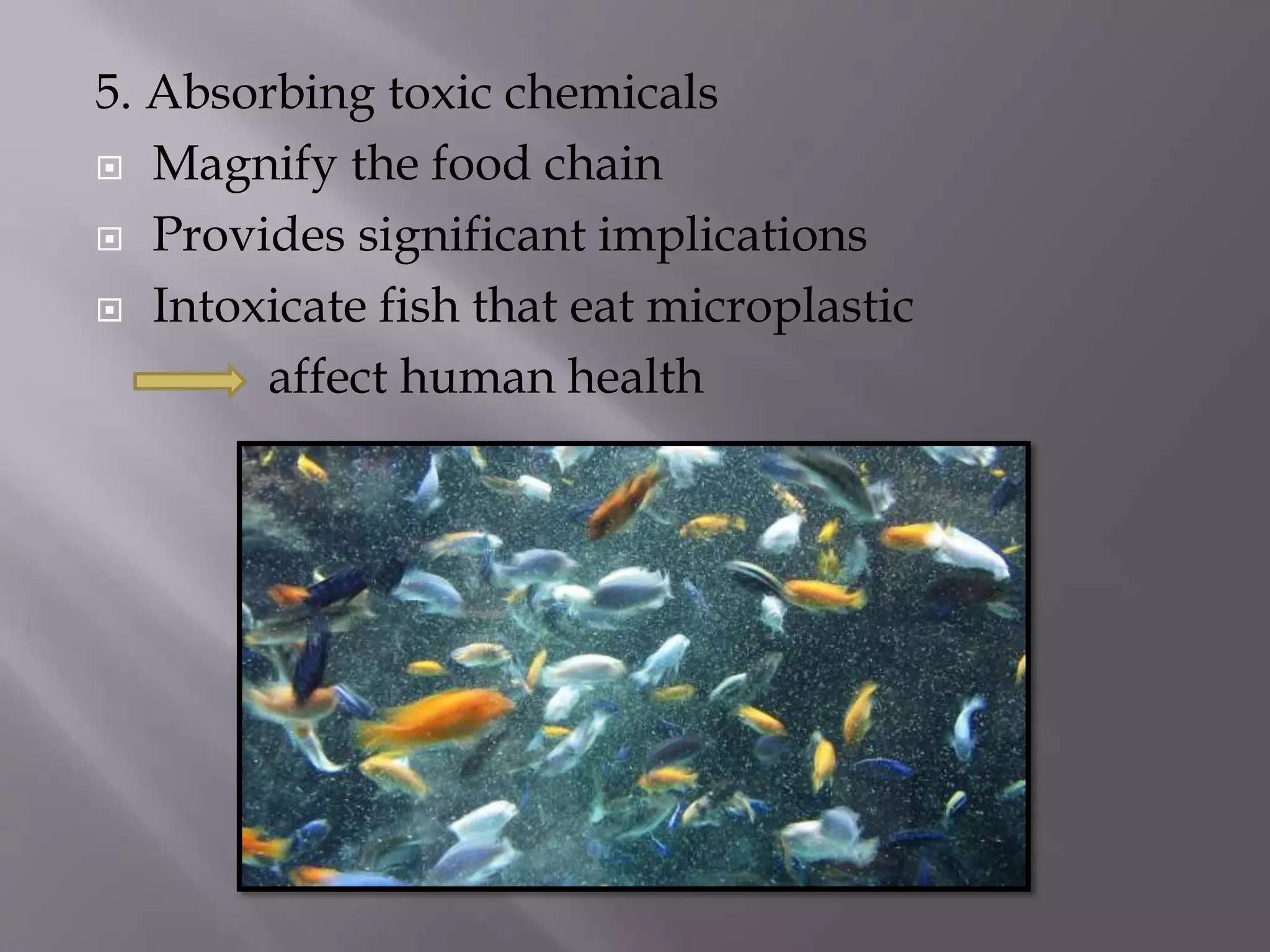
5. Absorbing toxic chemicals
 Magnify the food chain
 Provides significant implications
 Intoxicate fish that eat microplastic
affect human health
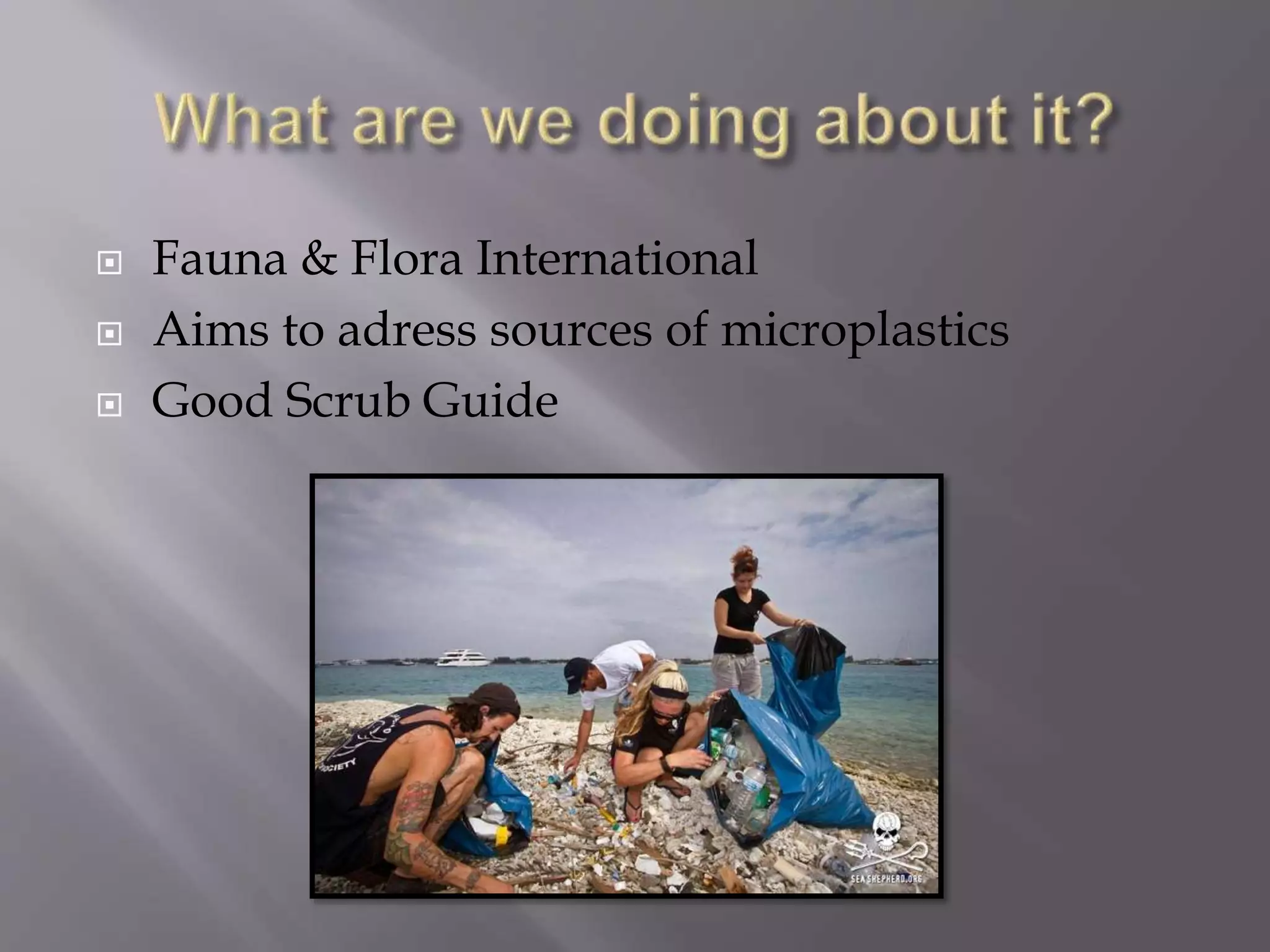
 Fauna & Flora International
 Aims to adress sources of microplastics
 Good Scrub Guide
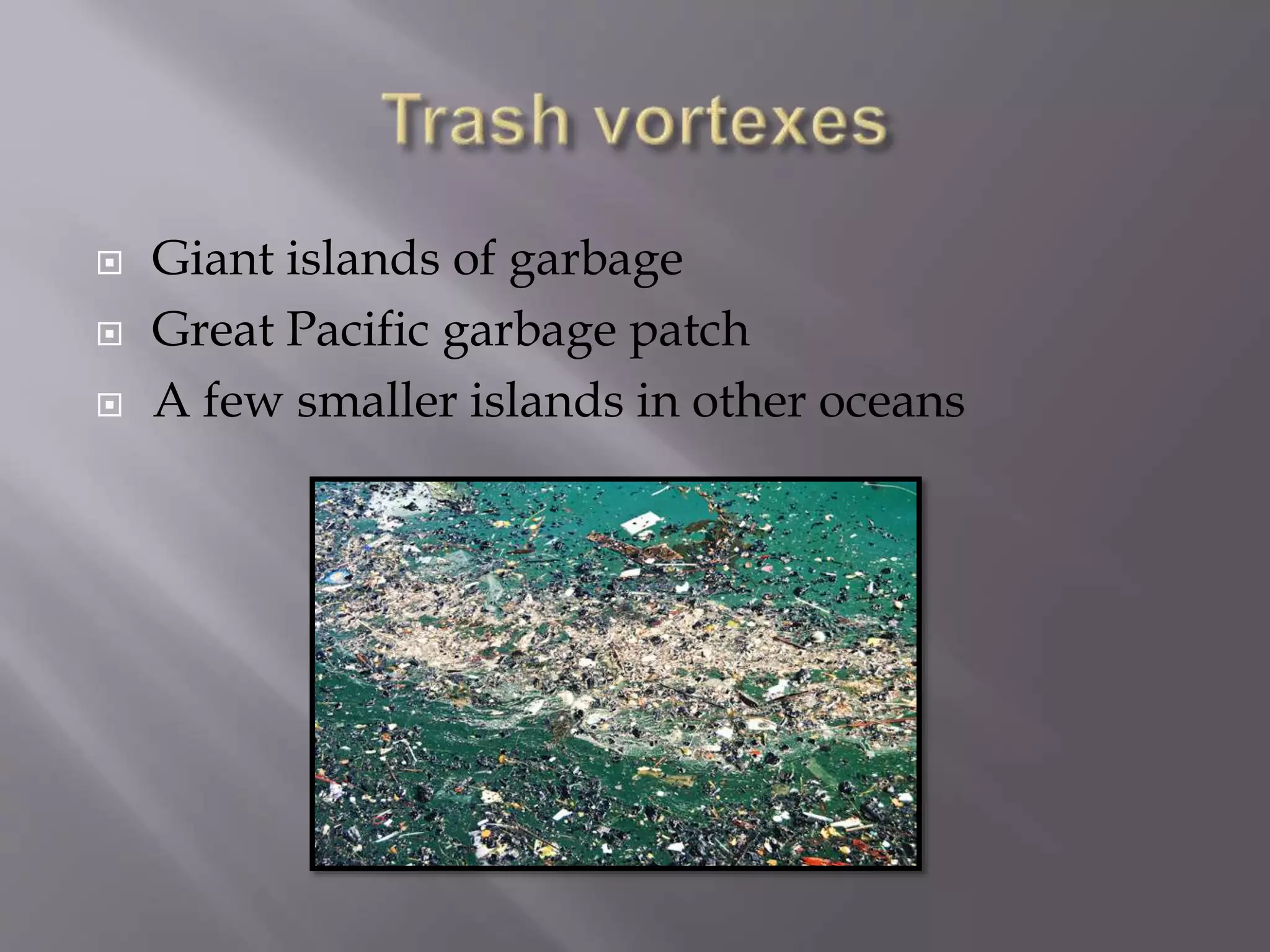
 Giant islands of garbage
 Great Pacific garbage patch
 A few smaller islands in other oceans
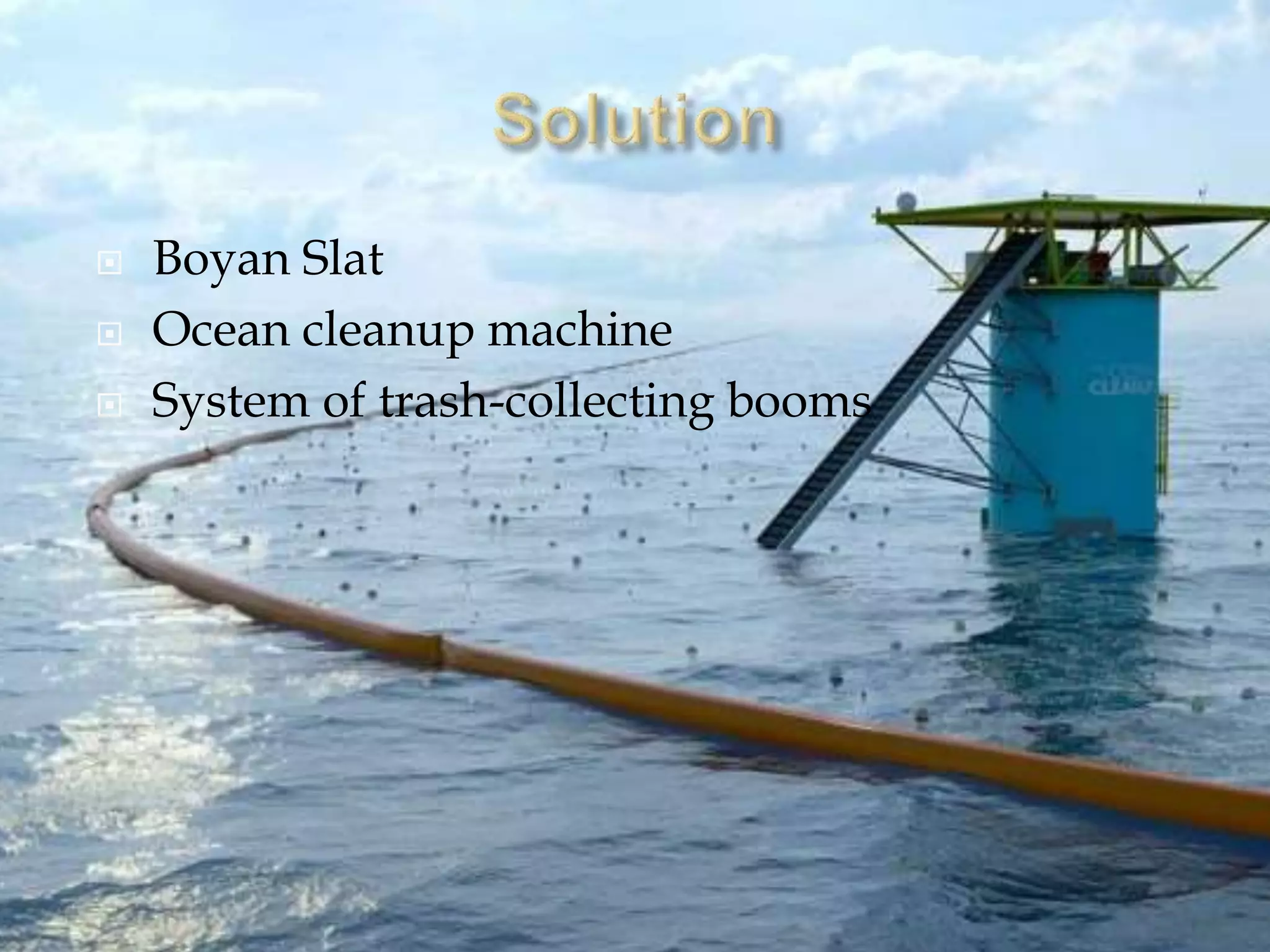
 Boyan Slat
 Ocean cleanup machine
 System of trash-collecting booms
micro and macro

micro and macro

  • 1.
    Matija Bažec, ČrtomirGrlj, Jan Eller & Petra Trstenjak
  • 2.
  • 3.
     MICROPLASTICS smallplastic particles (less than 5 mm) in the environment  MACROPLASTICS plastic particles (more than 5 mm) in the environment
  • 4.
     Brakedown oflarger pieces  Nurdles-large quantities of it lost during transport  Plastic abrasives  Plastic resins  Plastic fibres
  • 5.
     1. • Theyare hard to contain (once they entre the water)  2. • It becomes colonized by microorganizems • These alter the properties of plastics • Causing it to sink  It embades in to the seabad and shoreline
  • 6.
     Those particlesobstruct oxygen flow throught the sediment  Anoxic conditions  The deathn of oxygen-dependent faunaand flora
  • 7.
    4. Problems formarine fauna: • Circulatory blockages (lugworms, mussels...) • Often mistaken as a food source (nurdles – fish eggs) • Physical blockages, malnutrition, chocking and starvation • Harmful for seabirds • And people
  • 8.
    5. Absorbing toxicchemicals  Magnify the food chain  Provides significant implications  Intoxicate fish that eat microplastic affect human health
  • 9.
     Fauna &Flora International  Aims to adress sources of microplastics  Good Scrub Guide
  • 10.
     Giant islandsof garbage  Great Pacific garbage patch  A few smaller islands in other oceans
  • 11.
     Boyan Slat Ocean cleanup machine  System of trash-collecting booms