Methods:
Body Language, Photo
Journal, Frame Your
Design Challenge
Design for Smartphones and iPads | Zach, Barbara, Jenna
Body Language
● Nonverbal communication
○ Posture
○ Gestures
○ Facial expression
American Psychological Association
https://dictionary.apa.org/body-language
Design for Smartphones and iPads | Zach, Barbara, Jenna
Body Language
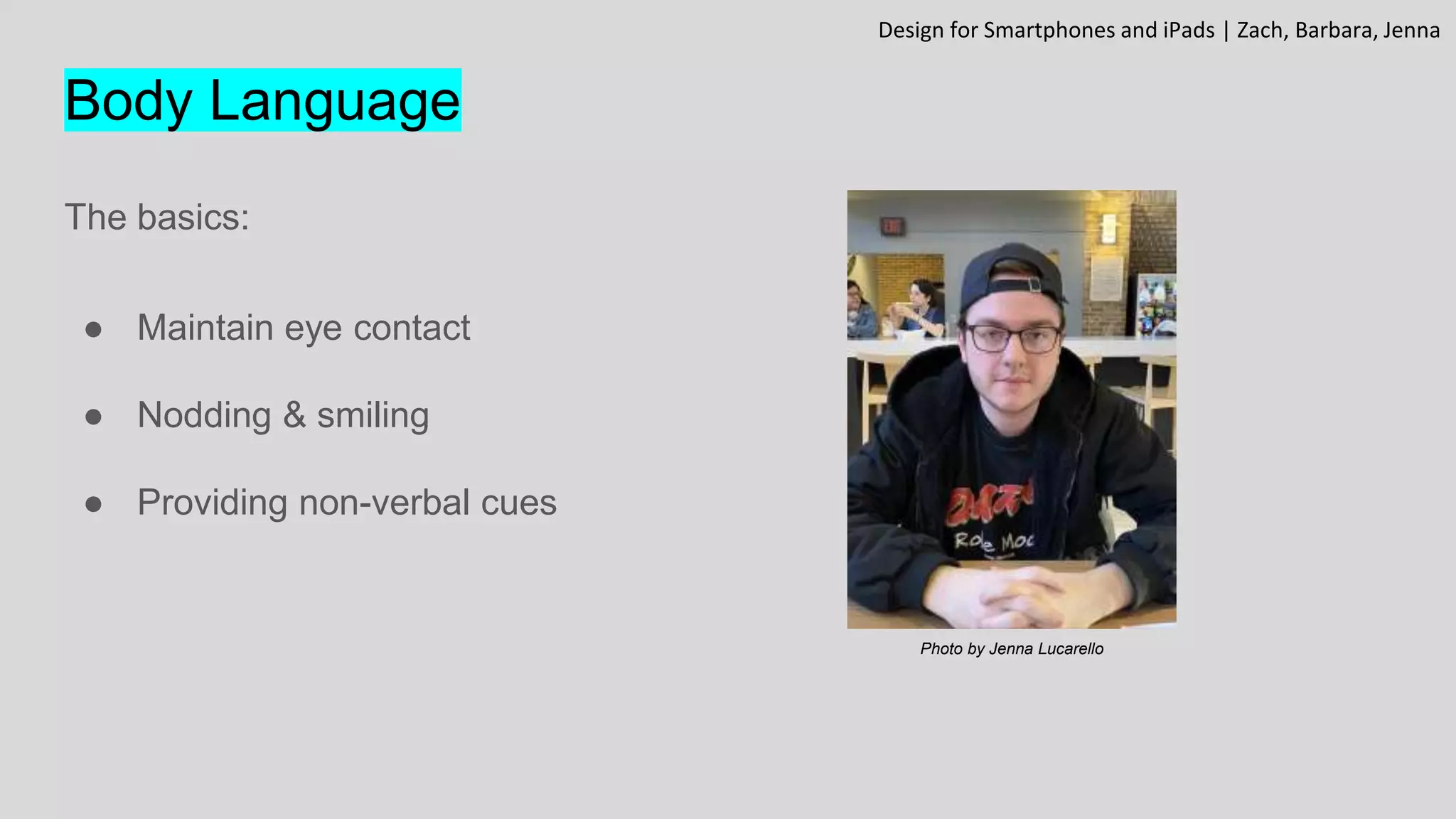
The basics:
● Maintain eye contact
● Nodding & smiling
● Providing non-verbal cues
Design for Smartphones and iPads | Zach, Barbara, Jenna
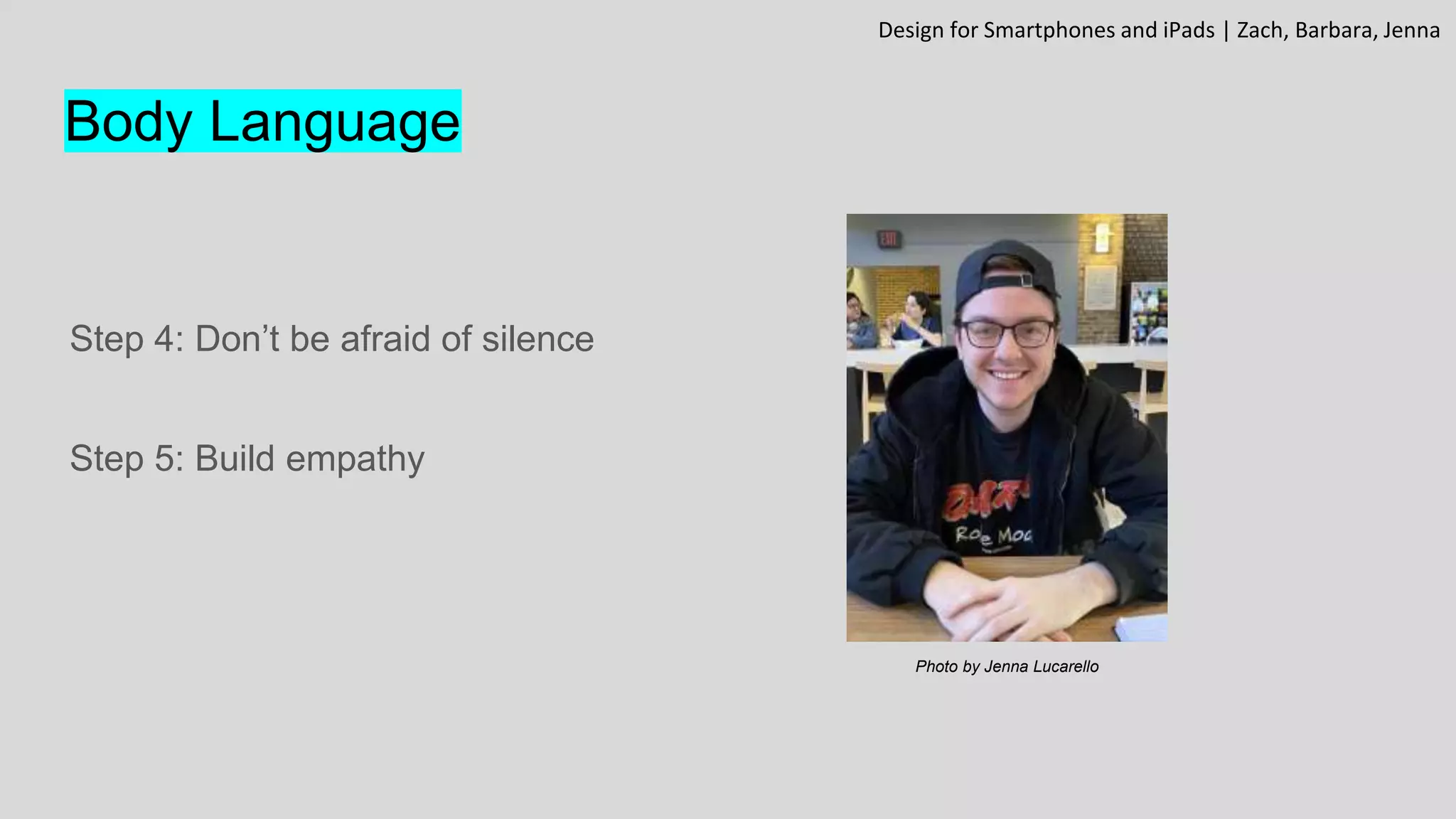
Photo by Jenna Lucarello
Body Language
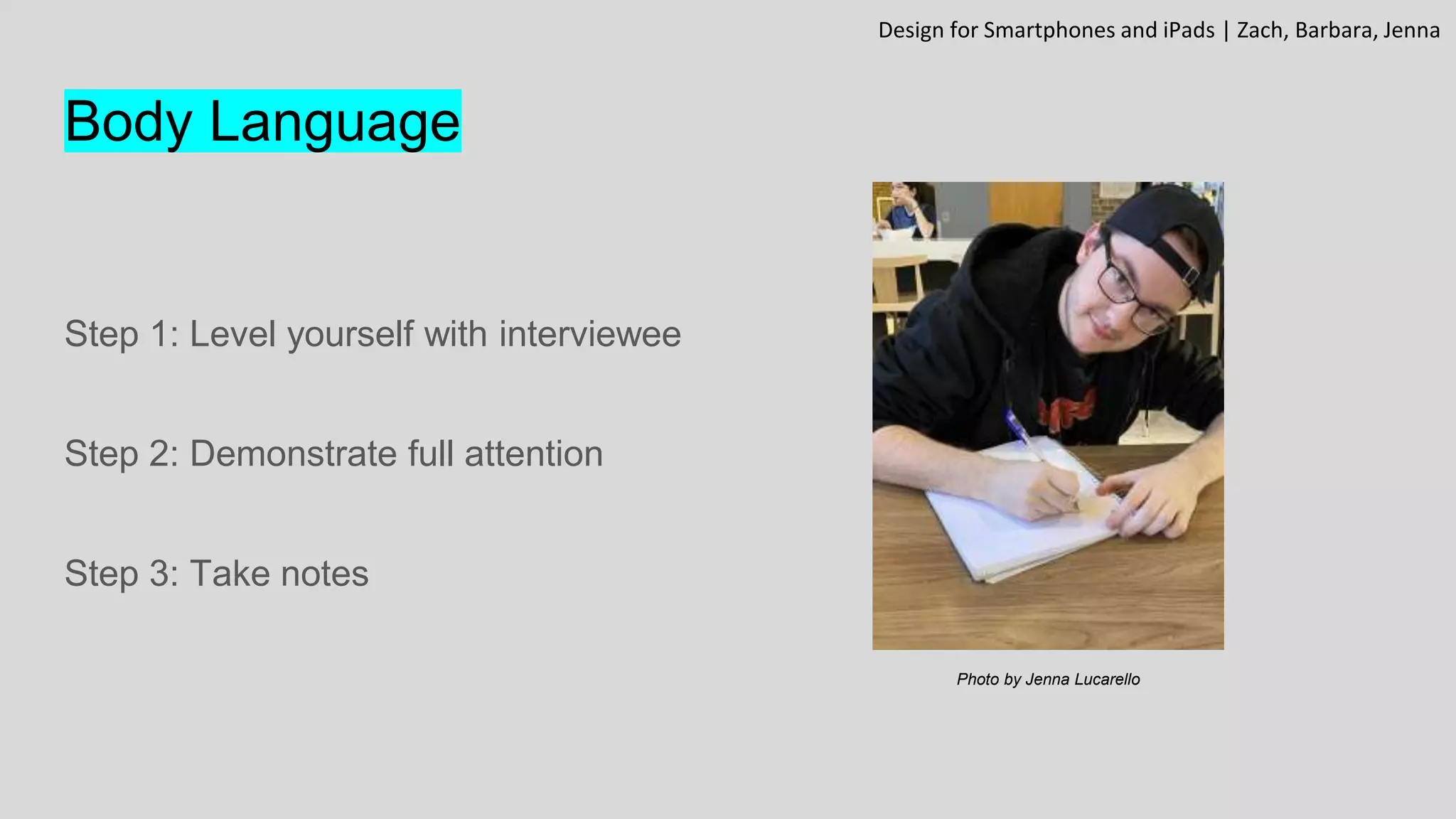
Step 1: Level yourself with interviewee
Step 2: Demonstrate full attention
Step 3: Take notes
Design for Smartphones and iPads | Zach, Barbara, Jenna
Photo by Jenna Lucarello
Body Language
Step 4: Don’t be afraid of silence
Step 5: Build empathy
Design for Smartphones and iPads | Zach, Barbara, Jenna
Photo by Jenna Lucarello
Body Language
● Learning how to read it can be a trained skill
● Affects vast areas around the globe
○ Intercultural exchanges
○ Police investigations
American Psychological Association
https://www.apa.org/research/action/speaking-of-psychology/nonverbal-communication
Design for Smartphones and iPads | Zach, Barbara, Jenna
Photo Journals
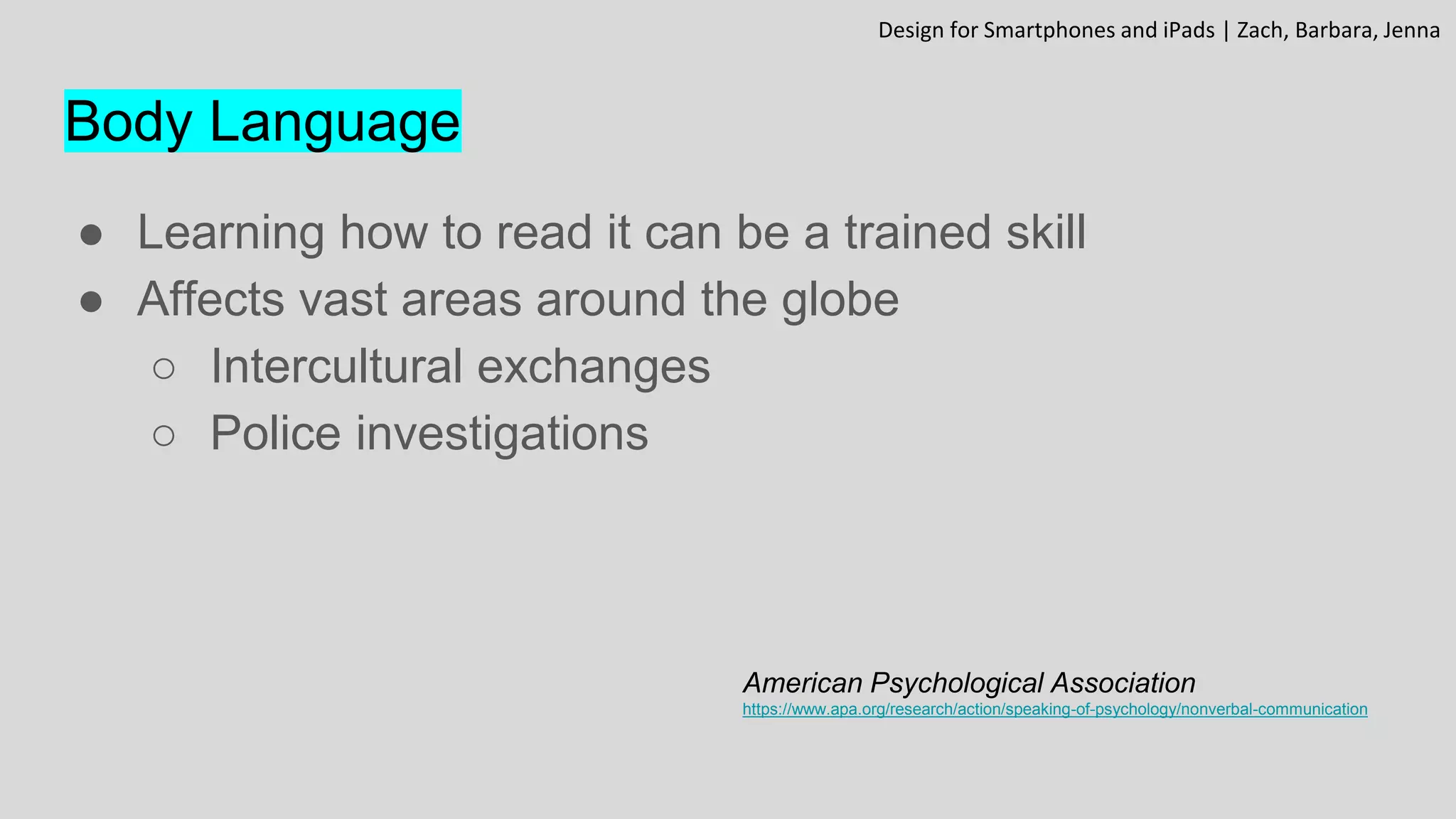
Photo Diary - keeping track of your life
through pictures, with limited description
Why Photo Journals? Memories
Design for Smartphones and iPads | Zach, Barbara, Jenna
Photo by Barbara Marquez
Photo Journal
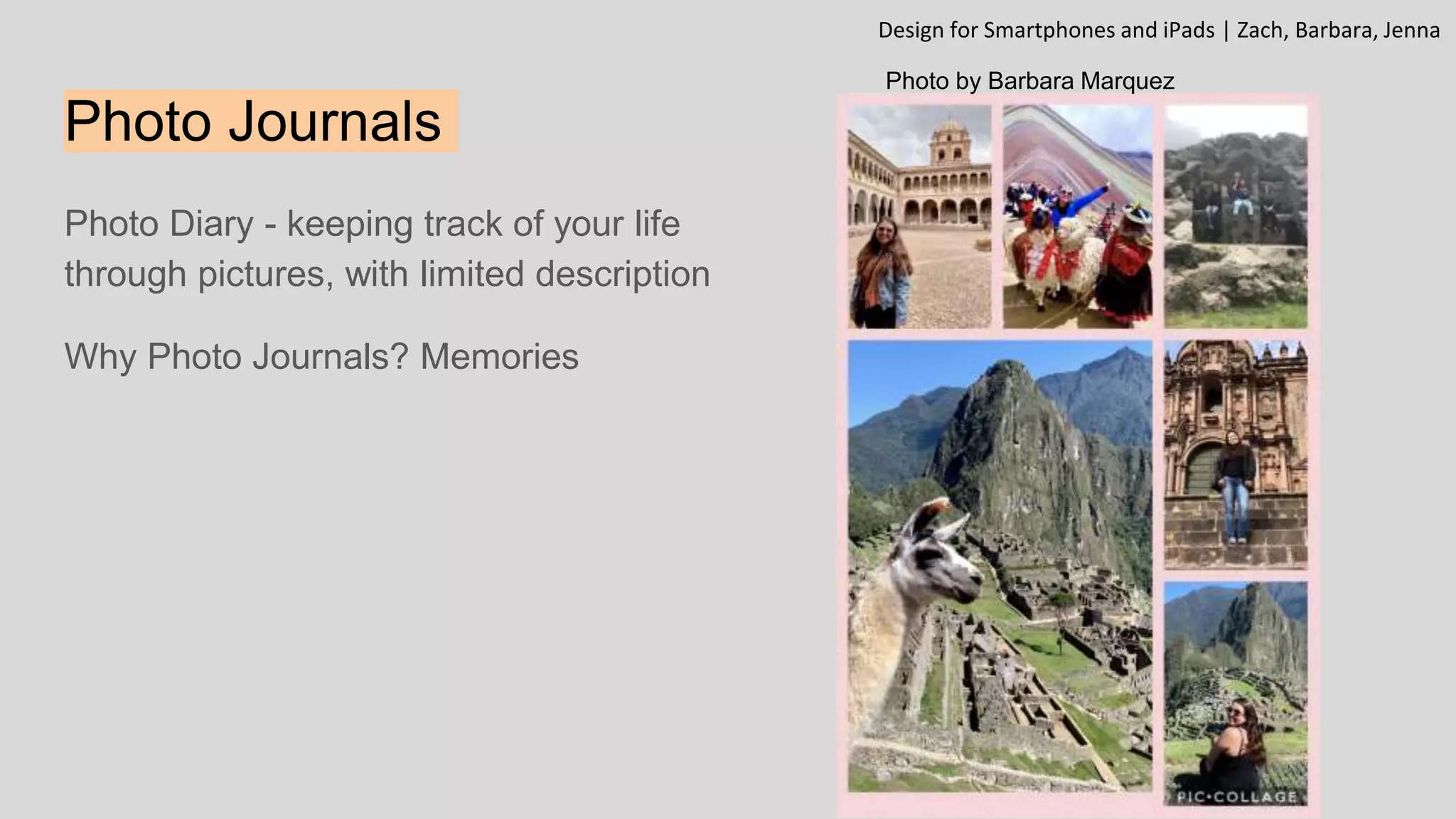
Photos of my study abroad trip -
this is making a personal photo
journal for myself to remember
my trip
Design for Smartphones and iPads | Zach, Barbara, Jenna
Photo by Barbara Marquez
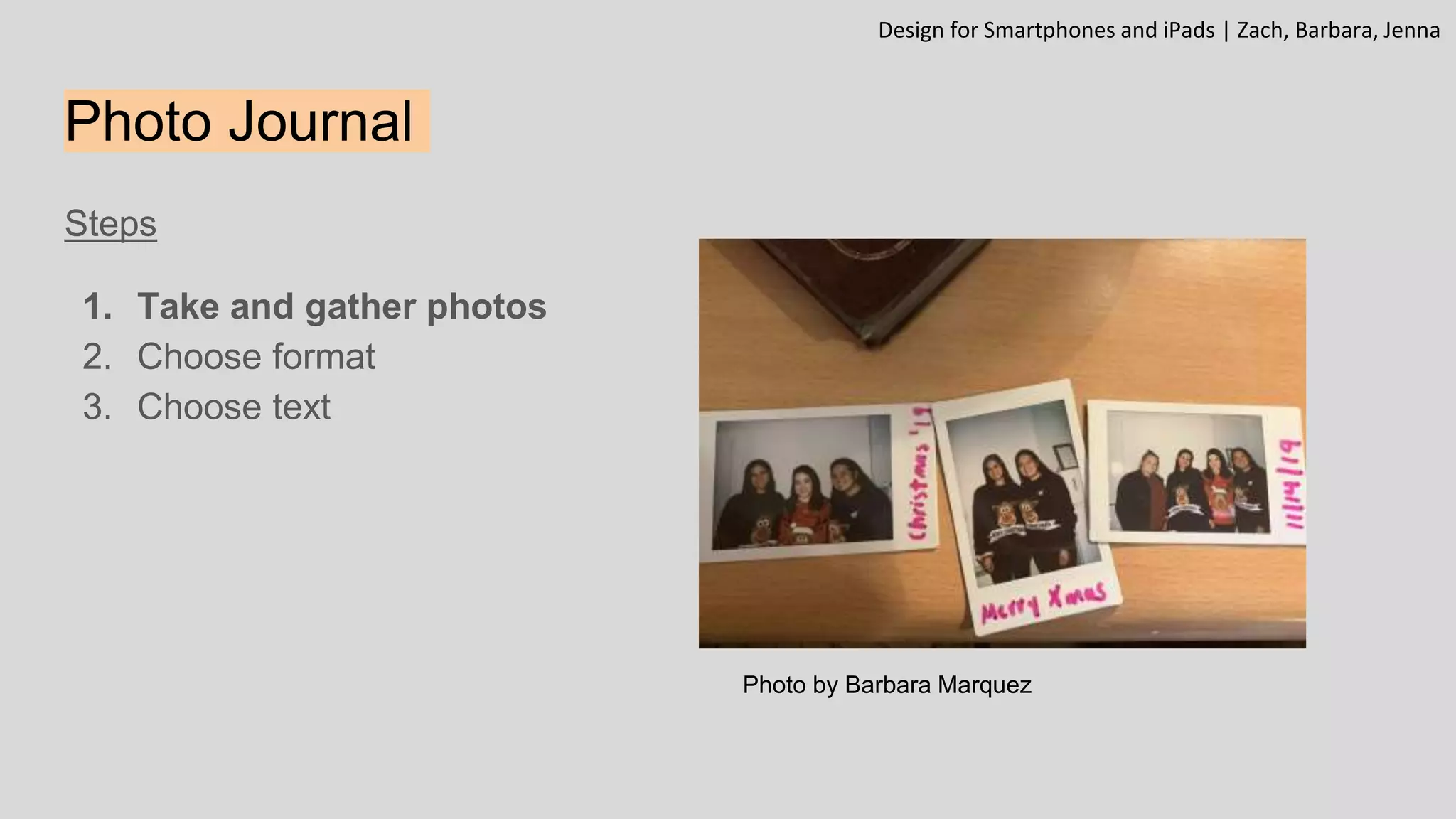
Photo Journal
Steps
1. Take and gather photos
2. Choose format
3. Choose text
Design for Smartphones and iPads | Zach, Barbara, Jenna
Photo by Barbara Marquez
Photo Journal
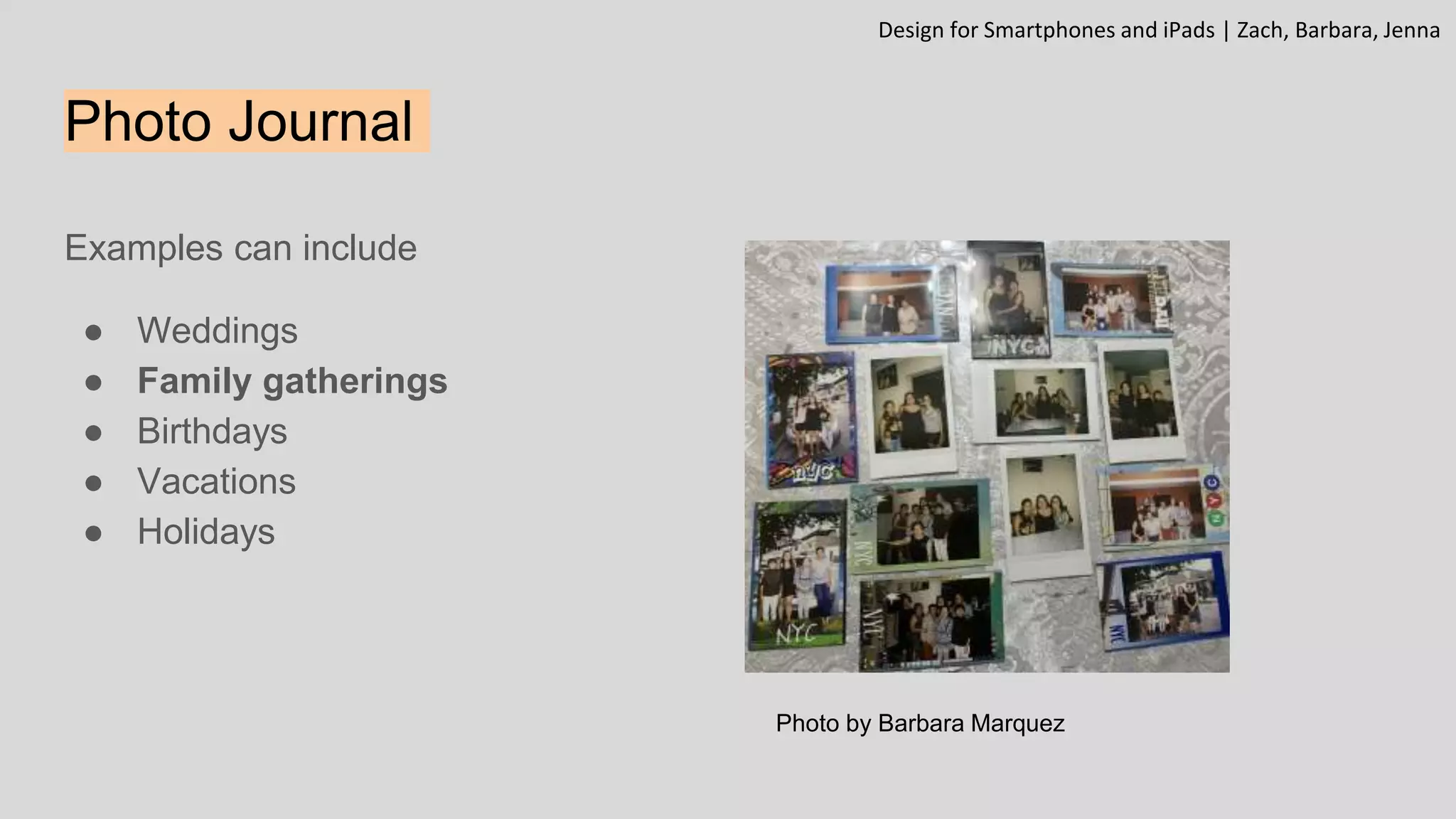
Examples can include
● Weddings
● Family gatherings
● Birthdays
● Vacations
● Holidays
Design for Smartphones and iPads | Zach, Barbara, Jenna
Photo by Barbara Marquez
Photo Journal
https://www.shihoriobata.com/blog/reflective-writing-journal-examples/
According to a blogger Shihori Obata
● A personal response to experiences, situations, events or new information.
● It is a processing phase where thinking and learning take place
Design for Smartphones and iPads | Zach, Barbara, Jenna
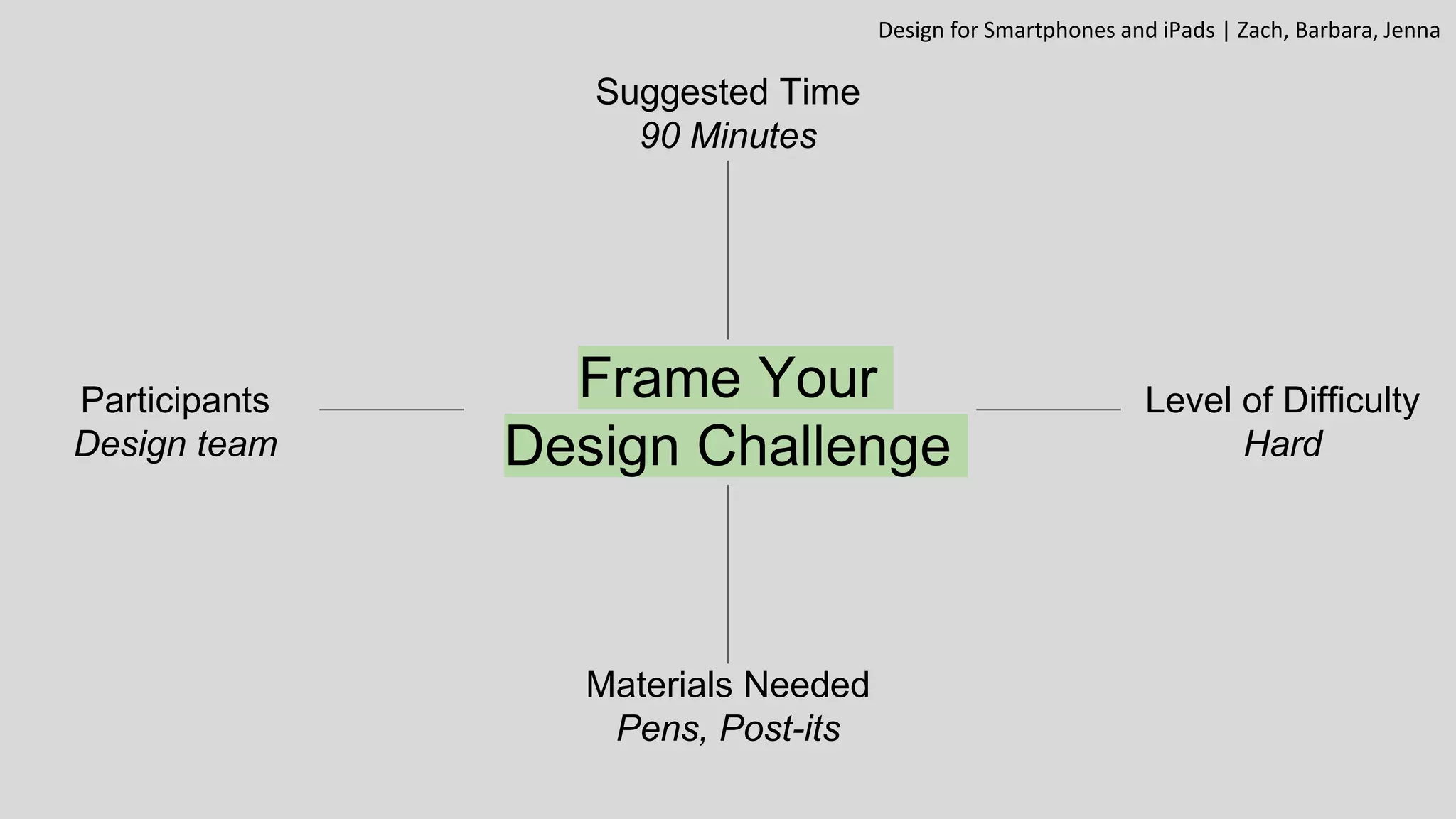
Frame Your
Design Challenge
Suggested Time
90 Minutes
Level of Difficulty
Hard
Materials Needed
Pens, Post-its
Participants
Design team
Design for Smartphones and iPads | Zach, Barbara, Jenna
Frame Your Design Challenge
Step 1
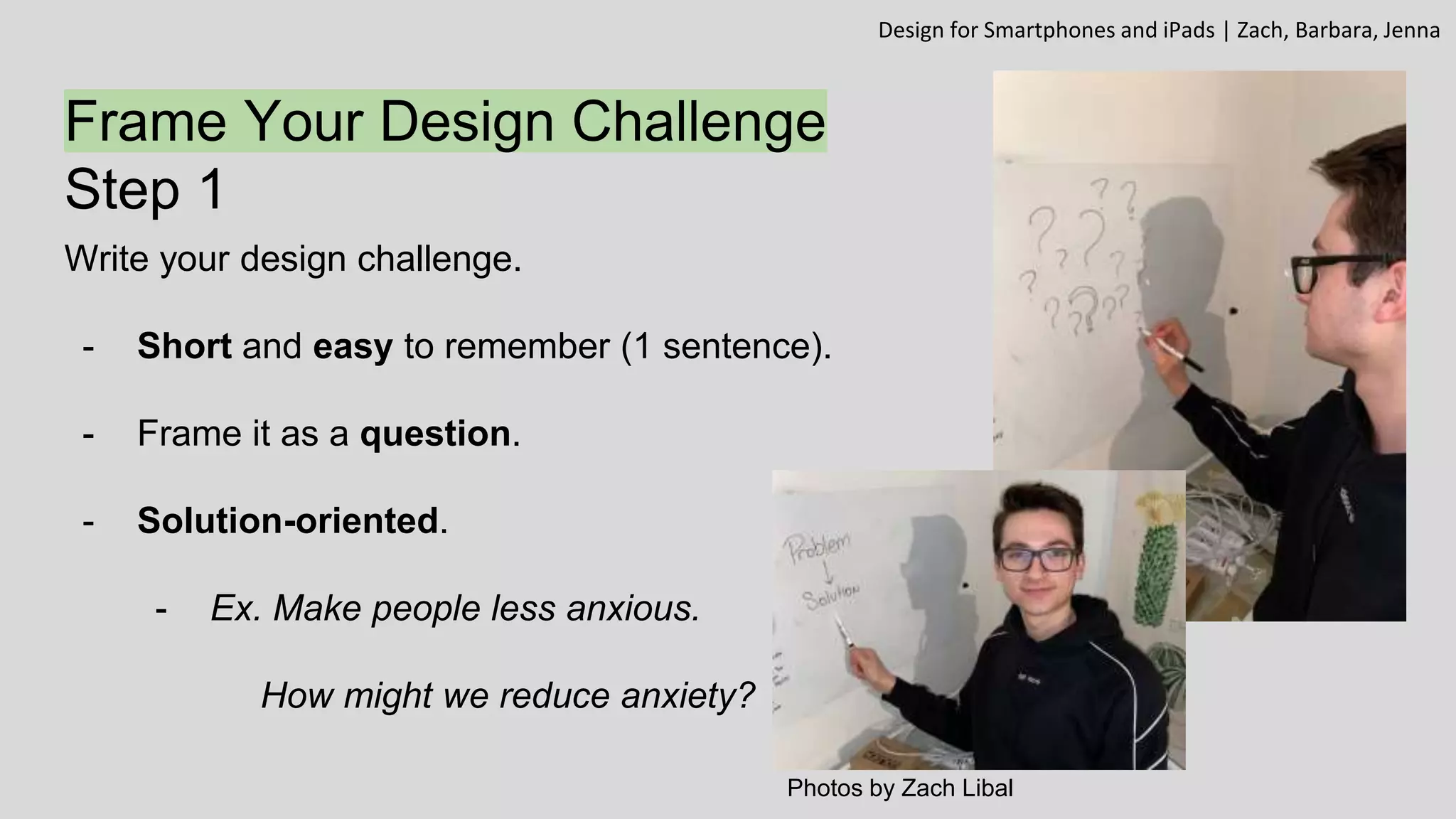
Write your design challenge.
- Short and easy to remember (1 sentence).
- Frame it as a question.
- Solution-oriented.
- Ex. Make people less anxious.
How might we reduce anxiety?
Design for Smartphones and iPads | Zach, Barbara, Jenna
Photos by Zach Libal
Frame Your Design Challenge
Step 2
Working toward ultimate impact.
- Allow for a variety of solutions.
- Take into account constraints and context.
- Now try articulating it again with those factors in mind.
- Ex. Eliminate all unnecessary anxiety.
Design for Smartphones and iPads | Zach, Barbara, Jenna
Frame Your Design Challenge
Step 3
Don’t be too narrow or too broad!
- Narrow = won’t offer enough room to explore creative solutions.
- Broad = won’t give you any idea where to start.
- Starting with “how might we” is the best practice.
- How might we reduce anxiety amongst college students?
https://uxdesign.cc/how-to-properly-frame-your-design-challenge-eccb4d89cb83
Design for Smartphones and iPads | Zach, Barbara, Jenna
Frame Your Design Challenge
Step 4
Do it again!
- It may seem repetitive.
- The right question will give you the right solution.
Quick Test
See if you can come up with five possible solutions
in just a few minutes.
- If so, you’re likely on the right track!
Design for Smartphones and iPads | Zach, Barbara, Jenna
Photo by Zach Libal
THANK YOU

Methods

  • 1.
    Methods: Body Language, Photo Journal,Frame Your Design Challenge Design for Smartphones and iPads | Zach, Barbara, Jenna
  • 2.
    Body Language ● Nonverbalcommunication ○ Posture ○ Gestures ○ Facial expression American Psychological Association https://dictionary.apa.org/body-language Design for Smartphones and iPads | Zach, Barbara, Jenna
  • 3.
    Body Language The basics: ●Maintain eye contact ● Nodding & smiling ● Providing non-verbal cues Design for Smartphones and iPads | Zach, Barbara, Jenna Photo by Jenna Lucarello
  • 4.
    Body Language Step 1:Level yourself with interviewee Step 2: Demonstrate full attention Step 3: Take notes Design for Smartphones and iPads | Zach, Barbara, Jenna Photo by Jenna Lucarello
  • 5.
    Body Language Step 4:Don’t be afraid of silence Step 5: Build empathy Design for Smartphones and iPads | Zach, Barbara, Jenna Photo by Jenna Lucarello
  • 6.
    Body Language ● Learninghow to read it can be a trained skill ● Affects vast areas around the globe ○ Intercultural exchanges ○ Police investigations American Psychological Association https://www.apa.org/research/action/speaking-of-psychology/nonverbal-communication Design for Smartphones and iPads | Zach, Barbara, Jenna
  • 7.
    Photo Journals Photo Diary- keeping track of your life through pictures, with limited description Why Photo Journals? Memories Design for Smartphones and iPads | Zach, Barbara, Jenna Photo by Barbara Marquez
  • 8.
    Photo Journal Photos ofmy study abroad trip - this is making a personal photo journal for myself to remember my trip Design for Smartphones and iPads | Zach, Barbara, Jenna Photo by Barbara Marquez
  • 9.
    Photo Journal Steps 1. Takeand gather photos 2. Choose format 3. Choose text Design for Smartphones and iPads | Zach, Barbara, Jenna Photo by Barbara Marquez
  • 10.
    Photo Journal Examples caninclude ● Weddings ● Family gatherings ● Birthdays ● Vacations ● Holidays Design for Smartphones and iPads | Zach, Barbara, Jenna Photo by Barbara Marquez
  • 11.
    Photo Journal https://www.shihoriobata.com/blog/reflective-writing-journal-examples/ According toa blogger Shihori Obata ● A personal response to experiences, situations, events or new information. ● It is a processing phase where thinking and learning take place Design for Smartphones and iPads | Zach, Barbara, Jenna
  • 12.
    Frame Your Design Challenge SuggestedTime 90 Minutes Level of Difficulty Hard Materials Needed Pens, Post-its Participants Design team Design for Smartphones and iPads | Zach, Barbara, Jenna
  • 13.
    Frame Your DesignChallenge Step 1 Write your design challenge. - Short and easy to remember (1 sentence). - Frame it as a question. - Solution-oriented. - Ex. Make people less anxious. How might we reduce anxiety? Design for Smartphones and iPads | Zach, Barbara, Jenna Photos by Zach Libal
  • 14.
    Frame Your DesignChallenge Step 2 Working toward ultimate impact. - Allow for a variety of solutions. - Take into account constraints and context. - Now try articulating it again with those factors in mind. - Ex. Eliminate all unnecessary anxiety. Design for Smartphones and iPads | Zach, Barbara, Jenna
  • 15.
    Frame Your DesignChallenge Step 3 Don’t be too narrow or too broad! - Narrow = won’t offer enough room to explore creative solutions. - Broad = won’t give you any idea where to start. - Starting with “how might we” is the best practice. - How might we reduce anxiety amongst college students? https://uxdesign.cc/how-to-properly-frame-your-design-challenge-eccb4d89cb83 Design for Smartphones and iPads | Zach, Barbara, Jenna
  • 16.
    Frame Your DesignChallenge Step 4 Do it again! - It may seem repetitive. - The right question will give you the right solution. Quick Test See if you can come up with five possible solutions in just a few minutes. - If so, you’re likely on the right track! Design for Smartphones and iPads | Zach, Barbara, Jenna Photo by Zach Libal
  • 17.

Editor's Notes

  • #3 For example, anger expressed thru facial expression with downward lines on the forehead, cheeks, and mouth
  • #4 For an interview Nodding & smiling: reinforces what the person is saying Providing non-verbal cues: validate what you’re hearing
  • #5 Step 1: if setting is seated at a desk, sit across from them; if its a more casual standing, stand and face them Step 2: eye contact & nodding Step 3: prime example of a non-verbal cue
  • #6 Step 4: if this occurs, try not to fill with personal anecdote; keep focused on the person you're interviewing Step 5: maintain relational status with interviewee, but remember you’re role: observe and learn
  • #7 Example: middle finger
  • #8 A photo journal is pretty much like having a diary. If anyone has had a diary before you know its writing your experiences into a book. This is a bit different, it is keeping track of your experiences through photos, with limited descriptions. The reason people enjoy taking and keeping photos is because they are great memories and reminders of a fun event or day you had.
  • #9 This is an example of my personal photo journey I kept from my trip to Peru this past January. These photos remind me of the good times I had there.
  • #10 Photo journals don’t have to be complicated or time consuming. There are a few steps you need to add all the components of a photo journal.
  • #11 Photo journals can be used for various occasions,
  • #12 Some people use photo journals as a coping or therapeutic method, for example this blogger wrote about her experiance.
  • #13  Properly framing your design challenge is critical to your success. Here’s how to do it just right.